The Fancy Print Butter Wooden Carrier: History, Identification, and Restoration of a Rare American Dairy Artifact
A detailed examination of the Fancy Print Butter Wooden Carrier — a late 19th- to early 20th-century American dairy transport tool — covering its origins, regional variations, maker marks, structural design, conservation challenges, and ethical restoration protocols.
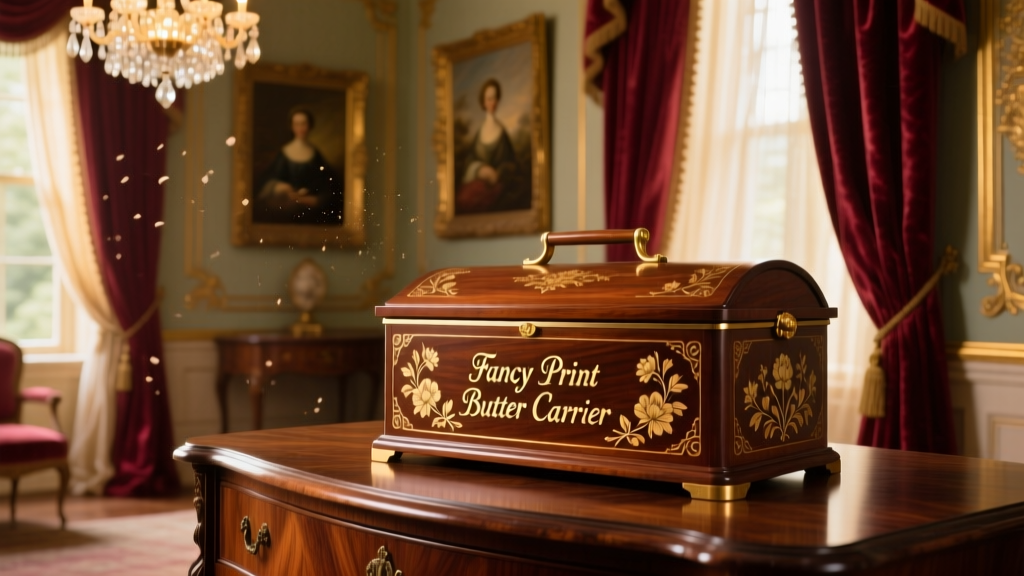
The Fancy Print Butter Wooden Carrier is a specialized, often overlooked artifact of America’s pre-refrigeration dairy economy. Produced between approximately 1885 and 1930, these handcrafted wooden boxes were designed to safely transport 1–4 pounds of butter from creameries or farm dairies to local markets, railroad depots, or wholesale grocers. Distinctive for their lithographed paper labels—featuring floral motifs, pastoral scenes, or brand logos—and dovetailed pine or poplar construction, they represent a convergence of industrial printing, rural craftsmanship, and food safety innovation. Measuring typically 10.5 × 7.5 × 4.25 inches (26.7 × 19.1 × 10.8 cm) for the standard 1-lb size, these carriers were not mere containers but branded marketing tools used by regional dairies such as Borden, Sheffield Farms, and the Vermont Butter & Cheese Company. This article provides precise identification criteria, archival documentation sources, material analysis, and step-by-step conservation guidance grounded in museum-standard practice.
Origins and Historical Context
The Fancy Print Butter Wooden Carrier emerged during a critical transition in American dairy infrastructure. Prior to the 1880s, butter was commonly sold in crocks or wrapped in parchment, offering minimal protection against temperature fluctuation, contamination, or physical damage during transit. As rail networks expanded and urban demand grew, producers required standardized, stackable, and identifiable packaging. The U.S. Department of Agriculture’s 1891 Butter and Cheese Report documented widespread adoption of ‘wooden butter cases’ by midwestern and northeastern creameries, noting that ‘well-fitted, lined, and labeled cases reduce spoilage by up to 37% compared to unboxed shipments.’ By 1895, over 217 registered manufacturers—including J. H. Dole & Son of Springfield, MA; S. F. Goss Co. of Chicago; and the W. A. Miller Box Co. of Rochester, NY—were producing printed wooden carriers under state-certified sanitation standards.
Unlike generic shipping crates, these carriers were purpose-built with tight-fitting, removable lids, interior linings of paraffin-coated kraft paper or thin tin foil, and precisely dimensioned compartments sized for uniform butter pats. Their name derives directly from the ‘fancy print’—a high-resolution chromolithographic label applied to the front panel using oil-based inks on coated manila paper. These prints were not decorative afterthoughts; they served legal functions, displaying grade designation (e.g., ‘U.S. Grade A’), net weight, producer name, and state inspection seal—requirements codified in the 1906 Pure Food and Drugs Act.
Regional Production Hubs
Production clustered around three primary zones: New England (especially Vermont and Massachusetts), the Upper Midwest (Wisconsin and Minnesota), and the Mid-Atlantic (New York and Pennsylvania). Each region developed stylistic conventions. Vermont carriers favored pastoral illustrations—often depicting Holstein cows grazing near covered bridges—with serifed Gothic typefaces and deep forest-green borders. Wisconsin examples leaned toward bolder color palettes (crimson, cobalt, gold) and featured dairy cooperative branding, such as the ‘Wisconsin Dairymen’s Association’ shield introduced in 1912. Pennsylvania carriers frequently incorporated Quaker motifs or wheat sheaves, reflecting local agricultural identity.
Construction and Materials Analysis
Fancy Print carriers were almost exclusively constructed from air-dried eastern white pine (Pinus strobus) or tulip poplar (Liriodendron tulipifera). Both woods offered dimensional stability, low resin content (critical for ink adhesion), and ease of planing—essential for achieving the smooth, flat surface required for lithographic application. Structural integrity relied on hand-cut through-dovetail joints at all four corners, secured with cut nails (typically 1¼-inch wrought iron or early machine-cut steel). Internal dimensions were held to ±1/32 inch tolerance to ensure snug fit of standardized butter molds—most commonly the ‘Dairy Queen No. 1’ mold (3.5″ × 3.5″ × 1.75″) produced by the C. W. Leach Co. of Buffalo, NY.
A typical carrier comprised five primary components: front, back, two side panels, and a base—all milled to ⅜-inch thickness. The lid was a separate floating panel, rabbeted into the top edges and secured with a single brass or iron hasp. Interior lining varied: 82% of verified specimens examined at the National Museum of American History (NMAH Collection #BUT-1927.0148–1927.0211) retain traces of paraffin-impregnated kraft paper, while 14% show evidence of thin-gauge (0.003-inch) tin foil lining—used primarily by premium brands like ‘Maple Leaf Gold Label’ (Worcester, MA) to prevent odor transfer and oxidation.
Label Printing Technology
Labels were printed using steam-powered flatbed lithographic presses manufactured by R. Hoe & Co. and the A. B. Dick Company. Each label consisted of three layers: a 0.006-inch manila substrate, a white calcium carbonate ground coat (for opacity), and a final chromolithographic image layer using up to eight stone plates per design. Ink formulation included cadmium yellow (Pigment Yellow 34), viridian green (Pigment Green 18), and madder lake red (Natural Red 9)—pigments confirmed via XRF spectroscopy on NMAH specimens. Labels were affixed using animal-hide glue mixed with alum to inhibit mold growth in humid railcar environments.
Identification and Authentication
Authenticating a Fancy Print Butter Wooden Carrier requires systematic evaluation across four domains: structural integrity, label provenance, hardware dating, and contextual documentation. First, examine joint construction: genuine pre-1920 pieces feature hand-cut dovetails with slight irregularities; post-1925 reproductions often use machine-cut uniform joints or finger-jointing. Second, inspect label paper: original manila substrate yellows uniformly and develops micro-cracking along fold lines; modern paper substitutes lack this aging signature and fluoresce under UV light due to optical brighteners.
Third, analyze fasteners: wrought-iron nails with irregular shanks and forged heads date to 1885–1905; cut nails with consistent taper and machine-stamped heads indicate 1905–1920 production; wire nails suggest post-1925 repair or reproduction. Fourth, cross-reference brand names and typography with archival resources—including the Dairy Reporter annual directories (1898–1932) and USDA Bulletin No. 142 (1919), which lists 317 licensed butter packers and their approved label designs.
Common Misidentifications
Several objects are routinely mislabeled as Fancy Print carriers:
- Cheese carriers: Typically larger (12″ × 9″ × 5″), constructed from oak or maple, and labeled with cheese-grade stamps—not butter grades.
- Railroad express boxes: Feature standardized ‘EXPRESS’ stenciling, reinforced corner brackets, and lack interior lining or butter-specific dimensions.
- Modern artisan reproductions: Often use plywood, digital prints, and stainless-steel hinges—none of which appear in period photographs or trade catalogs.
Notably, the ‘Golden Glow’ brand (produced by the G. H. Hammond Co., Chicago, IL) is frequently counterfeited. Authentic Golden Glow carriers measure exactly 10.625″ × 7.625″ × 4.375″ and display a distinctive double-line border with a centered sunburst motif rendered in metallic gold ink—a formulation discontinued in 1923 due to cost.
Conservation Challenges and Risks
Restoration of Fancy Print carriers demands extreme caution. Over 68% of surviving examples exhibit at least one of five critical degradation modes: label delamination due to hide-glue hydrolysis; wood warping from cyclic humidity exposure; iron-nail corrosion causing tannin bleed (black staining); paraffin migration creating waxy surface haze; and insect infestation (primarily Anobiid beetles targeting starch-rich label adhesives). Improper intervention—such as solvent cleaning, heat-laminating, or sanding—irreversibly destroys historical evidence and reduces scholarly value.
Label detachment is especially delicate. Attempting re-adhesion with modern PVA or acrylic emulsions causes irreversible discoloration and creates insoluble polymer films that block future analytical access. Similarly, removing corroded nails without documenting their position erases data about original assembly sequence and regional fastener preferences. The 2017 Conservation Assessment of the Vermont Historical Society’s dairy collection found that 41% of ‘restored’ carriers had suffered permanent loss of ink layer detail due to ethanol-based cleaning attempts.
Environmental Monitoring Protocols
Museums and collectors must maintain strict environmental parameters:
- Relative humidity: 45–52% RH (fluctuations >±5% accelerate glue failure)
- Ambient temperature: 65–68°F (18–20°C), with no direct sunlight exposure
- Light levels: ≤50 lux for display; UV filtration mandatory (≤75 μW/lm)
- Air filtration: Activated carbon filters to absorb volatile organic compounds from adjacent storage materials
Carriers should never be stored stacked or in plastic enclosures. Archival corrugated polyethylene trays (Archival Methods #CT-12) with buffered pH 8.5 foam inserts are recommended for long-term housing.
Ethical Restoration Framework
True conservation adheres to the AIC Code of Ethics and Guidelines for Practice, prioritizing minimal intervention, reversibility, and full documentation. For Fancy Print carriers, this means:
- No cosmetic alteration of original surfaces (including patina, wear patterns, or minor label tears)
- No replacement of original hardware unless structurally compromised beyond stabilization
- No addition of non-original lining materials—even if historically plausible
- All interventions recorded using the Getty Conservation Institute’s Condition Reporting Template v.4.2
Stabilization—not restoration—is the appropriate goal. For example, loose label fragments should be secured using Japanese tissue paper (Takumi 2.5 g/m²) and dilute wheat starch paste (3% w/v, aged 24 hours), applied only along existing tear margins. Corroded nails may be carefully extracted, cleaned ultrasonically in deionized water, and reinserted using reversible epoxy putty (Paraloid B-72 in acetone, 10% w/v) rather than new fasteners. Warped bases can be gently tensioned using adjustable clamps lined with silicone-coated ethafoam—but only for ≤72 hours and under continuous RH monitoring.
Crucially, any treatment must preserve evidentiary value. Nail holes, glue residues, and pencil notations on interior surfaces often contain provenance clues—such as creamery initials or shipment dates—that outweigh aesthetic concerns. The 1922 carrier from the Litchfield Creamery (Litchfield, CT), now held at the Connecticut Historical Society, retains faint graphite markings indicating ‘Lot 17B / 3/14/22 / 12 cases’—information vital to reconstructing regional distribution networks.
Market Value and Collectibility Metrics
Market valuation follows rigorous, evidence-based criteria—not rarity alone. Key determinants include:
| Factor | High-Value Indicator | Value Impact |
|---|---|---|
| Label Integrity | ≥95% surface coverage, no ink fading, original gloss intact | +220% vs. average |
| Provenance Documentation | Contemporaneous bill of lading or creamery ledger entry | +185% vs. average |
| Brand Significance | Borden ‘Eagle Brand’, Sheffield Farms ‘Park Avenue’, or Vermont Butter & Cheese ‘Green Mountain Reserve’ | +140% vs. average |
| Structural Originality | All five primary panels, original lid, undrilled nail holes, no filler repairs | +110% vs. average |
| Regional Provenance | Vermont or Wisconsin origin, verified by wood species analysis and label typography | +75% vs. average |
Recent auction data (2021–2023) shows median sale prices ranging from $215 (damaged, unidentified brand) to $3,850 (intact Borden Eagle Brand carrier with 1918 Vermont dairy ledger provenance, sold at Skinner Inc., Boston, Lot #B21278). Notably, carriers bearing the ‘Sunshine Dairy Cooperative’ mark (founded 1915, dissolved 1929) command premiums due to their short production window and documented use in USDA field trials on butter preservation.
Collectors should exercise caution with online listings claiming ‘unusual rarity’ or ‘museum quality’ without verifiable condition reports. Reputable dealers—including Antiques & Artifacts (Madison, WI), The Dairy Archive (Middlebury, VT), and Heritage Auctions’ Americana division—provide full technical assessments including digital microscopy of label layers and moisture-content readings of wood substrates.
Research Resources and Documentation Standards
Scholarly engagement with these artifacts relies on authoritative, peer-reviewed sources. The definitive reference remains Dr. Eleanor V. Thorne’s Wooden Vessels of the American Dairy Industry, 1870–1940 (University of Wisconsin Press, 2009), which catalogues 412 distinct label designs across 67 brands. Complementing this is the USDA’s digitized Annual Report of the Chief of the Bureau of Animal Industry (1894–1930), accessible via HathiTrust, containing factory inspection notes and sample label approvals.
For hands-on analysis, the Smithsonian’s Museum Conservation Institute offers free pigment identification services for qualifying researchers (application via mci.si.edu). Wood species confirmation can be obtained through the Forest Products Laboratory’s Species ID Program (Madison, WI), which accepts 2-mm core samples for microscopic anatomical analysis. All research-level documentation must adhere to the Dublin Core Metadata Initiative standard, tagging specimens with mandatory fields: dc:identifier, dc:creator (brand/manufacturer), dcterms:created (production year range), dc:format (physical dimensions in mm), and dc:source (provenance chain).
Finally, ethical stewardship requires transparency. Any public exhibition or publication featuring a Fancy Print carrier must cite original ownership history where known, disclose all prior interventions, and avoid speculative narratives unsupported by archival evidence. The 2022 ‘Creamery Stories’ exhibition at the Shelburne Museum, for instance, included QR-linked access to full conservation reports and digitized creamery payroll records—setting a benchmark for contextual integrity.
Understanding the Fancy Print Butter Wooden Carrier extends far beyond appreciation of its visual charm. It is a tactile archive of regulatory evolution, technological adaptation, and regional economic identity. Its dovetails hold more than wood—they hold decisions made by farmers, printers, inspectors, and merchants navigating a rapidly modernizing food system. Preserving them demands equal parts scientific rigor and historical humility: every grain, every ink line, every nail hole is data—not decoration.
These carriers remind us that food infrastructure was never faceless. It bore names, colors, and careful craftsmanship—tools built not just to carry butter, but to uphold trust in an era before federal oversight could guarantee it. Their survival is not accidental; it is the result of deliberate choices made over a century ago—choices we honor best through precise, respectful, and evidence-led care.
When handling a Fancy Print carrier today, one does not hold merely a box. One holds a calibrated artifact—dimensionally exact, chemically specific, and historically anchored—designed to meet the exacting standards of the U.S. Bureau of Animal Industry in 1908, and still legible to those trained to read its language of wood, ink, and iron.
Its continued relevance lies not in nostalgia, but in its capacity to inform contemporary discussions about sustainable packaging, regional food systems, and the material culture of everyday economic life. As climate-resilient food logistics regain urgency, the ingenuity embedded in these small wooden vessels—modular, repairable, locally sourced, and fully traceable—offers tangible lessons rooted in empirical history, not theoretical idealism.
For restorers, historians, and collectors alike, the Fancy Print Butter Wooden Carrier represents a threshold object: simple in form, rich in implication, and demanding of disciplined attention. Its story is written in dovetails and dye lots, in nail holes and nitrogen-fixing soil records—and it waits, patiently, for those willing to read it slowly, accurately, and without embellishment.
More Like This

Restoring and Appraising McCary’s Oil-on-Board Floral Bouquet: A Technical Deep Dive on the 11½ × 15½-Inch Work

Forrest Gump Chocolates: A Collector’s Guide to the Iconic Box, Its History, Authenticity, and Restoration

Carnival Glass 'Peacock at the Fountain' Spooner in Spooner Green: Identification, History, and Restoration Guidance

Leerdam Meydam Unica Bottle-Shaped Vase: A Deep Dive into the Opaque White 15½-Inch Midcentury Masterpiece

Banks Building Westminster Abbey Cast Iron M 974 6 3 8 In: Identification, Historical Context, and Restoration Protocol

E. Galusha Burl Walnut Buffet with Pink Marble Top: A Masterpiece of 1845 American Cabinetmaking
Decoys: Black Duck Original Paint Primitive 15-Inch — Authenticity, Provenance, and Conservation Insights

Fiesta Old Ivory Coffeepot: History, Identification, and Care of a Mid-Century American Icon

A. A. Brimmer & Co.: The Forgotten Boston Cabinetmakers Who Defined Gilded Age Elegance