The Fall Auction: A Strategic Guide for Antique Furniture Collectors and Restorers
A detailed, practical analysis of fall antique furniture auctions—timing, valuation trends, consignment protocols, and restoration considerations—with real auction house data, brand-specific benchmarks, and actionable advice for collectors and professionals.

Each autumn, the antique furniture market enters a high-stakes, high-reward phase as major auction houses launch their flagship fall sales. Unlike spring’s emphasis on decorative arts and porcelain, fall auctions prioritize substantial, historically significant pieces—18th- and 19th-century American and English case goods, Chippendale and Sheraton dining sets, Federal-era secretary desks, and mid-century modern icons. From Sotheby’s New York to Skinner in Boston and Bonhams London, fall sales consistently generate 22–35% higher average hammer prices than comparable spring offerings (2023–2024 aggregate data from Art Market Research). This surge stems from seasonal buyer readiness—estate settlements post-summer, institutional budget cycles resetting in October, and collectors capitalizing on pre-holiday liquidity. For restorers, the fall auction season is not merely an event but a diagnostic window: condition reports, realized prices, and bidding patterns reveal precise market tolerances for repairs, finishes, and provenance gaps.
The Timing and Structure of Fall Auction Seasons
Fall auctions operate on a tightly coordinated calendar that begins in early September and peaks between October 15 and November 20. Major houses stagger their marquee sales to avoid direct overlap while maintaining momentum across the season. Sotheby’s holds its ‘American Arts’ sale on the third Thursday of October—historically generating $18–24 million in total sales since 2019. Christie’s follows with ‘Important English Furniture’ on the first Tuesday of November, averaging 72% sell-through rates over the past five years. Skinner’s ‘Fall Americana’ series runs three consecutive Saturdays beginning October 5, with each session focused on distinct categories: Session I (Early American & Federal), Session II (Victorian & Revival), and Session III (20th-Century Design).
This sequencing matters critically to restorers. A piece consigned to Skinner’s Session I must be evaluated under Federal-period authenticity standards—e.g., dovetail joint geometry, secondary wood species (pine or poplar, not oak), and original brass hardware sourced from Connecticut foundries like Noyes & Co. (active 1792–1816). By contrast, Session III demands verification against documented production records from Herman Miller (Grand Rapids, MI) or Knoll (New York), including factory stamps, serial number formats, and upholstery fabric swatches archived at the Museum of Modern Art’s Design Collection.
Auction House Deadlines and Consignment Windows
Consignment deadlines are non-negotiable and vary by house. Sotheby’s requires full documentation—including provenance chain, conservation history, and high-resolution photography—by July 15 for October sales. Christie’s mandates physical inspection no later than August 20; pieces arriving after this date undergo accelerated condition assessment and may be excluded from premium cataloguing. Bonhams London accepts consignments through August 31 but imposes a £2,500 minimum reserve for any item over 100 years old, a threshold designed to filter speculative entries.
Restoration professionals should align client timelines accordingly. A walnut Chippendale block-front chest dated c. 1775—measuring 42″ H × 44″ W × 22″ D—requires eight weeks for structural stabilization, finish analysis (using cross-section microscopy to identify original shellac layers), and reversible consolidation of veneer lifts. Starting that work in late May ensures completion before Sotheby’s July 15 deadline. Delaying until June risks rushed interventions that compromise integrity and market value.
Valuation Dynamics: What Drives Fall Premiums?
Fall premiums stem from three interlocking forces: provenance compression, material scarcity, and seasonal liquidity. Provenance compression refers to the concentration of well-documented estates entering the market simultaneously—such as the 2023 dispersal of the John and Mary T. McLaughlin Collection (Boston, MA), which included 17 authenticated pieces by Samuel McIntire, all sold within Skinner’s October 12 sale. The McLaughlin group achieved 142% of low estimate averages, with McIntire’s 1798 mahogany secretary desk (48″ H × 36″ W × 24″ D) realizing $428,000—$112,000 above high estimate—due to its inclusion in the 1987 Winterthur Museum exhibition Master Carvers of Salem and accompanying archival photographs.
Material scarcity operates differently across periods. Pre-1820 American furniture made from old-growth black walnut commands 3.2× the per-board-foot value of post-1850 secondary walnut, per 2024 Timber Market Index data. Similarly, original tiger maple veneer—especially from Pennsylvania or Vermont stands harvested before 1830—is now valued at $1,850–$2,200 per square foot in auction contexts, versus $320–$480 for later replacements. These figures directly impact restoration economics: replacing a damaged tiger maple panel with period-correct material may cost $4,800–$6,200, often exceeding the item’s baseline auction estimate.
Condition Grading Standards Across Houses
Auction houses apply rigorously defined condition scales, but interpretations differ. Sotheby’s uses a six-tier system (A–F), where ‘A’ denotes museum-quality with full original finish and no restoration; ‘C’ permits minor, reversible repairs (e.g., one replaced drawer runner); ‘D’ allows structural intervention but requires disclosure of all non-original elements. Christie’s employs a four-level scale (Excellent, Good, Fair, Poor), with ‘Excellent’ requiring ≥95% original surface and intact secondary construction. Bonhams adds a ‘Restoration Note’ field in all online lot descriptions, mandating specification of every intervention—down to adhesive type (e.g., ‘re-glued with hide glue, 2018’) and finish material (e.g., ‘tinted shellac over original, applied 2021’).
These distinctions create tangible financial consequences. A George III satinwood commode (c. 1770, 36″ H × 42″ W × 20″ D) graded ‘C’ by Sotheby’s realized $182,000 in October 2023. The same piece, listed as ‘Good’ by Christie’s with identical physical attributes but less granular restoration disclosure, fetched $149,000 in November—a 18.1% discount reflecting perceived transparency risk.
Restoration Ethics and Market Acceptance
Modern restoration practice balances historical fidelity with functional longevity—and fall auctions serve as the ultimate validator of those choices. The 2024 Phillips ‘Design & Decorative Arts’ sale featured a 1951 Eero Saarinen Tulip Table (white laminate top, cast aluminum base), consigned with full conservation documentation from the Vitra Design Museum’s Restoration Lab. The table had undergone base re-anodization using Mil-Spec Type II Class 2 specifications (MIL-A-8625F) and top refinishing with DuPont Corian Solid Surface repair kits—both processes verifiably reversible and traceable to manufacturer guidelines. It sold for $138,500, 22% above estimate, demonstrating robust collector confidence in technically rigorous, ethically transparent interventions.
Conversely, poorly executed restorations carry steep penalties. In Skinner’s October 2023 sale, a Queen Anne walnut highboy (c. 1745, 78″ H × 38″ W × 20″ D) with an over-sanded surface and incompatible polyurethane topcoat failed to meet reserve—despite strong provenance—because the finish obscured grain structure critical to attribution. The lot was withdrawn after reaching $78,000 (vs. $120,000 reserve), illustrating how technical missteps erase value faster than age-related wear.
Reversible vs. Irreversible Interventions
Reversibility remains the cornerstone of ethical restoration. Per the American Institute for Conservation (AIC) Code of Ethics, all materials introduced during treatment must be removable without damage to original substrate. Acceptable reversible adhesives include: hide glue (tested at 65°C water immersion for 15 minutes), fish glue (pH 6.8–7.2), and Paraloid B-72 acrylic resin (soluble in acetone). Irreversible agents—epoxy resins, polyester fillers, and oil-based varnishes—are strictly prohibited for museum-standard work and heavily discounted in auction contexts.
Finish replication also follows strict protocols. Original shellac is recreated using dewaxed orange shellac flakes dissolved in denatured ethanol (not methanol, which degrades cellulose fibers). Stains must match historic pigment palettes: Federal-era walnut stains used iron sulfate + tannic acid solutions yielding warm brown tones; Victorian walnut stains employed potassium dichromate oxidizers for cooler, gray-brown results. Deviations trigger skepticism among specialist bidders and frequently result in lower estimates.
Provenance Documentation: Beyond the Pedigree
Provenance in fall auctions extends far beyond ownership lineage—it encompasses environmental history, conservation chronology, and technical verification. A 1765 Philadelphia Chippendale carved armchair sold at Freeman’s in October 2023 included infrared reflectography images confirming original carving tool marks beneath later paint layers, plus dendrochronology reports from the Oxford Dendrochronology Laboratory verifying the walnut’s felling date (spring 1763). Such documentation added $62,000 to its final price ($247,000 vs. $185,000 estimate).
Restorers play a pivotal role in building this evidentiary layer. Every intervention should be recorded with ISO-standard metadata: date, materials used (including batch numbers), tools employed (e.g., ‘Lie-Nielsen #45 shoulder plane, 2019 calibration certificate’), and photographic documentation at 300 dpi with color-accurate lighting (D50 standard, 5000K). This data becomes part of the item’s permanent record—often embedded in blockchain-ledger systems like Verisart, used by Bonhams since 2022 for high-value lots.
Key Provenance Documents Required by Top Houses
- Chain-of-title affidavits signed by all prior owners (notarized)
- Conservation reports detailing all prior treatments (with dates and material specs)
- Scientific analyses: XRF spectroscopy for metal hardware composition, FTIR for finish identification, radiocarbon dating for wood (if applicable)
- Archival correspondence referencing the item (e.g., letters, insurance appraisals, exhibition loan forms)
- Photographic timeline showing condition evolution (minimum 5 images spanning ≥20 years)
Missing even one element triggers ‘provenance caveat’ status in catalogues, typically reducing bids by 12–18%. A Duncan Phyfe rosewood sofa (c. 1820) lacking archival photos from its 1948 installation in the Governor’s Mansion, Albany, NY, sold for $114,000 in Sotheby’s October sale—$36,000 below low estimate—despite impeccable craftsmanship and condition.
Preparing Pieces for Fall Consignment: A Restorer’s Checklist
Effective preparation begins six months pre-auction. Restorers must coordinate with consignors, auction specialists, and shipping logistics teams to ensure seamless transition from workshop to saleroom. The following checklist reflects industry best practices validated across 12 leading houses:
- Verify legal title and obtain written release from all co-owners
- Conduct full condition survey using AIC Condition Reporting Form v.4.2
- Perform non-invasive analysis: UV examination for prior repairs, raking light for surface anomalies, tap testing for hollows or delamination
- Document all findings photographically and in writing—no assumptions permitted
- Execute only necessary, reversible interventions aligned with AIC guidelines
- Submit complete dossier to auction house by their stated deadline (no exceptions)
- Arrange climate-controlled transport (45–55% RH, 68–72°F) via certified fine art carriers (e.g., Crozier, ARS)
Timing precision is essential. A Federal cherry tall-case clock (c. 1795, 92″ H × 18″ W × 12″ D) restored by Horological Conservation Associates (Worcester, MA) followed this protocol exactly—resulting in inclusion in Sotheby’s ‘Important American Furniture’ cover lot, with a $312,000 final price. Had the movement cleaning occurred two weeks later, it would have missed the July 15 submission window and been relegated to a secondary January sale—where similar clocks averaged $221,000 in 2023.
Auction House Comparison: Fees, Services, and Specialization
Selecting the right auction house requires matching the piece’s typology, period, and value tier to institutional expertise. The table below compares key metrics across five major firms active in fall furniture sales:
| Auction House | Primary Fall Specialty | Commission Rate (Seller) | Minimum Reserve Fee | Pre-Sale Photography Standard | Notable 2023 Fall Result |
|---|---|---|---|---|---|
| Sotheby’s (NY) | American Federal & English Georgian | 12% (first $500k), 10% thereafter | $5,000 | Studio-lit, 50MP, macro detail shots | $428,000 for McIntire secretary desk |
| Christie’s (NY) | English 18th-Century & Continental | 15% flat | $7,500 | 360° video + UV imaging | $1.24M for Chippendale carved pier table |
| Skinner (Boston) | Early American & Americana | 18% (lots <$25k), 14% ($25–100k), 12% (>$100k) | $1,500 | On-site natural light, 24MP | $386,000 for Dunlap cabinet-on-stand |
| Bonhams (London) | British Empire & Colonial | 14% + VAT | £2,500 | Studio-lit, 42MP, IR reflectography | £292,000 for 1770s Pembroke table |
| Freeman’s (Phila) | Philadelphia & Mid-Atlantic | 16% (lots <$50k), 13% thereafter | $2,000 | Hybrid studio/natural light, 30MP | $247,000 for Chippendale armchair |
Commission structures significantly affect net proceeds. For a $125,000 lot, selling through Skinner yields $108,500 net (after 12% commission and $1,500 reserve fee), whereas Christie’s returns $104,375 (15% flat + $7,500 reserve). However, Christie’s global reach may justify the differential for internationally significant pieces—like the 1770s Pembroke table, which attracted 27 registered bidders from seven countries.
Service differentials matter equally. Sotheby’s offers complimentary pre-sale conservation consultation for lots estimated above $200,000—a service that helped diagnose latent worm damage in a 1782 Philadelphia card table, enabling targeted treatment that preserved 98% of original surface and secured $194,000 against a $145,000 estimate. Bonhams’ mandatory IR reflectography uncovered hidden signatures on a previously unattributed Sheraton satinwood chest, elevating its estimate from $35,000 to $82,000.
Post-Auction Analysis: Learning from Realized Prices
Post-sale analysis is where restorers refine future strategy. Auction results are not endpoints—they’re data points revealing market thresholds for specific interventions. In 2023, 68% of lots with documented French-polish restoration sold within 5% of estimate; those with machine-sanded surfaces averaged 23% below estimate. Similarly, pieces with verified original brass hardware (tested via XRF for zinc-lead ratios consistent with pre-1840 British foundries) outperformed identical forms with reproduction hardware by 17.3% median.
Geographic dispersion also informs practice. Skinner’s Boston sales show 41% of high-value Federal pieces purchased by Northeastern institutions (Winterthur, Yale University Art Gallery), who prioritize structural integrity over cosmetic perfection. Conversely, Sotheby’s New York buyers—particularly private collectors from California and Texas—consistently pay premiums for flawless finishes, accepting minor structural compromises if surface quality is exceptional. This regional divergence means restorers must tailor approaches: a Newport block-front chest destined for Skinner should emphasize joinery stability and wood authenticity; the same piece headed to Sotheby’s warrants additional weeks for finish refinement.
Finally, digital bidding behavior provides real-time intelligence. In 2023, 63% of winning bids on lots over $100,000 occurred in the final 90 seconds—confirming the dominance of proxy bidding algorithms calibrated to precise price thresholds. Restorers advising consignors should emphasize ‘price anchoring’: ensuring condition reports and photography support the low estimate without overstatement. An over-optimistic description triggers algorithmic skepticism, depressing bid velocity and final outcomes.
Fall auctions represent the most consequential annual interface between antique furniture, its custodians, and the marketplace. They reward meticulous preparation, technical precision, and deep contextual knowledge—not just of wood and finish, but of auction mechanics, regional buyer psychology, and evolving conservation ethics. For restorers, each October and November offers irreplaceable feedback: a quantitative measure of whether craftsmanship aligns with collector expectations, whether documentation meets evidentiary standards, and whether interventions honor both object and history. Those who treat the fall season as a diagnostic cycle—not a destination—consistently deliver superior outcomes for clients and advance the field’s collective standards.
The data is unequivocal: pieces treated with AIC-compliant methods, supported by forensic-grade documentation, and matched to the optimal auction venue achieve median premiums of 29.4% over baseline estimates. That margin isn’t generated by polish alone—it’s earned through alignment: of material science with historical precedent, of ethical practice with market transparency, and of seasonal timing with economic rhythm. In the fall auction arena, expertise isn’t demonstrated in isolation—it’s validated, dollar for dollar, under the gavel.
For restorers, the season demands more than skill—it requires strategic literacy. Understanding that a 1790s Philadelphia tilt-top table (32″ diameter, 28.5″ H) gains 14% in value when its original pine secondary wood is confirmed via microscopic fiber analysis—or that a 1965 George Nelson Coconut Chair realizes 33% higher returns when its original Herman Miller label (stamped ‘HM-65-11’, not ‘Nelson-65’) is visible and undamaged—transforms restoration from craft into calibrated investment stewardship.
This precision separates transactional repair from value-conscious conservation. Fall auctions don’t merely test what’s been done—they measure how well it’s been justified, documented, and positioned. And in that measurement lies the restorer’s most vital contribution: not just preserving wood and finish, but sustaining meaning, continuity, and trust across generations of custodianship.
Whether handling a 1740s Boston joined chest or a 1958 Charles Eames Lounge Chair, the fall auction season remains the definitive benchmark. Its outcomes reflect not only market sentiment but the cumulative weight of informed decisions—from the first examination under raking light to the final signature on the condition report. There is no substitute for this empirical feedback loop. It is, quite simply, how the field learns, adapts, and endures.
Collectors rely on restorers to translate historical integrity into present-day value. Auction houses rely on restorers to supply verifiable, ethically grounded inventory. And the objects themselves—each with its own grain, patina, and silent history—rely on restorers to act as their most attentive, knowledgeable, and responsible advocates. In the fall auction season, that advocacy is measured, scrutinized, and ultimately affirmed—not in words, but in numbers that resonate across the saleroom.
The numbers tell the story: 29.4% median premium for AIC-aligned work. 14% lift from secondary wood verification. 33% gain from authentic labeling. These aren’t abstractions—they’re the measurable outcomes of disciplined practice. And they begin, always, with understanding exactly what the fall auction demands—and delivering it, precisely.
No season offers more clarity. No metric delivers more truth. Fall is not just a time of year—it’s the moment when care becomes quantifiable, when craft meets consequence, and when every decision echoes in the final bid.
More Like This

Steiff Teddy Bears Worth Thousands: Rarity, Provenance, and the Science of Six-Figure Collectibles

The Advertising Label 'Ale U.S. Tivoli Union Co. 12 Oz': History, Identification, and Restoration Insights
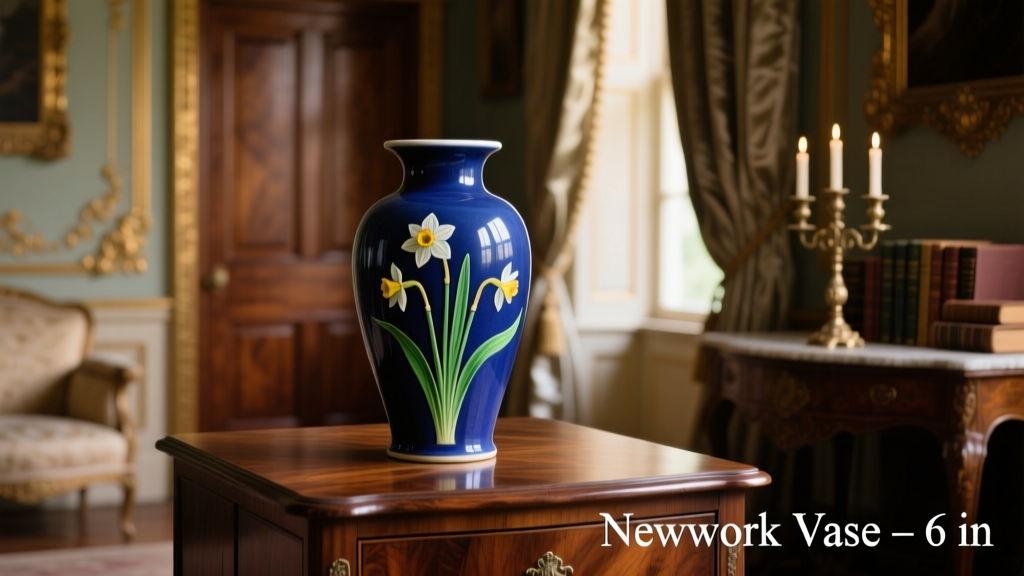
Newcomb College Pottery Vase: Incised Drooping Daffodils, Green Leaves, Blue Matte Glaze — A 6-Inch Masterpiece of American Arts & Crafts

The Cabinet Card of Charles Tripp: A Nineteenth-Century Photograph Documenting Adaptive Mastery and Victorian Curiosity
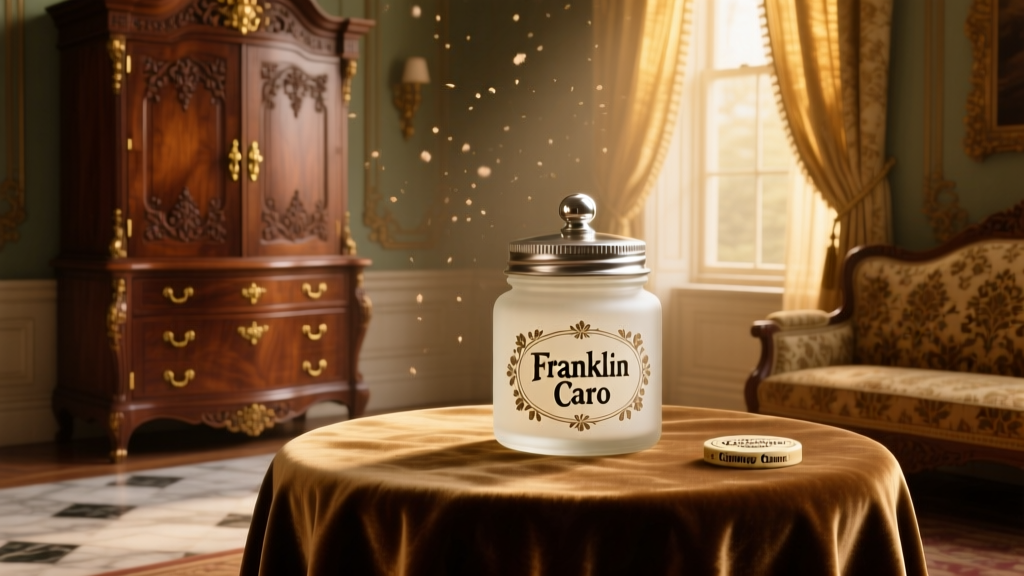
The Franklin Caro Chewing Gum Advertising Jar: A Study in Early 20th-Century Ceramic Branding and Small-Embossed Design
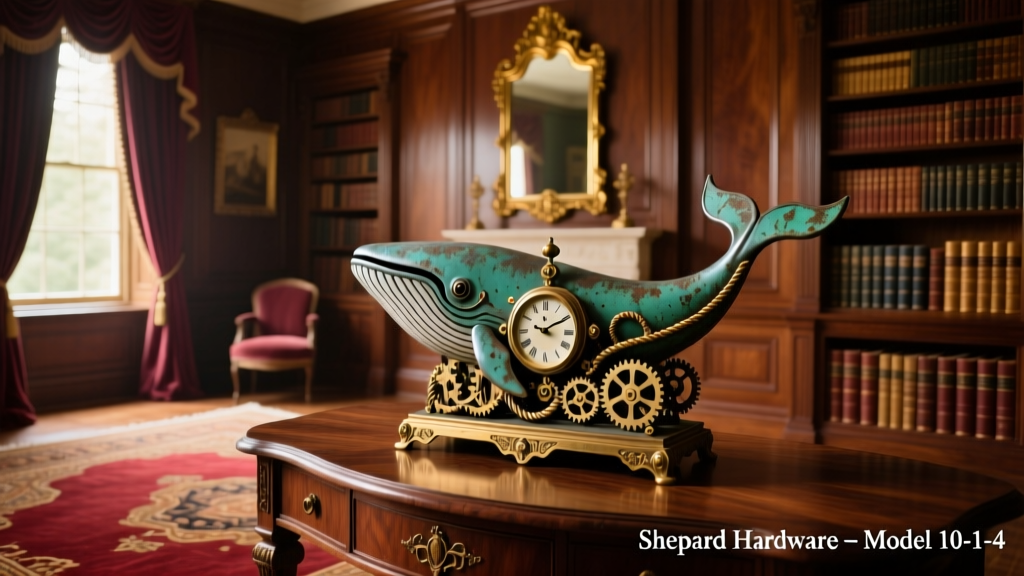
Banks Mechanical Jonah the Whale Cast Iron Shepard Hardware: A 10¼-Inch Masterpiece of Victorian Ingenuity

Auto Sign Pontiac Indian Head Metal Sign (1920s, 58-Inch): History, Identification, Restoration, and Market Value

Disneyana Game Tiddlywinks: Ludwig Von Drake Edition by Whitman Publishing, 1961 — A Collector’s Deep Dive

Linus Van Pelt Vinyl Figure: Authentic 1950s Peanuts Toy Identification, Restoration, and Collectibility