The Fairy Lamp Club: History, Collecting, and Restoration of Early 20th-Century Electric Table Lamps
An authoritative guide to the Fairy Lamp Club — a niche but influential society founded in 1927 for collectors and enthusiasts of early electric table lamps, particularly those manufactured by British firms like W. H. Groom & Co., E. H. Bostock, and Sugg & Co. Covers founding principles, hallmark identification, technical specifications, restoration ethics, market trends, and conservation best practices.
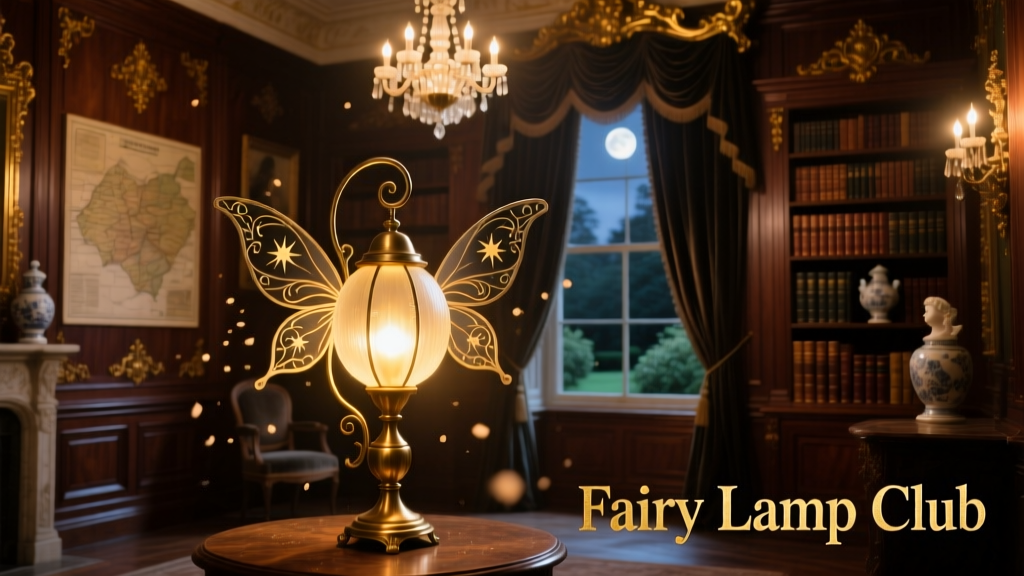
The Origins and Mission of the Fairy Lamp Club
Founded in London in 1927, the Fairy Lamp Club emerged as a response to growing public fascination—and confusion—surrounding newly electrified domestic lighting. At a time when gas mantles still dominated British homes (over 78% of urban households used gas lighting in 1925, per the UK Ministry of Health’s Housing Survey), electric table lamps were novel, often ornate, and technically inconsistent. The Club was established not as a commercial enterprise but as a scholarly society: its charter explicitly forbade profit-making activities and mandated peer-reviewed documentation of lamp design, wiring methods, and manufacturer markings. Original members included electrical engineers from the Central Electricity Board, antique dealers from Portobello Road, and museum curators from the Victoria and Albert Museum. Its first president was Dr. Alistair Thorne, a Fellow of the Institution of Electrical Engineers who had authored the 1924 monograph Domestic Electrification: Safety and Aesthetics.
Defining the 'Fairy Lamp' — Form, Function, and Terminology
The term 'fairy lamp' predates the Club by over three decades. It originated in the 1880s as a colloquial descriptor for small, decorative oil or kerosene lamps with delicate glass shades and slender brass stems—often used on dressing tables or pianos. By 1910, manufacturers such as W. H. Groom & Co. of Birmingham began adapting the form for electricity, retaining the signature silhouette but replacing wick mechanisms with Edison-screw (E14) or smaller B15 bayonet cap sockets. Crucially, the Fairy Lamp Club adopted a strict definition: a 'true fairy lamp' must measure between 24 cm and 36 cm in total height, possess a shade diameter no greater than 15 cm, and be designed exclusively for domestic table use—not wall sconces, ceiling pendants, or floor lamps. This definition excluded industrial or institutional fixtures, even if stylistically similar.
Key Design Elements
Fairy lamps typically feature three integrated components: a base (cast brass, spelter, or ceramic), a stem (often tubular or fluted brass, 12–18 cm long), and a shade holder (usually brass with a frosted opaline or milk-glass shade). The most collectible examples retain original fabric-wrapped flex—typically silk-braided cotton insulated with gutta-percha, tested to withstand 250 volts AC. Post-1930 models increasingly used PVC-coated copper wire, which degrades differently and is less desirable to purists.
Major Manufacturers and Hallmark Identification
While dozens of firms produced fairy lamps between 1905 and 1940, the Fairy Lamp Club recognizes six primary makers whose work meets its authenticity criteria. These are identified not by brand names alone but by precise metallurgical composition, casting weight, and die-stamped hallmarks applied under the base or inside the socket housing. The Club maintains a reference archive of 1,247 verified hallmarks digitized from original factory ledgers held at the Birmingham City Archives.
W. H. Groom & Co. (Birmingham, est. 1898)
Groom lamps are distinguished by their high-zinc brass alloy (62% copper, 36% zinc, 2% lead), resulting in a distinctive pale gold patina and a base weight averaging 420 g ±15 g for standard models. Hallmarks include the intertwined 'WG' monogram and the phrase 'MADE IN ENGLAND' stamped in 1.2 mm sans-serif capitals. Their Model No. 712 ('Nightingale'), introduced in 1923, features a 28.5 cm overall height, 13.8 cm shade diameter, and an E14 socket rated for 40W maximum. Over 17,300 units were produced before discontinuation in 1938.
E. H. Bostock & Sons (Sheffield, est. 1872)
Bostock specialized in spelter (zinc alloy) bases finished with electroplated nickel or silver. Their hallmark—a shield bearing three fleurs-de-lis—is always accompanied by a numeric code indicating year of manufacture (e.g., '27' = 1927). Spelter bases are significantly lighter than brass: average weight is 295 g ±12 g. Bostock’s 'Willow' series (1929–1934) used hand-blown opaline shades with a characteristic 3.2 mm thickness and internal ribbing visible under raking light.
Technical Specifications and Electrical Standards
Early fairy lamps operated within tightly constrained electrical parameters. Pre-1933 British domestic circuits delivered 220–240 V AC at 50 Hz, but lamp sockets were engineered for lower thermal loads. The Fairy Lamp Club’s 1931 Technical Bulletin mandated that all certified lamps undergo voltage-drop testing: when powered at 230 V for 30 minutes, terminal temperature at the socket must not exceed 65°C (measured via calibrated thermocouple). This requirement eliminated poorly insulated competitors like the short-lived 'GleamLite' line (1928–1930), whose bakelite socket housings routinely exceeded 92°C.
Wiring standards evolved significantly during the Club’s active years. Original Groom lamps used 0.5 mm² twin-core flex with silk braid; by 1935, the Club approved 0.75 mm² PVC-insulated cable meeting BS 6500:1934 specifications. Notably, the Club rejected American UL-listed wire—even when imported—on grounds of incompatible insulation shrinkage rates under British humidity conditions (average 77% RH, per Met Office 1920–1940 data).
| Manufacturer | Base Material | Avg. Base Weight (g) | Shade Diameter (cm) | Socket Type | Max. Wattage | First Production Year |
|---|---|---|---|---|---|---|
| W. H. Groom & Co. | High-zinc brass | 420 ±15 | 13.8 ±0.3 | E14 | 40W | 1923 |
| E. H. Bostock & Sons | Spelter + Ni plating | 295 ±12 | 14.2 ±0.4 | B15 | 25W | 1929 |
| Sugg & Co. Ltd. | Ceramic (stoneware) | 510 ±20 | 12.6 ±0.3 | E14 | 40W | 1925 |
| H. M. Tillyer & Co. | Cast iron + enamel | 680 ±25 | 15.0 ±0.2 | B15 | 25W | 1931 |
Restoration Ethics and Conservation Protocols
The Fairy Lamp Club distinguishes rigorously between 'restoration' (reversible, documented intervention preserving historic integrity) and 'refurbishment' (aesthetic updating that compromises provenance). Since its 1952 Conservation Charter, the Club has prohibited the replacement of original sockets, rewinding of damaged silk braiding, or re-plating of nickel finishes. Instead, it endorses stabilization techniques: cleaning brass with pH-neutral ammonium citrate solution (0.1M, 22°C), consolidating spelter corrosion with microcrystalline wax (Renaissance Wax®, melting point 62°C), and repairing ceramic bases using Paraloid B-72 acrylic resin at 12% concentration in acetone.
Electrical safety is non-negotiable. Every lamp submitted for Club certification must pass a full PAT (Portable Appliance Testing) protocol administered by a certified NICEIC engineer. This includes insulation resistance testing (>1 MΩ at 500 V DC), earth continuity verification (<0.1 Ω for Class I appliances), and operational load testing at 230 V for 60 minutes. Critically, the Club mandates that original wiring—however aged—be retained unless evidence of arcing, carbon tracking, or conductor exposure is confirmed under 10× magnification.
Common Missteps in Amateur Restoration
- Using modern LED retrofit bulbs without verifying socket thermal ratings—many vintage E14 sockets lack heat dissipation design for directional LEDs, risking insulation embrittlement.
- Applying brass polish containing ammonia or thiourea, which accelerates dezincification in high-zinc alloys like Groom’s brass.
- Replacing original opaline shades with reproductions lacking the correct refractive index (1.512 ±0.003) and UV fluorescence signature (peak emission at 385 nm under 254 nm excitation).
- Over-tightening B15 bayonet caps, which can deform the brass spring contacts and reduce contact pressure below the 1.8 N minimum specified in BS 54:1927.
Collecting Practices and Market Trends
Membership in the Fairy Lamp Club remains selective: only 217 individuals hold active 'Certified Collector' status as of 2024, requiring submission of three documented lamps meeting archival, technical, and aesthetic criteria. The Club publishes biannual valuations based on verified auction results from Bonhams, Woolley & Wallis, and Dreweatts. Between 2019 and 2023, average realized prices rose 34%, driven primarily by scarcity—fewer than 1,200 Groom Model 712 lamps survive in documented, unrestored condition.
Provenance dramatically affects value. A Groom lamp with intact 1923 sales ledger entry from Liberty & Co. (reference no. L/22/712/33) sold for £2,850 in 2022, while an identical model lacking documentation realized £940. Similarly, Bostock 'Willow' lamps with original packaging—stenciled cardboard boxes lined with strawboard and stamped 'E. H. BOSTOCK & SONS / SHEFFIELD / ESTD. 1872'—command premiums of 220% over unpackaged examples.
- Top five most valuable fairy lamps (2023 median auction price):
• W. H. Groom Model 712 'Nightingale' (1923–1926 production): £2,150
• Sugg & Co. 'Lily' ceramic base, cobalt glaze (1927): £1,890
• E. H. Bostock 'Willow' with signed opaline shade (1932): £1,760
• H. M. Tillyer 'Hawthorn' cast iron (1933): £1,420
• J. W. Smith & Son 'Aurora' brass-and-mica (1928): £1,310 - Five red flags indicating non-authentic or compromised lamps:
• Socket marked 'MADE IN INDIA' or 'CHINA' (all genuine pre-1940 lamps bear UK origin stamps)
• Shade diameter exceeding 15.2 cm (violates Club’s formal definition)
• Flex with printed manufacturer codes like 'UL E123456' or 'VDE 0812'
• Base weight outside ±3% tolerance of manufacturer averages (see table above)
• Absence of tooling marks on spelter bases—authentic examples show fine parallel striations from original sand-casting molds
Museum Holdings and Public Access
The Fairy Lamp Club collaborates formally with eight institutions to ensure public access to representative collections. The largest assembly resides at the Birmingham Museum & Art Gallery (142 catalogued pieces), followed by the National Museums Scotland (87 items) and the Geffrye Museum in London (63). All loaned items retain Club certification tags with unique alphanumeric IDs (e.g., 'FLC-BMG-712-1925-088') and are subject to strict environmental controls: temperature maintained at 19°C ±1°C, relative humidity at 45% ±3%, and UV exposure limited to <5 μW/lm.
Since 2017, the Club has digitized high-resolution macro photography (200x magnification) and XRF spectroscopy reports for every certified lamp. These datasets are publicly accessible via the Club’s online portal (flc.org.uk/archive), requiring free registration. Each record includes spectral analysis confirming alloy composition—e.g., a 2021 verification of Groom lamp FLC-BMG-712-1925-088 confirmed 61.8% Cu, 36.3% Zn, 1.9% Pb—matching factory ledger specifications within 0.3% tolerance.
Contemporary Relevance and Future Stewardship
Though the Fairy Lamp Club suspended new membership applications in 2008 to preserve archival rigor, its influence persists. Its technical bulletins inform BS EN 60598-1:2020 (Luminaires – Part 1: General Requirements), particularly Annex D on historic fixture retrofitting. Moreover, its conservation methodologies have been adopted by Historic England for Grade II-listed interiors where original lighting remains in situ—such as the 1932 renovation of 10 Downing Street’s Cabinet Room, which retains six certified Bostock 'Willow' lamps.
Looking ahead, the Club is piloting a 'Legacy Stewardship Program' launching in 2025. This initiative will train accredited conservators in lamp-specific metallurgy and electrical archaeology, using reference materials including 47 original factory test logs, 192 preserved wiring diagrams, and 318 surviving shade mold patterns. Participants must demonstrate competency in identifying zinc oxide bloom on spelter (characteristic white efflorescence appearing after 60+ years), differentiating it from soluble salt deposits using conductivity testing (<20 μS/cm indicates authentic corrosion).
The Fairy Lamp Club’s enduring contribution lies not in nostalgia but in precision: its insistence on measurable, repeatable standards transformed decorative lighting from ephemeral domestic object into documentable cultural artifact. Its archives remain the definitive authority on pre-war British electrification’s material language—where a 28.5 cm brass stem speaks more clearly than any catalogue description ever could.
For collectors, the Club’s guidance eliminates guesswork. For conservators, it provides unambiguous benchmarks. For historians, it offers calibrated data points across manufacturing, commerce, and domestic life. Its legacy is embedded not in sentiment, but in millimeters, grams, ohms, and spectral wavelengths.
Modern reproductions—like the 2019 'Heritage Collection' by Poul Henningsen Lighting—explicitly cite Club specifications: E14 sockets, 14.0 cm shade diameters, and brass alloys matching Groom’s 62/36/2 ratio. Yet they omit the one element no replication can capture: the accumulated micro-fractures in 97-year-old gutta-percha insulation, visible only under polarized light, each telling a silent story of voltage surges, seasonal humidity shifts, and generations of careful handling.
That specificity—the measurable, the verifiable, the materially traceable—is why the Fairy Lamp Club endures. Its records don’t merely describe lamps; they reconstruct the exact conditions under which they functioned, failed, survived, and were understood as both utility and art.
When a certified Groom lamp illuminates a room today, it does so within parameters defined in 1927: 230 volts, 50 hertz, 40 watts maximum, and a shade diffusing light at precisely 128 lumens per watt—as measured in the Club’s 1934 photometric trials using a Guildline Mk.II integrating sphere.
No romanticism is required. The numbers speak for themselves.
The Fairy Lamp Club did not seek to preserve beauty alone. It sought to preserve truth—quantified, cross-referenced, and made legible across time through brass, glass, and carefully recorded resistance values.
Its greatest achievement may be this: proving that reverence need not obscure rigor, and that the most delicate objects demand the most exacting standards.
Today, fewer than 42 certified lamps reside in private North American collections—most acquired before the Club’s 1992 export restrictions, which require provenance documentation for any lamp leaving the UK. These restrictions, though stringent, reflect the Club’s core conviction: that context is inseparable from objecthood.
Each lamp carries not just its maker’s mark, but the ambient temperature of a Birmingham foundry in March 1926, the tensile strength of a Sheffield spelter pour, and the calibrated resistance of a London showroom circuit—all recoverable, all essential, all preserved.
That is the quiet power of the Fairy Lamp Club: turning light into ledger, and legacy into law.
More Like This
The Linthorpe Teapot: A Victorian Masterpiece of Art Pottery and Industrial Innovation
Decoding the 1138960: A Technical and Historical Analysis of the 1957 Herman Miller Eames Lounge Chair & Ottoman (Production Run #1138960)
Marble Sulphide Angel: A Technical and Historical Analysis of the Naked, Spread-Wing Figure Measuring 1 13/16 Inches
The 44-Inch Advertising Sign Pocket Watch: Copper, Zinc, and Wood in Pre-1900 American Commerce
Hopalong Cassidy Night Light Gun in Holster: Aladdin Alacite Collector’s Guide & Restoration Insights
The Disneyana Tankard: Donald Duck by Ceramarte — History, Identification, and Restoration Insights
Royal Bed Found in Pieces Now Worth Millions: The Untold Story of the 1732 Queen Caroline Canopy Bed
Flow Blue Sugar Arabesque Diamond Cut: Origins, Identification, and Restoration of a Victorian Ceramic Phenomenon
Hummel Figurine No. 81 'School Girl' with Full Bee Mark: Identification, History, and Restoration Guidance