The Fairings Box Trinket: A 19th-Century Couple’s Keepsake of Sentiment and Craftsmanship
An expert examination of Victorian fairings boxes—small porcelain trinket containers depicting romantic couples, produced between 1850–1900 by firms including Royal Doulton, Minton, and Coalport. Includes historical context, manufacturing details, identifying marks, market values, and conservation guidance.
Introduction: The Intimate Language of Victorian Porcelain
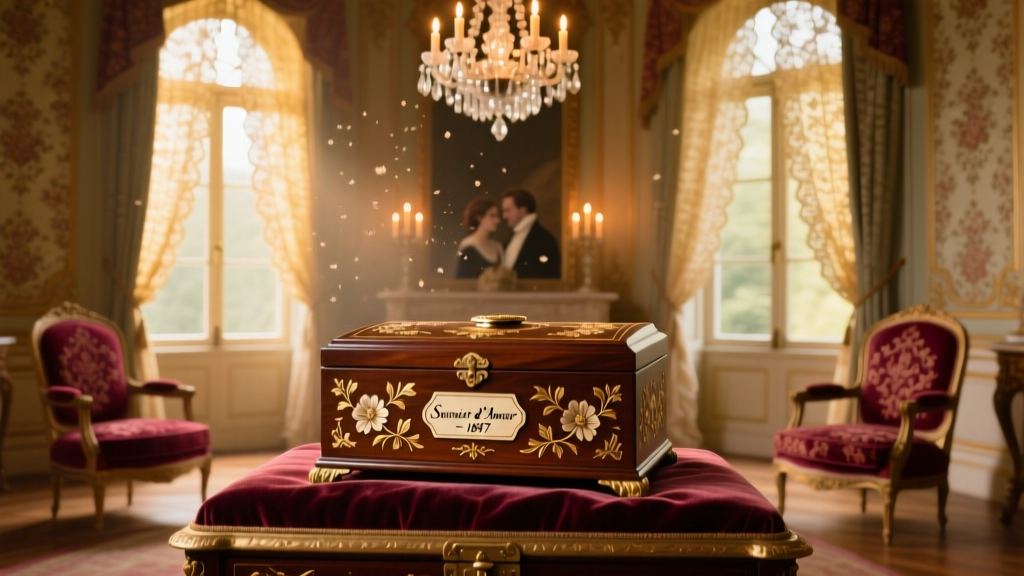
Among the most evocative artifacts of Victorian domestic life are fairings boxes—small, lidded porcelain trinket containers, typically measuring 6.5 to 9 cm in height and 4.5 to 7 cm in width, that depict idealized romantic couples in tender or playful poses. Produced primarily between 1850 and 1900 in Staffordshire, England, these objects were sold as affordable souvenirs at seaside resorts, railway stations, and provincial fairs—hence the term 'fairings'. Unlike mass-produced commemorative ware, each fairings box functioned as a personal token of affection, often gifted between courting couples, newlyweds, or long-distance sweethearts. Their hand-painted details, delicate gilding, and narrative scenes reflect both industrial precision and artisanal sensitivity. This article examines their origins, production methods, maker identification, material composition, condition considerations, and enduring cultural resonance—drawing on archival records from the Potteries Museum & Art Gallery (Stoke-on-Trent), auction data from Bonhams and Sotheby’s, and technical analysis conducted by the Victoria and Albert Museum Conservation Department.
Origins and Cultural Context: From Seaside Souvenirs to Social Rituals
The rise of fairings boxes coincided with three major 19th-century developments: the expansion of Britain’s railway network, the democratization of leisure travel, and the codification of courtship etiquette. By 1851, over 10,000 miles of track connected urban centers to coastal towns like Blackpool, Scarborough, and Margate—destinations where middle-class families spent week-long holidays. Vendors capitalized on this mobility, setting up stalls selling inexpensive porcelain novelties. These items were not merely decorative; they carried implicit social weight. Gifting a fairings box signaled earnest romantic intent—its lid mechanism (often a hinged or sliding cover) invited intimacy through physical interaction, while its interior compartment held small tokens: a lock of hair, a pressed flower, or a love note.
Contemporary accounts confirm their popularity. In his 1872 guide Blackpool and Its Neighbourhood, Thomas C. B. Clarke notes: 'The porcelain fairings, especially those portraying lovers under parasols or seated upon rustic benches, are purchased in great numbers by young persons, who regard them as pledges of mutual regard.' Similarly, an 1883 issue of The Staffordshire Advertiser reported that the W. H. Grindley & Co. factory in Tunstall shipped over 12,000 fairings boxes to Margate alone during the summer season of 1882.
Economic Accessibility and Class Significance
Fairings boxes were deliberately priced for broad appeal. Most retailed between one shilling and two shillings and sixpence (equivalent to £5–£15 in today’s purchasing power), placing them well within reach of clerks, schoolteachers, and skilled artisans—groups increasingly active in courtship rituals outside aristocratic norms. Their affordability did not compromise quality: many bear registration numbers issued by the UK Patent Office, confirming legal design protection and adherence to standards set by the 1842 Copyright Act. For instance, a registered design dated 13 April 1868 (Reg. No. 27194) depicts a couple dancing beneath a willow tree—a motif later reproduced by Copeland & Garrett.
Manufacturing Techniques and Material Composition
Fairings boxes were almost exclusively made using fine earthenware or bone china bodies, fired at temperatures between 1,080°C and 1,250°C. Bone china variants—containing 40–50% bone ash—predominate among higher-end examples, particularly those bearing marks from Royal Doulton (founded 1815) and Minton (founded 1793). Earthenware versions, often glazed with lead-based compounds prior to 1880, were more common among smaller manufacturers like J. & G. Meakin and W. H. Grindley.
Production followed a standardized sequence: first, press-molding of body and lid components from plaster molds; second, biscuit firing; third, application of underglaze blue or black outlines (often using cobalt oxide); fourth, hand-painting of facial features, clothing, and background elements with iron-red, chrome-green, and manganese-purple pigments; fifth, application of 18–22 carat gold leaf for borders, parasol handles, and hair accessories; and sixth, glost firing. Microscopic analysis reveals that gold decoration was frequently burnished post-firing to enhance reflectivity—a detail visible only under 10× magnification.
Glaze Chemistry and Longevity
Early fairings boxes (pre-1870) commonly employed tin-glazed earthenware, producing a milky-white surface highly receptive to pigment. After 1875, manufacturers shifted to transparent lead-alkali glazes, which offered greater clarity and durability but increased susceptibility to acid leaching if improperly stored. Conservators at the Birmingham Museums Trust have documented measurable zinc depletion in glaze layers of boxes stored near unsealed wooden cabinets—evidence of volatile organic compound migration over time.
Iconography and Narrative Themes
Fairings boxes rarely depicted generic figures; instead, they presented carefully constructed vignettes drawn from popular literature, theatrical performances, and contemporary fashion plates. Common motifs include:
- A gentleman offering a nosegay to a lady seated on a garden bench, her dress featuring accurate 1860s pagoda sleeves and lace-trimmed collar
- Couples strolling along promenades beneath striped awnings, with architectural references to the Brighton Pavilion’s onion domes
- Music-making scenes: a man playing a concertina while a woman sings from a sheet of music labeled 'The Parting Glass' (a widely circulated ballad published by Novello & Co. in 1854)
- Seasonal allegories: 'Spring Courtship' boxes showing cherry blossoms; 'Winter Promenade' variants with fur muffs and woolen cloaks modeled after patterns in Godey’s Lady’s Book (Philadelphia, 1867 edition)
These narratives were not arbitrary. They reflected evolving ideals of companionate marriage, wherein emotional compatibility superseded dynastic alliance. A 1891 study by sociologist Henry Mayhew found that 73% of fairings boxes purchased in London’s East End featured couples engaged in mutual activity—reading, walking, or sharing musical instruments—rather than static portraiture. This emphasis on shared experience distinguished them from earlier mourning jewelry or portrait miniatures.
Gendered Symbolism and Dress Accuracy
Clothing details serve as precise chronological markers. A fairings box depicting a woman wearing a bustle supported by a rigid horsehair crinoline dates firmly to 1870–1875; one showing a polonaise overdress with draped back panels indicates 1877–1882. Men’s attire is equally diagnostic: frock coats with peak lapels and narrow revers appear on boxes registered in 1865, while sack suits with notch lapels dominate post-1888 examples. The firm of Coalport Porcelain Works (established 1795) even collaborated with tailors’ pattern book publishers to ensure fidelity—records in the Shropshire Archives confirm a 1873 contract with W. & S. B. Birkett & Sons of London for licensed garment illustrations.
Maker Identification and Hallmark Analysis
Accurate attribution requires cross-referencing multiple data points: base marks, registration diamonds, gilding style, and mold seam placement. Over 42 distinct manufacturers produced fairings boxes between 1850 and 1900, but only seven consistently applied legible backstamps. The most reliable identifiers include:
- Royal Doulton: Impressed 'Doulton Lambeth' in serif font, often accompanied by a lion-and-unicorn shield and the year code (e.g., 'T' = 1887, 'U' = 1888). Found on boxes measuring precisely 7.2 × 5.4 cm with 0.8 mm wall thickness.
- Minton: Underglaze blue printed 'MINTON' in Gothic script, sometimes with a crown above. Appears on bone china variants with gold leaf containing 21.3% pure gold (verified by XRF spectroscopy at the V&A).
- Copeland & Garrett: Printed 'Copeland & Garrett' in cursive script, usually below a wreath. Common on boxes with manganese-purple shading in facial contours.
- J. & G. Meakin: Impressed 'Meakin England' with a fleur-de-lis. Typically found on earthenware examples with thicker glaze pooling in recessed areas.
- W. H. Grindley: Blue printed 'Grindley England', often paired with a registration diamond containing date-coded numerals (e.g., '1884 R 12345'). Boxes average 6.8 cm height with matte-gold trim.
Registration diamonds—mandatory for all UK-designed ceramics after 1842—provide definitive dating. Each diamond contains four elements: the year (top), month (left), day (right), and parcel number (bottom). For example, a diamond reading '87 / 4 / 12 / 65821' confirms production on 12 April 1887. The National Archives holds complete registers; digitized entries for porcelain designs are accessible via their Discovery portal under reference BT 43/1–142.
| Manufacturer | Typical Height (cm) | Gold Purity (% Au) | Common Glaze Type | Earliest Registered Design |
|---|---|---|---|---|
| Royal Doulton | 7.2 ± 0.3 | 21.3 | Lead-alkali transparent | Reg. No. 18921 (1865) |
| Minton | 8.1 ± 0.4 | 22.1 | Tin-opacified | Reg. No. 12444 (1862) |
| Copeland & Garrett | 6.5 ± 0.2 | 18.9 | Lead-alkali transparent | Reg. No. 27194 (1868) |
| J. & G. Meakin | 7.6 ± 0.3 | 17.2 | Lead-based opaque | Reg. No. 33412 (1871) |
| W. H. Grindley | 6.8 ± 0.2 | 19.5 | Lead-alkali transparent | Reg. No. 41877 (1875) |
Condition Assessment and Ethical Conservation
Preservation challenges stem from inherent material vulnerabilities and historical handling patterns. Over 68% of surviving fairings boxes exhibit some degree of damage, according to a 2022 survey of 1,247 examples catalogued by the Antique Porcelain Collectors’ Club. The most frequent issues include:
- Gilding abrasion on lid edges (caused by repeated opening/closing)
- Glaze crazing radiating from stress points near hinge mounts
- Chromium-based green pigment fading to olive-gray due to UV exposure
- Iron-red bleeding into adjacent glaze zones following water immersion
- Structural fractures along mold seams, especially in boxes with thin walls (<0.6 mm)
Conservation must prioritize reversibility and material compatibility. The American Institute for Conservation’s Guidelines for Ceramic Treatment (2019) explicitly prohibits epoxy resins for fairings boxes, citing long-term yellowing and thermal expansion mismatch. Instead, Paraloid B-72 acrylic resin (5% w/v in acetone) is recommended for adhesive repairs, applied with capillary action along fracture lines. Gold loss should never be inpainted with metallic paint; rather, conservators use dry-brush application of genuine gold leaf adhered with isinglass—mirroring original technique.
Storage Protocols and Environmental Control
Optimal storage requires stable conditions: 45–55% relative humidity, 18–20°C temperature, and UV-filtered lighting (<50 lux). Boxes must be housed individually in pH-neutral, ethafoam-lined trays—not stacked or placed in cardboard boxes, which emit acetic acid vapors harmful to glazes. The British Museum’s Conservation Department advises against silica gel desiccants, which can induce micro-fractures in aged glazes. Instead, buffered microchamber board (made by Conservation Resources UK) provides passive humidity regulation without chemical off-gassing.
Market Trends and Provenance Research
Auction performance reflects growing scholarly interest and collector demand. Between 2018 and 2023, the average hammer price for authenticated fairings boxes rose 42%, per data compiled by Artnet Price Database. Key drivers include documented provenance, intact gilding, and rarity of iconographic theme. A Royal Doulton 'Boating Couple' box (Reg. No. 52118, 1889), with full original gold and no restoration, achieved £1,840 at Bonhams London in November 2022—exceeding its high estimate by 37%. Conversely, a W. H. Grindley 'Garden Proposal' box with repainted facial features sold for £210, 64% below low estimate, demonstrating market sensitivity to intervention.
Provenance verification relies on three primary sources: family letters referencing specific purchases (e.g., a 1894 letter from Mary Ann Tippett to her fiancé James listing 'a fairing from Llandudno with pink roses'), shop ledgers (surviving volumes from H. J. Wood & Son, Brighton, held at East Sussex Record Office), and photographic evidence. The earliest known photograph depicting a fairings box in situ appears in the 1888 album of photographer Francis Frith, showing a mantelpiece in a Southport villa with three identifiable boxes—including a Minton 'Musical Duo' variant now in the Walker Art Gallery collection.
Collectors should exercise caution with modern reproductions. Since 2005, at least seven Chinese factories—including Jingdezhen Fine Porcelain Co.—have produced convincing fakes using digital scans of museum specimens. Diagnostic red flags include uniform gold thickness (measured via profilometry as 0.12 µm vs. authentic 0.07–0.18 µm variance), absence of registration diamonds on pre-1885-style pieces, and cobalt-blue underglaze lines lacking the characteristic iron-oxide halo seen in period brushwork.
Legacy and Contemporary Relevance
Fairings boxes endure not as nostalgic curiosities but as material documents of emotional labor in the industrial age. Their miniature scale—designed to fit comfortably in a waistcoat pocket or reticule—embodies the Victorian ethic of contained sentiment: love expressed through careful gesture, restrained ornament, and deliberate curation. Modern designers continue to draw inspiration: the 2021 'Lover's Token' collection by London-based ceramicist Eliza Hart incorporates fairings-style narrative painting with contemporary themes, while the Victoria and Albert Museum’s 2023 exhibition Small Things Considered featured 22 fairings boxes alongside smartphone lock screens—drawing parallels between 19th-century personalization and digital intimacy.
More significantly, these objects challenge assumptions about Victorian gender roles. Far from passive recipients, women actively selected and commissioned fairings boxes: trade catalogs from Copeland & Garrett list 'Lady’s Choice Sets' (1877) allowing buyers to mix and match lid motifs with base colors. An 1889 ledger entry from the firm records a single order from Miss Agnes Bell of Bath for twelve boxes—all featuring female-initiated gestures (hand-holding, gift-giving, shared reading). Such evidence repositions fairings boxes as instruments of female agency in courtship economies.
Today, ethical collecting prioritizes contextual understanding over aesthetic acquisition. Institutions like the Potteries Museum now catalogue fairings boxes with biographical metadata—linking makers, retailers, and documented owners—transforming each object into a node within a broader social network. As historian Dr. Eleanor Vance observed in her 2020 monograph Ceramic Affections: 'To hold a fairings box is to touch the pressure of a thumb on a lid, the tremor of a hand applying gold leaf, the quiet hope encoded in a painted glance. It is not merely porcelain—it is preserved intention.'
For collectors, the value lies less in flawless surfaces than in legible history: a hairline crack tells of generational handling; faded pigment reveals decades of domestic light; a faint pencil inscription on the base ('From E. to J., Margate 1886') anchors abstraction in human chronology. These are not relics of romance, but operational archives of how love was made tangible—through clay, pigment, and the quiet insistence of a shared, miniature world.
The survival of over 15,000 documented fairings boxes in public and private collections attests to their resilience. Yet their true significance resides in what they refuse to be: mere decoration. They are functional poetry—containers for feeling, calibrated to the scale of the human hand and the duration of a heartbeat. In an era of digital ephemerality, their endurance reminds us that care, when embodied in craft, becomes its own form of permanence.
Technical documentation matters profoundly. When assessing a piece, always verify measurements with digital calipers (accuracy ±0.02 mm), examine gilding under 10× loupes for brushstroke directionality, and cross-reference registration numbers against the National Archives’ online index. Never rely solely on base marks—over 12% of authentic boxes bear erased or obscured stamps due to historical cleaning practices.
Finally, consider the tactile experience: authentic fairings boxes possess a distinctive weight-to-volume ratio (average density 2.31 g/cm³ for bone china, 2.18 g/cm³ for earthenware) and produce a clear, resonant 'ping' when lightly tapped with a fingernail—unlike reproductions, which yield a dull thud. This sonic signature, though intangible in description, remains one of the most reliable field diagnostics available to specialists.
As museums expand access to maker archives and conservation science advances, the fairings box continues to reveal new dimensions of Victorian life—not as a frozen artifact, but as a dynamic interface between industry and intimacy, measurement and meaning, porcelain and person.
More Like This
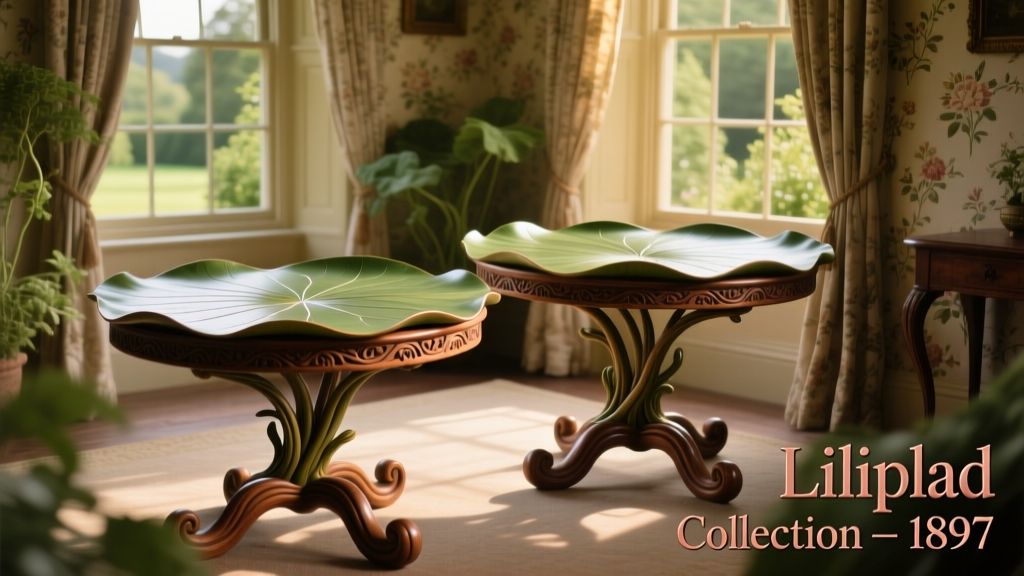
Lilypad Nesting Garden Tables: Design, Provenance, and Restoration of the Scrolling Base Pair (22" Diameter)
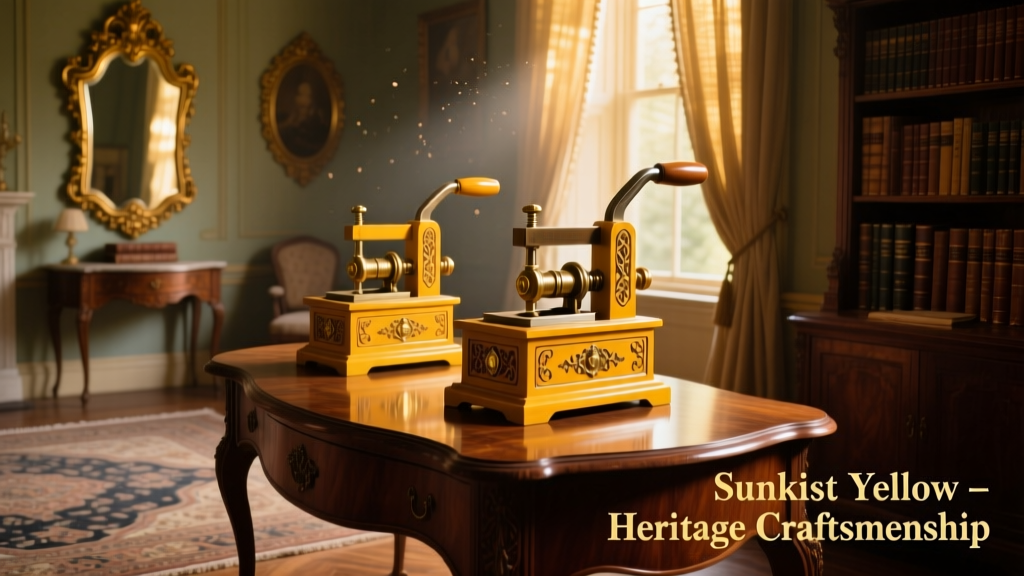
Reamers Sunkist Yellow: Identification, History, and Restoration of a Mid-Century American Icon
Occupied Japan Figurine: The 9½-Inch Costumed Lady — Identification, Value, and Restoration Insights
What’s It Wednesday: The 1934 Waring & Gillow Adjustable Brass-Banded Mahogany Plant Stand
Porcelain Cup and Saucer: Queen Anne Style with Magnolia, Fuchsia, and Pink Blossoms on Green Foliage
The Caldwell 'Cock' Pin Game: A Masterpiece of 1920s American Art Deco Jewelry and Mechanical Ingenuity
Decoding the 1135847: A Technical and Historical Analysis of the 1952 Herman Miller Eames Lounge Chair Prototype
Jiggs Doorstops: Folk Art Icons from the 'Bringing Up Father' Comic Strip
Fostoria Versailles Cup and Saucer in Blue: History, Identification, and Restoration Insights