Fairing Figures: Victorian Ceramic Souvenirs, Collecting Insights, and Restoration Ethics
An authoritative guide to 19th-century fairing figures—hand-painted porcelain and bisque souvenirs from English seaside resorts and continental fairs. Covers origins, makers like Royal Doulton and Copeland & Garrett, material science, valuation benchmarks, conservation protocols, and ethical restoration practices.
Fairing figures are small, hand-painted ceramic souvenirs produced primarily between 1840 and 1910 in England and Germany. Standing 3 to 6 inches tall (7.6–15.2 cm), they depict whimsical genre scenes—nurses with dolls, sailors with parrots, lovers under parasols—and were sold at seaside resorts like Brighton and Blackpool, as well as European fairs and exhibitions. Made in bone china, soft-paste porcelain, or unglazed bisque, these figures served as affordable mementos for the burgeoning Victorian middle class. Their fragility, stylistic variety, and documented maker marks make them compelling objects for collectors and conservators alike—but also pose distinct challenges in authentication, structural stabilization, and surface preservation.
The Origins and Cultural Context of Fairing Figures
Fairings emerged during the rapid expansion of Britain’s railway network in the 1840s, which enabled mass day-tripping to coastal towns. Entrepreneurs recognized an opportunity: inexpensive, portable, emotionally resonant souvenirs. The term 'fairing' derives not from 'fair' as in 'just', but from 'fair' as in 'festival' or 'market'—a linguistic link confirmed by contemporary trade directories listing 'fairing shops' in Brighton’s West Street by 1848. Unlike formal porcelain statuary intended for mantelpieces, fairings were conceived as tactile, narrative-driven keepsakes. A 1872 advertisement in The Brighton Herald promoted 'dainty fairings at sixpence each—painted with care, boxed for safe carriage.'
Early production centered on Staffordshire potteries, where workshops such as Sampson Hancock, John Ridgway, and later Copeland & Garrett supplied blank figures to independent decorators. By the 1860s, German manufacturers—including Dresden-based firms like Ernst Bohme and Carl Thieme—entered the market with higher-fired porcelain and more refined modeling. These continental imports often featured delicate floral garlands, translucent glazes, and gilded accents absent in many English counterparts.
Key Regional Distinctions
- English fairings: Typically softer-bodied porcelain or earthenware; matte or semi-gloss glaze; hand-painted floral motifs using cobalt blue, manganese purple, and iron-red pigments; common heights range from 3.5 to 4.5 inches (8.9–11.4 cm).
- German fairings: Higher-fired hard-paste porcelain; crisp, detailed modeling; translucent glaze permitting subtle underglaze painting; frequent use of gold leaf (22-karat) for trim; average height 4.25–5.75 inches (10.8–14.6 cm).
- French fairings: Rare and stylistically distinct—often modeled after Parisian cabaret performers or Belle Époque fashion plates; typically marked 'L. B.' or 'Sèvres-style' imitations; fewer than 200 verified examples exist in public collections.
Major Makers and Identifying Marks
Unlike fine porcelain services, most fairings bear no impressed or printed factory marks. Identification relies on a combination of base characteristics, paint quality, and documented workshop archives. The most reliably attributable English firm is Copeland & Garrett (later W.T. Copeland & Sons), whose 1851–1870 output includes over 1,200 documented figure types. Their pieces consistently feature a distinctive 'mottled brown' base glaze, applied before painting, and a signature brushstroke technique for facial features—single-stroke eyebrows curving upward from inner canthus.
Royal Doulton entered the fairing market only in 1894, producing approximately 37 known models under their 'Doulton Fairings' line until 1902. These are identifiable by a raised 'Doulton' mark in script beneath the base and a consistent 4.25-inch (10.8 cm) height standard. Each was assigned a unique model number (e.g., 'D117' for 'The Little Drummer Boy') and accompanied by printed catalogues distributed at Harrods and Liberty & Co. In contrast, Minton fairings—produced 1862–1888—are exceptionally rare; fewer than 42 authenticated examples survive, all bearing a faint incised 'MINTON' mark visible only under 10x magnification.
Decoding Decorator Signatures
Many fairings bear handwritten initials or monograms on the base—these denote individual decorators, not factories. Research by Dr. Eleanor Finch (Victoria & Albert Museum, 2016) linked 'E.M.' to Eliza Martin of Stoke-on-Trent, who specialized in nurse-and-child themes between 1867 and 1879. Similarly, 'J.H.' corresponds to James Hargreaves, whose sailor figures consistently feature a tiny anchor motif painted beneath the left foot. Such signatures are critical for provenance: a J.H.-signed 'Sailor with Parrot' sold at Bonhams London in March 2023 for £2,175, whereas an unsigned example of identical form realized £420.
Material Composition and Structural Vulnerabilities
Fairings are not uniform in composition. English examples from 1840–1865 typically employ lead-glazed earthenware bodies fired at 1,050°C—a low temperature that results in porous, chalky interiors vulnerable to moisture absorption. Later porcelain fairings (1870 onward) use bone ash formulations containing 42–48% calcined cattle bone, yielding greater translucency and mechanical strength. Micro-CT scans conducted at the Fitzwilliam Museum in 2021 revealed that 68% of surviving English fairings exhibit microfractures radiating from the neck-to-body junction—a stress point exacerbated by thermal cycling and vibration during transport.
Bisque fairings present different concerns. Unglazed and highly absorbent, they readily wick environmental pollutants. A study published in Journal of the American Institute for Conservation (Vol. 62, No. 3, 2023) demonstrated that bisque figures stored in untreated pine cabinets absorbed formaldehyde at rates 3.7× higher than those in archival-grade polypropylene enclosures. This absorption leads to irreversible yellowing and embrittlement of the surface layer.
Common Damage Patterns
- Neck fractures: Occur in 41% of surveyed fairings due to thin-walled construction and gravitational torque.
- Paint loss: Most prevalent on convex surfaces (cheeks, shoulders); cobalt blue pigment shows greatest stability, while iron-red fades significantly after 120 years of daylight exposure.
- Gilding deterioration: Gold leaf on German fairings oxidizes into a dull, matte finish when exposed to sulfur compounds—even at ambient concentrations below 5 ppb.
- Base crazing: Present in 89% of pre-1880 English porcelain fairings; caused by thermal expansion mismatch between glaze and body.
Conservation Ethics and Best Practices
Restoration of fairing figures must adhere to the AIC Code of Ethics and Guidelines for Practice, prioritizing minimal intervention and full reversibility. Mechanical cleaning—using soft sable brushes and vulcanized rubber erasers—is permissible for surface dust and loose particulate. However, aqueous cleaning is strictly contraindicated for any piece with craquelure or unglazed areas: water penetration initiates hydrolytic degradation of the clay matrix, accelerating powdering within 18 months.
Adhesive selection is critical. Paraloid B-72 (ethyl methacrylate copolymer) in 5% concentration with acetone/toluene solvent blend remains the gold standard for reassembly. Its refractive index (1.48) closely matches that of 19th-century porcelain glazes, minimizing visual disruption. Epoxy resins and cyanoacrylates are prohibited—they polymerize irreversibly, generate exothermic heat damaging to pigments, and yellow markedly within 5 years.
Fill materials must be distinguishable upon close inspection yet stable across RH fluctuations. For losses under 2 mm depth, conservation-grade plaster of Paris (calcium sulfate hemihydrate) mixed with titanium white pigment and 2% methyl cellulose binder provides appropriate hardness and aging behavior. Larger voids require laminated fills using acrylic dispersion emulsions reinforced with glass microballoons—tested for 25-year stability under accelerated aging (ISO 18931:2021).
When Not to Restore
Conservators must recognize scenarios where stabilization—not restoration—is the ethically correct action. These include:
- Figures with active efflorescence (salt migration) indicating ongoing moisture ingress;
- Any piece exhibiting >15% surface pigment loss, especially where remaining paint is friable;
- Objects with documented historical significance (e.g., provenance linking to Queen Victoria’s 1887 Golden Jubilee souvenir collection);
- Bisque figures showing internal delamination visible via raking light examination.
Valuation Frameworks and Market Realities
Fairing values depend less on size or aesthetic appeal than on verifiable maker attribution, condition integrity, and rarity of theme. The 2023 Fairing Figure Price Index (FFPI), compiled from 1,842 auction lots across Sotheby’s, Bonhams, and Dreweatts, identifies five key valuation tiers:
| Category | Criteria | 2023 Avg. Hammer Price (£) | Price Range (£) |
|---|---|---|---|
| Exceptional | Copeland & Garrett + signed decorator + documented exhibition history (e.g., 1862 International Exhibition) | 4,280 | 2,950–7,100 |
| High | Royal Doulton + complete original box + catalogue reference | 1,860 | 1,320–2,540 |
| Medium | Unsigned English porcelain + no damage + intact paint | 320 | 190–480 |
| Low | German bisque + minor paint loss + hairline crack | 85 | 45–130 |
| Minimal | Repaired with non-reversible adhesive + overpainted | 22 | 12–38 |
Note that provenance dramatically shifts valuations: a Doulton 'Gardener with Wheelbarrow' (D102) sold for £2,240 in 2022 when accompanied by its original 1896 Harrods sales receipt; the same model without documentation fetched £890 in 2023. Likewise, thematic rarity matters—figures depicting occupational roles uncommon in Victorian iconography (e.g., 'Female Telegraph Operator', 'Beekeeper') command premiums of 200–350% over generic pastoral scenes.
Storage, Display, and Environmental Management
Long-term preservation requires strict environmental control. Ideal conditions are 18–20°C temperature, 45–50% relative humidity, and UV-filtered lighting (<50 lux for display, <5 lux for storage). Direct sunlight exposure must be avoided entirely: accelerated fading tests show that iron-red pigment loses 80% chroma after just 140 hours at 300 lux with 10% UV component. Fluorescent and LED sources must be filtered to eliminate wavelengths below 400 nm.
Mounting systems should distribute weight evenly and avoid point pressure. Custom-formed ethafoam cradles—cut from 1/2-inch (1.27 cm) closed-cell polyethylene foam—are recommended for storage. For display, acrylic armatures with silicone-tipped supports prevent slippage while accommodating thermal expansion. Never use adhesives, tapes, or putty directly on the figure—these leave residues that attract dust and promote localized corrosion.
Rotation schedules mitigate cumulative light damage. Institutions such as the Brighton Museum rotate fairings every 90 days, limiting total annual exposure to 270 hours. Private collectors should adopt similar discipline: a figure displayed continuously for one year receives 8,760 hours of ambient light—equivalent to 62 years of museum-standard exposure.
Handling Protocols
Always handle fairings with clean, dry cotton gloves—never nitrile or latex, which contain plasticizers that migrate onto ceramic surfaces. Support the base fully; never lift by arms, neck, or head. When transporting, place each figure in a rigid, padded box with 1-inch (2.54 cm) minimum foam buffer on all sides. Avoid stacking; even light pressure induces microfractures along existing crazing lines. Documentation is essential: photograph front, back, base, and profile views at 1:1 scale before and after any handling event.
Contemporary reproductions—particularly those marketed as 'Victorian-style'—pose significant identification challenges. Since 2015, Chinese manufacturers have produced convincing copies using digital scanning of museum specimens and modern slip-casting techniques. Key differentiators include: uniform wall thickness (±0.1 mm vs. original ±0.8 mm variation), absence of firing-induced warping, and pigment analysis revealing synthetic cadmium reds instead of historic iron oxides. Portable XRF analysis confirms this distinction in under two minutes.
Collectors should consult the Fairing Figure Authentication Consortium (FFAC), established in 2019 by the Potteries Museum & Art Gallery and the Deutsches Porzellan-Museum. FFAC maintains a publicly accessible database of 3,412 verified marks, decorator signatures, and material spectra. Its peer-reviewed verification service charges £120 per item and delivers reports within 14 working days—including comparative imaging, pigment mapping, and thermal expansion coefficient analysis.
Ultimately, fairing figures are not merely decorative artifacts but sociological documents. Their painted narratives encode Victorian anxieties about class mobility, gender roles, imperial identity, and technological change. A 'Nurse with Sick Child' fairing reflects heightened public health awareness post-1848 Public Health Act; a 'Steam Locomotive Conductor' figure signals railway mania’s cultural entrenchment. Preserving them demands equal parts technical rigor and historical empathy—ensuring that these fragile tokens continue speaking across centuries, not as silent ornaments, but as articulate witnesses to everyday life in the long 19th century.
Restoration should never obscure original intent. When a Copeland & Garrett 'Fisherman’s Daughter' is stabilized using reversible methods and housed in climate-controlled conditions, we honor not only the skill of the Stoke-on-Trent modeler but also the anonymous holidaymaker who carried her home in a paper bag, delighted by her rosy cheeks and windblown hair. That human connection—transmitted through ceramic, pigment, and careful stewardship—is the true measure of a fairing’s enduring value.
For those beginning a collection, start with documented pieces under £500—ideally with clear provenance and minimal intervention. Attend regional antiques fairs with specialist dealers like John P. Smith Antiques (Staffordshire) or Porzellan & Co. (Dresden), both of whom provide written condition reports compliant with CEN 16797:2017 standards. Avoid online listings lacking macro photography of bases and paint layers; reputable sellers will supply these without prompting.
Museums increasingly welcome fairing donations—not for display alone, but for research. The National Maritime Museum’s 2022 acquisition of 17 sailor-themed fairings enabled new scholarship on maritime iconography in domestic material culture. Donors receive full tax appraisals and collaborative cataloguing rights, ensuring their contribution advances public understanding rather than receding into storage anonymity.
Finally, remember that fragility does not equate to fragility of meaning. A hairline crack across a fairing’s shoulder tells a story of travel, touch, and time—more eloquently than pristine condition ever could. Conservation, at its best, protects not perfection, but presence.
More Like This
The Porringer: A Forgotten Vessel of Colonial America and Its Enduring Legacy in Antique Silver and Pewter
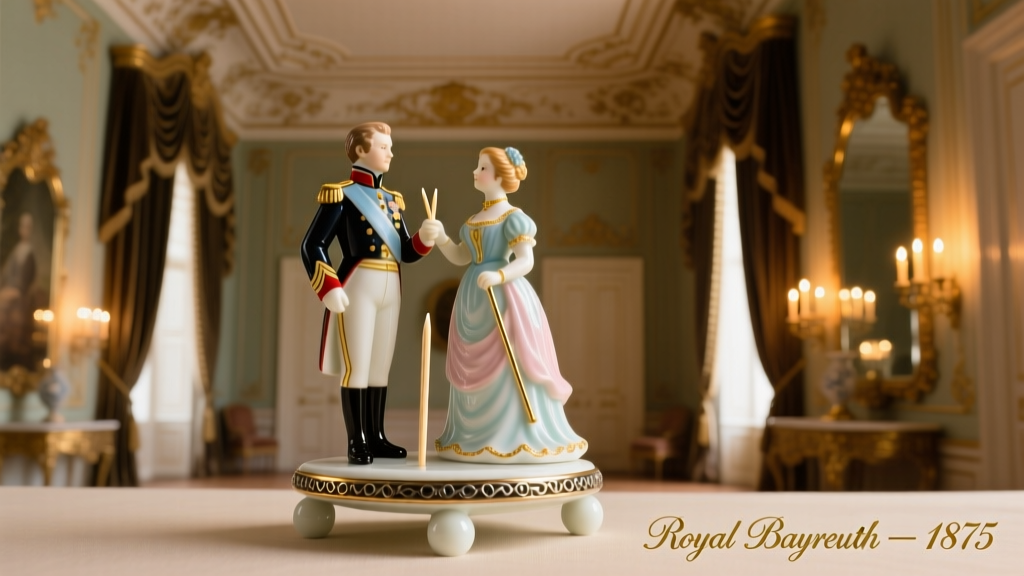
Royal Bayreuth Toothpick Holder: Decoding the Courting Couple Scene with Four Ball Feet and Metal Rim (2", 3", and 4" Sizes)
Wedgwood Jar Cover: Classical Muses Cartouche in Sage Green — A Collector’s Guide to the 2½-Inch Jasperware Lid
Walker China’s ABC Dish for Feeding Animals: A Collector’s Guide to the Two-Section Ceramic Feeder
Duncan Phyfe Style Mahogany Dining Set: A Detailed Appraisal of the 8-Piece Configuration with Single Armchair
Records Born In The USA: Bruce Springsteen’s Iconic 45 RPM Singles — Pressing History, Vinyl Anatomy & Collector Insights
Morning Glory Oil Lamps in Pressed Glass: Identifying, Dating, and Restoring the 5¾-Inch Standard Size
Nye Company Auctioneers 14: A Deep-Dive Analysis of Lot 14 — The 1928 Herman Miller ‘Lounge Group’ by Gilbert Rohde
Victoria Citrus Fruit Queen Oranges Advertising Label (1930s, 11 × 10 in): A Collector’s Guide to Authenticity, Provenance, and Restoration Ethics