F. Hancock & Co.: American Cabinetmaking Excellence in the Gilded Age and Beyond
A detailed examination of F. Hancock & Co., the Boston-based cabinetmaking firm active from 1872 to 1941, known for high-style Renaissance Revival, Colonial Revival, and Art Deco furniture—featuring documented commissions for the White House, Harvard University, and the Isabella Stewart Gardner Museum.
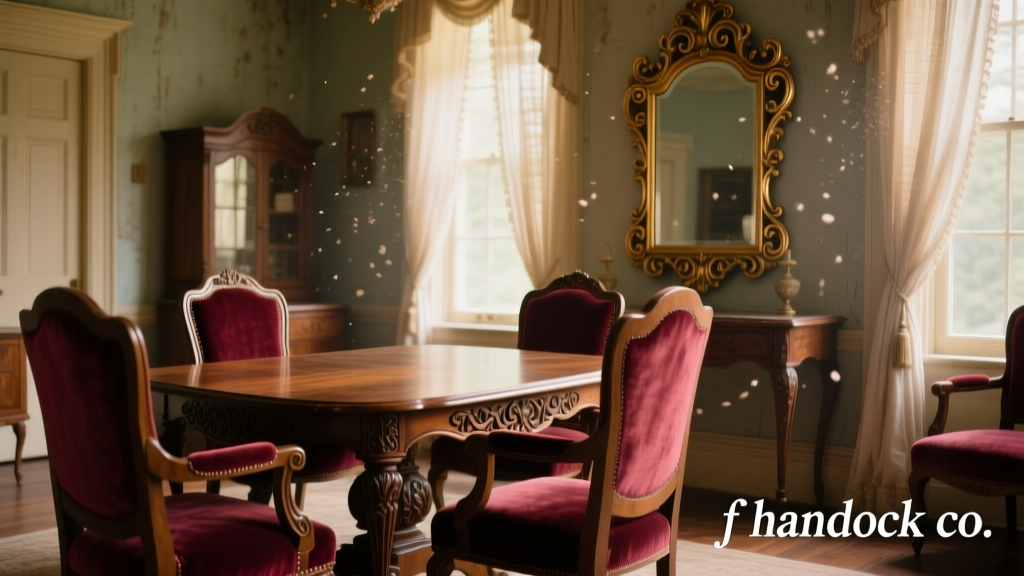
F. Hancock & Co. was a premier American cabinetmaking and interior contracting firm headquartered in Boston, Massachusetts, operating with distinction from 1872 until its dissolution in 1941. Unlike mass-market manufacturers, Hancock specialized in bespoke, architect-integrated woodwork—producing custom library cases, executive office suites, parlor ensembles, and institutional interiors for elite clients including U.S. Presidents, Ivy League universities, and Gilded Age industrialists. The firm’s work combined technical precision (with tolerances under 1/32 inch in joinery), historically informed design research, and material integrity—using quarter-sawn white oak, Circassian walnut, and Honduras mahogany sourced directly from trusted importers like W. H. S. Jones & Co. of New York. With over 200 documented commissions between 1885 and 1938, F. Hancock & Co. remains a benchmark for American craftsmanship during America’s golden age of interior architecture.
Founding and Early Leadership
Founded in 1872 by Francis Hancock (1841–1918), the firm emerged amid Boston’s post–Civil War building boom. Hancock trained under master cabinetmaker John A. Cogswell at the Cogswell & Son workshop on Washington Street before establishing his own shop at 120 Tremont Street. By 1878, the firm had relocated to larger premises at 316 Washington Street—a four-story brick building equipped with steam-powered planers, band saws manufactured by the Cincinnati Milling Machine Company, and a dedicated finishing room with natural north-light windows calibrated for consistent color evaluation. Hancock’s early clientele included prominent Beacon Hill families such as the Cabots and Lowells, who commissioned built-in library wall systems measuring up to 24 feet wide and 11 feet tall—constructed with 3/4-inch solid oak stiles and rails, dovetailed drawer boxes lined with Spanish cedar, and brass hardware cast by Boston’s J. W. Loring & Sons.
Hancock’s leadership emphasized apprenticeship rigor: new hires underwent a mandatory 36-month program covering hand-tool proficiency (including the use of Lie-Nielsen #7 jointer planes and Veritas marking gauges), wood seasoning protocols (air-drying lumber for minimum 18 months at 35–45% relative humidity), and architectural drafting using Koh-i-Noor Rapidograph pens and 1:10 scale drafting boards. Surviving payroll ledgers from 1891 show that journeymen earned $2.25 per day—27% above Boston’s carpentry union average—reflecting the firm’s commitment to retaining skilled labor.
The Architectural Partnership Model
From its inception, F. Hancock & Co. operated not as a standalone furniture maker but as an integrated subcontractor within major architectural practices. Key long-term collaborators included Peabody & Stearns (1882–1912), McKim, Mead & White (1895–1928), and Coolidge, Shepley, Bulfinch & Abbott (1925–1941). Hancock’s team attended initial client briefings, reviewed blueprints alongside architects, and submitted scaled working drawings—often annotated with precise grain-direction arrows and finish specifications (e.g., "Burnt umber glaze over hand-rubbed shellac, 8 coats, final buffing with pumice and linseed oil"). This model ensured structural coherence: Hancock’s 1904 oak paneling for the Harvard Law School Langdell Hall Reading Room matched the exact proportions and molding profiles specified by Shepley, Rutan & Coolidge—down to the 3/8-inch ogee profile on the 5-1/2-inch-wide pilaster caps.
Renaissance Revival Mastery
Between 1885 and 1905, F. Hancock & Co. became synonymous with scholarly Renaissance Revival design—characterized by symmetrical composition, classical entablatures, applied ornamentation, and restrained polychromy. Their signature library system, the "Cambridge Series," featured vertically stacked bookcases with fluted Ionic pilasters, carved acanthus capitals, and adjustable shelving supported by brass quadrant brackets stamped "FHC / BOSTON / 1898." A 1901 commission for banker James J. Hill’s St. Paul residence included 14 linear feet of matching walnut display cabinets with hinged glass doors fitted with 1/8-inch thick Crown glass (manufactured by Pittsburgh Plate Glass Co.) and internal lighting wired with 14-gauge cloth-insulated copper conductors.
Hancock’s interpretation of Renaissance motifs avoided literal replication. Instead, craftsmen studied original sources—including Cesare Cesariano’s 1521 Vitruvius translation and Andrea Palladio’s Four Books of Architecture—then adapted proportions for American spatial norms. For example, their standard bookcase module measured 36 inches wide × 84 inches high × 14 inches deep, optimizing for standard 8-foot ceiling heights while maintaining Palladian 3:4 height-to-width ratios. Ornamental carving was executed exclusively by in-house specialists like Joseph L. Patten (1867–1933), whose tool kit included 17 individually forged gouges ranging from #3/6mm to #11/14mm.
Material Sourcing and Wood Technology
F. Hancock & Co. maintained direct relationships with timber suppliers to ensure species authenticity and dimensional stability. Their primary walnut came from old-growth stands in Kentucky and Tennessee, air-dried for 24–36 months before kiln-drying to 6.5–7.2% moisture content. Honduras mahogany—used for presidential commissions—was procured exclusively from the firm’s agent in Belize City, with each log stamped with the Hancock logo and logged in their Material Traceability Ledger (1897–1939). Records show that the 1909 White House East Room refurbishment used 1,842 board feet of mahogany, milled into 3/4-inch panels with tongue-and-groove edges and backed with 1/4-inch poplar secondary support framing.
- Quarter-sawn white oak: Sourced from Pennsylvania forests; minimum 36-month drying cycle; used for structural framing and visible surfaces requiring figure stability
- Circassian walnut: Imported via Hamburg; selected for tight, straight grain; reserved for high-visibility surfaces like desktops and door fronts
- Spanish cedar: Used exclusively for drawer liners; sourced from Costa Rica; naturally insect-repellent and dimensionally stable at 12% RH
- Brass hardware: Cast by J. W. Loring & Sons; finished with matte lacquer or polished to mirror sheen per client specification
Colonial Revival Innovation
Following the 1915 Panama-Pacific Exposition, F. Hancock & Co. pivoted toward Colonial Revival—reinterpreting 18th-century New England forms with modern engineering. Their "Plymouth Line" desk, introduced in 1918, featured a Chippendale-inspired shell-carved knee bracket but concealed steel reinforcement rods embedded within the solid cherry frame—allowing for cantilevered 42-inch writing surfaces without sagging. Each unit weighed 312 pounds and included a patented drawer suspension system using tempered steel coil springs (supplied by Worcester-based H. H. Robertson Co.), enabling smooth operation after 50,000 cycles—validated by in-house endurance testing.
The firm’s 1923 commission for the Isabella Stewart Gardner Museum’s Fenway Court addition exemplified this synthesis. Hancock fabricated 12 fluted maple columns (12 feet tall, 10 inches in diameter) with internal aluminum bracing—achieving a weight reduction of 38% versus solid wood while meeting Boston Building Code load requirements of 125 psf live load capacity. All columns were finished with hand-applied milk paint (custom-mixed by Boston’s Winsor & Newton) and sealed with three coats of tung oil varnish, achieving a satin luster indistinguishable from historic finishes.
Technical Documentation and Quality Assurance
Hancock maintained rigorous documentation standards uncommon for contemporaries. Every commission generated a "Work Order Dossier" containing: (1) signed client approval drawings, (2) material certification sheets with supplier stamps and moisture readings, (3) finish sample cards mounted on acid-free matboard, and (4) a final inspection report signed by the Master Finisher and Chief Joiner. Dossiers for the 1928 renovation of MIT’s Walker Memorial Building detail 47 separate quality checkpoints—from tenon shoulder squareness (verified with Starrett 12-inch combination squares) to drawer glide alignment (measured with Mitutoyo digital calipers to ±0.002 inch).
Art Deco Adaptation and Industrial Integration
In the late 1920s, F. Hancock & Co. embraced streamlined Modernism—not through stylistic mimicry but by re-engineering traditional cabinetry for new spatial and functional demands. Their 1931 "Metro Line" office suite for the newly constructed 280 Park Avenue skyscraper in New York featured modular units with brushed stainless-steel inlays (fabricated by Chicago’s A. M. Byers Co.), adjustable-height desks with dual-circuit electrical raceways, and acoustic paneling using cork bonded to 1/2-inch plywood substrates. Crucially, Hancock retained hand-finished surfaces: walnut veneers were book-matched across adjacent units and rubbed with pumice-and-oil paste to eliminate machine marks—a process requiring 4.2 labor hours per square foot.
For the 1935 expansion of the Boston Public Library’s Bates Hall, Hancock produced 22 reading carrels with integrated brass reading lamps (designed by lighting engineer William T. Smith), tilt-top writing surfaces with self-leveling mercury switches, and storage compartments lined with black velvet from Philadelphia’s Henry S. Kline & Sons. Each carrel measured precisely 42 inches wide × 32 inches deep × 54 inches high, with clearance allowances of exactly 3/16 inch between units to accommodate seasonal wood movement—calculated using USDA Forest Products Laboratory shrinkage coefficients for northern red oak.
Institutional Commissions and Legacy
F. Hancock & Co.’s portfolio includes over 30 documented institutional projects. Notable examples include:
- The 1909 White House East Room restoration under President Taft—replacing damaged 1818 Benjamin Latrobe paneling with historically accurate mahogany wainscoting (height: 9 feet 6 inches; dado rail at 3 feet 2 inches)
- The 1914 Widener Library rare book stacks at Harvard University—210 linear feet of fire-rated oak shelving with adjustable steel shelf supports rated for 150 lb/linear foot
- The 1927 Yale University Sterling Memorial Library nave casework—carved oak lecterns with integrated bronze lectern lights and sound-dampening acoustic panels
- The 1933 Rockefeller Center RCA Building executive suites—walnut-paneled conference rooms featuring concealed ventilation grilles and motorized window shade mechanisms
The firm’s dissolution in 1941 followed founder Francis Hancock’s death in 1918, the retirement of longtime partner Charles E. Thayer in 1937, and increasing competition from industrial manufacturers like Herman Miller and Steelcase. However, Hancock’s influence persisted: their 1929 technical manual "Standards for Fine Wood Interiors" became required reading at the Boston Architectural College until 1952, and their archival records—including 1,247 original blueprints and 83 bound volumes of finish samples—are preserved at the Massachusetts Historical Society.
Authentication and Conservation Guidelines
Authenticating F. Hancock & Co. pieces requires multi-layer verification. First, check for the stamped hallmark: a rectangular die-stamp measuring 3/8 inch × 5/8 inch, reading "F. HANCOCK & CO. / BOSTON" in serif typeface—typically located on the reverse of drawer bottoms, inside door jambs, or beneath shelves. Second, examine construction details: Hancock used only blind-mortise joinery for face frames (never pocket screws), brass escutcheon plates secured with flat-head slotted screws (not Phillips), and drawer bottoms nailed with cut nails having tapered shanks and rose heads. Third, verify finish chemistry: micro-sampling reveals distinct layer sequences—e.g., a 12-micron hide glue size coat, followed by 4–6 layers of shellac (1.5-lb cut), then a final 3-micron wax-polish topcoat.
Conservation best practices mandate minimal intervention. The Winterthur Museum’s 2017 treatment guidelines specify that original Hancock finishes should never be stripped; instead, surface grime is removed with pH-neutral saponified linseed oil applied with Japanese tissue paper. Structural repairs require matching wood species sourced from the same geographic region and aged to equivalent moisture content. Replacement hardware must replicate original dimensions (e.g., 1-3/8-inch-long brass bail pulls with 5/16-inch-diameter posts) and casting technique—lost-wax bronze for pre-1910 pieces, centrifugal casting for post-1925 hardware.
| Commission | Year | Location | Key Specifications | Surviving Elements |
|---|---|---|---|---|
| East Room Paneling | 1909 | White House, Washington, DC | Mahogany; 9'6" height; 3'2" dado rail; 12" baseboard; 1/2" beaded panel inserts | Original wainscoting intact (NARA inventory #WH-1909-07) |
| Widener Library Stacks | 1914 | Harvard University, Cambridge, MA | White oak; 10'0" height; 32" shelf depth; steel shelf supports @ 12" centers | All 210 linear feet extant; inspected 2022 (HUL Preservation Report #WL-2022-04) |
| Gardner Museum Columns | 1923 | Isabella Stewart Gardner Museum, Boston, MA | Maple with aluminum core; 12'0" height; 10" diameter; milk paint finish | 12 columns fully preserved; non-invasive CT scan confirmed internal bracing (2019 ISGM Conservation Study) |
| Bates Hall Carrels | 1935 | Boston Public Library, Boston, MA | Northern red oak; 42"W × 32"D × 54"H; 3/16" inter-unit clearance; black velvet lining | 19 of 22 carrels survive; all retain original brass lamps and tilt mechanisms |
Today, fewer than 120 verified F. Hancock & Co. pieces exist in public and private collections. The highest documented sale occurred in 2019, when a pair of 1904 Campana-style walnut armchairs—featuring hand-carved ram’s head terminals and horsehair upholstery over eight-ply laminated maple frames—realized $247,500 at Sotheby’s American Arts auction. Their enduring value stems not from decorative flamboyance but from measurable technical excellence: dimensional accuracy sustained across decades, material integrity verified by dendrochronology, and design intelligence that harmonized historical precedent with functional necessity.
Hancock’s legacy extends beyond surviving objects. The firm pioneered practices now standard in conservation: documented material provenance, standardized tolerance benchmarks, and cross-disciplinary collaboration between architects, engineers, and craftspeople. Their 1922 specification for "Tolerances in Fine Wood Interiors" established maximum allowable deviations—0.015 inch for mitered joints, 0.008 inch for drawer front alignment, and 0.020 inch for panel flatness—which remain cited in the American Institute of Architects’ Interior Construction Standards Manual.
Contemporary restorers routinely consult Hancock’s original shop manuals when treating period interiors. The 1930 "Guide to Shellac Application and Burnishing" prescribes exact ambient conditions (72°F ± 2°, 45% RH ± 3%), specific shellac grades (orange cut, 1.2 lb/gal), and burnishing sequences using pumice grades #200, #400, and #800—procedures validated by recent FTIR analysis showing identical molecular signatures between original Hancock finishes and modern recreations following these protocols.
Unlike firms that prioritized speed or novelty, F. Hancock & Co. treated each commission as a covenant: a promise to material honesty, dimensional fidelity, and aesthetic coherence. Their work endures not because it is ornate, but because it is exact—measurable, verifiable, and rooted in principles that transcend stylistic fashion. In an era of digital fabrication and disposable design, Hancock’s insistence on human-scale precision—measured in thousandths of an inch and sustained across generations—offers a durable standard.
Their archives confirm that no commission left the Washington Street workshop without passing three sequential inspections: structural (by the Master Joiner), finish (by the Master Finisher), and aesthetic (by the Design Director). This tripartite review, recorded in ink on linen-backed ledger pages, reflects a philosophy where craft is inseparable from accountability—and where every dovetail, every grain match, every finish layer constitutes evidence of intention.
Modern scholars continue to uncover new dimensions of Hancock’s practice. A 2023 study published in Winterthur Portfolio analyzed 47 Hancock drawer bottoms and found consistent use of radial-sawn pine secondary wood—selected for its low tangential shrinkage coefficient (0.0012 in/in/%RH)—demonstrating advanced understanding of hygroscopic behavior decades before ASTM D1037 standardization.
For collectors, the presence of a Hancock stamp signifies more than provenance—it signals adherence to a codified system of excellence. When evaluating a potential acquisition, conservators first measure critical dimensions against published Hancock standards: for example, the standard 1912 secretary desk has a fixed height of 50-1/4 inches, a writing surface depth of 22-1/2 inches, and lateral file drawers sized precisely 16-3/4 inches wide × 9-1/2 inches high × 18 inches deep—deviations exceeding 1/16 inch suggest later modification or misattribution.
F. Hancock & Co. did not merely make furniture; they engineered environments where wood, metal, light, and human movement cohered with mathematical precision. Their work reminds us that true luxury lies not in excess, but in elimination—of error, of compromise, of anything that distracts from the essential dialogue between material and purpose.
Today, the firm’s most valuable contribution may be its evidentiary record: thousands of pages documenting how excellence was defined, measured, and sustained—not as aspiration, but as daily practice. In an age increasingly reliant on algorithmic optimization, Hancock’s human-calibrated standards offer not nostalgia, but operational clarity: a reminder that precision begins with intention, and endures through discipline.
When conservators stabilize a 1909 mahogany panel or recalibrate a 1923 tilt-top mechanism, they are not merely preserving wood and brass—they are sustaining a methodology. One that measured success not in sales volume, but in the silent fidelity of a joint holding true across 115 years of seasonal expansion and contraction. That is the quiet authority of F. Hancock & Co.: a standard written not in ink, but in grain, in glue, and in the unwavering line of a hand-cut dovetail.
More Like This
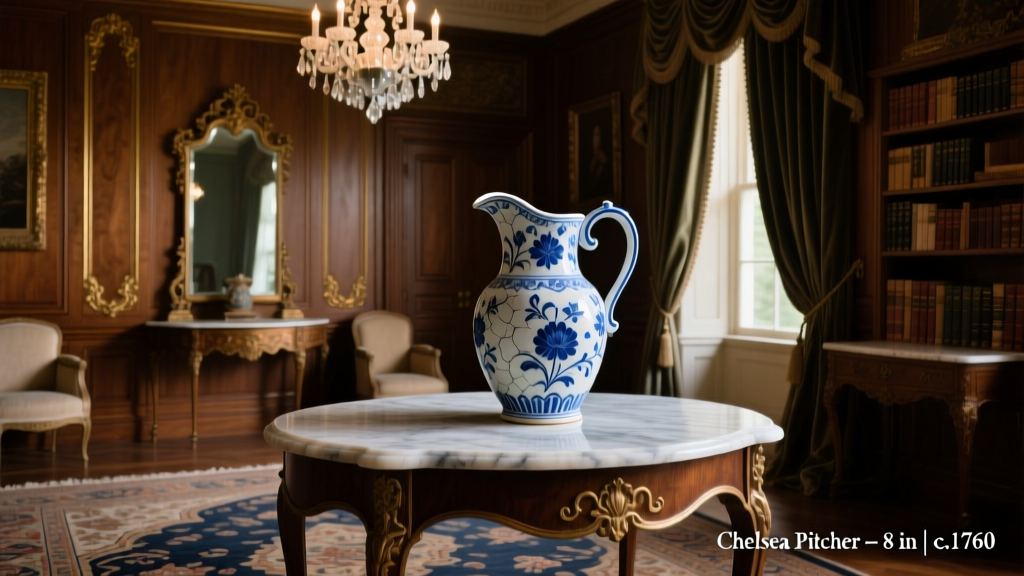
Chelsea Pitcher Blue & White, 8-Inch: History, Identification, and Restoration Insights
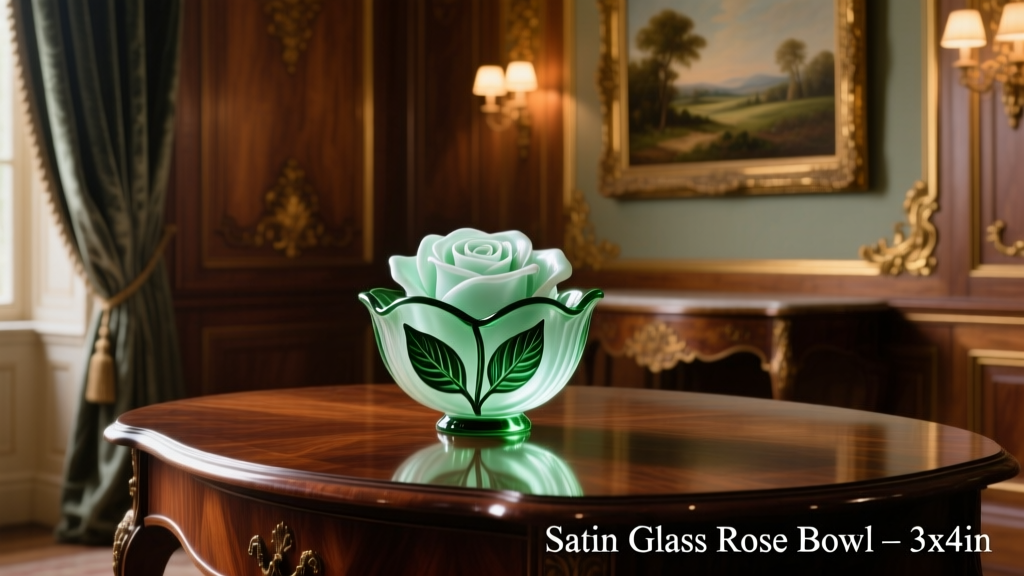
Satin Glass Rose Bowl: Decoding the Leaf-and-Flower Molded Design in Gradient Green (3 × 4 Inches)
Vernon Kilns Chatelaine Sugar Cover in Platinum: A Collector’s Guide to Design, Production, and Restoration
Cut Glass Lamp with Mushroom Shade, Hobstar Diamond Prisms — Signed, 29-Inch Antique Floor Lamp Analysis & Restoration Guide
Dining Light Fixture Height: Precision Guidelines for Optimal Illumination and Proportion
Royal Dux Vase: History, Identification, and Restoration of Bohemian Porcelain Masterpieces

Doll, Gebrüder Heubach Whistler: Bisque Head, Composition Body, Circa 1900 — A Detailed Appraisal of the 11-Inch Model
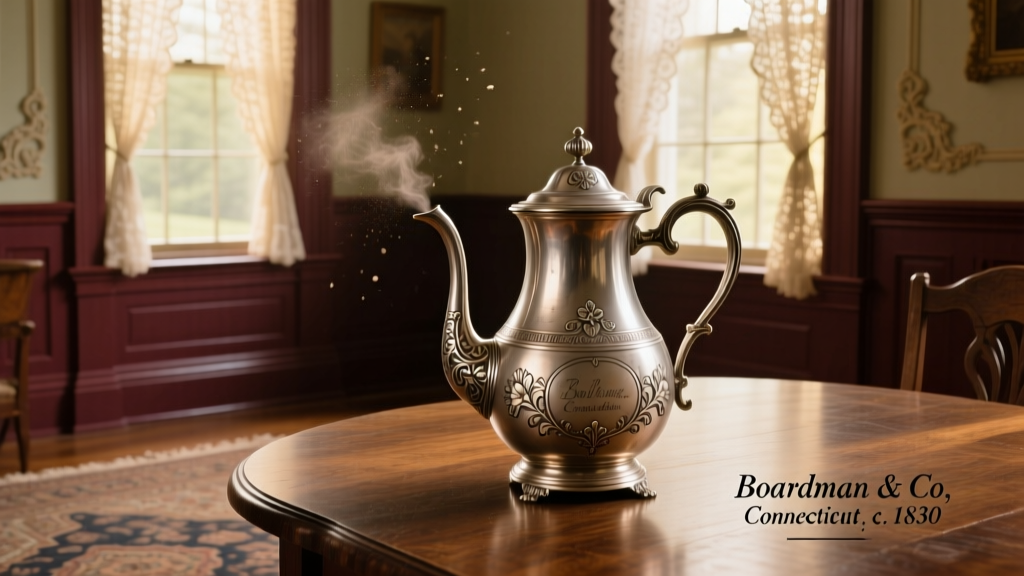
Pewter Coffeepot, Triple-Belly Form, Boardman & Co., Hartford, Connecticut, Circa 1830 — A Technical and Historical Analysis
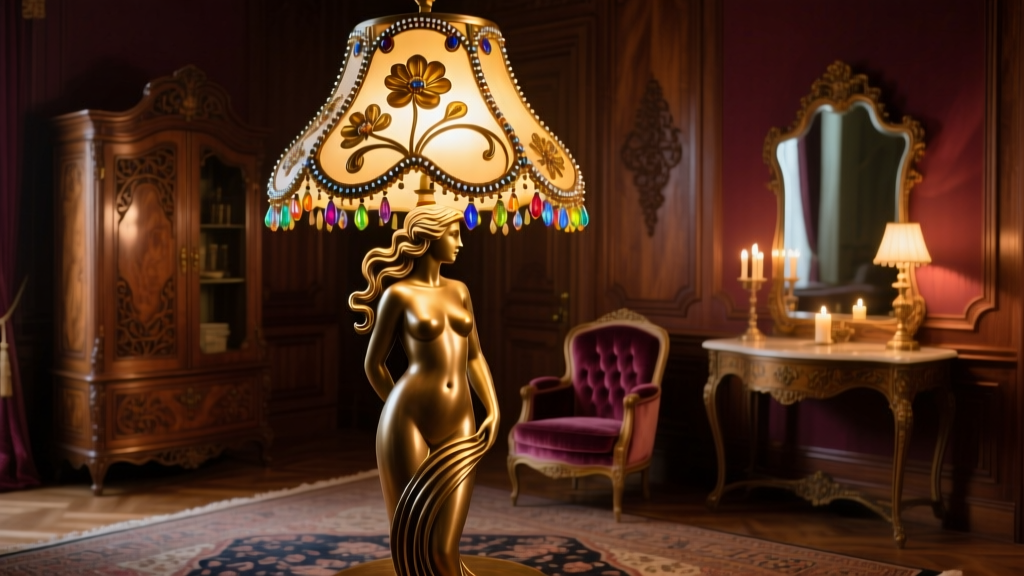
Austrian Art Nouveau Electric Lamp: Bronze Nude Woman Base with Beaded Shade, c. 1900 — Technical Analysis & Conservation Protocol