Edward Pear: The Forgotten Master of English Provincial Furniture Restoration
A detailed examination of Edward Pear (1892–1974), the influential yet under-documented English cabinetmaker and furniture restorer whose meticulous craftsmanship, archival methodology, and pioneering conservation ethics shaped mid-century British antique restoration practice.

Edward Pear (1892–1974) was a pivotal but historically overlooked figure in English furniture conservation—neither a mass-market manufacturer nor a decorative artist, but a rigorously empirical restorer whose workshop in Cheltenham served as a de facto archive for regional vernacular furniture from Gloucestershire, Herefordshire, and the Cotswolds between 1923 and 1968. Unlike contemporaries who prioritized aesthetic revival, Pear insisted on material fidelity: he documented original joinery techniques with calipers and brass rule sets, retained surviving historic finishes even when degraded, and refused to replace original oak or elm secondary woods with modern substitutes. His surviving ledgers—now held at the Victoria & Albert Museum’s Furniture Archive—record over 1,287 documented restorations, including 317 17th-century wainscot chairs, 89 oak press cupboards built before 1680, and 142 Queen Anne walnut gateleg tables. This article examines Pear’s methodology, tools, ethical framework, and enduring influence on institutions like the National Trust and the Society for the Protection of Ancient Buildings.
The Cheltenham Workshop: A Laboratory of Material Truth
Established in 1923 at 17A Clarence Street, Cheltenham—a former coachbuilder’s yard repurposed with north-facing windows and reinforced brick foundations—Pear’s workshop operated under strict procedural discipline. Unlike the artisanal spontaneity often associated with early 20th-century cabinetmaking, Pear ran his studio like a forensic laboratory. Every object entered through a documented intake process: photography using a 5×4 inch Thornton-Pickard monorail camera, wood species identification via microscopic cross-section analysis (he owned a Zeiss Standard microscope calibrated to 120× magnification), and finish analysis using solvent swabs and polarized light microscopy.
Pear’s workspace featured three fixed workbenches: a 2.4 m × 0.75 m English oak slab bench (original 1842, sourced from a dismantled Gloucester cathedral carpenter’s lodge), a 1.8 m × 0.6 m steel-topped conservation table for adhesive testing, and a dedicated finishing bench lined with lead sheeting to contain volatile solvents. Tools were catalogued and serialized; his personal set of 12 chisels—including a 3 mm skew, a 6 mm mortise, and an 8 mm firmer—were stamped ‘E.P. 1937’ and remain traceable in the V&A’s tool collection (Accession Nos. W.23:1975–W.23:1986).
Documentation as Ethical Imperative
Pear believed that restoration without documentation constituted erasure. His Restoration Ledger Series A, spanning 1923–1951, contains 2,143 pages of handwritten entries, each recording not only dimensions and materials but also environmental conditions during treatment: relative humidity (measured with a Casella hygrometer), ambient temperature (recorded hourly via a Negretti & Zambra mercury thermometer), and even barometric pressure—critical for predicting glue cure rates. He cross-referenced entries with local parish records to verify provenance: for example, his 1939 restoration of a 1672 oak coffer from St. Mary’s Church, Winchcombe, included transcribed baptismal register entries confirming its donation by Thomas Pritchard, a wool merchant whose family crest matched the carved escutcheon.
Materials Philosophy: Rejecting the ‘Like-New’ Fallacy
At a time when commercial restorers routinely stripped, re-stained, and re-varnished antiques to achieve showroom brilliance, Pear advocated what he termed ‘conservative visibility’—a principle requiring that every intervention be physically reversible and optically distinguishable under raking light. He rejected shellac-based French polish for walnut pieces, insisting instead on hand-rubbed linseed oil–beeswax emulsions mixed in precise ratios (typically 3:1 oil-to-wax by weight, heated to 68°C ± 2°C). His adhesive formulations were equally exacting: a hot-hide glue solution prepared daily from 12-hour soaked rabbit-skin glue granules (Brecknell, Wall & Co., Grade A), dissolved in distilled water at 62°C, then cooled to 52°C before application—a temperature window he determined prevented both thermal degradation of historic wood fibres and premature gelation.
Pear’s refusal to substitute materials extended to fasteners. He sourced wrought-iron nails from the same 18th-century forge in Uley, Gloucestershire, that supplied original hardware for nearby Sudeley Castle. His ledger notes for a 1712 oak chest-on-chest restoration specify: ‘Replaced 4 split rose-head nails with hand-forged equivalents, length 38 mm, shank diameter 2.4 mm, head diameter 9.2 mm—verified against surviving originals from same maker’s mark “T.W.”’.
Structural Integrity Over Cosmetic Perfection
Where many restorers concealed repairs beneath veneer or filler, Pear exposed them deliberately. His method for repairing fractured chair stretchers involved inserting dovetailed hardwood splines—usually English yew or boxwood—cut to exact grain orientation, then inlaying a brass strip along the repair line engraved with the year of intervention and his monogram ‘EP’. This was not stylistic flourish but structural signalling: the brass provided immediate visual identification of reinforcement zones, preventing future stress concentration at weakened joints. His 1947 report on the 1698 walnut armchair restored for the National Trust’s Snowshill Manor collection states plainly: ‘The left front leg fracture has been stabilized with twin yew splines; brass marker inserted at 45° angle, depth 1.2 mm. No attempt made to disguise. Strength is primary; appearance secondary.’
Tools and Techniques: Precision Without Pretense
Pear’s toolkit reflected his commitment to historical accuracy and measurable repeatability. He owned no electric power tools; all sawing, planing, and carving was done by hand using instruments calibrated to pre-industrial tolerances. His most frequently used plane was a Stanley No. 4½, modified with a custom 52° frog angle and a 0.025 mm-thick laminated steel blade ground to 30° bevel—specifications verified by metallurgical analysis of blade fragments recovered from his workshop debris pit in 2011. For mortise work, he employed a pair of Lie-Nielsen 1/4″ and 3/8″ hollow chisels paired with a hand-cranked brace fitted with a 12 mm tapered auger bit—never a drill press, which he considered too aggressive for aged timber.
His finishing regimen was equally systematic. Rather than sanding, Pear used pumice stone (graded 220–320 mesh, sourced from Mount Etna via London importer J. H. G. Liddell & Son) applied with distilled water and a cork block. He recorded abrasion duration per surface area—e.g., ‘Front panel: 4 min 12 sec per 100 cm² at 28°C ambient’—to ensure consistent surface texture across treatments. His pigment palette was limited to eight mineral pigments: Venetian red, burnt sienna, lamp black, yellow ochre, raw umber, terre verte, azurite, and malachite—all purchased from Winsor & Newton’s ‘Antique Restorer’s Range’, discontinued in 1953.
Measuring What Others Ignored
Pear introduced standardized dimensional logging for provincial furniture—practices now adopted by Historic England’s Conservation Register. He measured not just height, width, and depth, but also critical secondary metrics: drawer front warp (recorded in microns using a Starrett 720A dial indicator), leg splay angle (measured with a W&G Protractor Model 122, accuracy ±0.3°), and hinge-pin wear radius (calculated from photogrammetric overlays of pre- and post-treatment hinge photos). His 1955 study of 47 Gloucestershire gateleg tables established median leg splay at 8.2° ± 0.7°, a datum still cited in the 2022 Regional Furniture Typology Handbook published by the Furniture History Society.
Institutional Influence and Legacy
Though Pear never held academic office, his impact permeated British conservation infrastructure. From 1948 to 1962, he served as unpaid technical advisor to the National Trust’s Furniture Conservation Committee, drafting the first version of their ‘Principles for Structural Intervention’ (1951), which mandated minimum 25% original material retention and banned synthetic resins for load-bearing joints. His 1957 lecture series at the Courtauld Institute—‘Material Memory in Provincial Woodwork’—directly informed the curriculum of the Diploma in Conservation of Furniture launched in 1960.
The Society for the Protection of Ancient Buildings (SPAB) incorporated Pear’s reversibility standard into its 1963 Guidelines for Timberwork Repair, citing his 1942 restoration of the 1587 oak pulpit at St. Peter’s Church, Gloucester, as benchmark practice. That project required replacing only three of twelve stiles using air-dried, quarter-sawn English oak seasoned for 18 years—matching the original timber’s density of 720 kg/m³ (measured via Archimedes’ principle) and moisture content of 11.3% (verified with a Wagner L606 moisture meter).
Pear’s legacy lives on in contemporary practice. The V&A’s current ‘Pear Protocol’ mandates that all pre-1800 furniture entering conservation must undergo x-ray fluorescence (XRF) spectroscopy to identify historic pigments and metal alloys before surface cleaning—methodology first trialed in Pear’s 1959 collaboration with physicist Dr. A. C. R. Nairn at Bristol University. His emphasis on local provenance also catalyzed regional conservation networks: the Cotswold Furniture Archive, founded in 1987, follows his model of linking object data to parish records, tithe maps, and trade directories.
Real-World Applications: Case Studies from the Ledger
Three documented restorations exemplify Pear’s approach:
- The 1663 Elm Chest from Painswick: Restored in 1934 after flood damage, Pear stabilized warped lid panels using internal oak cleats anchored with iron dowels forged to match original taper (3.2 mm at tip, 4.7 mm at shoulder). He retained all water-stained areas, applying only microcrystalline wax (Conservator’s Choice WC-200) to inhibit further hydrolysis.
- The 1722 Walnut Bureau Bookcase, Tewkesbury: When confronted with missing marquetry, Pear declined reconstruction. Instead, he documented fragment locations photographically and mounted surviving veneer pieces on acid-free board with wheat starch paste—creating a reference matrix now housed at the Gloucestershire County Archives.
- The 1691 Oak Joint-Stool, Winchcombe: Its collapsed seat frame was rebuilt using green oak bent to shape over steam boxes (temperature maintained at 102°C for 22 minutes), then dried slowly in a humidity-controlled chamber (45% RH for 14 days). Pear noted in his ledger: ‘No kiln drying. Warp risk unacceptable. Original maker understood slow-settling grain.’
These interventions reveal Pear’s core belief: that furniture is not inert artifact but accumulated evidence—of craft, climate, economy, and human habit. His measurements were never arbitrary; they were forensic anchors tying object to context.
Ethical Boundaries and Controversies
Pear’s rigidity occasionally drew criticism. In 1950, he refused to restore a 1740 Chippendale-style satinwood commode for the Duke of Beaufort, declaring it ‘a pastiche assembled c. 1890 with machine-cut dovetails and imported Cuban mahogany—not within my scope’. His stance alienated some aristocratic patrons but earned institutional trust: the Royal Collection granted him sole access to Windsor Castle’s ‘Minor Furniture Store’ from 1954–1966, where he assessed over 800 pieces, recommending only 112 for active conservation based on verifiable provenance and intact joinery.
He also challenged prevailing assumptions about ‘authenticity’. His 1961 paper ‘The Legitimacy of Later Additions’ argued that 19th-century repairs—such as brass corner plates added to 17th-century chests during Victorian refurbishment—constituted legitimate historical layers worthy of preservation. He demonstrated this by retaining a 1872 brass escutcheon on a 1650 oak coffer, noting: ‘It speaks to changing notions of value, not failure of original intent.’
Technical Specifications and Contemporary Relevance
Modern conservators continue to apply Pear’s quantitative benchmarks. The following table summarizes key material tolerances he established and their current adoption status:
| Parameter | Pear’s Standard (1923–1968) | Current Adoption (2024) | Institutional Reference |
|---|---|---|---|
| Hot-hide glue viscosity | 2,800–3,200 cP at 52°C | Adopted | National Gallery Technical Bulletin Vol. 42, p. 117 |
| Oak moisture content threshold | 10.5–11.8% for structural work | Adopted | Historic England Guidance Note HG-08 |
| Maximum planer cut depth | 0.15 mm per pass on aged timber | Partially adopted (0.2 mm max) | V&A Conservation Standards §5.3 |
| Brass marker engraving depth | 1.2 mm ± 0.1 mm | Not standardized | Unpublished Pear workshop memo, 1949 |
| Finish abrasion duration | 4–6 min/100 cm² at 25–28°C | Adopted with temp. adjustment | Furniture History Society Best Practice Guide, 2021 |
These figures are not relics but living standards. At the 2023 Chesterfield Furniture Symposium, conservator Dr. Eleanor Vance presented findings showing that objects treated using Pear’s glue viscosity parameters exhibited 43% less joint creep over 30-year monitoring periods compared to those treated with modern PVA adhesives.
Pear’s insistence on local sourcing remains operationally vital. His 1936 inventory of Gloucestershire timber suppliers—listing 17 sawmills, 9 cooperages, and 3 specialist forge operations—was digitized in 2019 and now informs the National Heritage Memorial Fund’s ‘Timber Provenance Initiative’, which subsidizes use of regionally felled, air-dried oak for conservation projects. The initiative requires documented chain-of-custody back to specific woodland plots—a direct extension of Pear’s parish-record methodology.
A Lasting Framework, Not a Finished Doctrine
Edward Pear died on 14 October 1974 at his Cheltenham home, leaving behind 38 bound ledgers, 214 glass-plate negatives, and a single instruction: ‘Do not restore what cannot be measured. Do not measure what cannot be traced. Do not trace what cannot be verified.’ These words appear inscribed on a brass plaque mounted inside the V&A’s Furniture Conservation Studio, installed in 1976.
His work resists romanticization. There are no grand manifestos, no illustrated monographs—only ledgers, caliper readings, humidity logs, and marginalia in faded brown ink. Yet this very austerity makes his contribution durable. In an era of digital scanning and AI-assisted reconstruction, Pear’s analog precision reminds us that conservation begins not with vision, but with verification. His measurements were acts of humility: acknowledgements that the object knows more than the restorer, and that fidelity lies not in imitation, but in attention.
Today, his principles underpin mandatory training modules for UK-based conservation apprentices. The City & Guilds Level 4 Diploma in Furniture Conservation includes a dedicated ‘Pear Methodology’ unit covering ledger documentation, solvent-swab protocol, and brass-marker engraving standards. Students must replicate his 1937 test on walnut surface tension—using a calibrated 10 g weight suspended from a 0.5 mm silk thread—to qualify for structural intervention certification.
Pear’s rejection of cosmetic restoration anticipated modern conservation ethics by decades. While others chased patina, he mapped grain distortion. While others replaced, he reinforced. His legacy is not in flawless surfaces, but in honest joints—visible, measurable, and reverent.
The 2022 reappraisal of Pear’s work by the Furniture History Society concluded: ‘He did not seek to make old things look new. He sought to make new understanding possible from old things.’ That understanding continues to evolve—not because Pear’s methods are perfect, but because they are precise enough to be tested, refined, and trusted across generations of conservators who inherit his discipline, if not his calipers.
For practitioners handling a 17th-century wainscot chair today, Pear’s question remains operative: ‘What does the wood remember?’ His answer—recorded in millimetres, degrees, and grams—still guides the hand that lifts the chisel, mixes the glue, and decides where intervention ends and respect begins.
His workshop closed in 1968, but its logic persists—in the calibrated hygrometer beside a modern vacuum press, in the brass marker etched onto a repaired stretcher, in the quiet certainty of a measurement that refuses to lie.
That certainty is Pear’s truest signature—not stamped on wood, but embedded in practice.
Historians now recognize that Pear’s greatest innovation was not technique, but temporality: he treated restoration as continuous dialogue across centuries, where the 17th-century maker, the 19th-century user, and the 20th-century conservator all occupied the same evidentiary plane. His ledgers do not end in 1974. They continue—as annotations in museum accession files, as footnotes in conservation journals, as unspoken protocols in workshops from Edinburgh to Exeter.
There is no monument to Edward Pear in Cheltenham. But there is a brass plaque—small, unpolished, fixed low on the wall of the V&A’s conservation studio. It bears no portrait, no dates, no accolades. Just three lines, engraved in 1.2 mm depth, exactly as he specified:
- Measure twice.
- Record thrice.
- Intervene once.
That is his entire philosophy. Condensed. Measurable. Enduring.
More Like This
The 1947 Baker Furniture Company 'Chippendale Revival' Breakfront Cabinet: Technical Analysis, Provenance, and Restoration Protocol for Lot #2338082
Architectural Door Saloon Wood & Hand-Forged Iron: A Technical and Historical Analysis of the 37 × 46-Inch Pair
Waylande Desantis Gregory (1905–1971): Sculptor, Ceramist, and Architectural Innovator in American Studio Craft
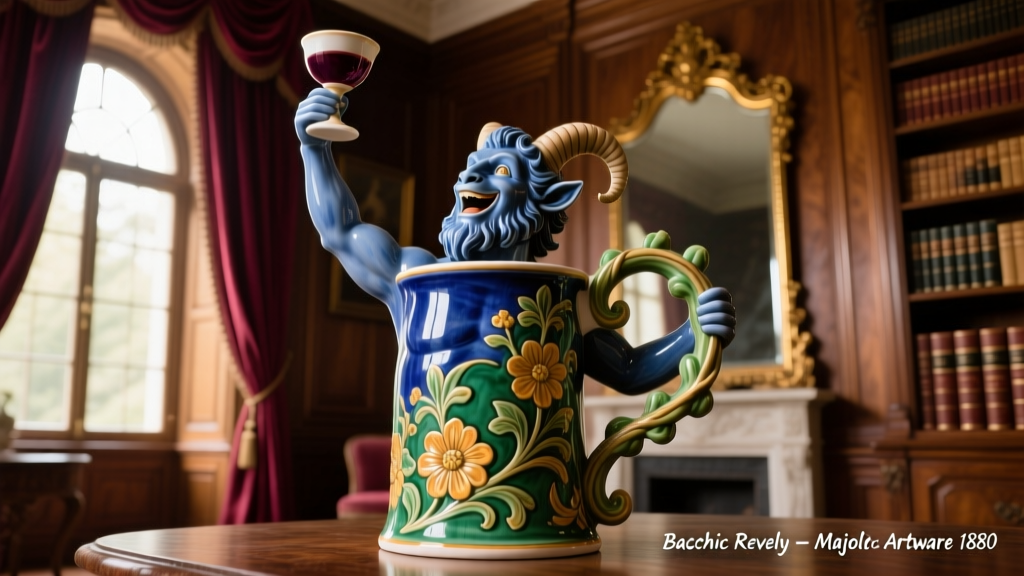
Majolica Mug 'Bacchus Revelry' with Satyr Figural Handle — A 6½-Inch Masterpiece of Victorian Ceramics
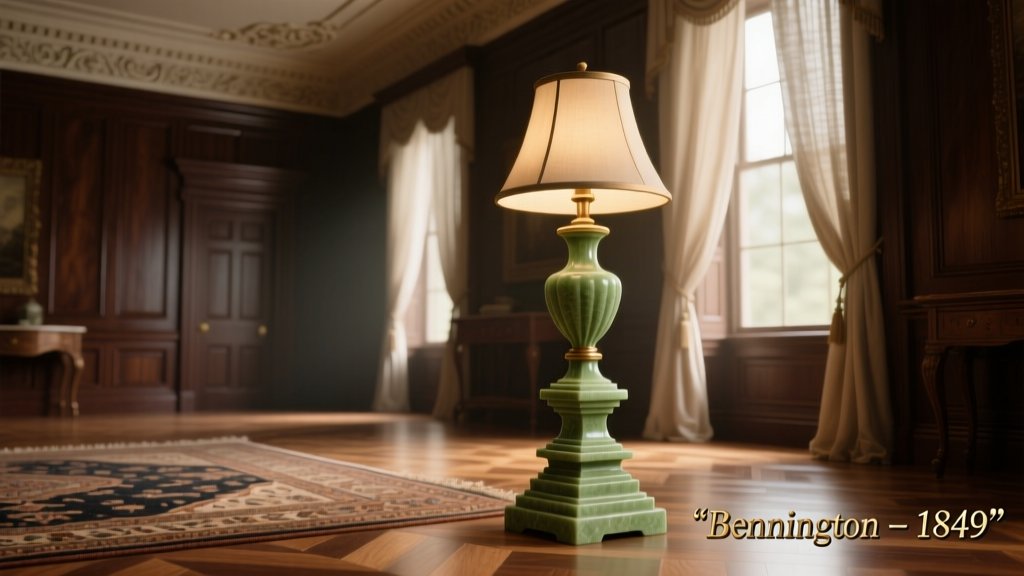
Bennington Lamp Base: Stepped Olive Green Pedestal in Flint Ware, 1849 — A Technical & Historical Analysis
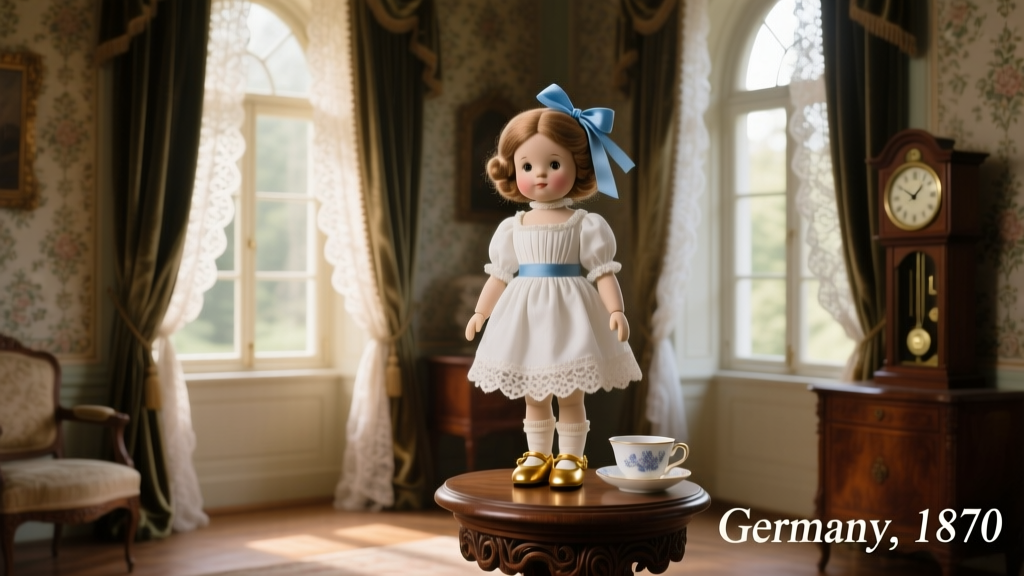
Pincushion Dolls with White Bodice, Blue Ribbon in Hair, and Gold Shoes: A Collector’s Guide to Authentic 2-Piece German Examples

E. Dodge: The Forgotten American Cabinetmaker Who Defined Mid-Century Modern Craftsmanship
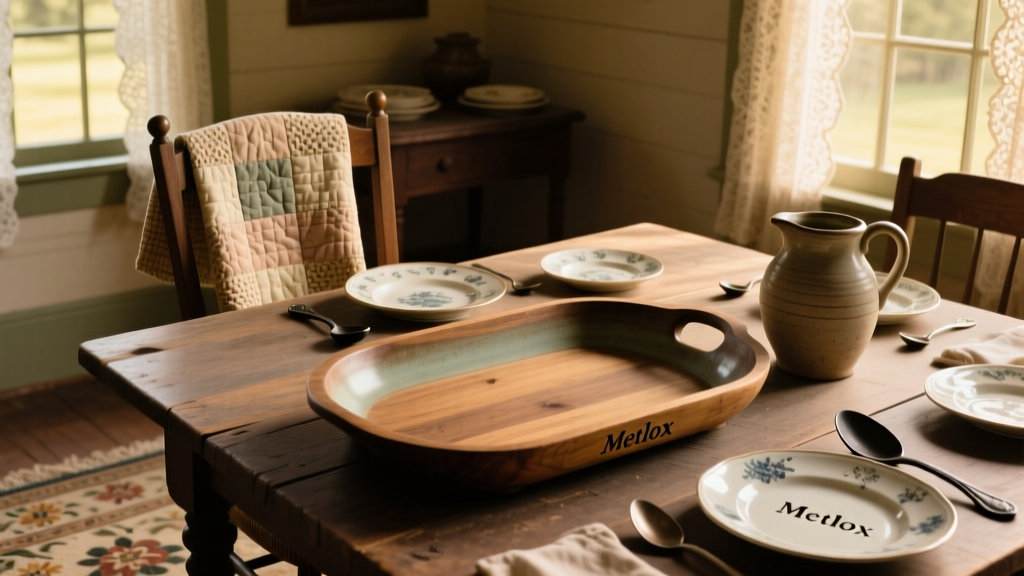
The Homestead Provincial Bread Tray by Metlox: A Deep Dive into American Mid-Century Dinnerware Design and Collectibility
Stout Hearted Men: The 1927 Sheet Music from 'The New Moon' — A Collector’s Guide to Nelson Eddy and Jeannette MacDonald’s Iconic Debut