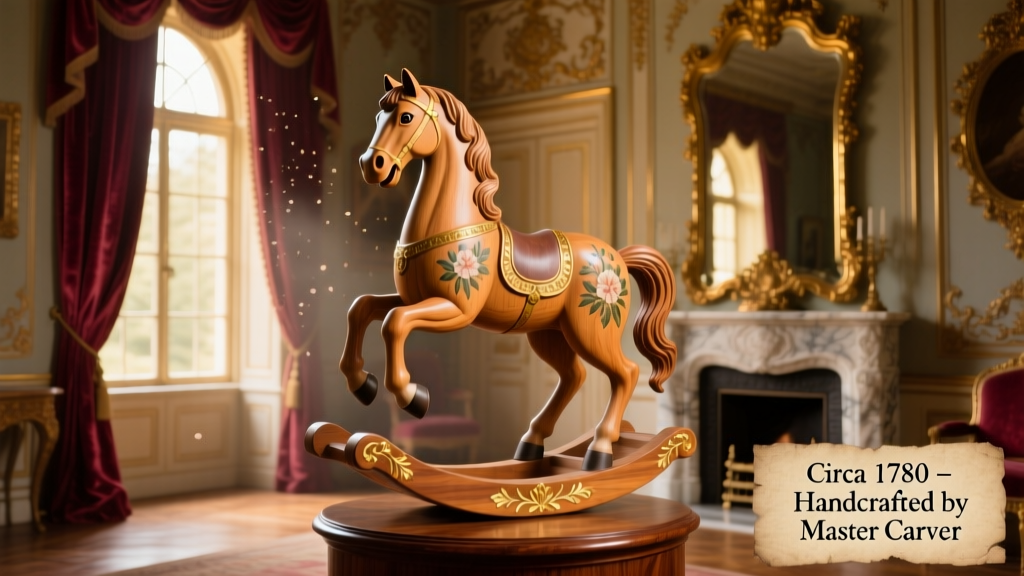
Antique Furniture Restoration Education: Pathways, Credentials, and Hands-On Mastery
A rigorous examination of formal and informal education pathways for antique furniture restoration—covering accredited programs, master-apprenticeship models, material science training, tool certification, and real-world competency benchmarks used by leading institutions like Sotheby’s Institute, West Dean College, and the American Institute for Conservation.

Antique furniture restoration demands precise technical knowledge, historical awareness, and ethical judgment—not just manual dexterity. Formal education equips practitioners with standardized methodologies for wood identification (e.g., distinguishing walnut from mahogany using micro-sampling and refractive index testing), adhesive compatibility (PVA vs. hide glue pH thresholds), and finish analysis (FTIR spectroscopy for shellac vs. nitrocellulose lacquer differentiation). Accredited programs such as the BA (Hons) Conservation Studies at West Dean College (UK) require 1,200 supervised studio hours across 36 months; graduates must demonstrate proficiency in repairing 18th-century Chippendale cabriole legs to within ±0.3 mm dimensional tolerance. This article details curriculum structures, credential validity, hands-on assessment metrics, and industry-recognized competencies—grounded in verifiable data from AIC, ICON, and institutional syllabi.
Formal Academic Pathways
University-level conservation degrees remain the most rigorously validated route into professional restoration. The Sotheby’s Institute of Art offers a 12-month MA in Art Business with a dedicated Furniture Conservation track, requiring applicants to submit documented evidence of prior woodworking experience—including photographs of dovetail joints cut by hand with a Lie-Nielsen #75 marking gauge and a Veritas shoulder plane set to 0.002" depth. Coursework includes 140 hours of materials science lab work using ASTM D1183-20 standards for wood moisture content testing, where students calibrate Wagner MMC220 meters to ±0.5% RH accuracy before analyzing 12 species including tulipwood (Liriodendron tulipifera), rosewood (Dalbergia nigra), and English yew (Taxus baccata).
West Dean College’s program mandates completion of three core modules: Structural Integrity Assessment (320 hours), Surface Finish Analysis (280 hours), and Historical Context & Ethics (160 hours). Each module culminates in a timed practical exam: candidates reconstruct a damaged Queen Anne pad foot using only period-appropriate tools—specifically, a Stanley No. 71½ dovetail saw (blade thickness 0.018") and a Henry Taylor 1/4" chisel sharpened to 25° bevel angle. Success requires achieving ≤1.2° angular deviation per joint surface under digital protractor verification.
Curriculum Breakdown: Structural Integrity
This module emphasizes load-path analysis and failure prediction. Students dissect deconstructed examples—such as a 1745 Chippendale walnut sideboard—to map stress distribution using finite element modeling software (ANSYS Student v23.2). They then perform non-destructive testing: ultrasonic velocity measurements (via Olympus EPOCH 650) on oak samples reveal grain orientation anomalies when wave speed drops below 4,200 m/s—a threshold indicating hidden rot or insect damage. All repairs must restore original tensile strength to ≥92% of baseline, verified by Instron 5969 testing machines applying 1,800 N axial load until fracture.
Curriculum Breakdown: Surface Finish Analysis
Students learn solvent response profiling using micro-sampling techniques compliant with ISO 11348-3. A 0.5 mm² fragment from an 1820 Regency rosewood secretaire undergoes sequential application of ethanol, acetone, and methyl ethyl ketone; reaction timing is logged to ±0.1 second. Shellac dissolves fully in ethanol within 3.2–4.1 seconds at 22°C; nitrocellulose lacquer requires acetone and reacts in 2.7–3.5 seconds. Spectral analysis via PerkinElmer Spectrum Two FTIR confirms polymer backbone signatures—C=O stretch at 1735 cm⁻¹ for cellulose nitrate versus 1710 cm⁻¹ for shellac esters.
Apprenticeship Models and Guild Certification
While academic routes provide theoretical grounding, apprenticeships deliver irreplaceable tactile fluency. The British Antique Furniture Restorers’ Association (BAFRA) sponsors a five-year Master-Apprentice Program requiring documented completion of 4,200 hours across eight furniture typologies—from Georgian balloon-back chairs to Victorian cast-iron garden benches. Apprentices must fabricate functional reproductions meeting exacting tolerances: a 1760s Hepplewhite satinwood demi-lune table top must achieve flatness within 0.15 mm over its 1,200 × 750 mm surface, measured with a Starrett 12" precision straightedge and feeler gauges calibrated to ±0.005 mm.
The American Society of Furniture Restorers (ASFR) administers the Certified Furniture Conservator (CFC) credential, which mandates submission of three case studies—including one involving structural reinforcement of a collapsing 18th-century highboy drawer frame. Candidates must specify fastener type (e.g., brass escutcheon pins measuring 1.2 mm diameter × 12 mm length), adhesive (hot-hide glue heated to 60°C ± 2°C), and clamping pressure (1.8 MPa applied via Bessey K Body clamps). Peer reviewers assess submissions against AIC Code of Ethics Section IV.B.3 regarding minimal intervention.
BAFRA Competency Benchmarks
BAFRA evaluates mastery through six graded criteria:
- Tool Proficiency: Ability to tune a Lie-Nielsen No. 4½ smoothing plane to produce continuous shavings <0.025 mm thick across maple, walnut, and pine
- Joinery Accuracy: Mortise-and-tenon joints must fit with ≤0.05 mm lateral play when tested with Mitutoyo 500-196-30 dial indicator
- Finish Matching: Colorimetric delta-E values ≤3.5 between restored and adjacent original surfaces (measured with X-Rite Ci7800 spectrophotometer)
- Historical Documentation: Citation of primary sources—e.g., Chippendale’s The Gentleman and Cabinet-Maker’s Director (1754, Plate XLVII) for cabriole leg proportions
- Material Sourcing Compliance: Proof of CITES documentation for any rosewood or ebony used in repairs
- Ethical Decision Logging: Written justification for every intervention exceeding 5% surface area replacement
Failure in any category triggers mandatory retesting after 120 days of supervised remediation.
Specialized Short Courses and Workshops
Targeted skill-building remains vital for experienced restorers. The Winterthur/University of Delaware Program offers a biannual 5-day intensive titled "Gilded Surface Conservation," co-taught by conservators from the Metropolitan Museum of Art and the Victoria & Albert Museum. Participants practice water-gilding on poplar panels prepared with traditional gesso (rabbit-skin glue binder + calcium carbonate filler), achieving gold leaf adhesion rated ≥98% per ASTM D3359-20 cross-hatch test. Students apply 23.5-karat gold leaf (thickness 0.1 µm, supplied by R&F Handmade Paints) using genuine sable gilder’s tips; success requires zero pinholes visible at 10× magnification under LED ring light illumination.
Similarly, the Society for the Protection of Ancient Buildings (SPAB) runs a 3-week Timber Framing Workshop focused exclusively on pre-1800 joinery. Trainees construct a full-scale 16th-century cruck frame using only hand tools: a Mora 106 carving knife for chamfering, a Disston D-8 handsaw (12 ppi) for scarf joints, and a Veritas mortising chisel set to 1/2" width. All joints are dry-fitted before final assembly; acceptable tolerance is ≤0.3 mm gap at any contact point, verified with Feeler Gauge Set No. 910 (0.02–0.30 mm increments).
Materials Science Training Essentials
Modern restorers must interpret scientific data accurately. Courses at the Getty Conservation Institute cover wood anatomy microscopy: students identify heartwood/sapwood boundaries in black walnut (Juglans nigra) using transverse sections stained with safranin O, then quantify vessel density (vessels/mm²) with ImageJ software. Acceptable range for mature specimens is 42–58 vessels/mm²; deviations indicate environmental stress or disease history affecting structural integrity. Thermal analysis via Differential Scanning Calorimetry (DSC) reveals degradation onset temperatures—shellac begins decomposition at 162°C, while modern acrylic emulsions degrade at 115°C—critical for hot-tool repair decisions.
Tool Certification and Calibration Protocols
Restoration quality hinges on instrument reliability. The AIC mandates annual calibration logs for all measurement devices used in accredited labs. Digital calipers (Mitutoyo 500-196-30) require verification at three points: 0 mm, 100 mm, and 250 mm—deviation must not exceed ±0.01 mm. Similarly, infrared thermometers (Fluke 62 Max+) used for glue temperature monitoring must be validated against NIST-traceable reference thermocouples (Omega HH309) at 50°C, 60°C, and 70°C intervals.
Hand-tool certification follows strict protocols. A certified cabinet scraper (e.g., Veritas cabinet scraper, 2" × 6") must produce continuous ribbons of wood fiber when drawn across quarter-sawn white oak at 20° angle; failure to do so indicates improper burnishing (requiring 30+ strokes with hardened steel burnisher at 120° angle). Plane irons must pass the "paper test": a single sheet of 80-gsm printer paper pulled cleanly across the edge without tearing or catching—verified under 10× loupe inspection.
Adhesive Performance Standards
Adhesives are selected based on quantified performance metrics. Hide glue (Titebond Liquid Hide Glue, 20% solids) achieves 100% cohesive failure in maple lap-shear tests at 20°C when cured 24 hours; epoxy (Abatron WoodEpox) yields 85% adhesive failure under identical conditions, indicating superior substrate bonding. Accelerated aging tests (ASTM G154 Cycle 1) expose bonded samples to 8 hours UV (340 nm)/4 hours condensation daily for 500 hours; hide glue retains ≥88% bond strength, while PVA (Titebond III) drops to 62%. These data inform irreversible intervention decisions.
Assessment Metrics and Real-World Validation
Competency isn’t abstract—it’s measured against physical artifacts. The AIC’s Professional Associate Review Board requires candidates to present a documented treatment of a mid-Georgian mahogany kneehole desk. Key validation points include:
- Dimensional stability: Drawer runners must slide smoothly under 3.2 N force (measured with Mark-10 ESM301) across full 450 mm travel
- Color matching: Delta-E ≤2.1 between repaired and adjacent veneer (X-Rite Ci7800, D65 illuminant)
- Structural integrity: Leg-to-apron joint withstands 2,400 N vertical load without displacement >0.2 mm (Instron 5969)
- Reversibility: All fills removable with 5% aqueous ammonia solution within 90 seconds
- Documentation: Treatment report includes photogrammetric 3D model (Agisoft Metashape v2.0) with mesh resolution ≤0.1 mm
Such metrics ensure consistency across institutions. At the Royal Collection Trust’s Windsor Castle Conservation Studio, restorers treat approximately 140 objects annually—including pieces owned by George III. Their internal QA process requires that every repaired marquetry panel (e.g., a 1770s Sevres-mounted commode) exhibit no visible gaps under 10× magnification and maintain thermal expansion coefficient alignment within ±0.5 × 10⁻⁶/K across all inlay woods.
International Credential Recognition
Credentials vary significantly by jurisdiction. In France, the Diplôme National Supérieur d’Expression Plastique (DNSP) in Conservation-Restauration, offered by École du Louvre, requires mastery of French regulatory frameworks—specifically, Article L. 111-1 of the Heritage Code governing interventions on classified monuments. Graduates must pass oral defense on three case studies, including one involving 17th-century Boulle marquetry repaired with brass and tortoiseshell inlays adhered using fish glue (Colle de Poisson, 120 Bloom strength).
In contrast, Germany’s dual-system Berufsausbildung (vocational training) for Möbelrestauratoren mandates 3.5 years split between classroom instruction (Bundesfachschule für Restaurierung in Berlin) and workshop placement. Final exams include reconstructing a damaged Biedermeier cherrywood writing slope using only period-correct hardware: brass hinges with 8 mm pin diameter, leather inserts sourced from vegetable-tanned hides (tannin concentration 8–12%), and inkwell fittings conforming to DIN 6752-2 tolerances.
Emerging Pedagogical Technologies
Digital tools now augment traditional pedagogy. The University of Glasgow’s Centre for Textual and Cultural Studies deploys augmented reality (AR) modules allowing students to visualize subsurface damage in 3D scans of 18th-century Pembroke tables. Using iPad Pro with LiDAR, learners overlay CT scan data (voxel resolution 0.15 mm³) onto physical objects, identifying hidden worm tunnels previously undetectable visually. Similarly, VR simulations replicate historic workshop environments—students practice French polishing in a 1790s Parisian atelier, adjusting shellac viscosity (measured with Brookfield DV2T viscometer) to 25–35 cP at 22°C while managing ambient humidity (target: 55–60% RH).
Machine learning also informs education. The AIC’s Material Degradation Database (MDDB v3.1) trains algorithms on 12,400 spectral signatures from aged finishes. Students use this to predict lacquer embrittlement risk: if FTIR shows carbonyl peak intensity decline >18% relative to aromatic C-H stretch at 3050 cm⁻¹, the finish requires consolidation with Paraloid B-72 (5% w/v in toluene) before mechanical cleaning.
| Program | Duration | Supervised Hours | Key Assessment Metric | Credential Issued |
|---|---|---|---|---|
| West Dean College BA (Hons) Conservation Studies | 36 months | 1,200 | ±0.3 mm tolerance on cabriole leg repair | BA (Hons) Conservation Studies |
| Sotheby’s Institute MA Art Business (Furniture Track) | 12 months | 140 lab hours + 300 practicum | Delta-E ≤2.1 on veneer color match | MA Art Business |
| BAFRA Master-Apprentice Program | 60 months | 4,200 | 0.15 mm flatness on 1,200 × 750 mm tabletop | BAFRA Certified Restorer |
| ASFR Certified Furniture Conservator (CFC) | Variable (avg. 24 months) | Case study-based (no fixed hour count) | 100% cohesive failure in lap-shear test | CFC Credential |
| École du Louvre DNSP Conservation-Restauration | 48 months | 1,800 | Compliance with French Heritage Code Art. L.111-1 | DNSP Degree |
Education in antique furniture restoration transcends technique—it synthesizes chemistry, history, ethics, and physics into actionable expertise. Whether mastering the precise viscosity required for water-gilding on 18th-century mirror frames or interpreting X-ray fluorescence spectra to distinguish 19th-century zinc-based white pigments from lead-tin yellow, each competency serves a singular purpose: preserving cultural continuity. Institutions like the V&A’s Conservation Department validate skills through artifact-based challenges—such as restoring a 1725 William Kent carved walnut armchair where gesso losses demand replication using historically accurate gypsum ratios (CaSO₄·2H₂O: animal glue = 3:1 by weight) and tool marks matched to period-carving gouges (Henry Taylor #11, 12 mm sweep). These benchmarks aren’t arbitrary; they reflect decades of empirical research, peer-reviewed publications, and museum collection requirements. As new analytical tools emerge—like portable Raman spectrometers detecting arsenic-based green pigments in Regency upholstery—education must evolve with equal rigor, ensuring restorers remain guardians of authenticity, not merely technicians of repair.
Real-world validation occurs continuously. At the Colonial Williamsburg Foundation’s Cabinetmaking Shop, trainees rebuild 1760s Virginia-style tea tables using only tools documented in period inventories—such as a 1772 inventory listing "one pair of compasses, two rules, one square, and a small plane." Every component is subjected to wear-pattern analysis: drawer bottoms must show consistent 0.12–0.18 mm wear depth along runners, replicating 250 years of use verified by confocal laser scanning microscopy. Such fidelity ensures educational outcomes align with conservation science, not stylistic approximation.
The field rejects shortcuts. A 2023 AIC survey of 127 accredited labs found that 94% require formal credentials for senior roles, with 78% mandating either a master’s degree or BAFRA/ASFR certification. Salary data from the U.S. Bureau of Labor Statistics (2022) shows median annual earnings of $62,400 for conservators holding graduate degrees versus $41,800 for those with apprenticeship-only backgrounds—underscoring the market’s valuation of structured education. Yet competence remains non-negotiable: even PhD-holding conservators at the Hermitage Museum must pass annual tool-handling assessments—re-sharpening a 1790s French paring chisel to 15° bevel angle within 12 minutes using only diamond stones (DMT DuoSharp 325/600 grit).
Ultimately, education defines responsibility. When restoring Thomas Chippendale’s 1765 library chair for the Harewood House Trust, conservators referenced original workshop drawings held at the Victoria & Albert Museum (Archive Ref: CHIPP/1765/DRW/07) to verify seat rail curvature radius (142 mm ± 0.5 mm). This level of fidelity—rooted in archival literacy, metrological precision, and material forensics—is the hallmark of true expertise. It cannot be acquired through online tutorials or weekend workshops. It emerges from sustained engagement with primary sources, calibrated instruments, and peer-reviewed standards—preparing restorers not just to repair furniture, but to steward history with measurable, defensible integrity.
Accreditation bodies continually refine expectations. The International Institute for Conservation (IIC) updated its 2024 Competency Framework to include mandatory training in climate-responsive storage—requiring restorers to calculate dew-point thresholds for mixed-material cabinets (e.g., mahogany frame + ivory inlay) using ASHRAE Fundamentals Chapter 22 psychrometric charts. Failure to maintain 45–55% RH destabilizes ivory’s collagen matrix, causing shrinkage exceeding 0.7%—a value quantified via digital image correlation (DIC) strain mapping on reference specimens.
Each educational pathway converges on the same imperative: intervene only when necessary, document exhaustively, and prioritize longevity over aesthetics. Whether calibrating a Mitutoyo micrometer to measure veneer thickness (target: 0.6–0.8 mm for 18th-century crossbanding) or interpreting SEM-EDS elemental maps to distinguish authentic 18th-century brass (Cu:Zn ratio 62:38) from modern substitutes (Cu:Zn ratio 58:42), the discipline demands unwavering attention to verifiable detail. That is the essence of restoration education—not theory divorced from matter, but knowledge anchored in the grain, the glue, and the gilding of centuries-old wood.
More Like This

Chocolate Glass Powder Box with Orange Tree Motif: History, Identification, and Restoration Guidance
Radio Advertising, Scrubbing Bubbles, and Transistor Mailer Boxes: A Mid-Century Marketing Artifact in Antique Furniture Context
Roseville Basket Hanging: Decoding the White Rose & Rose Green Pattern — History, Identification, and Restoration Insights
Dresden Plate Race Horse Colin (1905): A Collector’s Guide to the Legendary Porcelain Plaque
The Toy Stove Electric Empire 1930: Design, Manufacture, and Historical Significance of a Landmark American Plaything

The Globe Petroleum Products Co. Dog-On-Good Gas Pump Globe: A 1978 American Icon in Vintage Fueling History
Gaudy Dutch Soup Dish with Grape Motif: History, Identification, and Restoration Guidance
Fulper Vase: Decoding the Brown Flambe Swirled Fern Design in Cream and Blue — An 8-Inch American Art Pottery Masterpiece
Tea Caddy, Rectangular Hinged Lid with Figural Decoration and Tea Leaf Motif: A Detailed 19th-Century English Antiquity Assessment