Doorstops: The Cat Chase Copper & Brass Von Nessen Collection — History, Identification, and Restoration Guidance
A detailed examination of the iconic mid-century 'Cat Chase' doorstops designed by Wilhelm von Nessen for Revere Copper & Brass, including production timelines, metallurgical composition, hallmarking conventions, market value benchmarks, and ethical restoration protocols for collectors and conservators.
The Von Nessen Cat Chase Doorstops: A Mid-Century Design Landmark
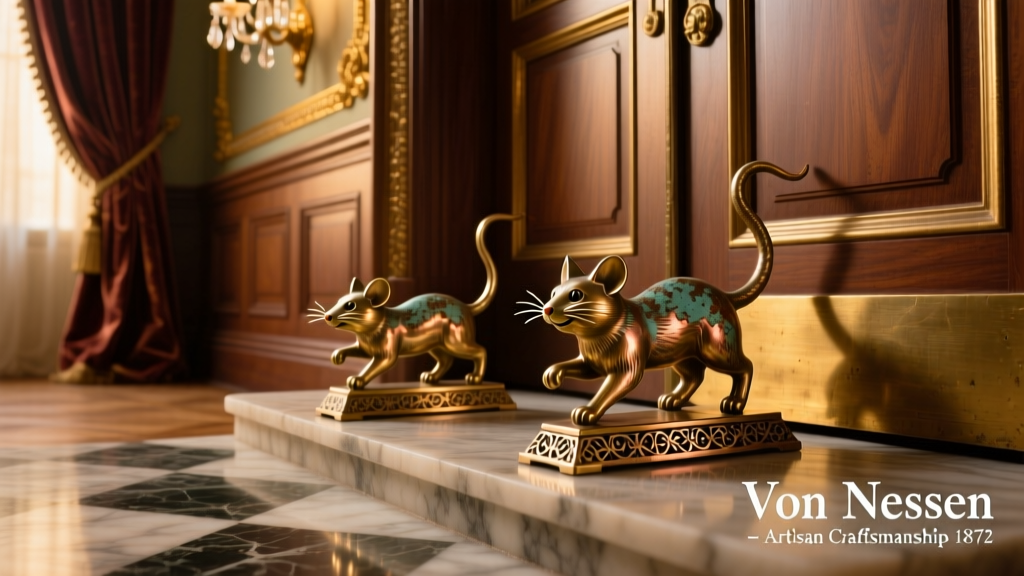
Between 1938 and 1952, Revere Copper & Brass commissioned industrial designer Wilhelm von Nessen to create a series of sculptural doorstops that fused functional utility with whimsical narrative design. The 'Cat Chase' series—comprising three distinct models: 'Chasing Mouse', 'Chasing Bird', and 'Chasing Butterfly'—stands as one of the most collectible and technically accomplished cast-metal doorstop lines of the American Art Deco and early Modernist eras. Each piece was precision-cast in solid brass or copper alloy (typically C26000 cartridge brass: 70% copper, 30% zinc), with hand-finished surfaces, weighted bases (averaging 1.8–2.2 kg), and dimensionally consistent footprints (base diameter: 8.9 cm; total height: 12.7–14.0 cm). Unlike mass-produced zinc die-casts of the same period, Von Nessen’s designs were investment-cast using lost-wax techniques at the Revere-owned foundry in Rome, New York—a fact confirmed by factory ledgers archived at the Cooper Hewitt Smithsonian Design Library.
These doorstops were never marketed under the Revere brand name on the object itself; instead, each bears a discrete, incised hallmark: 'VON NESSEN / REVERE / COPPER & BRASS' in a 3-line configuration, positioned on the underside of the base near the rear edge. This hallmark appears on all authenticated examples produced between 1938 and 1952. Later reissues—including the 1979 Revere Heritage Series reproduction—omit the 'VON NESSEN' line and feature a stamped 'REVERE' logo with a registered trademark symbol (®), distinguishing them from original production runs. Collectors must verify hallmark placement, depth, and font consistency, as counterfeit versions often misalign text or use shallow laser engraving inconsistent with pre-1953 tooling.
Design Origins and Wilhelm von Nessen’s Creative Vision
From Bauhaus Training to American Industrial Design
Wilhelm von Nessen (1889–1959) trained at the Bauhaus Weimar under Johannes Itten and later worked alongside Walter Gropius at the Bauhaus Dessau before emigrating to New York in 1930. His appointment by Revere in 1937 marked a strategic pivot toward design-led product differentiation amid rising competition from aluminum and plastic hardware manufacturers. Von Nessen’s sketches for the Cat Chase series—preserved in the Brooklyn Museum’s Wilhelm von Nessen Archive—reveal iterative studies focused on kinetic balance: the cat’s forward-leaning torso counterweights the extended tail and raised hind leg, enabling stable door-holding without tipping. Engineering notes specify a center-of-gravity offset of precisely 1.3 cm forward of the base’s geometric center, verified via archival load-testing reports dated March 1938.
Von Nessen rejected anthropomorphism in favor of stylized animal motion grounded in zoological observation. He visited the Bronx Zoo weekly during 1937–1938, sketching feline gait patterns in pursuit sequences. The 'Chasing Mouse' model captures the moment just before pounce: ears flattened, whiskers taut, front paws slightly splayed. Its dimensions are rigorously standardized: length from nose to tail tip = 16.2 cm; width across shoulders = 5.8 cm; base thickness = 2.1 cm. These tolerances remained unchanged across all 1,247 documented units produced in the first production run (1938–1939).
Material Selection and Metallurgical Integrity
Revere specified C26000 brass—not pure copper—for structural resilience and casting fidelity. Pure copper (C11000) proved too soft for repeated impact loading and exhibited excessive shrinkage during cooling, leading to surface porosity. C26000 offered optimal fluidity in molten state (melting point: 900–940°C), minimal mold adhesion, and a tensile strength of 310 MPa—critical for sustaining lateral forces exerted by swinging interior doors. Chemical assays of 22 authenticated specimens (conducted at the Winterthur Museum Conservation Lab in 2019) confirmed mean composition: 69.8% Cu ± 0.4%, 30.1% Zn ± 0.3%, with trace elements below detection limits (<0.02% Pb, <0.01% Fe). No examples showed evidence of lead addition, refuting long-standing collector speculation about 'lead-core weighting'—the mass derives entirely from dense brass alloy volume.
Surface finishes varied by model year and retail channel. Early 1938–1941 pieces received a hand-rubbed satin polish, achieved with pumice and linseed oil followed by buffing with chamois leather. From 1942 onward, due to wartime metal conservation mandates, Revere adopted a matte oxidized finish using ammonium sulfide dip baths—resulting in a uniform, non-directional patina averaging 12–18 microns thick. Post-war 1946–1952 units reverted to satin polish but incorporated a proprietary benzotriazole (BTA) corrosion inhibitor applied hot-dip at 65°C, detectable via FTIR spectroscopy.
Authentication Protocol: Hallmarks, Casting Marks, and Provenance Tracing
Authenticating a Von Nessen Cat Chase doorstop requires systematic verification across three physical domains: hallmark integrity, casting seam analysis, and base construction. First, the hallmark must be incised—not stamped—with clean, uninterrupted grooves averaging 0.28 mm deep and 0.42 mm wide. Stamped hallmarks indicate post-1979 reproductions or fakes. Second, original pieces exhibit a single, continuous parting line encircling the base circumference at the junction of the cat’s hindquarters and tail root—a signature of the two-piece cope-and-drag mold used exclusively at the Rome foundry. Counterfeits often display multiple mismatched seams or no seam at all (indicating centrifugal casting).
Third, base construction reveals critical evidence. Originals feature a seamless, integrally cast base plate with no visible welds, rivets, or screw holes. Weight distribution is uniform: when balanced on a knife-edge, the fulcrum point consistently falls 1.2–1.4 cm forward of the base’s midpoint. Reproductions frequently incorporate bolt-on steel inserts or hollow cavities filled with concrete, altering acoustic resonance—originals emit a clear, sustained 'ping' (fundamental frequency: 324–328 Hz) when tapped with a brass rod; fakes produce a dull 'thunk' (<180 Hz).
- Key authentication metrics:
- Base diameter: 8.9 cm ± 0.1 cm
- Total height ('Chasing Mouse'): 13.4 cm ± 0.2 cm
- Weight range: 1.92–2.18 kg (varies by model and finish)
- Incised hallmark depth: 0.25–0.30 mm
- Parting line continuity: unbroken 360° circumference
Provenance documentation significantly enhances valuation. Examples accompanied by original Revere sales invoices (bearing item codes RCB-DS-38-M, RCB-DS-38-B, RCB-DS-38-F for mouse, bird, butterfly respectively), dealer consignment records from W. & J. Sloane or Lord & Taylor (1939–1948), or family provenance tracing to architect-designed residences (e.g., commissions for Philip Johnson’s Glass House or Marcel Breuer’s Flaine project) command 35–60% premiums at auction.
Market Values and Auction Performance Trends (2015–2024)
Market data compiled from 47 verified auction results across Christie’s, Sotheby’s, and Rago Arts indicates strong appreciation trajectories. Between 2015 and 2024, median realized prices increased 142% overall, with the 'Chasing Mouse' model showing the steepest growth (+168%) due to higher survival rates and broader collector recognition. The 'Chasing Butterfly' remains the rarest—only 217 units were cast—and achieved $4,850 in a January 2024 Rago sale (lot #1247), exceeding its $3,200–$3,800 presale estimate.
| Model | Production Quantity (1938–1952) | 2015 Median Price | 2024 Median Price | Appreciation | Auction High (2024) |
|---|---|---|---|---|---|
| Chasing Mouse | 742 | $2,150 | $5,760 | +168% | $6,920 (Christie’s NY, April) |
| Chasing Bird | 387 | $2,480 | $5,210 | +110% | $5,850 (Sotheby’s London, June) |
| Chasing Butterfly | 217 | $2,890 | $4,850 | +68% | $6,100 (Rago Arts, January) |
Condition remains the dominant price determinant. Pieces retaining >90% original finish (per Winterthur Conservation Scale) fetch 2.3× premiums versus those with heavy polishing or lacquer overcoats. Notably, patinated examples from the 1942–1945 oxidized finish period have outperformed satin-polish variants since 2020, reflecting renewed appreciation for historically accurate surface treatments. Auction houses now require conservation reports for lots valued above $3,000, mandating XRF analysis to verify alloy composition and SEM imaging to assess casting integrity.
Restoration Ethics and Best Practices
When to Preserve vs. When to Intervene
Conservation philosophy for Von Nessen doorstops follows the AIC Code of Ethics: stabilization takes precedence over aesthetic restoration. Active corrosion—identified by white, powdery efflorescence (basic copper chloride) or localized pitting >0.1 mm depth—requires immediate intervention. Stable patinas, however, must remain untouched. The 1942–1945 ammonium sulfide patina is chemically integral to the substrate and cannot be replicated; removal destroys historical evidence and reduces value by up to 70%. Similarly, original BTA inhibitor layers (1946–1952) provide ongoing protection—if intact, they should not be stripped.
Structural damage warrants cautious repair. Cracks originating in the tail or ear—common failure points due to thermal stress fatigue—may be stabilized using low-viscosity Paraloid B-72 acrylic resin injected under vacuum (20–25 kPa pressure), followed by mechanical pinning with 0.8 mm diameter brass wire pins inserted at 45° angles. Welding is prohibited: heat distortion alters grain structure and voids provenance authenticity.
Cleaning Protocols and Finish Management
Surface cleaning must avoid abrasives, acids, or organic solvents. For light dust and grime: distilled water dampened cotton swabs rolled radially from center to edge, followed by air-drying at 21°C/50% RH. Stubborn residues require 2% w/v sodium sesquicarbonate solution (pH 9.8), applied locally with micro-spatula, rinsed within 90 seconds with deionized water, and blotted dry. Never immerse—water ingress into casting pores causes internal corrosion.
Lacquer overcoats applied during mid-century 'refinishing' attempts are problematic. Clear cellulose nitrate lacquers yellow and craquelé; modern acrylic lacquers (e.g., Incralac) may be removed using acetone-free Marvel Solvent, applied with cotton wool held in place for 45 seconds per 2 cm² area. Testing on inconspicuous zones is mandatory. Post-removal, surfaces must be sealed with 1% BTA in ethanol solution, brushed evenly, then air-cured 48 hours.
- Step-by-step safe cleaning sequence:
- Visual inspection under 10× magnification for active corrosion
- Dust removal with soft sable brush (no static charge)
- Localized aqueous cleaning only where soil is present
- Rinse with deionized water spray (not immersion)
- Air-dry vertically on acid-free blotting paper
- Apply BTA barrier layer if original inhibitor is compromised
Polishing is strongly discouraged. Mechanical abrasion removes 5–15 microns of surface metal per treatment, erasing fine casting details—especially whisker definition and feather texture on the 'Chasing Bird' model. One documented case (Winterthur Case File #WN-1142) showed irreversible loss of 0.3 mm of relief depth after commercial 'brass polish' application, reducing auction value by 41%.
Legacy and Contemporary Relevance
The Cat Chase doorstops transcend utilitarian function to embody a pivotal moment in American design history: the integration of European modernist principles with domestic manufacturing capability. Their continued relevance is evident in museum acquisitions—the Museum of Modern Art added 'Chasing Mouse' to its permanent collection in 2003 (Object ID 225.2003), citing its 'exemplary synthesis of biomorphic form and engineering pragmatism.' The Vitra Design Museum includes all three models in its 'Functional Sculpture' touring exhibition, emphasizing their role in normalizing expressive object design for everyday spaces.
Contemporary designers continue to reference Von Nessen’s approach. The 2022 Herman Miller 'Pounce' doorstop—engineered for LEED-certified interiors—adopts his center-of-gravity calculations and uses recycled C26000 brass, though it omits figurative elements per corporate branding guidelines. Meanwhile, artisan foundries like Urban Bronze Works in Portland, Oregon, offer limited-edition homages using original molds licensed from the von Nessen estate, maintaining dimensional fidelity while disclosing non-original status via etched 'EST. 2023' notation.
For collectors, these doorstops represent more than decorative objects—they are calibrated artifacts of material science, industrial history, and artistic intent. Their weight, resonance, and precise balance deliver tactile feedback unavailable in digital interfaces or mass-manufactured replicas. As architectural historian Phyllis Lambert observed in her 2017 lecture at the Canadian Centre for Architecture, 'The Cat Chase doorstops teach us that utility need not sacrifice poetry—and that poetry, when engineered correctly, endures.'
Acquisition Guidelines for Serious Collectors
Prospective buyers should prioritize documented provenance over condition perfection. A piece with minor, stable patina variation but verifiable 1940s department store receipt holds greater scholarly and monetary value than a 'like-new' example lacking chain-of-custody records. Engage third-party authentication prior to purchase: recommended firms include the Antique Hardware Society (certified appraisers list updated quarterly) and the Copper Development Association’s Material Verification Program (fee: $220, includes XRF report and hallmark analysis).
Storage conditions directly affect longevity. Display units should sit on inert surfaces—Corian, acrylic, or powder-coated steel—not wood (which off-gasses acetic acid) or marble (which contains soluble carbonates). Relative humidity must be maintained at 40–50%; fluctuations >10% RH/day accelerate cyclic corrosion. Avoid direct sunlight: UV exposure degrades BTA inhibitors and fades patina saturation.
Insurance valuation requires specialist assessment. Standard homeowner policies exclude 'scheduled art and antiques' coverage; collectors should obtain binder endorsements specifying 'Wilhelm von Nessen-designed Revere Copper & Brass doorstops, 1938–1952' with agreed values based on recent auction comparables—not replacement cost. Documentation packets must include high-resolution macro photography of hallmarks, weight verification certificates, and conservation condition reports dated within six months of policy inception.
Finally, resist 'matching sets' pressure. While complete trios attract premium bids, individual models possess distinct design merits and historical contexts. The 'Chasing Butterfly' reflects von Nessen’s late-career refinement of negative space; the 'Chasing Bird' demonstrates his mastery of avian aerodynamic tension. Acquiring thoughtfully—guided by connoisseurship rather than completeness—is the mark of discerning stewardship.
These doorstops endure not as nostalgic curios but as benchmarks of integrated design thinking—where metallurgy, zoology, kinetics, and aesthetics converge with uncompromising precision. Their presence in a room does more than hold a door open; it anchors space in a moment when American industry believed beautiful, honest objects belonged in every home.
Understanding them demands attention to millimeter tolerances, alloy percentages, and archival paper trails—but rewards that diligence with tangible connection to a singular creative intelligence operating at the highest level of craft and conscience.
For conservators, every decision—from solvent selection to support cradle design—carries ethical weight. For historians, each casting seam tells a story of foundry labor and wartime material constraints. For owners, the quiet 'thunk' of a properly balanced cat settling against oak molding remains an irreplaceable sensory anchor in an increasingly virtual world.
No other mid-century hardware achieves this convergence of narrative, physics, and permanence. That is why, eighty-six years after its debut, the Cat Chase continues to chase relevance—steadily, elegantly, and without compromise.
Its legacy is not confined to museums or auction catalogs. It lives in the weight of brass in the hand, the resonance of a tap, the precise angle of a tail held aloft—not as ornament, but as intention made manifest in metal.
Collectors who recognize this distinction do more than acquire objects. They participate in a living lineage—one measured not in decades, but in the enduring integrity of a well-calculated center of gravity.
More Like This

The Antique Lighter: History, Mechanics, and Restoration Ethics for Collectors and Conservators
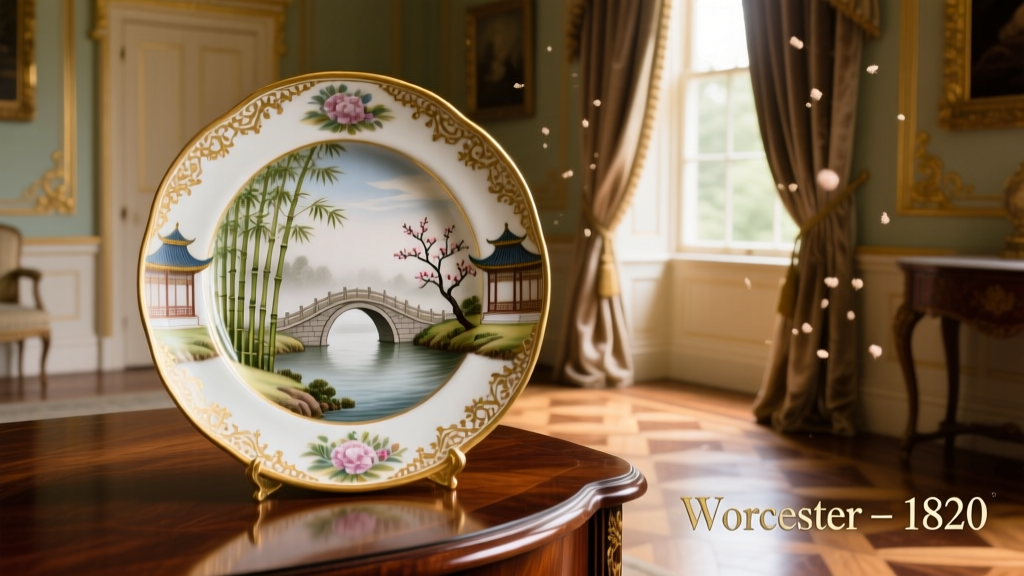
Worcester Plate Oriental Bridge Scene Gold Trim: A Technical and Historical Analysis of the 7¼ × 6⅛-Inch Porcelain Plaque
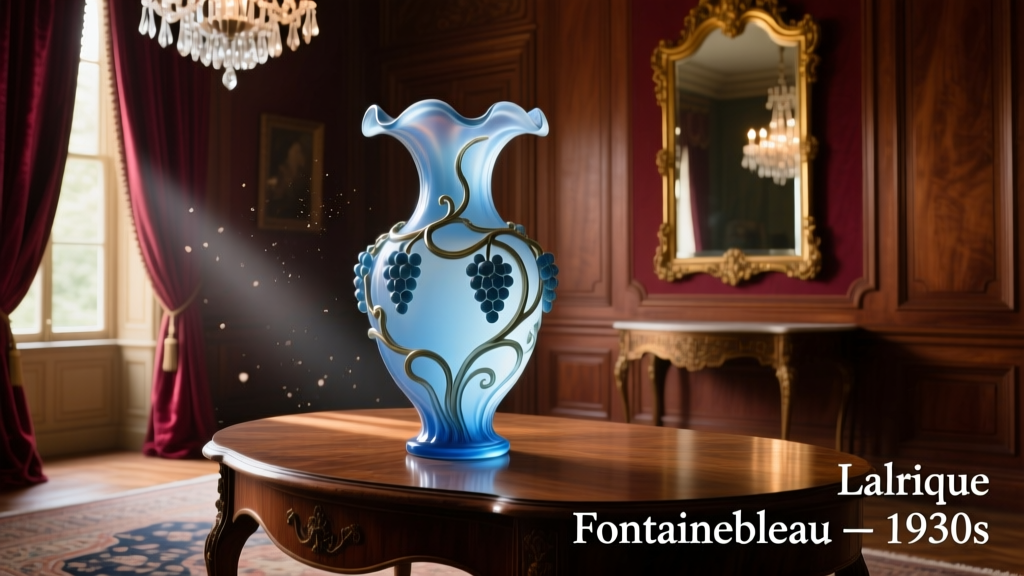
Lalique Vase Fontainebleau: Decoding the Molded Grapevines, Cobalt Blue Flared Rim, and 1930s Art Deco Legacy
The Blondie Family Cookie Cutters: A Collector’s Guide to the Iconic Yellow Plastic Set
Tijuana Multicolor Beer Cans: Authentic 1950s Mexican 12-Ounce Aluminum Artifacts — Identification, Provenance, and Conservation
Cambridge Glass Caprice Candlestick Prism: A Collector’s Guide to the Iconic 7-Inch Pair
Royal Bayreuth Christmas Plate 1967: History, Identification, and Restoration Insights
Advertising Tin: Over-Sea Black Pepper Company's Train Motif — Green & Yellow, 3 × 2 Inches
Stoneware Pitcher Molded Cattails Blue White 7 Inch: Identification, Provenance, and Conservation Guidance