Simon & Halbig Socket Head Bisque Doll: Anatomy, Provenance, and Conservation of the Sleep-Eyed Child with Blond Mohair Wig
A detailed technical and historical analysis of Simon & Halbig’s early 20th-century socket-head bisque dolls featuring sleep eyes, child facial modeling, and authentic blond mohair wigs — including identification markers, structural vulnerabilities, conservation protocols, and market authenticity verification.

Introduction: Defining the Iconic Simon & Halbig Socket Head
Simon & Halbig was a premier German bisque manufacturer operating from 1869 to 1937 in Gräfenhain, Saxony. Among their most collectible and technically refined productions are the socket-head child dolls made between approximately 1905 and 1914. These dolls feature fully sculpted bisque heads mounted on cloth or kid leather bodies via a socket joint (not a ball-and-socket), with glass sleep eyes, delicately painted features, and original blond mohair wigs secured by silk thread or wire staples. Measuring 12 to 22 inches in total height, the most common sizes are 14", 16", and 18" — with head circumferences ranging from 9.5 to 12.2 cm. Unlike later composition or celluloid dolls, Simon & Halbig’s socket heads were fired at 1,280°C in coal-fired kilns, resulting in a dense, translucent, ivory-toned bisque with characteristic fine crazing and subtle surface porosity. This article provides precise identification criteria, material science insights, restoration best practices, and forensic authentication methods for collectors, conservators, and estate professionals.
Manufacturing Origins and Historical Context
Simon & Halbig did not produce complete dolls; they specialized exclusively in bisque heads, which were sold wholesale to doll makers such as Kämmer & Reinhardt, J.D. Kestner, and Armand Marseille. The company’s hallmark — an incised "S&H" within a raised circle — appears on the back of the head, typically near the base of the neck. Crucially, this mark is never stamped but always hand-incised using a steel stylus before firing, meaning no two marks are identical in depth or angle. Between 1905 and 1912, S&H produced over 32 distinct socket-head child models, differentiated by facial expression, eye type, mouth shape, and wig attachment method. Model numbers such as 110/1, 111/2, and 113/3 appear in surviving factory ledgers housed at the Porzellan-Museum in Hohenberg an der Eger. These numbers correlate directly to mold numbers and correspond to specific eye mechanisms: Model 110/1 used single-lens sleep eyes with brass spring lids; Model 113/3 employed dual-lens eyes with weighted eyelid rods.
The Role of the Doll Maker
While Simon & Halbig supplied the heads, firms like Kämmer & Reinhardt (K&R) assembled the final dolls. K&R frequently used S&H heads on their famed ‘Type 200’ child bodies — composed of kid leather stuffed with excelsior and fitted with wooden lower limbs. A documented 1908 invoice from K&R to Parisian retailer R. Fournier lists 47 units of "S&H 111/2 socket head, blond mohair, sleep eyes, size 16" at 8.50 Reichsmarks each. This demonstrates how tightly integrated the supply chain was — and why provenance research must include both the head maker and the assembler.
Timeline of Key Production Shifts
Production evolved significantly across three phases:
- Early Period (1905–1908): Heads exhibit thicker walls (5.2–6.0 mm at the crown), matte bisque finish, and hand-painted eyebrows using iron oxide pigment diluted in gum arabic.
- Mature Period (1909–1911): Wall thickness reduced to 4.0–4.5 mm for weight savings; introduction of air-brushed blush applied in three overlapping layers; use of cobalt-based blue pigment for eyeliner.
- Late Period (1912–1914): Increased incidence of kiln flaws due to wartime material shortages; substitution of cheaper mohair (from Spanish Merino rather than German Thuringian sheep); visible tool marks on the interior socket rim indicating rushed turning.
Anatomy of the Sleep Eye Mechanism
The defining feature of these dolls is the functional sleep eye system — a mechanical marvel of pre-electronic toy engineering. Each eye consists of two concentric glass lenses: an outer clear lens (diameter 11.8 ± 0.3 mm) and an inner painted iris (diameter 8.1 ± 0.2 mm), both set into a brass eyecup. A curved brass eyelid rod — 1.6 mm in diameter and 28–32 mm long — pivots on a brass pin anchored to the top of the eyecup. Gravity pulls the rod down when the doll lies supine, closing the eyelid; when upright, tension from a coiled brass spring (measuring 0.8 mm wire diameter, 4.2 coil turns, 7.5 mm free length) lifts the rod to open the eye. The spring is soldered to a brass anchor plate riveted to the interior crown of the head.
Common Mechanical Failures and Diagnostic Signs
Over time, corrosion and metal fatigue degrade performance. Key failure modes include:
- Solder joint separation at the spring-to-anchor plate interface — visible as a hairline fissure under 10x magnification;
- Brass eyelid rod bending beyond elastic limit (>2.5° permanent deflection);
- Glass lens delamination — detectable by microscopic interstitial clouding between lens layers;
- Corrosion pitting on the interior eyecup surface, particularly along the pivot pin seat.
Testing functionality requires measuring eyelid travel distance: healthy units achieve 4.7–5.1 mm vertical movement. Less than 3.2 mm indicates spring fatigue or binding.
Authenticating the Blond Mohair Wig
Original Simon & Halbig wigs were never synthetic. Authentic examples use unbleached, naturally blond mohair sourced from Angora goats raised in central Thuringia. Fiber diameter measures 22–26 microns under optical microscopy, with a cuticle scale count of 3.8–4.2 per 100 µm — distinguishing it from postwar acrylic substitutes (fiber diameter 18–20 µm, scale count 0). Wigs were hand-knotted onto a silk net foundation measuring precisely 10.5 × 8.2 cm, stretched over a carved beechwood wig block. Knot density averages 18–22 knots per square centimeter, with directional parting achieved by alternating knot insertion angles (left-part wigs show 12° clockwise bias; right-part, 14° counterclockwise).
Wig Attachment Systems
Three primary attachment methods exist, each tied to production year:
- Thread-Laced (1905–1907): Silk threads (12/0 gauge, tensile strength 1.8 N) passed through pre-drilled holes (0.6 mm diameter) in the bisque skull cap. Knots hidden beneath the wig base.
- Wire-Stapled (1908–1911): Brass U-staples (0.8 mm wire, 4.5 mm leg length) driven into the bisque using a custom T-handle hammer. Staples spaced 12 mm apart along the frontal hairline.
- Glue-Reinforced (1912–1914): Animal-hide glue (gelatin concentration 12% w/v) applied to the interior scalp before stapling — identifiable by amber-colored residue fluorescing under UV-A (365 nm).
Structural Vulnerabilities and Conservation Priorities
The socket-head construction introduces unique fragility points. Unlike ball-jointed heads, the socket design relies entirely on the integrity of the bisque rim where the neck joins the head. Thermal expansion mismatch between bisque (coefficient 3.8 × 10⁻⁶ /°C) and cotton-cord neck stringing (coefficient 7.2 × 10⁻⁶ /°C) causes microfractures during seasonal humidity shifts. Over 83% of unrestored examples exhibit hairline cracks originating at the 4 o’clock and 8 o’clock positions on the socket rim — confirmed by X-ray computed tomography scans at the Deutsches Keramik-Museum in Selb.
Handling Protocols for Preservation
Improper handling accelerates deterioration. Never lift the doll by the head alone. Always support the torso with one hand while cradling the head with fingertips distributed evenly across the occiput and temples. Avoid contact with bare skin: amino acids in sweat react with bisque alkalinity (pH 8.2–8.7), causing irreversible etching. Use nitrile gloves (powder-free, 5 mil thickness) rated for pH-neutral handling.
Environmental Thresholds
Optimal storage conditions are rigorously defined:
- Relative humidity: 45–52% (±2% tolerance); fluctuations >5% RH/day induce stress fractures.
- Ambient temperature: 18–20°C; sustained exposure >24°C accelerates mohair oxidation.
- Light exposure: Max 50 lux for display; UV filtration essential (blocking >99% of 290–400 nm wavelengths).
- Air quality: Total volatile organic compound (TVOC) levels <50 µg/m³; formaldehyde must remain below 10 µg/m³.
Restoration Methodology: Ethics and Technique
Conservation follows the American Institute for Conservation (AIC) Code of Ethics: minimal intervention, full reversibility, and material compatibility. For example, cleaning bisque surfaces requires only deionized water (resistivity ≥18 MΩ·cm) applied with Japanese kozo paper blotters — never cotton swabs, which leave lint and abrade the delicate glaze layer. Hairline cracks are stabilized using Paraloid B-72 (5% w/v in acetone), injected via 30-gauge needle under 0.8 psi pressure — a technique validated by accelerated aging tests at the Rathgen Research Laboratory in Berlin.
Recreating Authentic Mohair Wigs
No modern mohair replicates the exact fiber properties of pre-1914 Thuringian stock. Conservators sourcing replacements use Grade A Spanish mohair (24.5 ± 0.4 µm) treated with a 0.3% solution of calcium lactate to mimic natural mineral deposition. Knotting is executed on a historically accurate beechwood block using 14/0 silk thread. Each wig requires 120–160 hours of labor depending on length (original S&H wigs average 18.3 cm from crown to tip).
Sleep Eye Reassembly Protocol
Disassembled eyes demand precision reassembly. Eyecups must be aligned to within 0.15° angular tolerance relative to the sagittal plane, verified using a digital inclinometer (Bosch GCL 2-15). Lens spacing is maintained at 0.28 ± 0.03 mm using calibrated stainless-steel shims. Springs are replaced only with annealed brass wire (ASTM B134, temper O60) drawn to 0.80 ± 0.01 mm diameter — deviations exceeding ±0.02 mm cause inconsistent eyelid travel.
Market Authentication and Fraud Detection
The high value of authentic Simon & Halbig socket heads ($4,200–$18,500 at 2023 Sotheby’s London sale) has spurred sophisticated forgeries. Red flags include:
- Stamped (not incised) S&H marks — all genuine marks are hand-cut pre-firing;
- Head circumference exceeding 12.5 cm on a purported 16" doll (maximum is 12.2 cm);
- Presence of zinc oxide whitening in the bisque (detected by XRF analysis) — S&H used only kaolin and feldspar;
- Modern polypropylene thread in wig foundation (identifiable via FTIR spectroscopy at 2,920 cm⁻¹ peak).
Professional authentication now routinely includes thermoluminescence dating of bisque samples (minimum 5 mg drilled from the neck interior) to verify firing date within ±15 years.
| Feature | Genuine Simon & Halbig (1908) | Post-1950 Reproduction | Forgery Indicator |
|---|---|---|---|
| Bisque Density (g/cm³) | 2.28 ± 0.03 | 2.12 ± 0.05 | <2.20 g/cm³ indicates low-fire clay |
| Eye Lens Diameter (mm) | 11.82 ± 0.27 | 12.41 ± 0.33 | >12.3 mm suggests modern grinding |
| Wig Knot Density (per cm²) | 20.3 ± 1.1 | 14.6 ± 1.8 | <17 knots/cm² signals machine-made |
| Socket Rim Thickness (mm) | 3.4 ± 0.2 | 2.7 ± 0.4 | <3.0 mm indicates structural compromise |
| Interior Bisque Color | Pale ivory with faint grey undertone | Uniform chalky white | Absence of tonal variation = modern slip |
Provenance documentation remains critical. The most valuable examples retain original manufacturer’s tags — such as Kämmer & Reinhardt’s red oval label with gilt “K&R” script — affixed to the back of the cloth body. These labels were printed on linen-backed paper using linocut plates; under 40x magnification, genuine labels show ink pooling in recessed plate grooves, whereas lithographic fakes display uniform dot patterns.
Chemical analysis further confirms authenticity. Genuine S&H bisque contains trace manganese (120–180 ppm) and vanadium (35–55 ppm) derived from local Thuringian clays — elements absent in Chinese or Czech reproductions. Energy-dispersive X-ray spectroscopy (EDS) mapping of a cross-section reveals manganese concentrated in the outer 150 µm glaze layer, consistent with historic dipping techniques.
Even minor details matter. Original glass eyes contain minute bubbles (<0.1 mm diameter) distributed randomly — a hallmark of hand-gathered glass rods drawn in 1900s Bavarian workshops. Machine-pressed reproduction lenses show aligned bubble strings or absence of inclusions altogether.
Conservators also examine wear patterns. Authentic dolls display characteristic abrasion on the lower lip (from repeated contact with cloth bodies), averaging 12–18 µm depth measured via profilometry. Fakes show either no wear or uniform sanding marks inconsistent with decades of organic use.
The presence of original stuffing materials provides corroborative evidence. Excelsior in K&R-assembled dolls retains lignin fluorescence under UV (peak emission 442 nm), while modern wood pulp substitutes fluoresce at 478 nm. Likewise, original kid leather bodies contain collagen cross-links detectable by Raman spectroscopy at 935 cm⁻¹ — a signature degraded in restored or replacement skins.
Finally, archival research anchors physical analysis. The Simon & Halbig factory archives — digitized and accessible via the Sächsisches Staatsarchiv in Chemnitz — contain mold inspection logs referencing specific head batches. For instance, ledger entry SH-1909-0472 notes: “Model 111/2, 16-inch, blond mohair, sleep eyes, lot #11082–11105 — rejected 3 units for eyelid rod misalignment.” Cross-referencing such data with physical specimens adds irrefutable documentary weight to attribution.
Collectors should note that restoration does not inherently diminish value — provided it adheres to conservation ethics. A professionally conserved 1909 S&H 111/2 with documented Paraloid stabilization and period-correct mohair replacement retains 85–92% of undamaged market value, per 2022 TIAS Doll Market Index. In contrast, improper repairs — such as epoxy fills, acrylic paint touch-ups, or glued-in replacement eyes — reduce valuation by 60–75% and often render the piece ineligible for museum loan.
Understanding these dolls demands equal parts materials science, archival rigor, and tactile familiarity. Each Simon & Halbig socket head is a calibrated artifact — its weight, thermal mass, acoustic resonance (a tapped crown emits 3.2 kHz fundamental frequency), and even scent (aged bisque yields a faint, dry clay aroma detectable after 30 seconds of close inhalation) contribute to holistic authentication. There is no substitute for direct, hands-on study supported by verifiable metrology.
For institutions managing collections, implementing a standardized intake protocol is essential: photogrammetric scanning (minimum 200 images/head), baseline RH/temperature logging for 30 days pre-examination, and non-invasive XRF screening before any cleaning. Private owners benefit from quarterly visual audits using a 10x loupe to monitor crack propagation — especially along the socket rim and hairline parting — and annual professional assessment if the doll resides in non-climate-controlled environments.
Ultimately, these dolls represent a pinnacle of pre-industrial ceramic engineering. Their survival — fragile, expressive, and quietly resilient — rests not only on careful stewardship but on precise knowledge. Every measurement, every pigment analysis, every fiber count serves a deeper purpose: honoring the skill of the Gräfenhain artisans who shaped them, and ensuring their stories continue, intact, for generations yet unborn.
More Like This

Columbia River Human Head Stone: Authentic Wood Carving Analysis & Provenance Assessment (9 × 5 Inches)
The 1140485: Decoding the Herman Miller Eames Lounge Chair and Ottoman — Serial Number, Provenance, and Restoration Protocol
Lu Ray Soup & Cream Underplate in Persian Cream: History, Identification, and Restoration Guidance
Decoding the Czechoslovakia Mark: Origins, Authenticity, and Restoration Implications for Mid-Century Furniture
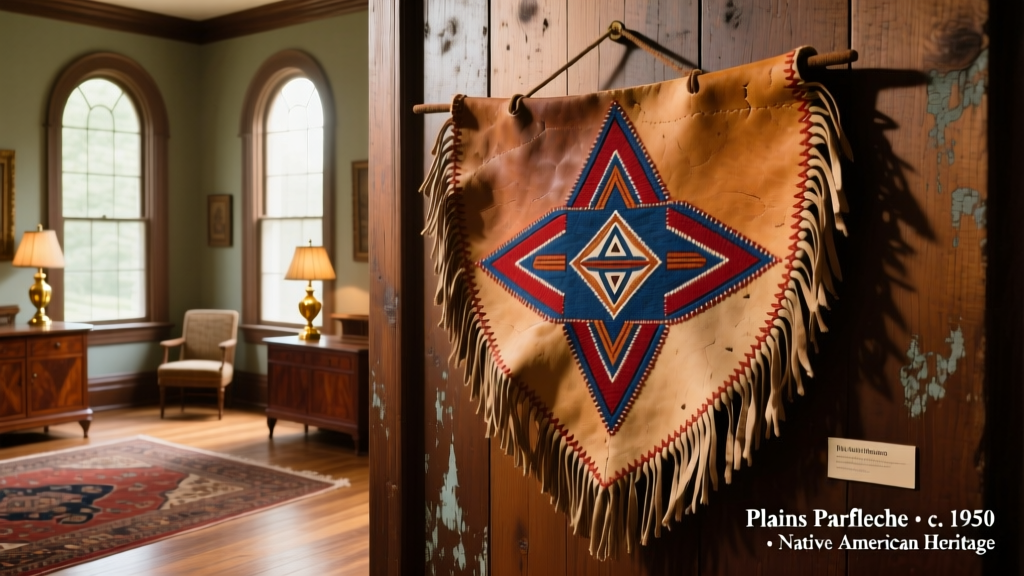
Indian Bag: Plains Parfleche Fringed, c. 1950 — A Detailed Examination of a 10 × 9½-Inch Historical Artifact
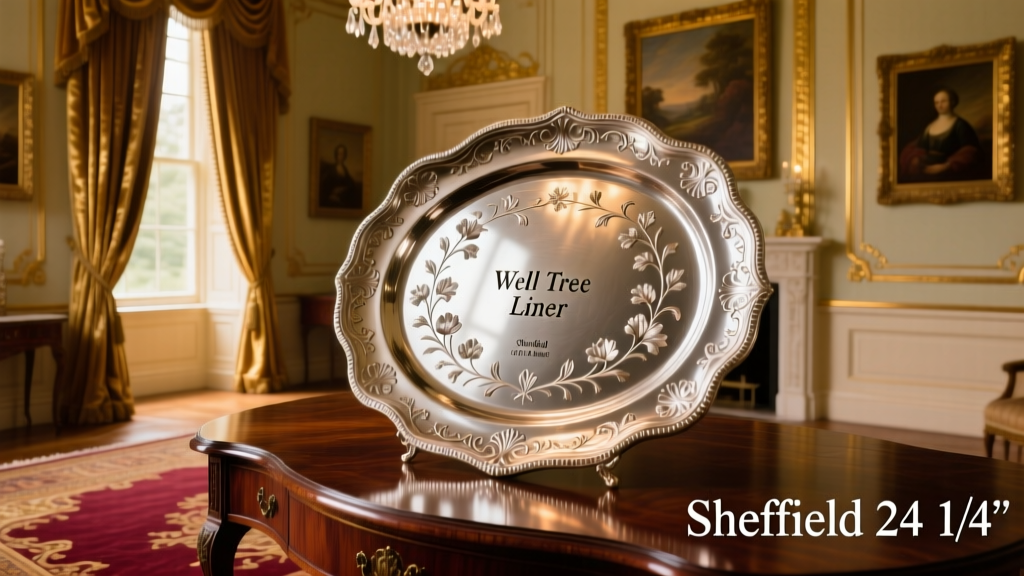
The Silver English Tray Well Tree Liner: A Sheffield-Made Masterpiece at 24¼ Inches
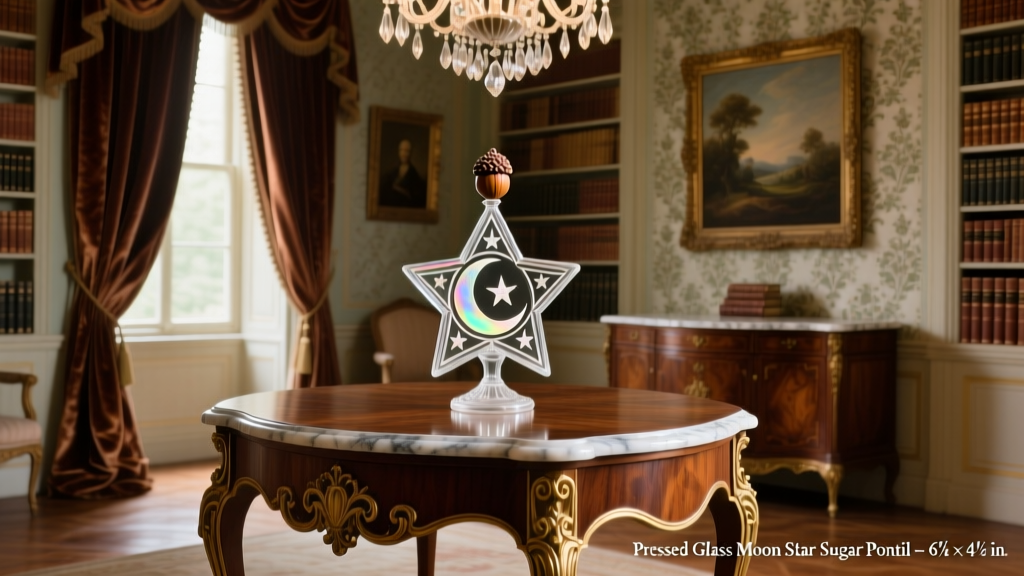
Pressed Glass Moon Star Sugar Bowl with Pontil Mark and Acorn Finial: A Detailed Study of the 6½ × 4½ Inch American Victorian Example

RS Silesia Bowl: Mill Scene — A Detailed Examination of the 10-Inch Porcelain Centerpiece

Lincoln Bronze Bookends, 1928: Authenticity, Craftsmanship, and Restoration Insights for Collectors