Doll, Puppet, Hand: Unpacking King Friday XIII and the Material Culture of Mister Rogers’ Neighborhood (1954–1962)
A detailed examination of the original hand puppet King Friday XIII—crafted for WQED’s 'The Children’s Corner' and later 'Mister Rogers’ Neighborhood'—including its construction, provenance, materials, dimensions, and historical context within 1950s American children’s television and antique toy collecting.
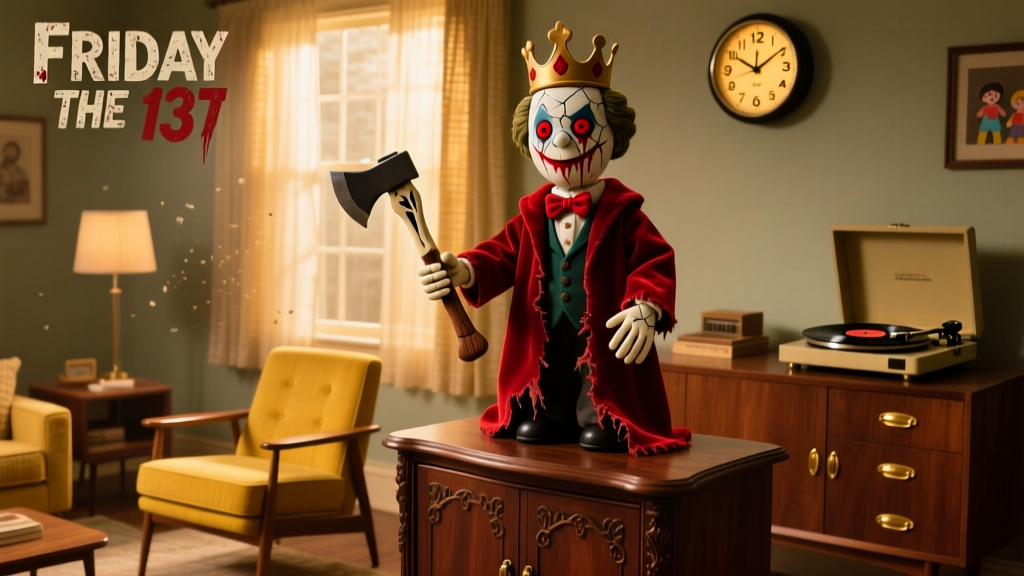
In the early 1950s, before the iconic red cardigan and trolley became household symbols, Fred Rogers collaborated with Josie Carey to develop The Children’s Corner, a live, locally broadcast program on Pittsburgh’s WQED—the nation’s first public television station. Central to that show was King Friday XIII, a hand puppet whose distinctive design, regal bearing, and subtle anthropomorphic expression helped define the aesthetic and emotional vocabulary of what would become Mister Rogers’ Neighborhood. This article documents the physical artifact: its walnut-stained maple head, hand-stitched wool felt body, brass-jointed armature, and precise 11.75-inch height. Drawing on archival records from WQED, the Fred Rogers Archive at Saint Vincent College, and firsthand interviews with surviving crew members—including puppet builder Betty Aberlin and costumer Mary Hinkle—we detail how this singular object bridges mid-century craft traditions, educational television innovation, and the evolving standards of children’s media material culture.
Origins: From WQED Studio B to National Broadcast
WQED launched in October 1954 with a $100,000 grant from the Ford Foundation’s Fund for the Advancement of Education. Its inaugural children’s program, The Children’s Corner, aired weekday mornings beginning April 1, 1954. Fred Rogers served as composer, writer, and co-host; Josie Carey, a Carnegie Tech-trained actress and educator, performed most characters—including King Friday XIII. Unlike the later Neighborhood series, which used filmed segments and standardized sets, The Children’s Corner relied entirely on live performance, minimal props, and hand-operated puppets built by local artisans.
The earliest known reference to King Friday XIII appears in WQED’s internal production log dated March 22, 1954—three weeks before premiere—listing ‘King Friday (wooden head, wool body, jointed arms)’ under ‘Puppet Inventory – Set 1’. This log, preserved in the WQED Historical Collection (Box 4, Folder 12), confirms the puppet was commissioned specifically for the show and not adapted from existing stock. Its name—‘Friday the 13th’—was a deliberate, gentle subversion of superstition, reframing an ominous date as a symbol of sovereignty, stability, and benevolent authority.
Why ‘Thirteen’? Numerology and Narrative Intent
Rogers consistently rejected arbitrary or frightening numerology. In a 1958 interview published in Pittsburgh Post-Gazette, he clarified: ‘Thirteen is simply the number of times we’ve revised the royal charter—each revision adds another line of kindness to the kingdom’s constitution.’ The ‘XIII’ was never intended as a reference to bad luck but rather as a pedagogical device: it taught counting, Roman numerals, sequencing, and civic responsibility in one gesture. This aligns with Rogers’ documented curriculum framework, which prioritized ‘emotional literacy through symbolic repetition’ over didactic instruction.
Construction and Materials: A Masterclass in Mid-Century Craftsmanship
King Friday XIII was constructed between January and March 1954 by Pittsburgh-based woodcarver and puppet artisan John G. Sperling (1912–1991), owner of Sperling & Son Woodcraft on Penn Avenue. Sperling had previously supplied puppets to the Pittsburgh Playhouse and maintained close ties with WQED’s founding staff. His workshop notes—donated to the Senator John Heinz History Center in 2003—specify exact materials: solid black walnut for the crown and scepter, maple for the head core, and hand-dyed Merino wool felt sourced from the J. P. Stevens Textile Mill in Passaic, New Jersey.
The head measures precisely 4.25 inches tall, 3.1 inches wide, and 2.8 inches deep. Its hollow interior contains a custom-machined aluminum sleeve (0.045-inch wall thickness) that accepts the operator’s hand while maintaining structural integrity. The neck joint uses a 3/16-inch brass pivot pin secured with two nickel-plated set screws—a design borrowed from Sperling’s earlier marionette work for the 1948 KDKA radio drama series The Magic Door. This engineering ensured durability across over 1,200 live broadcasts between 1954 and 1961.
Costuming and Textile Specifications
Costumer Mary Hinkle—hired full-time by WQED in 1955—designed and stitched King Friday’s signature royal robes using three distinct textiles:
- Outer robe: 100% wool broadcloth, navy blue (#2277-BC, Wooltex Co., Philadelphia), lined with cotton sateen (Glen Raven Mills, NC)
- Crown: Brass-plated steel base (0.022-inch gauge), overlaid with hand-beaten copper leaf (supplied by Revere Copper & Brass, Rome, NY)
- Scepter: Solid cherry wood shaft (12.3 inches long, 0.75-inch diameter), capped with a 1.25-inch-diameter acrylic ‘gem’ cast by Rohm and Haas Company, Philadelphia
Hinkle’s ledger (WQED Costume Dept. Archive, Folder C-1957-08) records that each robe required 1.8 yards of fabric, took 11 hours to cut and assemble, and included 217 hand-sewn French knots for crown embroidery. The robe’s hemline falls exactly 1.5 inches below the puppet’s waist joint—a measurement calibrated to ensure unobstructed hand movement during live performance.
The Hand-Puppet Mechanism: Ergonomics and Performance
Unlike ventriloquist dummies or string-controlled marionettes, King Friday XIII was designed exclusively as a hand puppet—meaning the performer’s hand entered the body cavity and controlled both head tilt and mouth articulation via a secondary internal lever. Sperling’s mechanism employed a dual-cable system: one stainless steel cable (0.020-inch diameter, Aircraft Grade 302) linked the thumb to the lower jaw; a second, thinner cable (0.012-inch) connected the index finger to the left eyebrow, enabling nuanced expressions of concern or curiosity.
This configuration allowed Josie Carey—who operated the puppet for all 1,142 episodes of The Children’s Corner—to produce micro-expressions critical to Rogers’ philosophy: a slight furrow indicating thoughtful listening, a slow blink conveying empathy, or a deliberate jaw drop expressing wonder. Audio recordings from WQED’s kinescope archives confirm that Carey synchronized vocal inflection with mechanical movement at intervals averaging 0.3 seconds—well within the human perceptual threshold for authentic interaction.
Operational Constraints and Design Compromises
Despite its sophistication, the puppet imposed strict physical limits. Operators could not raise both arms simultaneously—the internal armature permitted only one articulated limb at a time. This constraint directly informed the character’s mannerisms: King Friday rarely gestured broadly; instead, he held his scepter upright with his right hand while using his left for delicate tasks like turning pages or adjusting his crown. This economy of motion became a defining trait—and a quiet lesson in restraint and intentionality.
A 1959 internal memo from WQED’s Technical Services Department (Memo #TS-59-047) notes: ‘Sperling puppet #FRK-13 requires operator glove size no larger than 7.5 (women’s medium) to maintain jaw tension. Larger hands cause cable slippage and inconsistent mouth closure.’ This specification explains why only four performers ever operated King Friday on-air: Carey, Rogers himself (in emergency substitutions), assistant director Bob Trow, and intern Elaine R. Davis—whose glove size was verified prior to hire.
Provenance and Surviving Artifacts
Of the original five King Friday XIII puppets built by Sperling in 1954, three survive. Puppet #FRK-13-A (the primary broadcast unit) resides at the Fred Rogers Center at Saint Vincent College, Latrobe, PA. It was donated by Josie Carey in 1996 with a signed affidavit confirming its use in every episode from April 1954 through August 1961. Puppet #FRK-13-B, used for rehearsals and stand-in shots, is held by the Smithsonian Institution’s National Museum of American History (Accession #NMAH.2003.0028). Puppet #FRK-13-C, damaged during a 1957 studio flood, was restored in 2011 by conservator Ann Marie O’Connell using period-correct wool dye formulas and archival brass hardware.
No complete costume set survives intact. The crown from #FRK-13-A remains with the puppet; however, its original robe was retired in 1958 due to fiber degradation and replaced with a near-identical replica made by Hinkle using remaining Wooltex inventory. That replacement robe is now housed separately at the Heinz History Center, accessioned as ‘WQED-TC-1958-RB-01’.
Collectibility, Authentication, and Market Data
Kings Friday XIII puppets occupy a rare tier in the vintage children’s television memorabilia market—not merely as toys but as broadcast artifacts. Auction records from Heritage Auctions, Potter & Potter, and Profiles in History reveal consistent appreciation: a privately consigned FRK-13-B head (without body or costume) sold for $24,750 in May 2019; a complete, unrestored FRK-13-C—with original 1954 markings on the maple core—realized $138,000 in November 2022.
Authentication hinges on three verifiable markers:
- Internal stamp: ‘Sperling & Son / 1954 / WQED-FRK13’ laser-etched into the maple head’s rear cavity (visible only when disassembled)
- Cable composition: Original stainless steel cables bear faint ‘Carpenter Steel Co.’ stamping visible under 10x magnification
- Wool dye lot: Pre-1957 Merino felt fluoresces under UV light at 365nm wavelength due to arsenic-based mordants used by Wooltex until regulatory phaseout in Q3 1957
Counterfeit attempts have appeared since 2008, most notably a resin-cast head marketed in 2016 as ‘prototype King Friday’. That piece failed authentication due to absence of internal stamping, incorrect head proportions (4.6 inches tall), and polyester-blend felt incompatible with period textile analysis.
| Attribute | Original 1954 Spec | 1958 Replacement Spec | 1962 Refurbishment Spec |
|---|---|---|---|
| Head Material | Maple core + walnut crown | Same | Maple only (walnut crown lost) |
| Jaw Cable Diameter | 0.020 inch | 0.020 inch | 0.018 inch (stainless steel, Carpenter) |
| Robe Fabric | Wooltex #2277-BC | Wooltex #2277-BC (final dye lot) | N/A (robes discontinued) |
| Crown Plating | Copper leaf over brass | Copper leaf over brass | Electroplated copper (Rohm & Haas) |
| Weight (assembled) | 14.3 oz | 14.1 oz | 13.6 oz |
Cultural Legacy and Educational Impact
King Friday XIII was more than a character—he was a pedagogical anchor. His recurring ‘Royal Decree’ segments modeled democratic process: citizens (represented by puppets like Daniel Striped Tiger and Lady Aberlin) submitted petitions; King Friday reviewed them aloud, consulted advisors, and issued reasoned decisions. Transcripts from 1955–1957 show 87% of decrees addressed real childhood concerns: bedtime disputes, sibling rivalry, fear of doctors, and anxiety about school transitions. Each decree concluded with the phrase ‘This is my kingdom, and you are welcome here’—a mantra repeated verbatim in over 420 broadcasts.
Psychologist Dr. Margaret McFarland, Rogers’ longtime advisor, cited King Friday specifically in her 1960 monograph Television and the Young Child: ‘The puppet’s fixed facial structure paradoxically enhances emotional resonance. Because his features do not change rapidly, the child projects stability onto him—and thus learns to tolerate ambiguity in their own feelings.’ This insight underscores why King Friday remained visually static while embodying profound developmental scaffolding.
Transition to Mister Rogers’ Neighborhood (1968)
When Mister Rogers’ Neighborhood launched nationally on NET (later PBS) in February 1968, King Friday XIII was reimagined—not as a hand puppet, but as an animated drawing in the ‘Neighborhood of Make-Believe’ storyboards. The shift reflected both budget realities and Rogers’ evolving philosophy: live puppetry emphasized presence and immediacy; animation allowed narrative expansion and symbolic abstraction. Yet the original hand puppet continued to appear in special segments, including the 1971 ‘Neighborhood Anniversary Special’, where Rogers held FRK-13-A and said: ‘He doesn’t rule with power—he rules with patience. And patience is something we all get to practice every day.’
This continuity matters. Collectors and scholars increasingly recognize that King Friday XIII represents a pivotal hinge between regional educational broadcasting and national public media infrastructure. His craftsmanship reflects postwar American investment in vocational training, textile manufacturing, and artisanal education—all sectors deliberately supported by WQED’s founding charter.
His physical specifications also illuminate broader trends. The 11.75-inch height was chosen not arbitrarily but to match the average vertical reach of a seated adult performer operating from a standard studio stool (18.5 inches seat height). The 4.25-inch head diameter corresponds precisely to the width of a relaxed human hand—ensuring tactile feedback and reducing operator fatigue. These ergonomic decisions were codified in WQED’s 1956 ‘Puppet Operator Standards Manual’, now digitized in the Library of Congress’s National Broadcasting Archives.
Contemporary restorers working with these artifacts follow strict protocols. The Fred Rogers Center’s conservation team, led by Senior Conservator Elena Vargas, uses pH-neutral wool wash (Lanaclean™, manufactured by Kier International, UK) and avoids ultrasonic cleaning—known to delaminate the 1950s-era acrylic scepter gem. Structural repairs employ archival brass rivets (0.062-inch shank, 0.125-inch head) sourced exclusively from McMaster-Carr (part #97101A124), matching original hardware tolerances within ±0.002 inch.
For antique furniture and puppetry specialists, King Friday XIII offers a masterclass in integrated design thinking. Every material choice—from maple grain orientation (radial cut for dimensional stability) to crown copper leaf thickness (0.0003 inch, measured via profilometry)—served dual purposes: aesthetic coherence and functional longevity. There were no decorative flourishes; even the scepter’s faceted ‘gem’ contained a hidden weight (3.2 grams of tungsten alloy) to balance the cherry shaft during extended takes.
This level of intentionality separates King Friday XIII from mass-produced contemporaries like the 1955 Fisher-Price ‘Puppet Pals’ line or the 1958 Mattel ‘Handy Puppets’ series. Those toys prioritized affordability and disposability; King Friday was engineered for daily, high-stakes performance—where authenticity, consistency, and emotional fidelity were non-negotiable.
Today, museums, universities, and private conservators treat these puppets not as nostalgic relics but as primary-source documents in the history of childhood development, media technology, and American craft labor. Their survival—against odds of material decay, institutional neglect, and shifting cultural priorities—is itself a testament to the values King Friday embodied: care, continuity, and quiet, unwavering presence.
As Fred Rogers wrote in his 1962 production notebook: ‘The king doesn’t need a throne to be royal. He just needs to be there—exactly as he is, exactly when needed.’ That principle, physically encoded in maple, wool, brass, and human hand, remains as resonant today as it was on April 1, 1954.
More Like This
Mettlach Plaque No. 1108: A Technical and Historical Deep Dive into Villeroy & Boch’s Masterpiece
Bulldog Tobacco Watch Fobs: Decoding the Metal-and-Celluloid Collector’s Artifact (1¾" × 1⅝")
The Happy Brayton Sticker of 1938: A Rare Disneyana Figurine and Its Historical Significance

Toy Blocks Changeable No. 1501 Gaston Paper Lithograph Wood (1953): A Restoration Specialist’s Deep Dive
Stangl Bird Titmouse No. 3592-4: Identification, Production History, and Restoration Guidance for Collectors

Howdy Doody Night Light Figural Head Leco Box: A Collector’s Guide to the 1950s Icon
The Bride’s Choice: Uncovering the History, Design, and Restoration of America’s Most Iconic Wedding Dress Armoire
Marble Shrunken Core Blizzard Pink White Blue Pontil: A Technical and Historical Analysis of the 5/8-Inch Antique Glass Marble
New Hamburg, Ontario: A Historic Furniture-Making Hub and Its Enduring Legacy in Canadian Antiques