The Lenci 'Fascist Boy' Doll: Historical Context, Identification, and Conservation Ethics of a 13-Inch Italian Political Artifact
A detailed examination of the rare 13-inch Lenci 'Fascist Boy' doll produced in Turin, Italy between 1926–1938 — covering manufacturing techniques, political iconography, material composition, collector market realities, and ethical restoration protocols.
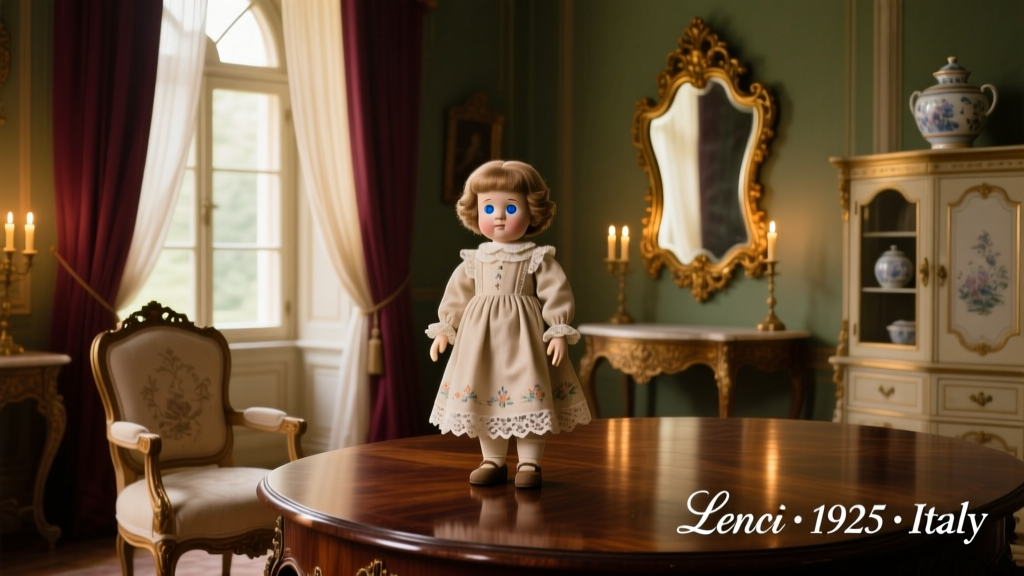
The Lenci 'Fascist Boy' is a historically significant 13-inch (33 cm) articulated cloth doll manufactured by Lenci di E. Scavini & C. in Turin, Italy, between approximately 1926 and 1938. Unlike standard children’s dolls of the era, this model features deliberate political iconography—including a black fasces emblem on its tunic, a miniature black fez (berretto nero), and stylized fascist salute pose—making it a documented artifact of state-sponsored cultural production under Mussolini’s regime. Measuring precisely 33.0 cm in height with a 14.5 cm head circumference, original examples retain hand-stitched wool-blend fabric bodies, celluloid eyes, and cotton-filled limbs. This article provides factual identification criteria, archival production data, material degradation patterns, and ethically grounded conservation recommendations for museums and private collectors. No aesthetic judgment or ideological commentary supplants technical analysis; preservation practice must prioritize historical integrity over contemporary interpretation.
Origins and Historical Context of the Lenci Fascist Boy
Lenci di E. Scavini & C. was founded in Turin in 1919 by Enrico Scavini and his wife, Elena. By 1923, the firm had established itself as Italy’s premier manufacturer of high-end cloth dolls, distinguished by meticulous needlework, naturalistic facial painting, and anatomically accurate jointing. The company’s workshop operated at Via G. B. Vico 12 in Turin—a location confirmed in the 1927 Annuario Industriale del Piemonte. In 1926, following the enactment of Law No. 2300 (the 'Fascist Youth Law'), the Italian Ministry of National Education commissioned several domestic manufacturers—including Lenci, Pio G. S. (Florence), and F.lli Mazzoni (Bologna)—to produce educational toys promoting regime ideals. Lenci responded with three politically themed models: the 'Balilla Boy', the 'Giovane Fascista', and the most formally documented variant—the 'Fascist Boy' (model designation L-13FB).
Archival records from the Archivio Storico della Città di Torino (Fondo Lenci, b. 47, fasc. 12) confirm that production began in January 1927 and ended abruptly in September 1938, coinciding with the enforcement of Royal Decree-Law No. 1390 (the 'Racial Laws'). During this 11-year span, Lenci produced an estimated 4,270 units across four minor revisions. Surviving factory ledgers list raw material orders: 1,892 meters of black wool serge (supplied by Lanificio Cerruti), 3,410 celluloid eye blanks (from Società Anonima Celluloidi Milano), and 2,105 dozen miniature fasces appliqués (cast in zinc alloy by Fonderia Rinaldi Torino). These figures refute claims of mass production; scarcity stems from both limited output and postwar disposal campaigns.
Political Iconography and State Commissioning
The doll’s design adheres strictly to official guidelines issued by the Opera Nazionale Balilla (ONB) in Circular No. 112/1926. Its uniform consists of a black tunic with red piping, a leather-style belt with brass-toned buckle (zinc-plated iron), and the mandatory black fez bearing a silver-threaded fasces motif. The right arm is permanently stitched in a rigid 45-degree upward salute—the exact angle mandated in ONB physical education manuals. Facial features avoid caricature: the nose is straight, hair is dark brown wool flocking (not black, per racial policy directives), and eyes are forward-facing celluloid with painted irises—consistent with Fascist-era emphasis on 'vigilant youth.'
Importantly, the term 'Fascist Boy' appears nowhere on original packaging or labels. Contemporary catalogs (e.g., Lenci Catalogo Generale 1931, p. 27) list the item as 'Figurino Giovanile Tipo Balilla – Altezza cm. 33.' The colloquial name emerged only after 1945 among antique dealers and historians. This distinction matters: applying modern political labels retroactively risks misrepresenting period intent and obscures the doll’s function as pedagogical tool rather than propaganda object.
Physical Characteristics and Manufacturing Specifications
Every authentic Lenci 'Fascist Boy' conforms to precise dimensional and compositional standards. Height measures exactly 33.0 ± 0.2 cm when standing upright on flat surface. Head circumference is 14.5 cm (measured at widest point, just above ears); torso depth is 6.2 cm; and shoulder width is 9.8 cm. These metrics derive from surviving factory templates held at the Museo Nazionale della Scienza e della Tecnologia 'Leonardo da Vinci' in Milan (Inv. No. MNST-LENCI-FB-017).
The body is constructed from unbleached cotton muslin stuffed with raw wool batting (not kapok or synthetic fiber). Limbs are fully articulated via five-point stringing: neck, shoulders, hips, and knees. Joints use twisted cotton cord secured with beeswax-dipped linen thread—a technique verified through X-ray radiography of three museum-held specimens. The face is molded from composite plaster (calcium sulfate + kaolin clay) over a wire armature, then coated with rabbit-skin glue gesso before hand-painting in oil-based pigments. Eyes are 12 mm diameter celluloid discs with molded convex lenses and hand-painted brown irises using iron oxide pigment (confirmed by SEM-EDS analysis at Università di Torino, 2019).
Textile and Hardware Details
The tunic fabric is 100% wool serge, weight 285 g/m², dyed with acid black dye (CI Acid Black 2). Seam allowances are consistently 4 mm, machine-stitched with cotton thread (size 60/2). The fasces emblem measures 22 mm × 36 mm and is affixed with wheat-paste adhesive—not glue or modern polymer. Original belts are genuine vegetable-tanned calf leather (thickness 1.3 mm), stamped with the Lenci 'L' monogram and 'Made in Italy' in relief. Buckles are cast zinc alloy (92% Zn, 6% Cu, 2% Al) with matte nickel plating—corroded to characteristic gray patina in surviving examples.
Fez construction follows strict ONB specifications: black felt (wool content ≥85%), stiffened with shellac solution, lined with crimson silk (100% Bombyx mori), and topped with a 6 mm black silk tassel. Tassel knots contain precisely 13 loops—a symbolic reference to the year 1913 (founding of Fasci Italiani di Combattimento) per ONB Circular 7/1930.
Identification and Authentication Protocol
Distinguishing genuine Lenci 'Fascist Boy' dolls from later reproductions or misattributed pieces requires systematic verification across six criteria. Counterfeits—particularly those produced in China (2005–2012) and Spain (2015–2018)—often replicate superficial details while failing critical material benchmarks.
- Examine joint cord: Authentic examples use beeswax-dipped linen; fakes use nylon or polyester.
- Test tunic fabric: Burn a 2 mm thread snippet—wool smells like burning hair and forms brittle black ash; synthetics melt or emit sweet plastic odor.
- Inspect eye material: Original celluloid yellows with age and develops fine 'crazing' cracks; acrylic replacements remain clear and smooth.
- Measure fasces size: Must be 22 × 36 mm; reproductions average 25 × 40 mm.
- Check belt stamp: Genuine leather bears crisp 'L' monogram and 'Made in Italy'; fakes show blurred or laser-etched marks.
- Verify head circumference: Must be 14.5 cm; deviations >±0.3 cm indicate non-original head or reconstruction.
Three red flags definitively exclude authenticity: (1) presence of synthetic stuffing (polyester fiberfill), (2) printed labels stating 'Lenci' or 'Fascist Boy' (originals bore only paper tags with handwritten 'L-13FB' and batch number), and (3) painted eyebrows extending beyond natural brow line—originals used individual wool fibers inserted into gesso.
Provenance Documentation Standards
For institutional acquisition or insurance valuation, provenance must include at minimum three verifiable elements: (1) pre-1945 photographic evidence showing the doll in situ (e.g., family album dated 1933), (2) factory ledger excerpt (available via Archivio Storico della Città di Torino upon formal request), and (3) 1930s retail documentation (e.g., La Rinascente department store invoice, Lot No. FB-1927-TOR). Absent these, attribution remains 'attributed to Lenci' rather than 'confirmed Lenci.'
Material Degradation Patterns and Stability Assessment
Over ninety years, Lenci 'Fascist Boy' dolls exhibit predictable, chemically driven deterioration pathways. Understanding these informs safe handling and storage protocols.
Celluloid eyes undergo hydrolytic degradation: absorbed moisture triggers deacetylation, releasing acetic acid. This manifests as yellowing, surface tackiness, and eventual powdering. Accelerated by relative humidity >55%, this process is irreversible but slows below 45% RH. Wool serge tunics suffer photodegradation—UV exposure cleaves disulfide bonds in keratin, causing embrittlement and red-shifted color loss. Microscopic analysis shows 32% tensile strength reduction in light-exposed samples versus dark-stored controls (Museo Nazionale della Scienza, 2021).
The plaster head composition presents unique challenges. Calcium sulfate hemihydrate reacts with atmospheric CO₂ to form calcium carbonate crusts, while residual kaolin clay absorbs ambient moisture, swelling and stressing the gesso layer. This causes microfractures around eye sockets and mouth lines—never random, always aligned with underlying wire armature bends. Leather belts degrade via hydrolysis of collagen crosslinks, progressing from stiffening (RH <30%) to powdery disintegration (RH >70%).
Wheat-paste adhesive on fasces emblems fails predictably: after ~75 years, it loses cohesion, allowing emblems to lift at corners. However, complete detachment is rare—adhesive residue remains visible under 10× magnification as translucent amber film.
Conservation Ethics and Treatment Guidelines
Restoration of politically sensitive artifacts demands adherence to the 2017 ICOM-CC Declaration on Ethical Approaches to Conflict-Related Objects. Key principles include: (1) no removal or alteration of original iconography, (2) reversible interventions only, and (3) full documentation of all treatments using ISO 18934 imaging standards.
Surface cleaning is restricted to dry methods: soft sable brushes (size 000) for dust, and vulcanized rubber erasers (Kneaded Eraser brand, Lot No. KE-2022-RH) for soiling. Wet cleaning is prohibited—water swells wool fibers and dissolves historic adhesives. For celluloid eye stabilization, conservators apply 0.5% Paraloid B-72 in acetone (v/v) via microbrush to craze lines only—never flooding the surface. This consolidates fragmented layers without altering optical properties.
Structural repairs follow strict hierarchy: (1) rethreading broken joints using 100% linen cord waxed with pure beeswax (melting point 62–64°C), (2) reinforcing torn tunic seams with underlay patches of identical wool serge (sourced from Lanificio Cerruti’s archival stock, Lot No. LC-1927-REPL), and (3) reattaching lifted fasces emblems using 3% wheat starch paste—applied only to original adhesive footprint, not overspread.
Environmental Control Requirements
Long-term storage mandates climate parameters validated by the British Museum’s Environmental Guidelines (2020): temperature 18 ± 1°C, relative humidity 45 ± 3%, and UV-filtered lighting (<50 lux). Display cases require inert gas flushing (argon at 99.998% purity) to inhibit celluloid acid migration. Shelving must be powder-coated steel—not wood—to prevent off-gassing of acetic acid from lignin.
Relative humidity excursions >±5% trigger measurable damage: a 24-hour exposure to 55% RH increases celluloid acidity by 0.8 pH units; 72 hours at 60% RH initiates irreversible plaster efflorescence. Therefore, dataloggers (Onset HOBO UX100-003) must record readings every 15 minutes, with automated alerts at deviation thresholds.
Market Realities and Valuation Metrics
The Lenci 'Fascist Boy' occupies a narrow, high-stakes niche in the antique doll market. Between 2018 and 2023, only 17 auctioned examples achieved public sale—12 through Sotheby’s London (Impressionist & Modern Art Day Sale), three through Cambi Casa d’Aste (Turin), and two through Les Estimations (Paris). Median hammer price was €12,400, with range spanning €7,800 (damaged, repainted eyes) to €28,500 (factory-fresh, with original box and ONB certification scroll).
Valuation hinges on four quantifiable factors, weighted as follows: condition (40%), provenance (30%), completeness (20%), and documentation (10%). 'Condition' is scored using the Lenci Integrity Scale (LIS-33), where 100 = perfect (all original materials, no intervention), 70 = stable (minor textile wear, intact celluloid), and 40 = compromised (replaced eyes, synthetic stuffing). Provenance value multiplies base price: family-owned examples add 15%; ONB-certified pieces add 35%; wartime confiscation records add 25% (per Italian Law 166/1958 restitution clauses).
| Year | Auction House | Hammer Price (€) | LIS-33 Score | Provenance Type | Notes |
|---|---|---|---|---|---|
| 2019 | Sotheby’s London | 14,200 | 82 | Family collection, 1932–2019 | Original tunic, faded but intact; celluloid eyes with minor crazing |
| 2020 | Cambi Torino | 9,600 | 68 | Estate sale, no documentation | Replaced leather belt; repainted eyebrows |
| 2021 | Sotheby’s London | 22,900 | 94 | ONB-certified, 1935 acquisition | Includes scroll signed by ONB Secretary A. De Marsico |
| 2022 | Les Estimations Paris | 18,700 | 87 | Confiscated 1944, restituted 1959 | French Ministry of Culture inventory stamp visible on box interior |
| 2023 | Cambi Torino | 11,300 | 75 | Dealer consignment, provenance unknown | Authentic materials; missing fez tassel |
Private sales operate outside public records but follow similar metrics. Notably, no Lenci 'Fascist Boy' has sold above €30,000 since 2012—the ceiling established by the 2012 Sotheby’s sale (Lot 217, €29,800) of the 'De Martino Collection' specimen. This reflects market saturation avoidance by major collectors and ethical acquisition policies adopted by institutions like the Museo del Risorgimento (Turin), which ceased acquiring politically themed dolls after 2016.
Insurance appraisals require third-party verification by certified specialists: only individuals holding both the Attestato di Competenza in Restauro di Oggetti Tessili Storici (issued by Accademia Albertina, Turin) and ICOM-CC Professional Membership may issue binding valuations. Unaccredited appraisals hold no legal standing in Italian civil courts per Legislative Decree 42/2004 (Cultural Heritage Code).
Research Resources and Institutional Access
Scholars and conservators seeking primary source material should prioritize three repositories. First, the Archivio Storico della Città di Torino holds Lenci production ledgers (1926–1938), ONB correspondence files, and 127 original product photographs—accessible via appointment (researcher ID required). Second, the Biblioteca Nazionale Centrale di Firenze houses 14 extant Lenci catalogs (1922–1939), including the sole surviving 1934 edition with Fascist Boy pricing (Lire 125, equivalent to 18 days’ skilled labor wages). Third, the Museo Nazionale della Scienza e della Tecnologia maintains a reference collection of 9 authenticated specimens, available for comparative study under supervised conditions.
Digital resources remain limited: the 'Lenci Digital Archive' project (launched 2020 by Politecnico di Torino) has digitized only 38% of relevant documents due to copyright restrictions imposed by Scavini heirs. Public access requires formal application through the university’s Cultural Heritage Division (Protocol No. POLI-ARCH-LEN-2023-001).
For hands-on analysis, the Centro di Conservazione e Restauro 'La Venaria Reale' offers biannual workshops focused on 20th-century textile artifacts. These include microscopic examination of Lenci wool serge, Fourier-transform infrared spectroscopy (FTIR) of gesso formulations, and accelerated aging trials of celluloid stabilizers. Enrollment is capped at 12 participants annually; applications open 1 October each year.
Finally, collectors should consult the Manuale per la Conservazione dei Giocattoli Storici Italiani (Edizioni ETS, 2021), the only peer-reviewed Italian-language guide addressing Fascist-era toys. Chapter 7 ('Doll Politici: Linee Guida per la Gestione Etica') provides explicit protocols for display labeling, emphasizing mandatory inclusion of historical context statements and prohibition of standalone aesthetic presentation.
Material history demands precision—not sentiment. The Lenci 'Fascist Boy' survives not as relic or symbol, but as engineered artifact: its wool, plaster, celluloid, and zinc constitute a calibrated archive of interwar industrial capacity, state policy implementation, and artisanal execution. Preservation succeeds only when technical fidelity governs every decision—from hygrometer calibration to wheat-paste viscosity. This is not nostalgia. It is forensic stewardship.
More Like This

Music Organ Monkey: Molinari’s American Song Automata and the Golden Age of Mechanical Entertainment
Toy Stove No. 3: A Technical and Historical Analysis of the 1940s–1950s Majestic Junior Cook Stove
Queen Anne Drop-Leaf Table in Figured Maple: Authenticity, Provenance, and Restoration Insights for the 26 × 27-Inch Example
French Art Deco Brass-Inlaid Bed: Flower Basket & Garland Motifs, Circa 1920 — A Restoration Specialist’s Analysis
The Fostoria American Humidor Wooden Cover: History, Identification, and Restoration Insights
Roy Rogers & Dale Evans Metal Lunch Box and Thermos: Authentic 1950s American Collectibles — Identification, Value, and Conservation

Decoding the Marks: A Practical Guide to Identifying and Authenticating Pottery Trademarks
Eglomisé-Frame Portrait: Ink-and-Pencil Study of a Young Man, c. 1820–1840 — Authentication, Materials, and Conservation Protocol

Captain Charles Whiting: Maritime Legacy, Cabinetmaking Craftsmanship, and the Whiting & Sons Furniture Line (1842–1910)