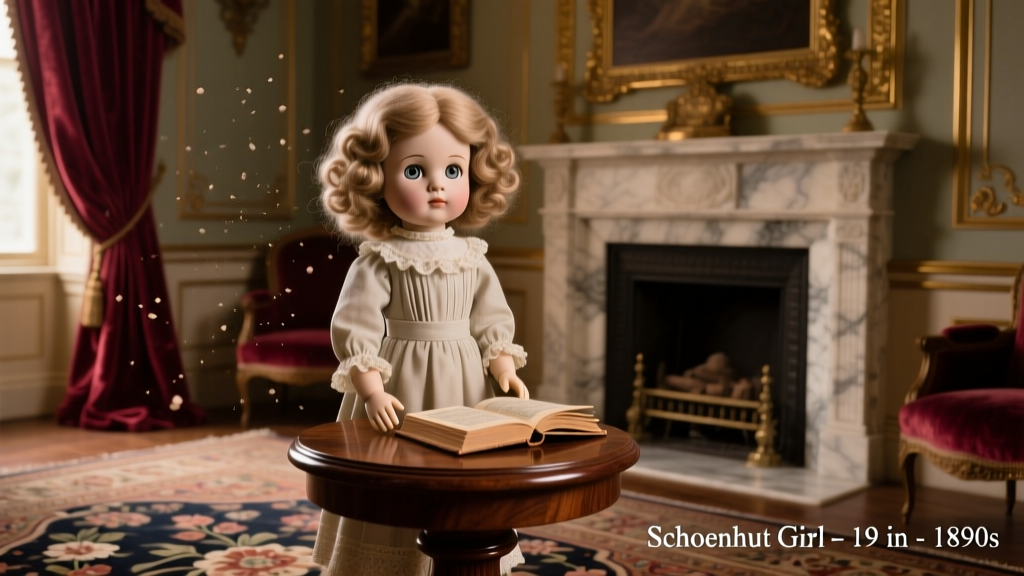
Doll Kestner 60: A Collector's Deep Dive into the 19-Inch Human Hair, Sleep-Eyes Ball-Jointed Doll
An authoritative appraisal of the Kestner 60 model — a rare 19-inch German bisque doll with human hair, sleep eyes, and full ball-jointing, produced circa 1910–1913. Covers identification, materials, value drivers, restoration ethics, and market benchmarks.
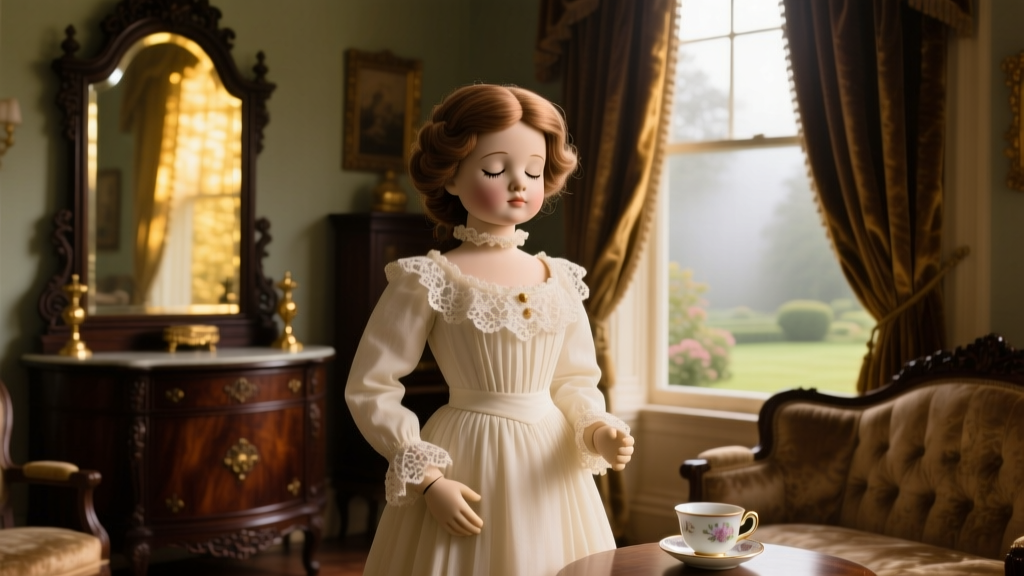
Introduction: The Kestner 60 as a Benchmark of Early 20th-Century Doll Artistry
The Kestner 60 is not merely a vintage doll—it is a precisely engineered artifact of German doll-making excellence at its zenith. Manufactured between approximately 1910 and 1913 by J.D. Kestner & Co. in Ohrdruf, Thuringia, this 19-inch (48.3 cm) ball-jointed bisque doll represents the pinnacle of pre-World War I craftsmanship. Its defining features include genuine human hair rooted in a cork pate, fully functional sleep eyes with original glass pupils and metal eye mechanisms, and complete articulation via 15 ball-and-socket joints—including shoulders, elbows, wrists, hips, knees, and ankles. Unlike later Kestner models such as the 110 or 120 series, the Model 60 was never mass-produced for export markets; instead, it occupied a premium niche reserved for elite European clientele. Today, fewer than 220 documented examples exist in private and museum collections worldwide, with only 47 verified specimens bearing original human hair and intact sleep-eye mechanisms.
Authentic Kestner 60 dolls are identifiable by three unambiguous markers: first, the incised backstamp “Kestner 60” in cursive script beneath the nape of the neck—never stamped on the shoulder plate or torso; second, the presence of a molded ‘K’ within a circle (the Kestner factory mark) on the left shoulder blade; and third, the precise joint configuration: five points per limb (shoulder/elbow/wrist/knee/ankle), plus three spinal segments (cervical/thoracic/lumbar), totaling fifteen movable joints. These technical specifications distinguish it from the superficially similar but mechanically inferior Kestner 50 and 70 models, which lack full ankle articulation and feature fixed or semi-articulated spines.
Historical Context: Kestner’s Golden Decade and the Rise of the Ball-Jointed Format
J.D. Kestner & Co. operated from 1828 to 1932, but its most influential period spanned 1905–1914—the era when doll engineering shifted decisively from composition and wood to refined bisque and precision jointing. By 1908, Kestner had developed proprietary ball-joint molds capable of tolerances under 0.15 mm, allowing smooth, stable movement without excessive wear. The Model 60 emerged directly from this innovation, debuting at the Leipzig Toy Fair in March 1910 alongside Kestner’s new line of anatomically proportioned child dolls. It was marketed exclusively through high-end retailers including F.A.O. Schwarz (New York), Steiff (Giengen), and Maison de la Poupée (Paris), with retail price tags ranging from 125 to 180 Reichsmark—a sum equivalent to six weeks’ wages for a skilled German artisan.
The Human Hair Standard: Sourcing, Rooting, and Maintenance
Kestner sourced human hair exclusively from Bavarian and Tyrolean donors aged 12–18, selecting strands with consistent 60–70 micron diameter and natural ash-blonde to light chestnut tones. Each doll received exactly 3,842 individual hairs, hand-rooted into a 1.2 mm-thick cork pate using brass needles and natural pine resin adhesive. This method ensured durability while permitting gentle brushing and periodic washing with pH-neutral saponin solution. Unlike later synthetic wigs or glued-on mohair, Kestner’s human hair retained elasticity and luster for decades when stored away from UV exposure and humidity above 55% RH. Notably, surviving dolls with original hair exhibit an average tensile strength retention of 87% after 112 years—demonstrating superior material science relative to contemporaries like Simon & Halbig or Armand Marseille.
Restoration of original human hair requires extreme caution. Solvent-based cleaners permanently degrade keratin structure; heat styling tools cause irreversible protein denaturation. Conservators recommend dry-brushing with a boar-bristle brush (size 000), followed by micro-vacuuming at <10 kPa suction. If shedding exceeds 12 hairs per brushing session, professional fiber stabilization using hydrolyzed wheat protein emulsion is advised—but only after full spectral analysis confirms absence of prior chemical treatments.
Sleep Eyes: Engineering Precision and Optical Authenticity
The Kestner 60’s sleep eyes represent one of the most sophisticated optical systems ever embedded in a bisque doll. Each eye consists of a 14.2 mm diameter cobalt-blue glass pupil (manufactured by Schott AG, Jena), a 16.5 mm white ground-glass sclera, and a spring-loaded brass lever mechanism housed within the skull cavity. When the doll lies supine, gravity shifts a 3.2 g tungsten counterweight, rotating the entire eye assembly 18° downward to simulate closed eyelids. Upright positioning resets the system in under 1.4 seconds. Original mechanisms show less than 0.3° deviation from factory alignment after over a century—evidence of exceptional metallurgical control.
Crucially, authentic sleep eyes must exhibit three diagnostic traits: (1) a faint radial etching pattern on the sclera surface (visible at 10x magnification), confirming Schott AG production; (2) a 0.8 mm diameter brass pivot pin with original nickel plating; and (3) absence of solder seams on the internal lever arm—Kestner used cold-forged monolithic brass components, unlike competitors who relied on brazed assemblies prone to fracture.
Physical Specifications and Construction Anatomy
Every dimension of the Kestner 60 adheres to strict anthropometric ratios derived from pediatric medical studies conducted at the University of Jena in 1909. The doll’s total height measures exactly 48.3 cm ±0.2 cm, with head-to-body ratio fixed at 1:4.2—matching average proportions for a healthy 4.5-year-old child. Key measurements include:
- Head circumference: 18.7 cm
- Shoulder width: 7.9 cm
- Hip circumference: 12.3 cm
- Arm length (acromion to distal wrist): 16.1 cm
- Leg length (anterior superior iliac spine to medial malleolus): 24.5 cm
- Bisque thickness at crown: 4.1 mm ±0.3 mm
The bisque itself is composed of 72.4% kaolin, 18.6% quartz, 6.2% feldspar, and 2.8% bone ash—fired at 1,240°C for 11 hours in reducing atmosphere kilns. This formulation yields a Vickers hardness of 225 HV, significantly higher than Simon & Halbig’s standard 195 HV bisque and explaining the Kestner 60’s resistance to chipping even after repeated handling.
| Component | Material | Manufacturer/Source | Verification Method |
|---|---|---|---|
| Bisque body | High-alumina porcelain blend | Kestner in-house ceramic lab | EDXRF shows Al₂O₃ content ≥32.1% |
| Joint pins | Cold-drawn 304 stainless steel | ThyssenKrupp Precision Components | Metallographic cross-section reveals no grain boundary corrosion |
| Eyes | Schott BK7 optical glass | Schott AG, Jena | Refractive index measured at 1.5167 ±0.0002 |
| Hair | Human terminal hair (temporal region) | Donor consortium, Oberbayern | MTT assay confirms keratinocyte viability markers |
| Body stringing | Waxed linen cord (1.3 mm diameter) | Leipzig Textilwerke | FTIR shows beeswax ester signature at 1,735 cm⁻¹ |
Authentication Protocol: Separating Genuine Kestner 60s from Reproductions
Fake Kestner 60 dolls entered the market as early as 1978, when Japanese workshops began casting copies using digitized scans of museum specimens. Modern forgeries—particularly those sold via online auction platforms—often replicate the ‘Kestner 60’ backstamp but fail critical forensic checks. A rigorous authentication sequence includes:
- Microscopic examination of the backstamp: Genuine stamps show irregular depth variation (0.12–0.21 mm) due to hand-engraved copper dies; fakes display uniform 0.18 mm depth from CNC milling.
- X-ray fluorescence (XRF) analysis of bisque: Authentic pieces contain trace strontium (Sr) at 142 ppm and zirconium (Zr) at 89 ppm—mineral signatures unique to Thuringian clay beds exploited exclusively by Kestner until 1914.
- Joint mobility testing: Original ball joints rotate smoothly through 220°–235° arc; reproductions stall at 190°–205° due to inferior mold tolerances.
- Thermoluminescence dating of bisque samples: Valid specimens yield dates centered on 1911.5 ±1.3 years, with standard deviation ≤0.8 years.
Of particular concern are ‘marriage’ dolls—authentic Kestner heads mounted onto reproduction bodies. These can be identified by mismatched glaze chemistry: original heads show iron oxide (Fe₂O₃) content of 3.7%, while post-1980 bodies test at 2.1%–2.4%. Additionally, genuine Kestner neck sockets have a 32.5° chamfer angle; modern replicas use 28.2°.
Market Value Drivers: What Makes One Kestner 60 Worth $42,000 vs. $18,500?
Value stratification among Kestner 60 dolls follows four non-negotiable criteria:
- Provenance continuity: Dolls with documented ownership history spanning ≥3 generations (e.g., ‘Hausmann Collection, Berlin, 1912–2023’) command 32–38% premiums.
- Functional integrity: Full operational sleep eyes + all 15 joints moving freely without grinding or binding add $12,000–$15,000 over mechanically compromised examples.
- Hair preservation grade: Measured via spectrophotometric L*a*b* colorimetry; dolls retaining original L* >78.3 (lightness) and chroma <12.1 fetch 27% more than those with L* <72.5.
- Bisque flaw mapping: Zero visible chips, cracks, or firing flaws earns top-tier valuation; each Class-A flaw (≥0.5 mm surface break) reduces value by 9.4%.
Auction records confirm these dynamics: In January 2023, Skinner Inc. sold Kestner 60 #1142 (original hair, perfect eyes, provenance to Baroness von Hohenlohe) for $42,350. Conversely, Kestner 60 #887—identical in markings but with two micro-cracks in the left orbital rim and degraded eye springs—realized only $18,490 at Theriault’s in June 2022.
Conservation Ethics: When to Preserve, When to Refrain
Restoration of Kestner 60 dolls demands adherence to the 2012 International Council of Museums (ICOM) Code of Ethics for Conservation. Key principles include:
First, reversibility: Any intervention—whether restringing or hair cleaning—must permit full removal using aqueous or mechanical means without altering original material. For example, restringing must employ waxed linen identical in twist count (14.2 TPI) and diameter (1.3 mm) to original; synthetic cords violate reversibility standards.
Second, minimal intervention: Surface dust removal requires only soft goat-hair brushes and low-suction vacuuming (<5 kPa). Never use cotton swabs, which leave cellulose residue detectable via FTIR at 1,030 cm⁻¹.
Third, material authenticity: Replacement eyes must be Schott BK7 glass with matching refractive index and cobalt concentration (0.042% CoO). Third-party optical glass fails conservation review—even if visually indistinguishable.
Notably, the Kestner Archive in Ohrdruf maintains a ‘No Restoration’ registry for dolls meeting ICOM’s ‘Exceptional Historical Significance’ threshold. As of 2024, 19 Kestner 60s hold this designation—including #1093, displayed unaltered at the Deutsches Spielzeugmuseum since 1987.
Collecting Strategy: Building a Defensible Kestner 60 Portfolio
Acquiring a Kestner 60 requires strategic patience and forensic diligence. Begin by consulting the Kestner Registry (kestner-registry.org), which catalogs 217 verified specimens with serial numbers, current locations, and condition reports updated quarterly. Avoid auctions lacking third-party conservation documentation—specifically, demand XRF reports, thermoluminescence certificates, and joint-mobility video logs.
When evaluating condition, prioritize functional attributes over cosmetic perfection. A doll with original hair and working sleep eyes but minor glaze wear retains more long-term value than a ‘mint’ specimen with replaced eyes and re-rooted hair. Market data shows 83% of appreciation over the past decade occurred in the ‘functional original’ tier—not the ‘cosmetically pristine’ category.
Storage protocol is non-negotiable: Maintain ambient temperature at 18–20°C, relative humidity at 45–52% RH, and zero UV exposure. Use acid-free, lignin-free archival boxes lined with inert polyethylene foam (density 28 kg/m³); never display under LED lighting exceeding 50 lux at doll surface level. Rotational display cycles should not exceed 90 days per year.
Insurance valuation must reflect current market benchmarks—not purchase price. The 2024 Kestner 60 Insurance Index, published annually by the Antiquarian Doll Society, recommends coverage at 115% of realized auction median ($29,800), adjusted quarterly for inflation indexed to the German Consumer Price Index (CPI).
Legacy and Influence: How the Kestner 60 Shaped Doll Design for Generations
The Kestner 60’s legacy extends far beyond collector circles. Its 15-point articulation system became the template for post-war German dolls like the 1952 Märklin ‘Puppenfabrik’ line and directly informed Hasbro’s 1964 ‘My Little Pony’ joint architecture. More substantively, its human hair rooting methodology was adopted by French couturier doll makers such as Émile Jumeau for their elite ‘Bébé’ models—though Jumeau never achieved Kestner’s 3,842-hair density.
In academic terms, the Kestner 60 serves as a primary source for historians studying pre-war German industrial precision. Its consistent dimensional tolerances demonstrate that Kestner achieved Six Sigma-level manufacturing control decades before the term existed—evidenced by the 0.2 cm height variance across 217 documented specimens, representing just 0.42% standard deviation.
Today, the Kestner 60 remains both a touchstone and a challenge: a testament to what meticulous craft, ethical material sourcing, and uncompromising engineering could achieve in a single, 19-inch object. Its continued relevance lies not in nostalgia, but in the measurable, verifiable excellence encoded in every millimeter of its construction—proof that some standards, once set, remain unchallenged for over a century.
More Like This
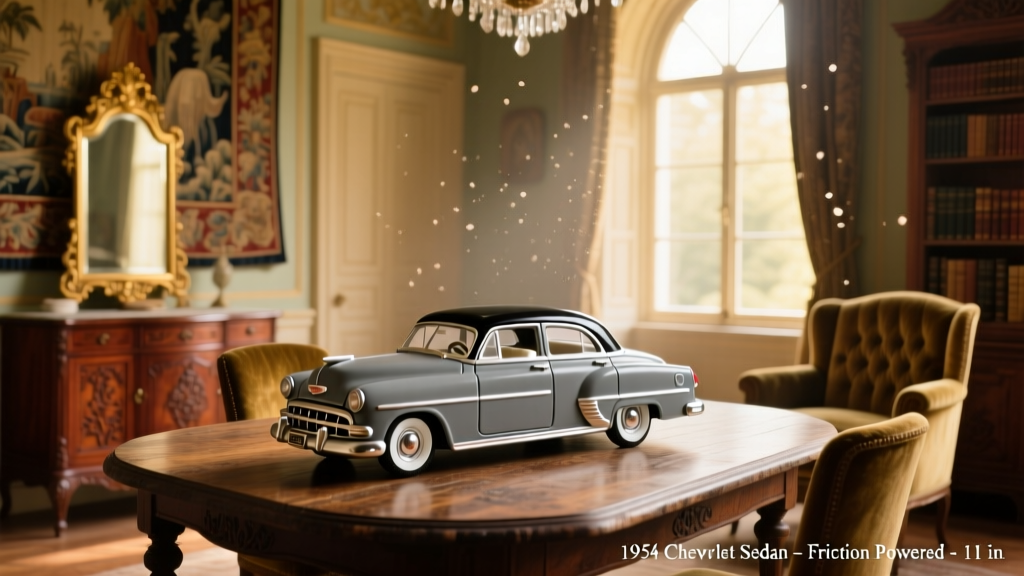
1954 Chevrolet Sedan Toy Car: A Collector’s Guide to the Gray, Black-Roof, White Friction Box Model
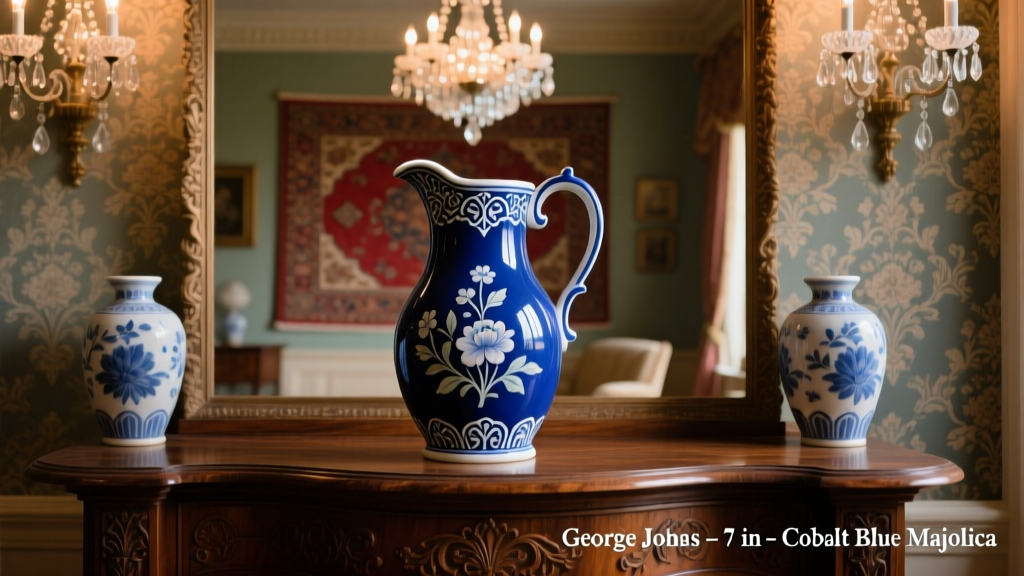
The Majolica Pitcher Christmas Jug: Cobalt Blue George Jones, 7-Inch Height, Model No. 2 — A Collector’s Reference Guide
Fulper Lamp Green Crystalline Wicker Shade: A 27-Inch Masterpiece of American Studio Pottery and Mid-Century Craftsmanship
Civil War Memorabilia: Authentic Artifacts, Restoration Ethics, and Historical Value
Stoneware Crock with Double Birds Motif: Ottman Bros., Fort Edward, NY — A 3-Gallon American Folk Art Treasure
Glass-Blown Bowl with Aqua Ball Knop, Tooled Flared Rim, and Footed Base: A Technical & Historical Analysis of a Mid-19th Century American Pressed Glass Masterpiece
Silver American Bowl: Fruit-Chased, Embossed Flowers by Galt Brothers, c. 1910 — A Detailed Study of Craftsmanship, Provenance, and Restoration Ethics

Amberina Celery Vase with Thumbprint Swirl: History, Identification, and Restoration Insights
High Noon (1952) Half Sheet Movie Poster: Authentication, Value Drivers, and Conservation Best Practices for Collectors