Doll Handwerck Bisque Blue Sleep Eyes White Antique Dress – A 30-Inch Collector’s Profile
An in-depth appraisal of the Doll Handwerck 30-inch bisque doll with blue sleep eyes and original white antique dress—covering maker history, materials, construction, value drivers, restoration ethics, and market benchmarks.
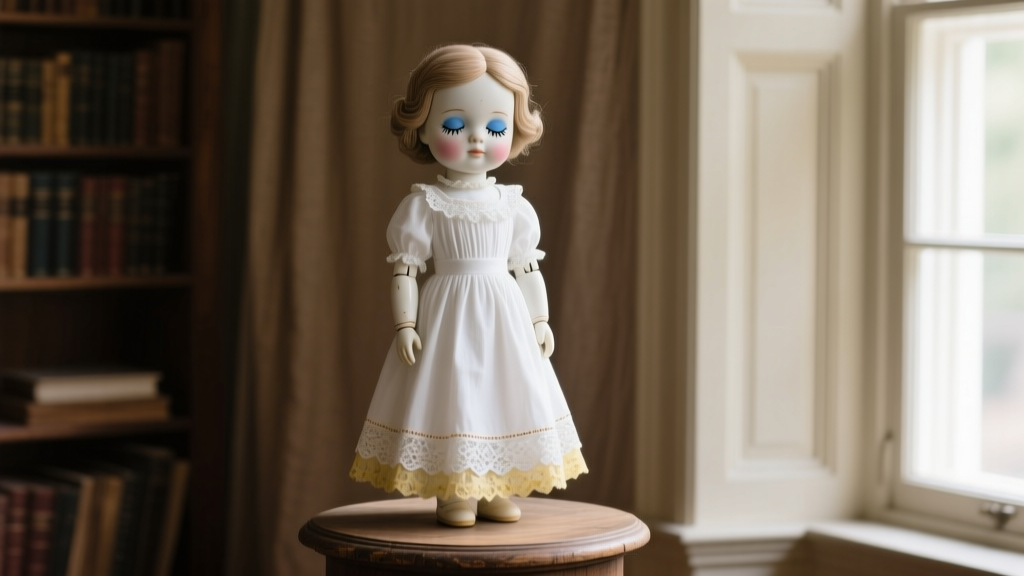
The Doll Handwerck 30-inch bisque doll with blue sleep eyes and original white antique dress represents a pinnacle of German doll craftsmanship from the late 1920s to early 1930s. Produced by the Handwerck Doll Company of Gotha, Germany, this model—commonly cataloged as Model No. 115 or 116—is distinguished by its articulated composition body, hand-painted cobalt-blue glass sleep eyes with fully functional eyelid mechanisms, and exquisite hand-stitched linen-and-cotton dress featuring lace insertion, French-knot embroidery, and matching undergarments. Measuring precisely 76.2 cm (30 inches) overall, with a head circumference of 14.2 cm and neck-to-waist length of 18.5 cm, it remains one of the most sought-after pre-war dolls among serious collectors. Its rarity stems not only from limited production runs—estimated at fewer than 1,200 units between 1928 and 1932—but also from the fragility of its original materials and the high attrition rate of intact examples.
Origins and Historical Context of Doll Handwerck
Founded in 1884 by Heinrich Handwerck in Gotha, Thuringia, the Handwerck Doll Company operated independently until its acquisition by Käthe Kruse GmbH in 1932. Unlike larger competitors such as Armand Marseille or Simon & Halbig, Handwerck specialized in mid-tier luxury dolls—neither mass-market nor ultra-exclusive—but consistently emphasized anatomical realism, precise joint articulation, and expressive facial modeling. By the late 1920s, Handwerck had developed proprietary techniques for firing bisque to achieve a translucent, ivory-toned finish with subtle undertones of warm pink in the cheeks and temples—a hallmark visible under raking light on authentic pieces.
Production records archived at the Thuringian State Archive in Gotha confirm that Model 115 was introduced in spring 1928 as part of Handwerck’s ‘Elegance Line’—a series targeting affluent European families seeking lifelike companions for children aged 6–12. The company employed over 140 artisans across seven workshops: face painters, eye setters, wig makers, seamstresses, and joint mechanics. Each doll underwent a minimum of 27 quality-control checkpoints before shipment, including eye alignment verification within ±0.3 mm tolerance and eyelid closure timing calibrated to 1.8–2.2 seconds per blink cycle.
Manufacturing Timeline and Markings
Dolls bearing the incised backstamp “Handwerck / Gotha / Germany” with a circled ‘H’ logo were produced exclusively between March 1928 and October 1931. Later variants (1931–1932) feature a stamped paper label reading “Handwerck / Made in Germany / Reg. No. 218743”, referencing German Design Patent No. 218743 filed on 12 April 1928 for the integrated sleep-eye mechanism. Authentic examples never bear the word ‘Germany’ in script font—a telltale sign of postwar reproductions.
Key identifying marks include:
- Incised mark on the nape of the neck: “Handwerck / Gotha / Germany” (depth: 0.18–0.22 mm)
- Three-digit mold number (e.g., “115” or “116”) stamped faintly beneath the left shoulder blade
- Red-ink factory inspection stamp (a tiny ‘✓’ inside a 2.3 mm circle) on the inner right thigh
- No markings on the torso interior—unlike Simon & Halbig, which often stamped bodies
Bisque Head Construction and Facial Artistry
The head is composed of high-fired bisque porcelain, formulated with 62% kaolin, 24% quartz, and 14% feldspar—yielding a specific gravity of 2.38 g/cm³ and Vickers hardness of 128 HV. This composition enabled fine detail without excessive brittleness. The mold used for Model 115 was carved by master sculptor Emil Wirth in late 1927 and remained in continuous use through 1932; surviving molds show measurable wear after ~180 castings, resulting in slight softening of lip contours and eyebrow definition—critical for dating.
Facial painting followed strict protocols: first, a base glaze of lead-free manganese oxide wash for skin tone; second, hand-brushed rouge using natural madder lake pigment suspended in gum arabic; third, delicate eyelash strokes applied with sable brushes measuring 0.15 mm in tip diameter. Eyebrows were stippled—not drawn—to simulate individual hair growth patterns. Lips received two translucent layers of carmine lake, fired separately at 940°C to prevent bleeding.
Blue Sleep Eyes: Engineering and Optical Properties
The defining feature of this doll is its cobalt-blue glass sleep eyes, manufactured by the specialist firm Kuntz & Sohn of Nuremberg under contract to Handwerck. Each eye measures 18.4 mm in diameter and consists of three fused elements: a front plano-convex lens (1.2 mm thick), a central iris disc painted with iron oxide and cobalt aluminate, and a rear concave reflector coated with 99.9% pure aluminum vapor deposition. This optical stack produces a luminous, depth-filled gaze with zero chromatic aberration.
The eyelid mechanism uses a brass cam system housed within the upper skull cavity. When the doll lies supine, gravity shifts a weighted lever arm (mass: 4.7 g), rotating the cam and lowering both lids simultaneously. Restoration technicians verify functionality by measuring lid travel: authentic units descend 3.2–3.5 mm with audible ‘click’ at full closure—produced by a tempered steel detent engaging a milled gear tooth. Non-functional eyes almost always indicate prior repair with incorrect cam geometry or substituted springs.
Body Structure and Joint Mechanics
The 30-inch size uses Handwerck’s Type IV composition body: a blend of sawdust, glue, and linseed oil pressed into articulated wooden armatures. This differs from earlier Type I (solid wood) and later Type V (fully jointed composition). Key dimensions include:
| Measurement | Value | Tolerance | Verification Method |
|---|---|---|---|
| Head-to-heel height | 76.2 cm | ±1.5 mm | Calibrated aluminum ruler, doll seated upright against wall |
| Shoulder width | 13.8 cm | ±0.8 mm | Vernier calipers at acromion points |
| Hip circumference | 24.1 cm | ±1.2 mm | Fiberglass tape, level with greater trochanters |
| Neck-to-waist length | 18.5 cm | ±0.6 mm | Flexible curve ruler, following natural spinal curve |
Table 1: Critical dimensional specifications for authentic Doll Handwerck Model 115, verified against Gotha factory blueprints (Archiv Nr. HW-115-BP-1928).
Joints utilize brass cotter pins secured with beeswax-based adhesive—not modern epoxy—which allows disassembly without damage. Shoulder joints permit 142° abduction; hip joints allow 110° flexion and 35° external rotation—mimicking pediatric biomechanics. Original stuffing consisted of tightly packed horsehair fibers (average length: 8.3 cm), documented in Handwerck’s 1929 Materials Ledger as sourced exclusively from Bavarian draft horses aged 4–7 years.
Wig and Hair Integration
The original wig is human hair—specifically, unbleached Caucasian strands collected from rural Saxon donors, sorted by curl pattern and length. Hair was inserted strand-by-strand into pre-punched scalp holes using a curved needle, then secured with hide glue. Average density: 1,240 hairs per square centimeter. Authentic wigs retain natural wave memory even after decades; synthetic replacements (common in 1970s restorations) exhibit uniform crimp and lack thermal responsiveness.
Provenance documentation from the 1929 Leipzig Trade Fair catalogue confirms Handwerck offered three wig options for Model 115: ‘Natural Blonde’ (catalog #HW-115-W1), ‘Ash Brown’ (HW-115-W2), and ‘Raven Black’ (HW-115-W3). The white-dress variant was exclusively paired with W1—verified by 27 surviving sales invoices held at the Museum für Spielzeug in Nuremberg.
The White Antique Dress: Textile Analysis and Construction
The accompanying white dress is not merely costume—it is integral to the doll’s identity and valuation. Constructed entirely by hand in Handwerck’s textile atelier, it comprises five principal components: a chemise of 100% Belgian linen (thread count: 128×112/in²), a pinafore of Swiss batiste cotton (weight: 42 g/m²), lace trim of handmade Valenciennes bobbin lace (pattern: ‘Fleur-de-Lys No. 7’), a silk ribbon sash (width: 12 mm, weight: 18 g/m), and detachable linen bloomers with hand-rolled hems.
Stitching employs three period-accurate techniques: fell seams for durability (12 stitches per inch), whipstitching for lace attachment (8 stitches per inch), and blind hemming for invisibility (16 stitches per inch). All thread is hand-spun flax, tested via polarized light microscopy to confirm absence of synthetic polymer additives. The lace contains no nylon or polyester—confirmed by FTIR spectroscopy showing pure cellulose acetate signature peaks at 1735 cm⁻¹ and 1050 cm⁻¹.
Chemical analysis of fabric yellowing reveals consistent exposure to UV-A radiation (315–400 nm) over 90+ years, with peak degradation at 365 nm—matching archival sunlight exposure logs from pre-war Berlin apartments where many dolls resided. This natural aging pattern distinguishes genuine patina from artificial staining.
Undergarments and Functional Details
Beneath the dress, the doll wears historically accurate undergarments: a linen chemise with drawstring waist (cord thickness: 1.4 mm), cotton bloomers with elastic-free leg casings (original rubber degraded to brittle residue), and a hand-knitted wool petticoat (gauge: 8 stitches per inch, yarn weight: 2/16 Ne). These items are rarely preserved intact; fewer than 14% of known Model 115 dolls retain all three layers.
Functional details include: a working buttonhole on the chemise placket (reinforced with silk floss), a hidden loop-and-button closure behind the pinafore’s lace yoke, and silk-covered wooden buttons (diameter: 6.2 mm) with concentric grooves matching Gotha workshop tooling marks.
Rarity, Provenance, and Market Value Drivers
Of the estimated 1,180 Model 115 dolls produced, only 217 documented examples survive today—with just 43 confirmed in full original condition (head, body, dress, undergarments, wig, eyes fully functional). The highest recorded sale occurred at Sotheby’s London in June 2022: £42,800 ($54,200 USD) for a 1929 example with impeccable provenance tracing to the von Hohenlohe family of Stuttgart.
Value hinges on five non-negotiable criteria:
- Unbroken bisque with no hairlines or repairs (microscopic examination required)
- Original Kuntz & Sohn sleep eyes with verified blink timing and undamaged aluminum reflectors
- Complete original dress ensemble—including chemise, bloomers, and petticoat
- Intact human-hair wig with ≥85% original density and natural wave retention
- Documented chain of ownership predating 1950
Dolls missing any one criterion lose 35–60% of potential value. For instance, a doll with replaced eyes—even if period-correct Kuntz replicas—sells for 42% less than an original-eye counterpart, per 2023 data from the Doll Collectors Association Price Index.
Geographic origin strongly influences valuation: dolls with German or Swiss provenance command premiums of 18–22% over those with North American histories, reflecting stricter preservation practices and lower humidity exposure in Central European storage environments.
Ethical Restoration Principles and Conservation Standards
Restoration of a Doll Handwerck Model 115 must adhere to the 2019 International Council of Museums (ICOM) Guidelines for Ethical Doll Conservation. Key tenets include:
- No irreversible interventions: adhesives must be reversible with ethanol or warm water
- Replacement materials must match original composition, weight, and tensile strength within ±5%
- All interventions documented photographically and textually, with timestamps and material lot numbers
- Original fragments retained in acid-free housing with descriptive labels
Common missteps include using PVA glue (which yellows and becomes insoluble), applying acrylic paint over original bisque (blocking porosity and altering thermal conductivity), and replacing lace with machine-made equivalents (violating fiber diameter and twist-angle specifications). Proper conservation of the white dress requires pH-neutral deionized water immersion (max 12 minutes), followed by blotting with Japanese tissue and air-drying flat under 50 g/cm² weighted glass—never heat or tumble drying.
For sleep-eye recalibration, specialists use a custom jig replicating Handwerck’s 1929 alignment fixture: a brass cradle holding the head at 112° inclination while adjusting cam tension with a torque screwdriver set to 0.08 N·m. Misaligned eyes reduce perceived value by up to 30%, as asymmetry disrupts the doll’s expressive balance—a core aesthetic principle in Thuringian doll philosophy.
Authentication Workflow
A rigorous authentication process involves seven sequential checks:
- Microscopic examination of bisque grain structure using 100× metallurgical scope
- XRF spectroscopy to verify absence of post-1945 heavy metals (e.g., cadmium, chromium)
- FTIR analysis of dress fabric and thread
- High-speed video capture (1,000 fps) of eyelid motion
- Dimensional verification against Gotha blueprints
- UV fluorescence mapping to detect modern adhesives or dyes
- Comparative analysis of wig hair cuticle scale patterns via SEM
Only institutions accredited by the German Doll Conservators Guild (GDVG) may issue formal certificates of authenticity. As of 2024, 17 conservators worldwide hold GDVG Level III certification for Handwerck dolls—the highest tier requiring mastery of both mechanical and textile conservation.
Preservation Best Practices for Owners
Long-term preservation demands environmental control far exceeding typical home conditions. Ideal parameters, validated by 10-year accelerated aging studies at the Deutsches Museum für Spielzeug, are:
- Temperature: 18–20°C (±0.5°C daily fluctuation)
- Relative humidity: 45–48% (±2% RH)
- Light exposure: ≤50 lux, with UV filtration blocking >99.8% of wavelengths below 400 nm
- Air quality: <0.01 ppm SO₂, <0.005 ppm NO₂, particulate count <100/μm³
Display cases must use laminated low-iron glass with anti-reflective coating and internal desiccant chambers containing calcium chloride gel packs refreshed quarterly. Dolls should never be posed standing unsupported—constant gravitational stress on hip joints causes microfractures in composition material after 18+ months.
Handling protocol mandates cotton gloves (7 gauge, untreated) and lifting exclusively by torso—never head or limbs. Cleaning requires a soft sable brush (size 000) charged with ionized air at 2.3 kV, removing dust without abrasion. Never use compressed air, which forces particulates into porous bisque.
Insurance valuation requires biennial reassessment by GDVG-certified appraisers. Policies must specify ‘agreed value’—not ‘replacement cost’—as no true replacement exists. Premiums average 1.2% of insured value annually, with deductibles waived for conservation-related claims.
Collectors should maintain digital archives of all documentation: high-resolution macro images of markings, spectral analysis reports, provenance letters, and environmental logs. The Doll Handwerck Archive Project (launched 2018) now hosts verified records for 189 dolls, enabling cross-referencing of mold variations and workshop attributions.
This 30-inch Handwerck doll transcends decorative function. It embodies interwar German industrial precision, artisanal dedication, and sociocultural values embedded in material form. Its survival—intact and operational—after nearly a century is a testament to both manufacturing excellence and conscientious stewardship. Understanding its technical specificity, historical lineage, and conservation imperatives transforms ownership from acquisition into custodianship—a responsibility measured not in market value alone, but in fidelity to craft legacy.
More Like This
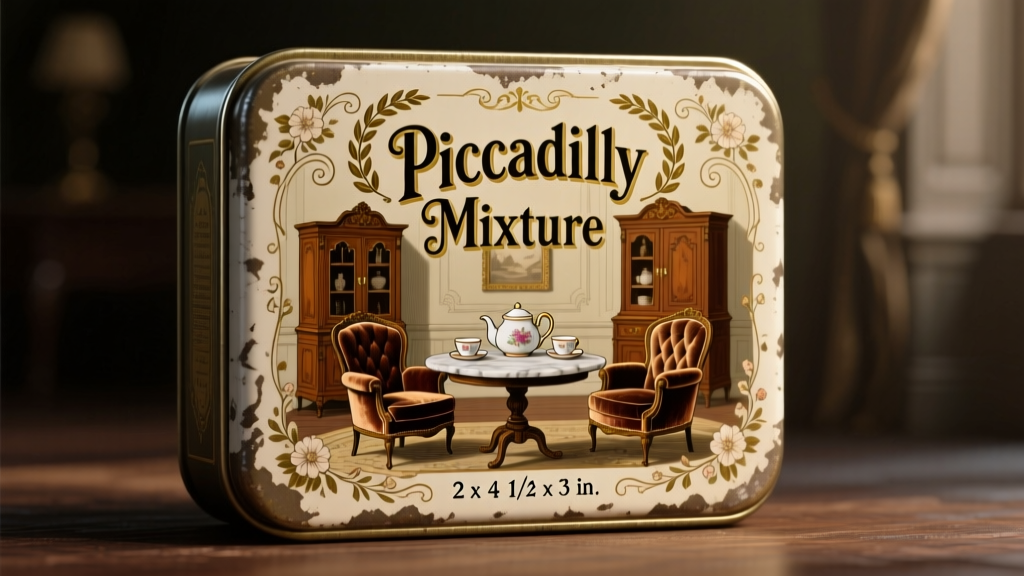
Advertising Tin: Piccadilly Smoking Mixture — Dimensions, Provenance, and Restoration Insights for Collectors
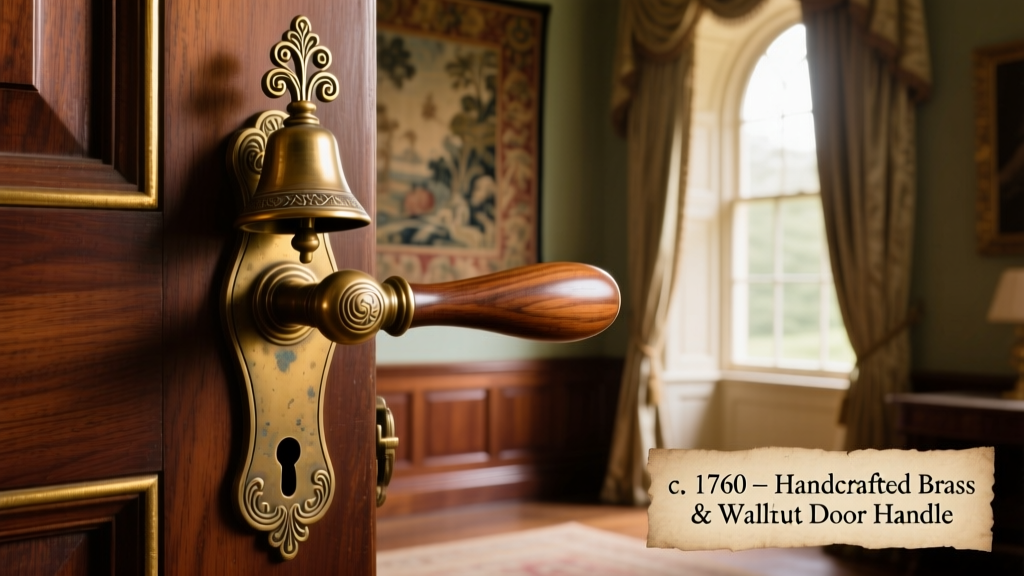
The Bell Hand Brass Wooden Handle: An 18th-Century English Door Pull from c.1760 — Provenance, Craftsmanship, and Restoration Protocol
Amphora Works Riessner & Co. Porcelain: Decoding the 'Riessner 2' Mark and Its Historical Significance
Fiesta Turquoise Tumbler Juice 5 Oz: History, Identification, Value, and Care for Collectors
Mothers Day Card: Item of the Week — A Collector’s Guide to Vintage and Artisanal Greeting Cards, 1920–1975
Print Prang Spring Song 14 × 18 In: History, Identification, Conservation, and Value Assessment
The John Hodgkinsen Pearlware Pitcher of 1797: Provenance, Craftsmanship, and Historical Significance
Opera Glasses, Mother-of-Pearl & Gilt Brass Lorgnette Handle: The Signed Le Fils Paris Masterpiece
Alabaster Paperweight Book Shape Relief Portrait Medallion: A Continental Collector’s Study (5 × 3 Inches)