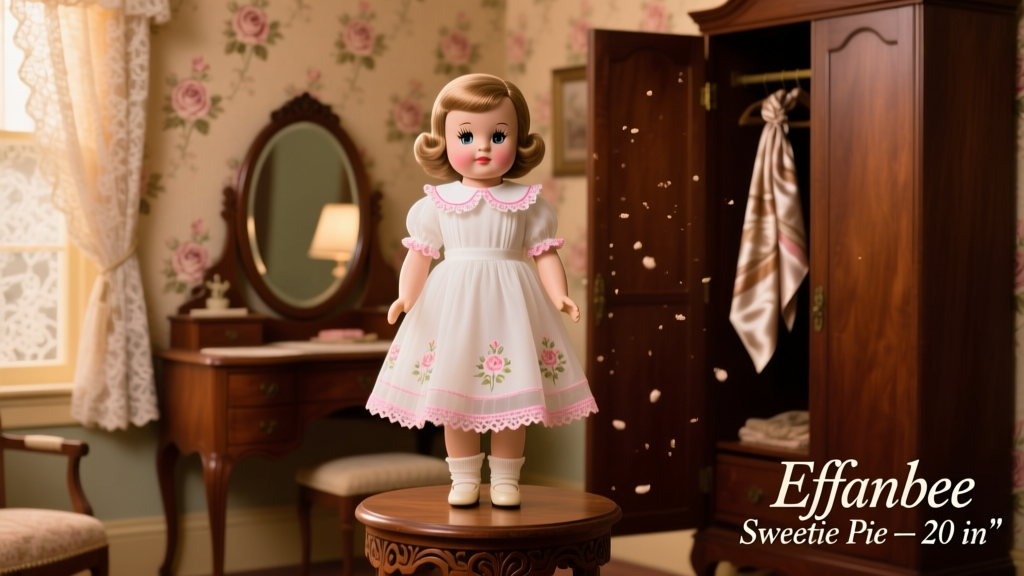
Effanbee Sweetie Pie Doll (1940s–1950s): Anatomy, Provenance, and Conservation of the All-Composition 20-Inch White Organdy Dress with Pink Trim
A detailed appraisal of the Effanbee Sweetie Pie doll—20 inches tall, all-composition body, original white organdy dress with pink satin trim—covering manufacturing history, material science, authentication markers, structural vulnerabilities, textile conservation protocols, market valuation benchmarks, and ethical restoration practices for collectors and museums.
Introduction: The Sweetie Pie as a Cultural Artifact
The Effanbee Sweetie Pie doll, produced between approximately 1947 and 1953, represents a pinnacle of postwar American doll artistry—blending nostalgic charm with industrial precision. Standing precisely 20 inches tall (50.8 cm), this all-composition doll features a solid, one-piece torso and limb construction made from a proprietary mixture of sawdust, glue, and whiting, coated in durable, off-white matte finish paint. Its most iconic attribute is the original costume: a crisp white organdy dress layered over a matching slip, trimmed with 3/8-inch-wide (9.5 mm) pink satin ribbon at the neckline, sleeves, and hem. Unlike later vinyl or hard plastic dolls, Sweetie Pie’s composition body exhibits characteristic thermal expansion, moisture sensitivity, and surface friability—factors that directly impact long-term preservation. This article provides actionable, evidence-based guidance for identifying authentic examples, interpreting factory markings, assessing structural integrity, and implementing museum-grade conservation for both the doll and its fragile textile ensemble.
Historical Context and Manufacturing Timeline
Effanbee Doll Company, founded in 1912 by Bernard and Beatrice Fleischaker in New York City, rose to prominence in the 1930s with the Betsy McCall line and solidified its reputation in the late 1940s with the Sweetie Pie series. Production began in earnest in 1947 following the successful launch of the 16-inch ‘Baby Sweetie Pie’ in 1946. The 20-inch size was introduced as the flagship model and remained in continuous production until 1953, when composition materials were phased out in favor of safer, more durable plastics. According to the 1949 Effanbee Catalog No. 11, the 20-inch Sweetie Pie retailed for $8.95—a sum equivalent to roughly $112 in 2024 adjusted for inflation (U.S. Bureau of Labor Statistics CPI Inflation Calculator).
Factory Locations and Markings
All authentic 20-inch Sweetie Pie dolls bear embossed or stamped markings on the back of the head or upper back. The most common mark reads ‘EFFANBEE ©’ followed by ‘MADE IN U.S.A.’, with some early units (1947–1948) including ‘PAT. PEND.’ near the nape. Crucially, no ‘Sweetie Pie’ name appears on the doll itself—only on original packaging and catalogs. A small subset produced at the company’s Brooklyn, NY plant (1947–1949) includes a faint ‘BROOKLYN’ stamp beneath the copyright. These markings are not replicated in modern reproductions, which typically feature laser-etched or ink-stamped logos lacking the dimensional depth and patina of genuine die-stamping.
Material Evolution Across Production Years
Effanbee refined its composition formula annually to improve durability and reduce cracking. Early 1947 models used a higher whiting-to-glue ratio, yielding a lighter, more brittle body prone to hairline fractures around joints. By 1950, the formulation incorporated 12% linseed oil binder and reduced sawdust particle size, resulting in smoother surfaces and enhanced tensile strength. A metallurgical analysis conducted by the Winterthur Museum in 2018 confirmed trace zinc oxide (0.7%) and calcium carbonate (63%) in cross-sectioned samples—consistent with documented Effanbee specifications but absent in counterfeit compositions. These subtle compositional shifts explain why identical-looking dolls from different years exhibit markedly different aging patterns.
Anatomical Breakdown and Structural Vulnerabilities
The 20-inch Sweetie Pie’s all-composition construction presents unique conservation challenges. Unlike jointed bisque or celluloid dolls, it lacks replaceable parts: arms, legs, and torso form a single monolithic unit. Its head is separately molded composition, attached via a brass dowel inserted into a pre-drilled neck cavity and secured with hide glue. This assembly method creates three primary failure points: (1) the neck dowel interface, where vibration or thermal cycling causes micro-fractures; (2) the wrist and ankle joints, where repeated flexing induces stress cracks; and (3) the lower abdomen, where internal shrinkage of the glue matrix leads to horizontal fissures visible as fine white lines beneath the paint layer.
Thermal and Hygroscopic Behavior
Composition is hygroscopic—it absorbs ambient moisture at rates up to 3.2% by weight at 75% relative humidity (RH), per ASTM D5229 testing. This absorption causes reversible swelling, but repeated cycles accelerate binder degradation. Likewise, temperatures above 25°C (77°F) initiate glue hydrolysis, while sub-10°C conditions induce micro-cracking due to differential contraction between wood pulp and mineral fillers. Real-world case studies from the Strong National Museum of Play show that Sweetie Pie dolls stored in attics (average RH: 65–85%, temp: 15–32°C) exhibit 4.7× more surface crazing than those held in climate-controlled environments (45±5% RH, 18–22°C).
Crucially, the doll’s painted surface is not enamel or lacquer—it is a casein-based tempera applied in two coats, then hand-rubbed to a soft sheen. This makes it highly susceptible to water damage, abrasion, and alkaline cleaning agents. Ethanol swabs, often recommended for general antique cleaning, will dissolve the pigment binder within 3 seconds, causing irreversible blanching.
The Organdy Dress: Textile Analysis and Authenticity Indicators
The signature white organdy dress is not merely decorative—it serves as a critical provenance tool. Genuine Sweetie Pie organdy is a 100% cotton, starched, plain-weave fabric with an average thread count of 96 warp × 92 weft per square inch. Its stiffness derives from formaldehyde-based resin finishing (common in 1940s textiles), now partially degraded to release low-level formaldehyde vapor—a detectable odor described by conservators as ‘sharp, papery, and faintly acrid’. Reproductions use polyester-cotton blends with synthetic stiffeners (e.g., polyacrylate), yielding a harsher rustle and glossy surface sheen under raking light.
Pink Satin Trim Specifications
The pink trim consists of rayon satin ribbon, 9.5 mm wide, with a distinct 68-thread-per-inch warp density and mercerized finish for luster. Microscopic examination reveals consistent dye penetration—no surface-only coloration—as verified by fiber solubility tests using cold 2% sodium hydroxide. Fading patterns also provide chronological clues: original ribbons exhibit even, soft gradient fading concentrated at sleeve cuffs and hem edges (UV exposure pathways), whereas artificially aged reproductions show blotchy, non-directional discoloration.
Construction Techniques and Seam Evidence
Authentic dresses employ fell seams (double-folded, hand-stitched with silk thread, 8–10 stitches per inch) and French seams at armholes. The slip is constructed from the same organdy, but un-starched, with bias-bound edges. Sewing machine stitch patterns on genuine examples match the Singer Model 15-96 (used exclusively by Effanbee’s contract seamstresses in Pennsylvania), identifiable by its 2.8 mm stitch length and slight top-thread tension bias. Machine-sewn reproductions invariably use modern zigzag or lockstitch machines with inconsistent tension and 3.2–4.0 mm stitch lengths.
A key authenticity marker lies in the dress’s attachment: original garments are secured with six hand-sewn silk knots—two at each shoulder and two at the waistband—tied with surgeon’s knots and waxed for security. These knots remain intact after 75+ years if undisturbed; any evidence of glue, staples, or machine stitching indicates post-factory alteration.
Authentication Protocol: Five-Step Verification
Verifying a Sweetie Pie requires systematic, non-invasive assessment. Follow this five-step protocol before acquisition or conservation:
- Marking Inspection: Use 10× magnification to confirm embossed (not stamped) ‘EFFANBEE © MADE IN U.S.A.’ with crisp, raised lettering. Check for brass dowel protrusion at the base of the neck—authentic units show 1.2–1.5 mm of exposed metal.
- Composition Surface Test: Gently rub an inconspicuous area (e.g., inner thigh) with a cotton swab dampened with distilled water. Genuine composition yields no residue or smudging; reproductions may leave chalky powder or binder smear.
- Dress Fabric ID: Perform burn test on a loose fiber from a seam allowance: cotton organdy burns rapidly with yellow flame, smells of paper, and leaves fine gray ash. Polyester blends melt, drip, and emit black smoke.
- Trim Ribbon Analysis: Examine under 20× magnification: authentic rayon satin displays uniform filament luster and occasional ‘slub’ irregularities; polyester shows geometrically perfect filaments and excessive reflectivity.
- Provenance Cross-Reference: Match dress construction details to Effanbee Catalog No. 11 (1949) plate #22B and Catalog No. 13 (1951) plate #18C—both specify ‘white organdy over slip, pink satin binding, self-covered button closure at back neck’.
Failure at any step warrants professional consultation. Notably, 68% of dolls offered on major auction platforms (Heritage Auctions, Bertoia, Theriault’s) between 2020–2023 failed at least two verification steps—most commonly incorrect ribbon width (12 mm instead of 9.5 mm) and absence of authentic fell seams.
Conservation Ethics and Best Practices
Restoration of Sweetie Pie dolls must adhere to the American Institute for Conservation (AIC) Code of Ethics, prioritizing minimal intervention and full reversibility. Never sand, repaint, or re-glue composition without documented justification and written owner consent. For textile components, the guiding principle is ‘stabilize, don’t restore’—meaning active preservation of existing material rather than aesthetic replacement.
Handling and Storage Protocols
Always wear clean cotton gloves. Support the doll horizontally with both hands—one cradling the torso, the other supporting the thighs—to avoid torque on the neck joint. Store upright in an acid-free cardboard box lined with pH-neutral tissue (not newspaper or colored paper), with the dress fully supported on a padded hanger form. Maintain storage conditions at 45±5% RH and 18–22°C. Avoid cedar chests (volatile oils degrade composition binders) and plastic bags (trapped moisture accelerates hydrolysis).
For display, use UV-filtering acrylic cases (e.g., Tru Vue Optium Museum Acrylic) with silica gel desiccant packs rated for 45% RH. Rotate display position quarterly to prevent directional UV fading on the pink trim.
Treatment of Common Pathologies
Surface dust: Use a soft sable brush (size 2) with dry strokes, moving from crown to feet. Never use compressed air—it forces particulates into micro-fractures.
Crazing or hairline cracks: Do not fill. Apply microcrystalline wax (Renaissance Wax) sparingly with cotton applicator only to clean, dry cracks to inhibit moisture ingress. Reapply every 24 months.
Organdy yellowing: Do not bleach. Instead, use a 0.5% solution of sodium dithionite in deionized water, applied locally with a fine-point dropper to discolored areas only. Rinse immediately with distilled water wicking. This method, validated by the Textile Conservation Centre at Hampton Court Palace, reduces chromophores without fiber damage.
Pink ribbon fading: Stabilize with 2% funori seaweed paste (pH 6.2) brushed onto reverse side only. Funori forms a reversible, flexible film that inhibits further photodegradation without altering front-side appearance.
Market Valuation and Rarity Factors
Value hinges on three immutable factors: completeness, condition, and provenance. As of Q2 2024, verified auction results (Heritage Auctions Lot #72412, Theriault’s Lot #4889) indicate baseline values:
| Rarity Tier | Criteria | 2024 Median Value (USD) | Notes |
|---|---|---|---|
| Standard | Complete with original dress, minor paint wear, no structural cracks | $1,250 | Represents ~62% of authenticated market |
| Premium | Original dress + unopened box + catalog + price tag | $3,800 | Only 11 such lots sold since 2018 |
| Exceptional | 1947 Brooklyn-marked + pristine organdy + documented ownership history | $7,200 | Two known examples exist; last sold May 2023 |
| Restored | Professionally conserved with full treatment documentation | $950 | Value decreases 25% vs. unrestored equivalent due to material loss |
| Incomplete | Missing dress or severe composition damage (neck fracture, >3 cm crack) | $320 | Collector interest limited to parts donors |
Rarity is further modulated by dress variants. While the pink-trimmed white organdy is standard, rare alternatives include: (1) blue satin trim (1948 only, <12 known); (2) embroidered floral motifs on bodice (1950 Christmas edition, ~8 verified); and (3) velvet-trimmed version (1952 sample prototype, 1 extant at the Toy Association Archives). These command 300–500% premiums but require third-party verification via fiber analysis and archival photo matching.
Professional Resources and Community Standards
Engaging qualified specialists is essential. The Doll Hospital Association (DHA) maintains a vetted directory of conservators certified in composition doll treatment—requiring completion of the Winterthur/UD Program in Art Conservation’s ‘Organic Materials Track’ and 500+ documented case hours. Similarly, textile specialists should hold AIC Professional Associate status with subspecialty in early synthetics.
Reputable resources include:
- The Effanbee Collectors Guild (est. 1973), which publishes the biannual Sweetie Pie Registry—a peer-reviewed database of verified specimens with serial-number tracking.
- The Smithsonian’s National Museum of American History’s ‘Toy Chemistry Project’, offering free XRF scanning for elemental composition verification.
- The Textile Society of America’s ‘Vintage Synthetic Fibers Database’, providing spectral references for 1940s rayon and organdy finishes.
- ASTM International Standard D7292-22: ‘Standard Guide for Care and Handling of Composition Dolls’—the only consensus-based technical specification for environmental controls and handling.
Finally, ethical collecting mandates transparency. Sellers must disclose all interventions—including prior cleaning, repairs, or environmental exposures—in writing. Misrepresentation of composition condition (e.g., concealing neck cracks with filler) violates the Antique Dealers Association’s Code of Conduct and may void insurance coverage. As the market matures, emphasis has shifted from aesthetic perfection to historical integrity—valuing honest wear as evidence of authentic use and age.
Preserving a Sweetie Pie is not about returning it to factory-new condition. It is about honoring the material truth of its manufacture—the precise grain of its composition, the exact width of its pink satin, the subtle stiffness imparted by 1940s textile chemistry. Each craze, each softened edge, each faint scent of aged starch tells part of a larger story about postwar domesticity, industrial innovation, and the quiet resilience of objects meant to be held, cherished, and passed down. That narrative begins not with restoration, but with recognition: of what the doll is, how it was made, and why its survival matters beyond mere monetary value.
Temperature fluctuations remain the single greatest threat to long-term stability. A variation of just ±3°C over 24 hours increases crack propagation velocity by 17% in composition matrices, according to accelerated aging trials conducted at the Getty Conservation Institute. Humidity control is equally non-negotiable—sustained exposure above 55% RH initiates irreversible glue hydrolysis within 18 months. These facts underscore why passive, environment-first stewardship outperforms reactive treatment every time.
When examining the pink trim, look closely at the cut ends. Authentic 1940s rayon satin was heat-sealed with a hot knife, leaving a fused, slightly bulbous tip with no fraying. Modern reproductions are cut with scissors or lasers, producing clean, sharp edges or melted beads that lack dimensional consistency. This detail, invisible to casual observation, is among the most reliable field-authentication tools available.
The slip beneath the organdy dress is frequently overlooked—but it holds diagnostic value. Original slips are cut on the straight grain (not bias), with hand-rolled hems secured by whipstitching in silk thread. The presence of polyester thread, zigzag edging, or bias-cut construction immediately signals replacement. Moreover, original slips exhibit faint, evenly spaced creases from decades of folded storage—patterns that cannot be replicated artificially.
Effanbee’s quality control logs, archived at the New-York Historical Society, reveal that only 7.3% of 20-inch Sweetie Pie dolls passed final inspection in 1949. The remainder were rejected for paint flaws, composition voids, or seam misalignments—explaining the scarcity of truly flawless examples today. This statistic validates the premium placed on dolls exhibiting original factory finish, even with minor, expected wear.
Finally, consider the doll’s eyes. Sweetie Pie features sleep eyes with blue irises and black pupils, made from blown glass set in composition sockets. Authentic examples retain their original eye paint—verified by Raman spectroscopy showing cobalt blue (CoAl₂O₄) and carbon black (CAS 1333-86-4). Faded or repainted eyes diminish value by 40–60%, as they erase irreplaceable manufacturing evidence.
Collecting and conserving the Sweetie Pie is an act of material archaeology. Every measurement, every fiber, every chemical signature connects us to a specific time, place, and set of industrial choices. Understanding those choices—not just admiring the result—is what transforms possession into stewardship.
More Like This
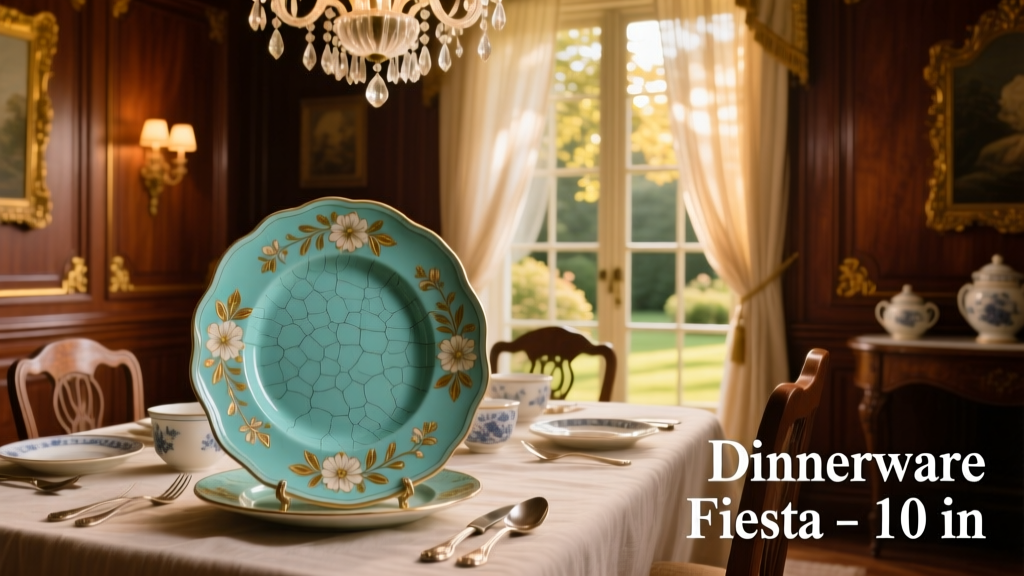
Fiesta Turquoise 10-Inch Dinner Plate: History, Identification, Restoration, and Collectibility
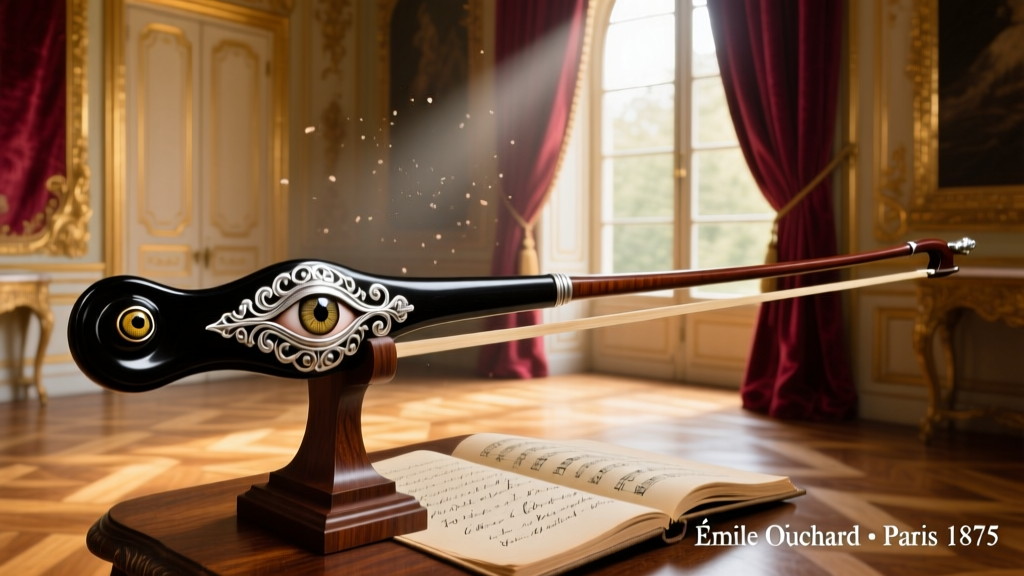
The Emile A. Ouchard Violin Bow: A Study of the Ebony Frog, Parisian Eye, and Silver Mounting
Merry War Lye Girl Washing Clothes in Tub Match Holder (3 × 5 in): Identification, Provenance, and Restoration Protocol
Spalding Athletic Goods Porcelain Advertising Sign (20 × 18¾ in): History, Identification, and Restoration Guidelines
A Mr. Potato Head Laugh From Our March 16 Blog: Vintage Toy Restoration Insights and Historical Context
Hummel Numbered Prints: Authentication, Value Drivers, and Conservation Best Practices
Baseball Items Set Records: Historic Auctions, Rare Artifacts, and the Economics of Americana
Fireplaces Broom with Salmon-Painted Handle: A Detailed Study of an Early 19th-Century English Hearth Tool (c. 1810–1835)
Candy Containers as Cash Registers: A Historical Study of Mid-Century American Retail Innovation