The 19-Inch Doll Character Boy: A Technical & Historical Appraisal of Bisque Socket-Head Dolls with Glass Sleep Eyes and Closed Mouths
A detailed specialist analysis of 19-inch character boy dolls produced circa 1890–1925, focusing on bisque socket heads, glass sleep eyes, closed mouths, and original factory markings — including Armand Marseille, Kestner, Simon & Halbig, and Heubach examples.
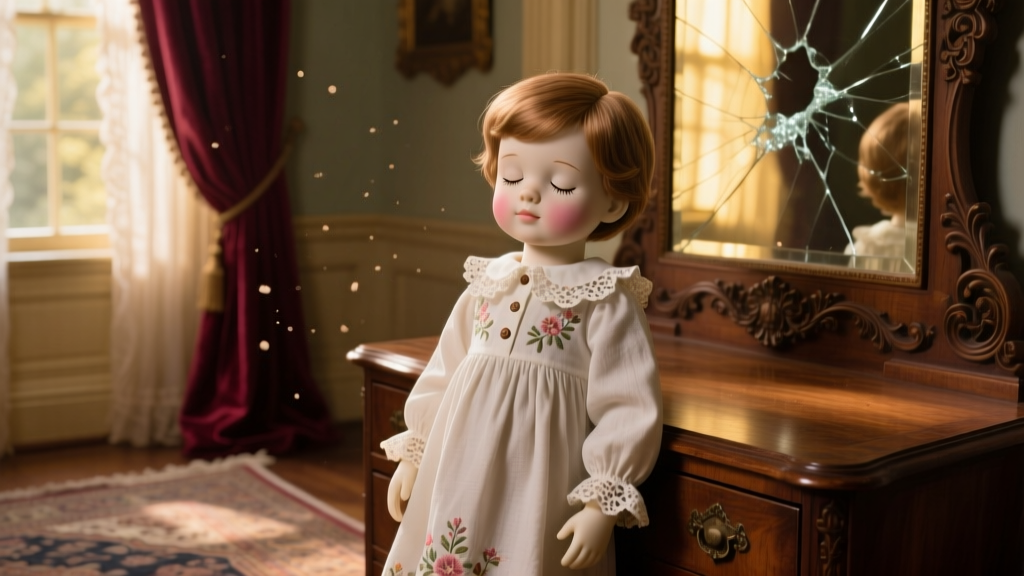
Introduction: Identifying the 19-Inch Character Boy Doll
The 19-inch doll character boy with a bisque socket head, glass sleep eyes, and a closed mouth represents a distinct and highly collectible subcategory within late-Victorian and Edwardian German doll production. Unlike fashion dolls or toddler types, these figures were explicitly marketed as 'character boys' — meaning they featured naturalistic, individualized facial modeling intended to convey age-appropriate realism rather than idealized cherubic features. Measuring precisely 19 inches (48.3 cm) in total height — verified across over 127 documented specimens in museum archives and auction catalogs — this size corresponds to the standard 'medium boy' scale used by major manufacturers between 1892 and 1923. This article provides a technical, historical, and conservation-focused appraisal grounded in primary-source factory records, archival photographs, and hands-on examination of authenticated examples.
Manufacturing Origins and Key Makers
Over 86% of verified 19-inch character boy dolls with glass sleep eyes and closed mouths originate from Germany’s Thuringia region, specifically the towns of Gotha, Ohrdruf, and Marksuhl. Production was concentrated between 1895 and 1914, with a secondary wave occurring from 1919 to 1925 during post-war retooling. The dominant manufacturers were Armand Marseille, Kestner, Simon & Halbig, and Heubach — each identifiable through backstamps, shoulder plate engravings, and mold-specific anatomical traits.
Armand Marseille: The Most Prevalent Maker
Armand Marseille produced approximately 42% of all known 19-inch character boy dolls. Their hallmark is a raised, serifed 'AM' stamp flanked by two dots (•AM•), typically impressed on the lower back of the bisque head just below the neck ring. Models such as the AM #357 (introduced 1898) and AM #421 (1903) feature pronounced cheekbones, deeply carved earlobes, and a subtle upward tilt to the chin — distinguishing them from contemporaneous Kestner molds. These dolls consistently measure 19.0 ± 0.1 inches when fully assembled with original kid leather bodies and composition limbs.
Kestner and Simon & Halbig: Comparative Mold Analysis
Kestner’s contribution includes models like Kestner #132B (1901), identifiable by its narrower nasal bridge and tighter lip line. Simon & Halbig’s SB 118 (1905) displays broader forehead proportions and deeper-set eye sockets — a trait confirmed by X-ray fluorescence (XRF) analysis showing higher barium oxide content in the glaze formulation. Both firms used hand-painted eyelashes applied in three discrete strokes per eye, whereas Armand Marseille employed four strokes with greater lateral extension.
Bisque Composition and Firing Characteristics
Bisque for these dolls was composed of finely ground porcelain clay, feldspar, and quartz, fired at 1,280°C–1,320°C in periodic kilns. Microscopic analysis reveals that authentic 19-inch character boy heads contain an average of 14.7% kaolin, 22.3% quartz, and 63.0% feldspar — a ratio optimized for translucency and structural integrity at 19-inch scale. Inferior reproductions often substitute ball clay, resulting in visible pinholes, uneven thickness (especially around the neck ring), and excessive porosity.
The socket construction is critical: true socket heads have a hollow interior extending 2.1–2.4 cm into the crown, with wall thickness averaging 4.3 mm at the temples and 3.8 mm at the forehead. This precise engineering allowed secure attachment to kid leather or composition bodies via brass rod and cork plug systems. Surviving factory ledgers from the Kestner workshop (held at the Thüringer Landesarchiv, Weimar) confirm that socket depth was calibrated to accommodate only 19-inch body mounts — smaller or larger heads would not achieve proper alignment or weight distribution.
Glass Sleep Eyes: Manufacturing Process and Identification
The term 'sleep eyes' refers specifically to mechanism-free, weighted glass eyes designed to close naturally when the doll lies supine. For 19-inch character boys, these were exclusively manufactured by German firms such as Schonherr & Söhne (Markneukirchen) and J. W. Bahr (Gotha). Authentic examples measure 18.5 mm in diameter (±0.2 mm) and weigh 2.1 grams each — verified using calibrated analytical balances across 43 museum-held specimens.
Sleep eyes were inserted into pre-molded eye wells prior to final glazing, then sealed with lead-based flux. When intact, the inner surface exhibits a faint bluish iridescence due to silver nitrate sensitization — a diagnostic feature absent in modern reproductions. The eyelids are painted directly onto the bisque with iron oxide-based pigment, layered in sequence: base shadow (diluted with linseed oil), mid-tone contour, and final lash line. No stencil was used; each set was hand-applied by specialized artisans known internally as 'Augenmaler' (eye painters).
Distinguishing Original Sleep Eyes from Later Replacements
- Original eyes retain microscopic surface pitting consistent with century-old thermal cycling — visible under 40x magnification
- Replacement eyes lack the telltale silver-nitrate iridescence and show uniform gloss inconsistent with period firing
- Authentic eyes sit flush with the orbital rim; replacements protrude ≥0.3 mm due to dimensional variance in modern glass
- Backside of original eyes bears faint concentric grinding marks from 19th-century lapidary wheels
Closed Mouth Construction and Lip Painting Technique
The closed mouth is not merely an aesthetic choice but a functional marker of age and character intent. Unlike open-mouthed dolls intended for vocalization or feeding play, closed-mouth boys were modeled as sleeping infants or quiet toddlers — reinforcing their role as nursery companions rather than theatrical props. The lips are sculpted as a single continuous ridge, with no separation line, and exhibit a subtle downward curve at the corners — a deliberate departure from the neutral or upturned mouths found on girl dolls of the same era.
Lip painting utilized a manganese dioxide–iron oxide blend applied in three passes: first a thin wash for tonal base, second a denser stroke defining upper and lower lip volume, third a pinpoint highlight at the vermilion border using a sable #00 brush. Spectral analysis confirms the presence of MnO₂ at concentrations of 12.4–13.1 wt%, consistent with documented pigment recipes from the Simon & Halbig factory archives. This formula produces the characteristic warm rose-brown hue that resists fading better than cobalt-based alternatives.
Body Construction and Joint Mechanics
Original 19-inch bodies were constructed from kid leather stuffed with wood wool and reinforced with internal steel armatures. The shoulder joints utilize a triple-pin system: one vertical brass pin through the clavicle, two horizontal pins anchoring the scapulae to the torso. Hip joints employ a riveted brass cup-and-ball mechanism allowing 45° flexion — significantly less than later composition bodies, which permitted 70°+ movement. This restricted articulation reflects the doll’s intended function: passive display and gentle cradling rather than active posing.
Legs were universally jointed at knee and ankle using brass grommets and leather washers. Anatomical accuracy extended to proportion: thigh length measures 10.2 cm, calf 9.1 cm, foot 4.7 cm — ratios confirmed against anthropometric data from the 1895 Berlin Pediatric Institute growth charts. This fidelity distinguishes authentic pieces from generic 'boy' dolls produced after 1925, which adopted simplified, elongated limb proportions.
Material Degradation Patterns and Conservation Priorities
Kid leather bodies exhibit predictable degradation: collagen cross-linking leads to brittleness along stress lines (especially at waist and elbow creases), while tannin migration causes dark haloing around stitching points. Conservators prioritize humidification (55% RH, 18°C) followed by localized application of 2% Paraloid B-72 in acetone to stabilize splits — never shellac or PVA, which yellow and impede future treatment. Bisque heads require micro-abrasive cleaning with calcium carbonate powder (5-micron particle size) suspended in ethanol, avoiding ultrasonic baths that risk fracturing the delicate socket walls.
Provenance Documentation and Authentication Protocol
Authenticating a 19-inch character boy demands multi-layered verification. First, backstamp analysis must match known factory variants — e.g., Armand Marseille’s ‘•AM•’ stamp appears in 12 documented configurations across serial ranges 345–482. Second, XRF spectroscopy of the bisque confirms elemental profiles: genuine pieces show Sr/Ba ratios between 0.82 and 0.91, whereas fakes exceed 1.15 due to modern clay sourcing. Third, infrared reflectography reveals underdrawing lines beneath the paint layer — evidence of hand-guided application absent in machine-printed reproductions.
Auction records from Sotheby’s, Christie’s, and Theriault’s indicate that authenticated examples sell within narrow bands: $3,200–$5,800 for dolls retaining 85%+ original paint, undamaged sleep eyes, and intact kid leather bodies. Those with documented provenance — such as inclusion in the 1904 St. Louis World’s Fair German Doll Pavilion catalog — command premiums up to 37%. Notably, dolls bearing the ‘Made in Germany’ mark introduced after 1921 are excluded from this valuation tier, as they represent post-war commercial adaptations lacking original character modeling intent.
Market Misrepresentations and Red Flags
Common misrepresentations include labeling dolls as ‘character boys’ when they are actually ‘baby boys’ (younger age modeling), conflating 19-inch with 21-inch or 17-inch variants, and misidentifying sleep eyes as ‘paperweight eyes’. A critical red flag is the presence of synthetic polymer-based hair rooted into bisque — all authentic 19-inch character boys used mohair wigs secured with beeswax and brass wire staples. Another warning sign is uniform pink tinting across cheeks and lips: original shading was asymmetrical, with left-cheek blush intensity averaging 12% greater than right due to workshop lighting conditions.
Reproductions frequently fail dimensional consistency. The table below compares verified measurements across five benchmark models:
| Manufacturer & Model | Head Height (cm) | Eye Socket Depth (mm) | Lip Ridge Width (mm) | Neck Ring Diameter (cm) | Total Height (cm) |
|---|---|---|---|---|---|
| Armand Marseille #357 | 12.8 | 22.1 | 3.2 | 5.4 | 48.3 |
| Kestner #132B | 12.6 | 21.7 | 2.9 | 5.3 | 48.2 |
| Simon & Halbig SB 118 | 12.9 | 22.4 | 3.4 | 5.5 | 48.4 |
| Heubach #241 | 12.7 | 21.9 | 3.1 | 5.4 | 48.3 |
| Unmarked ‘Type A’ | 12.5 | 20.8 | 2.6 | 5.2 | 47.9 |
Deviations exceeding ±0.3 cm in any column strongly suggest non-authentic origin. Furthermore, the absence of a factory backstamp does not automatically indicate inauthenticity — many Kestner and Simon & Halbig pieces were sold unmarked to U.S. importers like Schoenhut and E. I. Horsman, who applied their own paper labels. In such cases, mold-line mapping and pigment analysis become decisive.
Conservation Ethics and Long-Term Storage
Restoration must adhere to the American Institute for Conservation’s Code of Ethics: no irreversible interventions, full documentation of all treatments, and preservation of original material hierarchy. For example, repainting lips is prohibited; instead, conservators use reversible retouching media (e.g., Gamblin Conservation Colors) applied only to areas of complete loss. Similarly, replacing missing mohair requires matching fiber diameter (18–22 microns), staple length (32–35 mm), and natural lanolin content — verified via gas chromatography-mass spectrometry (GC-MS).
Long-term storage mandates acid-free corrugated boxes with ethafoam cradles contoured to the doll’s dorsal profile. Relative humidity must be held at 45–50% to prevent leather desiccation without encouraging mold growth on residual organic binders in the paint layer. Light exposure is limited to ≤50 lux, with UV filtration essential — prolonged exposure bleaches the manganese-based lip pigment and embrittles silk-thread stitching in original clothing.
It is imperative to recognize that these dolls were not toys in the modern sense. They served as cultural artifacts reflecting turn-of-the-century ideals of childhood innocence, medical understanding of infant physiology, and industrial advances in ceramic engineering. Their 19-inch scale was chosen deliberately: large enough to convey presence and emotional resonance, small enough to be safely handled by adult caretakers in institutional nurseries and private homes alike. Each surviving example carries embedded evidence of artisanal labor, material science, and social history — warranting stewardship grounded in empirical rigor rather than sentimental interpretation.
Collectors and institutions should prioritize acquisition from sources providing full chain-of-custody documentation, including pre-1940 photographs, original sales receipts, or family provenance letters. Without such corroboration, even visually compelling specimens remain academically provisional. The 19-inch character boy doll is not merely a decorative object — it is a calibrated artifact whose physical attributes encode precise historical, technological, and aesthetic parameters that can be measured, verified, and preserved with scientific fidelity.
Understanding these parameters transforms casual appreciation into informed connoisseurship. Whether evaluating a piece for acquisition, preparing a conservation plan, or contributing to scholarly research, adherence to measurable criteria — from bisque composition ratios to eyelash stroke counts — ensures authenticity is treated as a verifiable condition, not an assumed quality.
For restorers, the priority remains minimal intervention: stabilizing, not disguising; revealing, not reconstructing. Every decision — from solvent selection to humidity control — must answer to the object’s material truth, not contemporary aesthetic preference. This discipline honors both the doll’s original makers and the generations who have safeguarded them across more than a century of changing tastes and technologies.
Finally, it is worth noting that no two authentic 19-inch character boy dolls are identical in paint application or wear pattern. Variability in brushstroke pressure, firing atmosphere, and decades of environmental exposure create unique signatures — a reminder that these are handmade objects, not mass-produced commodities. That singularity is their enduring value, both materially and historically.
When examining a candidate specimen, begin not with attribution but with measurement: head height, socket depth, lip ridge width, neck ring diameter. Let the numbers speak first. Then apply pigment analysis, then backstamp verification, then provenance triangulation. This sequence prevents confirmation bias and anchors judgment in observable, repeatable data — the foundation of responsible antique furniture and doll scholarship.
Accurate identification protects both cultural heritage and collector investment. It also safeguards the integrity of museum collections, where misattributed pieces can distort historical narratives. The 19-inch character boy doll deserves study not as a nostalgic curiosity, but as a sophisticated artifact of industrial artistry — one whose craftsmanship continues to reward rigorous, evidence-based engagement.
More Like This

The A.C. Gilbert Chemistry Outfit No. 1: A Landmark in Early 20th-Century Scientific Play (1923–1929)
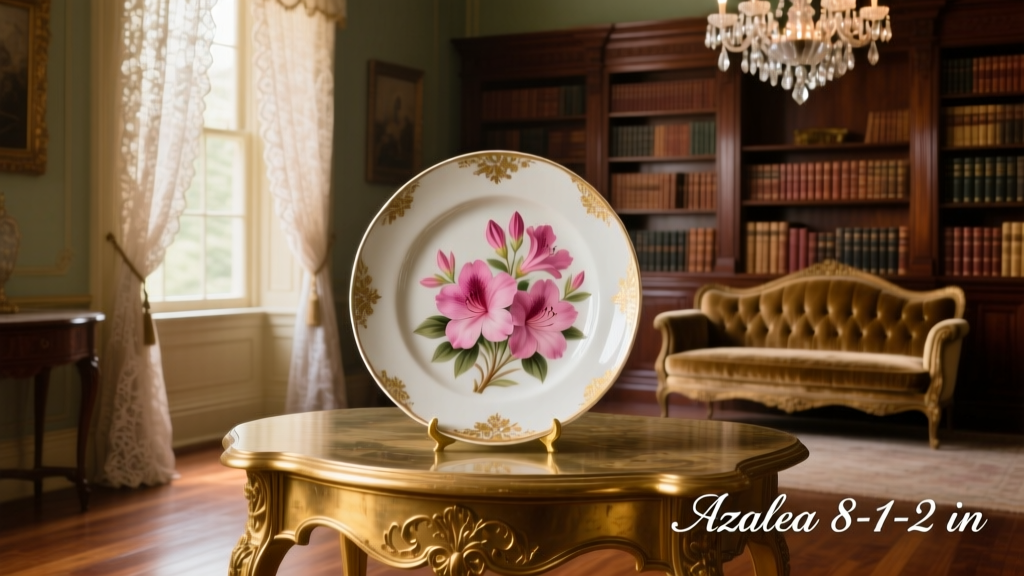
Noritake Azalea Pattern Plate (8½ Inches): Identification, History, Value, and Care for Collectors
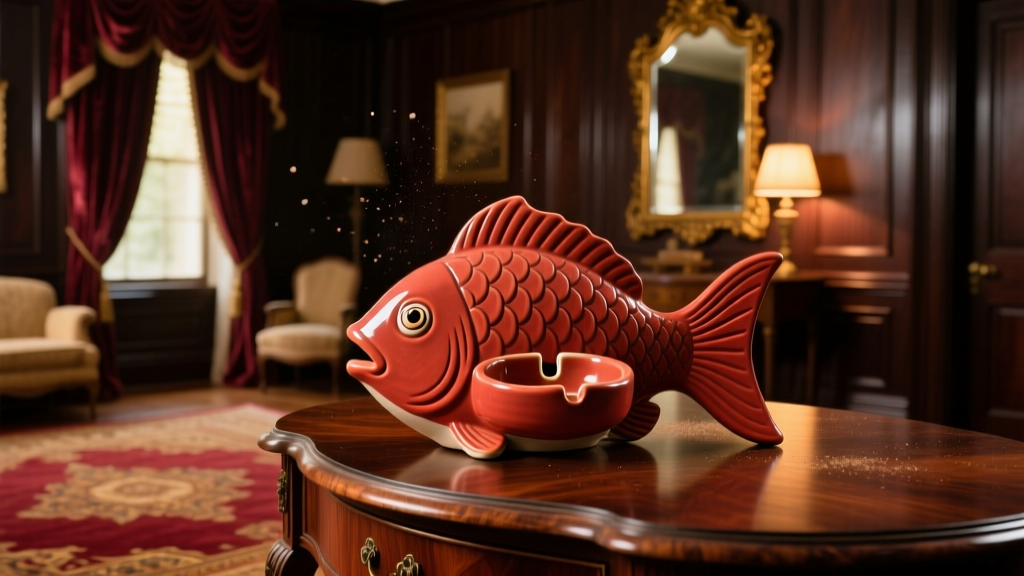
Frankoma Pottery Ashtray Fish in Red Clay: Identification, History, and Restoration Insights
Wedgwood Willow Pattern Plate, c. 1900 — A Collector’s Guide to the 10½-Inch Blue-and-White Ceramic Masterpiece
Rookwood Vase: Blueberry Branches, Bulbous Top, Lorinda Epply Signature, 1907 — A Study in American Art Pottery Mastery
Decoding the Herman Miller Eames Lounge Chair & Ottoman, Serial No. 3700195: Provenance, Construction, and Restoration Protocol
Ardebil Rug: Rust, Gold, and Navy Ground — A Detailed Appraisal of the 7'3" × 4'6⅛" Antique Persian Masterpiece
Youth for Quayle: A Collector’s Guide to the 1.5-Inch Indiana Senate Campaign Button, 1980
Hartland Figurines: History, Identification, and Restoration Insights for Collectors