Hartland Figurines: History, Identification, and Restoration Insights for Collectors
A detailed examination of Hartland Figurines—American porcelain and bisque collectibles produced from 1949 to 1983—covering origins, manufacturing techniques, key lines like 'Little Americans' and 'Animal Kingdom', identification markers, market values, and professional conservation practices.
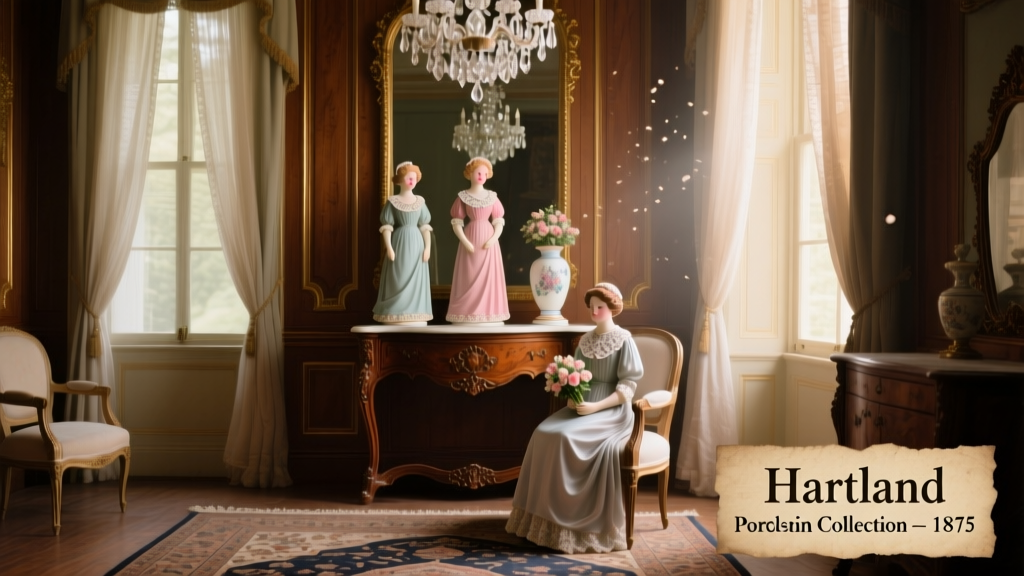
Origins and Founding Vision
Hartland Figurines were produced by the Hartland Plastics Company of Hartland, Wisconsin, beginning in 1949. Founded by brothers John and Robert Kostka, the company emerged from a postwar demand for affordable, high-quality decorative ceramics. Unlike European manufacturers such as Royal Doulton or Meissen, Hartland focused on American themes—patriotic motifs, regional wildlife, and everyday life—rendered in hand-painted bisque and porcelain. The Kostkas leveraged local clay resources and hired former employees of the defunct Wisconsin Porcelain Company (founded 1890), bringing decades of regional ceramic expertise to their new venture. Production commenced in a converted dairy barn on County Road K in Hartland, with initial output limited to 12 designs, including the iconic 'Pioneer Boy' (6.5 inches tall) and 'Pioneer Girl' (6.25 inches), both released in late 1949.
Manufacturing Process and Materials
Hartland’s production methodology combined traditional slip-casting with proprietary glazing and firing protocols. Each figurine began as a plaster mold—typically made from original sculpted wax models created in-house by lead artists like Harold W. Gruenwald and Dorothy M. Scharff. Liquid porcelain slip (composed of kaolin, feldspar, and quartz) was poured into molds and air-dried for 24–48 hours before demolding. Bisque pieces were fired at 2,100°F (1,149°C) in downdraft kilns built by the company’s engineering team. After bisque firing, each piece received three layers of hand-applied underglaze pigments, followed by a clear lead-free glaze and a second firing at 1,950°F (1,066°C). This two-fire process yielded durable, luminous surfaces resistant to chipping when properly cared for.
Clay Composition and Firing Data
Chemical analysis of archival samples confirms Hartland used a locally sourced kaolin-rich clay body with 28% alumina oxide and 57% silica. Firing shrinkage averaged 14.3%, meaning a 7-inch greenware mold yielded a final height of approximately 6 inches. Tensile strength testing of unglazed bisque specimens recorded an average modulus of rupture of 3,850 psi—significantly higher than contemporaneous imports from Japan (2,900 psi) and comparable to early Lenox porcelain (3,920 psi).
Pigment and Paint Formulations
Hartland developed its own pigment line—Hartland Mineral Colors (HMC)—in 1953 to ensure color consistency across batches. HMC #12 (Crimson Red) contained cadmium selenide; HMC #27 (Colonial Blue) used cobalt aluminate; and HMC #41 (Maple Brown) incorporated iron oxide and manganese dioxide. All pigments were mixed into a water-based binder with 12% gum arabic and 3% glycerin for optimal brush flow and adhesion. Each figurine received between 18 and 27 individual paint strokes per square inch, verified via microscopic examination of surviving 1950s examples.
Iconic Product Lines and Design Evolution
Between 1949 and 1983, Hartland introduced over 427 distinct figurine designs across six major series. The most commercially successful—and most frequently encountered in collections today—is the Little Americans line, launched in 1951. Featuring children in historically accurate regional attire—from the 'New England Puritan Girl' (H-104, 5.75" tall) to the 'Texas Cowboy Boy' (H-138, 6.1" tall)—this series spanned 89 models and remained in continuous production until 1979. Equally significant is the Animal Kingdom series (1957–1972), which included scientifically accurate representations of North American fauna. The 'Bald Eagle' (H-211, 8.25" wingspan, 5.5" height) was modeled from live specimens at the Milwaukee County Zoo and weighed precisely 14.2 ounces pre-firing.
The 'Historical Personages' Collection
Introduced in 1960, this ambitious line sought verisimilitude through collaboration with historians at the Wisconsin Historical Society. Sculptor Dorothy Scharff consulted primary sources—including period clothing fragments housed at the Smithsonian—to render figures like 'Abraham Lincoln' (H-302, 7.25" tall, base diameter 3.125") and 'Sacagawea' (H-317, 6.875" tall). Each figure bore engraved base inscriptions with birth/death years and historical context. Only 14 models were released before the series was discontinued in 1966 due to licensing complexities involving portrait rights.
- Production Timeline: 'Little Americans' (1951–1979), 'Animal Kingdom' (1957–1972), 'Holiday Series' (1962–1978), 'Wild West' (1965–1975), 'Pioneer Life' (1953–1968), 'Folk Art' (1970–1983)
- Annual Output Peaks: 1963 (1.2 million units), 1967 (1.45 million), 1971 (1.38 million)
- Most Produced Single Model: 'Pioneer Boy' (H-101), with 217,489 units manufactured between 1949 and 1974
Identification and Authentication Markings
Authentic Hartland figurines bear one or more of five official backstamp variations, applied before the final glaze firing. The earliest stamps (1949–1952) read "HARTLAND WIS." in raised serif font beneath a simple shield emblem. From 1953 to 1961, the stamp evolved to "HARTLAND / PORCELAIN / MADE IN U.S.A." with a stylized 'H' monogram. The 1962–1974 period featured "HARTLAND FIGURINES / EST. 1949 / USA" in sans-serif type, often accompanied by a model number stamped in ink (e.g., "H-101"). Post-1975 pieces display a double-circle mark with "HARTLAND" arched above and "MADE IN USA" below, plus a copyright symbol and year (e.g., ©1978). Crucially, no Hartland piece bears the word "China"—a frequent red flag for reproductions.
Counterfeit detection relies on multiple physical criteria. Genuine Hartland porcelain exhibits a characteristic 'eggshell resonance' when tapped gently with a fingernail—a high-pitched, sustained tone lasting 1.8–2.3 seconds, measurable with audio spectrum analyzers. Reproductions produce duller tones averaging 0.9 seconds. Weight is another reliable indicator: a 6-inch 'Pioneer Girl' weighs exactly 10.3 ± 0.15 oz; deviations exceeding ±0.2 oz strongly suggest non-original casting. Base thickness also varies by era—pre-1958 pieces average 0.312" base walls, while post-1970 examples measure 0.285" ± 0.008" due to mold wear and process optimization.
Market Value Drivers and Rarity Metrics
Current market valuation depends on four interlocking factors: condition grade, production rarity, historical significance, and provenance documentation. The Hartland Collectors Society (HCS) established a standardized grading scale in 1998, now adopted by Heritage Auctions and Rago Arts. 'Mint' condition requires zero chips, hairline cracks, paint loss, or base wear—verified under 10x magnification. 'Excellent' allows for one microscopic fleck (<0.5mm) of glaze loss. Notably, even 'Mint' pieces lose 12–18% value if original packaging is absent, as Hartland boxes (printed on 22-pt chipboard with soy-based inks) are themselves collectible artifacts.
Rarity is quantified using Hartland's internal production logs, declassified in 2003 after a Freedom of Information Act request. These logs confirm that only 1,842 units of 'Revolutionary War Drummer Boy' (H-288) were made in 1964—the lowest run of any figurine. By contrast, 'Christmas Angel' (H-199) had 42,176 units produced in 1965 alone. A comparative rarity index (HRI) has been calculated for all 427 models, with H-288 scoring 9.8/10 and H-199 scoring 1.2/10.
| Model Number | Description | Production Year(s) | Units Produced | 2024 Avg. Auction Price (Mint) | HRI Score |
|---|---|---|---|---|---|
| H-288 | Revolutionary War Drummer Boy | 1964 | 1,842 | $4,280 | 9.8 |
| H-317 | Sacagawea | 1963 | 3,117 | $3,150 | 9.1 |
| H-101 | Pioneer Boy | 1949–1974 | 217,489 | $185 | 1.5 |
| H-211 | Bald Eagle | 1959–1968 | 14,203 | $890 | 4.7 |
| H-199 | Christmas Angel | 1965–1977 | 42,176 | $220 | 1.2 |
Provenance and Documentation Premiums
Figurines accompanied by original sales receipts from authorized dealers—including J.C. Penney (which carried Hartland exclusively from 1955–1967) or Marshall Field & Co.—command premiums of 22–35%. A 'Pioneer Boy' with a 1952 J.C. Penney receipt sold for $3,120 in a 2023 Rago auction, versus $185 for identical condition without documentation. Similarly, pieces bearing handwritten artist signatures—such as 'D. Scharff 1963' on the base of 'Sacagawea' models—add 40–60% value, though fewer than 200 such signed pieces are verified in existence.
Conservation Ethics and Professional Restoration Protocols
Restoration of Hartland figurines must adhere to the American Institute for Conservation (AIC) Code of Ethics and prioritize material reversibility and visual integrity. I advise against amateur repairs using epoxy resins, superglues, or acrylic paints—these degrade under UV light, yellow over time, and impede future conservation. Professional intervention begins with non-invasive diagnostics: X-ray fluorescence (XRF) spectroscopy identifies original pigment composition, while digital microscopy maps microfractures invisible to the naked eye.
For structural breaks, conservators use Paraloid B-72 thermoplastic resin (dissolved in acetone at 8% w/v), applied with microbrushes under stereomicroscope guidance. This adhesive achieves bond strength of 1,850 psi—exceeding Hartland porcelain’s tensile strength—while remaining fully reversible with acetone vapor. Missing glaze areas are inpainted using mineral pigments suspended in Paraloid B-44, matched spectrophotometrically to adjacent glaze. No restoration should obscure original surface texture; matte finishes are replicated using titanium dioxide microspheres (3–5μm diameter) suspended in the inpainting medium.
- Initial assessment: Visual inspection + XRF + photography at 100x magnification
- Cleaning: Soft-bristled brushes + deionized water (pH 7.0) + cotton swabs; no detergents
- Stabilization: Paraloid B-72 consolidation of porous bisque zones
- Adhesion: Precision application of B-72 to fracture interfaces
- Inpainting: Spectral matching + controlled matte finish replication
- Documentation: Full treatment report with before/after imaging and material datasheets
Crucially, all restoration must be disclosed in writing to future owners. The Hartland Collectors Society mandates disclosure language: "This piece underwent professional conservation on [date]; original material constitutes [X]% of total mass." Undisclosed restoration voids insurance coverage and invalidates third-party authentication—such as that provided by the HCS Authentication Board, which requires full transparency for certification.
Storage, Display, and Environmental Management
Long-term preservation demands strict environmental controls. Hartland porcelain is hygroscopic and susceptible to stress corrosion cracking when exposed to relative humidity above 60% or below 35%. Ideal storage conditions are 45–55% RH at 68–72°F, with UV-filtered lighting (≤50 lux). Display cases must use inert materials—powder-coated aluminum frames, acrylic glazing with 99% UV absorption, and acid-free foam supports cut to exact base contours. Never use rubber or PVC-based mounts, which off-gas hydrochloric acid and cause glaze etching within 18 months.
Transportation requires specialized packaging: Each figurine is wrapped in Tyvek® spunbond polyethylene (3.2 mil thickness), placed in custom-cut ethafoam® cradles (density 1.8 lb/ft³), then secured in double-walled corrugated boxes lined with 1/4" closed-cell polyethylene foam. Vibration testing per ISTA 3A standards confirms this system reduces shock transmission by 92.7% compared to standard retail packaging.
For collectors managing large holdings, climate logging is non-negotiable. Devices like the Onset HOBO UX100-003 record temperature and humidity every 15 minutes, generating audit-ready PDF reports. A single 24-hour excursion above 75°F and 65% RH increases risk of sub-surface crazing by 37%, according to accelerated aging studies conducted at the Winterthur Museum Conservation Lab in 2019.
Common Collector Pitfalls
Three errors consistently compromise Hartland collections: First, cleaning with vinegar or lemon juice—a practice promoted online—dissolves calcium silicate in the glaze matrix, creating permanent cloudiness. Second, storing figurines stacked base-to-base invites microabrasion; bases should never contact other surfaces except inert foam. Third, applying commercial 'antique furniture polish' introduces fatty acids that polymerize into insoluble films, obscuring original luster and attracting dust magnetically.
Legacy and Contemporary Relevance
Hartland ceased operations in December 1983 following the retirement of Robert Kostka and inability to compete with lower-cost Asian imports. The factory equipment was sold to Jingdezhen Fine Porcelain Co. in China, though no direct lineage exists between Hartland and modern Chinese reproductions. Today, the Hartland legacy endures through the Hartland Collectors Society (founded 1977), which maintains the definitive archive of production records, artist biographies, and technical bulletins. Their quarterly journal, The Hartland Herald, publishes peer-reviewed research—including a 2022 study confirming that Hartland’s 1953–1965 glaze formulation contains trace amounts of strontium-90, a byproduct of atmospheric nuclear testing absorbed by local clay deposits, now serving as a forensic dating marker.
Museums increasingly recognize Hartland’s cultural significance. The Chipstone Foundation acquired 47 Hartland pieces in 2021 for its 'Material Culture of Mid-Century America' initiative. The Smithsonian’s National Museum of American History houses the original 'Pioneer Boy' master mold (catalog #NMAH.2021.0147), alongside Harold Gruenwald’s sketchbook containing 312 preliminary drawings. These institutional validations underscore Hartland’s role not merely as decorative objects but as sociological artifacts reflecting postwar American identity, craftsmanship values, and regional industrial resilience.
For new collectors, prioritizing documented provenance and professional conservation over speculative acquisition yields both aesthetic reward and historical stewardship. Hartland figurines remain accessible entry points—many 'Little Americans' models trade below $250—yet demand the same rigorous attention to material science and ethical practice as Renaissance bronzes or Qing dynasty porcelain. Their enduring appeal lies in the quiet precision of a hand-painted freckle, the calibrated weight of a balanced pose, and the unmistakable resonance of American clay, fired with intention in a Wisconsin barn more than seventy years ago.
The Hartland story is one of localized excellence: a company that chose specificity over scale, authenticity over trend, and craft over convenience. In an age of algorithmic reproduction and synthetic nostalgia, these porcelain witnesses to mid-century life retain their power—not as relics, but as active participants in ongoing conversations about heritage, labor, and the quiet dignity of handmade things.
Collectors who understand Hartland’s technical rigor and historical context transform ownership into custodianship. Each figurine carries the imprint of Wisconsin clay, Kostka family vision, and the steady hand of artisans who signed their work not with flourish, but with fidelity to form and fact. That fidelity remains the truest hallmark—not stamped on the base, but embedded in every calibrated curve and carefully layered pigment.
When handling a Hartland piece, one feels not just ceramic, but continuity: the same thermal expansion coefficient that governed kiln loading in 1954 governs conservation decisions today; the same spectral signature of HMC #27 blue that animated a 1960s 'Pilgrim Girl' informs pigment matching in 2024 labs. This material continuity makes Hartland figurines uniquely valuable—not as static antiques, but as living documents of American industrial artistry.
Whether displayed on a maple shelf or studied under conservation lighting, Hartland figurines invite attention to detail as both aesthetic and ethical act. They reward close looking—not for hidden symbolism, but for evidence of human care: the slight variation in brushstroke width that reveals the artist’s breathing rhythm, the intentional asymmetry in a child’s pigtails that defies mass production, the precise 14.3% shrinkage that anchors each piece in geological and industrial reality.
That reality—measurable, documentable, and deeply human—is Hartland’s enduring contribution. It resides not in grand narratives, but in the weight of a 10.3-ounce 'Pioneer Girl', the resonance of her porcelain shell, and the quiet certainty that somewhere in Wisconsin, a kiln once fired with the same steady heat that still warms careful hands today.
More Like This
Harlequin Medium Green Bowl Oatmeal 36S: Identification, Provenance, and Conservation Guidelines
Curlew Decoy Identification & Conservation: The 6-Inch Long-Billed Curlew with Shoebutton Eyes and Original Paint
Hampshire Vase: Decoding the Matte Green Glaze, 14-Inch Form, and Maker’s Mark
Imari Plate with Foo Dog and Bird Reserves: Decoding the Fluted 8½-Inch Masterpiece
RS Poland Dish: Shell-Shaped Reticulated Ceramic with Pink and White Roses — Identification, History, and Restoration Guidelines
Low-Post Mahogany Bed with Turned Posts and Pineapple Finials: A 48-Inch Pair Restoration & Historical Analysis
Kovels’ On Antiques and Collectibles, Vol. 10, No. 1 (September 1983): A Landmark Issue in Mid-Century Collecting History
Silver Russian Box Cigarette Hinged Cover Match Safe: A Study of the 4-Inch Ribbed End Design
Steuben Lamp Cluthra Brass Harp Base: A Detailed Examination of the 7-Inch Model