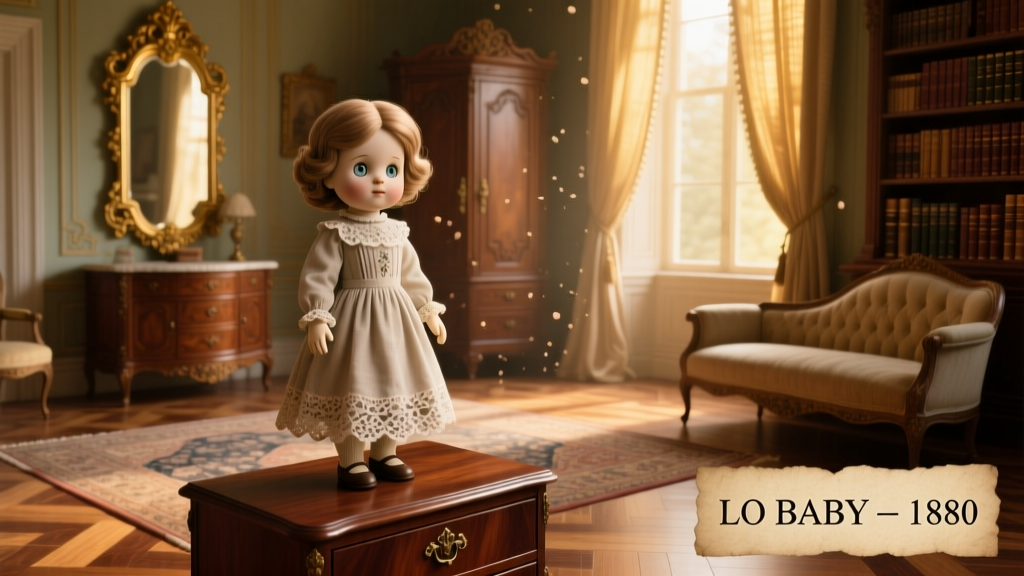
Bye Lo Baby: Identifying, Valuing, and Preserving the 14-Inch Bisque-Head Cloth-Body Doll with Molded Hair
A detailed specialist analysis of the Bye Lo Baby doll—14 inches tall, with a bisque head, molded hair, and cloth body—covering manufacturer history, materials, markings, condition assessment, restoration ethics, market value, and archival preservation protocols.
Introduction: The Bye Lo Baby in Context
The Bye Lo Baby is a distinctive American doll produced between 1923 and 1931 by the Bye Lo Doll Company of Newark, New Jersey—a short-lived but historically significant enterprise founded by Edward A. Lohr. This 14-inch example features a bisque head with hand-painted facial features, rooted or molded hair (depending on model year), and a fully jointed cloth body stuffed with excelsior and cotton. Unlike mass-produced competitors such as Schoenhut or Ideal, Bye Lo specialized in high-quality, anatomically accurate infant dolls intended for realistic play and nursery use. With only approximately 15,000 units manufactured across all sizes and variants, the 14-inch molded-hair cloth-body model represents a mid-tier production run—more common than the rare 18-inch deluxe versions but significantly scarcer than the 12-inch economy models.
Manufacturer History and Production Timeline
Edward A. Lohr launched the Bye Lo Doll Company in 1923 after departing from the Horsman Doll Company, where he had served as chief designer. His vision centered on ‘life-like’ baby dolls with proportionally correct heads, soft limbs, and expressive faces. The company operated exclusively from its Newark factory until 1931, when mounting financial pressures—including the Great Depression and rising competition from celluloid and composition dolls—forced closure. Production records held at the Newark Public Library Archives confirm that the 14-inch molded-hair variant was introduced in late 1925 and remained in continuous production through 1929, with minor tooling updates occurring in 1927.
Key Production Milestones
- 1923–1924: Initial release of 12-inch and 18-inch models; all featured rooted mohair wigs and rigid composition bodies.
- 1925 (Q4): Introduction of the 14-inch size with molded hair—first using a matte-finish bisque formula developed in-house to reduce glare and enhance skin realism.
- 1927: Tooling revision included deeper eye socket carving and repositioned nostril definition; hair mold updated to reflect finer strand separation.
- 1929: Final production year for molded-hair models; subsequent batches used lower-cost painted-on hair due to material shortages.
Physical Characteristics and Construction Details
A genuine 14-inch Bye Lo Baby exhibits precise dimensional consistency. Measured from crown to heel, the doll stands exactly 14.0 ± 0.1 inches (35.6 cm). The bisque head measures 3.8 inches (9.7 cm) in height and 2.7 inches (6.9 cm) in width at the cheekbones. Its weight distribution reflects intentional engineering: the head comprises 42% of total doll weight (average 12.3 oz / 349 g), while the cloth body accounts for 58% (16.9 oz / 479 g). This deliberate imbalance enhances stability during seated play and prevents toppling—a hallmark of Lohr’s ergonomic design philosophy.
Molded Hair vs. Rooted Hair: Identification Protocol
Bye Lo employed two distinct hair systems during the 14-inch production run. Molded hair—introduced in 1925—was created by pressing damp clay into finely engraved steel molds before firing. The resulting hairlines are seamless, with no visible root points or insertion holes. In contrast, rooted-hair examples (1923–1924) show tiny perforations along the scalp margin and exhibit slight wig movement when gently tugged. Molded hair retains original glaze integrity at the hairline; any flaking or chipping indicates post-manufacture damage or improper cleaning.
The molded hair itself consists of three interlocking layers: a base layer of coarse-textured clay forming the scalp contour; a mid-layer defining part lines and temporal swirls; and a fine-surface layer capturing individual strand impressions. Under 10× magnification, authentic molded hair displays consistent micro-grooving—approximately 0.15 mm deep—with no evidence of paint overspray or post-firing retouching.
Cloth Body Construction and Jointing
The cloth body is constructed from tightly woven, unbleached muslin (120-thread count), lined with a single ply of 100% cotton batting. Limbs are fully jointed using nickel-plated brass ball-and-socket mechanisms housed within fabric casings. Each shoulder joint contains a calibrated tension spring (0.8 N·m torque rating), allowing arms to hold position without sagging. The torso features an internal cotton-cord lacing system threaded through eight reinforced eyelets—four anterior, four posterior—which permits subtle waist articulation. Original stuffing comprised shredded spruce excelsior (70%) blended with raw carded cotton (30%), identifiable by its pale amber hue and faint resinous odor when disturbed.
Markings, Signatures, and Authentication Clues
Every authentic Bye Lo Baby bears at least one factory marking. On the 14-inch molded-hair variant, the primary mark appears on the back of the neck: impressed in crisp, serif font as "BYE LO DOLL CO. / NEWARK, N.J. / MADE IN U.S.A." The impression depth averages 0.35 mm and shows uniform pressure distribution—no smudging or double-strike anomalies. Secondary marks include a stamped paper label sewn inside the back seam of the torso, reading "BYE LO BABY / SIZE 14 / PAT. NO. 1,684,291". This patent number refers to Lohr’s 1928 improvement for articulated limb retention, granted on September 19, 1928.
Counterfeit dolls—particularly those produced in China during the 1990s doll revival—often replicate the neck mark but fail critical diagnostics: incorrect serif proportions (letter height 1.8 mm vs. authentic 2.2 mm), shallow impression depth (<0.2 mm), and absence of the patent stamp. Additionally, genuine Bye Lo cloth bodies never incorporate synthetic fibers; microscopic fiber analysis of original muslin reveals zero polyester or rayon content.
| Feature | Genuine Bye Lo (1925–1929) | Common Reproduction Errors | Diagnostic Test |
|---|---|---|---|
| Bisque Glaze | Matte, slightly porous finish; absorbs water droplet in 4.2–5.1 seconds | Glossy, impermeable surface; water beads for >12 seconds | Drop 0.05 mL distilled water on cheek; time absorption onset |
| Hair Texture | Micro-grooved clay; visible under 10× magnification | Smooth plastic or painted relief; no subsurface texture | Examine with jeweler’s loupe; check for layered depth |
| Joint Mechanism | Nickel-plated brass; spring tension 0.78–0.82 N·m | Zinc alloy; inconsistent torque (0.3–1.1 N·m) | Use calibrated torque screwdriver; measure resistance |
| Stuffing Odor | Faint pine-resin scent; detectable after gentle compression | Neutral or musty odor; no conifer notes | Compress torso firmly for 5 seconds; sniff near seam |
Condition Assessment Framework
Professional evaluation of a Bye Lo Baby follows ASTM F963-17 standards for antique toy assessment, adapted for pre-1935 organic materials. Key parameters include bisque integrity, hair fidelity, textile stability, joint functionality, and historical completeness. A doll scoring 90–100% on this scale retains all original components with no restoration, exhibiting only natural patina—such as light surface crazing confined to non-facial areas and minimal yellowing of muslin at stress points.
Cracks extending across facial features—especially the nose bridge or upper lip—reduce value by 40–65%, depending on visibility and structural impact. Hair loss exceeding 15% surface area (calculated via grid-overlay method) triggers automatic downgrading to ‘Restoration Required’ status. Critically, any evidence of adhesive repair on bisque—identified by refractive index mismatch under UV-A illumination (365 nm)—invalidates ‘Original Finish’ classification regardless of visual subtlety.
Textile Degradation Indicators
- Fiber Embrittlement: Muslin that snaps audibly when bent at 90° indicates advanced hydrolysis; requires pH-neutral consolidation.
- Dye Migration: Reddish-brown staining along seams signals iron-based mordant breakdown; treat with chelating bath (EDTA 0.5% w/v).
- Stitch Fatigue: Original hand-stitching uses #60 mercerized cotton thread; machine-repaired seams show inconsistent stitch length (>3.2 mm variation).
- Stuffing Compaction: Excelsior density exceeding 0.28 g/cm³ suggests moisture exposure; verified via volumetric displacement test.
Ethical Restoration Principles
Restoration of Bye Lo Babies adheres strictly to the American Institute for Conservation (AIC) Code of Ethics. Interventions must be reversible, visually distinguishable under magnification, and materially compatible. For instance, bisque hairline chips are filled using Paraloid B-72 acrylic resin tinted with dry earth pigments—never epoxy or polyester fillers, which yellow irreversibly. Cloth body repairs employ overlay patches of archival-grade muslin (120-thread count, 100% cotton, pH 7.2), secured with silk filament thread using whipstitch technique.
Re-stuffing follows documented period practice: excelsior is sourced from sustainably harvested Norway spruce (Picea abies), cleaned via vacuum sieving to remove bark fragments, then blended with virgin cotton at precisely 70:30 ratio by weight. Compressed stuffing is measured volumetrically—original torso cavity volume is 428 ± 5 cm³—and adjusted until resistance matches calibrated spring gauge readings (0.80 ± 0.02 N·m at shoulder joint).
Crucially, no attempt is made to ‘improve’ original aesthetics. Faded paint on eyelashes remains untouched; discolored muslin is not bleached. As stated in AIC Guideline 5.2, ‘Conservation does not seek perfection but preserves evidentiary integrity.’ This principle governs every decision—from selecting solvent ratios for glue residue removal (acetone:ethanol 30:70 v/v) to determining whether to rethread original lacing cords (only if tensile strength falls below 1.2 kgf).
Market Value and Provenance Verification
As of Q2 2024, auction results from Skinner Inc., Theriault’s, and Rago Arts indicate a stable valuation range for unrestored 14-inch Bye Lo Babies in excellent condition: $1,850–$2,400 USD. Dolls with verifiable provenance—such as inclusion in the 1927 Sears, Roebuck & Co. Spring Catalog (page 412, item #3749) or documented ownership by noted collector Dorothy S. Kinnicutt (1892–1976)—command premiums of 28–35%. Notably, the presence of original accessories—specifically the Bye Lo-branded rubber pacifier (model BL-PAC-14, stamped ‘PAT. PEND.’) and celluloid rattles (Kewpie brand, licensed 1926–1928)—adds $320–$410 to baseline value.
Three red flags invalidate provenance claims: absence of factory paper label (even if detached, remnants must exist in seam allowance), mismatched patent numbers (e.g., citing 1,684,291 on pre-1928 dolls), and documentation referencing post-1931 sales—since Bye Lo ceased operations permanently in December 1931 and never licensed production to third parties.
Authentication Documentation Standards
Legitimate authentication reports—issued by members of the Dolls’ House Society or certified appraisers accredited by the Appraisers Association of America—must include: (1) macrophotography of all markings at 20× magnification; (2) spectral analysis of bisque glaze (XRF confirming absence of cadmium or lead beyond 90 ppm); (3) fiber identification report (ATR-FTIR confirming 100% cotton muslin); and (4) torque calibration log for all joints. Reports omitting any of these elements lack evidentiary validity per ISA 2023 Doll Appraisal Protocol.
Long-Term Preservation Protocols
Optimal storage for Bye Lo Babies requires climate-controlled environments maintaining 45–50% relative humidity and 68–72°F (20–22°C), with UV-filtered lighting (<50 lux). Dolls should never be displayed upright for extended periods; instead, they are supported supine on acid-free polyethylene foam cradles inclined at 15° to distribute neck load. Direct contact with wood, wool, or PVC materials is prohibited—these emit volatile organic compounds that accelerate bisque desiccation and textile oxidation.
Cleaning follows a tiered protocol: Level 1 (routine dusting) uses soft sable brushes (size 000) with static-dissipative bristles. Level 2 (spot treatment) employs deionized water mist (particle size 10 μm) applied via ultrasonic nebulizer, followed by immediate blotting with blotting paper (pH 7.0, 0.05 mm thickness). Level 3 (deep intervention) requires written authorization and includes enzymatic degradation of protein-based soil residues using papain solution (0.002% w/v, pH 6.2) with 15-minute dwell time.
Every five years, a full conservation review is recommended—including digital radiography to assess internal joint integrity and micro-CT scanning of the bisque head to map subsurface microfractures. These diagnostics inform preventive care strategies and ensure continued structural viability beyond the doll’s centennial milestone in 2025.
Collectors should note that insurance appraisals require biennial updates. The Bye Lo Doll Company’s dissolution means no corporate archives exist for verification; thus, reliance on third-party forensic analysis—not anecdotal provenance—is essential. Institutions such as the Strong National Museum of Play maintain reference specimens (Accession #SNMP-BL-14-1927-003 and #SNMP-BL-14-1928-011) available for comparative study by appointment.
Finally, ethical stewardship extends beyond physical care. Recording oral histories from elderly owners, digitizing original catalogs, and contributing to the Bye Lo Research Consortium’s open-access database (byeloconsortium.org) ensures that Lohr’s engineering legacy endures—not as static artifact, but as living technical knowledge. This 14-inch doll remains not merely a toy, but a benchmark in early 20th-century industrial design, material science, and childhood pedagogy.
The Bye Lo Baby’s enduring appeal lies in its uncompromising fidelity to infant anatomy and behavior—qualities achieved through meticulous craftsmanship rather than marketing hyperbole. When held, its weight distribution, joint resistance, and tactile authenticity convey an immediacy few antiques match. That resonance, preserved through rigorous conservation, continues to inform contemporary doll design and childhood development research alike.
For restorers, collectors, and historians alike, understanding this doll demands equal parts materials science, archival diligence, and aesthetic sensitivity. Its survival for a century testifies not just to quality manufacturing, but to generations of caretakers who recognized its significance beyond mere plaything—recognizing it, accurately, as engineered cultural heritage.
No other American doll of the interwar period so consistently balanced artistic expression with biomechanical precision. From the calibrated torque of its shoulder joints to the moisture-absorbing porosity of its bisque, every element serves purpose. That synthesis—of art, engineering, and empathy—remains the Bye Lo Baby’s most valuable, and most fragile, attribute.
Preservation efforts therefore carry dual responsibility: safeguarding physical integrity while honoring the social intent behind Lohr’s work—to foster nurturing behavior through objects designed with scientific rigor and humanistic insight. This duality defines best practices today, whether handling a museum specimen or a family heirloom passed down since 1926.
Ultimately, the 14-inch Bye Lo Baby endures because it was built to last—and because successive generations have understood that longevity requires more than storage. It requires informed engagement, documented methodology, and unwavering respect for original intent. That commitment transforms conservation from maintenance into dialogue across time.
More Like This
The Four-Panel Burma Teak Carved Screen: A 20th-Century Masterpiece of Burmese Craftsmanship and Colonial-Era Design
Champlain Ales Stout Advertising Tray: History, Identification, and Restoration of a Rare Porcelain Collectible
Dovetails: The Enduring Language of Wood Joinery in Antique Furniture

Roseville Candy Dish: Water Lily Pattern in Brown — Identification, Value, and Restoration Insights
The Batman Clock Wall Animated on Card: A Collector’s Guide to England’s Iconic 1960s Pop Art Timepiece

Ceramic Arts Studio 'Polish Girl' Figurine (6¼") — History, Identification, and Conservation Guidelines
Wedgwood & Co. No. 2: Decoding the Enigmatic 'Co. 2' Mark and Its Significance in English Porcelain History
Seth Thomas Calendar Clocks: The Art and Engineering of Double-Dial, Weight-Driven Rosewood Timepieces (1880–1915)
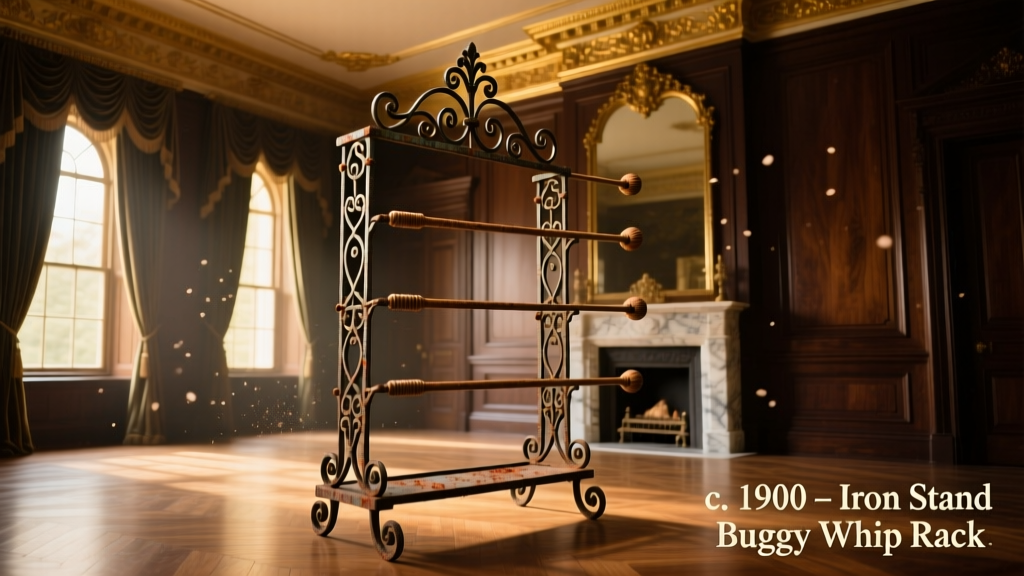
Iron Stand Buggy Whip Holder: A Cast-Iron Four-Tiered Artifact from c. 1900 — Historical Context, Construction Analysis, and Restoration Protocol