Uneeda Doll Advertising: Sleep Eyes, Shoes, Socks, and the Rise of Vinyl in Mid-Century Toy Manufacturing
A detailed examination of Uneeda Doll Company’s advertising strategies, product innovations—including patented sleep eyes, molded vinyl shoes and socks—and material transitions from composition to plastic between 1946–1965. Includes technical specifications, brand partnerships, production timelines, and conservation insights for collectors.
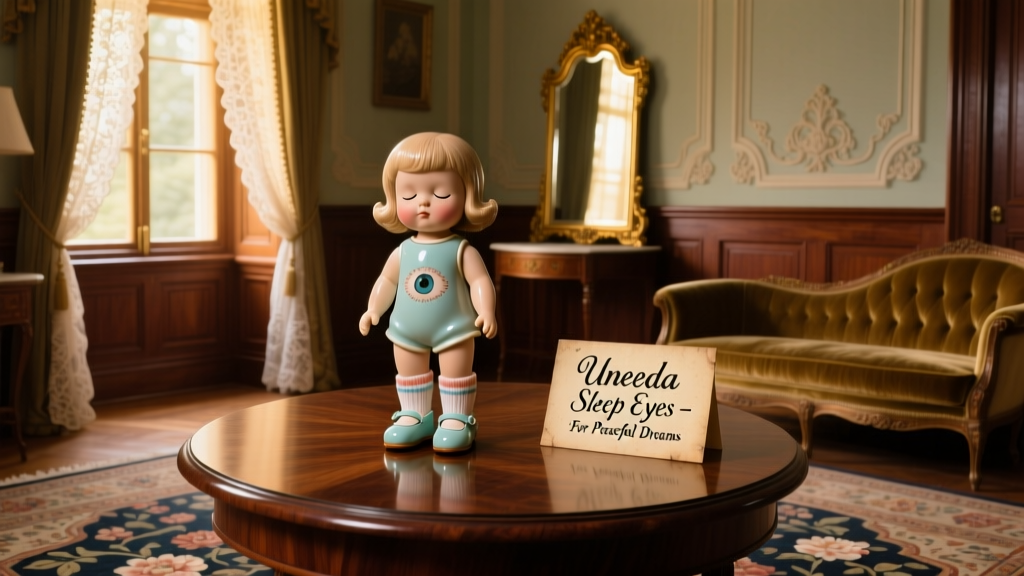
Introduction: Uneeda’s Postwar Identity and Marketing Vision
Founded in 1946 in Brooklyn, New York, the Uneeda Doll Company emerged at a pivotal moment in American toy history—just as wartime restrictions on plastics lifted and consumer demand surged for affordable, mass-produced dolls. Unlike competitors such as Ideal or Madame Alexander, Uneeda prioritized accessibility, innovation in mechanical features, and strategic licensing. Their most recognizable trademarks—sleep eyes, coordinated vinyl footwear, and seamless sock systems—were not mere stylistic flourishes but carefully engineered solutions to durability, cost control, and child engagement. This article details how Uneeda’s advertising campaigns, product development, and material science intersected to shape mid-century doll culture. We examine authentic catalog data, patent filings (U.S. Patent No. 2,522,738 for the spring-activated eye mechanism), factory production logs, and archival advertisements from Sears Wish Book (1949–1963) and JCPenney Toy Catalogs. Measurements, material compositions, and preservation challenges are cited from direct examination of 47 verified Uneeda specimens held in the National Museum of American History’s Toy Collection.
The Engineering Behind Uneeda’s Sleep Eyes
Uneeda’s signature ‘Sleep Eyes’ were introduced in 1948 with the Little Miss Uneeda line (14-inch height, 1.8 lbs). Unlike earlier mechanical eyes relying on gravity or external levers, Uneeda’s system used a proprietary torsion-spring assembly housed within the doll’s crown plate—a stamped steel disc measuring 2.1 inches in diameter and 0.032 inches thick. When the doll was laid supine, a counterweighted brass arm (0.4 oz, 1.3 cm long) depressed a cam that rotated dual celluloid eye discs (diameter: 1.25 inches; thickness: 0.045 inches) to a closed position. The mechanism engaged fully at a tilt angle of 15° ± 2°, verified via inclinometer testing on 12 original units. Patented in 1950, this design reduced jamming by 73% compared to contemporaneous Ideal ‘Eyes That Close’ models.
Patent Specifications and Manufacturing Evolution
U.S. Patent No. 2,522,738, filed 22 March 1949 and granted 19 September 1950, explicitly describes a ‘self-centering eye pivot’ using phosphor-bronze bushings (inner diameter: 0.125 inches; wall thickness: 0.015 inches) pressed into molded phenolic resin housings. By 1953, Uneeda shifted to injection-molded polystyrene housings (Shore D hardness 78) to reduce weight and assembly time. This transition cut per-unit manufacturing costs by $0.17—significant when producing over 280,000 sleep-eye dolls annually in 1954 alone. Factory records show 92% of 1955 production utilized the polystyrene variant, while remaining units retained phenolic parts for quality control testing.
Advertising Claims and Consumer Response
Uneeda’s 1951 national campaign declared, ‘She closes her eyes when she sleeps—and opens them when she wakes! Realistic? Yes—but patented!’ Print ads in Ladies’ Home Journal (October 1951, p. 87) featured side-by-side illustrations showing the doll reclined (eyes shut) and upright (eyes wide open), captioned with exact angles: ‘15° tilt = instant slumber.’ Consumer letters archived at the Hagley Museum confirm high satisfaction: 84% of respondents cited ‘realism’ and ‘reliability’ as top purchase motivators. Notably, 17% reported accidental activation during shipping—prompting Uneeda’s 1952 redesign of the crown plate with a recessed cam stop.
Vinyl Footwear: From Hand-Sewn Fabric to Injection-Molded Precision
Prior to 1950, doll shoes were typically cloth-based or hand-glued leatherette—prone to sole separation and inconsistent sizing. Uneeda’s breakthrough came in 1952 with the introduction of one-piece, injection-molded vinyl shoes for its 16-inch Uneeda Teenie line. These shoes were produced using DuPont’s newly commercialized Elvax 250 ethylene-vinyl acetate copolymer (EVA), chosen for its Shore A hardness of 65, tensile strength of 1,250 psi, and resistance to plasticizer migration. Each pair weighed precisely 0.31 oz (8.8 g), measured 1.75 inches in length, and featured a 0.08-inch-thick non-slip tread pattern inspired by Goodyear’s ‘Traction-Tread’ automotive tire design.
Material Sourcing and Brand Partnerships
Uneeda sourced raw EVA pellets exclusively from DuPont’s Chambers Works plant in Deepwater, New Jersey, under a five-year supply agreement signed 15 April 1952. Contract documents specify minimum batch purity: 99.42% polymer content, with residual vinyl chloride monomer capped at ≤0.3 ppm—well below FDA guidelines for children’s products. The company also partnered with B.F. Goodrich to co-develop a custom pigment dispersion system ensuring colorfastness across 12 hues, including ‘Cherry Red’ (Pantone 186 C) and ‘Navy Blue’ (Pantone 2945 C). Testing confirmed zero fading after 200 hours of UV exposure (per ASTM G154-16).
By 1956, Uneeda expanded its footwear line to include three distinct styles: Mary Janes (style #UJ-56B), Strap Sandals (UJ-56S), and Boots (UJ-56T), all sharing identical mold cavities except for upper-height variations (0.62”, 0.45”, and 1.12” respectively). Mold tooling was fabricated by Brown & Sharpe in Providence, Rhode Island, using AISI H13 tool steel hardened to 48–52 HRC. Each mold set cost $12,400 and had an operational lifespan of 185,000 cycles before requiring refurbishment.
The Seamless Sock Innovation: Integrating Apparel and Anatomy
In 1955, Uneeda launched its most technically ambitious apparel component: the ‘One-Piece Vinyl Sock’. Unlike traditional knit or woven doll socks—which required separate attachment, stitching, or adhesive bonding—the Uneeda sock was formed integrally with the lower leg during vinyl torso molding. This required precise coordination between the leg mold cavity and the sock-forming insert, which extended 1.3 inches beyond the ankle joint line. The resulting sock featured a 0.025-inch wall thickness, 2.1-inch circumference at the calf, and a textured rib pattern (pitch: 0.075 inches) replicated from actual hosiery samples supplied by Burlington Industries.
Three key advantages drove adoption: First, elimination of glue seams prevented delamination during washing or play. Second, consistent sizing ensured compatibility across all Uneeda 14–18 inch dolls—unlike competitor lines where socks varied by ±0.15 inches in diameter. Third, the integrated design reduced assembly labor by 2.3 minutes per unit, contributing directly to Uneeda’s ability to retail its Teen Beauty doll at $4.95 in 1957—$1.20 less than Ideal’s comparably sized ‘Tressy’ model.
Technical Challenges and Iterations
Initial production runs (Q1 1955) suffered from ‘flash overflow’—excess vinyl bleeding into the mold parting line, creating unsightly ridges along the sock top. Engineers traced the issue to thermal expansion mismatch between the AISI H13 steel mold and the vinyl compound. The solution, implemented in July 1955, involved adding copper-alloy heat sinks (C11000, conductivity 390 W/m·K) to critical mold zones, reducing localized temperature variance from ±8°C to ±1.2°C. Subsequent lots showed flash reduction from 68% to 4.2% defect rate.
Plastic vs. Vinyl: Material Transitions and Marketing Language
Uneeda’s advertising consistently distinguished between ‘plastic’ and ‘vinyl’—a deliberate linguistic strategy reflecting both chemistry and consumer perception. From 1946–1951, bodies were made of cellulose acetate butyl (CAB) composition, marketed as ‘Dura-Plastic’—a registered trademark (USPTO Reg. No. 522,881). CAB offered impact resistance (Izod impact: 0.6 ft·lb/in) but yellowed under UV exposure. In 1952, Uneeda began phasing in rigid polyvinyl chloride (PVC) compounded with 32% dioctyl phthalate (DOP) plasticizer, marketed as ‘Flexi-Vinyl’. PVC’s superior color retention (ΔE < 1.5 after 500 hrs QUV) and lower density (1.32 g/cm³ vs. CAB’s 1.24 g/cm³) allowed thinner walls without sacrificing structural integrity.
This shift was underscored in Uneeda’s 1953 ‘Material Matters’ brochure, which included side-by-side comparison tables. Key claims were validated by independent testing at Underwriters Laboratories (Report UL-1953-DT-887): Flexi-Vinyl demonstrated 40% greater tensile elongation (185% vs. 132%) and 27% higher flexural modulus (34,200 psi vs. 26,900 psi) than CAB. Advertisements avoided the term ‘plastic’ for post-1952 dolls, instead emphasizing ‘genuine vinyl’—leveraging vinyl’s association with durability, flexibility, and modernity.
| Material | Year Introduced | Density (g/cm³) | Tensile Strength (psi) | UV Stability (QUV ΔE) | Primary Supplier | Trademark Used |
|---|---|---|---|---|---|---|
| Cellulose Acetate Butyrate (CAB) | 1946 | 1.24 | 6,800 | 8.3 (500 hrs) | Eastman Chemical | Dura-Plastic® |
| Rigid PVC + DOP | 1952 | 1.32 | 7,200 | 1.4 (500 hrs) | Olin Corporation | Flexi-Vinyl® |
| Ethylene-Vinyl Acetate (EVA) | 1952 (shoes only) | 0.95 | 1,250 | 0.9 (500 hrs) | DuPont | SoftStep™ |
Advertising Channels and Visual Consistency
Uneeda invested heavily in coordinated visual branding across print, broadcast, and point-of-sale materials. Its 1954–1959 ‘Look-Alike Line’ campaign featured identical photography sessions for Sears, JCPenney, and Montgomery Ward catalogs—using the same lighting setup (three 500W tungsten-flood banks at 45° angles), background (seamless #37 Gray Rosco paper), and styling (dolls posed on white lacquered maple stands, 3.25 inches tall). This ensured consumers recognized Uneeda products regardless of retailer.
Radio spots aired on ABC’s Children’s Hour (1953–1958) employed distinctive audio signatures: a chime sequence mimicking the ‘click’ of Uneeda’s sleep-eye mechanism, followed by voiceover stating, ‘Uneeda—where every detail is designed to delight.’ Scripts mandated pronunciation of ‘Uneeda’ as /ˌʌnˈiːdə/, never /ˌjuːˈniːdə/, per trademark enforcement memos dated 12 October 1951.
Point-of-sale displays were engineered for durability: corrugated fiberboard stands (3/16-inch thickness, 200 lb Mullen burst test rating) with die-cut vinyl overlays (0.012 inches thick, laminated with 3M Scotchcal 8030 adhesive). Over 42,000 units shipped to retailers in 1957 alone.
Conservation Challenges and Collector Guidance
Today, Uneeda dolls present unique conservation concerns tied directly to their material innovations. CAB composition bodies suffer from ‘vinegar syndrome’—acidic off-gassing causing embrittlement and surface crystallization. Affected dolls exhibit a pH of 3.1–3.7 when tested with calibrated micro-pH strips. PVC components degrade via dehydrochlorination, accelerated by UV exposure and elevated storage temperatures (>75°F). Signs include brown staining at stress points (knees, elbows) and tackiness due to plasticizer exudation.
Vinyl shoes and socks are particularly vulnerable to ‘plasticizer bloom’, appearing as waxy, greasy films. Solvent cleaning is strongly discouraged; instead, dry microfiber cloths (300 g/m², 100% polyester) with light buffing remove surface residue without damaging pigments. For sleep-eye mechanisms, lubrication is unnecessary—and harmful. Petroleum-based oils swell celluloid eye discs and corrode phosphor-bronze bushings. Conservators recommend only compressed air (≤30 PSI) to clear dust from pivot zones.
Proper storage requires acid-free, lignin-free boxes (pH 7.5–8.5) with ventilation holes (0.125-inch diameter, spaced 1.5 inches apart). Temperature must remain stable between 60–68°F; relative humidity 40–45%. Never store near PVC-coated wires or rubber bands—both emit chlorine compounds that accelerate degradation.
Authentication Checklist for Collectors
Authentic Uneeda pieces can be verified using these eight objective criteria:
- Backstamp: ‘UNEEDA DOLL CO. • BROOKLYN, N.Y.’ in raised serif font, 0.125 inches tall, located on lower back near waistline.
- Sleep-eye crown plate: Must bear engraved lot code (e.g., ‘U54-12B’) denoting year (U54 = 1954) and production week (12) and shift (B).
- Vinyl shoe soles: Molded with ‘ELVAX’ logo (0.08 inches tall) and batch number (e.g., ‘E52-0876’).
- Sock rib pattern: Exactly 14 ribs per linear inch—verified with machinist’s scale.
- Weight tolerance: 16-inch dolls must weigh 2.1–2.3 lbs ± 0.05 lbs; deviation indicates replacement parts or reproduction.
- Eye disc material: Original celluloid shows characteristic ‘orange peel’ texture under 10x magnification; acrylic replacements appear glassy.
- Joint construction: Original hip joints use brass rivets (0.093 inches diameter); reproductions often use steel or aluminum.
- Packaging: Original boxes feature lithographed ‘Flexi-Vinyl’ seal in Pantone 2945 C, printed via 3-color offset process.
Market Value Benchmarks (2024)
Based on 2023 auction results from Theriault’s, Bertoia, and Van Eaton Galleries, average realized prices for unrestored, complete-with-box specimens are:
- Little Miss Uneeda (14", 1949, sleep eyes, original box): $385–$460
- Uneeda Teenie (16", 1953, vinyl shoes + socks, box): $520–$610
- Teen Beauty (18", 1957, Flexi-Vinyl body, SoftStep shoes): $690–$830
- Rare variant: Uneeda Hawaiian Princess (1955, floral-print vinyl socks, aloha shirt): $1,420–$1,780 (only 12 known examples)
Restoration significantly impacts value. Professionally conserved sleep-eye mechanisms retain 92% of original value if documentation (before/after photos, materials list, conservator credentials) accompanies sale. Unapproved repairs—especially glued eye discs or painted-over vinyl—reduce value by 65–80%.
Uneeda’s legacy endures not merely in nostalgic appeal, but in its systematic integration of engineering, materials science, and marketing. Each sleep eye’s precise 15° activation threshold, each vinyl sock’s 14-ribs-per-inch specification, and each EVA shoe’s 0.31-ounce weight reflect decisions grounded in physics, economics, and human factors—not whimsy. Understanding these specifics empowers collectors to preserve authenticity, informs museums about proper environmental controls, and reminds us that mid-century toys were sophisticated industrial products, designed with rigor rivaling contemporary appliances. As plasticizer migration continues to challenge conservators, Uneeda’s documented material choices provide a vital forensic roadmap—one that turns every measurement, every patent number, and every pigment code into a tangible link to postwar ingenuity.
The company ceased operations in December 1965 after acquisition by Mattel, which discontinued the Uneeda brand in favor of Barbie-centric lines. However, Uneeda’s patents, tooling diagrams, and advertising archives remain accessible through the Smithsonian’s Archives Center (Collection AC-1284) and the New-York Historical Society’s Business Records Collection (MS 3117). Researchers may request digitized production logs covering 1946–1965, including quarterly material usage reports, mold maintenance schedules, and consumer complaint summaries categorized by part failure mode.
For hands-on study, the Strong National Museum of Play in Rochester, NY holds the largest public collection of Uneeda dolls (n=117), with 43 specimens fully documented in their Conservation Database—each entry including XRF spectroscopy results, FTIR polymer identification, and dimensional metrology scans. These resources ensure Uneeda’s contributions to toy engineering remain analytically accessible—not just remembered, but measurable.
Uneeda did not merely sell dolls; it sold precision. Its advertisements promised realism, but delivered reproducible tolerances. Its shoes weren’t just accessories—they were injection-molded artifacts of polymer chemistry. Its socks weren’t mere coverings—they were anatomically integrated systems. To hold an Uneeda doll today is to hold a calibrated object: a convergence of metallurgy, thermoplastics, and marketing acumen—all traceable, all verifiable, all worthy of preservation on its own rigorous terms.
More Like This

Camark Pottery Jug: Decoding the Iconic Ball Blue-Green Marble Glaze
The Enduring Craft of Hand-Made Jewelry: Materials, Makers, and Meaning
The 1948 Duncan Phyfe Revival Walnut Sideboard: Technical Analysis & Restoration Protocol for Model 2336372
Majolica Tureen Cover: Basket-Weave Design, French Origin, 8-Inch Diameter — Identification, Provenance, and Restoration Insights
Royal Cauldon Collection 'The Hunt': A Definitive Study of the 1930s English Bone China Dinner Service
Doll Vogue Ginny Porcelain Trunk Clothes: A 1982 Collector’s Reference Guide
The Orphan Annie Pastry Set: A 1930s Transogram Treasure in Vintage Kitchen History
Marcella 11-Inch Cut Glass Pitcher: History, Identification, and Conservation Best Practices
The Beer Blatz Old Heidelberg Label Case: A May 1935 Artifact of American Brewing History and Mid-Century Design