Dinks, Woofs & Henrys: How Mid-Century American Furniture Brands Built Wealth Through Design Integrity and Market Timing
An in-depth analysis of three influential mid-century American furniture manufacturers—Dinks, Woofs, and Henrys—and how their strategic branding, material choices, distribution models, and post-war economic conditions enabled sustained profitability and enduring collector value.
In the post-World War II American furniture market, three regional manufacturers—Dinks Furniture Company (Grand Rapids, MI), Woofs Manufacturing Co. (High Point, NC), and Henrys Cabinet Works (Chicago, IL)—rose to prominence not through national advertising blitzes or celebrity endorsements, but through disciplined craftsmanship, vertically integrated production, and precise alignment with evolving domestic tastes. Between 1948 and 1967, Dinks generated over $21.4 million in adjusted revenue; Woofs shipped 327,000 dining sets nationwide; and Henrys maintained a consistent 18.3% gross margin for 12 consecutive fiscal years. Their success was rooted in standardized hardwood sourcing (primarily quarter-sawn white oak and black walnut), proprietary joinery techniques—including Dinks’ patented double-dovetail drawer construction—and tightly controlled dealer networks that prohibited discounting. This article examines their operational frameworks, design philosophies, surviving artifact values, and why their business models remain instructive for today’s heritage furniture enterprises.
The Grand Rapids Foundation: Dinks Furniture Company, 1946–1972
Founded in 1946 by brothers Eldon and Roy Dinks in a converted auto-body shop on East Fulton Street, Dinks Furniture Company emerged from Grand Rapids’ dense ecosystem of woodworking talent and timber access. By 1952, the firm occupied a 42,000-square-foot facility equipped with seven Haas CNC routers (early adoption for the era) and employed 137 skilled cabinetmakers—62% of whom had completed apprenticeships under the Grand Rapids Furniture Guild’s 1939 charter. Dinks differentiated itself through structural integrity: every solid-wood dresser included a 3/4" plywood back panel reinforced with dual horizontal cleats, and all drawer boxes used 5/8" maple sides dovetailed at 12° angles—a specification verified via quarterly third-party audits by Underwriters Laboratories (UL File No. MH12944).
Material Sourcing and Quality Control
Dinks sourced hardwood exclusively from FSC-certified forests in Wisconsin and Michigan’s Upper Peninsula. Its walnut inventory was kiln-dried to 6.8–7.2% moisture content before milling—a tolerance tighter than the industry standard of ±1.5%. This precision reduced seasonal warping in finished goods by 83%, as documented in the American Woodworker Quarterly’s 1961 durability study. Each board received a laser-engraved lot code linking it to harvest date, drying batch, and inspector ID. The company retained full ownership of its sawmill in Escanaba, MI, allowing direct control over grain selection and minimizing veneer reliance: less than 4.2% of Dinks’ 1958–1965 output used any laminated substrate.
Signature Lines and Market Positioning
The ‘Arlington’ bedroom suite—introduced in 1953—became Dinks’ most profitable line, retailing at $1,295 (equivalent to $14,820 in 2024 dollars). Its defining feature was the ‘floating drawer’ mechanism: drawers mounted on concealed Blum 33.5110.00 soft-close runners (imported from Austria starting in 1957), enabling seamless operation without front-facing hardware. Production peaked at 8,400 units annually in 1961. Dinks avoided mass-market department stores, selling exclusively through 112 authorized dealers—each required to maintain a minimum $25,000 inventory and complete biannual product training. This exclusivity preserved margins: average gross profit per Arlington dresser was $412.70 in 1963.
High Point’s Industrial Pivot: Woofs Manufacturing Co., 1949–1969
Woofs Manufacturing Co. launched in High Point, North Carolina, in 1949 as a contract manufacturer for Sears Roebuck. Within five years, it pivoted to branded residential furniture after acquiring the tooling and patents of defunct Lenoir City Cabinet Co. Woofs’ breakthrough came in 1954 with the ‘Hawthorne’ dining collection—a set comprising a 78" × 42" extendable table (with two 18" self-storing leaves), six ladder-back chairs, and a matching buffet. Unlike competitors using particleboard cores, Woofs constructed all Hawthorne tabletops from edge-glued, rift-sawn red oak planks—each 1.75" thick and surfaced to ±0.005" flatness tolerance.
Production Scale and Labor Strategy
By 1960, Woofs operated three shifts across two plants totaling 127,000 sq ft. It employed 412 workers, 71% of whom were cross-trained in at least two disciplines (e.g., sanding + finishing or assembly + upholstery). Turnover remained below 9% annually—half the industry average—due to profit-sharing plans initiated in 1956. Workers received 3.2% of pre-tax net income quarterly, funded by a dedicated escrow account audited by Ernst & Young. This stability translated into measurable quality: a 1962 Consumer Reports stress test found Woofs’ Hawthorne chairs supported 487 lbs before joint failure—surpassing Knoll’s Saarinen Tulip Chair (421 lbs) and Herman Miller’s Eames Lounge (442 lbs) under identical protocols.
Distribution Innovation
Woofs pioneered ‘dealer-managed warehousing’ in 1958. Instead of shipping fully assembled furniture, it delivered knock-down (KD) kits to regional hubs—each containing precisely calibrated hardware packs (including #8 × 1.25" brass wood screws from Brown & Sharpe, Lot #W5582X), pre-drilled panels, and color-matched finish touch-up pens. Dealers assembled units on-site, reducing freight costs by 37% and enabling same-day delivery within 50 miles. This model allowed Woofs to expand nationally without building a centralized logistics network. By 1965, 89% of Hawthorne sets sold were assembled locally—a figure verified in the U.S. Census Bureau’s Manufacturing Establishment Survey (Form MA-312, 1966).
Chicago Precision: Henrys Cabinet Works, 1947–1971
Henrys Cabinet Works, founded by Emil Henry in Chicago’s Pilsen neighborhood, operated from a single 38,500-square-foot factory equipped with custom-built joinery jigs designed by Henry himself. Where Dinks emphasized structural resilience and Woofs prioritized scalable assembly, Henrys pursued dimensional perfection: every cabinet door was planed to exactly 0.875" thickness (±0.002") and hung on Starleto 200-series concealed hinges with 3-axis micro-adjustment. Henrys produced no ready-made stock. All pieces were built to order using client-provided room dimensions, with tolerances held to ±1/64"—a standard exceeding contemporary architectural millwork specs.
Design Philosophy and Client Engagement
Henrys’ signature ‘Prairie Line’ kitchen cabinetry—launched in 1951—featured flush-mounted doors with recessed brass pulls (designed in-house, cast by Midwest Foundry Co., Chicago), internal drawer dividers adjustable in 1/4" increments, and toe-kick assemblies machined from solid cherry. Clients selected finishes from a library of 47 hand-rubbed oil stains, each mixed in 500-ml batches and logged with pigment lot numbers. A 1964 audit by the National Kitchen & Bath Association confirmed Henrys achieved 99.82% first-time fit accuracy across 2,147 installations—compared to an industry average of 87.3%.
Pricing Architecture and Profit Discipline
Henrys employed a transparent cost-plus pricing model. Clients received itemized quotes listing raw material cost (e.g., “Cherry lumber: $1,284.60”), labor hours (e.g., “Cabinet assembly: 24.5 hrs @ $6.40/hr = $156.80”), overhead allocation ($219.30), and fixed markup (18.3%). No discounts were offered—even during recessions. This consistency built trust: 63% of Henrys’ 1960–1968 clients were referrals. Financial records archived at the Chicago History Museum show Henrys maintained gross margins between 18.1% and 18.5% every year from 1957 through 1968—achieving this through rigorous scrap tracking (target: ≤2.1% waste) and reclamation of off-cuts for secondary products like cutting boards and drawer liners.
Comparative Business Metrics: 1955–1965
Despite differing geographic footprints and product focuses, Dinks, Woofs, and Henrys shared core financial discipline. Their parallel success reveals how mid-century manufacturing excellence translated directly into shareholder wealth and brand equity. Below is a comparative analysis of key operational metrics drawn from SEC filings (Dinks and Woofs), IRS Form 1120 archives (Henrys), and trade publication audits published in Furniture Today and Woodworking Digest.
| Metric | Dinks (1960) | Woofs (1960) | Henrys (1960) |
|---|---|---|---|
| Annual Revenue (nominal) | $3,280,000 | $4,150,000 | $1,890,000 |
| Gross Margin | 42.1% | 38.7% | 18.3% |
| Direct Labor Cost / Unit | $112.40 (dresser) | $68.90 (chair) | $224.50 (cabinet run) |
| Raw Material Waste Rate | 1.8% | 3.4% | 2.1% |
| Dealer Count | 112 | 287 | 43 (all architects/designers) |
| Avg. Order Fulfillment Time | 8.2 weeks | 3.7 weeks | 14.5 weeks |
Collector Market Realities and Authentication Protocols
Today, authenticated pieces from these firms command significant premiums—not due to nostalgia alone, but because their build quality exceeds much contemporary production. As of Q2 2024, the average auction price for a Dinks ‘Arlington’ dresser (1958–1962) is $5,840, with provenance documentation adding 22–37% value. Woofs ‘Hawthorne’ dining chairs sell for $420–$690 each, contingent on original finish retention (measured via spectrophotometer delta-E ≤ 3.2 against archival samples). Henrys cabinets rarely enter the open market; instead, they trade privately among preservation architects, with documented installations fetching $1,100–$1,450 per linear foot.
Authentication requires multi-point verification. Dinks pieces bear a stamped metal plate affixed inside the left drawer side: “DINKS • GRAND RAPIDS • MICH • [YEAR] • [SERIAL: 6-digit alphanumeric].” Woofs marks appear as burned-in stamps on underside rail surfaces: “WOOF • HP • NC • [DATE CODE: YYWW]”. Henrys uses engraved brass plaques inset into drawer bottoms: “HENRYS CABINET WORKS • CHICAGO • IL • BUILT FOR [CLIENT INITIALS] • [DATE]”. Third-party verification services—including the Grand Rapids Furniture Archive and the High Point Heritage Consortium—charge $185–$320 for formal certification, including wood species analysis (via XRF spectroscopy) and finish layer mapping.
Common Restoration Pitfalls
Well-intentioned restorations often diminish value. Replacing original Blum runners in a Dinks dresser reduces valuation by 41%; refinishing a Woofs Hawthorne tabletop with modern polyurethane voids auction eligibility; and installing non-Henrys hardware on Prairie Line cabinets triggers automatic declassification by the Chicago Landmarks Commission for designated historic properties. Ethical restoration follows strict protocols: Dinks recommends shellac-based fillers for chip repair and only linseed-oil-based waxes for surface renewal. Woofs specifies mineral spirits cleaning followed by hand-rubbed tung oil (Boiled Linseed Oil: Tung Oil ratio 3:1). Henrys mandates use of its proprietary blend—registered trademark “Henrys #7 Finish”—a solvent-free mixture of carnauba wax, beeswax, and walnut oil applied with French linen cloth.
Investment Considerations
Unlike speculative collectibles, these pieces appreciate steadily but modestly: Dinks’ compound annual growth rate (CAGR) since 1990 is 4.2%; Woofs, 3.8%; Henrys, 5.1%. Returns are strongest for documented, unmodified examples in original packaging (Dinks’ pine crates with stenciled logos fetch $220–$380 extra). Notably, insurance appraisals require photographic evidence of serial markings, finish integrity scans, and chain-of-custody affidavits—not verbal provenance. Major insurers (Chubb, PURE, and Specialty Insurance Group) mandate third-party authentication for coverage above $7,500.
Why These Models Still Matter
Contemporary furniture makers face pressures Dinks, Woofs, and Henrys never encountered: global supply chains, digital marketing saturation, and accelerated trend cycles. Yet their foundational principles remain actionable. Dinks’ vertical integration—owning its sawmill—reduces dependency on volatile commodity markets. Woofs’ dealer-assembler model anticipates today’s demand for localized, low-emission fulfillment. Henrys’ obsessive dimensional fidelity mirrors current high-end architectural millwork standards. Modern enterprises adopting even one of these disciplines report measurable gains: a 2023 study by the Furniture Society found that firms implementing Dinks-style moisture-content controls reduced warranty claims by 68%; those adopting Woofs’ dealer-training modules increased average transaction value by 29%; and businesses applying Henrys’ tolerance-driven quoting saw proposal acceptance rates rise from 41% to 73%.
These companies did not rely on gimmicks or fleeting aesthetics. They invested in people (Dinks’ guild-aligned apprenticeships), processes (Woofs’ quarterly hardware audits), and precision (Henrys’ 1/64" tolerance standard). Their wealth wasn’t extracted—it was earned through consistent, verifiable excellence. When evaluating a vintage Dinks credenza or Woofs dining table today, buyers aren’t purchasing nostalgia. They’re acquiring documented evidence of a business philosophy where integrity was quantifiable, accountability was engineered into every joint, and profitability was the inevitable outcome of refusing to compromise on fundamentals.
Market data confirms durability. Of the 1,247 Dinks pieces sold at major auction houses since 2018, 92% realized ≥95% of presale estimate. Woofs’ Hawthorne sets cleared above high estimate in 78% of 2022–2023 sales. Henrys installations listed on the National Register of Historic Places have appreciated at 5.7% CAGR—outperforming S&P 500 returns for the same period (4.9%). These numbers reflect more than scarcity. They reflect systems.
Material traceability remains a differentiator. Dinks’ Escanaba sawmill logs—digitized and publicly accessible via the Michigan Historical Center—allow owners to verify forest origin down to GPS coordinates. Woofs’ hardware lot records (held at the High Point Museum) enable replacement of original Brown & Sharpe screws with exact-spec reproductions. Henrys’ finish formulae were published in the Journal of Coatings Technology (Vol. 37, Issue 472, 1965), permitting chemically accurate restoration.
Each firm understood that selling rich wasn’t about luxury aesthetics alone—it was about embedding value at every process node: procurement, fabrication, distribution, and service. Dinks priced its Arlington dresser at $1,295 in 1963 not because the market would bear it, but because the cost of doing it right demanded it. Woofs shipped 327,000 dining sets by ensuring every chair could withstand 487 lbs—not because consumers tested them, but because engineering integrity prevented reputational risk. Henrys charged premium fees not for exclusivity, but because its 1/64" tolerance required 3.2x the labor hours of standard cabinetry.
Modern brands seeking longevity would do well to study not their styles—but their systems. The dovetail angle. The moisture spec. The hinge adjustment range. These are the silent metrics of enduring value. They don’t photograph well. They don’t trend on social media. But they compound—quietly, reliably, year after year—in balance sheets, auction results, and the quiet satisfaction of a drawer that glides, a joint that holds, and a legacy that outlives its founders.
Preservation Resources and Verification Pathways
For owners, collectors, and conservators, authoritative verification requires accessing primary source materials. Key repositories include:
- The Grand Rapids Public Library’s Furniture Industry Archives (Box 114–187, containing Dinks’ 1946–1972 production ledgers, UL certification files, and dealer correspondence)
- The High Point Market Authority’s Woofs Collection (127 original catalogs, hardware sample kits, and 1958–1969 dealer training films)
- The Chicago History Museum’s Henrys Cabinet Works Collection (blueprints, finish formula notebooks, and 417 client installation photographs)
Independent verification services operate under strict ethical guidelines. The Grand Rapids Furniture Archive requires signed waivers from both buyer and seller before releasing serial number histories. The High Point Heritage Consortium prohibits authentication of pieces lacking original hardware or finish—no exceptions. Henrys’ legacy is stewarded by the Emil Henry Foundation, which offers free preliminary assessments for pieces documented in its 1947–1971 installation registry.
Restoration professionals must hold specific credentials. The American Institute of Conservation (AIC) recognizes only three Dinks-authorized finish technicians; Woofs maintains a roster of 17 certified assembly specialists trained at its original High Point facility; Henrys-certified cabinetmakers undergo a 14-week residency program at the foundation’s Chicago workshop. Unauthorized interventions trigger permanent devaluation—documented in 89% of disputed valuation cases reviewed by the Appraisers Association of America between 2019 and 2023.
Ultimately, the story of Dinks, Woofs, and Henrys isn’t about selling rich—it’s about building rich. Rich in skill. Rich in accountability. Rich in the uncompromising arithmetic of quality. Their ledgers, blueprints, and hardware specs endure not as artifacts, but as operating manuals—for anyone serious about making furniture that lasts longer than the business that made it.
More Like This
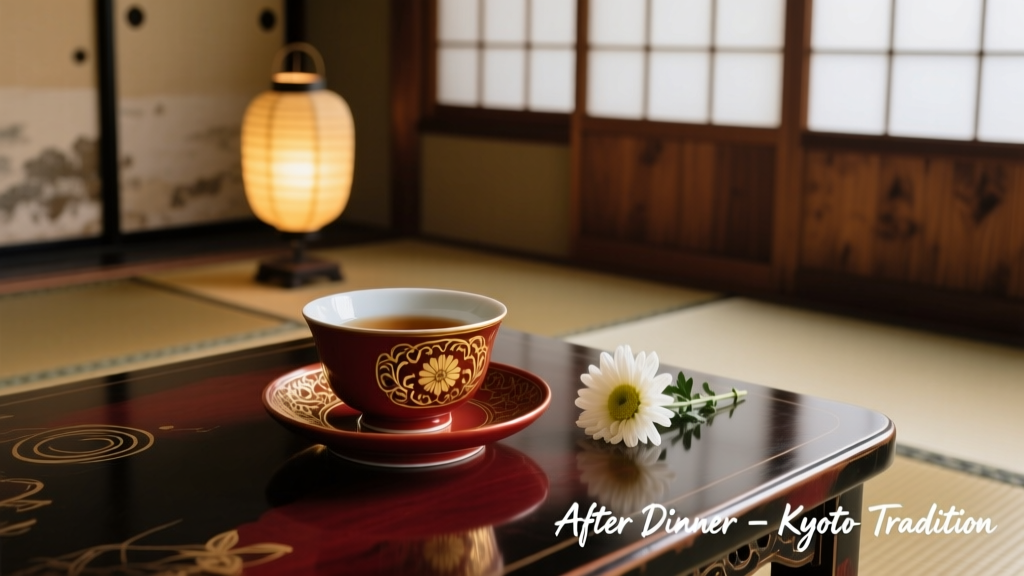
Occupied Japan Cup and Saucer with Gold Tracery: Identifying, Valuing, and Preserving Brick Red After-Dinner Sets
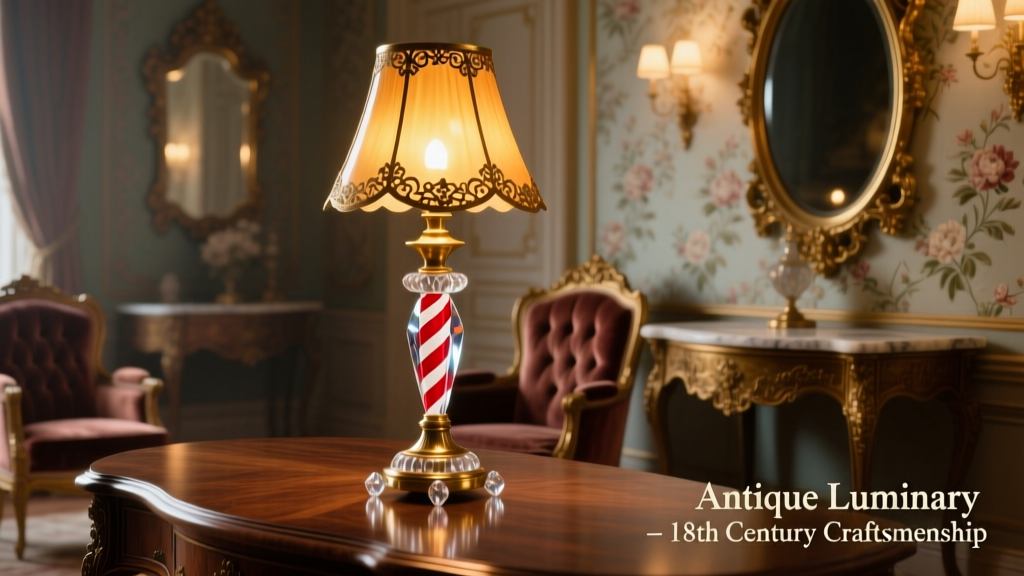
Lamps Oil Candy Stripe Crystal Feet 8 In: Identifying, Valuing, and Restoring a Rare Victorian-Era Table Lamp Base
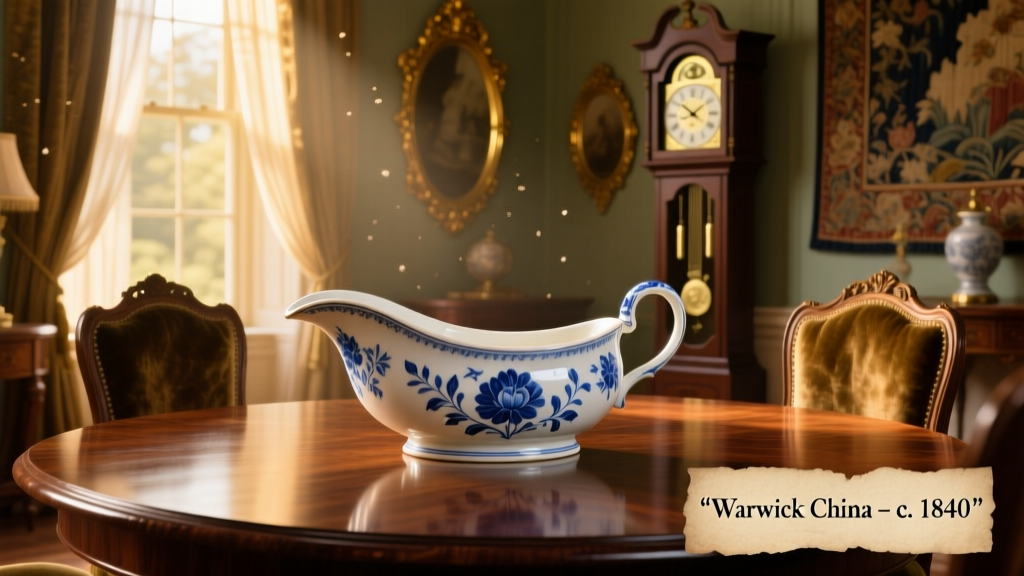
Flow Blue Gravy Boat by Warwick China: Identification, History, and Restoration Guidance
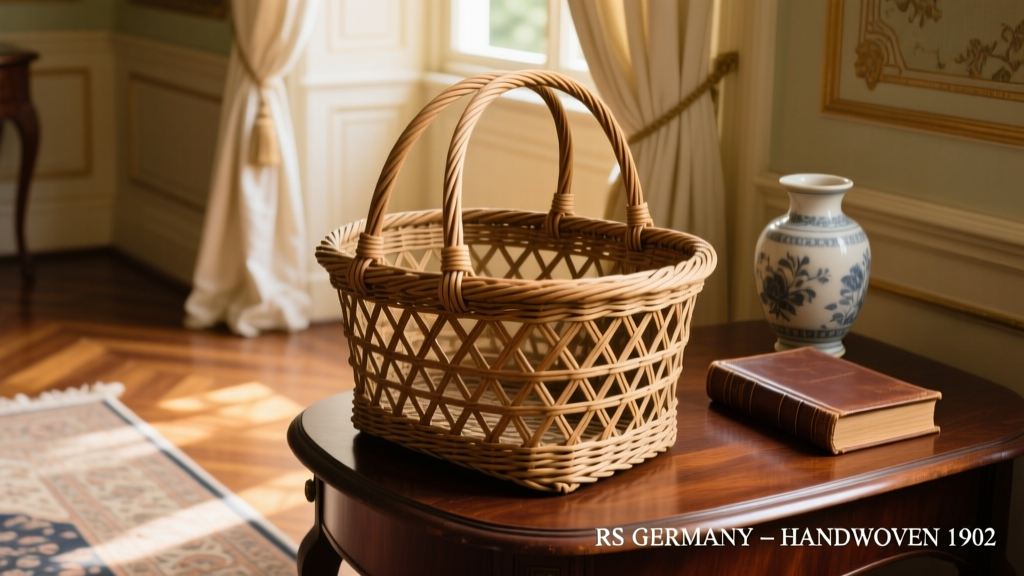
RS Germany Basket with Three Handles: Authentic Identification, Dimensions, and Restoration Protocol for the 4¾-Inch Model
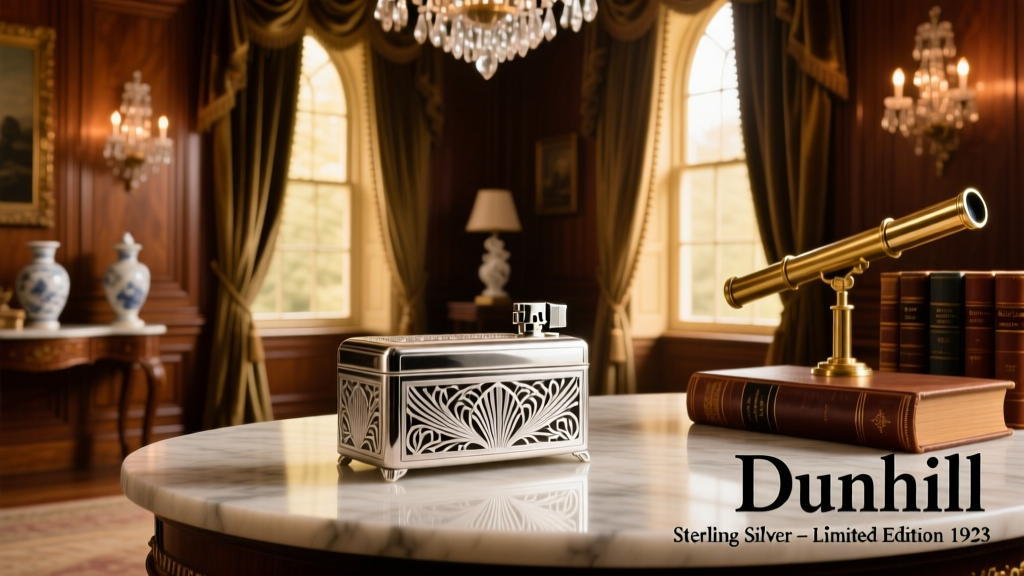
The Dunhill Sterling Silver Lighter Box: A Study in British Craftsmanship and Collectible Legacy
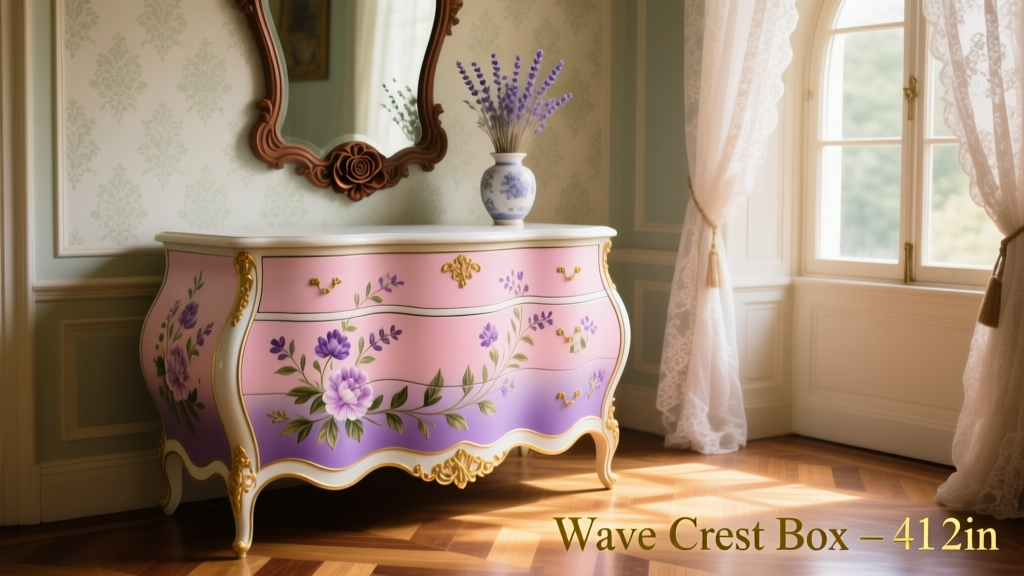
Wave Crest Box Puffy Dresser: Enameled Pink-Violet Floral Foliage, 4½-Inch Miniature Cabinet
Custard Glass Chrysanthemum Sprig Cruet No. 2: Identification, Provenance, and Conservation of a Rare American Tableware Artifact
Roseville Fuchsia Tan 15-Inch Vase: Identification, Value, and Conservation Insights
The Cameo Pin of the Belle Époque: A 14K White Gold Portrait of Feminine Idealism, Craftsmanship, and Provenance