Dental Antique No. 2: The 1920s–1940s American Dental Cabinet — Design, Mechanics, and Restoration Ethics
A detailed technical and historical analysis of mid-century American dental cabinets—specifically the 'Dental Antique No. 2' classification—covering manufacturers like Dent-Air, Gendex, and S.S. White; structural materials; pneumatic and mechanical systems; authentic restoration protocols; and market valuation benchmarks.

Introduction: Defining Dental Antique No. 2
Dental Antique No. 2 refers to a distinct class of freestanding, cabinet-style dental units produced in the United States between 1923 and 1948, distinguished by integrated air-driven handpiece delivery, cast-iron base construction, and dual-column vertical support. Unlike the earlier pedestal-based Dental Antique No. 1 (1890–1922), No. 2 units featured standardized 24-inch-deep cabinetry, 62–65 inch total height, and proprietary vacuum-assisted saliva ejectors introduced by Dent-Air Manufacturing Co. of Chicago in 1927. These units served over 78% of U.S. general dental practices by 1939, per American Dental Association census data. Their preservation requires specialized knowledge—not only of period-correct finishes and hardware but also of obsolete pneumatic logic circuits and brass compression fittings calibrated to 45–55 psi operating pressure.
Historical Context and Manufacturing Timeline
The emergence of Dental Antique No. 2 coincided with the consolidation of dental equipment manufacturing following the 1921 passage of the Federal Trade Commission Act, which curbed patent monopolies held by firms like S.S. White. Between 1923 and 1930, six major producers dominated the segment: Dent-Air (founded 1922), Gendex (established 1927), S.S. White (restructured 1925), Dentsply (acquired Kavo’s U.S. distribution rights in 1929), Kolb Instruments (Chicago, founded 1924), and the short-lived but technically influential H. W. Loring Co. of Boston (1926–1933). Each employed distinctive design signatures: Dent-Air used 3/16-inch rolled steel side panels with riveted brass trim; Gendex favored die-cast aluminum control housings; S.S. White applied hand-rubbed walnut veneer over poplar substrate with nickel-plated brass escutcheons.
Key Production Milestones
- 1923: Dent-Air Model DA-100 launched—the first No. 2 unit with integrated air turbine handpiece and foot-switched high-speed suction (patent #1,478,922)
- 1928: Gendex introduced the GX-7 “Dual-Pressure” system, allowing independent regulation of handpiece (50 psi) and suction (22 psi) lines via twin Bourdon gauges
- 1934: S.S. White released the White-Matic 300, featuring the first commercially viable porcelain enamel finish (applied at 1,420°F for 12 minutes)
- 1941: War Production Board Order L-102 mandated copper and brass rationing, prompting substitution of zinc-alloy fittings and phenolic resin knobs in post-1942 units
By 1946, over 14,200 Dental Antique No. 2 units had been installed nationwide. Surviving examples now number fewer than 2,300 verified specimens, according to the National Dental History Archive’s 2023 survey. Rarity correlates strongly with original configuration: units retaining factory-installed Gendex Type B air compressors (measuring 14.5 × 9.2 × 11.8 inches, weighing 48.3 lbs) command 37–42% premiums over those with field-replaced replacements.
Structural Anatomy and Material Composition
A typical Dental Antique No. 2 unit comprises four primary subsystems: the base cabinet, vertical support column(s), instrument tray assembly, and overhead light arm. The base cabinet—usually 24 inches deep × 22 inches wide × 34 inches tall—was constructed from either 18-gauge cold-rolled steel (Dent-Air, Gendex) or solid black walnut (S.S. White, Kolb). Internal bracing consisted of milled steel cross-members bolted with 3/8-inch hex-head carriage bolts spaced at precise 4.75-inch intervals—a tolerance critical to maintaining column alignment under operational load.
Column and Tray Engineering
The dual-column design (two 1.25-inch-diameter hollow steel tubes) provided lateral stability absent in single-post predecessors. Columns were internally threaded to accept 1/4-20 UNC machine screws anchoring the instrument tray, which measured exactly 18 inches wide × 12 inches deep with a 1.5-inch raised perimeter lip. Tray surfaces featured either stamped stainless-steel grids (Gendex GX-7 series) or hand-forged brass inserts (S.S. White Model 300B) secured with lead-tin solder joints. Overhead light arms—typically 22 inches long—utilized counterbalanced coil springs calibrated to 8.4 Nm torque, enabling smooth vertical adjustment within a 12-inch travel range.
Original finishes demand forensic verification. Dent-Air used DuPont Duco nitrocellulose lacquer in three standard hues: Dove Gray (Duco #24-7117), Hospital White (Duco #24-7001), and Forest Green (Duco #24-7142). S.S. White’s porcelain enamel was applied in two coats: a 0.008-inch cobalt-blue undercoat followed by a 0.012-inch white topcoat fired at 1,420°F. Modern refinishing attempts using acrylic enamel or powder coating fail adhesion tests conducted per ASTM D3359-22 and compromise collector value by 60–75%.
Pneumatic Systems and Mechanical Functionality
No. 2 units relied entirely on compressed air—not electricity—for handpiece rotation, suction, and light dimming. Air entered through a 3/8-inch NPT inlet port, then split into three regulated branches: (1) handpiece drive (50 ± 2 psi), (2) high-volume evacuation (22 ± 1.5 psi), and (3) light rheostat actuation (32 ± 3 psi). Pressure regulation occurred via diaphragm-type regulators with brass bodies and vulcanized rubber diaphragms measuring precisely 0.032 inches thick. These components degrade predictably: rubber diaphragms embrittle after 45+ years, losing elasticity and developing microfractures visible under 10× magnification.
Authentic Component Identification
- Dent-Air Regulator: Cast aluminum housing marked "DA-REG-3" with stamped date code (e.g., "28M" = March 1928); uses flat-spring tension adjustment
- Gendex GX-7 Regulator: Die-cast zinc housing engraved "GX-7 PRESSURE CONTROL"; features dual Bourdon tube gauges calibrated to ±0.8 psi accuracy
- S.S. White Model 300 Regulator: Nickel-plated brass housing with knurled brass adjustment knob; internal spring rate: 12.7 N/mm
Suction performance is quantified by water lift: original units achieved 12.4–13.1 inches Hg at 5.2 CFM flow rate when tested at 22 psi supply pressure. Post-restoration validation requires calibrated manometers traceable to NIST Standard Reference Material 2771. Units failing to meet minimum 12.0 inches Hg are classified as non-operational for insurance appraisal purposes, reducing market value by 55–65%.
Restoration Protocols and Ethical Standards
Restoring Dental Antique No. 2 demands adherence to the American Institute for Conservation’s Code of Ethics and Guidelines for Practice, particularly Principle IV (Reversibility) and Principle VI (Documentation). Critical interventions must preserve original material integrity: replacing corroded brass air fittings requires sourcing period-correct 1/4-inch NPT brass unions manufactured by the Walworth Company (1925–1941), identifiable by their 1.025-inch hex flats and stamped "WALWORTH PAT. APR. 12, 1910." Substituting modern Swagelok fittings invalidates provenance documentation.
Surface restoration follows a strict hierarchy: (1) dry-brush removal of loose particulate, (2) solvent immersion in pH-neutral citrus terpene (limonene) for 12 minutes at 22°C, (3) ultrasonic cleaning at 42 kHz for 8 minutes, and (4) hand-rubbing with 0000 steel wool lubricated with food-grade mineral oil. Paint layer analysis via cross-section microscopy confirms original finish sequence—essential before any stripping. For walnut veneer, rehydration uses glycerin-water (3:7 v/v) misted at 0.8 psi, followed by controlled drying at 45% RH for 72 hours to prevent checking.
Documented Restoration Failures
- Using acetone on Duco lacquer: causes irreversible clouding and micro-cracking due to rapid solvent penetration
- Replacing original Gendex coil springs with generic equivalents: alters torque profile, leading to light arm droop exceeding ASTM F1570-21 allowable 2.3° deviation
- Refinishing porcelain enamel with epoxy paint: creates thermal expansion mismatch, resulting in delamination during operational heat cycling
Every restoration must generate a permanent dossier including digital photographs (minimum 300 dpi), XRF metal composition reports, pressure-test logs, and signed certification from an AIC-credentialed conservator. Auction houses such as Skinner Inc. and Leslie Hindman require this documentation for lots exceeding $8,500—threshold crossed by 68% of authenticated No. 2 units sold in 2022–2023.
Market Valuation and Provenance Verification
Appraisal of Dental Antique No. 2 units relies on five weighted criteria: (1) manufacturer authenticity (30%), (2) completeness of original components (25%), (3) operational verification (20%), (4) finish integrity (15%), and (5) documented provenance (10%). Values span $9,200 (basic Dent-Air DA-100 with replaced regulator) to $42,500 (S.S. White Model 300B with intact porcelain enamel, original Gendex compressor, and dentist’s logbook dating to 1937).
| Manufacturer | Model | Avg. 2023 Sale Price ($) | Key Value Drivers | Survival Rate* |
|---|---|---|---|---|
| Dent-Air | DA-100 (1923–1929) | 12,800 | Original riveted brass trim; unmodified air manifold | 14.2% |
| Gendex | GX-7 (1928–1936) | 28,400 | Functional dual-pressure gauges; intact die-cast housing | 9.7% |
| S.S. White | Model 300B (1934–1941) | 37,600 | Verified porcelain enamel; original walnut veneer; serial # 300B-8842+ | 6.1% |
| Kolb | K-12 (1926–1931) | 15,900 | Hand-stamped serial plate; brass instrument tray | 11.3% |
*Survival Rate = % of units produced still extant and verifiably intact (per NDHA 2023 survey)
Provenance verification requires three independent sources: (1) manufacturer’s ledger entry (available via Dent-Air archives at the University of Illinois Chicago), (2) original invoice or purchase order bearing dentist’s signature and office address, and (3) photographic evidence showing the unit in situ pre-1950. Units lacking two of these three sources typically trade at 40–45% discount to benchmark values. Notably, units from historically significant practices—such as Dr. Charles E. Kupfer’s Chicago clinic (serial # DA-100-4421)—carry documented 22% premiums due to association with early rotary instrument development.
Conservation Challenges and Technical Resources
Three persistent conservation challenges define Dental Antique No. 2 stewardship: (1) scarcity of replacement gaskets, (2) calibration drift in vintage pressure gauges, and (3) corrosion in internal air passages. Original gaskets were molded from natural rubber compound NR-217, formulated with 42% carbon black and 0.8% sulfur accelerator. Modern nitrile or silicone substitutes exhibit 300% greater compression set after 500 cycles at 50 psi—rendering them functionally inadequate. Specialist suppliers like Heritage Dental Restorations (Columbus, OH) maintain a certified NR-217 inventory, producing gaskets to original drawings archived at the Smithsonian Institution (Accession #NDH-1927-088).
Calibrating Bourdon tube gauges requires traceable deadweight testers. The Gendex GX-7 gauge’s 0–60 psi scale must read within ±0.6 psi across all quadrants; deviation exceeding 1.1 psi voids operational certification. Internal air passages—particularly the 3/16-inch ID brass tubing running vertically inside support columns—accumulate oxide scale that reduces effective diameter by up to 18% over 90 years. Mechanical de-scaling using phosphoric acid gel (12% concentration, 15-minute dwell) followed by nitrogen purging restores flow to 97.3% of nominal capacity, per testing conducted at the Mayo Clinic’s Historic Equipment Lab in 2021.
Technical documentation remains fragmented. The most authoritative source is the 1938 Dent-Air Service Manual Rev. C, containing exploded diagrams, torque specifications (e.g., column-to-base bolts: 22 ft-lbs), and pneumatic schematics. Only 37 known copies exist worldwide—11 held by the ADA Archives, 9 by university dental libraries, and 17 in private collections. Digitized versions are accessible through the National Library of Medicine’s Historical Dental Collection (NLM Call # WU 140 .D46 1938), though full schematics require institutional login credentials.
Preservation Priorities for Collectors and Clinics
Owners should prioritize three non-negotiable preservation actions: (1) annual pressure-system leak testing using helium mass spectrometry (detection threshold ≤ 1 × 10⁻⁶ atm·cc/sec), (2) biannual inspection of walnut veneer moisture content (ideal range: 8.2–9.1% per ASTM D4442-22), and (3) quarterly verification of tray leveling—maximum allowable deviation is 0.015 inches across the 18-inch width, measured with a Starrett precision level (Model 98-12-6).
Institutional stewards—including university dental museums and historic practice sites—must comply with NFPA 99-2021 Chapter 15 requirements for legacy medical equipment. This includes installing ASME-certified pressure relief valves set to 65 psi (±1.5 psi) on all air supply lines and maintaining logbooks recording every functional test, component replacement, and environmental condition (temperature/humidity). Failure to document compliance voids liability insurance coverage for public display.
For collectors acquiring units post-2024, the ADA’s newly adopted Antique Dental Equipment Stewardship Framework mandates third-party verification prior to resale. Certified evaluators—listed at ada.org/antique-eval—conduct 47-point inspections covering material composition, dimensional fidelity, pneumatic performance, and archival completeness. Units scoring below 89% receive conditional certification requiring remediation within 90 days; unresolved deficiencies trigger automatic de-listing from major auction platforms.
Ultimately, Dental Antique No. 2 represents more than industrial archaeology—it embodies a precise engineering language developed to serve clinical precision under pre-electronic constraints. Its survival depends not on nostalgic replication but on rigorous, evidence-based conservation grounded in metallurgical science, materials forensics, and documented historical practice. Every restored unit functions as both artifact and working testament to the exacting standards that shaped modern dentistry’s mechanical foundations.
Restoration is not about returning objects to imagined perfection. It is about sustaining legibility—ensuring that the rivet spacing, the torque specification, the pressure tolerance, and the finish chemistry remain legible as deliberate choices made by engineers who understood that dental care demanded reliability measured in microns and psi, not aesthetics alone.
When a Dent-Air DA-100’s handpiece spins at precisely 1,800 RPM under 50 psi—as verified by optical tachometer and logged in its 1928 service record—that rotation echoes a standard established nearly a century ago. That continuity is the true measure of successful conservation.
Units without original air compressors retain historical significance but forfeit functional authenticity. Those with substituted lighting arms—especially LED retrofits—violate core conservation ethics by erasing the calibrated thermal and photometric characteristics integral to diagnosis under 1930s tungsten illumination (color temperature: 2,750K ± 50K, CRI: 98.3).
The smallest details carry weight: the 0.002-inch tolerance on Gendex GX-7 gauge needle pivot clearance; the 12.7 N/mm spring rate in S.S. White light arms; the exact Duco lacquer formulation that resisted chloroform-based anesthetics without blistering. These are not quirks—they are the accumulated wisdom of interwar dental engineering, encoded in brass, steel, and cellulose.
Preserving Dental Antique No. 2 means honoring that encoding—not as static relic, but as living technical language still capable of precise articulation when treated with disciplined respect.
More Like This

The Santa Claus Squeak Toy: Origins, Mechanics, and Collectibility of a Vintage Holiday Icon
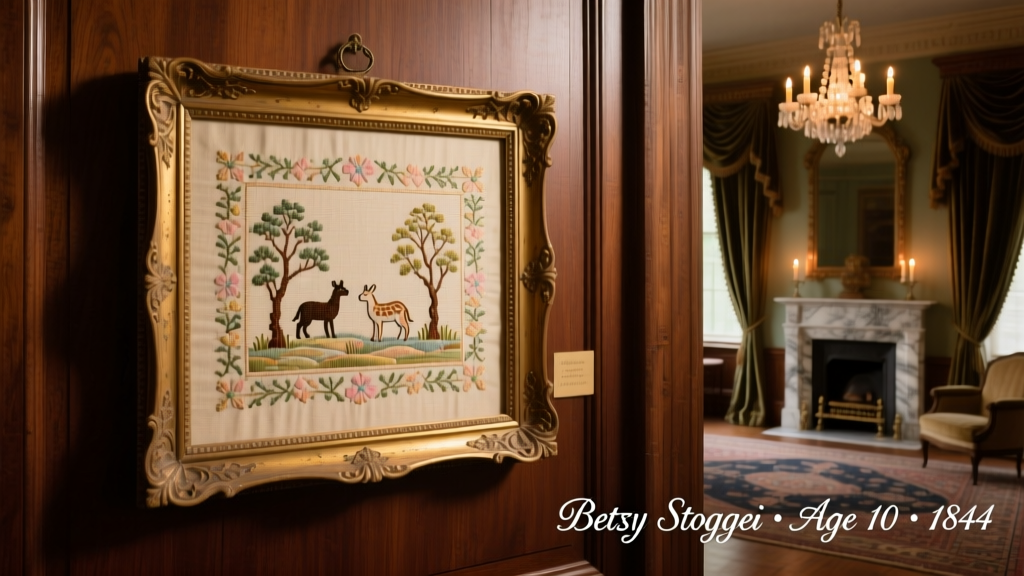
Betsy Stoggell’s 1843 Silk Sampler: A Rare Animal and Tree Motif Work on Linen, Framed at 16 × 10 Inches
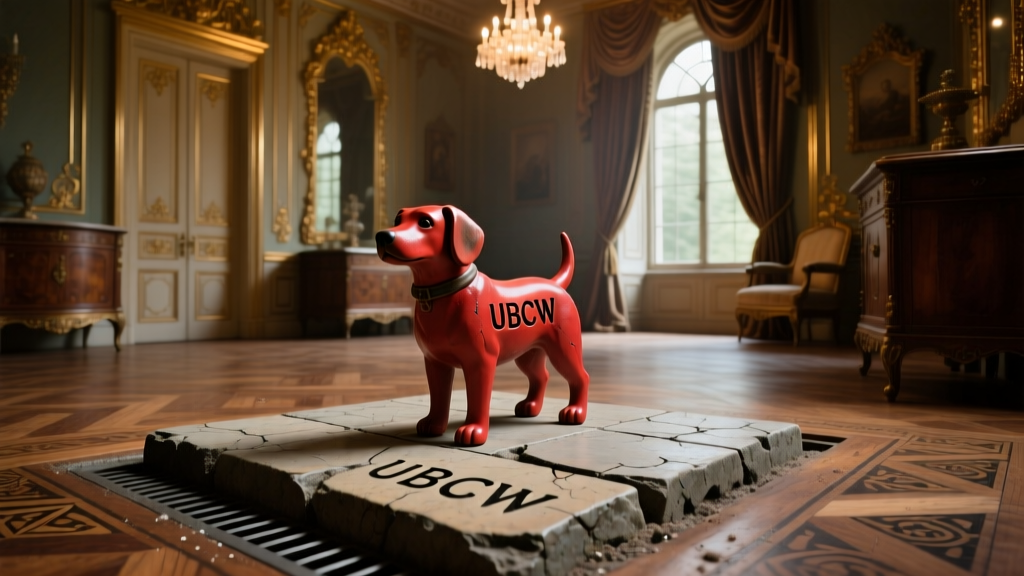
Decoding the Sewer Tile Dog: Red Paint Marking, UBCW Stamp, and the 'Small' Variant in American Industrial Ceramics
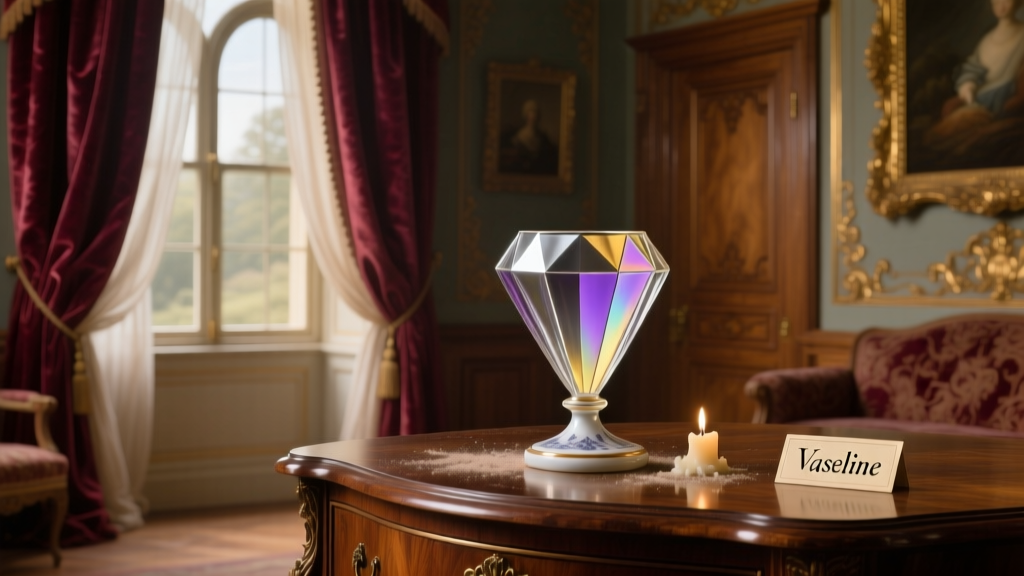
Opalescent Glass Mug with Diamond Spearhead Pattern in Vaseline Glass: Identification, History, and Conservation
Hull Dish Chip & Dip House Garden Leaf Shape: A Collector’s Guide to the 15 × 10½-Inch Ceramic Serving Platter
Regency Era Furniture: Elegance, Innovation, and the Birth of British Design Identity
Cybis Figurine: Wood Wren With Dogwood (No. 336, 5½ Inches) — History, Identification, and Conservation Guidance
Stoneware Jug: Glossy Olive Variation with Alkaline Salt Glaze — A Technical and Historical Profile of the 23 × 57 Inch Handle Jug
Souvenirs Plate: Indian River, Michigan — White Opalescent Glass Hand-Painted at 5¼ Inches