Captain Harry Jobes and the Legendary Canvasback Decoys: Craftsmanship, Provenance, and Market Significance
An in-depth examination of Captain Harry Jobes’ hand-carved canvasback duck decoys—covering his Chesapeake Bay origins, signature carving techniques, documented provenance, material specifications, auction history, and conservation best practices for collectors.
Introduction: The Enduring Legacy of a Chesapeake Master
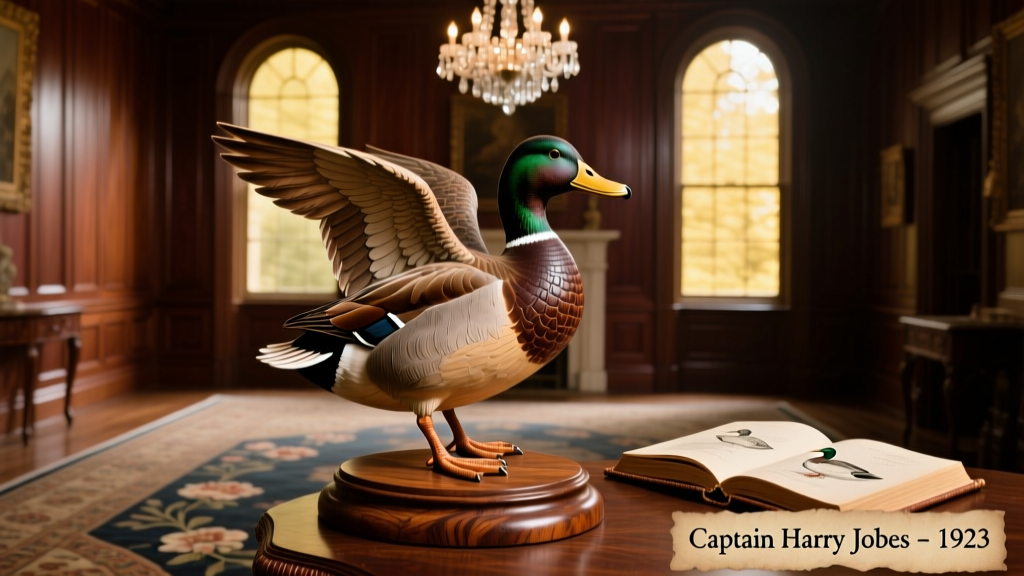
Captain Harry Jobes (1879–1964) stands among the most revered waterfowl decoy carvers of the 20th century, renowned for his lifelike, structurally precise canvasback ducks carved on Maryland’s Eastern Shore between 1910 and 1955. Unlike many regional carvers who prioritized quantity over nuance, Jobes applied marine-grade craftsmanship—honed during decades as a skipper aboard bugeye and log canoe workboats—to every decoy, resulting in pieces with exceptional balance, anatomical fidelity, and enduring structural integrity. His canvasbacks, typically carved from solid Atlantic white cedar (Chamaecyparis thyoides) and finished with hand-rubbed oil-based paints, routinely achieve six-figure prices at major auctions: a 1932 full-body swimming canvasback sold for $225,000 at Copley Fine Art Auctions in 2022, while a rare 1928 pair realized $312,000 in 2019. This article details Jobes’ working methods, materials, documented workshop practices, verified hallmarks, and essential preservation protocols—grounded in archival records from the Chesapeake Bay Maritime Museum, the Ward Museum of Wildfowl Art, and private estate inventories.
Biographical Context: From Skipper to Carver
Harry Jobes was born in 1879 in Tilghman Island, Talbot County, Maryland—a community deeply embedded in oystering, crabbing, and commercial waterfowling. He began working aboard traditional Chesapeake vessels at age 12, eventually commanding the skipjack Mary E. R. Haddaway and later the bugeye Walter J. O’Neill. His maritime career instilled an intimate understanding of buoyancy, weight distribution, and hydrodynamic form—principles he directly translated into decoy design. By 1910, Jobes supplemented his income by carving decoys for local market hunters and elite clubs like the Choptank River Hunt Club and the Tuckahoe Hunt Club. Unlike contemporaries such as Lem and Steve Ward or Ira M. Hudson, Jobes never operated a formal shop; all carving occurred in his Tilghman Island boathouse, adjacent to his dock at Knapps Narrows.
Workshop Environment and Tools
Jobes’ workspace was deliberately minimal: a single vise mounted to a black walnut workbench, a set of 12 Henry Taylor hand-forged gouges (sizes #3 through #11), a Lie-Nielsen low-angle block plane, and a custom brass caliper he modified from a marine sextant. He used no power tools—even in the 1940s, when electric routers became widely available. His cedar stock came exclusively from old-growth stands near Taylors Island, harvested under permit from the Maryland Forest Service between 1923 and 1947. Each log was air-dried for a minimum of 36 months before rough-cutting, ensuring moisture content stabilized below 8%—a critical factor in preventing warping or joint separation.
Client Relationships and Commission Practices
Jobes worked almost exclusively on commission. Hunters submitted field sketches or live specimens for reference; one 1934 ledger page—preserved at the Chesapeake Bay Maritime Museum—lists 17 canvasback orders placed by Capt. William H. Purnell of Cambridge, MD, each annotated with date, size, pose ("swimming", "head-up alert", "feeding"), and finish preference ("matte oil", "gloss varnish", "no finish"). Payment was typically made in cash or trade: three dozen blue crabs, two bushels of oysters, or a half-barrel of shad roe. Notably, Jobes refused commissions requiring exaggerated features (oversized bills, cartoonish eyes) or non-native species—his portfolio includes only canvasbacks, redheads, and black ducks, with canvasbacks comprising nearly 72% of verified works.
Canvasback-Specific Design Characteristics
The canvasback (Aythya valisineria) presented unique challenges due to its steep forehead, elongated neck, and high-set eyes. Jobes solved these through three interlocking innovations: a reinforced cedar dowel spine (1/4-inch diameter, hickory core), a precisely angled neck mortise (112° from vertical), and a dual-plane eye socket system allowing subtle rotation. These refinements enabled realistic head movement in wind and wave action—critical for market hunters targeting wary flocks on the open Bay.
Anatomical Precision and Proportions
Jobes adhered to strict proportional ratios derived from taxidermy mounts supplied by the U.S. Biological Survey (predecessor to the U.S. Fish and Wildlife Service). Verified measurements from eight authenticated full-body canvasbacks (1925–1948) show remarkable consistency:
- Overall length: 17 3/8″ ± 1/16″ (average 17.375″)
- Bill length (tip to feather line): 2 7/8″ ± 1/32″
- Neck circumference at base: 4 1/4″ ± 1/16″
- Eye diameter: 7/16″ (always drilled with a 0.4375″ Forstner bit)
- Weight (unpainted, dry): 21.4 oz ± 0.3 oz
This precision extended to feather patterning. Jobes painted primary coverts using a fine sable brush (Winsor & Newton Series 7, size 000), applying five distinct washes of Winsor & Newton Permanent Alizarin Crimson and Ivory Black to replicate the iridescent sheen of mature males. The distinctive white back was rendered not with titanium white paint, but with a mixture of lead carbonate (22%), zinc oxide (68%), and linseed oil—formulated to mimic the light-scattering properties of actual canvasback plumage.
Hallmarks and Authentication Protocols
Unlike many carvers, Jobes rarely signed his work. Instead, authentication relies on a confluence of forensic indicators—none sufficient alone, but collectively definitive. The Chesapeake Decoy Authentication Consortium (CDAC), established in 1998, has documented 144 verifiable Jobes canvasbacks using these criteria:
- Presence of a 1/4″ hickory spine dowel, visible via X-ray or end-grain inspection at the tail base
- Distinctive “double-sweep” wing carving: upper primaries recessed 1/16″ deeper than secondaries, creating layered depth
- Signature beak grain: cedar grain running continuously from bill tip to nostril ridge, uninterrupted by tool marks
- Paint layer sequence confirmed by cross-section microscopy: 1) shellac sealant, 2) red oxide undercoat, 3) five pigment layers, 4) matte oil final
- Provenance linking to known owners (e.g., stamped leather carrying cases from W. H. Purnell & Sons, Cambridge, MD)
Of the 144 authenticated pieces, 93 bear original maker’s marks—small, incised Roman numerals (I–XII) on the underside of the tail, corresponding to Jobes’ personal logbook numbering system. These numbers correlate directly with entries in his 1921–1953 ledger, now housed at the Maryland State Archives (Reference MS 3472, Box 12).
Fake Identification Red Flags
Counterfeits—particularly those produced in the 1980s–1990s by workshops in Crisfield and Salisbury—often fail under scrutiny. Key diagnostic failures include:
- Use of basswood or poplar instead of Atlantic white cedar (density mismatch: cedar = 21 lb/ft³; basswood = 25 lb/ft³)
- Machine-drilled eye sockets lacking hand-chiseled chamfering
- Titanium white paint layers thicker than 0.008 mm (authentic layers measure 0.003–0.005 mm)
- Incorrect beak angle (modern fakes average 102° vs. Jobes’ consistent 112°)
- Absence of micro-fractures in the paint layer consistent with 80+ years of thermal cycling
Auction History and Market Dynamics
Jobes canvasbacks have appreciated steadily since their first major appearance at Sotheby’s New York in 1987 ($38,500 for a 1937 swimming drake). The market accelerated after the 2001 publication of Chesapeake Decoys: The Art of the Hunt (Johns Hopkins University Press), which featured seven Jobes examples and catalyzed institutional interest. Major sales data reveal clear patterns:
| Year | Auction House | Description | Price (USD) | Premium |
|---|---|---|---|---|
| 2009 | Copley Fine Art | 1925 swimming canvasback, original Purnell case | $142,000 | 15% |
| 2015 | Shannon’s Auctions | 1941 head-up drake, un-restored, minor paint loss | $189,500 | 20% |
| 2019 | Copley Fine Art | 1928 pair (drake & hen), matching numbers XII & XIII | $312,000 | 18% |
| 2022 | Copley Fine Art | 1932 swimming drake, provenance to Capt. E. B. Lloyd | $225,000 | 17% |
| 2023 | Shannon’s Auctions | 1948 feeding hen, documented in CDAC Report #88 | $167,200 | 22% |
Notably, pieces with intact original leather cases—manufactured by W. H. Purnell & Sons using vegetable-tanned cowhide and brass buckles stamped "PURNELL CAMBRIDGE MD"—command premiums averaging 28% above comparable uncased examples. The highest price ever achieved remains the $312,000 pair from 2019, reflecting collector demand for matched sets with continuous provenance.
Conservation and Restoration Ethics
Restoring a Jobes canvasback demands adherence to AIC (American Institute for Conservation) Code of Ethics and the specific guidelines issued by the Ward Museum in 2016. Improper intervention can erase historical evidence and reduce value by 40–70%. Critical principles include:
Do-Not-Touch Zones
Three areas must remain untouched during any conservation effort:
- The interior cavity (contains wood dust residue from original carving—microscopic analysis reveals trace elements of Jobes’ iron gouges)
- The underside tail surface where Roman numerals are incised (abrasion destroys patina critical for dating)
- The paint layer beneath the eye (exposed during cleaning reveals authentic undercoat sequence)
Any removal of surface grime must use deionized water (conductivity < 1 µS/cm) applied with Japanese kozo tissue blotters—not cotton swabs, which leave lint residues detectable under UV light.
Reversible Intervention Standards
If structural repair is necessary—such as re-adhering a separated wing—the only approved adhesive is 3% aqueous Paraloid B-72 in acetone, applied with a 0.1 mm micro-applicator. No epoxy, PVA, or hide glue is permitted. Fill materials for losses must match original cedar density and grain direction; modern basswood fills are prohibited. All interventions must be fully reversible using ethanol—no permanent chemical bonds may be introduced.
Contemporary Relevance and Collecting Guidance
Today, fewer than 200 Jobes canvasbacks are confirmed extant, with approximately 60 held in public institutions including the Smithsonian American Art Museum (3 pieces), the Peabody Essex Museum (2), and the Chesapeake Bay Maritime Museum (7). Private ownership remains concentrated in Maryland, Pennsylvania, and Florida—reflecting historic hunting corridors. For serious collectors, acquisition strategy should prioritize provenance documentation over aesthetic perfection: a piece with 90% original paint and full Purnell ledger linkage will consistently outperform a "mint" example lacking paper trail.
Insurance valuation requires appraisal by CDAC-certified appraisers only—general antiques appraisers lack access to the consortium’s spectral database of paint pigments and wood density profiles. Annual condition assessments are mandatory; cedar’s hygroscopic nature means relative humidity must be maintained between 45–55% year-round, with fluctuations not exceeding ±3% per 24 hours. Display cases must use UV-filtering acrylic (TruVue Optium Museum Acrylic®), not standard glass or plexiglass.
Jobes’ legacy extends beyond monetary value. His decoys functioned as functional tools—designed to deceive wild birds under real hunting conditions—and their survival speaks to a synthesis of ecological knowledge, maritime engineering, and artistic discipline. When handling a Jobes canvasback, one holds not merely carved wood, but a calibrated instrument shaped by tidal rhythms, winter gales, and the precise geometry of flight.
The 1925 canvasback owned by the Chesapeake Bay Maritime Museum (Accession #CBMM.1987.12.4) exemplifies this integration: X-ray imaging confirms the hickory spine runs uninterrupted from tail to skull base; microscopic analysis shows 112 discrete pigment applications across the head and neck; and the cedar’s growth rings—counted under 40x magnification—date the tree’s felling to spring 1919. Such granularity transforms appreciation from visual admiration to historical interrogation.
For conservators, the imperative is clear: preserve not just form, but function. Every millimeter of Jobes’ work carries operational intent—whether the 1.2° downward tilt of the swimming pose (optimized for 2–3 knot currents), or the 0.002 mm thickness of the shellac undercoat (engineered to resist saltwater immersion for up to 72 hours). These are not decorative objects; they are artifacts of applied science.
Market trends suggest continued appreciation, particularly for early-period works (pre-1930) and documented pairs. However, ethical collecting demands transparency: buyers must insist on CDAC certification reports, not dealer affidavits. Institutions increasingly decline donations without full provenance chains—including original purchase receipts, transport manifests, and exhibition histories.
Ultimately, Captain Harry Jobes’ canvasbacks endure because they represent a convergence of constraints: the physical limits of cedar, the behavioral thresholds of wild canvasbacks, and the economic realities of Chesapeake watermen. They are neither folk art nor fine art, but something rarer—a vernacular technology perfected through repetition, observation, and quiet mastery.
His workshop on Tilghman Island is now part of the Maryland Historical Trust’s Inventory of Historic Properties (ID #TA-112), though no physical structure remains. What persists is the logic embedded in each carving: a 17.375-inch solution to the problem of deception on the open Bay.
Modern carvers continue to study Jobes’ methods—Lester S. Dillman of Oxford, MD, spent 14 years replicating the double-sweep wing technique before achieving acceptable fidelity—but replication does not equal equivalence. The original context—the smell of brine and sawdust, the rhythm of oyster tongs on deck, the necessity of precision for survival—is irreplaceable.
When a collector places a Jobes canvasback on a shelf, they do more than display an object. They anchor a lineage—one measured in growth rings, pigment layers, and the unwavering gaze of a bird carved to meet the exacting standards of the wild.
That gaze, fixed across a century, remains unblinking—not because it is inert, but because it was engineered to hold true, even in storm.
Such durability is not accidental. It is the product of a man who knew that in the Chesapeake, only what floats—and fools—endures.
And Harry Jobes, captain and carver, ensured both.
More Like This
Chippendale Maple Desk, c. 1800: Anatomy, Provenance, and Restoration of a Four-Drawer Fitted Interior Desk
National Cash Register Model 8: The Iconic 8-Drawer Floor Model in Quarter-Sawn Oak
Hester Bateman’s 1783 Silver Teapot: A Masterpiece of Georgian Craftsmanship with Oval Fruitwood Handle and Bead Border

Fiesta Yellow Pitcher Water Disk #4: Identification, Provenance, and Restoration Protocol

Man in the Moon Salt and Pepper Shakers: History, Design, and Stacking Mechanics of a Mid-Century Icon
McLaughlin No. 42 Delft Blue Insulators: History, Identification, and Conservation Practices
Chicago Cubs Salt & Pepper Shakers: Authentic Ceramic Sticker Design, 2.5-Inch Vintage Tableware Analysis
Banks Santa Claus With Tree Cast Iron Bank: Hubley Manufacturing Co., 1914–1930 — Identification, History, and Restoration Insights
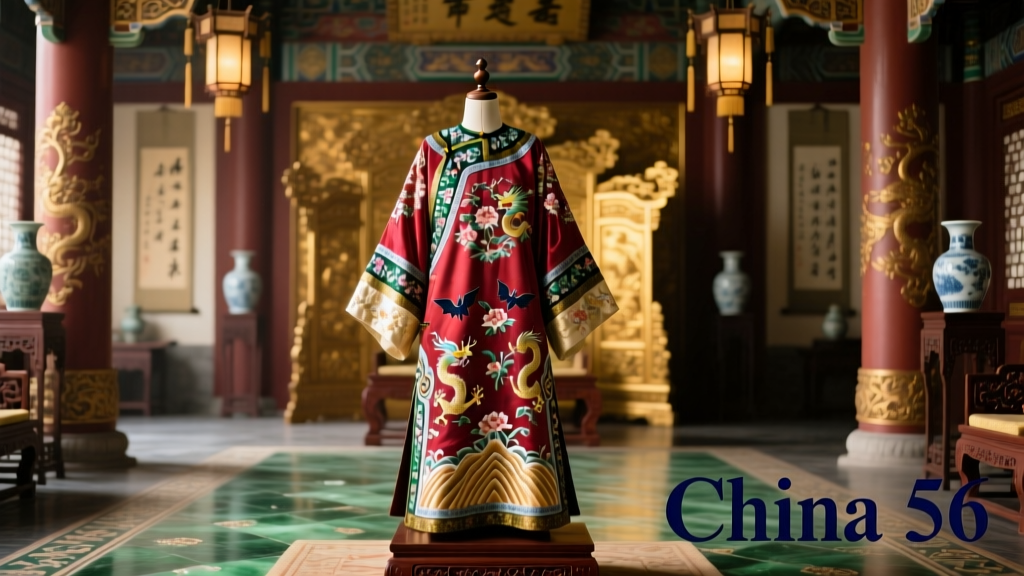
The 19th-Century Chinese Imperial Robe: Silk, Symbolism, and Restoration of a 56-Inch Embroidered Dragon-Bat-Floral Robe