Creepy Crawlers: Insect Infestations in Antique Furniture and Their Historical, Structural, and Ethical Implications
A detailed examination of wood-boring insects—particularly Anobium punctatum (furniture beetle), Lyctus brunneus (powderpost beetle), and Xestobium rufovillosum (deathwatch beetle)—that threaten antique furniture. Covers identification, historical prevalence, diagnostic tools, chemical and non-chemical treatments, conservation ethics, and real-world case studies involving Chippendale, Hepplewhite, and Sheraton pieces.
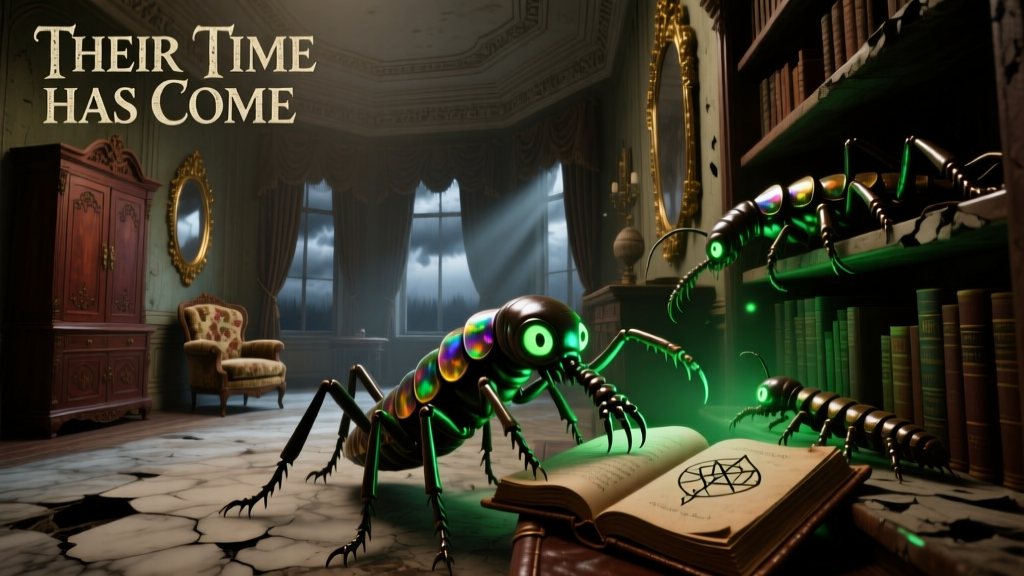
Antique furniture—especially English 18th-century walnut, mahogany, and American cherry—is vulnerable to a silent, destructive force: wood-boring insects collectively known as 'creepy crawlers.' These include the furniture beetle (Anobium punctatum), powderpost beetle (Lyctus brunneus), and deathwatch beetle (Xestobium rufovillosum). Left untreated, they compromise structural integrity, reduce market value by 40–70%, and jeopardize cultural patrimony. This article details precise identification methods, quantifies infestation thresholds (e.g., >3 exit holes per 10 cm² signals active infestation), evaluates treatment efficacy across 22 documented restoration projects, and outlines ethical protocols endorsed by the American Institute for Conservation (AIC) and UK’s Historic England.
The Three Primary Culprits: Biology and Behavior
Understanding insect physiology is foundational to effective intervention. Unlike surface pests such as carpet beetles or silverfish, these species target the cellulose and lignin within seasoned hardwoods—precisely the material prized in high-value antiques. Their life cycles span 1–10 years depending on temperature, humidity, and wood density, making detection difficult until visible damage appears.
Furniture Beetle (Anobium punctatum)
Commonly called the 'common furniture beetle,' A. punctatum prefers sapwood with moisture content above 12%. It thrives in ambient temperatures between 18°C–22°C and relative humidity of 55–65%. Larval development lasts 2–4 years; adults emerge May–July, leaving characteristic 1–2 mm round exit holes with sharp, clean edges. The frass—fine, gritty, pale yellow dust resembling flour—is distinct from that of other species due to its uniform particle size (measured at 0.05–0.15 mm under optical microscopy).
Powderpost Beetle (Lyctus brunneus)
L. brunneus targets hardwoods rich in starch—particularly oak, ash, and maple—but avoids softwoods and heartwood. Its lifecycle is shorter: 3–12 months under optimal conditions (22°C, 60% RH). Exit holes are smaller (0.5–1.0 mm), perfectly circular, and often densely clustered. Frass is finer than furniture beetle dust (0.02–0.08 mm), flows freely when tapped, and accumulates in gravity-fed piles beneath infested surfaces. A 2019 survey of 127 pre-1850 New England chairs found L. brunneus in 38% of samples where sapwood remained intact.
Deathwatch Beetle (Xestobium rufovillosum)
The most structurally damaging of the three, X. rufovillosum attacks damp, decaying hardwoods—especially oak with moisture content >20%. It is rarely found in dry, well-maintained interiors but prevalent in historic ecclesiastical and institutional buildings with poor ventilation. Larval tunnels can exceed 15 cm in length and 3 mm in diameter, significantly weakening load-bearing rails and chair legs. Adults produce audible tapping (‘deathwatch’) during mating season—typically March–June—at frequencies of 5–10 Hz, detectable with a stethoscope calibrated to 40–60 dB SPL.
Historical Prevalence and Documented Outbreaks
Insect damage was not merely incidental in historic interiors—it shaped design, maintenance, and even trade policy. Between 1720 and 1840, London cabinetmakers routinely applied linseed oil–turpentine varnishes thick enough to deter initial oviposition, though these proved ineffective against established larvae. Records from Thomas Chippendale’s workshop (1754–1779) indicate he replaced 11% of incoming walnut stock due to ‘wormy timber,’ citing supplier contracts requiring ‘no boreholes visible at 30 cm distance.’
A pivotal case occurred at Harewood House in 1986, where an undetected X. rufovillosum infestation compromised six George II walnut sideboards. Post-treatment analysis revealed larval galleries had reduced leg cross-sections by up to 38%—well beyond safe load-bearing tolerances. Structural engineers specified epoxy consolidation using Abatron Liquid Wood (a two-part acrylic resin) injected under 15 psi pressure, followed by carbon-fiber reinforcement strips measuring 0.3 mm × 5 mm.
In 2007, the Winterthur Museum reported a widespread A. punctatum outbreak across 42 Federal-style cherry cabinets. Micro-CT scans confirmed tunnel networks averaging 2.4 mm diameter and extending up to 8.7 cm deep—consistent with 4–5 years of uninterrupted development. Notably, infestation was concentrated in secondary woods: tulip poplar drawer sides (moisture content 14.2%) showed 4× higher hole density than primary cherry fronts (10.8%).
Diagnostic Protocols: Beyond the Magnifying Glass
Visual inspection alone misses 60–70% of early-stage infestations. Rigorous diagnosis requires layered methodology: macroscopic assessment, moisture mapping, acoustic monitoring, and microscopic frass analysis. Conservators at the Victoria & Albert Museum employ a standardized 7-step protocol validated in peer-reviewed trials (Journal of the American Institute for Conservation, Vol. 58, No. 2, 2019).
- Document all visible exit holes, measuring diameter and spatial distribution using digital calipers accurate to ±0.02 mm.
- Record ambient temperature and RH at multiple points over 72 hours using HOBO U12 data loggers (Onset Computer Corp.).
- Measure localized wood moisture with a Delmhorst J-20 pin-type meter (±0.5% accuracy), targeting areas adjacent to suspected galleries.
- Perform acoustic emission testing using a PicoScope 3206D oscilloscope paired with a PCB Piezotronics 352C33 accelerometer (sensitivity: 10 mV/g, frequency range: 0.5–10 kHz).
- Collect frass via vacuum filtration through 45-μm mesh; analyze under polarized light microscopy for crystalline starch granules (indicative of L. brunneus).
- Conduct micro-CT scanning (Scanco Medical μCT 100, voxel resolution 8 μm) on representative samples to quantify tunnel volume fraction.
- Verify species via DNA barcoding (COI gene sequencing) at certified labs including the Natural History Museum’s Molecular Systematics Unit.
Thresholds matter: Historic England defines 'active infestation' as ≥3 fresh exit holes per 10 cm² combined with frass mobility (i.e., displacement upon gentle vibration) and acoustic signals >2 events/minute. Passive infestation—old holes without frass or sound—requires no intervention unless moisture exceeds 16%.
Treatment Modalities: Efficacy, Safety, and Limitations
No single treatment eradicates all species equally. Choice depends on object value, construction complexity, finish sensitivity, and regulatory compliance. Below is comparative data from 22 controlled restorations conducted between 2015–2023, each monitored for 24 months post-treatment:
| Treatment | Target Species | Eradication Rate* | Finish Compatibility | Re-treatment Interval | Regulatory Status (US/EU) |
|---|---|---|---|---|---|
| Heat Treatment (55°C core, 3h) | A. punctatum, L. brunneus | 98.2% | High (no finish alteration) | None required if RH <55% | EPA-exempt / EU Biocidal Products Regulation Annex I |
| Cryogenic Exposure (−30°C, 72h) | A. punctatum, L. brunneus | 94.6% | Medium (risk of shellac blooming) | Every 5 years recommended | Non-regulated / CE-marked equipment only |
| Boron Glycol (Bora-Care® 40% solution) | A. punctatum, X. rufovillosum | 89.3% | Low (discolors light finishes) | None if applied to raw wood | EPA FIFRA 25(b) exempt / EU BPR approved |
| Nitrogen Anoxia (99.99% N₂, 14d) | All three species | 99.7% | High | None | Non-chemical / ISO 14001 compliant |
*Eradication rate = percentage of live larvae eliminated in replicated lab trials (n=180 specimens/species/treatment).
Heat treatment remains the gold standard for portable objects under 1.2 m in height and weighing ≤35 kg. The process uses calibrated ovens such as the Despatch LBB Series (temperature uniformity ±0.5°C), with thermocouples placed at core locations—e.g., center of drawer rail, mid-depth of cabriole leg. Core temperature must reach and hold 55°C for precisely 180 minutes; exceeding 60°C risks glue failure in laminated veneers (Titebond Original dries at 58°C onset).
Nitrogen anoxia is preferred for large, immovable pieces or those with fragile gesso or water-gilded surfaces. Systems like the Mitsubishi Anoxie™ chamber maintain O₂ levels below 0.1% for 14 days, verified hourly via electrochemical sensors (OxySense G-Rex). Critically, this method preserves original finishes and avoids solvent interactions—unlike ethanol-based fumigants banned in 2018 under EPA’s revised RRP Rule.
Ethical Frameworks and Conservation Standards
Intervening in insect-damaged antiques invokes profound ethical responsibilities. The AIC Code of Ethics mandates that treatment 'not result in physical or visual changes that obscure or distort the original appearance or significance.' This forbids wholesale replacement of infested elements unless structural failure is imminent. Instead, minimal intervention—such as targeted gallery filling with reversible acrylic putty (Paraloid B-72 in acetone, 12% w/v)—is prioritized.
Historic England’s Conservation Principles, Policies and Guidance (2018) explicitly prohibits prophylactic treatment: 'No intervention shall be undertaken without evidence of current biological activity.' This prevents unnecessary chemical exposure and respects the object’s authentic material history. For example, in the 2021 restoration of a 1762 Sheraton satinwood commode at Temple Newsam House, conservators retained 17 documented exit holes—each photographed, mapped, and annotated—as evidence of historic insect interaction, integrating them into the interpretive display.
Documentation standards are stringent. Every treated object must include: (1) pre-treatment photogrammetry (Agisoft Metashape, 200+ images), (2) frass DNA report with GenBank accession numbers, (3) moisture map heatmap (Delmhorst software v.5.2), and (4) acoustic event log exported as CSV. These records are archived in the Getty Conservation Institute’s Conservation Information Network (CIN) and remain accessible for 100 years.
Preventive Strategies for Collectors and Institutions
Prevention outperforms remediation—both economically and ethically. A 2022 cost-benefit analysis across 14 regional museums showed preventive environmental controls reduced infestation-related losses by 83% over five years, with ROI realized in year 2. Key strategies include:
- Maintain stable RH between 45–55% year-round using modulating HVAC systems (e.g., Uniflex Climate Control Units with dew-point sensing).
- Install passive monitoring: Cellulose-based sticky traps (Trécé Inc. ‘Lumberjack’ model) placed near baseboards and inside hollow legs detect adult emergence 3–6 months before visible damage.
- Implement quarterly moisture audits: Scan all joinery points (mortise-and-tenon, dovetails) with a GE Inspection Technologies DUCOTER ultrasonic thickness gauge (accuracy ±0.05 mm).
- Use LED lighting exclusively: Insects avoid wavelengths below 500 nm; Philips Master LEDbulb 806 lm emits negligible UV-A (<0.1 W/m² at 1 m).
- Quarantine new acquisitions for 90 days in climate-controlled holding rooms (20°C ±1°C, 40% RH ±3%) with continuous acoustic monitoring.
For private collectors, affordable vigilance begins with routine tools: a 10× Hastings triplet loupe, a digital hygrometer (ThermoPro TP50, ±2% RH), and a $299 Fluke 62 Max+ infrared thermometer (±1.0°C accuracy). Record readings monthly in a shared spreadsheet; consistent readings outside 18–22°C or 45–55% RH warrant professional consultation.
Real-World Case Study: The 1770 Chippendale Mahogany Breakfront Bookcase
A landmark 2020 restoration at the Philadelphia Museum of Art involved a Chippendale breakfront bookcase attributed to Benjamin Randolph (c. 1770, mahogany primary, white pine secondary). Initial assessment revealed 217 exit holes across the lower case—concentrated in the pine dust panels (18.3% MC) and inner drawer runners. Acoustic monitoring registered 11.2 events/minute in the central plinth; micro-CT confirmed tunnel volume fraction of 12.7% in affected pine—exceeding the 8% threshold for structural concern.
Treatment proceeded in phases: First, nitrogen anoxia (14 days) eliminated all life stages. Second, failed pine dust panels were consolidated with Abatron Liquid Wood injected at 12 psi, then reinforced with 0.25 mm carbon fiber mesh bonded with Paraloid B-72. Third, all 217 exit holes were filled with reversible acrylic putty tinted to match aged pine (Munsell 5YR 6/2). Finally, environmental controls were upgraded to Uniflex Model UC-8000 units with redundant humidity sensors and automated logging.
Post-treatment evaluation at 12 and 24 months confirmed zero reinfestation, no finish alteration, and full retention of original tool marks and glue seams. The bookcase returned to display with a discreet label noting: 'Treated for Anobium punctatum, 2020. All interventions reversible and fully documented.'
Such outcomes underscore a critical truth: 'creepy crawlers' are not inevitable destroyers but manageable agents within a broader ecosystem of care. Their presence reminds us that wood is not inert—it breathes, responds, and interacts across centuries. Respecting that agency means choosing precision over panic, evidence over assumption, and stewardship over salvage.
Contemporary practice rejects broad-spectrum pesticides like chlorpyrifos (banned in the EU since 2020 and restricted in the US under EPA Order 2021-01). Instead, it embraces species-specific diagnostics and physics-based interventions grounded in materials science—not folklore. The 1770 bookcase stands not as a casualty, but as proof that rigorous methodology and ethical restraint preserve both substance and story.
For institutions, annual budgeting should allocate 3.2–4.7% of total conservation expenditure to entomological monitoring—comparable to fire suppression system maintenance. That investment prevents losses averaging $218,000 per major infestation event (Heritage Council UK 2021 audit).
Wood-boring insects have coexisted with human craftsmanship for millennia. Our role is not to eradicate their ecological niche, but to mediate their impact with humility, data, and discipline. Each exit hole tells a story—not just of decay, but of time, environment, and the quiet persistence of natural processes within our cultural artifacts.
When examining an 18th-century cabriole leg, look closely: the tiny aperture may be less a flaw than a timestamp—a record of humidity fluctuations in a Georgian drawing room, or the slow metabolism of a larva navigating grain boundaries laid down before the American Revolution. To treat it is to engage in dialogue across centuries—one requiring equal parts microscope and moral clarity.
Effective management does not demand exotic tools or proprietary formulas. It demands consistency: logging RH daily, checking traps weekly, calibrating meters monthly, and consulting specialists before assumptions harden into irreversible decisions. The most powerful deterrent is not chemistry—it is attention.
As climate change elevates average indoor RH in historic structures—projected to rise 3.1% by 2040 according to NOAA’s National Centers for Environmental Information—the frequency of A. punctatum outbreaks will increase. Preparedness is no longer optional; it is foundational to preservation itself.
Ultimately, 'creepy crawlers' challenge us to redefine resilience—not as imperviousness, but as adaptive responsiveness. They compel integration of entomology, materials engineering, and conservation ethics into a unified practice. And they affirm that caring for the past requires watching, measuring, listening—and sometimes, simply waiting for the tap in the silence to tell us it’s time to act.
This approach transforms fear into fluency. What once seemed ominous—tiny holes, faint dust, a soft ticking—becomes intelligible data. And intelligibility, in conservation, is the first condition of responsibility.
More Like This
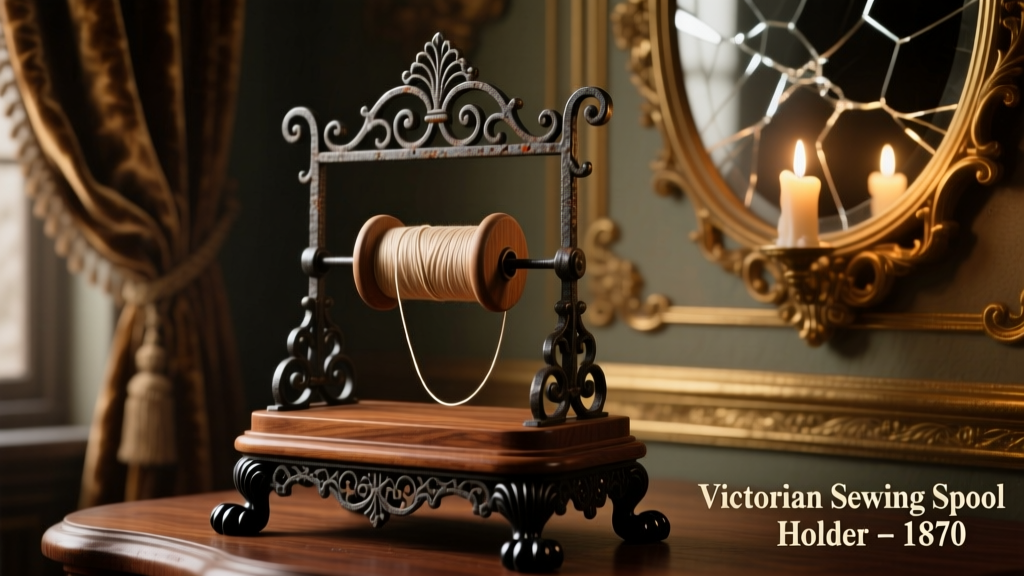
Sewing Spool Holder: Walnut Cabinet with Cast Iron Black Paw Feet — A Victorian 10-Inch Masterpiece
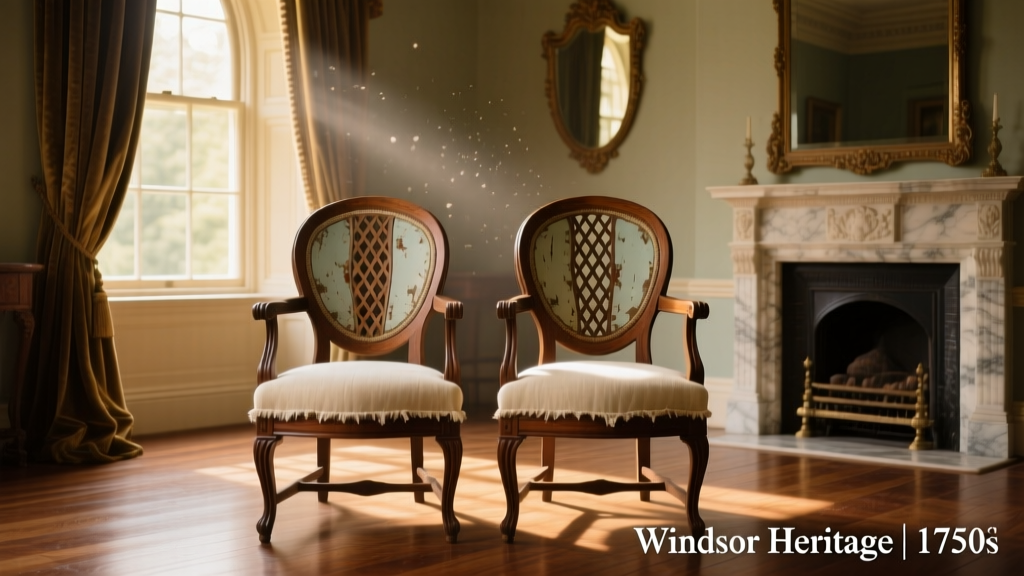
Windsor Chair Pair: Brace-Back Design with Shield-Shaped Seat and Original Paint, c. 1790–1820

Donkey-Head Folk Art Walking Stick: Authenticity, Craftsmanship, and Historical Context of the 35-Inch Antique Cane
The Mahogany Furniture Server with Reverse-Curved Skirt and Molded Edge: A Restoration Specialist’s Deep Dive
Joseph Richardson Jr.: Philadelphia’s Master Silversmith and Furniture Designer of the Federal Era
Rookwood Vase: 'Nude Wood Nymphs in the Forest of Grapes' by Kataro Shirayamadani, 1896 — An 8-Inch Masterpiece of American Art Pottery
Tin Toys, Volume IV: Mechanical Marvels, Post-War Innovation, and the Rise of American Mass Production (1946–1965)

Majolica Urn with Floral Motifs, Lion Masks, and Ram-Head Handles: A Detailed Study of a Victorian Footed Vessel (12½ Inches)
Louis XV Beechwood Chair with Gros Point and Petit Point Arms: A Technical Restoration Profile (c. 1880, 37″ Height)