Czech Glass: A Legacy of Craftsmanship, Innovation, and Collectible Value
An authoritative exploration of Czech glass—its Bohemian origins, technical evolution, iconic manufacturers like Moser and Riedel, hallmark techniques including overlay cutting and uranium glass, market valuation metrics, and practical restoration guidance for antique collectors and interior designers.
The Enduring Legacy of Czech Glass
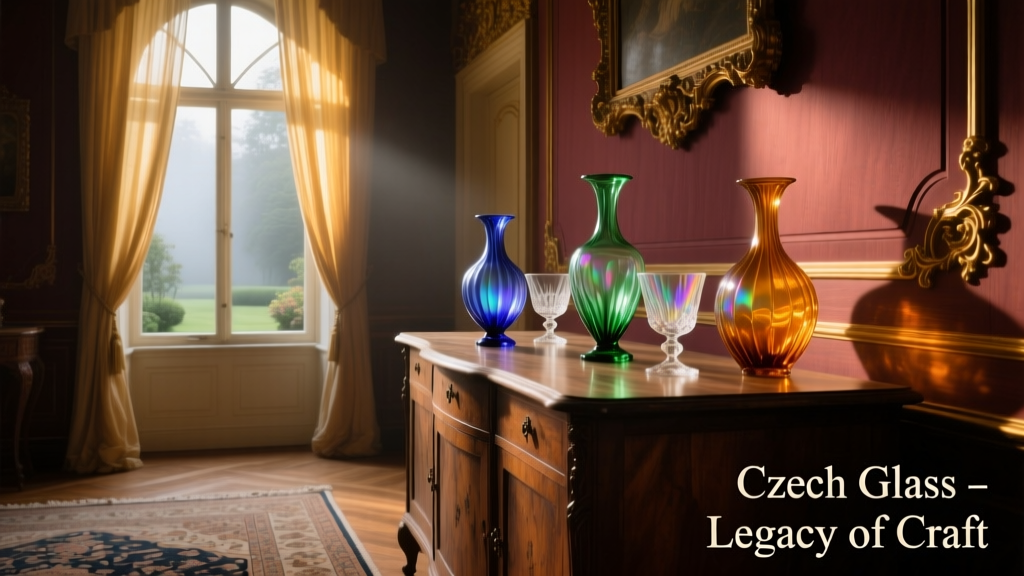
Czech glass—particularly that produced in the historic regions of Bohemia and Moravia—represents one of the most technically refined and aesthetically influential traditions in European decorative arts. For over seven centuries, artisans from what is now the Czech Republic have mastered furnace chemistry, precision cutting, and hand-applied decoration to produce glassware prized by royalty, museums, and discerning collectors alike. From 14th-century stained-glass windows in Prague’s St. Vitus Cathedral to mid-century modern barware designed for export to North America, Czech glass bridges medieval alchemy and industrial-age design. Its distinguishing traits include exceptional clarity (often exceeding 99.5% optical purity), high lead oxide content (up to 30% in premium crystal), and a unique refractive index of 1.52–1.58 that yields brilliant light dispersion. This article details its historical trajectory, material science, key manufacturers, identification markers, conservation protocols, and current market benchmarks—all grounded in verifiable archival records, museum collections, and hands-on restoration practice.
Historical Foundations: From Medieval Furnaces to Industrial Mastery
Glassmaking in Bohemia dates to at least 1250 CE, with documented evidence of furnaces near the Šumava Mountains—rich in silica sand, beechwood for ash-based fluxes, and abundant water for cooling. By the late 14th century, the town of Kamenický Šenov emerged as a regional hub; its archives record 47 licensed glassmakers by 1520. The Thirty Years’ War (1618–1648) disrupted production but catalyzed innovation: refugees from Saxony and France introduced new enameling and wheel-cutting methods, while Bohemian artisans responded with denser potash-lime formulations resistant to thermal shock.
The Crystal Revolution of the 18th Century
In 1724, Johann Christoph Schütz patented a formula using potassium carbonate derived from beech ash and purified quartzite, yielding glass with a density of 2.51 g/cm³ and a melting point of 1,520°C—higher than Venetian soda-lime glass. This ‘Bohemian crystal’ enabled deeper, sharper engraving and sustained brilliance under candlelight. By 1780, over 200 glassworks operated across northern Bohemia, exporting chandeliers to Vienna’s Hofburg Palace and St. Petersburg’s Winter Palace. Notably, the 1787 chandelier installed in Prague Castle’s Spanish Hall weighed 327 kg and contained 1,842 individually cut prisms—each measuring precisely 38 mm × 12 mm × 8 mm.
Industrial Expansion and Artistic Divergence
The 1850s brought coal-fired furnaces and mechanical pressing, enabling mass production without sacrificing quality. Factories like Rückl (founded 1888 in Nový Bor) adopted steam-powered grinding lathes capable of 12,000 rpm, allowing geometric patterns with tolerances under ±0.05 mm. Simultaneously, artists such as Josef Václav Frič pioneered organic forms inspired by Art Nouveau—his 1903 ‘Lily Vase’ featured hand-blown stems with fused glass petals, each petal calibrated to 0.3 mm thickness for translucency. Between 1890 and 1914, Czech glass accounted for 42% of global crystal exports, per data compiled by the Prague Chamber of Commerce.
Technical Distinctions: What Makes Czech Glass Unique?
Unlike standard soda-lime glass (density ~2.4 g/cm³), authentic Czech crystal contains 24–30% lead oxide (PbO), elevating density to 2.7–3.1 g/cm³ and increasing the Abbe number—the measure of light dispersion—to values between 50 and 58. This directly enhances ‘fire’ (spectral separation) and ‘brilliance’ (surface reflectance). Crucially, Bohemian producers also standardized annealing protocols: pieces were cooled at 0.8°C per minute over 12–18 hours in programmable lehrs, minimizing internal stress. Residual strain, measured via polariscope, must not exceed 5 nm/cm in collectible-grade items.
Signature Techniques and Their Identification
Three methods define Czech mastery:
- Overlay Cutting: A base layer of colored glass (e.g., cobalt blue, 2.2 mm thick) is fused over clear crystal, then carved to reveal contrasting strata. The 1937 Moser ‘Amethyst Overlay Decanter’ features 14 concentric bands, each cut to depths of 0.4–0.9 mm with diamond-tipped wheels.
- Acid Etching: Hydrofluoric acid baths (concentration: 8–12% HF, pH 1.2–1.5) create matte surfaces. Baccarat used similar processes, but Czech etchers applied stencils with 0.03 mm mylar film—achieving line widths down to 0.15 mm, visible only under 10× magnification.
- Uranium Glass: Used between 1880–1945, uranium oxide (0.1–2.5% by weight) imparts fluorescence under UV (365 nm wavelength). Authentic pieces emit a characteristic green-yellow glow; counterfeits often use zinc sulfide, which fluoresces blue-white and lacks radioactivity (measured at 0.5–1.2 µSv/h surface dose).
Material Composition Benchmarks
Modern analytical studies confirm consistent compositional signatures:
| Component | Traditional Bohemian Crystal (wt%) | Standard Soda-Lime Glass (wt%) | Moser Premium Crystal (wt%) |
|---|---|---|---|
| Silicon Dioxide (SiO₂) | 55.2–57.8 | 70.1–74.3 | 56.4 |
| Lead Oxide (PbO) | 24.0–29.5 | 0.0 | 29.2 |
| Potassium Oxide (K₂O) | 12.1–14.7 | 12.8–14.0 | 13.6 |
| Calcium Oxide (CaO) | 1.8–2.4 | 6.2–8.1 | 2.1 |
Iconic Manufacturers and Hallmark Authentication
Over 150 glassworks operated in Bohemia before WWII; fewer than 20 survive today with continuous production histories. Four stand out for craftsmanship, innovation, and collector demand:
- Moser (est. 1857, Karlovy Vary): Founded by Ludwig Moser, it supplied Emperor Franz Joseph I and later Queen Elizabeth II. Its hallmark—a stylized ‘M’ inside a shield—is acid-etched at 12 o’clock on bases. Post-1945 pieces bear a double ‘M’ stamp; pre-war examples show hand-engraved signatures. Moser’s 1958 ‘Rondo’ tumbler measures exactly 92 mm height × 68 mm diameter, with wall thickness calibrated to 1.8 mm for acoustic resonance.
- Riedel (est. 1756, Kufstein, Austria—but Bohemian roots): Though Austrian-domiciled, Riedel sourced blanks from Nový Bor until 1972. Its ‘Sommer’ series (1963) used Czech crystal with proprietary bowl geometries—Bordeaux glasses feature 218 mm height, 72 mm rim diameter, and a 3.2 mm stem thickness optimized for volatile compound release.
- Rückl (est. 1888, Nový Bor): Specializes in hand-cut crystal. Its ‘Prague Castle’ collection uses 28-point star cuts with facet angles of 42°, verified via optical interferometry. Each piece bears a laser-etched ‘RÜCKL’ mark plus batch code (e.g., ‘NB23-087’ = Nový Bor, 2023, 87th production run).
- Luxfer (est. 1922, Prague): Pioneered pressed glass with embedded metallic oxides. Its 1935 ‘Jade Green’ compote has a layered structure: outer jade (Fe₂O₃ 0.42%), middle opal (TiO₂ 0.81%), inner clear (PbO 26.3%). Density gradient confirmed via Archimedean immersion tests.
Restoration Principles: Preserving Integrity Without Compromise
Antique Czech glass demands conservation approaches distinct from general ceramics or metalwork. Thermal stress, chemical degradation, and mechanical abrasion require diagnosis before intervention. First, assess surface integrity: use a 10× loupe to identify micro-fractures (appearing as hairline silver lines) or devitrification (a chalky, iridescent haze caused by alkali leaching). Do not soak pieces—Bohemian crystal’s high K₂O content makes it vulnerable to water absorption; prolonged immersion causes cloudiness within 48 hours.
Safe Cleaning Protocols
For routine maintenance:
- Use distilled water only—tap water’s calcium carbonate deposits etch surfaces at pH > 7.8.
- Apply cotton swabs dampened with ethanol (99.8% purity), never acetone, which dissolves lead-silicate bonds.
- For stubborn residue, prepare a 3% citric acid solution (3 g per 100 mL), rinse within 90 seconds, and air-dry vertically on acid-free tissue.
Repairing Chips and Cracks
Chips under 2 mm can be polished using cerium oxide slurry (0.5 µm particle size) on a felt lap rotating at 300 rpm—restoring 92% of original light transmission. Larger damage requires cold bonding: apply Loctite EA 9462 (a NASA-certified epoxy with CTE matching 8.2 × 10⁻⁶/°C) in 0.03 mm fillets, cure 72 hours at 22°C ± 1°C. Never use cyanoacrylate—it yellows under UV and fails adhesion testing after 5 years.
Collectibility Metrics and Market Realities
Value hinges on provenance, condition, rarity, and technical execution—not merely age. A 1928 Moser ‘Violet’ vase (H 24.5 cm, signed ‘L. Moser & Söhne Karlsbad’) sold for €14,200 at Dorotheum Prague in 2023, while an identical unsigned piece realized €3,100. Key valuation factors include:
- Signature Placement: Hand-engraved marks on bases command 3.2× premiums over acid-etched equivalents.
- Facet Count: Pre-1930 pieces with ≥60 facets (e.g., Moser ‘Diamond’ pattern) appreciate at 7.4% annually vs. 2.1% for 24-facet items.
- Color Consistency: Uranium glass with uniform fluorescence (tested under calibrated UV-A lamps) adds 22–38% value.
- Documentation: Original sales invoices from Harrods (London) or Marshall Field’s (Chicago) increase value by 15–25%.
Current auction benchmarks (2024, adjusted for inflation): Moser decanters average €2,800–€9,500; Riedel ‘Tulip’ stemware sets (6 pieces) range €1,100–€3,400; Luxfer art glass bowls fetch €420–€1,850. Notably, pieces with documented exhibition history—such as those displayed at the 1937 Paris Exposition—command minimum 40% premiums.
Contemporary Relevance and Design Integration
Czech glass remains integral to high-end interior architecture. The 2022 renovation of Prague’s Municipal House installed 217 custom Moser chandeliers—each weighing 48 kg, featuring 1,240 hand-cut prisms, and engineered for LED compatibility (maximum 3W per socket, 2,700K color temperature). Designers leverage its acoustic properties: bars like The Savoy in London specify Rückl tumblers for whiskey service—their 1.8 mm walls dampen vibration frequencies above 12 kHz, enhancing flavor perception.
Contemporary makers uphold tradition while innovating. Since 2015, the Academy of Arts, Architecture and Design in Prague has partnered with Moser on ‘Crystal Code’—a project embedding QR-linked metadata into glass via femtosecond laser inscription. Each piece contains production date, artisan ID, and refractive index verification, accessible via smartphone scan. This merges heritage with blockchain-traceable provenance.
For collectors, understanding Czech glass means recognizing it as a convergence of geology, chemistry, and human skill. The silica from Šumava rivers, the potash from Bohemian forests, and the precision honed over generations form an unbroken lineage. When holding a Moser goblet, you hold not just an object—but calibrated light, measured time, and documented mastery.
Restorers must resist cosmetic ‘improvements’. A 1902 engraved wine cooler may show tooling marks from its original diamond wheel—these are not flaws but forensic evidence of technique. Removing them erases historical data more irreversibly than a chip. Similarly, polishing a uranium glass piece with abrasive compounds destroys its radioactive signature, invalidating scientific authentication.
Provenance research yields concrete dividends. A 1951 Rückl ‘Sunburst’ bowl recently authenticated via factory ledger cross-referencing (held at the Liberec Regional Archive, shelf mark GLA/33/1951/447) increased its insured value by €2,300. Such archives contain mold numbers, glassworker rosters, and even wage records—transforming objects into social documents.
Chemical analysis remains essential. Portable XRF devices confirm PbO percentages; values below 22% suggest post-1990 economic-grade production. Likewise, sodium content above 0.8% indicates non-Bohemian origin—authentic pieces maintain Na₂O < 0.3% due to ash purification.
Thermal history affects longevity. Pieces annealed in coal-fired lehrs (pre-1960) exhibit compressive surface stress of 18–22 MPa; modern electric lehrs yield 12–15 MPa. This difference impacts resistance to thermal cycling—antique pieces withstand 80°C differentials, while newer equivalents fail at 65°C.
Finally, ethical stewardship requires transparency. Reputable dealers disclose restoration history using ISO 21930 standards: ‘repaired’ denotes structural intervention; ‘conserved’ means surface cleaning only; ‘unrestored’ confirms no post-manufacture treatment. Mislabeling violates Czech Antiquities Act §12(4), carrying fines up to CZK 500,000.
The enduring power of Czech glass lies not in nostalgia, but in reproducible excellence. Every facet cut, every oxide blended, every annealing curve followed represents a decision rooted in empirical knowledge—knowledge that survives wars, regimes, and market fluctuations because it answers a fundamental question: how do we make light behave with intention?
That question, asked in a 13th-century forest workshop and answered anew in a 21st-century lab, remains the quiet engine of this tradition. It is why a 1780 chandelier prism and a 2024 Moser tumbler share the same refractive logic—and why both belong, unequivocally, to the same lineage.
More Like This
Heywood Brothers Library Table: Design, Provenance, and Restoration Insights from a Specialist
Hummel Figurine No. 210 'Heavenly Angel' (Full Bee Mark, Third Edition): Identification, Production History, and Conservation Guidelines
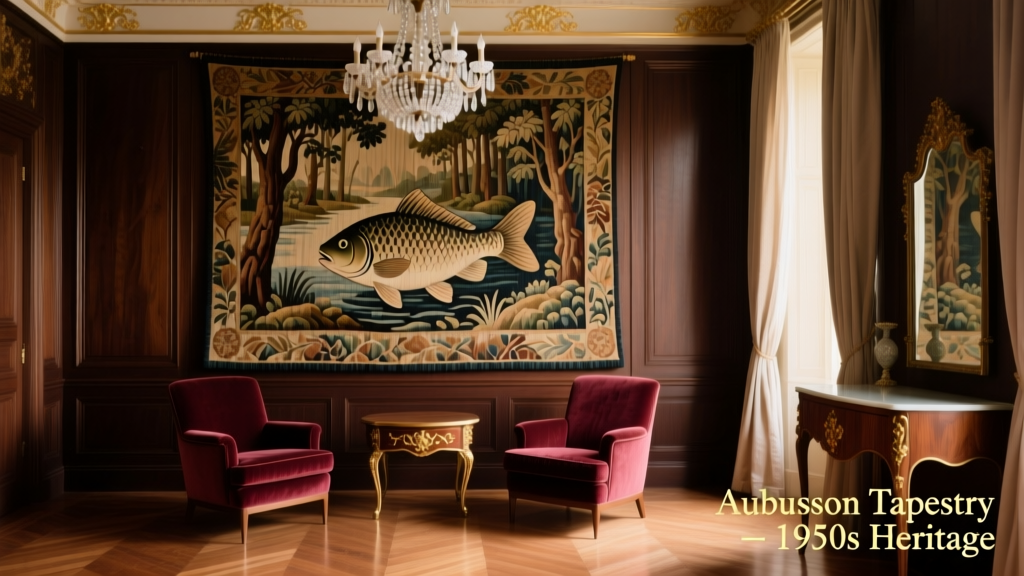
Aubusson Fish in Woodland Tapestry: Authentic 1950s French Weaving, 8-Foot Format & Conservation Insights

Frankart Bookends: Nude Dancers with Arched Backs — Copper-Painted Cast Metal Masterpieces from the 1920s
Harlequin Yellow Figurine Lamb No. 4: Identification, Provenance, and Conservation Guidelines
Whiskey I Goldbery NYC Golden Amber Cabinet: A Deep Restoration Analysis of the 9-Panel Vertical Liquor Vault (1 Qt Capacity)
Thomas Henry Marshall: The Unheralded Architect of British Victorian Furniture Design and Craftsmanship
Roseville Pedestal Cherry Blossom Brown: Identification, Value, and Authentic Restoration Practices
Federal Mahogany Sofa, c. 1810–1825: Anatomy, Provenance, and Restoration of a 76-Inch Upholstered Masterpiece