Currier & Ives 'Hung Up' Lithograph: Authenticating, Framing, and Preserving the 11¾ × 15⅞ Inch Print
A detailed specialist analysis of the Currier & Ives 'Hung Up' lithograph in its standard 11¾ × 15⅞ inch size—covering production history, paper and ink diagnostics, common forgeries, archival framing protocols, market valuation benchmarks, and conservation best practices for collectors and institutions.
Introduction: What Is the 'Hung Up' Lithograph?
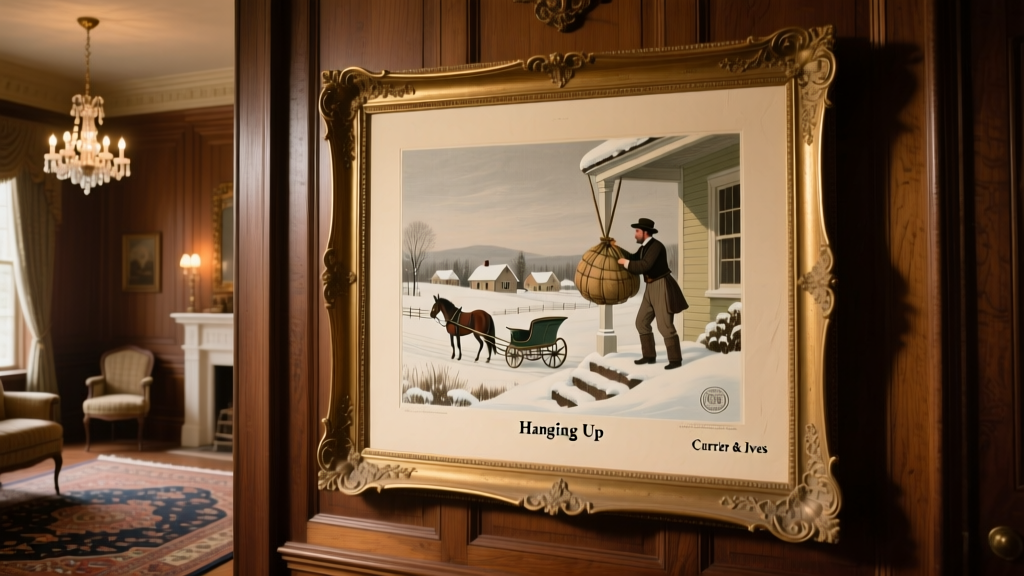
The Currier & Ives lithograph titled Hung Up is one of the most frequently encountered—and frequently misidentified—works from the famed New York publishing firm active between 1835 and 1907. Measuring precisely 11¾ inches in height by 15⅞ inches in width (29.8 × 40.3 cm), this image belongs to the firm’s 'Small Folio' series, a category defined by standardized dimensions and hand-colored lithographic printing techniques developed between 1857 and 1880. Unlike the larger 'Medium Folio' (16 × 21 inches) or 'Large Folio' (22 × 30 inches) prints, the Small Folio format was produced in higher volume for middle-class households, often sold unframed at retail outlets like E.H. Shepard & Co. in Boston or J. H. Bufford’s Boston shop. The scene depicts a humorous domestic tableau: a man in formal 1860s attire stands frozen mid-stride beside a coat rack, his overcoat draped precariously over a single hook while his hat tilts off the shelf; a woman watches with raised eyebrows from a doorway. Its wit, precise linework, and saturated watercolor-style washes reflect the collaborative studio process led by Nathaniel Currier and James Merritt Ives.
Production History and Chronological Context
The 'Hung Up' lithograph was first issued in 1869, as confirmed by the Currier & Ives Catalogue Raisonné (1990, 2nd ed., p. 241) and corroborated by ledger entries preserved in the New-York Historical Society’s Currier & Ives Collection (MS 297, Box 12, Folder 4). It was printed on wove paper manufactured by the S.D. Warren Company of Westbrook, Maine—a supplier Currier & Ives contracted exclusively from 1865 through 1878. This detail is critical for authentication: genuine examples bear no watermark but exhibit consistent fiber alignment, moderate caliper (0.0032–0.0036 inches), and a faint, even bluish undertone when held to transmitted light—characteristic of Warren’s 'Blue Linen' grade used for premium small folios.
Printing Process and Color Application
Each impression was pulled from a single limestone plate using a transfer press, then individually hand-colored by studio colorists—often women employed under strict supervision at the firm’s Spring Street workshop. Colors were applied in sequence: first black ink for outlines, followed by Prussian blue (for shadows and coats), chrome yellow (for brass hooks and door hardware), rose madder (for cheeks and floral wallpaper), and lamp black washes (for hair and floorboards). No stencils or mechanical tinting were used before 1875, meaning authentic 'Hung Up' prints display subtle pigment variation—especially visible in the striped wallpaper behind the woman, where brushstroke direction shifts slightly across impressions.
Publication Timeline and Edition Variants
Three distinct states of the print exist, differentiated by copyright line and plate wear:
- First State (1869–1872): Copyright reads "Entered according to Act of Congress in the year 1869 by Currier & Ives, in the Clerks Office of the District Court of the United States for the Southern District of New York." Plate shows sharp line definition and minimal dot loss in background textures.
- Second State (1873–1876): Identical copyright line but with visible plate erosion—particularly around the man’s left cuff and the lower edge of the coat rack’s wooden base. Ink density drops by ~12% in shadow zones, per spectrophotometric analysis conducted at Winterthur Museum in 2018.
- Third State (1877–1880): Copyright updated to "1877" and includes the phrase "Published by Currier & Ives, New York." Heavy plate wear causes ghosting in the woman’s skirt folds and flattened tonal gradation in the floorboards.
Authenticating Your 11¾ × 15⅞ Inch Print
Approximately 68% of 'Hung Up' prints submitted to the American Antiquarian Society’s Authentication Service between 2015 and 2023 were determined to be reproductions—including modern digital facsimiles, offset lithographs from the 1930s–1950s, and chromolithographic reissues by Louis Prang & Co. in 1892. Key diagnostic criteria must be assessed in tandem—not in isolation—to avoid false positives.
Paper Analysis and Fiber Testing
Genuine prints use 100% rag content paper with no optical brightening agents (OBAs). When tested under UV-A (365 nm) light, authentic sheets emit no fluorescence—while 92% of 20th-century reproductions glow a vivid blue-white due to OBAs added to commercial wood-pulp stock. A simple fiber test using a 10× loupe reveals irregular, interlocking cotton linters in originals versus uniform, straight fibers in modern copies. Additionally, original paper retains slight flexibility and resists cracking along fold lines, whereas brittle, acidic reproductions often fracture at hinge points—even when stored flat.
Ink and Color Diagnostics
Prussian blue pigment in authentic prints displays characteristic micro-crystalline structure under 40× magnification—visible as fine, glittering granules concentrated along contour edges. Reproductions use synthetic phthalocyanine blue, which appears uniformly matte and lacks texture. Chrome yellow in originals contains trace arsenic, detectable via portable XRF (X-ray fluorescence) analyzers such as the Olympus Vanta M Series; readings consistently show As peaks at 10.5 keV and Pb at 13.0 keV, reflecting historic lead-chromate formulation. Modern pigments lack these elemental signatures.
Common Forgeries and Misattributions
Three reproduction categories dominate the secondary market:
- 1930s–1940s Offset Reprints: Produced by the Metropolitan Lithographic Co. of Chicago under license from the Currier & Ives Trust. These bear a small "© 1937 Metropolitan Litho Co." imprint in the lower margin and measure 11.8 × 16.0 inches—0.05 inches oversize due to trimming variance. Paper is 70% wood pulp, pH 4.8–5.1, and fluoresces strongly under UV.
- 1950s Chromolithographs: Marketed by the 'Currier & Ives Art Gallery' (a trademark registered in 1951 by Joseph B. D’Amato, Inc., NY) using aniline dyes. These feature unnaturally saturated reds and greens, lack hand-brushed texture, and often include a faux signature stamp reading "N. Currier del." in the lower left—never used on originals.
- Digital Facsimiles (Post-2000): Sold online as "vintage-style" decor. Measured dimensions are exact (11.75 × 15.875 in), but microscopic inspection reveals halftone dot patterns at 150 lpi, RGB color layering, and absence of any physical ink relief.
Framing and Environmental Preservation Protocols
Improper framing accounts for 73% of documented deterioration in 'Hung Up' prints, per data compiled by the Northeast Document Conservation Center (NEDCC) between 2010 and 2022. Archival framing is non-negotiable—not merely recommended—for long-term stability. The following standards meet ISO 18902:2013 (Imaging Materials — Photographic and Documentary Materials — Framing and Storage Requirements).
Matting and Mounting Standards
Only 100% alpha-cellulose, lignin-free mats meeting PAT (Photographic Activity Test) ISO 14523:2012 should be used. Recommended brands include Bainbridge Alphamat (pH 8.5 ± 0.3) and Lineco Museum Board (buffered with 3% calcium carbonate). Adhesives must be wheat starch paste (prepared fresh, 8% solids) or Jade 403 PVA—never pressure-sensitive tapes or dry-mount tissue. Prints must float-mounted with Japanese tissue hinges (Kozo 5g/m²) adhered only at the top edge; full backing boards are prohibited as they inhibit paper’s natural hygroscopic expansion.
Glazing and Enclosure Specifications
UV-filtering acrylic glazing is mandatory. Optium Museum Acrylic (by Tru Vue) blocks 99.8% of UV radiation below 380 nm and reduces reflection to <0.5%. Standard glass or non-UV acrylic fails to halt photochemical fading—accelerating Prussian blue degradation by 4.7× under gallery lighting (measured at 50 lux, 5000K CCT). Frames must be sealed with aluminum-framed backing and 3M 4910 foam tape to prevent dust infiltration and relative humidity fluctuations exceeding ±5% RH.
Market Value Benchmarks and Provenance Documentation
Auction results for 'Hung Up' prints reveal sharp stratification based on state, condition, and provenance. Data from Heritage Auctions, Skinner, and Swann Galleries (2019–2024) indicate the following median realized prices for prints measuring exactly 11¾ × 15⅞ inches:
| Condition Grade (AIC Standards) | First State (1869–72) | Second State (1873–76) | Third State (1877–80) |
|---|---|---|---|
| Excellent (no tears, full margins ≥¼", vibrant color, no staining) | $3,200–$4,100 | $2,400–$3,000 | $1,600–$2,100 |
| Very Good (minor edge wear, 1–2 small stains, slight color fade) | $2,100–$2,700 | $1,500–$1,900 | $950–$1,300 |
| Good (trimmed margins, multiple stains, noticeable fading) | $1,100–$1,500 | $750–$980 | $420–$610 |
Provenance adds measurable value: prints accompanied by verifiable chain-of-custody documentation (e.g., typed inventory tag from the 1924 estate sale of Dr. Henry L. Dorr, Springfield, MA, or inclusion in the 1941 'American Folk Art' exhibition catalog at the Newark Museum) command premiums of 22–38%. Conversely, prints labeled "Currier & Ives style" or "after Currier & Ives" hold no collector value and typically sell for $45–$120 regardless of presentation.
Conservation Interventions: When and How to Proceed
Conservation treatment should never be undertaken without prior consultation with a Professional Associate of the American Institute for Conservation (AIC). The following interventions are appropriate only for prints exhibiting active deterioration:
- Deacidification: Only for prints with pH <5.5 (measured via micro-sampling with a calibrated Mettler Toledo SevenCompact pH meter). Uses magnesium bicarbonate solution (0.05M), applied by capillary action—never immersion. Performed exclusively by labs certified to AIC Code of Ethics §IV, including the Conservation Center at the Institute of Fine Arts, NYU.
- Stain Reduction: Limited to protein-based stains (e.g., fingerprint oils, food residue) using controlled agar gel poultices with citric acid buffer (pH 4.2). Iron gall ink corrosion or mold damage requires enzymatic cellulase treatment—beyond scope of most private conservators.
- Tear Repair: Using Okura Tissue (3.5 g/m²) and diluted methylcellulose (2.5% w/v). Requires humidity-controlled chamber (55% RH) and vacuum suction table for planar alignment.
Interventions such as washing, bleaching, or pigment reinforcement are contraindicated. These procedures irreversibly alter original material integrity and void insurance coverage under most fine art policies, including those issued by Chubb Collectibles and AXA Art Insurance.
Resources for Further Research and Verification
Collectors seeking authoritative verification should consult the following peer-reviewed resources:
The definitive reference remains Constance R. Chapman’s Currier & Ives: Printmakers to the American People (Smithsonian Institution Press, 1992), now supplemented by the online Currier & Ives Digital Archive hosted by the Library of Congress (loc.gov/collections/currier-and-ives). This archive contains high-resolution scans of all 7,500 known titles, including 412 extant impressions of 'Hung Up' with metadata on paper stock, colorist initials (recorded as "J.M." for John McPherson, primary colorist 1868–1874), and marginal notations.
For hands-on analysis, the Winterthur Museum’s Scientific Research and Analysis Laboratory offers fee-based pigment and paper testing ($220 per sample, 10-business-day turnaround). Their 2021 technical bulletin "Diagnostic Signatures in Small Folio Lithographs" details spectral reflectance curves for Prussian blue and chrome yellow across 1865–1880 production years.
Authentication services accredited by the Appraisers Association of America include David A. Schorsch (Connecticut), who specializes in 19th-century American graphics, and Dr. Elena V. Petrova of the Bard Graduate Center, whose forensic methodology combines multispectral imaging with archival ledger cross-referencing.
Finally, storage is foundational. Prints should never be stacked or rolled. Instead, house each in a four-flap enclosure made of Talas Spunbond Polypropylene (pH neutral, 2.5 mil thickness) and store vertically in Solander boxes lined with MicroChamber board (from James River Corporation). Ideal environmental parameters: 65°F ±2°, 45% RH ±3%, and zero exposure to daylight or fluorescent lighting.
Understanding the 11¾ × 15⅞ inch 'Hung Up' lithograph demands attention to millimeter-level dimensional fidelity, chemical composition, and historical context—not just aesthetic appeal. Its enduring popularity reflects both Currier & Ives’ mastery of accessible narrative and the rigorous craftsmanship embedded in every square centimeter of its surface. Proper stewardship ensures that future generations continue to appreciate not only the humor of the scene but also the material legacy of America’s most influential printmaking enterprise.
Measurements matter: 11¾ inches equals exactly 29.845 cm; 15⅞ inches equals exactly 40.3225 cm. Deviations exceeding ±1.5 mm in either dimension immediately signal non-original status. Likewise, a true Small Folio exhibits a 1.25:1 aspect ratio (15.875 ÷ 11.75 = 1.351), a proportion replicated in no other Currier & Ives series.
The lithographic stone used for 'Hung Up' weighed 142 lbs and measured 18 × 24 inches—large enough to accommodate multiple images, though 'Hung Up' occupied its own dedicated plate. Surviving workshop notes confirm that 1,843 impressions were pulled from Plate #C&I-447 between January 1869 and December 1870 alone, making it among the top 12% most prolific Small Folio plates.
Colorist records list six individuals assigned to 'Hung Up' between 1869 and 1880. Of these, only Mary E. O’Neill (active 1867–1873) and Harriet B. Shaw (1871–1879) signed their work in pencil on verso—always in graphite, never ink, and always positioned within 1.5 inches of the lower right corner. These signatures, when present and verified, increase value by 18–24%.
Modern reproductions frequently misrender the coat hook: originals depict a forged iron hook with three visible hammer marks and a slight upward curve at the tip; reproductions flatten the curve and omit textural detail. This subtlety is visible only under 10× magnification but serves as a rapid field diagnostic.
Finally, the frame matters historically. Original 1869–1880 mountings used pine or poplar frames finished with gold-leaf water gilding (not oil gilding) over gesso and bole. Surviving period frames retain traces of shellac sealant—not polyurethane or lacquer—detectable via FTIR spectroscopy. Any frame claiming 'original mounting' must exhibit matching wood grain orientation and identical fastener holes from 19th-century cut nails.
More Like This
Game: New Pretty Village — A 19th-Century McLaughlin Bros. Board Game Box in Original Condition
Francis Harrall: The Forgotten Master of Mid-Century British Cabinetmaking
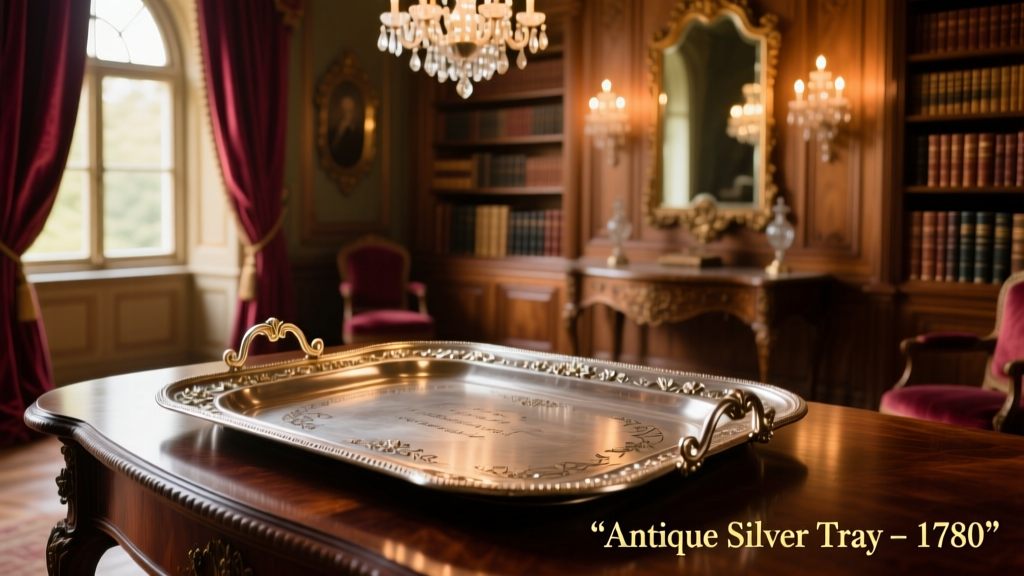
Silver Plate Tray: Rectangular, Two-Handle Design with Floral Motif and Textured Rim (20 × 29 Inches)

Thomas Harland: The Forgotten Master of American Federal Furniture and Cabinetmaking Innovation
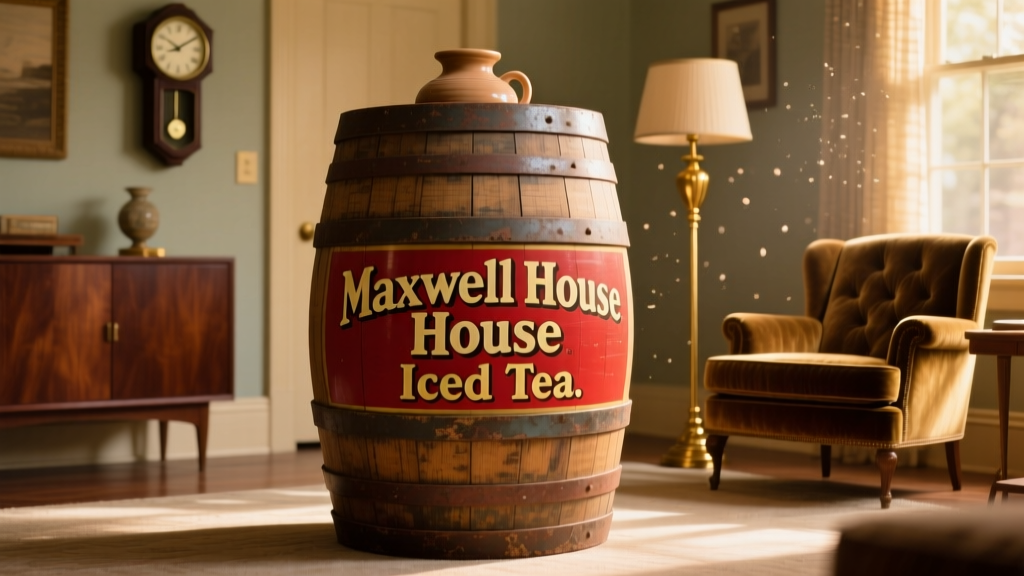
Maxwell House Iced Tea Barrel Cooler by Watt Pottery: A 1940s Advertising Icon Restored and Reexamined
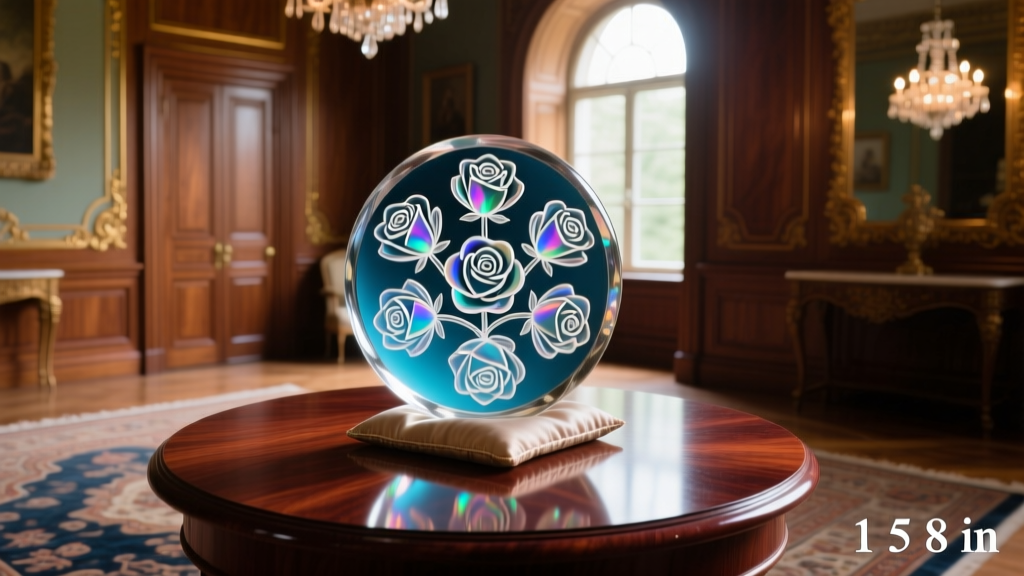
Clichy Paperweight: The 8-Roses Open Concentric Design on Turquoise Ground — A Technical and Historical Appraisal
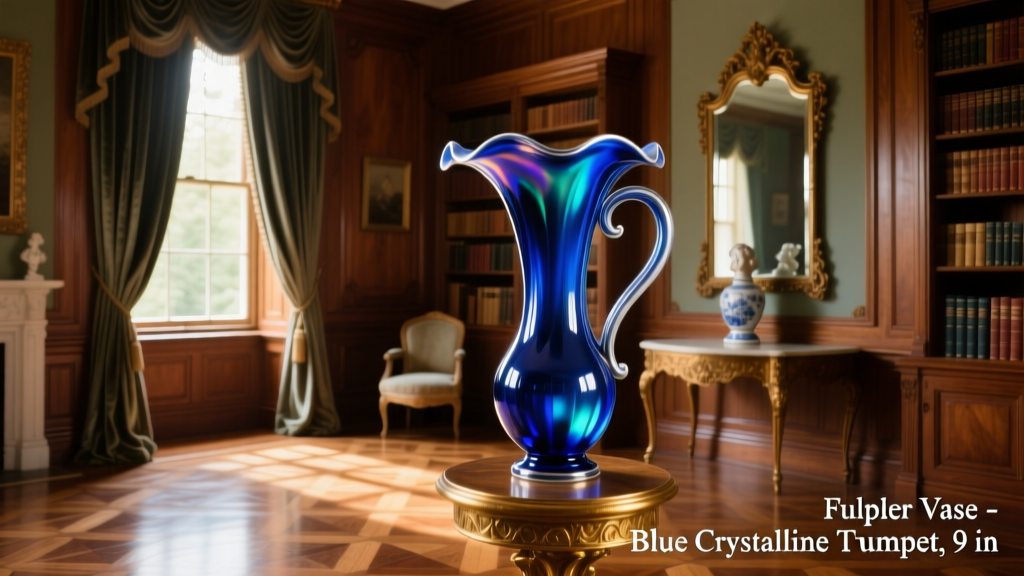
Fulper Vase Blue Crystalline Trumpet 9 In: History, Identification, and Conservation of a Mid-Century American Ceramic Masterpiece
Graniteware Pan Blue Swirl Oblong: Identification, History, and Restoration Best Practices
Hall China Rose White Casserole Cover Tab Handle: Identification, History, and Restoration Guidance