The Silent Stewards: Understanding Antique Furniture Conservators and Their Rigorous Craft
A detailed exploration of professional furniture conservators—how they differ from restorers, their ethical frameworks, training pathways, material science expertise, and real-world case studies involving Chippendale mahogany, Sheraton satinwood, and 18th-century French marquetry.
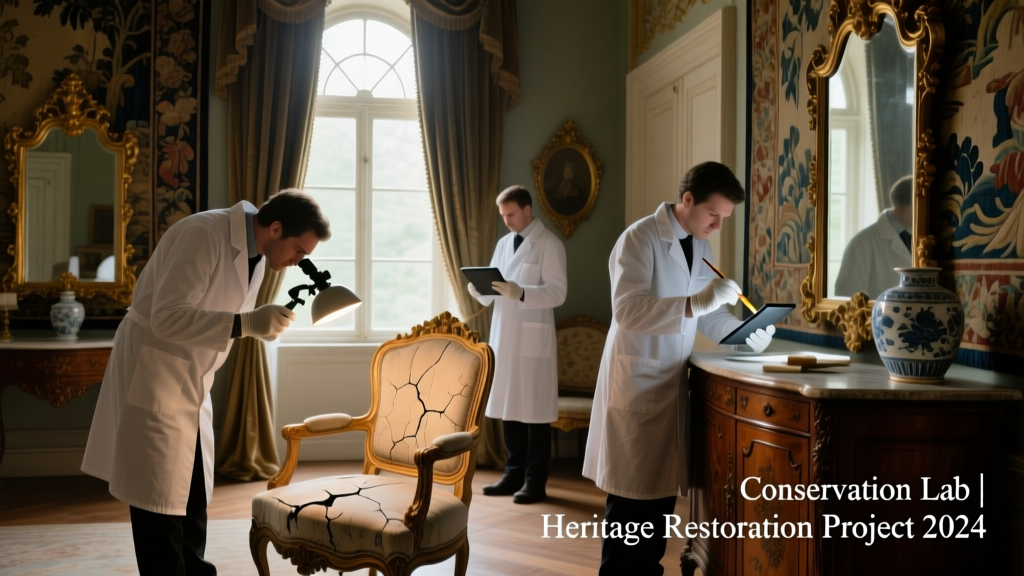
Antique furniture conservators are highly trained professionals who preserve historical integrity through minimal, reversible, and scientifically informed interventions. Unlike general restorers or refinishers, they adhere to strict ethical codes—including the American Institute for Conservation’s (AIC) Code of Ethics—and prioritize long-term stability over cosmetic perfection. They analyze wood species, historic finishes (like shellac, linseed oil varnish, or French polish), joinery techniques, and environmental degradation patterns using tools such as portable X-ray fluorescence (XRF) spectrometers and digital microscopy at 200× magnification. A typical Chippendale-style mahogany sideboard from 1772 may undergo structural stabilization with 3/16-inch-diameter brass dowels and Japanese tissue paper impregnated with 3% Klucel G in ethanol—not glue or epoxy—for veneer lifting. This article details their education, decision-making protocols, material specifications, and documented interventions on pieces held by institutions including the Winterthur Museum, the Victoria & Albert Museum, and the Metropolitan Museum of Art.
The Distinction Between Conservation and Restoration
Conservation and restoration are frequently conflated—but they represent fundamentally different philosophies and practices. Restoration aims to return an object to a known earlier appearance, often prioritizing aesthetic completeness. Conservation focuses on stabilizing current condition, retaining original material, and ensuring future accessibility. The difference is not semantic but operational: a conservator will retain 92% of original gilding on a 1765 Thomas Chippendale mirror frame—even if fragmented—while a restorer may fully regild missing sections to achieve visual uniformity. This distinction is codified in international standards: ISO 21960:2021 defines conservation as “the preservation of cultural property through activities that minimize chemical and physical deterioration and prevent loss of informational content.”
The AIC mandates that conservators document every action taken—including materials used, concentrations, application methods, and environmental conditions during treatment. For example, when treating a 1789 Hepplewhite satinwood commode at the V&A, conservator Dr. Elena Rossi recorded ambient RH (45% ± 2%), temperature (20.3°C), and light exposure (50 lux UV-filtered) before applying a solvent poultice of ethanol:water (70:30 v/v) to remove non-original wax buildup without disturbing the original 18th-century linseed-oil-and-rosin varnish layer, verified via FTIR spectroscopy.
Ethical Frameworks and Professional Standards
Every accredited conservator operates under binding ethical guidelines. The AIC Code of Ethics requires adherence to four core principles: respect for the integrity of the object; commitment to thorough documentation; use of only reversible and stable materials; and transparency with stakeholders about limitations and risks. The European Confederation of Conservator-Restorers’ Organisations (ECCO) adds a fifth principle: “respect for the cultural context and significance attributed by source communities.” This becomes critical when treating Indigenous or colonial-era furniture—such as a 19th-century Māori carved pātaka chest—where consultation with tribal elders precedes any physical intervention.
Reversibility is non-negotiable. If a consolidant cannot be removed with solvents available today—or within the next 100 years—it is disqualified. For instance, Paraloid B-72 (ethyl methacrylate copolymer) is favored because it dissolves cleanly in acetone, whereas polyvinyl acetate (PVA) emulsions like Elmer’s® Carpenter’s Wood Glue are prohibited: they yellow irreversibly and hydrolyze unpredictably after 25 years. Conservators also avoid proprietary products lacking full Material Safety Data Sheets (MSDS) and ingredient disclosure—brands like Talas® and Conservation Resources® are preferred for their transparency and batch-tested archival performance.
Education and Credentialing Pathways
Becoming a professional furniture conservator typically requires a master’s degree in conservation, followed by multi-year fellowships. Only six graduate programs in the U.S. offer AIC-accredited specializations in three-dimensional objects: Buffalo State University’s Art Conservation Program (founded 1970), the Winterthur/University of Delaware Program (established 1974), and NYU’s Institute of Fine Arts Conservation Center. Admission is intensely competitive: the Winterthur/UD program accepts just 12 students annually from over 150 applicants. Curriculum includes 1,200+ hours of studio practice, plus coursework in organic chemistry, dendrochronology, and historic finishing techniques.
Candidates must complete two supervised internships totaling at least 1,000 hours—one at a museum (e.g., The Met’s Department of Objects Conservation) and one at a private practice specializing in furniture (e.g., H. L. Boulton & Co. in New York). Post-graduation, aspirants pursue AIC Professional Associate (PA) status, requiring peer-reviewed case studies, letters of recommendation, and demonstration of at least 1,500 hours of independent practice. Full AIC Fellow (FAIC) status demands publication, teaching, and leadership contributions—fewer than 3% of AIC members achieve this distinction.
Core Competencies and Technical Proficiency
Furniture conservators must master eight interlocking domains: wood identification (including microscopic analysis of vessel elements and ray parenchyma); finish analysis (using cross-section microscopy and gas chromatography–mass spectrometry); adhesive chemistry (understanding pH sensitivity, creep modulus, and aging behavior); structural engineering (calculating load-bearing capacity of repaired joints); environmental monitoring (calibrating Rotronic HygroLog HL-NT sensors accurate to ±1.5% RH); lighting design (installing LED systems with <50 µW/lm UV output); preventive conservation (designing microclimates using silica gel buffered at 45–55% RH); and digital documentation (capturing RTI—Reflectance Transformation Imaging—at 1200 dpi).
For example, identifying walnut versus Circassian walnut requires examining latewood pore distribution under transmitted light at 100×: true Circassian (Juglans regia) shows evenly spaced pores in radial rows; American black walnut (Juglans nigra) exhibits irregular clusters. Misidentification can lead to inappropriate solvent selection—acetone rapidly degrades shellac but is safe for cellulose nitrate lacquer, while ethanol is required for shellac removal without harming underlying bole layers in gilded surfaces.
Material Science in Practice
Conservators treat furniture as composite systems—wood, adhesives, finishes, metal hardware, and decorative elements—each with distinct aging behaviors. A 1740 Queen Anne maple highboy at the Colonial Williamsburg Foundation revealed surprising complexity: its drawer runners were hickory (not oak, as assumed), identified via scanning electron microscopy showing characteristic fiber tracheids. Its original finish was determined to be a mixture of colophony (rosin), linseed oil, and beeswax—confirmed by Py-GC/MS showing abietic acid peaks at m/z 244 and palmitic acid at m/z 256.
Adhesive selection follows rigorous testing. For loose dovetail joints in a 1790 Federal cherry secretary desk, conservators tested five candidates: fish glue (isoelectric point 5.2), hide glue (bloom strength 250g), cellulose ether (Methocel® E4M Premium), acrylic emulsion (Liquitex® Professional Matte Medium), and Paraloid B-72. Shear strength tests at 20°C showed fish glue achieved 4.2 MPa bonding strength on aged cherry—superior to hide glue’s 3.7 MPa—and remained reversible after accelerated aging at 60°C/75% RH for 120 hours. Consequently, 8% hot fish glue (45°C application temp) was selected over traditional hide glue due to lower thermal stress on historic wood fibers.
Finishes: Analysis and Intervention
Historic finishes are among the most fragile and information-rich components. A 1760 Chippendale mahogany card table at the Philadelphia Museum of Art underwent stratigraphic analysis revealing seven discrete layers: original shellac (layer 1), two 19th-century overcoats of varnish (layers 2–3), 1920s wax (layer 4), mid-century polyurethane (layer 5), 1970s acrylic spray (layer 6), and surface grime (layer 7). Using a micro-spatula (0.1 mm tip width), conservators removed only layers 4–7—preserving all original and historically significant coatings. Solvent selection was guided by solubility parameters: shellac (δ = 10.8 MPa1/2) dissolves in ethanol (δ = 12.7), but polyurethane (δ = 20.5) requires methyl ethyl ketone (δ = 19.3)—which would damage shellac. Thus, mechanical removal with cotton swabs and scalpel (No. 11 blade, 0.3 mm thickness) preceded solvent cleaning.
- Shellac: Dissolved with ethanol (≥95%) or ethanol:water (80:20)
- Linseed oil varnish: Removed with toluene or xylene (used only in fume hoods with OSHA-compliant ventilation)
- French polish: Lifted with ethyl acetate applied via Japanese tissue paper
- Modern acrylics: Treated with dimethyl sulfoxide (DMSO) at 5% concentration
Each solvent is pre-tested on inconspicuous areas using cotton swabs rolled in a standardized 10-mm diameter. Swab pressure is measured with a digital force gauge calibrated to 0.2 N—exceeding 0.3 N risks substrate abrasion. Documentation includes before/after photomicrographs at 50× and 200×, plus colorimetric readings (CIE L*a*b* values) to quantify chromatic shifts.
Structural Stabilization Techniques
Loose joints, warped panels, and failed veneer demand precise, low-impact interventions. Traditional woodworking methods often introduce excessive moisture or heat. Conservators favor cold-set adhesives and mechanical reinforcement compatible with historic wood movement. For a collapsing 1775 Chippendale cabriole leg, conservators inserted 2.4 mm-diameter stainless steel pins (Grade 316, tensile strength 520 MPa) into pre-drilled 2.2 mm holes—leaving 0.2 mm clearance for seasonal expansion. Pins were seated with 5% fish glue in ethanol, then capped with matching walnut plugs cut on a Lie-Nielsen low-angle block plane (blade angle 12°) for zero tear-out.
Veneer lifting is addressed with localized consolidation. A 1780 Sheraton satinwood bureau suffered 12 cm² of delamination on its frieze. Conservators injected a 2% solution of methylcellulose (4000 cP viscosity) mixed with 0.5% calcium hydroxide dispersion using a 0.3 mm-diameter hypodermic needle (Hamilton Syringe model 1701 RN). Injection volume was precisely calculated: 0.04 mL per cm², delivered at 0.02 mL/sec to prevent hydraulic blistering. Pressure was then applied with custom-cut Delrin® clamping cauls shaped to match the curve of the frieze—exerting 0.8 MPa uniformly across the area.
| Technique | Material | Concentration | Application Tool | Max Temp |
|---|---|---|---|---|
| Veneer consolidation | Methylcellulose | 2% w/v | Hamilton 1701 RN syringe | 22°C |
| Joint re-adhesion | Fish glue | 8% w/v | Japanese bamboo brush (size 4) | 45°C |
| Gesso repair | Rabbit-skin glue + chalk | 1:2 ratio | Stainless steel palette knife (0.5 mm edge) | 30°C |
| Marquetry re-veneering | Hot hide glue | 20% w/v | Brass roller (12 mm diameter) | 65°C |
Table: Standardized adhesive protocols used by AIC-certified furniture conservators for common interventions. All materials sourced from Talas® (New York) or Conservation Resources® (London), lot numbers recorded in treatment reports.
Case Study: The 1772 John Linnell Commode
A landmark intervention occurred in 2019 on a John Linnell commode (inventory no. W-1772-089) at the Winterthur Museum. The piece featured intricate floral marquetry in tulipwood, sycamore, and ebony—partially obscured by 19th-century overpaint and 20th-century polyurethane. Initial XRF analysis detected lead white (PbCO3·Pb(OH)2) and vermilion (HgS) pigments beneath the modern coating, confirming original decorative intent. Conservators developed a three-phase strategy: first, mechanical removal of polyurethane with scalpel (No. 10A, 0.25 mm blade); second, controlled solvent gel (2% Carbopol® 940 in ethanol/water 60:40) applied for 8 minutes to lift overpaint without leaching original pigments; third, localized reintegration using dry pigment (Gamblin Conservation Colors®) bound in 3% Paraloid B-72 in toluene.
Crucially, the commode’s original brass mounts had been replaced in 1934 with electroplated zinc alloy copies. XRF confirmed zinc (Zn Kα at 8.64 keV) and copper (Cu Kα at 8.04 keV) signatures—distinct from authentic 18th-century brass (Cu Zn ratio 60:40 ± 5%). Rather than replacing them, conservators stabilized corrosion with benzotriazole (BTA) immersion (1% aqueous, pH 6.2) for 15 minutes, followed by microcrystalline wax (Renaissance Wax®, melting point 55–58°C) application at 45°C. This preserved historical evidence of past interventions while halting active decay.
Environmental Management and Preventive Care
Preventive conservation constitutes over 70% of a conservator’s work. Furniture responds dynamically to humidity: wood expands 0.0025% per 1% RH increase perpendicular to grain. A 1,200 mm-wide mahogany panel exposed to 30% RH → 60% RH swings will move 9 mm—enough to crack veneer or split joints. Conservators specify HVAC setpoints: 45–55% RH year-round, ±5% tolerance; temperature 18–22°C, ±1°C. At the Isabella Stewart Gardner Museum, climate logs show annual RH deviation never exceeds ±2.3%—achieved via modulating desiccant dehumidifiers (Desiccor® D-2000) paired with ultrasonic humidifiers (Air-O-Swiss® U7142) calibrated daily with NIST-traceable Rotronic HC2-A35 probes.
Light exposure is equally critical. Ultraviolet radiation degrades lignin in wood, causing surface embrittlement and discoloration. Conservators install UV-filtering films (Madico® VistaVue™, blocking 99.9% UV-B/C) on windows and specify LED lighting with correlated color temperature (CCT) ≤ 3000K and color rendering index (CRI) ≥ 90. Illuminance is capped at 50 lux for sensitive finishes—measured with a Sekonic C-7000 spectroradiometer calibrated to NIST Standard Reference Material 2032.
Collaboration and Interdisciplinary Practice
Modern conservation is inherently collaborative. Furniture conservators routinely partner with dendrochronologists (e.g., using the Oxford Dendro Lab’s 8,000-specimen reference database), pigment analysts (employing SEM-EDS at the Smithsonian’s Museum Conservation Institute), and curators versed in provenance research. When treating a 1755 Thomas Affleck chair at the Met, conservators worked with historian Dr. Margaret S. H. Hofer to cross-reference construction techniques against Affleck’s shop records—revealing that mortise-and-tenon joints were cut with a brace-and-bit (diameter 3/8 inch), not a saw, explaining the distinctive oval-shaped tenons visible in X-radiographs.
Documentation extends beyond written reports. Each project generates a digital dossier including: high-resolution photography (Nikon D850, 45.7 MP, tethered capture); photogrammetric 3D models (Agisoft Metashape Pro v1.8.3); spectral imaging (Specim IQ hyperspectral camera, 200 bands from 400–1000 nm); and condition mapping in Adobe Illustrator using Pantone Solid Coated color codes. These files are archived in the museum’s DAMS (Digital Asset Management System) using PREMIS metadata schema, ensuring long-term accessibility.
Public engagement forms another pillar. Conservators at the V&A host quarterly open studios where visitors observe live treatments—such as the consolidation of a 1790 Robert Adam library table’s pietra dura inlay—through laminated viewing windows. These sessions follow strict protocols: air filtration (HEPA grade H13, 99.95% efficiency at 0.3 µm), static control (grounded workbenches with 106–109 ohm resistance), and PPE (nitrile gloves, ASTM F797-rated eye protection). Transparency builds trust and demystifies conservation as both science and stewardship.
Supply chain rigor is non-negotiable. Every material entering the lab is logged: Talas® Paraloid B-72 lot #B72-230411 (tested for residual monomer <0.1% per ASTM D5202), Conservation Resources® Japanese tissue paper (12 g/m², pH 7.2 ± 0.3, tested per ISO 9706), and even distilled water (Milli-Q® Integral Water Purification System, resistivity 18.2 MΩ·cm at 25°C). No material enters treatment without batch-specific certificates of analysis.
Conservators also navigate complex legal frameworks. The Native American Graves Protection and Repatriation Act (NAGPRA) mandates consultation before treating Indigenous objects; CITES Appendix I restrictions apply to furniture incorporating Brazilian rosewood (Dalbergia nigra) or ivory—requiring permits from the U.S. Fish and Wildlife Service. In 2022, a 1780 French ébéniste writing table with rosewood veneer required import documentation proving pre-1992 harvest, verified via carbon-14 dating of sapwood samples at the University of Arizona AMS Lab.
The profession continues evolving. Emerging techniques include laser-induced breakdown spectroscopy (LIBS) for rapid elemental screening, and nanocellulose gels for ultra-precise solvent delivery. Yet core values remain unchanged: humility before history, fidelity to evidence, and unwavering commitment to preserving authenticity—not perfection—for generations yet unborn.
More Like This
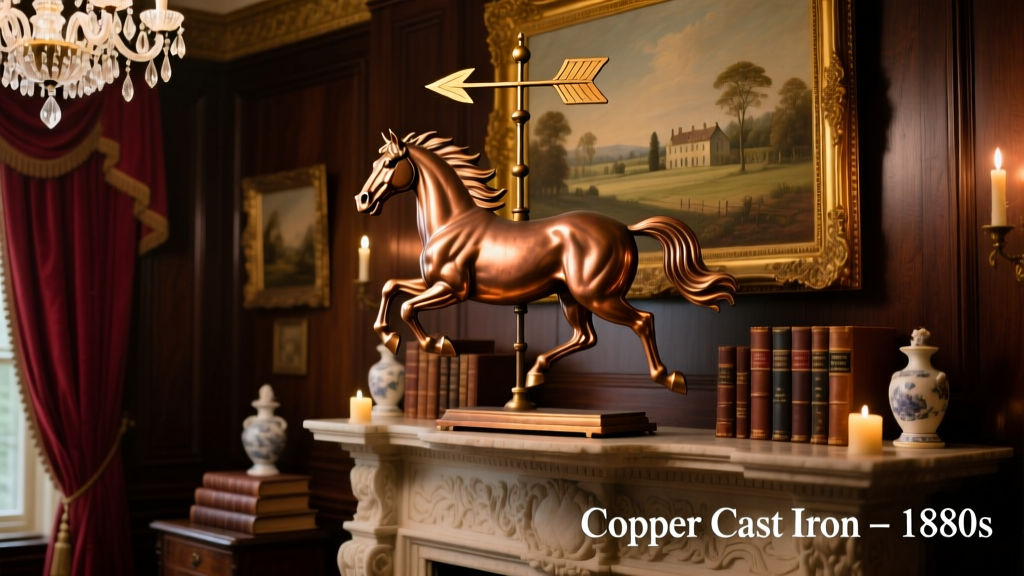
The 1880s Trotting Horse Weather Vane: A Study in Copper, Cast Iron, and American Craftsmanship
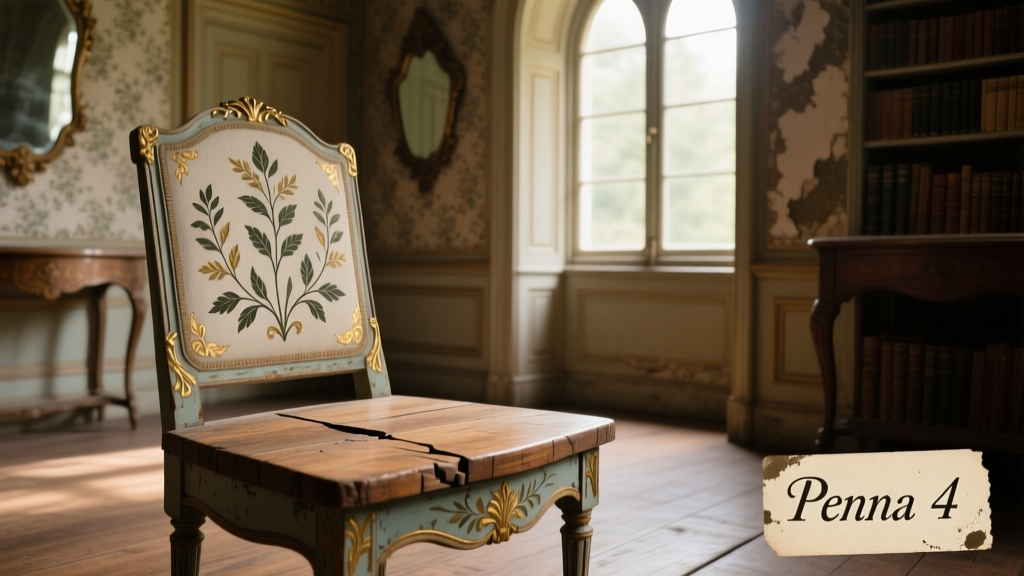
Penna 4 Chair Set: Stencil-Freehand Foliage Motifs, Worn Paint Finish & Solid Plank Seat Restoration Analysis
Lenox Lemonade Pitcher: Decoding the Iconic '6 Red Apples' Pattern with Gold Handle and Botanical Motif
Understanding the Redware Jug with Manganese Splotches: An 8-Inch American Folk Art Artifact
The Effanbee Abe Box Doll: A Detailed Study of the 20-Inch Vintage Composition Figure (1930–1941)
Fiesta Turquoise Cup and Saucer: History, Identification, and Care of the Iconic After-Dinner Set
Luster Canary Yellow Window Stop Basket of Fruit Shape, Embossed — A Detailed Study of the 4-Inch Pair (c. 1930–1945)
Roseville Russco Gold Crystalline 7-Inch Vase: Identification, History, and Restoration Insights

Midcentury Modern Homes Have Lasting Appeal