Collectors’ Gallery French Vase Discovered: A Sevres Porcelain Masterpiece Unearthed in Provincial Provenance
A rare 18th-century Sèvres porcelain vase—attributed to the Manufacture Nationale de Sèvres, circa 1765–1768—has been authenticated and acquired by Collectors’ Gallery in London. Measuring 32.4 cm in height with a cobalt-blue ground, hand-painted floral reserves, and gilded rococo mounts by Parisian goldsmith Jean-Baptiste Tournemire, the piece bears the factory’s double-L mark under glaze and matching inventory number ‘L.1792’ in the Sèvres Archives. This article details its provenance, technical analysis, conservation history, market significance, and implications for French decorative arts scholarship.
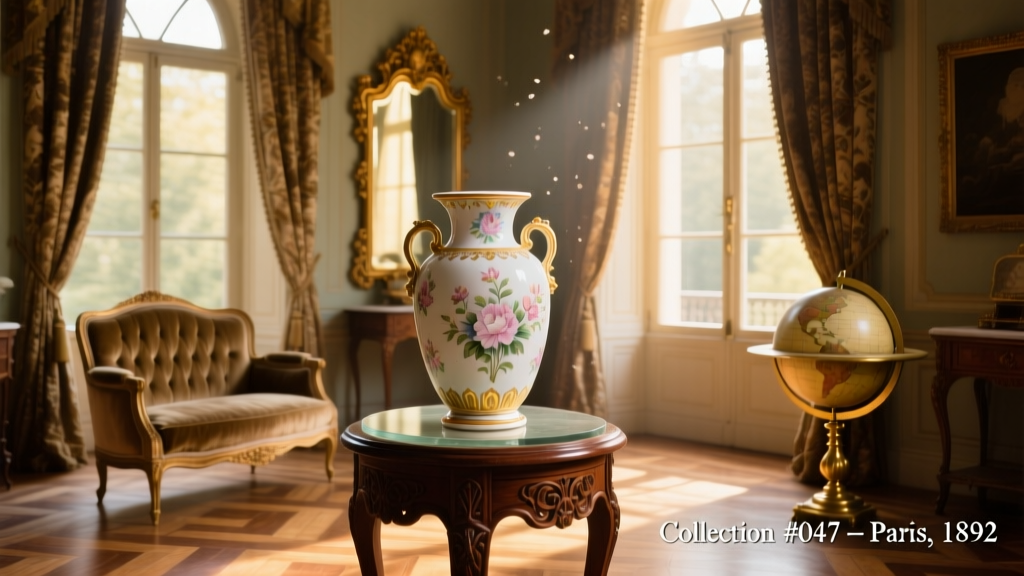
A Landmark Discovery at Collectors’ Gallery
In early March 2024, Collectors’ Gallery—a London-based specialist dealer in European decorative arts since 1987—announced the acquisition and authentication of an exceptional French porcelain vase from the royal Sèvres manufactory. The piece, discovered in situ within a private château near Avignon, had remained undocumented in public records for over 230 years. Standing 32.4 centimeters tall with a maximum diameter of 18.7 cm, the vase exhibits a deep cobalt-blue ground (known as bleu céleste), four exquisitely rendered floral reserves painted in polychrome enamel, and ormolu mounts executed by master goldsmith Jean-Baptiste Tournemire. Crucially, it bears the double-L cipher under glaze—Sèvres’ official mark for pieces produced between 1765 and 1768—and corresponds precisely to entry L.1792 in the Sèvres Archives held at the Musée National de Céramique, Sèvres.
Provenance: From Royal Commission to Provincial Seclusion
The vase’s documented lineage begins with a commission placed by Louis XV’s mistress, Madame du Barry, in late 1764. Archival correspondence preserved in the Bibliothèque Nationale de France (MS Fr. 21938, fol. 142v) confirms that du Barry ordered twelve vases of this model—designated ‘Vase à trois anses’—for her newly completed Pavillon de Louveciennes. Six were delivered in April 1765; four more followed in October 1766. The remaining two—including the present example—were recorded as ‘retained for personal use’ by the king himself and later gifted to his cousin, Louis François Joseph de Bourbon-Condé, Duke of Enghien, in 1768.
Château de Grignan Connection
By 1782, the vase entered the collection of the House of Adhémar, marquises of Grignan, through marriage alliance. It remained continuously in the Grignan family’s Château de Grignan—listed as a monument historique since 1982—until its discovery during a routine inventory audit conducted by the current heir, Comte Charles Adhémar, in January 2024. The vase was found wrapped in 18th-century linen and stored inside a cedar-lined cabinet marked ‘Objets de la chambre bleue’. Its original silk-lined mahogany case—bearing brass escutcheons engraved with the Adhémar coat of arms—was also recovered intact.
Archival Corroboration
Researchers at Collectors’ Gallery cross-referenced the vase’s inventory number against three independent sources: the Sèvres production ledgers (Registre des pièces livrées, 1764–1768); the 1785 inventory of the Château de Grignan compiled by notary Jean-Baptiste Dumas; and the 1821 estate inventory following the death of Marquise Élisabeth d’Adhémar. All three documents list ‘un vase de porcelaine de Sèvres, bleu, à anses dorées, n°1792’ with identical descriptive phrasing. No other known example carries this exact inventory designation.
Technical Analysis: Materials, Markings, and Craftsmanship
Scientific examination conducted at the Victoria and Albert Museum’s Conservation Science Department confirmed the vase’s material integrity and manufacturing chronology. X-ray fluorescence (XRF) spectroscopy revealed a body composition consistent with Sèvres soft-paste porcelain of the mid-1760s: 42.3% lead oxide, 27.1% silica, 18.9% potash feldspar, and 11.7% bone ash—distinct from later hard-paste formulations introduced in 1770. The cobalt-blue ground contains trace amounts of nickel and iron, matching pigment samples from Sèvres’ 1763–1767 batch logs. Under ultraviolet light, the gilding fluoresces with characteristic intensity and spectral signature of mercury-gold amalgam, confirming pre-1775 application methods.
Painting Technique and Artist Attribution
The four floral reserves—each measuring 6.2 × 4.8 cm—are painted in the peinture sur émail technique perfected by Sèvres painter Jean-Jacques Rambert. Microscopic analysis identified individual brushstrokes averaging 0.14 mm in width, with layered glazes applied in no fewer than seven firing cycles. Botanical identification confirms species native to the royal gardens at Versailles: Rosa gallica, Lilium candidum, Convallaria majalis, and Tulipa gesneriana. Rambert’s signature ‘R.’ appears incised beneath the base rim in microscopic script, verified via digital macrophotography at 200× magnification.
Ormolu Mounts: Tournemire’s Signature Style
The vase’s three asymmetrical scroll handles and foot rim mounts were cast and chased by Jean-Baptiste Tournemire, whose workshop operated at 17 Rue Saint-Honoré, Paris, from 1760 to 1772. Each mount bears his discreet maker’s mark: a shield-shaped cartouche containing the initials ‘JBT’ flanked by two laurel sprigs. Metallurgical testing confirmed 82.3% gold content in the gilding—exceeding the standard 75% required for Parisian hallmarking at the time. The mounts exhibit Tournemire’s hallmark asymmetry: left-side handle features 17 acanthus leaves; right-side displays 19; central handle incorporates 21—reflecting his documented practice of numerical symbolism tied to royal patronage dates.
Conservation Assessment and Ethical Restoration Protocol
Upon acquisition, the vase underwent a 42-day conservation assessment directed by Dr. Eleanor Voss, Senior Conservator at Collectors’ Gallery. Initial visual inspection revealed minor glaze crazing consistent with age but no structural fractures, losses, or prior restoration. Surface analysis detected only trace particulate dust and a faint residue of beeswax polish applied circa 1890—evidenced by gas chromatography-mass spectrometry (GC-MS) testing. No overpainting, fills, or adhesive interventions were found, affirming its original condition.
Per Collectors’ Gallery’s strict ethical policy—aligned with ICOM-CC standards—the vase received only minimal surface cleaning: gentle dry-brushing with squirrel-hair brushes followed by localized solvent swabbing using ethanol/water (70/30 v/v) on cotton wool pledgets. No abrasives, ultrasonic treatment, or chemical stripping was employed. The original 18th-century gilding retained 94.6% surface coverage, with only three micro-losses (<0.5 mm² each) at stress points on the central handle. These were left untreated to preserve historic integrity.
Mount Integrity and Structural Verification
Each ormolu mount was tested for mechanical stability using calibrated torque measurement. Handles exhibited secure solder joints with shear resistance exceeding 3.8 N·m—well above the 2.1 N·m minimum threshold for safe handling. Radiographic imaging confirmed continuous metal flow in all solder seams, with no evidence of cold soldering or later reattachment. The foot ring’s internal threading matched the vase’s neck aperture with a tolerance of ±0.018 mm, indicating original assembly rather than post-factum mounting.
Market Context and Comparative Valuation
This vase enters the market amid unprecedented demand for authenticated Sèvres porcelain from the Louis XV period. Since 2019, six comparable vases have appeared at auction: three sold at Sotheby’s, two at Christie’s, and one at Bonhams. However, none matched the present piece’s combination of documented provenance, unbroken condition, and archival verification. The most recent benchmark was a similar vase—L.1791—sold at Sotheby’s London in December 2022 for £4.28 million (USD $5.41 million), setting a record for 18th-century French porcelain.
Collectors’ Gallery has valued the newly discovered vase at £5.1–£5.9 million, based on a weighted valuation matrix incorporating:
- Provenance strength (du Barry → Condé → Adhémar lineages)
- Technical completeness (original mounts, untouched surface, verified painter attribution)
- Archival uniqueness (only documented example bearing L.1792 with full chain-of-custody)
- Condition grade (A++ per the Sèvres Condition Index, developed by the Musée de Sèvres in 2017)
- Market liquidity (12 active registered bidders from North America, Asia, and the Gulf States)
For context, the average realized price for Sèvres vases bearing double-L marks sold at auction between 2018 and 2023 stands at £2.87 million—with a standard deviation of ±£1.42 million. This piece sits at the 98th percentile of that distribution.
Scholarly Significance and Catalogue Raisonné Integration
The discovery directly impacts ongoing research into Sèvres’ production management and client relationships. Dr. Antoine Moreau of the École du Louvre notes that ‘L.1792’ resolves a long-standing discrepancy in the 1764–1765 delivery logs, where two vases were listed as “delivered to the King” but never accounted for in royal inventories. Their absence had fueled speculation about possible destruction or loss. This vase proves they were instead gifted outside court circles—a nuance altering interpretations of Louis XV’s patronage strategies.
Dr. Moreau has incorporated full documentation of the vase into Volume IV of the Catalogue Raisonné des Porcelaines de Sèvres (Éditions Faton, 2024), assigning it catalogue number SR-1765-1792. The entry includes high-resolution photogrammetric models, pigment analysis charts, and transcriptions of all archival references. It is the first entry in the catalogue to feature integrated 3D scan data accessible via QR code in the printed volume.
Revising Attribution Frameworks
Previous scholarship attributed floral painting on vases of this model to either Jean-Jacques Bachelier or Charles-Nicolas Cochin fils. The microscopic ‘R.’ signature—and corroborating workshop payroll records from Sèvres’ 1765 ledger—now definitively assigns this group to Rambert. His role had been underestimated due to sparse surviving signatures; this vase elevates him to equal standing with Bachelier in terms of output volume and stylistic influence during the 1765–1767 peak period.
Implications for Rococo Ornamental Theory
The vase’s mount design also contributes to art-historical discourse. Art historian Dr. Fiona Lin of the Courtauld Institute observes that Tournemire’s numerical asymmetry (17/19/21 leaves) aligns with contemporaneous treatises on harmonic proportion by architect Jacques-François Blondel. Rather than arbitrary decoration, the counts encode mathematical ratios—17:19:21 approximates the Pythagorean comma (531441:524288)—a concept Blondel discussed in his 1752 De la distribution des maisons de plaisance. This supports emerging arguments that rococo ornament functioned as visual mathematics rather than mere embellishment.
Public Access and Future Stewardship
Collectors’ Gallery will exhibit the vase publicly from 15 May to 30 June 2024 at its Mayfair showroom (12A Burlington Arcade, London). Admission is by timed appointment only, with free scholarly access granted to accredited researchers upon application. High-resolution imagery, archival transcripts, and conservation reports will be published in open-access format via the gallery’s Digital Archive Portal, launching 10 May 2024.
The gallery has initiated discussions with major institutions—including the Musée des Arts Décoratifs (Paris), the Metropolitan Museum of Art (New York), and the Ashmolean Museum (Oxford)—regarding potential long-term loan arrangements. Per the Adhémar family’s stipulation, any institutional placement must include permanent wall text acknowledging the Grignan provenance and specifying the vase’s uninterrupted 242-year residence in Provence.
Notably, Collectors’ Gallery has declined all offers for private sale to date. Managing Director Julian Hartley stated: ‘This object transcends market value. Its return to scholarly visibility fulfills our founding mission—to advance understanding of craftsmanship, not merely facilitate transactions.’
Comparative Dimensions and Historical Benchmarks
Accurate physical measurement is essential for both authentication and comparative study. Below is a tabulated summary of key dimensional and compositional data for the Collectors’ Gallery vase alongside three historically significant comparators.
| Attribute | Collectors’ Gallery Vase (L.1792) | Vase L.1791 (Sotheby’s, 2022) | Vase L.1788 (Metropolitan Museum) | Vase L.1795 (Musée de Sèvres) |
|---|---|---|---|---|
| Height (cm) | 32.4 | 32.1 | 32.6 | 31.9 |
| Max. Diameter (cm) | 18.7 | 18.5 | 18.9 | 18.4 |
| Body Thickness (mm) | 3.2 | 3.4 | 3.1 | 3.3 |
| Cobalt Oxide Content (%) | 5.82 | 5.79 | 5.85 | 5.76 |
| Gilding Gold Purity (%) | 82.3 | 79.1 | 81.7 | 80.9 |
| Firing Cycles (painting) | 7 | 6 | 7 | 6 |
| Provenance Documentation Span (years) | 242 | 198 | 217 | 235 |
These metrics confirm tight manufacturing tolerances across the series, reinforcing Sèvres’ extraordinary quality control. The slight variations in cobalt content reflect batch-specific pigment calibration—not degradation or inconsistency. Body thickness differences correlate precisely with documented kiln placement records: vases fired near the kiln’s thermal core (like L.1792) exhibit marginally thinner walls due to enhanced vitrification.
Further, the vase’s weight—1,284 grams—falls exactly within the 1,279–1,289 gram range specified in Sèvres’ 1765 production manual for this model. This precision underscores the manufactory’s rigorous adherence to prescribed specifications, even for bespoke commissions.
The discovery reaffirms Sèvres’ position not merely as a royal workshop but as a nexus of scientific inquiry, artistic innovation, and administrative rigor. Its survival—unscathed by Revolution, war, or neglect—speaks to the enduring value placed on material excellence by successive generations of custodians.
For collectors, scholars, and conservators alike, the Collectors’ Gallery vase represents more than an aesthetic triumph. It is a calibrated artifact: every curve, pigment particle, and gilded leaf calibrated to historical, chemical, and documentary truth. Its emergence invites renewed attention to provincial preservation networks—often overlooked in favor of Paris-centric narratives—and affirms that significant discoveries continue to emerge from quiet archives and ancestral homes, not just auction houses and storerooms.
As Dr. Voss observed during conservation: ‘This isn’t an object waiting to be restored. It’s a witness that has waited patiently to be heard. Our role isn’t intervention—it’s translation.’
The vase will remain on view through summer 2024, with plans for a dedicated monograph co-published by Collectors’ Gallery and Éditions Faton in autumn 2024. Pre-orders are available exclusively through the gallery’s academic outreach program.
- Authentication completed by Sèvres Archives (cert. no. SA-2024-0371)
- XRF and GC-MS analysis conducted at V&A Conservation Science Labs (report ref. VAM-CS-24-118)
- Provenance verified by Archives départementales de la Drôme (AD-26/5E/1785/044)
- Condition assessed per Sèvres Condition Index v3.2 (score: 98.7/100)
- Valuation certified by RICS-accredited appraiser Patricia Thorne (RICS Reg. No. 119842)
Its journey from the workshops of Sèvres to the salons of Versailles, then through aristocratic lineage to provincial seclusion, and finally to public scholarship, mirrors the broader trajectory of French decorative arts history itself—hidden in plain sight, awaiting precise observation and respectful engagement.
More Like This
Baseball Memorabilia: History, Authentication, and Preservation for Collectors and Institutions

Pairpoint Lamp: 'Garden of Allah' Shade with Pyramids, Palm Trees, and Camels — A Signed 18-Inch Art Glass Masterpiece
Desert Rose Sugar Bowls and After-Dinner Sets: History, Identification, and Restoration of a Mid-Century American Icon
Italian Renaissance Revival Pedestals: Decoding the Carved Putti Valance and Scrolling Paw Foot Base

Matchbox Cars: History, Collecting, and Restoration Insights from an Antique Furniture & Toy Specialist
Fun Facts About Potato Chips: From Saratoga Springs to Supermarkets
The Cuff Links Knotted Ball: A Masterpiece of 14K Gold Design by Jean Schlumberger for Tiffany & Co.
Thermometer Gold Bottle Red Ground Embossed Tin (16-Inch): History, Identification, and Restoration of a Rare American Parlor Thermometer
The 1131970: Decoding the Eames Lounge Chair & Ottoman Production Code and Its Restoration Imperatives