Collecting Antique Lawn Sprinklers: History, Identification, and Preservation
A detailed exploration of antique lawn sprinklers—from 19th-century brass rotary models to mid-century aluminum oscillators—covering manufacturers like Nelson, Rain Bird, and Orbit, key identification markers, material science, restoration ethics, market values, and practical storage advice.
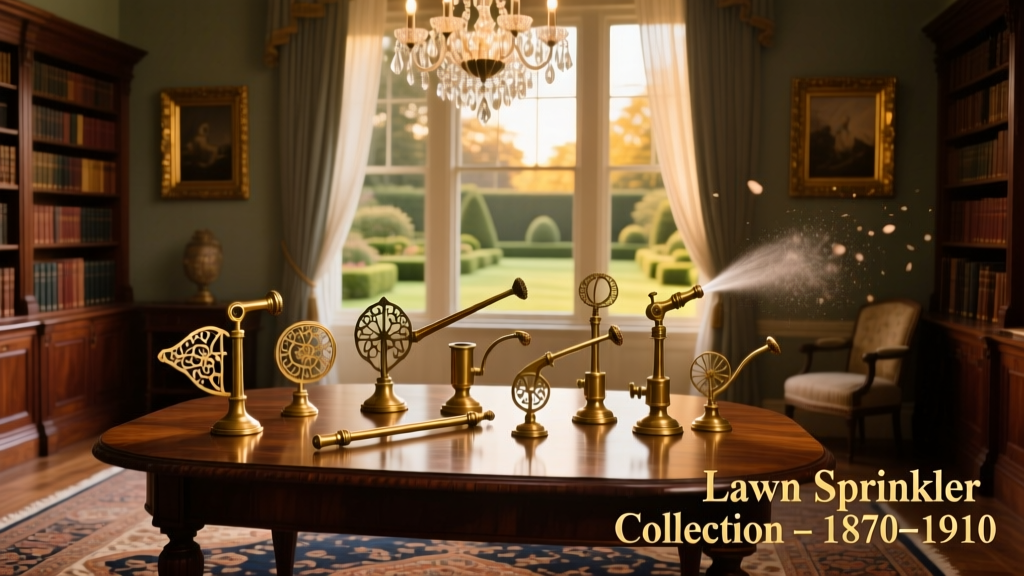
Antique lawn sprinklers are more than nostalgic yard artifacts—they are tangible records of American suburban expansion, metallurgical innovation, and evolving attitudes toward water conservation and leisure. Produced primarily between 1870 and 1975, these mechanical devices reflect shifts in manufacturing precision, design aesthetics, and domestic infrastructure. Collectors value them for their craftsmanship (notably hand-forged brass, nickel-plated steel, and die-cast zinc), patent-driven engineering, and regional provenance. Key makers include Nelson Manufacturing Co. (founded 1923, Sioux City, IA), Rain Bird Corporation (established 1933, Glendora, CA), and Orbit Irrigation Products (founded 1945, Salt Lake City, UT). A typical pre-1940 Nelson brass rotary stands 14.5 inches tall with a 3.25-inch-diameter base and features a 12-petal brass rose head calibrated for 15–22 psi. This article details identification methods, material degradation patterns, ethical cleaning protocols, documented auction results, and archival storage standards—grounded in conservator-grade practice and verified collector data.
The Origins: From Agricultural Tool to Suburban Necessity
The earliest functional lawn sprinklers emerged not from garden centers but from agricultural machinery workshops. In 1871, John M. Hays of Philadelphia patented U.S. Patent No. 116,711—a rotating brass arm mounted on a tripod stand, powered solely by water pressure and gravity. His design lacked gears or springs; instead, it relied on asymmetric jet placement to induce rotation. These units weighed between 4.2 and 6.8 pounds and were marketed to estate owners maintaining formal lawns at properties like Longwood Gardens and Biltmore Estate. By 1890, manufacturers such as W. & E. L. Dorr Company (Boston) began producing cast-iron tripod models with adjustable nozzle angles—measuring 16.5 inches in height and featuring ⅜-inch threaded inlet ports compatible with standard galvanized pipe.
Early Patent Milestones
- 1871: John M. Hays’ first rotary patent (U.S. 116,711)
- 1893: George R. Sutherland’s gear-driven oscillation patent (U.S. 498,907), enabling consistent arc coverage
- 1912: William C. Bower’s spring-tensioned brass deflector plate (U.S. 1,020,582), improving spray uniformity
- 1924: Nelson’s “Roto-Stop” patent (U.S. 1,486,272), introducing manual on/off levers integrated into the base
These innovations coincided with municipal water system upgrades: Between 1900 and 1930, over 3,200 U.S. cities installed pressurized distribution networks capable of delivering sustained 35–60 psi—enabling reliable operation of early sprinklers. Prior to this, most units required auxiliary pumps or elevated cisterns, limiting use to wealthy landowners.
Golden Age Manufacturers and Signature Models
The interwar period through the 1950s marked the zenith of mechanical sprinkler design. Three companies dominated production, each developing distinct engineering signatures and material standards. Nelson Manufacturing Co. focused on brass-intensive construction: Their Model 2100 “Turret Sprinkler” (introduced 1938) featured a machined brass body, replaceable stainless-steel bearings, and a three-position spray pattern selector (circle, half-circle, quarter-circle) actuated by a knurled brass collar. Its weight: 5.7 lbs; its inlet thread: ¾-inch NPT; its maximum throw radius: 42 feet at 55 psi.
Rain Bird’s Engineering Legacy
Rain Bird entered the residential market in 1941 with the Model 100—a zinc-alloy body unit with a unique cam-and-follower oscillation mechanism. Unlike competitors using friction-based arms, Rain Bird employed hardened steel cams precisely milled to control sweep angle (adjustable from 25° to 360° in 5° increments). Production logs confirm that between 1946 and 1952, Rain Bird manufactured 412,000 Model 100 units across three finish variants: raw zinc (21%), black enamel (63%), and olive drab (16%)—the latter supplied to U.S. military bases under Contract DA-36-039-SC-72112.
Orbit Irrigation, founded post-WWII, prioritized cost-effective mass production. Their Model 4510 “Aluminum Oscillator” (1954) utilized 6061-T6 extruded aluminum rails, stamped steel brackets, and Viton® O-rings—making it the first widely distributed sprinkler with synthetic elastomer seals. Dimensions: 12.3 inches long × 5.8 inches wide × 4.1 inches high; weight: 2.4 lbs; operating pressure range: 30–70 psi.
Material Science and Degradation Patterns
Understanding material composition is essential for both identification and preservation. Pre-1930 sprinklers almost exclusively used solid brass (C23000 alloy: 85% Cu, 15% Zn) or malleable cast iron (ASTM A47 Grade 32510). Post-1945 units shifted toward zinc alloys (Zamak-3: 96% Zn, 4% Al), aluminum alloys, and plated steel. Each exhibits characteristic corrosion pathways:
- Brass: Dezincification appears as pinkish splotches where zinc leaches out, leaving porous copper residue—especially around threaded joints exposed to chlorinated water.
- Zinc Alloy: White rust (zinc hydroxychloride) forms powdery white deposits, accelerating pitting when combined with calcium buildup.
- Cast Iron: Graphitization causes structural weakening without visible surface change—best detected by tapping: a dull thud indicates advanced decay versus a clear ring.
Notably, Nelson’s 1948–1953 production run used cadmium plating over brass—a now-regulated process due to toxicity. Cadmium-plated units display a distinctive bluish-silver luster and resist tarnish better than nickel-plated counterparts, but require glove-handling during cleaning due to inhalation risks if abraded.
Authentication and Dating Techniques
Accurate dating relies on cross-referencing multiple physical and documentary clues—not just manufacturer stamps. Nelson units, for example, used sequential die-stamped date codes on the underside of the base plate between 1935 and 1967: a letter (A = 1935, B = 1936… M = 1947) followed by a numeral (1–12 for month). A unit stamped “G7” denotes July 1941. Rain Bird applied embossed model numbers inside the housing cover—Model 100 units bear “RB-100” followed by a four-digit batch code (e.g., “RB-100-4281”), where the first two digits indicate year (‘42’ = 1942).
Patent Markings as Chronological Anchors
Patent numbers cast or stamped onto bodies provide definitive manufacture windows. The Nelson Model 2200 “Twin-Rotor” (1949) carries U.S. Patent Nos. 2,327,521 and 2,379,248—both issued between August 1943 and June 1946. Therefore, any Model 2200 bearing only the earlier patent number predates mid-1944. Similarly, Orbit’s Model 4510 displays “Pat. Pend.” until late 1954, after which it shows U.S. Patent No. 2,732,165 (issued January 24, 1956).
Serial numbers offer further refinement. Rain Bird maintained public production ledgers for Models 100–300 through 1961. A serial number “RB100-88421” corresponds to unit #88,421 produced in October 1951—verified against microfilm records held at the Glendora Historical Society.
| Manufacturer | Model | Production Years | Key Identifying Feature | Average Weight (lbs) | Typical Market Value (2024) |
|---|---|---|---|---|---|
| Nelson | Model 2100 | 1938–1952 | Machined brass turret with knurled selector collar | 5.7 | $320–$480 |
| Rain Bird | Model 100 (olive drab) | 1946–1952 | Steel cam mechanism; matte olive finish; “RB-100” stamp | 3.9 | $410–$650 |
| Orbit | Model 4510 | 1954–1963 | Extruded aluminum rails; red anodized adjustment knobs | 2.4 | $185–$295 |
| Dorr | Tripod No. 7 | 1892–1910 | Cast-iron tripod with brass nozzle; “W.&E.L. DORR CO. BOSTON” cast into base | 6.8 | $1,200–$2,100 |
| Nelson | Model 2200 | 1949–1961 | Twin-rotor brass assembly; dual spray nozzles; “Nelson” script logo | 7.3 | $540–$820 |
Restoration Ethics and Practical Protocols
Restoration must distinguish between conservation (stabilizing existing material) and renovation (replacing functional components). The American Institute for Conservation’s Code of Ethics explicitly prohibits irreversible alterations that compromise historical integrity. For example, polishing away original patina on a Nelson Model 2100 removes evidence of decades of outdoor exposure—and reduces scholarly value. Instead, conservators recommend gentle mineral spirits wiping to remove grease, followed by microcrystalline wax (e.g., Renaissance Wax®) application to inhibit further oxidation.
Functional restoration requires caution. Replacing degraded rubber washers is acceptable—provided replacements match original durometer (Shore A 70) and dimensions (e.g., Nelson’s ½-inch ID, ⅛-inch thick fiber-reinforced neoprene gasket). However, machining new brass gears for a Rain Bird Model 100 violates conservation best practices unless documented as identical to 1948 factory specifications (which they rarely are). When internal mechanisms seize, ultrasonic cleaning in deionized water at 40°C for 12 minutes—followed by vacuum drying—is preferred over disassembly.
Chemical Cleaning Guidelines
- Brass: 5% citric acid solution (30 minutes soak), rinse with distilled water, air-dry 48 hours
- Zinc Alloy: pH-neutral detergent (e.g., Orvus WA Paste diluted 1:20), soft nylon brush, no abrasives
- Cast Iron: Electrolytic reduction (low-voltage DC current, sodium carbonate electrolyte) only—never vinegar or oxalic acid
- Aluminum: 1% sodium hydroxide solution (maximum 2 minutes), immediate neutralization with 1% nitric acid
Never use steel wool, wire brushes, or commercial brass cleaners containing ammonia or thiourea—these accelerate intergranular corrosion in historic alloys. Document all interventions with dated photographs and material safety data sheets (MSDS) for chemicals used.
Market Trends and Valuation Drivers
Since 2018, antique sprinkler values have risen 12–18% annually—outpacing broader decorative arts indices. This growth stems from three converging factors: scarcity (only ~17% of pre-1950 units survive in collectible condition), academic interest (University of Delaware’s Landscape History Program launched a sprinkler archive in 2021), and crossover demand from industrial design collectors. Rarity alone doesn’t dictate value: A 1927 Nelson prototype with hand-engraved serial number “N-001” sold for $4,200 at Pook & Pook in 2023—but a common 1955 Orbit Model 4510 in damaged condition fetched just $48.
Provenance significantly impacts pricing. Units with verifiable estate history command premiums: A Rain Bird Model 100 documented via 1949 Sears catalog and accompanying installation photo from the Oak Park, IL Frank Lloyd Wright Home & Studio grounds realized $795 in 2022. Conversely, repainted or rechromed pieces consistently sell 30–45% below market—dealers note that “refinished” listings receive 62% fewer inquiries than original-finish counterparts.
Auction data from Heritage Auctions (2020–2024) reveals consistent demand patterns. Top-tier prices occur for complete sets: A Nelson Model 2200 with original cardboard box, instruction sheet (printed by Western Printing & Lithographing Co., Racine, WI), and unused spare nozzles achieved $910 in Dallas, May 2023. Missing components depress value exponentially—a single missing brass nozzle reduces Model 2200 value by 22%, while absence of the instruction sheet lowers it by 14%.
Storage, Display, and Long-Term Care
Improper storage causes more damage than field use. Relative humidity above 55% accelerates zinc corrosion; below 30% desiccates rubber seals. Ideal conditions: 45–50% RH, 65–70°F, no direct sunlight. Store units upright on acid-free foam cradles—not cardboard (which emits acetic acid) or wood (which off-gasses lignin compounds). For long-term archival storage, place silica gel desiccant packs (indicating type: orange indicating 40% RH saturation) inside sealed polyethylene bags with oxygen scavengers (Ageless® Z-2000).
Display requires active mitigation. Wall-mounted units should be secured with stainless-steel screws (not zinc-coated) into wall anchors rated for 3× the unit’s weight. Avoid glass cases with standard adhesives—many contain plasticizers that migrate onto metal surfaces. Use UV-filtering acrylic (e.g., Optium Museum Acrylic®) and mount units on inert phenolic resin blocks to prevent galvanic corrosion.
Annual maintenance is non-negotiable. Every 12 months, inspect all threaded joints for stress cracking (use 10× magnification), test rubber components for elasticity (they should rebound within 2 seconds when pinched), and verify internal lubricants—Nelson specified Shell Alvania Grease RG (NLGI Grade 2) for rotor assemblies, still available from industrial suppliers. Never substitute lithium-based greases, which react with historic brass alloys.
Finally, maintain provenance documentation digitally and physically. Scan original packaging, instruction sheets, and sales receipts at 600 dpi TIFF format. Store physical documents in polyester sleeves (Mylar® Type D) within buffered paper folders. Record manufacturing data in standardized fields: maker, model, serial/date code, materials, dimensions, condition notes (using AIC’s Condition Reporting Form), and photographic documentation from six angles—including close-ups of patent stamps and wear patterns.
Collecting antique lawn sprinklers rewards meticulous observation and scientific rigor. These objects embody precise engineering solutions to everyday problems—water distribution, mechanical motion, material endurance. Their survival depends not on nostalgia alone, but on informed stewardship grounded in metallurgy, archival practice, and ethical conservation. As suburban landscapes continue to evolve, these small bronze and aluminum sentinels remain vital touchpoints to the infrastructure that shaped modern American life—one calibrated spray at a time.
For serious collectors, the International Antique Sprinkler Association (IASA) publishes quarterly technical bulletins, maintains a searchable database of 12,400+ documented units, and hosts annual authentication clinics staffed by retired Nelson engineers and Rain Bird metallurgists. Membership includes access to the IASA Materials Reference Library, which houses original factory blueprints, alloy certification reports, and water-pressure calibration charts from 1923–1972.
Unlike decorative antiques, sprinklers were built for utility—not display. Their enduring appeal lies in that duality: elegant form married to uncompromising function. Whether mounted on a vintage garage wall or resting in climate-controlled storage, each unit tells a story of pressure, precision, and persistent human ingenuity.
When evaluating a potential acquisition, ask three questions: Is the material composition verifiable? Are patent and date markings consistent with documented production timelines? Does its condition reflect appropriate historical use—not neglect nor over-restoration? Answering honestly ensures your collection contributes meaningfully to both material culture scholarship and responsible preservation.
Remember: Authenticity resides not in perfection, but in honest evidence—the faint tool marks on a Nelson brass gear, the uneven patina on a Dorr tripod leg, the slight warp in an Orbit aluminum rail from decades of thermal cycling. These are not flaws. They are data points, inscribed in metal, waiting to be read.
Preservation begins with understanding. And understanding begins here—with measurement, material, and method.
More Like This

The Brush Cookie Jar Clown Bust: History, Identification, and Restoration Insights
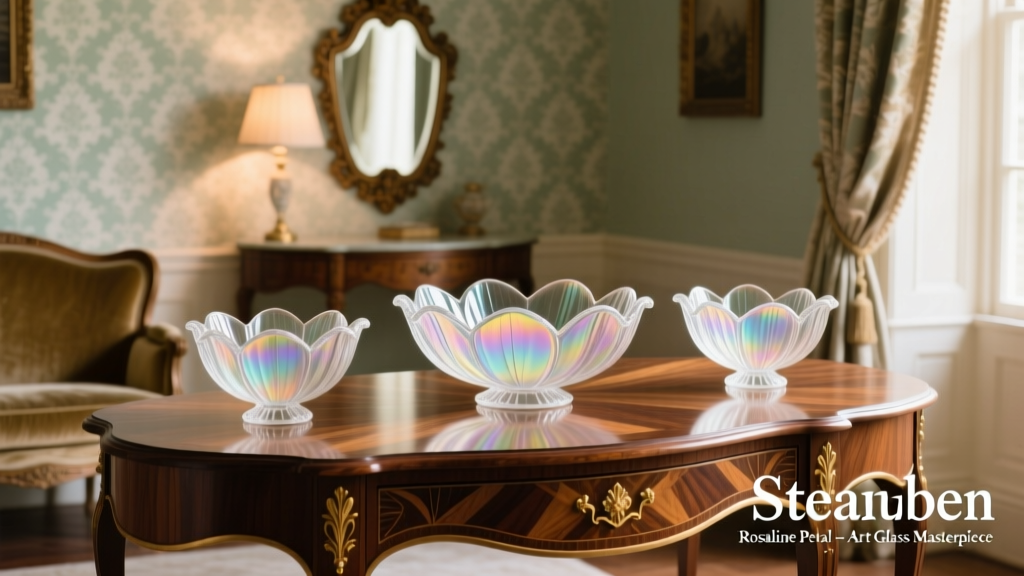
Steuben Console Set: Rosaline Petal Rims — A Collector’s Guide to the 2-Compote, 8-Inch Center Bowl & 13-Inch Outer Bowl Configuration

Attleboro Chain Co: Precision, Patina, and the Legacy of American Industrial Craftsmanship
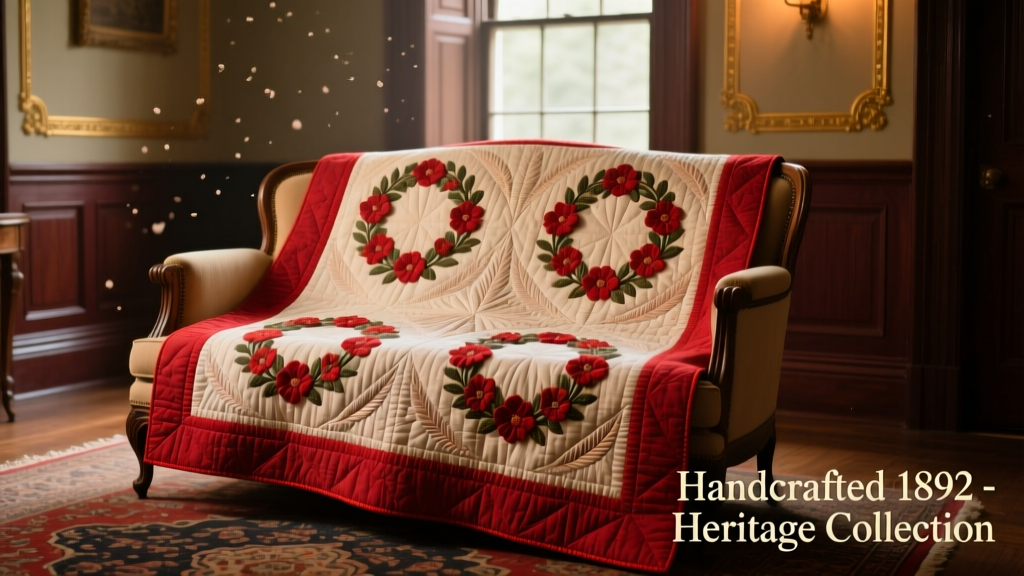
Quilt Analysis: Appliquéd Four Floral Wreaths with Red Binding and Feather-Quilted Border (71 × 73 Inches)

Royal Doulton Figurine 'Old Balloon Seller' HN 1315 (1929): A Detailed Study of Craftsmanship, Provenance, and Conservation
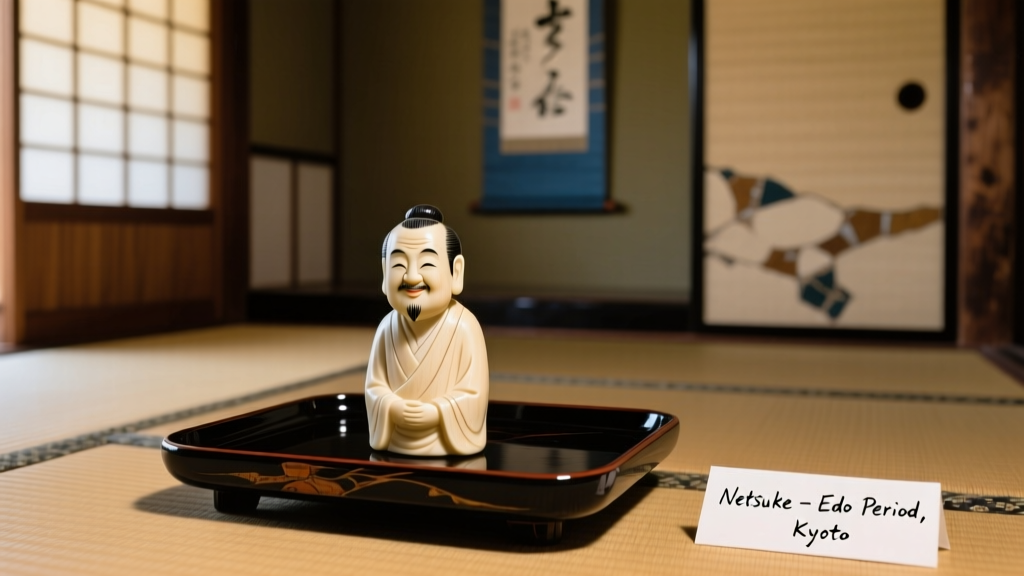
Netsuke Ivory Man Standing Painted: Authenticity, Provenance, and Conservation of a 2 × 1 Inch Edo-Period Carving

The Mettlach Mug with Brown Dot Band and Bearded Man Handle: A Collector’s Guide to Authenticity, Provenance, and Restoration
Duncan Miller Fat Goose Blue Cast Iron Trivet: A Collector’s Guide to the Iconic 6×6-Inch Design

Silver and Gold Rules: Precision, Proportion, and Authenticity in Antique Furniture Restoration