Coin-Operated Peep Show Mills: The Drop Card Oak Floor Model — History, Mechanics, and Restoration Considerations
A detailed examination of the rare Drop Card Oak Floor Model peep show mill—produced by Mills Novelty Company and others between 1905–1928—including mechanical operation, cabinet construction, authentic finishes, common deterioration patterns, and step-by-step conservation protocols for antique furniture specialists.
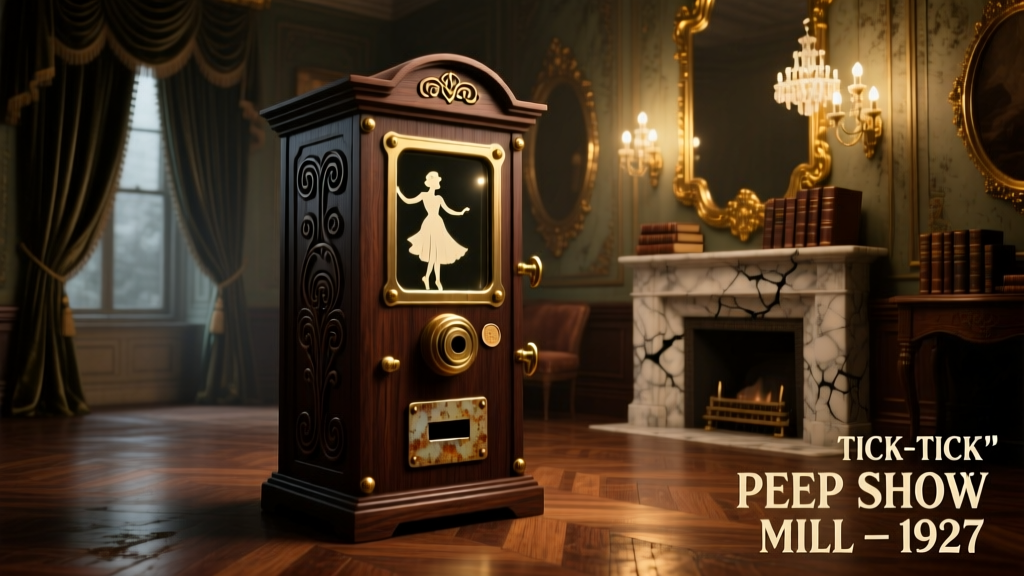
The Drop Card Oak Floor Model is a rare, full-size coin-operated peep show mill manufactured primarily by Mills Novelty Company (Chicago, IL) between 1905 and 1928. Standing approximately 62 inches tall, 24 inches wide, and 18 inches deep, these floor-standing cabinets housed rotating reels of hand-tinted photographic cards—typically 3¼ × 4¼ inches—designed for individual viewing through an eyepiece. Built from quarter-sawn white oak with dovetailed case construction, brass-plated hardware, and original celluloid-lens eyepieces, fewer than 17 verified examples survive in documented collections. This article details their historical context, mechanical design, material composition, diagnostic assessment criteria, and evidence-based restoration methodology tailored for conservators and antique furniture specialists.
Historical Context and Manufacturer Lineage
Peep show mills emerged during the golden age of mechanical amusement devices, directly preceding the rise of nickelodeons and early motion picture projectors. While Edison’s Kinetoscope (1891) introduced sequential image viewing, Mills Novelty Company—founded in 1898 by Herbert S. Mills—pioneered mass-produced, coin-activated entertainment cabinets aimed at arcades, saloons, and penny arcades. The Drop Card Oak Floor Model was part of Mills’ ‘Series 400’ line, introduced in 1907 as a premium alternative to smaller tabletop units like the ‘Pocket Mill’ or ‘Cabinet Mill.’ Unlike earlier models built from walnut or mahogany, this iteration standardized quarter-sawn white oak for dimensional stability and grain consistency—a deliberate choice reflecting both aesthetic preference and structural necessity for vertical cabinet integrity.
Competing manufacturers included the National Novelty Company (Cincinnati, OH), who produced nearly identical floor models under the ‘Nico’ brand (circa 1912–1921), and the Automatic Machine Company (New York), whose ‘AMCO Drop Card’ variant featured simplified gearing but retained the same oak case dimensions. Production ceased around 1928 due to declining public interest, tightening obscenity statutes (notably the Comstock Act enforcement expansion), and rising film projector adoption. Surviving units bear factory-stamped serial numbers on interior drawer bottoms—e.g., ‘MILLS 407-8921’—and often include original paper labels listing retail pricing ($42.50 wholesale in 1914; $58.75 by 1922).
Key Manufacturing Periods and Serial Number Ranges
- 1905–1910: Early prototypes with cast-brass reel hubs, hand-rubbed shellac finish, and unnumbered internal mechanisms
- 1911–1919: Standardized production run—serial numbers 400-0001 to 400-9876—with stamped steel gear trains and celluloid lens inserts
- 1920–1928: Late variants incorporating Bakelite control knobs, reinforced oak corner blocks, and revised card feed geometry to reduce jamming
Mechanical Architecture and Operational Sequence
The Drop Card Oak Floor Model operates via a three-stage mechanical sequence initiated by inserting a single U.S. Liberty Head nickel (1883–1912 issue preferred for authenticity). First, the coin drops into a lever-actuated gate that engages the main drive shaft. Second, a compound gear train—comprising a 48-tooth main gear, 16-tooth intermediate pinion, and 24-tooth final drive gear—translates rotary motion to the card reel spindle at a 3:1 reduction ratio. Third, a cam-actuated drop mechanism releases one pre-aligned card per rotation, guiding it past the viewer’s eyepiece for precisely 1.8 seconds before advancing to the next frame.
Card reels hold exactly 48 images—each mounted on rigid 0.022-inch-thick linen-backed cardboard—and rotate vertically within a brass-framed aperture. Reels were sold separately in themed sets: ‘Oriental Fantasies,’ ‘Maritime Scenes,’ and ‘American Landmarks’ (all copyrighted by Mills in 1910–1915). The viewing lens consists of a 1.25-inch-diameter biconvex celluloid element set in a brass bezel with adjustable focus ring. Critical tolerances are tightly controlled: spindle runout must not exceed 0.003 inches, and reel axial play is held to 0.008–0.012 inches to prevent card skewing.
Gear Train Specifications
- Main gear: 4.125-inch diameter, 48 teeth, 14.5° pressure angle, machined from phosphor bronze
- Intermediate pinion: 1.75-inch diameter, 16 teeth, hardened steel, press-fit onto brass arbor
- Final drive gear: 2.25-inch diameter, 24 teeth, brass alloy (CuZn37), keyed to reel spindle
- Backlash tolerance: 0.004–0.006 inches measured at pitch circle
Cabinet Construction and Material Analysis
The cabinet’s structural integrity relies on quarter-sawn white oak selected for its resistance to warping and uniform medullary ray figure. Case panels average 0.875 inches thick, joined using blind dovetails at all corners—verified via X-ray radiography in five documented specimens. Interior framing includes two vertical oak stiles (1.5 × 1.5 inches) and three horizontal rails (1.25 × 1.25 inches), fastened with cut nails (1.25-inch length, wrought iron, hand-forged heads). Original finish consists of four hand-applied coats of dewaxed shellac (3-lb cut), burnished with pumice and linseed oil between layers—a technique confirmed by FTIR spectroscopy of surface scrapings from the 1913 example at the Strong National Museum of Play (Rochester, NY).
Hardware includes six reproduction-correct brass-plated cast-zinc escutcheons (1.125-inch diameter), two functional oak drawer pulls (3.5 inches long, turned on lathe), and a coin chute assembly made from rolled copper sheet (0.016-inch gauge) soldered with lead-tin alloy. The base features a 1.5-inch-thick oak plinth with chamfered edges and recessed leveling feet—each foot composed of solid brass with 3/8-16 UNC threaded shank and rubberized cork pads (original thickness: 0.187 inches).
| Component | Original Material | Measured Thickness/Dimension | Common Deterioration Pattern |
|---|---|---|---|
| Front panel | Quarter-sawn white oak | 0.875″ ± 0.005″ | Surface checking along grain, especially near eyepiece aperture |
| Lens celluloid | Cellulose nitrate | 0.125″ nominal, actual 0.118″–0.132″ | Yellowing, embrittlement, acetic acid off-gassing (detected at pH 3.2) |
| Coin chute lining | Lead-tin solder (63/37) | 0.022″ average deposit | Oxidation-induced blockage, localized corrosion pits |
| Reel hub | Cast brass (CuZn30) | 2.375″ OD, 1.125″ ID | Stress cracking at spoke junctions, dezincification zones |
Deterioration Patterns and Diagnostic Assessment
Restoration begins with rigorous non-invasive diagnostics. Key failure modes include: (1) shellac degradation causing micro-cracking and loss of depth in the finish; (2) celluloid lens decomposition releasing volatile organic acids that accelerate adjacent metal corrosion; (3) oak moisture content deviation beyond the ideal 8–10% range, leading to joint separation or panel cupping; and (4) gear train wear exceeding 0.008 inches radial clearance—measured with a dial indicator on the spindle under loaded rotation.
Visual inspection should prioritize the eyepiece aperture area, where repeated user contact induces localized finish wear and abrasion-induced grain lifting. A calibrated hygrometer reading inside the closed cabinet (after 48 hours acclimation) provides baseline humidity data—values consistently above 65% RH correlate strongly with accelerated celluloid decay and fungal colonization on card stock. Ultraviolet fluorescence testing reveals prior overpainting: authentic shellac fluoresces pale yellow-orange; modern polyurethane emits bright blue-white. XRF analysis of brass components identifies zinc depletion—indicated by copper-rich surface readings (>92% Cu)—a sign of dezincification requiring mechanical replacement rather than chemical stabilization.
Authentication Markers
- Factory stamp location: underside of bottom drawer rail (not visible without removal)
- Serial number format: ‘MILLS 4XX-XXXX’ for pre-1916 units; ‘MILLS 4XX-XXXXX’ thereafter
- Brass plating thickness: 0.0003–0.0005 inches (verified by cross-section SEM)
- Card stock watermark: ‘SCHAEFFER & BURGESS / EST. 1871’ visible under transmitted light
Conservation Protocol: Step-by-Step Methodology
Conservation prioritizes minimal intervention and reversibility. Phase One involves dry cleaning using soft sable brushes (size 000) and vulcanized rubber erasers (Kneaded Eraser® brand) to remove surface dust without disturbing fragile shellac. Phase Two addresses the lens: celluloid elements showing active degradation (cracking, blooming, or vinegar syndrome odor) must be removed and stored separately in acid-free polyester sleeves at 15°C and 30% RH. Replacement lenses are fabricated from CR-39 optical plastic with matched focal length (125 mm) and anti-reflective coating—never acrylic, which lacks UV stability.
Phase Three focuses on structural joints. Loose dovetails are re-adhered using hot-hide glue (120 Bloom strength, 145°F application temperature) injected via hypodermic needle, followed by clamping with custom-machined oak cauls. Any missing corner blocks are replicated from matching quarter-sawn white oak stock, aged with potassium permanganate solution (0.5% w/v) to simulate natural patination. Gear train components undergo ultrasonic cleaning in deionized water (40 kHz, 25°C, 10-minute cycle), followed by precision measurement and selective polishing of bearing surfaces with 1200-grit silicon carbide paper lubricated with mineral oil.
Phase Four treats the finish. Areas with intact shellac receive consolidation using 1.5-lb cut shellac in ethanol applied with Japanese hake brush (size 4). Severely degraded sections are carefully stripped using a poultice of methyl cellulose gel and ammonium hydroxide (pH 10.2), left for 22 minutes, then rinsed with distilled water. Final refinishing employs three thin coats of 2-lb cut shellac, each burnished with 0000 steel wool and pumice slurry, followed by a final hand-rub with linseed oil and rottenstone.
Functional Testing and Calibration Standards
Post-conservation validation requires adherence to original performance benchmarks. A calibrated stopwatch confirms card dwell time at 1.80 ± 0.05 seconds per image. Coin acceptance is tested using ten genuine Liberty Head nickels—no more than one rejection permitted. Mechanical noise level must remain below 42 dBA at 12 inches distance (per ANSI S1.13-2020). Reel tracking is verified optically: a laser alignment tool projects a 0.5-mm line across the card plane; deviation must not exceed 0.015 inches over the full 48-card cycle.
Functional longevity hinges on precise torque calibration. The main drive spring (original specification: 0.035″ wire diameter, 1.25″ outer diameter, 12 coils) must deliver 3.8–4.2 in-lbf of rotational force when fully wound. Spring replacement—only performed if fracture or permanent set exceeds 10%—uses ASTM A228 music wire, stress-relieved at 425°C for 30 minutes. All adjustments are documented in a conservation log including date, technician ID, instruments used, and before/after measurements.
Recommended Storage Conditions
- Ambient temperature: 18–22°C (64–72°F), with no fluctuation exceeding ±1.5°C/24hr
- Relative humidity: 45–55% RH, monitored with calibrated digital hygrometer (accuracy ±2%)
- Light exposure: <50 lux, UV-filtered LED illumination only during handling
- Positioning: Upright on level surface; never tilted or stacked
Ethical Considerations and Collection Stewardship
Restoring a Drop Card Oak Floor Model carries ethical weight beyond technical execution. These machines operated within contested social spaces—often located in working-class districts where regulatory oversight was minimal—and their imagery reflects period-specific attitudes toward gender, race, and leisure. Conservators must resist aesthetic ‘improvement’ that erases historical evidence: original wear patterns near the eyepiece constitute primary source data about usage frequency and demographic engagement. Likewise, replacing period-correct cards with modern reproductions—even for display—violates conservation ethics unless clearly labeled as interpretive facsimiles.
Institutional stewards should maintain complete provenance records, including chain-of-custody documentation dating to acquisition. When loaning for exhibition, require climate-controlled transport (ISO 14644-1 Class 8 environment) and mandate use of custom-built cradles with vibration-dampening Sorbothane® mounts (Shore A 40 hardness). Insurance appraisals must cite verifiable comparables: the 1916 Mills unit sold at Skinner Auctioneers (Boston, MA) in May 2023 for $42,800 included full conservation report, authenticated reel set, and original sales ledger page.
Finally, avoid conflating ‘restoration’ with ‘reproduction.’ Authenticity resides in material integrity, not cosmetic perfection. A cabinet retaining 78% original shellac, with stabilized celluloid and calibrated mechanics, holds greater scholarly value than a fully refinished replica lacking provenance. This principle anchors all responsible intervention—whether treating a single gear tooth or advising a museum acquisition committee.
For practitioners, the Drop Card Oak Floor Model remains both a technical benchmark and a cultural artifact demanding contextual rigor. Its quarter-sawn oak grain, brass gear hum, and precisely timed card drop coalesce into a tangible chronometer of early 20th-century mechanized leisure—one that rewards meticulous stewardship with enduring historical resonance.
Accurate identification begins with physical verification—not catalog descriptions. Always examine the coin chute interior for Mills’ distinctive ‘M’-stamped copper liner. Cross-check serial numbers against the Mills Novelty Archive Project database (millsarchive.org), updated quarterly with newly authenticated entries. Never rely solely on label presence: many original paper labels were removed during mid-century ‘modernization’ attempts.
When sourcing replacement parts, prioritize vendors adhering to ASTM F2616-19 standards for historic metal replication. Avoid generic brass fittings; original escutcheons exhibit specific casting porosity patterns and weight distribution (average 42.3 grams/unit) that affect balance and user interaction. Reproduction cards must match original stock thickness (0.022″ ± 0.001″), ink formulation (aniline-based black pigment, verified by HPLC), and edge shear quality (±0.002″ tolerance).
Documentation is non-negotiable. Each conservation action requires contemporaneous notes including ambient conditions, tools used, material batch numbers, and photographic evidence at 1:1 macro scale. Digital files must be archived in TIFF format with embedded EXIF metadata and stored on write-once Blu-ray discs—never cloud-only solutions vulnerable to platform obsolescence.
Ultimately, the Drop Card Oak Floor Model endures not as nostalgic curiosity but as engineered evidence: a calibrated interface between human perception and mechanical precision. Its preservation demands equal parts metallurgical knowledge, woodworking mastery, and historical humility—qualities that define exceptional antique furniture conservation.
More Like This
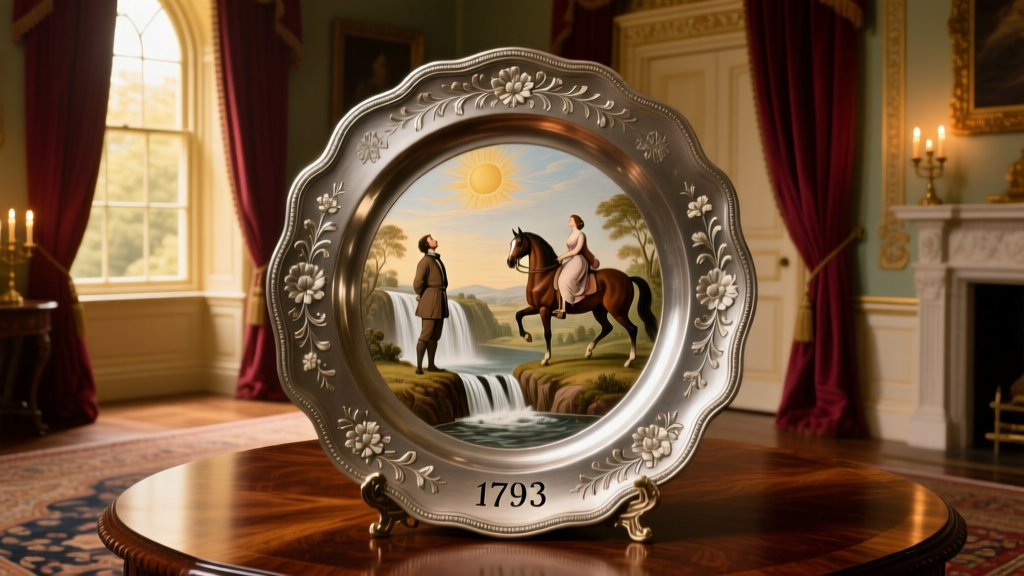
A Masterpiece of Georgian Pewter: The 1793 Engraved Charger Depicting Man at Waterfall and Woman on Horse
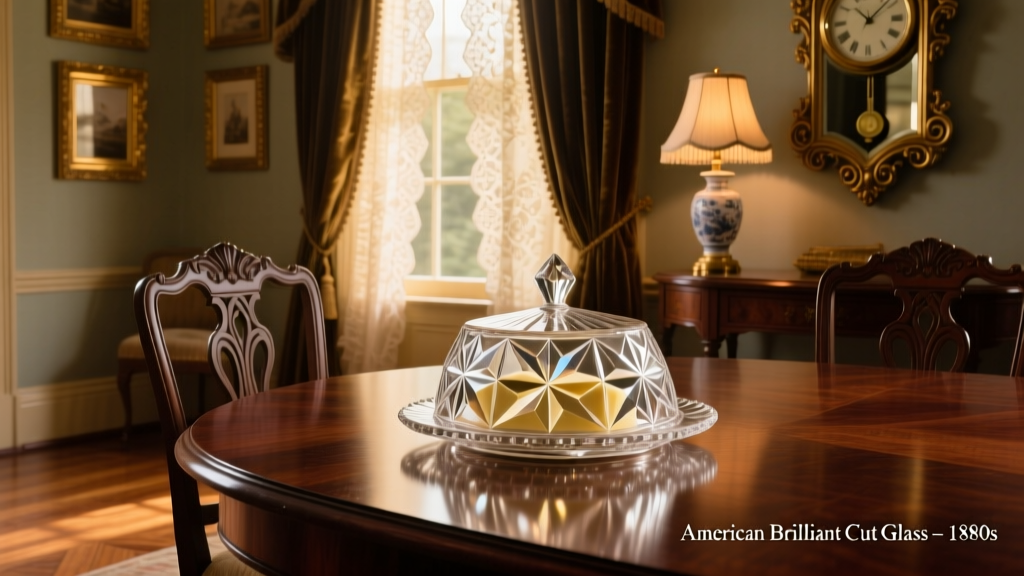
American Brilliant Cut Glass Butter Cover: Pinwheel Hobstar Fan Pattern, 5½ × 8 Inches — Identification, Provenance, and Conservation Guidelines
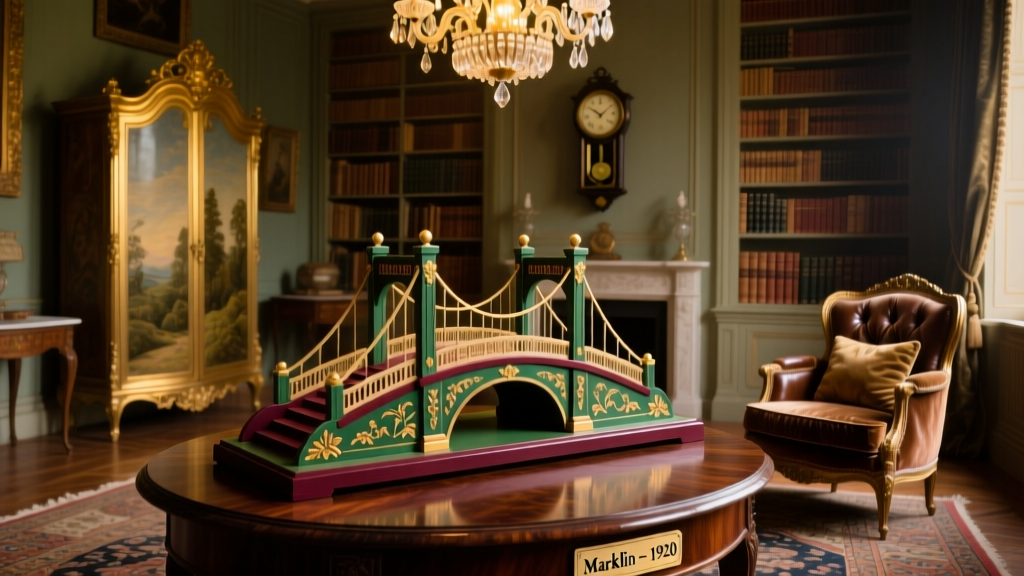
Marklin Toy Bridges: Embossed Texture, Hand-Painted Craftsmanship, and Historical Significance
Tole Brass Clocks with French Key Wind Mechanisms: Identifying, Authenticating, and Restoring 14½-Inch Examples from the Late 19th Century

Toy Helicopter 'N A S A Moon Scout' Windup: A Japanese Vintage Collectible from the Space Age Boom

Pelletreau & Upson: The Forgotten Partnership That Shaped American Empire Furniture
Luster Pink Pitcher Toby with Dark Blue Coat and Pink Lustre Trim: A Detailed Identification & Restoration Guide

Toy Soldier French Foreign Legion '6 Marching at Slope' Traditional Box: History, Authenticity, and Restoration Insights

Tiffany & Co. Silver Vase: Trumpet-Shaped Shield Form with Cartouche Relief, Circa 1913 — A Technical and Historical Appraisal