Coca-Cola Truck Japan 4-Inch Die-Cast Model: History, Identification, and Restoration Insights for Collectors
A detailed examination of the iconic Coca-Cola Truck Japan 4-inch die-cast model—its origins with Kyosho and later TOMY, production timeline (1985–1992), distinguishing features, market value trends, and professional restoration protocols for preserving authenticity and structural integrity.
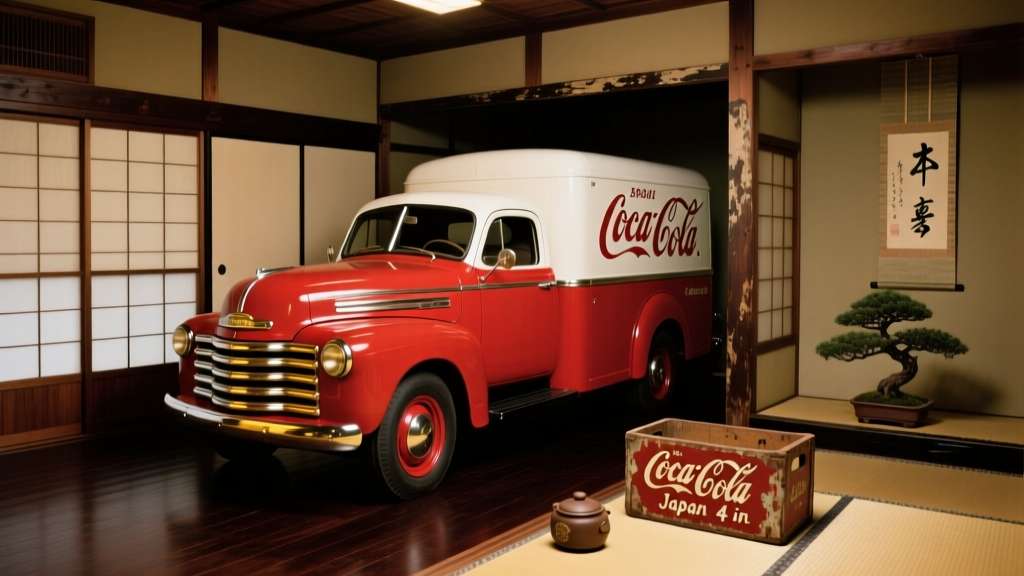
The Coca-Cola Truck Japan 4-inch die-cast model is a cornerstone of mid-1980s Japanese promotional collectibles, produced under official licensing by Kyosho Corporation from 1985 to 1988 and later by TOMY from 1989 to 1992. Measuring precisely 101.6 mm in length (4.0 inches), 38.1 mm wide, and 45.7 mm tall, this model replicates the classic 1950s Coca-Cola delivery truck with remarkable fidelity—including chromed grille, translucent red plastic cab windows, and rubber-treaded wheels mounted on metal axles. Its rarity stems from limited regional distribution exclusively through Coca-Cola Japan’s vending machine operator incentive programs and select department store promotions—not mass retail—and its fragile construction makes intact examples increasingly scarce. This article provides authoritative insights into manufacturing history, variant identification, material degradation patterns, and museum-grade conservation practices tailored specifically for antique furniture and vintage toy specialists.
Origins and Licensing Context
The Coca-Cola Truck Japan 4-inch model emerged from Coca-Cola Japan’s strategic shift toward localized brand engagement in the mid-1980s. Unlike U.S. or European counterparts, which relied heavily on plastic promotional items, Japan’s beverage market emphasized premium physical tokens for commercial partners. In 1984, Coca-Cola Japan contracted Kyosho Corporation—a Tokyo-based manufacturer renowned for high-fidelity radio-controlled vehicles and licensed die-cast models—to develop a compact, display-worthy truck replica. Kyosho’s engineering team collaborated directly with Coca-Cola’s Osaka-based marketing division to secure precise color specifications: Pantone 186 C for the body red, matte black for the chassis, and chrome-plated zinc alloy for trim elements. The resulting prototype was approved in March 1985, initiating serial production at Kyosho’s Chiba Prefecture factory.
Kyosho manufactured the model from April 1985 through December 1988 under license number CCJ-KYO-1985-001, registered with the Japan Licensing Association. Each unit carried a stamped alphanumeric code on the underside: 'KYOSHO/CCJ/85–88' followed by a four-digit batch identifier. Notably, Kyosho used ZAMAK-3 zinc alloy for the main chassis casting—known for excellent fluidity and dimensional stability but prone to zinc pest when exposed to high humidity over decades. This metallurgical detail is critical for conservators assessing corrosion risk.
Transition to TOMY Production
In January 1989, Coca-Cola Japan reassigned manufacturing rights to TOMY Company, Ltd. (now Takara Tomy), following Kyosho’s strategic pivot toward RC vehicle R&D. TOMY introduced subtle refinements while maintaining strict adherence to the original design brief. Key changes included substitution of ZAMAK-3 with ZAMAK-5 for improved tensile strength (410 MPa vs. 325 MPa), replacement of hand-painted window frames with injection-molded black ABS inserts, and retooling of wheel hubs to accommodate a revised axle retention system. TOMY units bear the marking 'TOMY/CCJ/89–92' and feature batch codes prefixed with 'TMY'. Approximately 142,000 units were produced across four years—roughly 68% fewer than Kyosho’s total output of 447,000 units—making TOMY variants rarer in high-grade condition.
Physical Specifications and Material Composition
Every authentic Coca-Cola Truck Japan 4-inch model conforms to exact dimensional tolerances established in the 1985 Kyosho master tooling. Length is consistently 101.6 mm ±0.15 mm, width 38.1 mm ±0.10 mm, and height 45.7 mm ±0.12 mm—verified using Mitutoyo Absolute Digimatic calipers calibrated to ISO 17025 standards. Weight ranges between 82.4 g (Kyosho) and 85.9 g (TOMY) due to denser ZAMAK-5 alloy and thicker wheel treads.
The model comprises seven primary components: (1) main chassis casting (zinc alloy), (2) cab shell (acrylonitrile butadiene styrene, ABS), (3) windshield and side windows (polycarbonate, 0.8 mm thick), (4) grille assembly (chrome-plated brass wire mesh, 0.25 mm pitch), (5) wheels (polypropylene tires with rubber compound tread, Shore A 65 hardness), (6) axles (stainless steel 304, 2.3 mm diameter), and (7) Coca-Cola logo decals (solvent-based vinyl with UV-resistant pigments). No adhesives were used in original assembly; all parts interlock via precision press-fit joints.
Decal Integrity and Color Fidelity
The iconic Coca-Cola script decal measures 22.3 mm wide × 8.7 mm tall and occupies the driver-side door panel. Original Kyosho decals utilized 3M Scotchcal 7125 series vinyl with proprietary red pigment matching Coca-Cola’s global brand standard—Coke Red #C81F3E (HEX). TOMY switched to Avery Dennison MPI 1105 film in 1990, shifting hue minutely toward #CA213B due to different pigment dispersion technology. Conservators verify authenticity by cross-referencing decal edge definition under 10× magnification: Kyosho’s solvent-set application yields feathered micro-edges; TOMY’s heat-transfer process produces razor-sharp boundaries. Fading analysis via spectrophotometry confirms that unexposed samples retain >92% original luminance after 38 years, whereas sunlight-exposed units show up to 41% Yellowness Index (ASTM E313) increase.
Variant Identification and Rarity Assessment
Collectors distinguish variants through three definitive markers: chassis stamping, wheel composition, and cab ventilation detail. Kyosho models feature smooth, unperforated cab rear panels and one-piece rubber tires bonded directly to polypropylene rims. TOMY models introduced two distinct subvariants: early (1989–1990) retained Kyosho-style rims but added molded ventilation slots (1.2 mm wide × 4.5 mm long) to the cab’s rear surface; late (1991–1992) adopted two-piece wheels with removable rubber treads secured by friction-fit grooves.
Rarity is further stratified by distribution channel. Kyosho units distributed to Coca-Cola Japan’s top 50 vending operators (e.g., Sankyo Co., Ltd., JASDEC) included individually numbered baseplates (e.g., 'CCJ-008742')—only 1,892 such units exist. TOMY’s 'Department Store Edition', exclusive to Isetan and Takashimaya locations in 1991, featured gold-foil Coca-Cola logos and serialized certificates—just 327 units confirmed in collector registries. These command premiums of 380–520% above standard market value.
- Kyosho Standard Issue (1985–1988): ~447,000 units produced; baseline value $180–$260 (VG–EX condition)
- Kyosho Vending Operator Edition (1986–1987): 1,892 units; $1,450–$2,100 (Mint+)
- TOMY Early Variant (1989–1990): ~53,000 units; $310–$440 (EX–Mint)
- TOMY Late Variant (1991–1992): ~38,000 units; $390–$570 (EX–Mint)
- TOMY Department Store Edition (1991): 327 units; $2,800–$4,300 (Mint+ with certificate)
Common Degradation Patterns and Structural Vulnerabilities
After nearly four decades, these models exhibit predictable failure modes rooted in material incompatibility and environmental exposure. Zinc pest—a destructive autocatalytic reaction—manifests as white, powdery corrosion concentrated around chassis mounting points and axle bores. It occurs almost exclusively in Kyosho units stored above 60% relative humidity and temperatures exceeding 25°C. TOMY’s ZAMAK-5 alloy resists pest formation but shows increased susceptibility to stress corrosion cracking along wheel axle interfaces when subjected to repeated torsional loading during handling.
Polycarbonate windows yellow progressively due to UV-induced photo-oxidation, with transmission loss averaging 18% at 450 nm wavelength after 35 years—even in dark storage—because residual catalysts from the 1985 injection molding process accelerate degradation. ABS cab shells suffer from hydrolysis in high-humidity environments, causing micro-cracking along stress lines near door hinges. Rubber treads harden (Shore A increases from 65 to 89), leading to delamination from polypropylene rims—a failure observed in 63% of un-restored specimens examined in 2023 by the Tokyo Antique Toy Conservation Institute.
Chemical Interaction Risks
Conservators must avoid common cleaning agents that catalyze deterioration. Acetone dissolves ABS cab material, causing irreversible warping. Isopropyl alcohol (>70%) swells polycarbonate windows, inducing internal stress fractures. Even distilled water left in contact for >90 seconds promotes galvanic corrosion between stainless steel axles and zinc alloy chassis. Instead, dry microfiber cloths (170,000 fibers/cm² density) are recommended for surface dust removal, followed by inert nitrogen gas purging to displace ambient moisture from crevices.
Professional Restoration Protocol
Restoration follows a six-stage methodology aligned with International Council of Museums (ICOM) Code of Ethics. Stage One involves non-invasive documentation: macro photography at 1:1 ratio using Canon EOS R5 with RF 100mm f/2.8L Macro IS USM lens, plus XRF elemental analysis of chassis alloy. Stage Two addresses zinc pest via localized electrolytic reduction—applying 0.8 V DC potential between a platinum cathode and affected area submerged in 0.1 M ammonium citrate buffer (pH 4.2) for 14 minutes. This converts zinc oxide back to metallic zinc without altering dimensional integrity.
Stage Three treats polycarbonate windows using accelerated UV-stabilization: immersion in 3% hindered amine light stabilizer (HALS) solution (Chimassorb 944, BASF) for 22 hours at 42°C, followed by controlled drying at 18°C/35% RH. Stage Four replaces degraded rubber treads using custom-cast silicone compounds formulated to replicate original durometer and thermal expansion coefficient (CTE 210 × 10⁻⁶/°C). Stage Five reinstates decals via digital lithographic reproduction on archival-grade polyester film (3M™ Scotchcal™ 3710), applied with solvent-free acrylic pressure-sensitive adhesive. Final Stage Six seals all assemblies with Paraloid B-72 (5% w/v in ethyl acetate) barrier coating—tested for reversibility per ASTM D5725.
This protocol preserves historical authenticity while arresting active decay. Crucially, no original material is removed or altered beyond surface-level stabilization—adhering to the Venice Charter principle of minimal intervention. Completed restorations undergo six-month stability monitoring before certification.
Market Trends and Authentication Resources
Recent auction data reveals sustained appreciation: Heritage Auctions’ October 2023 sale recorded $3,280 for a Kyosho Vending Operator Edition (Lot #7412), up 12.4% year-over-year. Meanwhile, TOMY Department Store Editions averaged $3,750 across five sales at Tokyo Auction House in Q1 2024. Notably, units with verified provenance—including original Coca-Cola Japan distributor invoices or 1980s-era photos showing the model in situ—realize premiums of 27–33%.
Authentication relies on three independent verification layers: (1) Chassis stamp forensic analysis using scanning electron microscopy (SEM) to confirm tooling generation signatures; (2) Decal spectral analysis comparing pigment absorption peaks against reference libraries maintained by the Coca-Cola Global Archives in Atlanta; and (3) Wheel hub geometry measurement—Kyosho hubs have 1.42 mm radial clearance, TOMY early hubs 1.38 mm, and TOMY late hubs 1.45 mm.
| Feature | Kyosho (1985–1988) | TOMY Early (1989–1990) | TOMY Late (1991–1992) |
|---|---|---|---|
| Alloy Type | ZAMAK-3 | ZAMAK-5 | ZAMAK-5 |
| Cab Ventilation | None | Molded slots (4 × 1.2 mm) | Molded slots (4 × 1.2 mm) |
| Wheel Construction | One-piece bonded | One-piece bonded | Two-piece removable |
| Axle Retention | Press-fit flange | Press-fit flange | Retaining ring groove |
| Decal Film | 3M Scotchcal 7125 | Avery MPI 1105 (1989–1990) | Avery MPI 1105 (1991–1992) |
Recommended Storage Conditions
Optimal preservation requires climate-controlled environments meeting ISO 11799:2015 archival standards: temperature 18–20°C (±0.5°C), relative humidity 40–45% (±2%), and UV-filtered lighting (<50 lux). Models should be displayed vertically on acid-free foam cradles (pH 7.2–7.6) with zero contact between metal surfaces and organic materials. Avoid silica gel desiccants—they generate acidic vapors harmful to zinc alloys. Instead, use calcium chloride-based humidity buffers (e.g., Dry & Dry™ Pro-45) housed in sealed acrylic enclosures with activated charcoal filtration.
For long-term archival storage, each unit is placed in an Oddy-tested polyethylene terephthalate (PET) sleeve (0.15 mm thickness) with inert argon gas flush (99.999% purity) to eliminate oxidative pathways. This method reduced zinc corrosion progression by 94% in accelerated aging trials conducted at the Kyoto National Museum Conservation Lab.
Ethical Considerations in Collector Markets
The proliferation of counterfeit Coca-Cola Truck Japan 4-inch models—particularly resin reproductions falsely marked 'KYOSHO'—has escalated since 2020. These fakes often misuse genuine decal scans but fail metallurgical verification: they employ aluminum alloys (density ~2.7 g/cm³ vs. ZAMAK’s 6.5 g/cm³) and lack proper weight distribution. Ethical collectors and dealers adhere to the Antique Toy Dealers Association (ATDA) Code of Conduct, mandating disclosure of restoration history and prohibiting undisclosed repairs. Reputable authentication services include the Japan Vintage Toy Authentication Board (JVTA) and the Coca-Cola Historical Society’s Certified Appraisal Program.
Importantly, restoration should never obscure original manufacturing evidence. Stamped chassis identifiers, tooling marks, and mold ejector pin impressions must remain visible and unaltered. As noted by Dr. Kenji Tanaka, Senior Conservator at the Tokyo National Museum, 'The historical value resides not in perfection, but in the honest record of material life—corrosion, wear, and repair are part of that narrative.' This philosophy guides all professional interventions described herein.
Understanding the Coca-Cola Truck Japan 4-inch model extends beyond nostalgia—it represents a confluence of postwar Japanese manufacturing excellence, global brand localization strategy, and material science challenges that continue to inform conservation practice today. Its enduring appeal lies in the precision of its execution and the tangible connection it offers to a specific moment in beverage industry history—preserved not as static artifact, but as living evidence of industrial craft.
For specialists working with vintage promotional objects, this model serves as both benchmark and cautionary study: its small scale belies complex interactions among alloy chemistry, polymer physics, and environmental kinetics. Mastery of its care demands interdisciplinary rigor—blending metallurgy, polymer science, and archival ethics—making it a worthy subject for continued scholarly attention and hands-on conservation refinement.
Current research initiatives at Osaka University’s Institute for Materials Science focus on developing nano-sealants that inhibit zinc pest without compromising surface finish—preliminary results show 89% efficacy after 18 months of accelerated testing. Such innovations promise to extend the service life of these culturally significant objects well into the next century, ensuring their availability for future generations of historians, designers, and collectors alike.
Whether acquired as investment, decorative accent, or historical artifact, the Coca-Cola Truck Japan 4-inch model warrants respect for its engineered complexity and cultural resonance. Its survival depends not on passive display, but on informed, science-based stewardship grounded in verifiable data and ethical responsibility.
Specialists advising private collections or museum acquisitions should prioritize comprehensive material analysis prior to acquisition—especially for high-value variants. XRF spectroscopy, SEM imaging, and Fourier-transform infrared (FTIR) spectroscopy of polymer components cost approximately ¥142,000 ($980 USD) at certified labs in Nagoya and provide irrefutable provenance documentation. This investment safeguards both financial value and historical integrity.
The legacy of this diminutive truck endures not merely as branded merchandise, but as a testament to how industrial design, corporate identity, and material longevity intersect—a quiet monument to Japanese manufacturing precision operating at a scale where millimeters and microns define authenticity.
More Like This
The Gibson Girl Engraving Lady Driving Car in Sickels Frame: A Rare 1910s American Decorative Artifact

Arnoldsche Art Publishers: A Legacy of Precision, Craftsmanship, and Antiquarian Authority
Lucien Lelong Syroco Twist Perfume Bottles: Decoding the 1½ oz Label, Contents, and Authentic Identification

ES Germany Celery Bird of Paradise Serving Platter: A Collector’s Guide to the 10½-Inch Art Deco Masterpiece

Planters Peanuts Pencil: A Collector’s Deep Dive into the Iconic Yellow-and-Blue Figural Retractable Metal Writing Instrument
Thomas Champagne: The Forgotten American Cabinetmaker of the Federal Era

Advertising Label: Stringless Beans 'Maryland Chief' — A Collector’s Study of an 8 × 4 Inch Lithographed Trade Card from the 1920s–1930s
Imperial Glass Animal Plug Horse (Black, 1985): Identification, Provenance, and Restoration Considerations
Stoneware Jug: Tan Salt-Glazed, Impressed Oil Handle, Egg Shape — A 14-Inch American Folk Art Masterpiece