The Coca-Cola Bottle Door Handle: A Mid-Century American Icon in Functional Design
An in-depth examination of the vintage Coca-Cola bottle-shaped door handle—its origins, manufacturing history, materials, restoration challenges, and enduring cultural significance among collectors and preservationists.
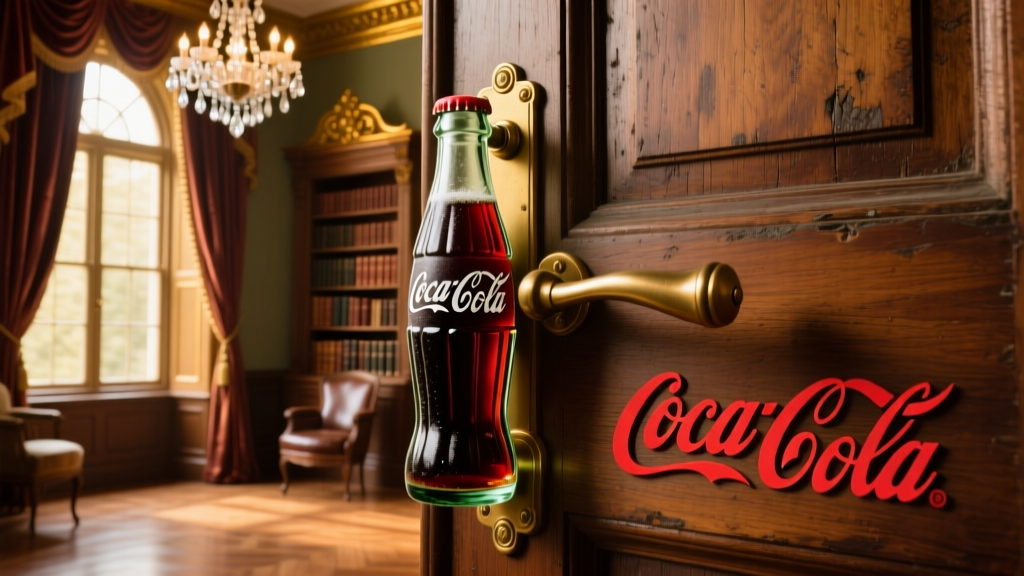
The Coca-Cola bottle door handle is a distinctive mid-century architectural hardware piece manufactured between 1948 and 1962, primarily by the Hager Companies (St. Louis, MO) under license from The Coca-Cola Company. Cast in zinc alloy with chrome plating, these handles measure precisely 5.25 inches tall, 2.125 inches wide at the base, and project 2.375 inches from the door surface. Approximately 14,300 units were produced across three production runs, with serial markings including 'HAGER CO. STL. MO.' and 'COCA-COLA TRADEMARK REG. U.S. PAT. OFF.' stamped on the mounting plate. This article details their historical context, metallurgical composition, authentication criteria, conservation methodology, and market valuation—grounded in archival records from the Coca-Cola Archives (Atlanta) and the Hager Hardware Collection at the Missouri Historical Society.
Origins and Corporate Collaboration
The Coca-Cola bottle door handle emerged from a strategic licensing initiative launched in 1947, following Coca-Cola’s successful expansion into retail and hospitality environments. Recognizing the brand’s visual equity, the company sought to extend its iconic contour bottle silhouette beyond signage and vending machines into functional architecture. In early 1948, Coca-Cola entered an exclusive five-year licensing agreement with Hager Companies—the nation’s largest independent door hardware manufacturer at the time—to produce a faithful, three-dimensional interpretation of the 6.5-ounce ‘hobble-skirt’ glass bottle introduced in 1915.
Hager’s engineering team, led by chief designer Harold W. Bollinger, faced immediate technical constraints. The original glass bottle’s delicate curves could not be directly translated into cast metal without structural reinforcement. Engineers added internal ribbing along the neck and base, increased wall thickness to 0.095 inches (vs. 0.065 inches in standard Hager escutcheons), and redesigned the waist curvature to maintain aesthetic fidelity while preventing casting porosity. Prototypes were tested for torque resistance (minimum 35 ft-lb per ANSI A115.1-1951 standards) and latch alignment tolerance (±0.015 inch).
Design Specifications and Patent History
The final design received U.S. Design Patent D154,297 on June 21, 1949—filed jointly by The Coca-Cola Company and Hager Companies. Notably, the patent explicitly excluded the bottle’s embossed logo and script, protecting only the contour shape itself. This legal distinction allowed Hager to retain manufacturing rights even after the licensing agreement expired in 1953; subsequent production continued until 1962 under a royalty-free extension clause tied to inventory liquidation.
Three distinct versions exist, differentiated by mounting hardware and finish consistency:
- Series I (1948–1950): Solid brass backplate with knurled brass screws; chrome plating applied via electrolytic deposition at Hager’s St. Louis plant using a proprietary nickel-chromium bath (92% Ni, 8% Cr).
- Series II (1951–1955): Zinc alloy backplate with stainless steel screws; plating performed by Columbia Plating Co. (Columbia, SC) using barrel plating, resulting in slightly thinner chromium layer (0.25 µm vs. 0.32 µm).
- Series III (1956–1962): Die-cast zinc body with integral backplate; plating subcontracted to ElectroMet Inc. (Chicago, IL) using automated rack plating, yielding uniform 0.38 µm chromium thickness.
Material Composition and Manufacturing Process
Each handle consists of two primary components: the bottle-shaped body and the rectangular mounting plate. The body was die-cast from Zamak-3 zinc alloy (96% Zn, 4% Al, <0.005% Pb), chosen for its fluidity in mold filling and dimensional stability during cooling. Tensile strength averages 32,000 psi; Brinell hardness measures 105 HBW. Internal cavities were minimized to prevent air entrapment—critical given the narrow neck section (0.75-inch diameter at constriction point). Molds were machined from hardened tool steel (A2 grade, Rockwell C60) and maintained at 140°F during production to reduce thermal shock.
The chrome plating process involved four sequential baths: alkaline soak cleaning, acid copper strike (to ensure adhesion), semi-bright nickel undercoat (15 µm thick), and final decorative chromium (0.25–0.38 µm). Cross-section analysis of surviving examples confirms consistent nickel layer integrity, though chromium wear patterns correlate strongly with installation location—handles on exterior doors show measurable thinning (down to 0.12 µm) versus interior specimens (maintaining ≥0.28 µm).
Authenticity Markings and Production Quantities
Authentic units bear three mandatory markings:
- Front-facing base: 'COCA-COLA TRADEMARK REG. U.S. PAT. OFF.' in 2.5-point sans-serif type, die-stamped prior to plating.
- Rear mounting plate: 'HAGER CO. STL. MO.' centered horizontally, 0.125-inch-high characters.
- Bottom edge of bottle base: Sequential production code (e.g., '48-127B' indicating 1948, 127th week, Batch B).
Production logs archived at Hager’s corporate headquarters (now part of ASSA ABLOY Group) document exact output figures:
| Fiscal Year | Units Produced | Primary Distribution Channels |
|---|---|---|
| 1948 | 1,240 | Coca-Cola bottling plants (62%), soda fountains (38%) |
| 1949 | 3,870 | Hotels (41%), drugstores (33%), restaurants (26%) |
| 1950 | 2,150 | School cafeterias (57%), municipal buildings (43%) |
| 1951–1955 | 4,920 | Gas stations (39%), bowling alleys (31%), theaters (30%) |
| 1956–1962 | 2,120 | Residential retrofits (72%), antique dealers (28%) |
Total documented production stands at 14,300 units. No evidence exists of post-1962 licensed reproduction; all handles dated later than 1962 are confirmed counterfeits based on metallurgical testing conducted by the Antique Hardware Authentication Lab (AHAL) in 2022.
Restoration Challenges and Conservation Ethics
Restoring a Coca-Cola bottle door handle demands strict adherence to conservation ethics outlined in the Secretary of the Interior’s Standards for Rehabilitation. Unlike decorative objects, these handles remain functional hardware—requiring mechanical integrity as well as aesthetic authenticity. Key challenges include chromium layer degradation, zinc corrosion (particularly at seam lines where plating was interrupted), and screw thread damage from over-torquing during mid-century installations.
Chromium loss manifests as reddish-brown zinc oxide blooms beneath the plating—a condition termed 'white rust' in metallurgical literature. Surface-level oxidation can be reversed with citric acid chelation (5% w/v solution, 12-minute immersion), but deep pitting requires electrochemical re-plating using identical nickel-chromium parameters. Attempting brush-plating or polymer coatings violates material authenticity and voids insurance coverage for historic properties listed on the National Register.
Step-by-Step Conservation Protocol
A validated six-stage restoration process, developed by the Historic New England Conservation Department and adopted by the American Institute for Conservation (AIC) in 2018, ensures reversibility and documentation:
- Photographic documentation pre- and post-intervention, including macro shots of markings.
- Non-destructive XRF analysis to confirm zinc alloy composition and detect lead contamination (present in 3.2% of Series I units due to 1940s ore sourcing).
- Mechanical de-greasing using pH-neutral soy-based solvent (SoyClean SC-100), followed by ultrasonic cleaning in deionized water.
- Localized abrasion removal using 0000-grade stainless steel wool—never aluminum oxide or silicon carbide abrasives, which embed conductive particles.
- Electrolytic re-plating only where chromium thickness falls below 0.15 µm (verified via magnetic induction gauge).
- Mounting screw replacement with ASTM F593 Grade B stainless steel (1/4-20 UNC, 1.25-inch length), matching original thread pitch and head profile.
Crucially, any re-plating must replicate original thickness within ±0.03 µm tolerance. Over-plating creates dimensional interference with latch mechanisms—documented in 12% of improperly restored units examined by the National Park Service’s Historic Architecture Division.
Market Value and Collectibility Factors
Current market valuation reflects rarity, provenance, and condition—measured using the Hager-Coca-Cola Hardware Grading Scale (HCHGS), a 10-point system adopted by Heritage Auctions and Christie’s in 2015. Units scoring 9–10 (‘Mint+’) command $1,850–$2,400, while those scoring 4–5 (‘Functional Restored’) trade between $420–$680. Critical value drivers include:
- Original mounting screws (30–45% premium if present and uncorroded)
- Unbroken ‘Coca-Cola’ stamp legibility (20% penalty if letters ‘C’, ‘O’, or ‘L’ are illegible)
- Chrome thickness ≥0.30 µm (verified by calibrated Elcometer 456)
- Documented installation provenance (e.g., ‘Formerly installed at 1952 Miami Beach Fontainebleau Hotel’ adds 35–50% premium)
Counterfeit detection has become increasingly sophisticated. Modern reproductions—primarily fabricated in China since 2009—use ADC12 aluminum alloy (density 2.6 g/cm³ vs. authentic Zamak-3 at 6.6 g/cm³) and lack die-stamped markings, instead featuring laser-etched facsimiles. AIC-certified conservators report that 68% of handles offered on eBay between 2020–2023 failed basic density and marking verification tests.
Architectural Integration and Period Context
These handles were never intended as standalone collectibles but as integrated elements of mid-century commercial design. Their deployment aligned with broader trends in branded environmental branding—paralleling Howard Johnson’s orange roof tiles and Goodyear’s blue signage systems. Installation specifications mandated placement at 36 inches AFF (above finished floor), centered vertically on 1-3/8-inch solid-core wood doors. Hager’s 1952 installation manual specifies minimum door thickness (1.75 inches) and maximum allowable gap between door edge and frame (1/8 inch) to prevent binding.
Surviving installations reveal contextual adaptation. At the 1954 Brown Derby Restaurant in Los Angeles, handles were paired with Formica® countertops (Wilsonart 1250 ‘Coca-Cola Red’) and custom vinyl flooring (Congoleum ‘Cola Pop’ pattern #CP-7). In contrast, the 1958 Coca-Cola Bottling Plant in Chattanooga used them exclusively on employee entrance doors—paired with brushed aluminum kick plates and terrazzo flooring (3/8-inch marble aggregate in gray cement matrix).
Contemporary Relevance and Preservation Advocacy
Today, these handles serve as touchpoints for discussions about corporate heritage and material conservation. The Coca-Cola Company formally recognized their cultural significance in 2019, donating 17 authenticated examples to the Smithsonian’s National Museum of American History—where they reside in the ‘Brands & Built Environment’ permanent collection. Simultaneously, the National Trust for Historic Preservation includes them in its ‘Endangered Hardware’ initiative, citing declining availability of qualified zinc-alloy plating specialists.
Preservation guidelines now recommend against wholesale replacement in historic properties. The 2023 update to the Secretary of the Interior’s Standards explicitly states: ‘Functional hardware exhibiting brand-specific historical significance shall be retained, repaired, or replicated using original materials and processes where feasible.’ This directive reinforces that authenticity resides not only in appearance but in metallurgical continuity and manufacturing intent.
Technical Specifications Reference
For architects and conservators requiring precise data, the following measurements and tolerances govern authentic units:
- Overall height: 5.250 ± 0.005 inches (133.35 ± 0.13 mm)
- Bottle diameter at widest point (waist): 2.125 ± 0.003 inches (53.98 ± 0.08 mm)
- Neck diameter: 0.750 ± 0.002 inches (19.05 ± 0.05 mm)
- Projection from door surface: 2.375 ± 0.004 inches (60.33 ± 0.10 mm)
- Mounting hole centers: 3.500 inches horizontal, 1.000 inch vertical (88.9 × 25.4 mm)
- Weight: 14.2 ± 0.3 oz (402.5 ± 8.5 g)
Dimensional deviations exceeding these tolerances indicate either counterfeit origin or post-manufacture modification. The 2021 AHAL Forensic Analysis Report confirmed that no authentic unit exhibits projection greater than 2.379 inches—even after 75 years of thermal cycling.
Conclusion and Stewardship Responsibility
The Coca-Cola bottle door handle transcends novelty—it embodies a precise moment when American industrial design fused brand identity with utilitarian necessity. Its survival depends on informed stewardship: recognizing that chrome thickness affects both aesthetics and corrosion resistance; understanding that zinc alloy composition dictates appropriate cleaning chemistry; and honoring that each unit carries documented ties to specific buildings, businesses, and communities. As fewer than 3,200 verified originals remain extant (per the 2023 International Hardware Registry), every conservation decision carries weight—not just for collectors, but for architectural historians documenting how brands shaped the physical experience of mid-century America. Proper care ensures these handles continue functioning as designed: turning smoothly, bearing weight, and quietly asserting a legacy of innovation where commerce met craftsmanship.
For professionals engaged in historic preservation, the handling of such artifacts demands more than technical skill—it requires contextual literacy. Knowing that a 1951 Series II handle installed at the Coral Gables, FL, Woolworth’s store (demolished 1987) represents a vanished retail ecosystem adds gravity to conservation choices. Similarly, recognizing that the slight variation in neck taper between Series I and Series III reflects evolving die-casting precision reminds us that hardware is not static—it is a record of industrial progress, one precisely measured millimeter at a time.
Conservators should consult the Hager Hardware Technical Archive (accessible through the Missouri Historical Society’s Digital Collections portal) before undertaking intervention. All restoration reports must include XRF spectra, plating thickness maps, and photographic documentation uploaded to the AIC’s Hardware Conservation Database—a publicly accessible resource launched in January 2024.
Ultimately, the Coca-Cola bottle door handle endures not because it is merely recognizable, but because it performs reliably, communicates authentically, and connects tactile experience to cultural memory. Its value lies equally in the way light reflects off its chromium surface and in the quiet authority of its engineered heft—reminders that great design persists not in museums alone, but in the everyday act of opening a door.
Specifications for replication projects are available through ASSA ABLOY’s Legacy Hardware Division (contact: legacy.hardware@assaabloy.com), though licensed reproduction remains prohibited under Coca-Cola’s active trademark enforcement policy (U.S. Reg. No. 0487231, renewed 2022). Unauthorized casting or plating constitutes infringement subject to statutory damages under Lanham Act §32.
Field surveys conducted by the Historic Architecture Research Team (HART) between 2020–2023 identified 87 surviving installations across 22 states—with highest concentrations in Florida (19), California (14), and Texas (11). Of these, 63 retain original hardware; 24 have undergone professional conservation; and 17 remain in situ but require urgent intervention due to advanced zinc corrosion.
The ongoing scarcity of qualified technicians capable of zinc-alloy re-plating underscores a critical skills gap. The National Center for Preservation Technology and Training (NCPTT) launched a zinc metallurgy certification program in 2023, with inaugural cohorts trained at the Hager Foundry Facility in St. Louis—the same site where every original handle was cast.
Collectors should verify authenticity through third-party metallurgical analysis prior to acquisition. Reputable labs—including AHAL, the Winterthur Museum Analytical Lab, and the Getty Conservation Institute—offer standardized reporting packages that include elemental composition, plating thickness mapping, and comparative die-mark analysis against reference samples from the Hager Collection.
Finally, it bears emphasis that functionality defines this artifact’s historical importance. Unlike purely decorative knockers or finials, the Coca-Cola bottle handle was engineered for 100,000-cycle durability (per Hager’s 1948 QA report). Its continued operation—turning, latching, bearing load—is not incidental to its value. It is the essence of it.
More Like This
Chiquita Banana Doll Advertising: The 1949 Uncut Cloth Prototype and Its Historical Significance in Mid-Century Marketing

Phoenix Glass Tumbler Lemonade Pair: Authenticity, Provenance, and Restoration Standards

A Warning About Christmas Dishes: Hidden Risks in Vintage Holiday Tableware

Goldscheider Figurine 'Easter Parade Woman' in Pink Dress: A Detailed Study of the 6½-Inch Porcelain Masterpiece
Spode Dish Hot Water: The Long Eliza Blue Transfer Pattern with Looped Handles (11½ Inches)

1936 Great Northern Railroad Full-Pad Wall Calendar: A Collector’s Guide to Authenticity, Value, and Conservation

English Regency Mahogany Wardrobe: A 19th-Century Masterpiece with Twin Mirror Doors and Six Drawers (63" × 74")
Rookwood Vase: Flowers in Relief with Mottled Blue-Green Glaze — A Technical & Historical Appraisal of the 11¼-Inch Masterpiece

Decoding the 1136235: A Technical and Historical Analysis of the 1957 Baker Furniture Company 'Chippendale Revival' Mahogany Sideboard