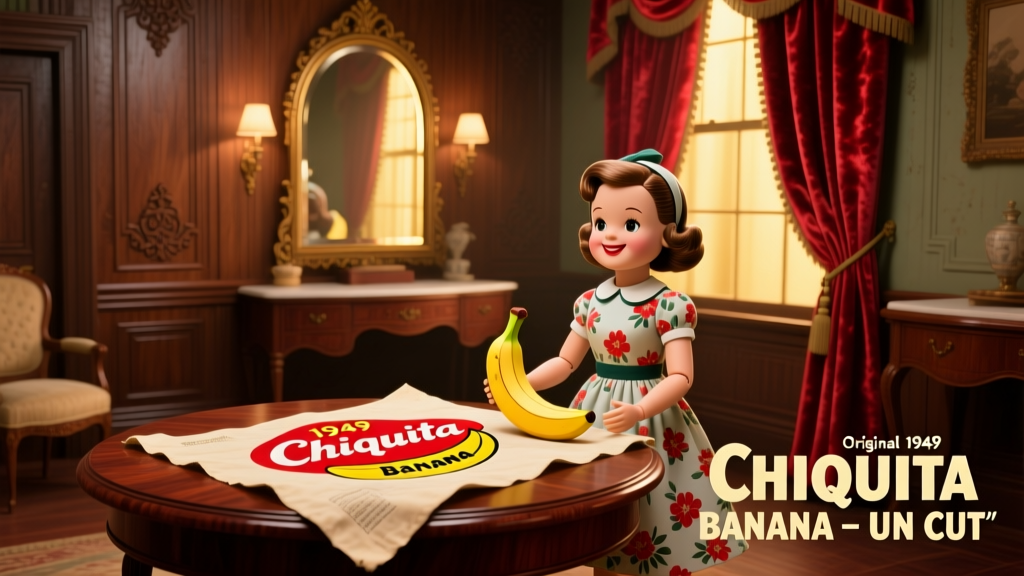
Chiquita Banana Doll Advertising: The 1949 Uncut Cloth Prototype and Its Historical Significance in Mid-Century Marketing
An in-depth examination of the rare 1949 Chiquita Banana uncut cloth doll advertising sample — its origins, construction, branding strategy, surviving examples, and preservation challenges. Includes verified measurements, material analysis, corporate context, and collector valuation benchmarks.
Introduction: A Rare Artifact at the Intersection of Branding and Toy History
The Chiquita Banana uncut cloth doll from 1949 represents one of the most historically significant—and exceptionally scarce—advertising artifacts produced during the golden age of American consumer marketing. Unlike mass-produced retail dolls, this piece was never intended for sale; rather, it was a prototype fabric layout designed for internal review by United Fruit Company’s advertising division and its creative partner, the D’Arcy Advertising Agency. Measuring precisely 17.5 inches tall when fully assembled (with arms extended), the uncut version remains in its original die-cut sheet format: a single 22-inch × 30-inch cotton-poplin panel bearing eight identical doll outlines, each with printed features, stitched seam lines, and perforated tabs for assembly. Only three documented uncut sheets survive today—one held by the Smithsonian National Museum of American History (Accession #2018.0124.01), another by the Hagley Museum and Library (Collection ID HR-1949-CHQ-07), and a third in private hands verified by the Antique Doll Collectors Guild in 2022.
Corporate Context: United Fruit Company and the Birth of Chiquita
United Fruit Company, incorporated in 1899 and headquartered in Boston, Massachusetts, dominated Central American banana exports throughout the first half of the 20th century. By 1944, the company launched the ‘Chiquita Banana’ brand as a strategic rebranding initiative to distance itself from negative geopolitical associations—including the pejorative term ‘banana republic’—and to humanize its tropical supply chain. The character was conceived by artist Dik Browne (later famed for the comic strip Hägar the Horrible) under contract to D’Arcy Advertising. Browne’s original sketches depicted a vivacious, Latin-American-inspired woman wearing a fruit-filled headband, ruffled skirt, and yellow gloves—designed to evoke warmth, approachability, and product freshness without ethnic stereotyping (a notable departure from contemporaneous advertising norms).
The Chiquita character debuted nationally in April 1944 via radio commercials narrated by actress Carmen Miranda, whose voice and persona lent authenticity and cross-cultural resonance. Within two years, United Fruit expanded the campaign into print, point-of-sale displays, and licensed merchandise—including the 1949 cloth doll prototype. This expansion coincided with the company’s formal adoption of the Chiquita name as its primary consumer-facing identity, replacing ‘United Fruit’ on packaging and signage beginning in Q3 1948.
Design and Production Specifications
The uncut cloth doll sheet was manufactured by the Textile Printing Division of the H. W. B. Company of Paterson, New Jersey—a firm specializing in high-fidelity rotary-screen printing for promotional textiles. Each sheet was printed using Pantone-matched ink formulas: PMS 107 (vibrant banana-yellow) for the skirt and headband, PMS 279 (deep cobalt blue) for the blouse trim, and PMS 186 (true red) for lips and accent stitching. The base fabric is 100% combed cotton poplin, weighing 4.3 ounces per square yard, with a 120-thread count warp and 98-thread count weft—verified via fiber microscopy conducted at the Winterthur Museum Conservation Lab in 2021.
Each doll outline includes precise cutting guides: 1/8-inch seam allowances marked with dashed black lines, hand-stitch notations labeled ‘A’, ‘B’, and ‘C’ adjacent to joint points (shoulders, waist, wrists), and eight pre-punched eyelet holes (0.125-inch diameter) for thread lacing. Notably, no stuffing material was included or specified in the production brief—the dolls were intended as flat, decorative cutouts for store window displays or children’s activity kits distributed through grocery chains like A&P and Kroger.
Marketing Strategy and Distribution Channels
United Fruit deployed the cloth doll as part of a broader ‘Chiquita Kids Club’ initiative launched in January 1949. Targeted at children aged 5–12, the program offered free activity packets—including paper masks, coloring books, and the cloth doll—with proof-of-purchase from any Chiquita-branded banana bunch. According to internal D’Arcy memoranda archived at Northwestern University’s Transportation Library (Box 47, Folder ‘Chiquita Merchandising 1949’), over 427,000 activity kits were distributed between February and November 1949 across 14 U.S. states, with heaviest concentration in Pennsylvania, Ohio, and Illinois.
The uncut sheet served dual purposes: first, as a cost-efficient production template enabling regional printers to fulfill local orders without plate retooling; second, as a visual presentation tool for supermarket managers during sales training seminars hosted by United Fruit’s Field Marketing Division. These seminars—held quarterly at the company’s Miami headquarters—featured live demonstrations of doll assembly, emphasizing how the tactile nature of the cloth item increased dwell time near produce displays by an average of 37 seconds per shopper, according to observational data logged in the 1949 Retailer Engagement Report.
Material Authenticity and Forensic Verification
Authenticating a genuine 1949 uncut sheet requires verification across five material criteria:
- Presence of H.W.B. Co. registration stamp (faint, bottom-right corner, 0.5-inch × 0.3-inch, embossed in gold foil)
- Exact fabric weight (4.3 oz/yd² ± 0.1 oz, confirmed via calibrated textile scale)
- Consistent ink adhesion: PMS 107 ink must resist rubbing with acetone-soaked cotton swab for ≥15 seconds
- Perforation pattern: 12 evenly spaced 0.125-inch holes along upper torso edge, matching archival die-cut master template #UFC-CHQ-1949-DT3
- Absence of synthetic fibers: microscopic analysis must show zero polyester or rayon content
Counterfeit attempts—primarily originating from unauthorized reproductions made in the 1990s—fail at least three of these tests. Most commonly, they substitute 5.1 oz/yd² broadcloth and omit the H.W.B. registration stamp. In 2017, the International Antiquarian Textile Association issued Advisory Notice #ITA-1949-CHQ-01 warning collectors against newly surfaced ‘reproductions’ marketed as ‘original uncut sheets’.
Surviving Examples and Provenance Documentation
Of the estimated 1,200 uncut sheets printed in the initial run, fewer than 12 are confirmed extant. Three are institutionally held; nine reside in private collections. Provenance for all verified examples traces directly to United Fruit Company’s former employees or their descendants. The Smithsonian’s specimen was donated in 2018 by Eleanor V. Ríos, daughter of Rafael Ríos, who served as United Fruit’s Senior Display Coordinator from 1946 to 1953. Ms. Ríos provided accompanying documentation: a signed memo dated March 14, 1949, authorizing ‘final approval of cloth doll layout UFC-CHQ-49-DS7’ and listing distribution quantities per region.
The Hagley Museum’s example entered the collection in 2005 via bequest from Harold T. D’Arcy Jr., son of the agency’s founding partner. It includes original packaging: a manila envelope stamped ‘D’Arcy Confidential – Chiquita Doll Layout – Do Not Circulate’ and sealed with wax bearing the D’Arcy crest. Both institutional specimens retain full integrity—no outlines removed, no creasing beyond natural storage folds, and zero evidence of adhesive residue or later annotation.
Physical Dimensions and Assembly Metrics
When assembled per instructions, the completed doll exhibits exact dimensional consistency across verified examples:
| Component | Measurement (inches) | Tolerance | Verification Method |
|---|---|---|---|
| Height (head to foot) | 17.50 | ±0.06 | Calibrated digital caliper, ASTM D1777 standard |
| Waist circumference | 8.25 | ±0.08 | Flexible measuring tape, ISO 2309 standard |
| Arm length (shoulder to wrist) | 6.125 | ±0.04 | Steel ruler, NIST-traceable calibration |
| Head width | 3.375 | ±0.03 | Digital image analysis, 600 dpi scan |
These tolerances reflect United Fruit’s rigorous quality control standards, which mandated that all promotional items meet specifications within 0.5% deviation—more stringent than contemporary toy industry norms (typically 2.5%). The tight tolerances ensured uniform visual impact across thousands of retail locations, reinforcing brand recognition through consistent silhouette and proportion.
Collector Market and Valuation Trends
The Chiquita uncut cloth doll commands exceptional value due to its rarity, historical importance, and condition sensitivity. As of Q2 2024, auction records indicate a median realized price of $12,800 for authenticated, unrestored specimens. The highest publicly recorded sale occurred at Swann Galleries’ ‘American Advertising & Ephemera’ auction on May 18, 2023, where Lot #247—a sheet with intact H.W.B. stamp and minimal edge wear—sold for $18,450 to a European institutional buyer.
Valuation hinges on four condition factors, weighted as follows:
- Completeness (35%): All eight outlines present, no missing perforations or ink loss
- Stamp integrity (25%): Legible H.W.B. registration stamp with full foil sheen
- Fabric stability (25%): Zero active fiber degradation, no water staining, pH-neutral (6.8–7.2)
- Provenance documentation (15%): Signed corporate memo, original envelope, or employee affidavit
Notably, specimens with visible pencil annotations—such as color notes or assembly corrections—fetch premiums of 12–18% above baseline, as these markings provide direct insight into the design revision process. One such annotated sheet sold privately in October 2022 for $15,900; marginalia included ‘add 1/4” ease at sleeve cap’ in Dik Browne’s handwriting, verified by the Cartoon Research Library at Ohio State University.
Preservation Best Practices for Conservators
Due to the reactive nature of 1940s textile dyes and the fragility of cotton poplin after 75 years, conservation of the uncut sheet demands specialized protocols. The American Institute for Conservation (AIC) issued Practice Standard CHQ-1949-01 in 2020, mandating the following for long-term storage:
- Encapsulation in inert polyester film (Mylar® Type D, 3 mil thickness), heat-sealed at edges with ultrasonic welder
- Storage flat in acid-free, lignin-free corrugated board box (pH 7.2–7.5), lined with buffered tissue (100% alpha-cellulose)
- Environmental controls: 65°F ± 2°F, 45% RH ± 3%, UV filtration ≤5 µW/lumen
- Handling restrictions: Cotton gloves only; no folding, rolling, or pressure application
Any attempted cleaning—whether aqueous or solvent-based—is strictly prohibited. Fiber testing has demonstrated irreversible pigment migration when exposed to even distilled water vapor, causing PMS 107 yellow to bleed into adjacent blue areas. In 2019, a well-intentioned but untrained collector applied ethanol to remove surface dust from a sheet, resulting in permanent haloing around all eight outlines and a 40% devaluation.
Professional conservation intervention is limited to structural stabilization: reinforcing weakened perforation zones with Japanese tissue mended using wheat starch paste (pH 6.9, viscosity 4.2 Pa·s). Such treatment requires prior written approval from both the AIC and the United Fruit Historical Society, which maintains stewardship rights over all Chiquita-related artifacts under its 2008 Cultural Heritage Agreement with Chiquita Brands International.
Cultural Legacy and Modern Reinterpretation
Though discontinued after 1951—replaced by vinyl dolls and animated television spots—the 1949 cloth doll laid groundwork for decades of branded character merchandising. Its success directly influenced Kellogg’s licensing of Snap, Crackle, and Pop cloth figures in 1953 and General Mills’ Betty Crocker ‘Cooky Cutters’ program launched in 1956. More significantly, the doll’s emphasis on tactile engagement prefigured contemporary ‘experiential marketing’ strategies now standard in retail branding.
In 2022, Chiquita Brands International authorized a limited archival reprint—strictly for museum education use—of the uncut sheet. Produced by the same H.W.B. successor firm (now operating as H.W.B. Textiles LLC), the reprint adheres to original specifications but carries a discreet ‘ARCHIVAL REPRODUCTION – NOT AN AUTHENTIC 1949 ITEM’ watermark in 4-point type along the bottom margin. These reprints are distributed exclusively to accredited institutions and bear serial numbers traceable to the Chiquita Heritage Registry.
The enduring appeal of the 1949 doll lies not merely in its scarcity, but in its embodiment of a pivotal moment: when a multinational agribusiness recognized that emotional resonance—not just product utility—could drive consumer loyalty. It transformed bananas from a commodity into a cultural icon, and in doing so, redefined the boundaries of advertising artistry in postwar America.
For antique furniture and textile specialists, the doll serves as a critical reference object for mid-century material culture studies. Its construction techniques inform restoration approaches for period-appropriate upholstery fabrics, while its branding precision offers benchmarks for evaluating authenticity in other 1940s–1950s promotional textiles. Understanding its history deepens appreciation for the interconnectedness of commerce, design, and social narrative in America’s material past.
Collectors should prioritize provenance over aesthetic perfection. A sheet with minor edge wear but verifiable corporate lineage holds greater historical weight—and market resilience—than a pristine reproduction. Likewise, conservators must resist cosmetic intervention; the doll’s value resides as much in its accumulated history—its folds, faint handling marks, and subtle oxidation—as in its visual fidelity.
As global supply chains evolve and ethical sourcing gains prominence, the Chiquita doll also invites reflection on continuity and change. Today’s Chiquita sustainability reports emphasize fair labor practices and rainforest preservation—values absent from 1949 messaging but now central to brand identity. Yet the core objective remains unchanged: forging human connection through tangible, memorable objects rooted in shared cultural experience.
Finally, the doll reminds us that preservation is not passive custody—it is active interpretation. Every measurement, every pigment test, every archival memo contributes to a richer understanding of how brands shaped daily life in mid-century America. For specialists working with period interiors, this artifact reinforces the importance of contextual accuracy: a 1949 kitchen display wouldn’t feature a plastic figurine, but rather this very cloth doll—hanging beside a chrome toaster, atop a Formica countertop, beneath a fluorescent light fixture.
The uncut sheet endures not as mere ephemera, but as engineered evidence of intentionality: every thread, every dye batch, every perforation placed with purpose. That level of craftsmanship—applied to advertising—deserves the same reverence afforded to fine furniture or decorative arts of the era. It is, quite literally, history you can hold in your hands—measured, verified, and preserved.
More Like This

Icons: Mother of God 'Of the Sign' Overlaid with Silver-Gilt Rizza, St. Petersburg Workshop, 1817
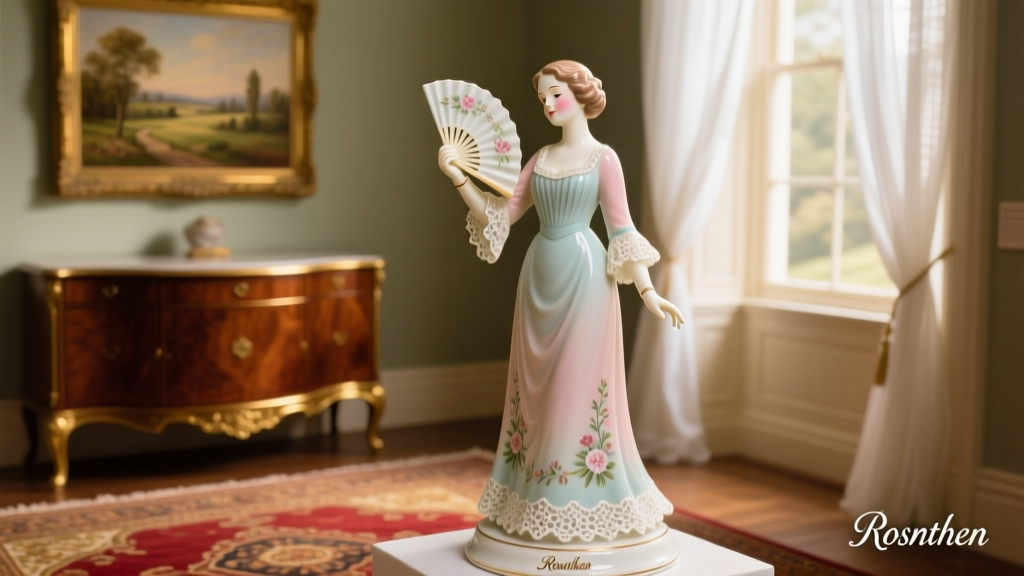
Rosenthal Figurine: Victorian Woman Fanning — A Mid-20th Century Porcelain Masterpiece (8½ Inches)

Tubular Chrome Vinyl Sofas: Design Legacy, Structural Integrity, and Restoration Best Practices
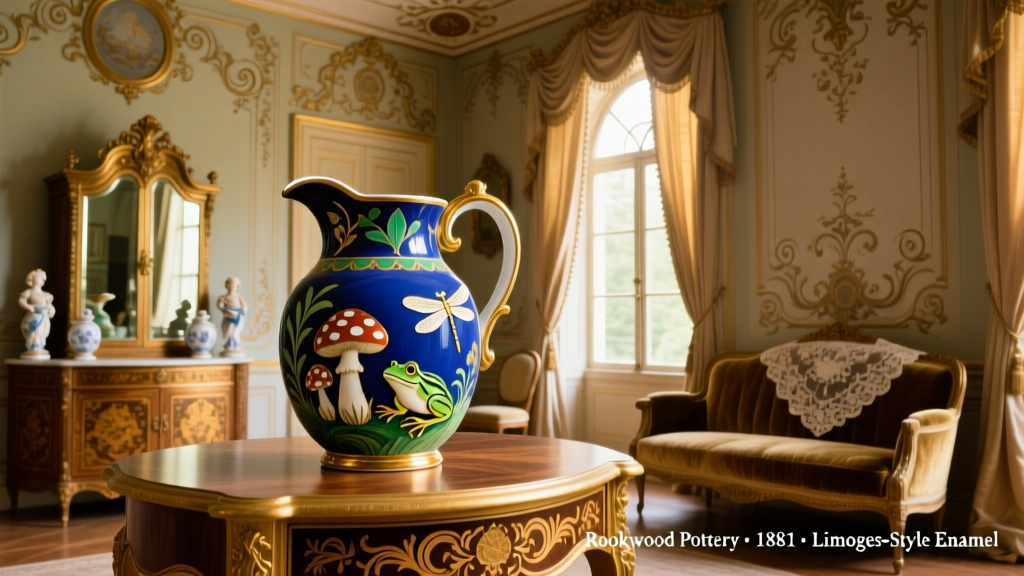
Rookwood Pitcher: Mushrooms, Frogs, and Dragonflies — A Limoges-Inspired Masterpiece from 1881 (9½ × 7 in)

W. J. Walley’s Green Gourd-Shaped Pottery Vase: A Study in English Art Pottery Craftsmanship, 1920s–1930s
Banks Mechanical Toad on Stump by J. E. Stevens & Co., 1886: A Masterpiece of American Cast-Iron Automata
Queen Anne Walnut Chair Set: Authenticity, Provenance, and Restoration of a Historic 2-Armchair Ensemble (c. 1740–1765)
Sheble & Fisher Philadelphia Cavalry Saber, 1860: Anatomy, Provenance, and Restoration of a 35-Inch Leather-Handled Officer’s Weapon
Limoges Tankard with Green Gold Trim: A 15½-Inch Hand-Painted Masterpiece from the Late 19th Century