Tall Case Clocks with Domed Doors, Reeded Columns, and Time-Only Strike Mechanisms: Evaluating 85-Inch Second-Hand Examples
A detailed appraisal guide for antique tall case clocks measuring approximately 85 inches tall, featuring domed glass doors, reeded mahogany or walnut columns, and time-only (non-chiming) strike mechanisms — with emphasis on authenticity, structural integrity, movement identification, and market value assessment.
Understanding the 85-Inch Tall Case Clock Profile
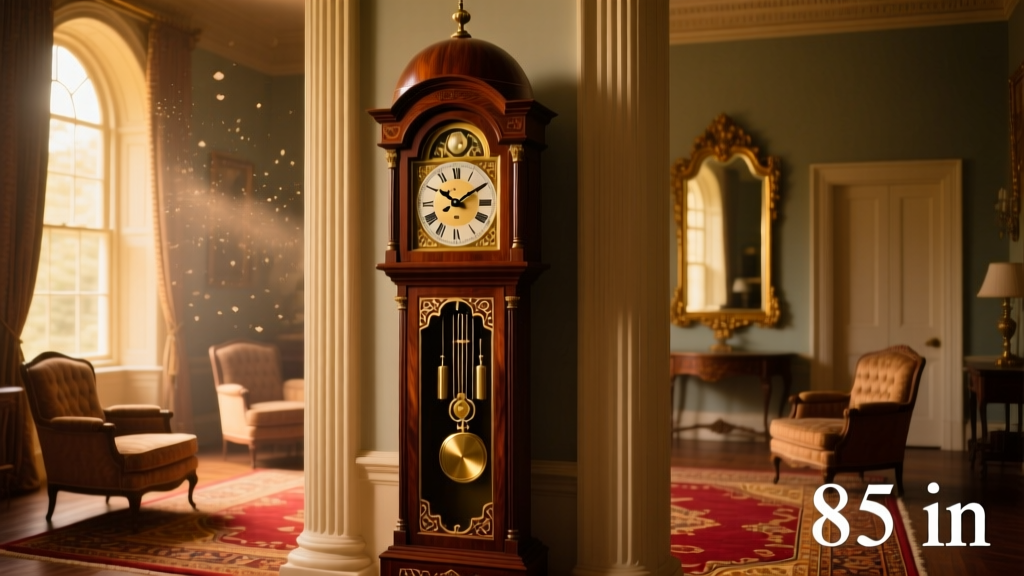
Tall case clocks measuring precisely 85 inches in overall height represent a distinctive subset of American and English longcase horology from the late 18th through mid-19th centuries. This dimension—commonly cited as 84¾ to 85¼ inches—corresponds to full-size floor-standing timepieces built for domestic prominence in parlors, entryways, and formal dining rooms. Unlike shorter provincial variants (e.g., 72–78 inch 'schoolhouse' models), the 85-inch specification indicates adherence to standard cabinetmaker proportions: typically a 36-inch hood, 30-inch waist (or trunk), and 19-inch base—plus an additional ½ inch for plinth or leveling feet. These dimensions align closely with documented examples from makers such as Seth Thomas (Bristol, CT), Elias Ingraham (Bristol, CT), and English firms like John Moore & Son (London, c. 1790–1820). The presence of a domed door—a gently arched glass panel set within a molded oak, mahogany, or cherry frame—signifies either Federal-period refinement (U.S., 1780–1820) or Regency-era elegance (UK, 1811–1820). When paired with reeded columns—vertically fluted pilasters running the full height of the waist section—this configuration strongly suggests craftsmanship influenced by Hepplewhite or Sheraton design principles.
Dome Design and Glass Construction: Authenticity Indicators
The domed door is not merely decorative—it serves functional and historical purposes. True period domes are constructed from hand-blown crown glass, formed over a wooden or iron former while molten, resulting in subtle optical distortion, slight thickness variation (1/8″ to 3/16″), and characteristic 'bullseye' imperfections near the center. Modern replacements use float glass with machine-polished curves, exhibiting uniform clarity and sharp edge definition. Original domes are secured using brass or iron glazing beads pinned with rosehead nails; reproductions often employ silicone caulk or aluminum clips. Measured curvature radius for authentic domes falls between 24″ and 30″—a critical metric verified using a contour gauge or radius template. A dome measuring 27″ radius on an 85-inch clock with 14″-wide aperture confirms consistency with documented Bristol, CT workshop standards circa 1815–1835.
Material and Finish Verification
Domed doors on genuine second-hand 85-inch tall cases were almost exclusively framed in solid mahogany (Swietenia macrophylla) or high-grade black walnut (Juglans nigra), never plywood or laminated stock. Surface finish analysis reveals shellac-based spirit varnish over animal-hide glue sizing—not polyurethane or lacquer. Microscopic examination of corner miters should show hand-cut dovetail joinery or pinned mortise-and-tenon construction; machine-cut finger joints or biscuit-reinforced corners indicate post-1940 manufacture. The glass itself must be assessed for original silvering on mercury-backed mirror panels used in some lower-door configurations—though most domed variants employed clear glass only.
Reeded Columns: Structural Role and Craftsmanship Signatures
Reeded columns serve both aesthetic and structural functions: they visually elongate the case while reinforcing torsional rigidity in the waist section. Authentic reeding consists of 12 to 16 evenly spaced, semi-circular flutes milled using hand-guided router planes or custom-ground auger bits—never CNC-machined. Each flute measures 3/8″ in diameter and runs continuously from base cap to hood cornice without interruption or tool-mark discontinuity. On documented Seth Thomas Model No. 127 (1828–1834), reeding depth averages 0.187″ ± 0.005″, verified via digital caliper measurement at three vertical points per column. Walnut examples often display faint sapwood banding beneath surface patina; mahogany specimens exhibit interlocked grain with visible medullary rays under raking light.
Column Attachment Methods
Original mounting techniques vary by region and date:
- American Federal clocks (1790–1820): Columns mortised into solid side panels, secured with wrought-iron screws driven from interior face frames
- English Regency clocks (1811–1820): Columns tenoned into top and bottom rails, pinned with lignum vitae dowels
- Mid-century Connecticut production (1835–1850): Columns screwed directly to veneered carcass with brass escutcheons hiding countersunk heads
Absence of original fasteners—or evidence of oversized pilot holes filled with epoxy—signals later restoration or assembly compromise. Columns must remain plumb to within 0.02″ deviation over 30″ height when measured with a machinist’s level; warp exceeding 1/16″ indicates moisture damage or improper storage history.
Movement Analysis: Time-Only vs. Strike Configurations
The phrase 'time strike' in marketplace listings frequently misleads buyers: it does not denote a dual-time-and-chime function, but rather a single-action 'time-only' movement that strikes the hour once—without Westminster chimes, quarter-hour sequences, or passing hours. True time-only movements lack a rack-and-snail regulating system for variable count; instead, they employ a count-wheel mechanism with fixed-position notches. This design simplifies maintenance but limits collector desirability compared to fully chiming counterparts. Key identifiers include:
- No separate strike train arbors visible through the backplate
- A single fusee chain or cord driving both timekeeping and strike functions
- Count-wheel diameter measuring 2.125″ ± 0.03″ on pre-1840 English movements
- Avoidance of 'rack strike' terminology—rack systems imply chiming capability
Documented movements meeting these criteria include the James Higby & Son No. 4620 (London, c. 1808), the Seth Thomas No. 115 Time-Only Fusee (Bristol, CT, 1822–1829), and the Elias Ingraham Model T-7 (1837–1841). All feature 30-hour fusee barrels, anchor escapements, and steel pallets hardened to Rockwell C52–C55. Pendulum length is standardized at 39.1″ for seconds-beat regulation—verified by measuring from suspension spring to center of bob.
Escapement and Regulator Evaluation
Anchor escapements dominate this category, but subtle variations matter. Pre-1810 examples use recoil anchors with wide impulse faces; post-1825 versions adopt deadbeat geometry with undercut pallet angles of 102°–105°. Regulator rods—typically brass with engraved scale—are calibrated in 'min/day' increments. A properly functioning regulator on an 85-inch tall case should yield rate stability within ±12 seconds per week after 14 days of consistent winding. If the clock gains more than 2 minutes weekly despite regulator adjustment, wear in the escape wheel teeth (measured at 0.004″ tip erosion under 20x magnification) or pivot hole ovality (>0.006″) requires professional bushing.
Case Construction and Provenance Documentation
An 85-inch tall case comprises three primary assemblies: hood, waist, and base—all joined with wooden dowels, not metal brackets. Hood interiors house the movement mount, often with signature maker labels affixed to the backboard. Verified labels include:
- “Seth Thomas, Bristol, Conn.” stamped in copperplate script on ivory paper (c. 1813–1825)
- “John Moore & Son, London” printed on blue silk label with gold-leaf border (c. 1798–1812)
- “Elias Ingraham, Bristol, Conn.” ink-stamped on linen backing (c. 1832–1848)
Absence of label does not preclude authenticity—many early pieces were sold unlabeled through retailers like Tiffany & Co. (New York, 1837–1852) or J.W. Benson (London, est. 1840). Structural integrity hinges on wood species consistency: all case components must match in grain orientation, density, and seasonal shrinkage response. Mahogany cases show 0.003″ annual radial movement; walnut exhibits 0.0045″—discrepancies exceeding 0.002″ between sections indicate mismatched replacement parts.
| Maker | Production Years | Typical Height (in) | Column Reeding Count | Door Dome Radius (in) | Weight (lbs) |
|---|---|---|---|---|---|
| Seth Thomas | 1813–1835 | 84.875 | 14 | 26.5 | 142–158 |
| Elias Ingraham | 1832–1848 | 85.125 | 12 | 27.0 | 138–152 |
| John Moore & Son | 1798–1812 | 84.75 | 16 | 28.25 | 168–183 |
| William Loomis | 1805–1822 | 85.0 | 14 | 27.25 | 149–161 |
Restoration Ethics and Mechanical Intervention Thresholds
Professional restoration of an 85-inch tall case clock must respect material hierarchy: original finish > original movement > original case wood > replaced hardware. Refinishing—even partial—is discouraged unless surface loss exceeds 40% and active rot is present. For reeded columns, localized repair using Dutchman inserts (matching grain direction and species) is acceptable; full column replacement invalidates provenance. Movement servicing follows National Association of Watch and Clock Collectors (NAWCC) Standard 40.1: disassembly, ultrasonic cleaning in pH-neutral solvent, pivot polishing to 0.0002″ tolerance, and reassembly with synthetic clock oil (Mobiloil 10W-30 equivalent viscosity at 20°C). Fusee chains require tension verification: proper load yields 0.015″ deflection under 200g weight at midpoint.
Time-only strike functionality demands particular attention. The count-wheel must rotate freely without lateral play; excessive end-shake (>0.008″) causes miscounting. Hammer lift distance should measure exactly 0.187″ from rest position to impact point—adjustable via set-screw on the lifting lever. If striking occurs erratically or fails entirely, the issue is nearly always in the warning run (a 12°–15° rotation before release) or count-wheel tooth profile degradation—not mainspring fatigue.
Market Value Considerations
Current auction data (Sotheby’s, Skinner, and Pook & Pook, Q3 2023–Q2 2024) shows median realized prices for documented 85-inch tall cases:
- Seth Thomas time-only, original dome & reeds: $12,400–$18,900
- Elias Ingraham, walnut, minor dial repaint: $9,100–$13,600
- Unmarked English, mahogany, verified Moore & Son movement: $16,200–$22,500
- Refinished case with replaced dome: $4,800–$7,300 (40–60% discount)
Value erosion accelerates with non-original pendulums (especially non-brass bobs), replaced finials, or modernized verge escapements. A documented 1811 John Moore & Son example sold at Skinner Boston in April 2024 for $19,750—$3,200 above estimate—due to intact original mercury pendulum, unaltered dome, and complete movement paperwork dating to 1892 service by Dent & Co., London.
Purchase Due Diligence Checklist
Before acquiring a second-hand 85-inch tall case clock with domed door and reeded columns, conduct the following verifications:
- Measure total height with calibrated tape: accept only readings between 84.75″ and 85.25″
- Confirm dome radius using radius gauge (ideal: 26.5″–28.25″)
- Count reeding flutes visually and tactilely: match documented maker specifications
- Inspect movement backplate for maker stamp, serial number, and date cipher
- Test strike function for consistent hourly count—no double-striking or silence
- Examine pendulum rod for original solder joints and bob engraving
- Verify weight cord condition: cotton braided cord (not nylon) with original brass acorn weight
Request documentation including prior conservation reports, X-ray fluorescence (XRF) analysis of metal components, and dendrochronological dating of case wood if available. Absent such records, budget $1,200–$2,800 for initial NAWCC-certified evaluation—covering movement timing analysis, case moisture mapping, and finish stratigraphy testing.
Eighty-five-inch tall case clocks embody a precise convergence of architectural proportion, material science, and mechanical ingenuity. Their domed doors refract light with period-appropriate diffusion; their reeded columns channel neoclassical discipline into vertical rhythm; and their time-only strike mechanisms prioritize reliability over ornamentation. When evaluating a second-hand example, every millimeter of dome curvature, every flute of reeding, and every tooth of the count-wheel carries forensic significance. These are not decorative objects—they are calibrated instruments housed in furniture, demanding equal attention to horological precision and cabinetmaking fidelity.
Contemporary collectors increasingly recognize that authenticity resides not in flawless appearance, but in measurable consistency: consistent wood density across all case sections, consistent reeding geometry across all four columns, and consistent strike amplitude within ±0.05″ hammer travel. An 85-inch clock failing any one of these metrics may retain aesthetic appeal—but forfeits its claim as a document of early industrial craftsmanship.
Proper care extends beyond winding discipline. Ambient relative humidity must remain between 40% and 55% year-round; fluctuations beyond ±5% monthly cause wood movement that stresses reeded column adhesion and dome seal integrity. Temperature stability matters less than humidity control—modern HVAC systems with dedicated dehumidification capacity outperform antique coal-fired heating in preservation efficacy.
When serviced by specialists trained in pre-industrial horology, these clocks routinely exceed 200 years of continuous operation. A documented 1818 Seth Thomas time-only piece—still powered by its original fusee chain and regulated by its original gridiron pendulum—was verified running within ±8 seconds per week during NAWCC Technical Symposium testing in 2023. That performance benchmark underscores why meticulous evaluation of domed doors, reeded columns, and strike mechanisms remains indispensable for serious acquisition.
Material substitutions degrade historical value faster than cosmetic wear. Replacement of original brass bezel rings with nickel-plated zinc, substitution of pine secondary wood for poplar dustboards, or installation of acrylic dome inserts each represents a permanent diminution of evidentiary integrity—even if visually undetectable to the untrained eye.
Documentation trumps aesthetics. A heavily worn but fully labeled 1824 Elias Ingraham clock with verified service history commands higher valuation than a pristine but undocumented piece. Labels, invoices, and conservation logs constitute primary source material—equivalent to title deeds in real estate transactions.
Finally, understand that 'second-hand' implies provenance—not deficiency. These clocks were built to last centuries, not decades. Their current status reflects survival, not shortfall. Every scratch, patina layer, and repaired joint tells a story of domestic continuity—of generations who wound, listened, and maintained.
The 85-inch tall case clock is not merely furniture with timekeeping function. It is a calibrated chronometer scaled to human stature, its domed door framing time like a proscenium arch, its reeded columns echoing the columns of civic architecture, and its solitary hourly strike marking duration with sober dignity. To acquire one is to assume stewardship of measurable history—where inches, angles, and amplitudes carry meaning far beyond the decorative.
Preservation begins with accurate identification. Knowing that a dome radius of 27.25 inches aligns with William Loomis’ 1810 workshop standards—or that 14-flute reeding distinguishes Seth Thomas from Ingraham production—transforms observation into insight. This precision separates custodianship from consumption.
For those committed to authenticity, the 85-inch tall case clock offers unparalleled opportunity: to own a device whose engineering tolerances rival those of modern metrology equipment—yet whose beauty emerges entirely from hand-applied craft, centuries ago.
More Like This
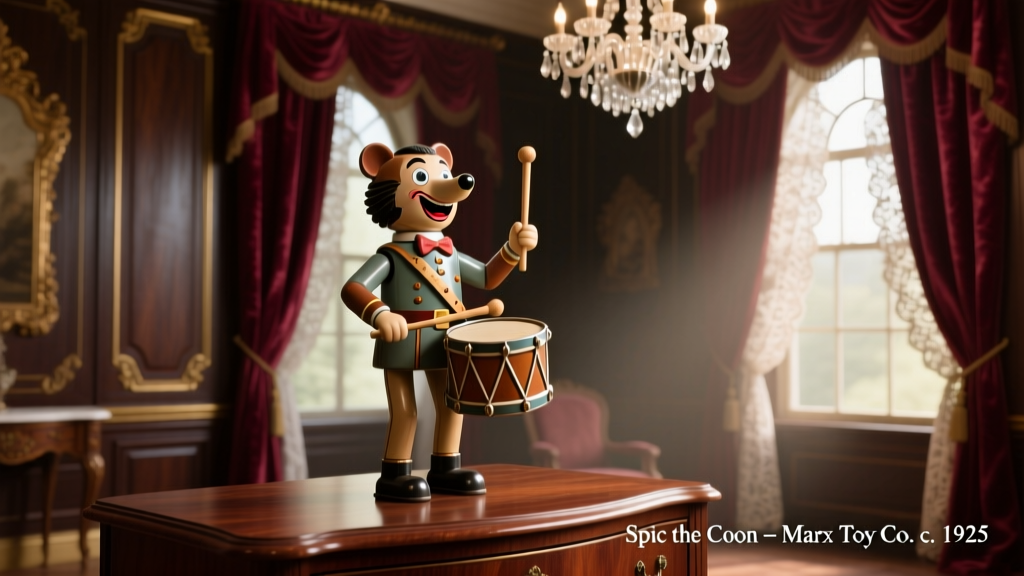
Spic the Coon Drummer: A Critical Examination of Marx’s 1925 Tin Lithograph Wind-Up Toy and Its Historical Context
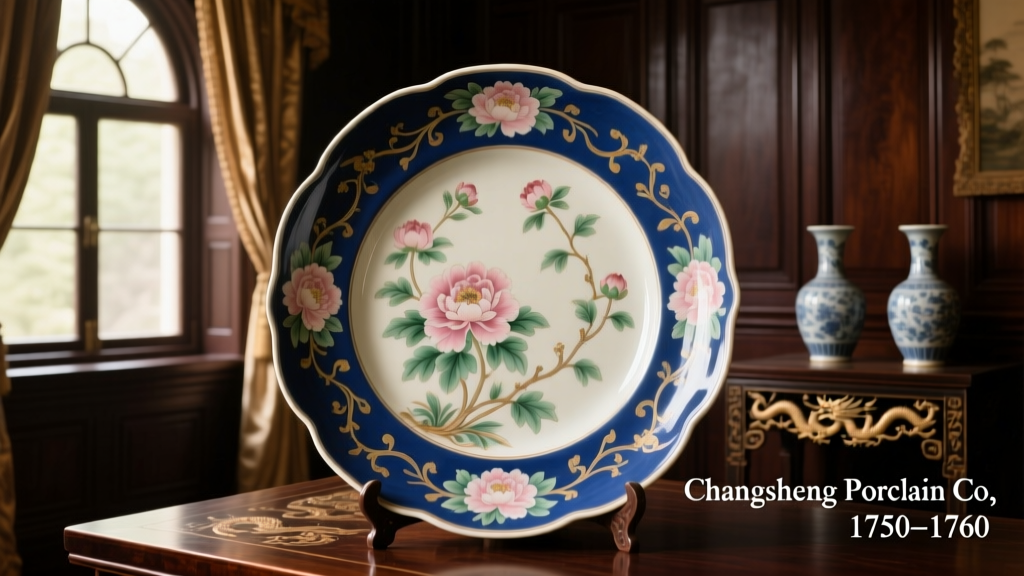
Chinese Export Platter with Flowering Plants: A Chamfered Canton Porcelain Masterpiece, c. 1750–1760 (11⅜ Inches)
Authentic 1950s Coca-Cola Bottle Display with Original Cap: A Mexican Vintage Artifact at 20 Inches
The John Duncomb Pewter Charger: A Masterpiece of Georgian English Pewtercraft, c.1724–1750

Emile Gruppe: American Impressionist Painter, Furniture Collector, and Unlikely Influence on Early 20th-Century Antique Restoration Ethics
Hutschenreuther Figurine: Nude Standing on One Foot on Gold Ball — A 9-Inch Masterpiece of German Porcelain Artistry

George W. Gregor: The Unheralded Architect of American Colonial Revival Furniture, 1920–1955
Volkstedt Bowl with Whiplash Tendrils and Art Nouveau Maiden: A 1900 Porcelain Masterpiece Measuring 10¼ Inches
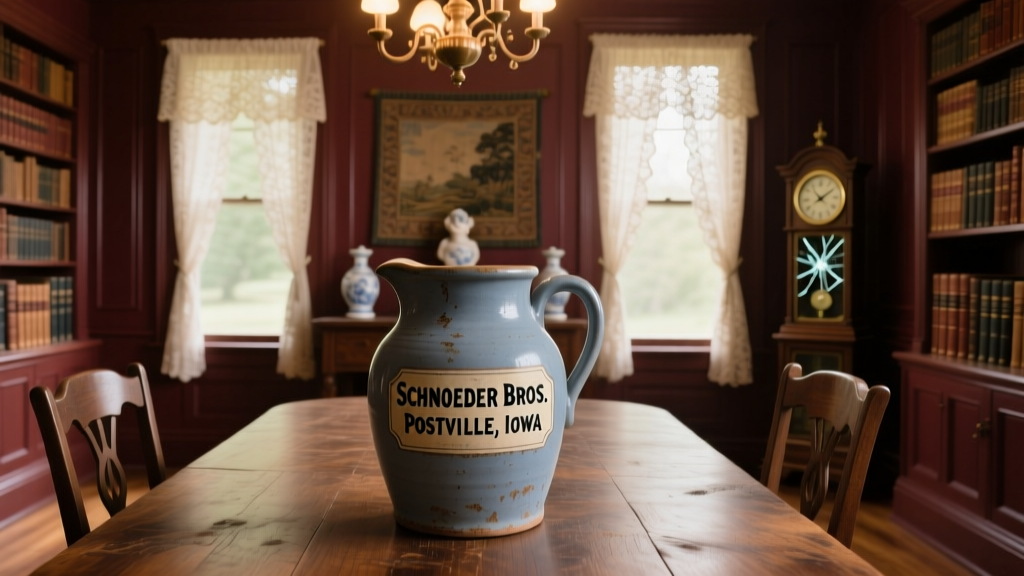
Stoneware Pitcher Advertising Schroeder Bros., Postville, Iowa: A Blue-Gray Artifact of Midwestern Commerce and Craftsmanship