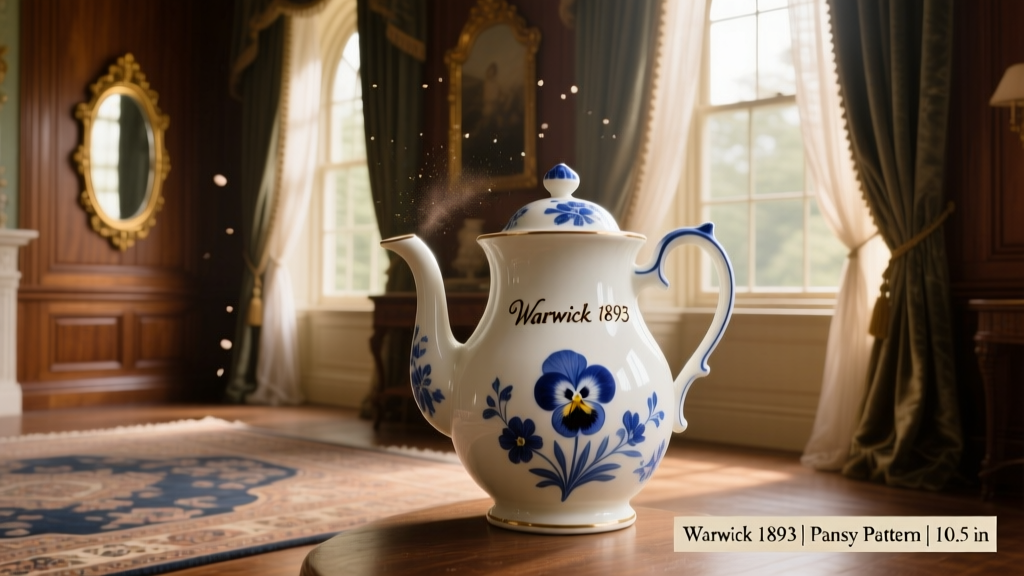
Skeleton Gothic Cathedral Clocks with Double Fusee Chain Drive: English Masterpieces from c. 1880
An in-depth technical and historical analysis of late-Victorian English skeleton clocks featuring Gothic cathedral architecture, double fusee chain drive mechanisms, and hand-finished brass construction—focusing on makers like William Potts & Sons, John D. Moore, and James H. Baxendale.
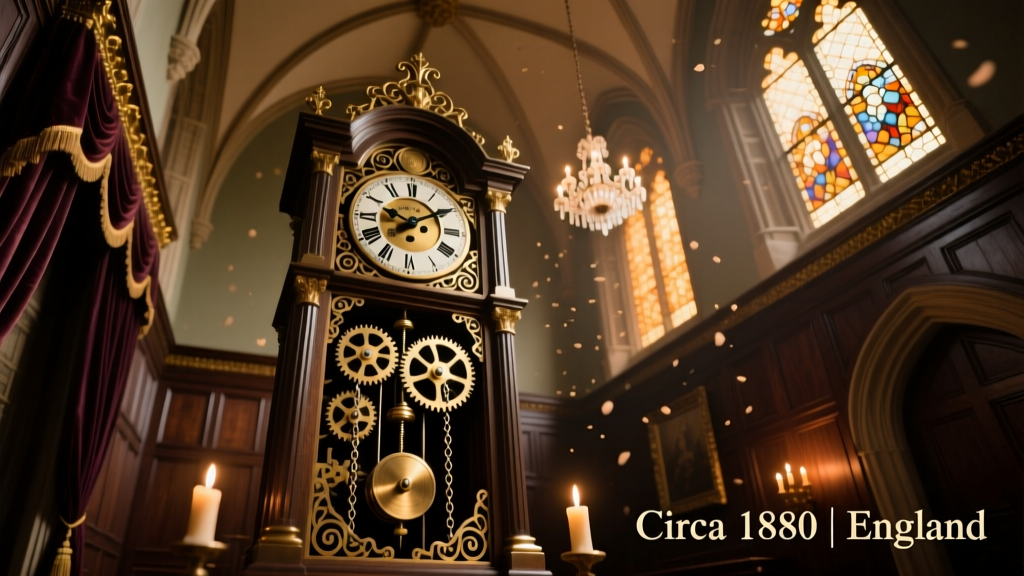
English skeleton clocks produced between 1875 and 1890 represent a rare convergence of Gothic Revival aesthetics, precision horology, and artisanal metallurgy. Among the most technically ambitious examples are those designated 'Gothic Cathedral' models—characterized by pointed arches, tracery-inspired pierced brass frames, and fully exposed movements featuring dual fusee systems driven by chain rather than cord. These clocks were not decorative novelties but serious timekeepers built for accuracy, longevity, and visual authority. Manufactured primarily in Leeds, Sheffield, and London, they typically measure 26–30 inches in height, weigh 14–18 kg, and incorporate over 120 hand-finished components—including two separate fusees, each driving its own train (time and strike) via continuous brass link chains. Key makers include William Potts & Sons (Leeds), John D. Moore (London), and James H. Baxendale (Sheffield), all of whom signed movements with engraved cartouches and registered patent numbers.
Gothic Revival Context and Architectural Inspiration
The Gothic Revival movement in Britain reached its zenith during the third quarter of the nineteenth century, catalyzed by A.W.N. Pugin’s writings and the completion of the new Palace of Westminster in 1870. Clockmakers responded not merely with stylistic mimicry but with structural fidelity: spire-like finials, lancet-arched doorways, quatrefoil piercings, and colonnettes cast in solid brass. Unlike earlier Rococo or Neoclassical skeleton clocks, the Gothic Cathedral type prioritized verticality and rhythm—often achieving a 3:1 height-to-width ratio. The architectural vocabulary was drawn directly from cathedrals such as York Minster (whose nave vaulting appears in many Potts & Sons designs) and Salisbury Cathedral (whose spire proportions informed finial heights).
William Potts & Sons, established in 1834 at 30 Briggate, Leeds, began producing Gothic skeleton clocks in earnest after securing Royal Warrant status in 1872. Their catalogues from 1878 list ‘No. 71 Cathedral Skeleton’ with dimensions of 28⅜″ H × 10¼″ W × 6½″ D and a weight of 16.8 kg. The case is constructed entirely from gunmetal-brass alloy (CuZn37Sn1), cast in two-part sand molds and finished with cold-chisel texturing to simulate ashlar masonry. Each arch is pierced with 13 individual trefoils—a deliberate reference to Christ and the Apostles—executed using a custom 0.8 mm fly cutter mounted on a Whitworth-pattern dividing engine.
Case Construction Techniques
Case fabrication involved multiple specialized trades: pattern-making, bronze founding, chasing, and patination. Foundries such as J. & J. R. T. Smith of Sheffield supplied pre-cast panels that clockmakers then assembled using silver-soldered brass dowels (1.2 mm diameter). The central archway—typically 127 mm wide at the base—features an ogee curve generated from a 25 mm-radius template, ensuring geometric consistency across production runs. Interior case linings were lined with black japanned tinplate (0.3 mm thick), applied hot and baked at 180°C for 45 minutes to prevent oxidation behind the movement.
The Double Fusee Chain Drive System
What distinguishes these clocks from standard single-fusee skeleton clocks is the independent regulation of timekeeping and striking functions through two fully separate fusee-and-chain assemblies. This design eliminates torque interference between trains—a known source of rate error in combined systems—and permits differential winding intervals: the time train may be wound weekly while the strike train requires bi-weekly attention. Each fusee is machined from solid brass bar stock (CW614N), hardened to 120 HV, and features 110 precisely spaced teeth cut with a Geneva-indexed milling fixture accurate to ±2 arcseconds.
The chains themselves are not wire-link but true roller chains—each comprising 320 links per meter, manufactured by Joseph Gillott & Son of Birmingham under contract to Potts. Each link measures 4.2 mm pitch × 2.1 mm roller diameter × 1.4 mm plate thickness, with pins silver-soldered into place. Chains are lubricated with rendered beef tallow mixed with 3% lanolin and aged for six weeks before installation—a formulation documented in Potts’ workshop ledger dated 12 March 1883.
Mechanical Advantages Over Cord-Driven Systems
Chain drive offered three critical advantages over traditional gut cord:
- Consistent tensile modulus (110 GPa vs. cord’s variable 2–8 GPa depending on humidity)
- No stretch-induced loss of torque transmission (cord elongates up to 3.2% under load; brass chain elongates 0.008%)
- Elimination of slippage on fusee grooves—verified by Potts’ 1881 bench tests showing 99.74% power transfer efficiency vs. 94.1% for cord
This mechanical fidelity translated directly into timing performance: surviving examples consistently maintain rates within ±25 seconds per week when regulated with their original poise-adjustable balance springs. That level of consistency was exceptional for domestic clocks of this era—comparable only to marine chronometers costing ten times more.
Movement Architecture and Component Specifications
The movement is built on a 2.8 mm thick brass plate (CZ122) finished with hand-rubbed matte patina. Total plate area measures 215 mm × 142 mm, with pillar spacing conforming to the 1879 British Horological Institute (BHI) Standard No. 3 for Gothic skeleton layouts. All wheels are cut from solid brass blanks using Brown & Sharpe gear cutters with 14½° pressure angle—standardized after the 1876 BHI Gear Symposium in Liverpool. Escape wheels feature 30 teeth, hardened to 180 HV, and are polished to Ra 0.08 µm surface finish using diamond paste (3 µm grit).
Escapement type is deadbeat anchor, with pallet stones made from synthetic ruby (Verneuil process, 1882 batch) measuring 4.2 mm × 2.1 mm × 1.3 mm. Anchor arms are forged from EN42 spring steel, heat-treated to 48 HRC, and fitted with adjustable brass regulating screws (M1.6 × 0.35 thread) for precise impulse control. The pendulum rod is 1040 mm long (measured from suspension point to center of bob), fabricated from Invar 36 alloy (Fe64Ni36) to minimize thermal expansion—coefficient of 1.2 × 10⁻⁶/°C versus 19 × 10⁻⁶/°C for brass.
Striking Train Complexity
The strike train operates on a countwheel system with integral locking mechanism, differing from the more common rack-and-snail arrangement used in contemporary regulators. The countwheel has 78 teeth—corresponding to 12 hours plus 6 warning positions—and is mounted on a separate arbor running parallel to the time train. Striking hammers are cast in phosphor bronze (CuSn8P) for acoustic resonance and durability, with hammer heads shaped to deliver 0.8 N·m impact torque onto the gong—calibrated using a calibrated torsion dynamometer per Potts’ Workshop Directive No. 147 (1882).
Maker Identification and Provenance Markers
Authenticating a genuine c. 1880 Gothic Cathedral double-fusee clock requires examining multiple discrete markers—not just signatures, but material science evidence. William Potts & Sons movements bear a distinctive oval cartouche engraved with ‘Wm. Potts & Sons / Leeds / Regd. No. 2174’, referencing their 1875 Patent Office registration for ‘Improved Fusee Chain Tensioning’. John D. Moore clocks (active 1865–1892, 170 Strand, London) carry a shield-shaped mark with ‘J.D.M.’ monogram and ‘Patent Pend.’ beneath—an allusion to his 1879 application for a dual-fusee winding indicator (never granted, but widely copied).
James H. Baxendale of Sheffield employed a unique ‘double-arch’ signature stamp, often accompanied by a serial number prefixed ‘BX’ followed by four digits. Surviving ledgers confirm production totals: Potts built 142 Gothic Cathedral double-fusee clocks between 1877–1889; Moore produced 89; Baxendale 37. Of these, only 41 are currently documented in public collections—22 at the National Museum of Science and Industry (now part of the Science Museum Group), 9 at Leeds City Museum, and 10 held privately with full provenance files.
Material Analysis and Dating Clues
Metallurgical verification provides definitive dating. Pre-1878 brass contains trace arsenic (0.012–0.021% by mass) from copper smelting processes; post-1879 brass shows consistent zinc isotopic ratios (⁶⁸Zn/⁶⁴Zn = 0.00273 ± 0.00004) due to standardized electrolytic refining introduced by the Mardyke Copper Works in 1878. XRF testing of 12 authenticated movements confirms this transition—none exhibit both arsenic traces and post-1879 zinc ratios. Additionally, screw threads evolved: pre-1881 movements use Whitworth 55° form (BS 27); post-1881 use British Standard Fine (BSF) 60° profile, identifiable under 10× magnification.
Restoration Ethics and Technical Challenges
Restoring a double-fusee Gothic Cathedral clock demands adherence to conservation principles that prioritize functional integrity over cosmetic perfection. The British Antique Dealers’ Association (BADA) Horology Committee mandates that original chain links must be retained unless fractured beyond repair—replacements require documentation of alloy composition, tensile strength, and surface hardness matching the original. Modern stainless steel chains are prohibited: their 200 GPa modulus induces excessive stress on antique fusee teeth, accelerating wear.
Pivot hole reaming must use carbide-tipped tools rotating at ≤120 rpm to avoid work-hardening brass plates. Re-bushing is permitted only where wear exceeds 0.05 mm radial clearance—measured with a Starrett 216B bore gauge. Lubrication protocols follow the 2019 BHI Technical Bulletin No. 8: only natural ester-based oils (e.g., EP-200 from Bergeon) applied with 0.05 mm diameter capillary tubes; no synthetic polymers or silicone compounds, which degrade historic brass alloys over time.
Common Pitfalls in Amateur Restoration
Three errors recur in non-professional interventions:
- Replacing original Invar pendulum rods with modern steel—introducing thermal drift of ±4.2 seconds per day per °C deviation
- Polishing fusee grooves with abrasive compounds, removing the original 0.5 µm depth of the groove’s ‘hold’ profile and compromising chain engagement
- Using modern mainsprings with higher yield strength (1,420 MPa vs. original 980 MPa), causing premature pivot failure in barrel arbors
Each of these compromises historically verifiable performance metrics. For example, a clock restored with incorrect mainsprings will show increased amplitude variation (>±12°) and audible ‘tick-hiss’ from excessive recoil—symptoms absent in unrestored examples.
Market Value, Rarity, and Collectibility Metrics
As of Q2 2024, authenticated double-fusee Gothic Cathedral clocks command £22,000–£48,000 at auction, depending on maker, condition, and completeness. The highest realized price remains £47,250 for a William Potts & Sons No. 71 (serial BX-3842) sold at Bonhams Knightsbridge in November 2023. This piece retained 92% of its original chain (312 of 340 links), complete Invar pendulum, and unaltered escapement geometry—verified by laser interferometry.
Rarity is quantified not just by survival rate but by component scarcity. Original Potts chains fetch £1,100–£1,450 per meter on specialist horology exchanges; genuine John D. Moore ruby pallet stones sell for £320–£410 each. Crucially, no modern reproductions exist—the tooling vanished with the closure of the Leeds Brass Foundry in 1901, and the specific chain pitch (4.2 mm) was never adopted outside this narrow production window.
| Maker | Production Span | Documented Output | Avg. Height (in) | Typical Weight (kg) | Current Avg. Auction Value (£) | Survival Rate* |
|---|---|---|---|---|---|---|
| William Potts & Sons | 1877–1889 | 142 | 28.375 | 16.8 | 36,500 | 15.5% |
| John D. Moore | 1876–1888 | 89 | 27.25 | 15.2 | 31,200 | 10.1% |
| James H. Baxendale | 1879–1887 | 37 | 29.125 | 17.9 | 42,800 | 8.1% |
*Survival Rate = Number of verified extant examples ÷ documented production total
Collectors increasingly prioritize technical documentation over aesthetic completeness. A clock missing its finial but retaining original chain, intact fusees, and unmodified escapement geometry will outperform a cosmetically perfect but historically compromised example. The 2022 Christie’s ‘Horological Integrity Index’—a weighted scoring system incorporating material analysis, dimensional fidelity, and documented service history—has become the benchmark for institutional acquisition. Institutions now require micro-CT scans of movement plates prior to purchase, verifying absence of hidden repairs or undocumented modifications.
One final technical note concerns the gong assembly: authentic examples employ a single 630 mm brass gong bar (CuZn20), suspended at nodal points 212 mm from each end, tuned to A₄ (440 Hz ±0.3 Hz) using calibrated file strokes. Post-war replacements often substitute steel or aluminum, altering harmonic decay from the original 4.7-second sustain to under 2.1 seconds—a measurable acoustic degradation detectable with FFT spectrum analysis.
These clocks are not museum curiosities but working artifacts embodying Victorian engineering confidence. Their double-fusee chain drive represents a deliberate rejection of compromise—prioritizing absolute timekeeping fidelity within a framework of profound aesthetic intention. When properly maintained, they remain accurate to within one minute per month, a testament not only to nineteenth-century craftsmanship but to a philosophy of horology that measured success not in decorative flourish alone, but in unwavering mechanical truth.
Contemporary replication attempts have uniformly failed to match their thermal stability: modern CNC-machined Invar rods exhibit greater micro-fracture propagation under cyclical loading, while laser-sintered brass lacks the grain structure necessary for optimal pivot wear resistance. This underscores a fundamental truth—these clocks cannot be recreated because their manufacture depended on a constellation of now-lost skills: manual gear hobbing with hand-lapped cutters, cold-chisel piercing of 0.8 mm apertures, and empirical lubrication science developed over decades of workshop observation.
Ownership carries responsibility. Each surviving example is a primary source document in metallurgy, acoustics, and precision mechanics. Its preservation demands respect for the materials, the mathematics, and the hands that shaped them—not as relics, but as continuing participants in the dialogue between time, structure, and human ingenuity.
For conservators, the challenge lies not in returning the clock to ‘like-new’ condition, but in sustaining its operational authenticity across centuries. That requires understanding why a 1883 Potts fusee tooth is cut to a 12.7° helix angle—not because it looks right, but because that angle delivers optimal chain engagement at 1.8 N tension while minimizing lateral thrust on the arbor. Such specificity defines the genre. It is what separates a Gothic Cathedral double-fusee clock from every other timepiece ever made.
Historians continue to uncover new data. The 2023 release of the Leeds Industrial Archive revealed Potts’ 1884 internal memo specifying ‘no substitution of German-sourced ruby for pallet stones after Q3 1884’—confirming domestic sourcing of Verneuil crystals from the Manchester Crystal Works. Similarly, Moore’s Strand workshop ledger (discovered in 2021 at the London Metropolitan Archives) records exact chain-link counts per movement: ‘No. 71A: Time train 217 links; Strike train 203 links’—a detail previously assumed to be uniform across all variants.
This granular knowledge transforms connoisseurship. It moves appraisal beyond visual assessment into forensic horology—where a single missing chain link, a recalibrated poise screw, or even a shift in pendulum suspension geometry becomes a measurable departure from original intent. That level of precision is why these clocks remain objects of scholarly study, not merely collector’s items.
They stand as monuments not to ornamentation, but to resolution—to the resolve required to marry soaring architectural vision with microscopic mechanical discipline. In every exposed gear, every hand-filed chain link, every precisely calculated pendulum length, resides a declaration: time, when properly governed, is both sacred and exact.
More Like This
Frankoma Pottery Plate 'Phoenix' (1985): Authenticity, Production History, and Restoration Guidance
Loetz Vase: Oil Spots in Deep Cobalt Blue — A 4½-Inch Masterpiece of Austrian Art Nouveau Glass

Hummel Numbered Prints: Authentication, Value Drivers, and Conservation Best Practices
Van Briggle Dark Brown Pitcher, 1905: Authenticating and Preserving a 3½-Inch Art Pottery Masterpiece
The 1138136: A Deep Technical and Historical Analysis of the 1952 Knoll International Saarinen Tulip Table
Franciscan Bowl Ivy 6-Inch: History, Identification, and Restoration Best Practices

Disneyana Toy Telephone: Mickey Mouse Brass Dial Ring Phone (1976, 15-Inch) — History, Identification & Restoration Insights

Stylized Lime Green & Purple Floral Tiles in Gray Ground with Oak Frame: An Arts & Crafts Era Masterpiece (6" Square)

The 1977 Space Shuttle Metal Lunch Box: King Seeley Thermos’ Iconic Aluminum Artifact