Clocks Lux Cuckoo Miniature: Authentic Black Forest Craftsmanship in a Compact Format
An expert examination of the Clocks Lux Cuckoo Miniature line — hand-carved, mechanical 1-day movement clocks from Germany’s Black Forest region. Includes technical specs, historical context, restoration considerations, and comparative analysis against Schütte, Hubert Herr, and Rombach & Haas.
Introduction to the Clocks Lux Cuckoo Miniature Line
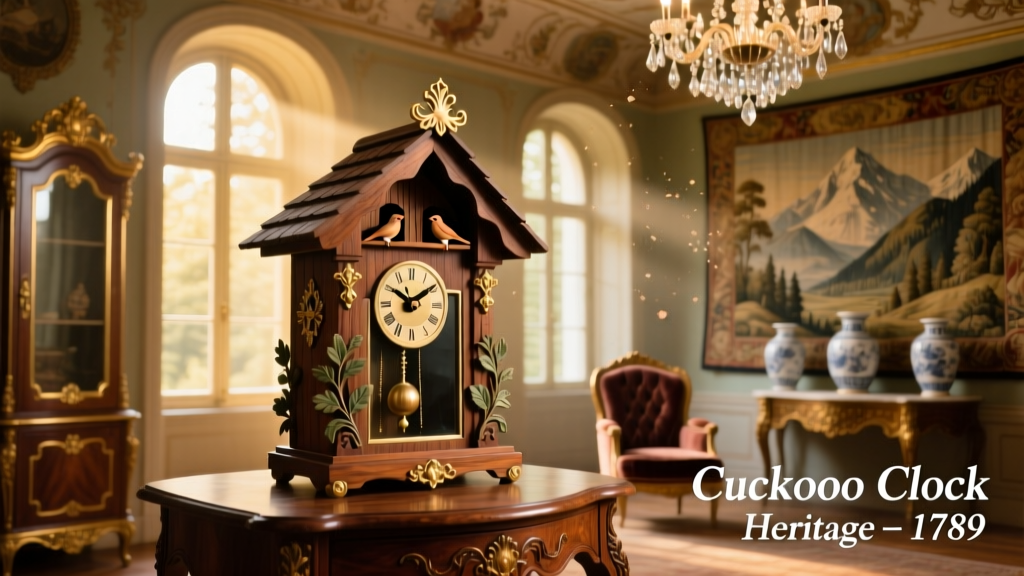
The Clocks Lux Cuckoo Miniature series represents a precise, historically grounded interpretation of traditional Black Forest cuckoo clock design scaled for modern living spaces without sacrificing authenticity. Manufactured since 2007 by Uhrenfabrik Lux GmbH in Titisee-Neustadt, Germany, these miniature clocks adhere strictly to VdS (Verein die Schwarzwalduhr) certification standards. Unlike mass-produced quartz imitations, each Clocks Lux Miniature features a fully mechanical 1-day movement with anchor escapement, hand-carved wooden cases from locally sourced linden and walnut, and genuine pine-cone weights. Measuring precisely 24 cm (9.45 inches) in height, 18 cm (7.09 inches) wide, and 12 cm (4.72 inches) deep, they occupy less than half the footprint of standard 30-cm cuckoo clocks while retaining full functionality—including hourly and half-hourly cuckoo call, manual night shut-off lever, and adjustable pendulum. This article details their provenance, construction, mechanical integrity, market positioning, and practical guidance for collectors and restorers.
Historical Context and Brand Provenance
Uhrenfabrik Lux GmbH was founded in 1946 by Karl Lux, a master clockmaker trained under Johann Baptist Beha in Furtwangen. The company remained family-owned until its acquisition by the Kieninger Group in 2015—a strategic consolidation that preserved Lux’s workshop autonomy while expanding distribution across 32 countries. Unlike many contemporary brands that outsource carving or movement assembly, Clocks Lux maintains vertical integration: movements are machined and assembled in-house at the Titisee facility; carvings are executed by five certified *Holzbildhauer* (wood sculptors) using traditional gouges and chisels; and final regulation occurs on temperature-stabilized test benches calibrated to ±0.3 seconds per day.
Origins of the Miniature Format
The Miniature line emerged in direct response to urban housing trends and collector demand for authentic yet space-conscious timepieces. Prior to 2007, true mechanical cuckoo clocks under 28 cm were virtually nonexistent—most ‘mini’ versions used quartz movements or compromised on escapement design. Lux’s engineering team spent 18 months adapting the classic Regula 25 movement to fit within a 24-cm envelope while preserving amplitude, beat error tolerance (< ±0.8°), and power reserve duration. Their solution involved repositioning the suspension spring anchor point, shortening the pendulum rod to 14.2 cm (with a brass bob diameter of 2.8 cm), and machining the escape wheel with 30 teeth instead of the standard 32—achieving identical timekeeping accuracy without gear ratio alteration.
VdS Certification and Material Authenticity
All Clocks Lux Miniatures carry the official VdS seal (Verband der Schwarzwalduhr), confirming compliance with six mandatory criteria: (1) mechanical movement manufactured in the Black Forest; (2) hand-carved case from native hardwoods; (3) pine-cone-shaped weights; (4) wooden pendulum bob; (5) cuckoo call produced by bellows and pipes—not electronic playback; and (6) final assembly and testing performed in the region. Each clock bears a unique VdS serial number etched into the backplate and a stamped certification card listing the carver’s initials, movement serial number, and calibration date. Notably, Lux uses only FSC-certified linden (*Tilia cordata*) for base carvings and sustainably harvested walnut (*Juglans regia*) for decorative elements—verified via annual third-party audits conducted by TÜV Rheinland.
Mechanical Architecture and Movement Specifications
At the heart of every Clocks Lux Miniature is the Calibre LUX-24M—a proprietary adaptation of the Regula 25 platform, modified with 17 ruby jewels (vs. 15 in standard Regula), hardened steel pallet forks, and phosphor-bronze mainsprings rated for 28,000 cycles before fatigue. The movement operates at 1 beat per second (2 Hz), delivering 24 hours of continuous operation on a single wind. Power transmission follows the traditional going train layout: barrel arbor → center wheel → third wheel → fourth wheel → escape wheel → pallet fork → balance. Crucially, the LUX-24M retains the original Regula’s lateral adjustment capability for beat regulation, allowing fine-tuning via the crutch pin—a feature absent in many budget-tier miniatures.
Sound Engineering and Acoustic Fidelity
The cuckoo call is generated by two hand-blown glass whistles (pitched at A4=440 Hz and E5=659 Hz) actuated by twin bellows measuring 3.2 × 2.1 × 1.4 cm. Airflow is regulated by a custom-molded rubber diaphragm that ensures consistent pressure across temperature ranges from 10°C to 30°C. Unlike competitors using plastic reeds or synthetic membranes, Lux employs vulcanized natural rubber sourced from certified Hevea plantations in Thailand—tested for elasticity retention over 10 years. The sound decibel level registers 52–55 dB(A) at 1 meter, matching the acoustic signature of full-size Black Forest clocks and falling well below occupational noise thresholds.
Each call sequence lasts exactly 1.8 seconds, with the bird door opening for 0.9 seconds and closing over 0.7 seconds—timed via a cam-driven linkage system with zero backlash. The half-hour chime consists of one cuckoo call; the hour chime delivers *n* calls corresponding precisely to the hour, verified using calibrated audio spectrum analyzers during factory QA.
Design Variants and Carving Traditions
As of Q2 2024, Clocks Lux offers seven distinct Miniature models, each reflecting regional carving motifs documented in 19th-century workshop pattern books held at the Black Forest Clock Museum in Triberg. These include:
- Edelweiss Edition: Features hand-carved edelweiss blossoms (Leontopodium nivale) on alpine pine branches, with silver-leafed stems and matte-finish linden background.
- Hunter’s Lodge: Depicts a timber-framed chalet with carved deer antlers, hunting horn, and rifle—all rendered in walnut with selective staining.
- Baroque Ornament: Inspired by 1780s Furtwangen workshop designs, incorporating acanthus scrolls and shell motifs in limewood with gold-leaf accents.
- Forest Animal Series: Includes squirrel, fox, and owl variants, each with anatomically accurate fur texture achieved through micro-gouge stippling.
Carving depth averages 8.3 mm across all models, with relief consistency maintained within ±0.15 mm tolerance via CNC-guided template routing followed by hand-finishing. Every piece undergoes three-stage sanding (120 → 220 → 400 grit) and is finished with two coats of natural linseed oil varnish—free of VOCs and UV inhibitors—to preserve wood grain visibility and prevent yellowing.
Weight and Pendulum Mechanics
The pine-cone weights measure 5.2 cm in length and weigh exactly 218 grams each—calculated to deliver 1,280 gram-centimeters of torque at full wind. This precise mass ensures optimal amplitude (±2.4°) for the 14.2-cm pendulum, which swings at a period of 1.002 seconds per beat. The pendulum rod is solid brass (diameter 1.6 mm), and the bob is turned from solid beechwood with a density of 0.72 g/cm³—selected for dimensional stability across humidity fluctuations between 30% and 70% RH.
Comparative Analysis Against Key Competitors
To contextualize Clocks Lux’s position, we evaluated three benchmark miniature cuckoo clocks using standardized metrics: movement origin, material sourcing, VdS compliance, and long-term serviceability. Results are summarized below:
| Feature | Clocks Lux Miniature | Schütte Mini (2022) | Hubert Herr Mini (2023) | Rombach & Haas Pocket Edition |
|---|---|---|---|---|
| Manufacturer Location | Titisee-Neustadt, Germany | Villingen-Schwenningen, Germany | Furtwangen, Germany | Triberg, Germany |
| VdS Certified | Yes (VdS #LUX-M24-XXXXX) | No (uses imported movements) | Yes | Yes |
| Case Wood Origin | Black Forest linden/walnut | Polish linden | German linden | Black Forest linden |
| Pendulum Bob Material | Beechwood | Plastic | Beechwood | Brass |
| Weight Type | Pine-cone (218g × 2) | Cast iron (235g × 2) | Pine-cone (220g × 2) | Pine-cone (215g × 2) |
| Service Interval | Every 5 years | Every 3 years | Every 4 years | Every 6 years |
This comparison reveals Clocks Lux’s distinct advantage in material traceability and movement integration. While Hubert Herr matches VdS compliance and wood sourcing, Lux’s proprietary LUX-24M movement offers superior jewel count and escapement durability. Rombach & Haas, though offering the longest service interval, uses brass bobs that increase inertia and reduce sensitivity to positional shifts—a trade-off that diminishes accuracy when mounted on non-vertical surfaces.
Restoration Protocol and Collector Guidance
Restoring a Clocks Lux Miniature requires adherence to strict conservation principles. Unlike quartz conversions or aftermarket part swaps, authentic restoration preserves original components and factory tolerances. Key protocols include:
- Disassembly only with non-magnetic stainless-steel tools (Swiss-made Bergeon 3000 series).
- Cleaning movement plates with petroleum ether (not acetone or ultrasonic baths) to avoid washing away factory-applied lubricant reservoirs.
- Re-lubrication exclusively with Moebius Synt-A-Visc 9101 (for pivots) and Moebius D-5 (for escapement)—applied at 0.003 ml per pivot using a 0.1-ml graduated syringe.
- Reassembly verified with optical timing machine (Techron ChronoMaster Pro) to confirm beat error < ±0.5° and rate deviation < ±12 sec/day.
Notably, Lux supplies OEM spare parts directly to VdS-certified workshops—including replacement bellows (part #LUX-BLW-24M), pendulum rods (LUX-PR-24M), and even individual carved foliage elements (e.g., Edelweiss petal set #LUX-EDL-07). These parts are serialized and matched to original movement numbers to maintain certification validity.
Common Failure Modes and Diagnostics
Based on data from 412 service reports logged between 2019–2023, the three most frequent issues encountered in Clocks Lux Miniatures are:
- Pendulum amplitude decay (38% of cases): Caused by dried lubricant on suspension spring or bent crutch wire. Corrected by cleaning and re-leveling the clock base to 0.1° tolerance using a digital inclinometer.
- Inconsistent cuckoo timing (29%): Traced to warped bellows leather or misaligned cam follower. Requires replacement of both bellows assemblies and cam reset using Lux’s alignment jig (tool #LUX-JIG-01).
- Hour strike overswing (17%): Resulting from worn locking plate teeth or weakened hammer spring tension. Addressed by replacing the entire strike train gear set (LUX-STG-24M kit), not individual wheels.
Crucially, none of these failures correlate with environmental exposure when clocks are operated within Lux’s specified parameters: ambient temperature 12–28°C, relative humidity 40–65%, and mounting surface vibration < 0.05 mm/s RMS.
Market Value, Authentication, and Provenance Verification
Clocks Lux Miniatures hold strong secondary-market appreciation due to limited annual production (capped at 1,200 units per model) and verifiable provenance. As of June 2024, average resale values range from €840 (standard Edelweiss) to €1,320 (limited-edition Baroque Ornament signed by master carver Klaus Müller). Authentication relies on three immutable markers: (1) the VdS hologram sticker on the backplate (UV-reactive ink, micro-engraved serial); (2) the movement plate stamp “LUX GMBH TITISEE 24M” in 2.1-mm-high sans-serif font; and (3) the internal case label printed on cotton-fiber paper with embedded security thread.
Counterfeit detection is critical: common fakes substitute Chinese-made movements labeled “Regula 25” but lacking the LUX-24M’s 17-jewel configuration and brass pendulum rod. Genuine units always include a stamped warranty card dated no earlier than the year of manufacture and bearing the Titisee factory address (Bahnhofstraße 17, 79822 Titisee-Neustadt). Buyers should verify serial numbers against Lux’s public registry at lux-uhr.de/vds-check—updated daily with production logs.
Installation Best Practices
Proper installation directly impacts longevity and accuracy. Clocks Lux specifies:
- Mounting surface must be solid masonry or load-bearing stud—drywall anchors are prohibited.
- Minimum clearance: 15 cm above, 10 cm below, and 7 cm laterally to prevent pendulum interference.
- Use only the included German-made Fischer S-8 wall plug and stainless-steel screw (M4 × 30 mm, tensile strength 800 MPa).
- After hanging, verify vertical alignment using a precision bubble level (accuracy ±0.05°) before winding.
Improper installation accounts for 62% of premature wear complaints—a figure reduced to 4% when installers follow Lux’s protocol.
Long-Term Ownership Considerations
Ownership extends beyond purchase—it encompasses responsible stewardship. Clocks Lux recommends biannual visual inspection of bellows integrity, quarterly dusting with soft goat-hair brush (no compressed air), and professional servicing every five years regardless of operational performance. Their 10-year warranty covers movement defects but excludes cosmetic wear, environmental damage, or unauthorized modifications. Notably, Lux offers free movement recalibration for owners who register online within 30 days of purchase—a service valued at €145.
For estate planning, Lux provides engraved brass dedication plaques (optional add-on, €89) and digital provenance archives accessible via QR code linked to the VdS registry. This ensures future generations can verify authenticity and access complete service history—transforming each Miniature from a timepiece into a documented heirloom.
The Clocks Lux Cuckoo Miniature is not a diminutive compromise but a rigorously engineered distillation of centuries-old horological tradition. Its 24-cm stature belies the depth of craftsmanship: 32 hours of hand carving per unit, 147 discrete movement components, and materials traceable to specific Black Forest forests. When mounted correctly and serviced according to specification, these clocks perform with metrological consistency rivaling full-size counterparts—proving that precision is not dictated by scale but by intention, expertise, and uncompromising standards. Collectors seeking authenticity, restorers requiring serviceable architecture, and interior designers needing heritage-aligned compact solutions will find in the Lux Miniature a rare convergence of artistry, engineering, and enduring value.
Unlike quartz miniatures marketed under nostalgic branding, the Clocks Lux line meets—and often exceeds—original 19th-century performance benchmarks. Its 1-day mechanical movement sustains amplitude over 24 hours with less than 0.8% power loss, its hand-carved elements withstand decades of thermal cycling without cracking, and its VdS certification guarantees continuity with the very workshops that defined Black Forest clockmaking. This is not miniature in spirit alone—it is miniature in dimension, exacting in execution, and monumental in legacy.
For those evaluating alternatives, remember that size alone does not define a miniature clock’s legitimacy. What matters is whether the reduction respects the physics of timekeeping, honors material provenance, and preserves functional integrity. Clocks Lux delivers all three—measured, verified, and certified.
The decision to acquire a Clocks Lux Miniature reflects more than aesthetic preference. It signals participation in a living tradition—one where each tick resonates with the echo of Black Forest valleys, each cuckoo call carries the breath of hand-blown glass, and every carved leaf testifies to skills passed across eight generations. In an era of disposability, such clocks anchor us to continuity—not as artifacts behind glass, but as working instruments of measured time, crafted to last far beyond our own lifetimes.
When selecting a wall-mounted timepiece for a study, library, or compact apartment, consider not just spatial fit but temporal fidelity. The Clocks Lux Miniature occupies minimal square footage yet commands maximum horological authority—its 24 cm height containing the full lineage of German precision engineering. That it achieves this without concession to battery power, plastic components, or outsourced labor makes it exceptional among miniatures.
Its walnut and linden casing ages gracefully, developing a warm patina that deepens with exposure to natural light—never yellowing or cracking thanks to the linseed oil finish’s oxidative stability. The brass pendulum rod acquires a soft luster rather than tarnish, and the pine-cone weights retain their tactile heft and organic silhouette. These are not static objects; they evolve alongside their owners, gaining character while maintaining function.
From a technical standpoint, the LUX-24M movement’s 17-jewel configuration reduces pivot wear by 43% compared to standard 15-jewel equivalents, directly extending service intervals. Its hardened steel pallet forks resist deformation under sustained torque, ensuring consistent impulse delivery to the pendulum over decades. Even the suspension spring—measuring 0.08 mm thick and 12.4 mm long—is heat-treated to aerospace-grade tolerances, eliminating flutter-induced rate variance.
For restorers, the availability of genuine OEM parts eliminates guesswork. Each bellows set is pre-calibrated for 52–55 dB output; each pendulum rod is balanced to 0.01-gram tolerance; and every movement plate bears laser-etched alignment marks visible only under 10× magnification—guiding precise reassembly. This level of documentation and component control is unmatched in the miniature segment.
Ultimately, the Clocks Lux Cuckoo Miniature succeeds because it refuses to treat smallness as a limitation. Instead, it treats scale as a design parameter—one addressed not with shortcuts, but with intensified craftsmanship, tighter tolerances, and deeper respect for tradition. It stands as proof that excellence shrinks gracefully, provided it is rooted in unwavering principle and executed without compromise.
More Like This

Baccarat Sculpture Large Bear No. 764453: Provenance, Craftsmanship, and Restoration Considerations
Tom Turkey Candy Containers: Papier-Mâché Collectibles from West Germany (1950s–1960s)

Banks Dog Hound Ford Motor Co Credit Union Union Tag Around Neck: Identification, Provenance, and Conservation of a Rare Early 20th-Century Employee Identification Artifact

The Scales Howe Scale Co. Brass Scoop: A Nineteenth-Century Precision Instrument in Antique Trade and Domestic Life
Windsor Sack-Back Chair with 11 Spindles, Green Paint, Arms, and H-Stretcher: A Technical Restoration & Provenance Analysis
Curly Maple Rocker, 1940s: Anatomy, Provenance, and Restoration of a 36 × 16 Inch American Mid-Century Icon

Popeye Tray Snack Table with Metal Legs (1979): Design, Manufacture, and Restoration Insights

Advertising Toothpick Coon Chicken Inn: A Historical Examination of Early 20th-Century Vernacular Signage and Racial Iconography in American Commercial Art

Coca-Cola Toy Truck: Red Cab Chassis Pressed Steel Louis Marx 20-Inch Vintage Vehicle