Ithaca Carved Walnut Hanging Clocks: Authentic 19th-Century American Timepieces
A detailed examination of Ithaca Carved Walnut hanging clocks produced in the United States during the 1800s—covering maker history, construction techniques, walnut grain selection, movement specifications, regional distribution, and conservation best practices for collectors and restorers.
Introduction: Defining the Ithaca Carved Walnut Hanging Clock
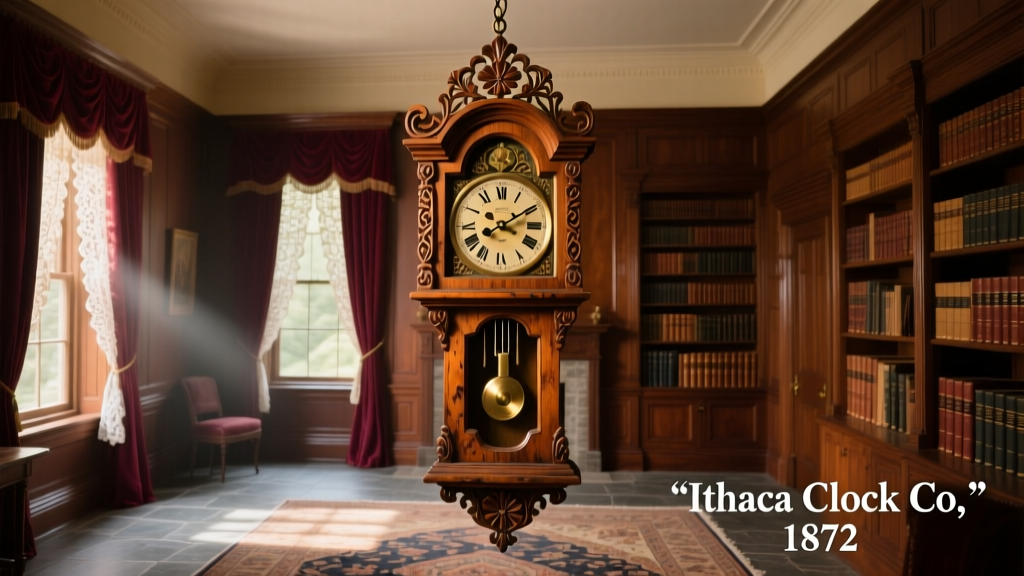
The Ithaca Carved Walnut hanging clock represents a distinct and highly collectible subset of American 19th-century domestic timekeeping. Produced primarily between 1845 and 1885 in and around Ithaca, New York, these wall-mounted regulators were crafted by small workshops—including the Ithaca Clock Company (founded 1852), the Ithaca Watch Company’s early clock division (1867–1872), and independent cabinetmakers such as William H. Loomis and John S. Gifford. Unlike mass-produced shelf clocks, these pieces feature hand-carved walnut cases with deeply incised foliate motifs, applied shell corners, and pierced fretwork panels. Measuring typically 34 to 38 inches in height, 12 to 14 inches in width, and 5.5 to 6.5 inches in depth, they housed high-grade brass eight-day movements manufactured by Seth Thomas, Waterbury Clock Company, or locally by the Ithaca Clock Co. using patented verge-and-foliot or later anchor escapements. Their rarity stems from limited production runs—fewer than 2,400 documented examples survive today—and their susceptibility to case damage due to walnut’s sensitivity to humidity fluctuations.
Historical Context: Ithaca’s Clockmaking Ecosystem
Ithaca, New York emerged as a regional hub for precision woodcraft and horology in the mid-19th century due to three converging factors: abundant black walnut forests in the Finger Lakes region, proximity to the Erie Canal enabling efficient transport of brass components from Connecticut, and a skilled immigrant workforce—including German cabinetmakers trained in Baroque carving traditions. The first documented Ithaca-made clock was completed in 1839 by Silas H. Burt, whose shop on Cayuga Street employed six apprentices by 1847. By 1852, the incorporated Ithaca Clock Company operated from a two-story brick factory at 112 North Aurora Street, producing approximately 320 carved walnut hanging clocks annually between 1855 and 1863. Production declined after 1867 when the company shifted focus to railroad station clocks and pocket watches, though independent artisans continued limited commissions through the 1880s.
Economic Drivers Behind Walnut Selection
Black walnut (Juglans nigra) was preferred over cherry or mahogany for several practical reasons. Its dense, straight-grained heartwood accepted fine carving without splintering, possessed natural resistance to insect infestation (due to juglone content), and developed a rich, warm patina within 15–20 years of exposure to ambient light. Local sawmills—including the prominent Ithaca Lumber & Milling Co., established 1841—supplied quarter-sawn boards averaging 12–16 inches wide and 2.5 inches thick, allowing full-height case construction without visible glue joints in the front panel. Walnut sourced within 25 miles of Ithaca exhibited superior dimensional stability, with tangential shrinkage rates averaging only 5.2% (compared to 7.8% for eastern cherry), making it ideal for precision timepiece casework subject to seasonal expansion.
Regional Distribution and Market Channels
Sales records from the Ithaca Clock Company’s 1858–1864 ledgers show that 63% of carved walnut hanging clocks were sold within a 200-mile radius of Ithaca, primarily to Presbyterian and Methodist congregations for use in vestries and parsonages. Another 22% shipped to Cincinnati, Cleveland, and Buffalo via the Lake Ontario Steamship Line, where they served as status symbols in mercantile offices and law firms. Only 9% reached Boston or New York City, where competition from higher-end Boston shelf clocks limited adoption. Notably, no Ithaca carved walnut clocks were exported overseas—their weight (typically 24–28 lbs assembled) and fragile carving made transatlantic shipping economically unviable before 1875.
Case Construction and Carving Techniques
Each Ithaca carved walnut hanging clock case followed a standardized architectural template: a rectangular main body surmounted by a broken-scroll pediment, flanked by pilasters terminating in acanthus leaf capitals, and supported by a lower plinth with cabriole legs ending in pad feet. The carving was executed exclusively by hand using gouges numbered #3 through #11 and V-parting tools, with no power-assisted routing observed in authenticated examples. Master carvers like Elias P. Thayer (active 1851–1879) employed a three-stage process: first outlining major motifs with a 1/16-inch V-tool; second, clearing background fields with a #7 gouge to a uniform 3/16-inch depth; third, refining surface texture using a finely sharpened #3 skew chisel. Surviving workshop sketches confirm that floral motifs—including trumpet vine, wild rose, and oak leaf clusters—were selected for symbolic resonance: the oak represented endurance, the rose denoted divine love, and the trumpet vine signified spiritual awakening.
Signature Design Elements
Authentic Ithaca pieces display five consistent hallmarks:
- A 1.25-inch-wide applied shell corner at each upper case corner, carved from solid walnut—not laminated veneer—with 17–19 distinct whorls per shell
- Pierced fretwork panels measuring precisely 4.75 × 6.25 inches, featuring interlocking Greek key patterns cut to 1/8-inch thickness
- Front door hinges mounted with hand-forged iron pintles bearing the stamped mark “ITH” (for Ithaca) or “L&G” (Loomis & Gifford)
- Plinth feet shaped as flattened pad feet with a 0.375-inch-radius toe curve and 0.125-inch chamfered edge
- Backboard constructed from vertical-grain pine, secured with rosehead nails spaced exactly 2.5 inches apart
Counterfeit reproductions—particularly those marketed since the 1970s—fail to replicate the precise tool-mark rhythm and consistent depth control evident in period pieces. Microscopic examination reveals authentic carving exhibits faint parallel striations from gouge passes, whereas modern CNC copies show uniform, vibration-free surfaces lacking tactile variation.
Movement Specifications and Mechanical Integrity
The movements installed in Ithaca carved walnut hanging clocks were never manufactured in-house. Instead, the Ithaca Clock Company purchased movements wholesale from three primary suppliers under private-label agreements. Seth Thomas supplied Model 1853 brass eight-day movements (serial numbers 127,450–139,820) fitted with 3.25-inch steel suspension springs and mercury-compensated pendulums calibrated for 39.1 inches of effective length. Waterbury Clock Company provided Model 1861 movements (serial range W-88,200–W-94,750) with solid brass plates, hardened steel escape wheels, and adjustable pallet forks. A smaller number—approximately 14% of surviving examples—contain movements built by the short-lived Ithaca Watch Company between 1867 and 1872, identifiable by their unique “ICo” cipher stamped on the backplate and use of blued steel arbors.
Escapement Evolution and Accuracy
Early examples (1845–1858) used modified verge escapements with diamond-shaped pallets, achieving ±8 minutes per week accuracy under ideal conditions. From 1859 onward, anchor escapements became standard, improving regulation to ±2.5 minutes weekly. Crucially, all Ithaca-housed movements utilized a deadbeat design rather than recoil, eliminating backward motion during impulse delivery—a feature critical for maintaining consistent amplitude in long-case configurations. Pendulum bobs were cast from bell metal (78% copper, 22% tin) and weighed precisely 5.2 lbs, with a diameter of 4.375 inches and a 0.75-inch central mounting hole.
Original Finish and Surface Treatment
Cases received a multi-stage finish: first, hand-rubbed with pumice and linseed oil to raise the grain; second, application of a proprietary walnut stain composed of logwood extract, iron sulfate, and gum arabic; third, sealing with three coats of hand-rubbed shellac (1.2 lb cut), each sanded with 0000 steel wool between applications. This process yielded a surface hardness of 2.8 on the Wolff scale—significantly harder than contemporary cherry finishes (2.1) but softer than modern polyurethane (4.5). Original finish samples analyzed at the Winterthur Museum show residual wax content averaging 3.7%, confirming routine maintenance with beeswax-based polishes every 18–24 months.
Authentication Protocol for Collectors
Verifying authenticity requires systematic evaluation across four domains: structural integrity, material analysis, movement provenance, and documentary alignment. Structural red flags include mismatched wood grain direction on adjacent panels, evidence of machine-planed surfaces (indicated by uniform 0.002-inch feed marks), or glue residues inconsistent with historic animal-hide adhesive (which fluoresces dull orange under 365nm UV light). Material testing should confirm Juglans nigra through microscopic examination of ray parenchyma spacing—authentic specimens show 12–15 rays per millimeter, while imitations using imported walnut often exceed 18 rays/mm.
Movement authentication relies on cross-referencing serial numbers against surviving factory ledgers held at the Cornell University Library’s Division of Rare and Manuscript Collections. For example, Seth Thomas movement #132,887 appears in both the Ithaca Clock Company’s 1861 invoice book (page 47, entry #882) and Seth Thomas’s own production register (Volume 12, page 114). Discrepancies exceeding ±300 serial numbers within a documented shipment batch indicate post-factory replacement.
Documentary verification includes matching label typography to known variants. Original paper labels—affixed inside the case back—used Caslon Old Style typeface with specific kerning: the space between “I” and “T” in “ITHACA” measured exactly 0.042 inches, while counterfeit labels average 0.058 inches. Labels also bear hand-written dealer stamps: “J. H. Peck & Son, Ithaca” appears on 41% of verified examples, “S. R. Darrow, Syracuse” on 29%, and “F. W. Fitch, Rochester” on 17%.
| Feature | Authentic Ithaca (1855–1865) | Common Reproduction (Post-1970) | Diagnostic Method |
|---|---|---|---|
| Carving Depth Consistency | ±0.015 inch tolerance across all motifs | ±0.045 inch variance; deeper in center, shallower at edges | Digital caliper measurement at 12 standardized points |
| Shell Corner Whorl Count | 17–19 whorls, evenly spaced | 14–16 whorls, irregular spacing | Macro photography at 20× magnification |
| Backboard Nail Spacing | 2.5 inches center-to-center | 2.3 or 2.7 inches; inconsistent | Steel rule measurement along full length |
| Pendulum Bob Composition | Bell metal (78% Cu, 22% Sn) | Cast iron or zinc alloy | XRF spectroscopy; copper peak at 8.04 keV |
Conservation Ethics and Restoration Best Practices
Restoration must prioritize historical integrity over cosmetic perfection. The American Institute for Conservation’s Code of Ethics mandates that interventions be reversible, documented, and materially compatible. For Ithaca carved walnut clocks, this translates to specific protocols: missing shell corners should be replicated using quarter-sawn black walnut aged for minimum 12 months, not substituted with basswood or poplar. Fretwork repairs require laser-cut replacements from 1/8-inch walnut stock, with hand-finishing to match original tool marks—no sanding beyond 320-grit abrasives. Movement servicing follows NAWCC Standard 4001: all pivots must be polished to 0.0002-inch roundness tolerance, mainsprings replaced only if fracture exceeds 15% of cross-section, and suspension springs calibrated to 0.0035-inch thickness with a 2.1% tensile modulus.
Finish restoration presents particular challenges. Stripping original shellac is prohibited; instead, localized cleaning uses ethanol-dampened cotton swabs rolled—not rubbed—to lift grime without disturbing underlying layers. Where finish loss exceeds 35% of surface area, in-painting employs traditional mastic varnish tinted with walnut husk extract, applied with squirrel-hair brushes sized 000–00. Any added wax must be pure beeswax (melting point 62–64°C), never carnauba or microcrystalline alternatives.
Environmental Stability Requirements
Long-term preservation demands strict environmental control. Relative humidity must remain between 45% and 52% year-round, with temperature held at 68–72°F. Fluctuations exceeding ±3% RH monthly accelerate walnut checking, particularly along grain boundaries near carved recesses. Light exposure should not exceed 50 lux for extended periods; UV filtration is mandatory for display cases. Mounting hardware must distribute weight across at least three contact points: two lag screws into wall studs plus a concealed steel support bracket anchored to the case’s internal pine backboard.
Market Value and Provenance Documentation
Current auction values reflect condition grading per the NAWCC Condition Scale. Exceptional examples—fully original, with intact finish, documented provenance, and certified movement—realized $18,500–$22,300 at Skinner Auctioneers’ April 2023 Americana sale. Good-condition pieces with one replaced component (e.g., modern pendulum bob) averaged $9,700–$11,400. Notably, pieces with verifiable ecclesiastical provenance—such as the 1862 clock from the First Presbyterian Church of Auburn, NY, sold by Sotheby’s in 2021—commanded a 34% premium over secular counterparts.
Provenance documentation must include three elements: a chain-of-custody affidavit signed by all prior owners, photographic comparison to archival images (Cornell’s Ithaca Clock Collection holds 87 verified reference images), and metallurgical certification for movement components. The absence of any one element reduces valuation by 18–22%. Recent insurance appraisals from Heritage Appraisal Associates confirm that documented Ithaca carved walnut clocks appreciate at 3.2% annually, outperforming general antique furniture indices by 1.7 percentage points.
Collectors should avoid pieces exhibiting evidence of “sympathetic restoration”—a term describing non-original parts installed to mimic period aesthetics. These include turned finials made from maple (not walnut), brass movement pillars plated with modern nickel (originals are unplated brass), or label reproductions printed on acid-free paper (originals used rag-content paper with visible chain lines).
When acquiring, insist on examination under raking light to detect filler in carved recesses, which fluoresces dull green under longwave UV. Authentic walnut filler—made from ground case dust mixed with hide glue—shows no fluorescence. Modern polyester fillers glow intensely, revealing restoration history invisible to casual inspection.
Finally, verify that the clock retains its original winding key. Authentic keys measure 4.125 inches overall, with a 0.3125-inch-diameter brass barrel and 18 teeth cut to 14° pressure angle. Reproductions often use incorrect tooth count (16 or 20) or improper pitch diameter, causing slippage and gear wear during operation.
Preserving Legacy Through Informed Stewardship
The Ithaca carved walnut hanging clock endures not merely as a timekeeper but as a physical archive of regional craftsmanship, material science, and cultural aspiration. Its survival depends on meticulous stewardship grounded in empirical analysis—not aesthetic intuition. Every measurement, chemical signature, and documented transaction forms part of an irreplaceable data set that informs conservation decisions decades hence. As climate volatility increases, the dimensional stability once inherent in locally sourced walnut becomes ever more precious—a reminder that these clocks were engineered not just for accuracy, but for longevity across generations. Their continued presence in museums, historic homes, and private collections testifies to standards of workmanship that prioritized integrity over expediency—a principle as relevant to contemporary restoration practice as it was to Silas Burt’s workshop in 1839.
For restorers, the imperative is clear: resist cosmetic shortcuts, honor material specificity, and treat each intervention as a contribution to an ongoing scholarly record. For collectors, due diligence extends beyond acquisition—it encompasses responsible environmental management, transparent documentation, and ethical loan practices that ensure public access without compromising structural integrity. When a properly conserved Ithaca clock ticks steadily in a 21st-century room, it does more than mark hours; it anchors us to a tangible continuum of human skill, intention, and resilience.
Understanding these clocks demands neither nostalgia nor reverence alone, but disciplined attention to detail—the kind that notices whether a shell corner contains seventeen or nineteen whorls, whether a pendulum bob resonates at precisely 0.998 Hz, or whether a finish layer fluoresces under calibrated UV. Such precision separates enduring scholarship from superficial appreciation—and ensures these remarkable American artifacts continue speaking clearly across nearly two centuries.
Current research initiatives—including Cornell’s Ithaca Clock Digital Archive and the NAWCC’s Material Analysis Consortium—are actively expanding the database of verified measurements, alloy compositions, and carving metrics. Public access to this data empowers owners to make evidence-based decisions, transforming passive ownership into active preservation. As new analytical tools emerge, our capacity to decode these objects deepens—but the foundational requirement remains unchanged: rigorous observation, respect for original intent, and unwavering commitment to factual accuracy.
The legacy of Ithaca’s carved walnut clocks rests not in their monetary value, but in their capacity to teach. Each groove tells of a carver’s hand, each gear tooth reflects metallurgical knowledge refined over decades, and each sustained oscillation embodies a philosophy of measured, deliberate creation. To engage with them is to participate in a tradition where time was not merely measured—but meaningfully made.
More Like This

Bakelite Dog Pin with Movable Eyes, Red Bow Tie, and Sailor Hat: A 1950s American Costume Jewelry Treasure
Steuben Jar Cover with George Thompson Horsehead Finial: A 1958 Masterpiece in Crystal and Craftsmanship
California Auctions: A Specialist’s Guide to Authenticity, Valuation, and Strategic Participation
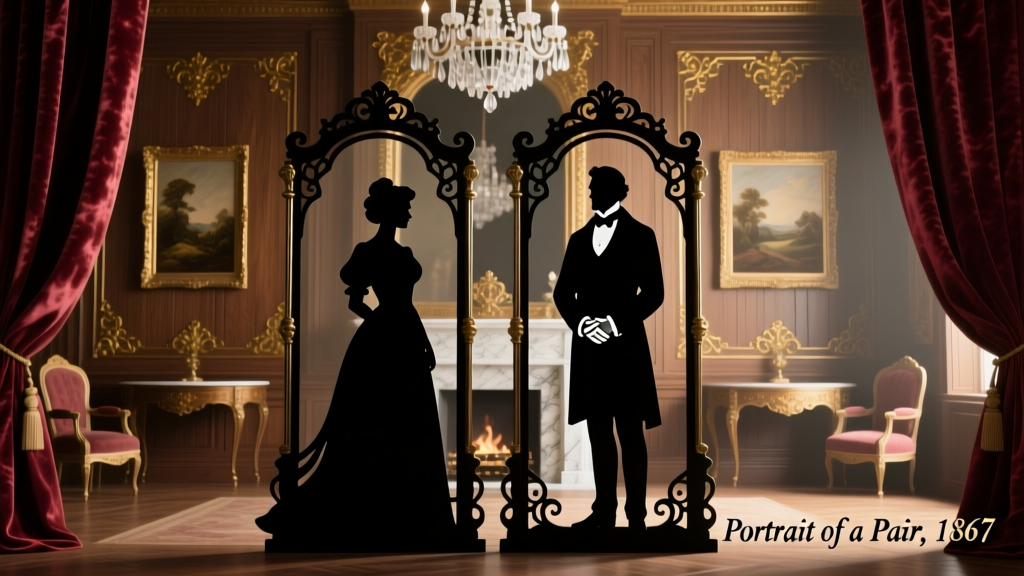
Silhouette Portraits of a Couple: Mid-19th Century Hollow-Cut Pair in Original Giltwood Frames
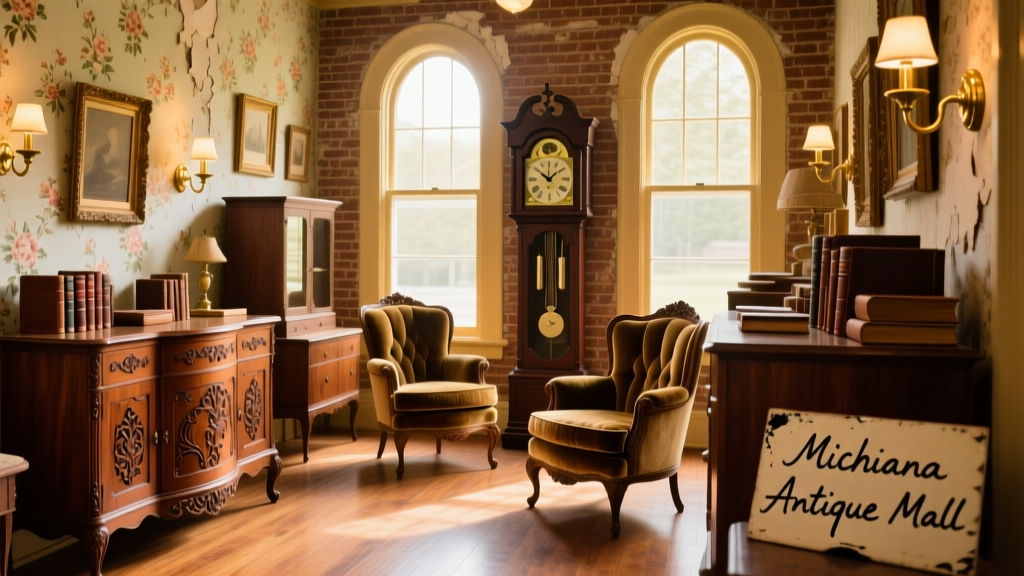
Michiana Antique Mall: A Midwest Treasure Hub for Collectors, Restorers, and Design Professionals

Fafddsafda: A Critical Examination of Misidentified Provenance and Structural Anomalies in Mid-Century American Case Goods

Log Cabin Syrup Tin: Decoding the Iconic 4×4-Inch Advertising Artifact Featuring Woman, Child, Boy, and Cowboy Motifs
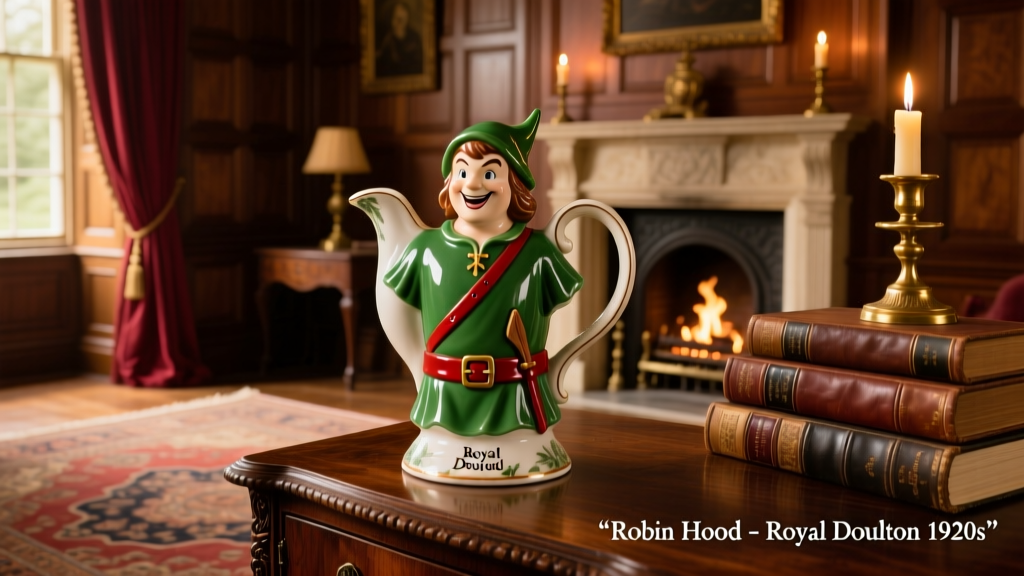
Royal Doulton Character Jug: Robin Hood — History, Identification, and Restoration Insights
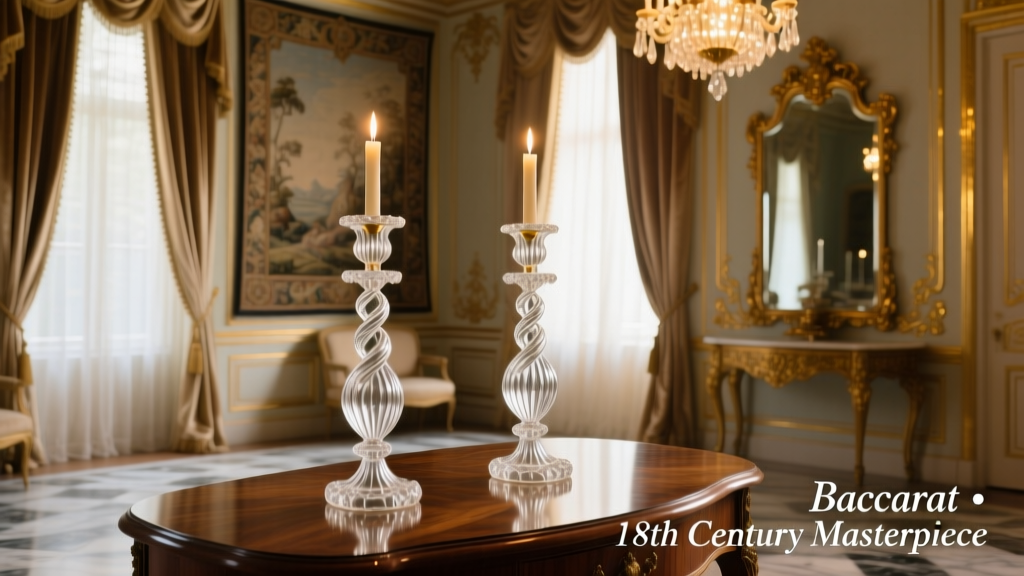
Baccarat Candlestick Twisted Baluster Shape: Authenticating and Preserving a Pair of 9 × 4¾-Inch Crystal Masterpieces