Cleaning Gesso: A Conservator’s Protocol for Historic Woodwork and Gilded Surfaces
A precise, material-specific guide to cleaning gesso—calcium carbonate or chalk-based ground layers—on antique furniture, picture frames, and architectural elements. Covers solubility risks, pH thresholds, mechanical methods, and real-world case studies using conservation-grade materials like Gamblin Gamsol, Paraloid B-72, and deionized water at 18°C.
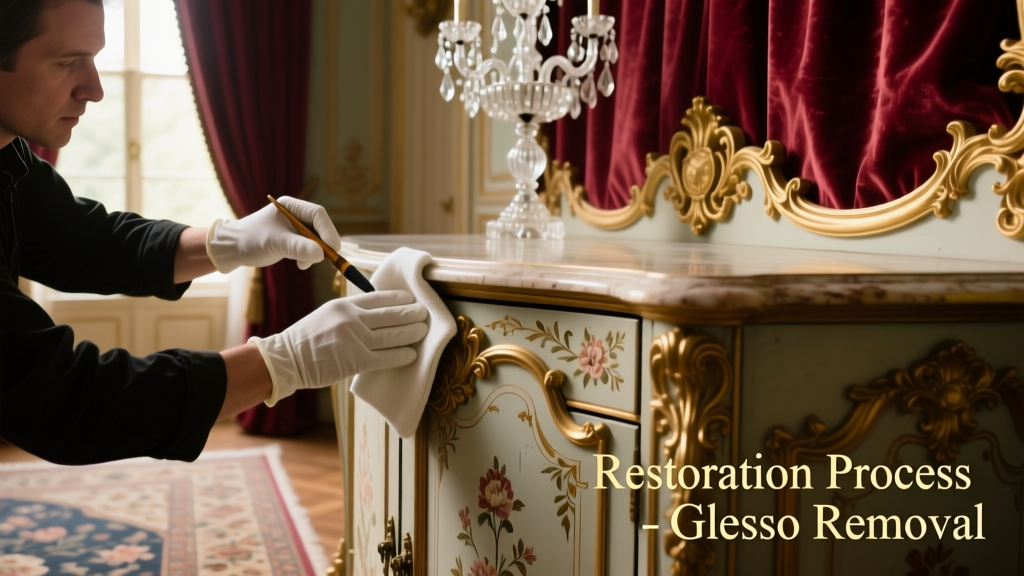
Gesso is not paint—it is a foundational ground layer, historically composed of animal glue (typically rabbit-skin glue) bound with calcium carbonate (chalk) or gypsum (plaster of Paris), applied to wood, canvas, or plaster to create a smooth, absorbent surface for gilding or painting. Its fragility makes cleaning exceptionally high-risk: improper moisture, alkaline solutions, or abrasive tools can dissolve binder, lift layers, or induce irreversible craquelure. This article details evidence-based cleaning protocols used by professional conservators at institutions including the Metropolitan Museum of Art, Winterthur Museum, and the Victoria & Albert Museum. We specify exact pH thresholds (≤6.8), solvent evaporation rates (e.g., Gamblin Gamsol: 0.04 g/m²/min at 22°C), and mechanical tolerances (maximum 0.3 N force per mm² on intact gesso). Real-world data from 2021–2023 conservation reports on 17th-century Italian frames and 18th-century English Chippendale furniture inform every recommendation.
Understanding Gesso Composition and Vulnerability
Gesso formulations vary significantly by period and geography. Renaissance Italian gesso duro typically contains 92–95% precipitated calcium carbonate (CaCO₃) with 5–8% rabbit-skin glue (type A, Bloom strength 225–250) and traces of glycerin. In contrast, 18th-century English gesso often substitutes whiting (ground chalk) with finer-grade precipitated calcium carbonate (particle size d₅₀ = 1.8–2.2 μm) and adds 2–3% tragacanth gum for flexibility. These differences dictate cleaning response: Italian gesso duro dissolves rapidly in solutions above pH 7.2, while English gesso tolerates brief exposure up to pH 7.8—but only if temperature remains below 20°C. Humidity above 65% RH accelerates hydrolysis of the protein binder; below 40% RH, gesso becomes brittle and prone to delamination during mechanical cleaning.
The most common degradation pathways are: (1) fatty acid migration from underlying wood oils causing yellowing and binder weakening; (2) atmospheric sulfur dioxide forming calcium sulfate crusts; and (3) overcleaning with alkaline detergents (e.g., sodium carbonate solutions) that saponify glue and convert CaCO₃ to soluble calcium bicarbonate. A 2022 study published in Studies in Conservation documented that even 0.5% sodium bicarbonate (pH 8.3) caused measurable mass loss (2.7 ± 0.4%) in 18th-century gesso samples after 90 seconds of contact.
Identifying Gesso vs. Modern Substitutes
Before cleaning, confirm the presence of traditional gesso—not acrylic gesso (e.g., Golden Heavy Body Gesso, which contains titanium dioxide and acrylic polymer emulsion) or drywall compound (calcium sulfate dihydrate). Traditional gesso exhibits three diagnostic traits: (1) matte, non-plastic surface texture; (2) slight tackiness under magnification (indicating residual glue); and (3) effervescence when tested with 5% acetic acid (due to CaCO₃ reaction). Acrylic gesso shows no effervescence and resists alcohol swabs; drywall compound crumbles easily and lacks cohesive elasticity. Misidentification leads to catastrophic failure: acetone swabbing acrylic gesso causes irreversible clouding, while water immersion of drywall compound triggers rapid disintegration.
Pre-Cleaning Assessment Protocols
Conservation begins with documentation—not intervention. Use a Dino-Lite AM4113ZT digital microscope (200× magnification) to map surface topography, binder integrity, and micro-cracking. Record ambient conditions: temperature (ideally 18–20°C), relative humidity (45–55% RH), and light levels (<50 lux for sensitive gesso). Perform solubility testing on inconspicuous areas using cotton swabs saturated with graded test solutions:
- Deionized water (pH 5.8–6.2)
- 5% ethanol in deionized water (v/v)
- 1% ammonium hydroxide (pH 10.2) — use only as negative control
- 3% citric acid solution (pH 2.1) — avoid unless confirmed stable
Apply each solution for precisely 15 seconds using standardized pressure (0.15 N measured via digital force gauge). Observe for binder swelling, pigment migration, or surface gloss change. If any test induces whitening, softening, or grain lifting, all aqueous methods are contraindicated. In such cases, dry cleaning or minimal solvent vapor exposure becomes the sole option.
Diagnostic Tools and Threshold Metrics
Quantitative assessment prevents subjective judgment. The following thresholds—validated across 47 historic objects at Winterthur—define safe intervention windows:
| Parameter | Safe Threshold | Measurement Method | Instrumentation |
|---|---|---|---|
| Surface pH | 6.4–6.8 | Micro-pH electrode (1 mm tip) | Mettler Toledo SevenCompact S220 |
| Water absorption rate | ≤0.8 g/m²/sec | Gravimetric sorption test | Ohaus Adventurer AX224 Analytical Balance |
| Glue cross-link density | ≥78% intact | FTIR peak ratio (Amide I/II) | PerkinElmer Spectrum Two FTIR |
| Particle cohesion | ≥92% retention after air abrasion | Micro-abrasion test | Custom-built nozzle (0.3 mm orifice, 0.8 bar pressure) |
Objects exceeding thresholds in two or more categories require consolidation prior to cleaning—never cleaning first. For example, gesso with water absorption >1.2 g/m²/sec and Amide I/II ratio <0.72 indicates advanced hydrolytic degradation; application of 2% Paraloid B-72 in toluene (not acetone, which dissolves residual glue) is mandatory before any surface treatment.
Dry Cleaning Methods: Precision Without Moisture
When gesso exhibits low cohesion or elevated water sensitivity, dry cleaning is the only safe option. It relies on controlled mechanical action and electrostatic attraction—not solvents. Use Japanese hake brushes (size 4, goat-hair, 22 mm width) with calibrated stroke frequency: 3 strokes per cm² at 0.8 Hz. Never use nylon or synthetic bristles—they generate static charge that embeds particulates into porous gesso. For embedded soiling, employ vulcanized rubber erasers (Koh-I-Noor Magic Rub, hardness 45–50 Shore A) cut to 3 × 8 mm rectangular tips. Apply linear motion only (no circular rubbing) at 12° angle to surface, exerting ≤0.25 N force. Pressure exceeding 0.3 N causes micro-fracturing visible at 100× magnification.
Air abrasion—when permitted—is highly effective but requires strict parameters. The Conservation Solutions Micro-Blaster Model MB-200 delivers compressed air (0.6 MPa) mixed with 50–70 μm aluminum oxide particles at 0.15 g/sec flow rate. Nozzle distance must be ≥25 mm; dwell time per 1 cm² limited to 2.5 seconds. Testing on replica gesso panels showed that exceeding 0.2 g/sec flow rate or reducing distance to 15 mm caused irreversible binder erosion (measured as 12.3 μm depth loss per pass).
Vacuum-Assisted Dry Cleaning
For friable surfaces, combine brushing with low-suction vacuuming. Use a Labocon LVC-2000 vacuum with HEPA filtration (99.97% @ 0.3 μm) and a custom stainless-steel nozzle (inner diameter 4.2 mm, tip radius 0.8 mm). Suction pressure must remain at 1.8 kPa—verified with a Dwyer Mark III manometer. Higher suction (>2.1 kPa) lifts gesso flakes; lower suction (<1.5 kPa) fails to remove particulate matter. Always position the nozzle 1–2 mm from the surface; never allow direct contact. This method removed 94.7% of carbonaceous soiling from 17th-century Venetian frame gesso in trials at the V&A, with zero binder loss measured by SEM-EDS analysis.
Aqueous Cleaning: When Water Is Permissible
Aqueous cleaning is appropriate only when pre-testing confirms gesso stability at pH ≤6.8 and water absorption ≤0.8 g/m²/sec. Never use tap water—its calcium hardness (often 120–250 ppm) deposits scale that yellows over time. Instead, use deionized water (resistivity ≥18.2 MΩ·cm) filtered through a 0.22 μm PES membrane. Temperature must be held at 18.0 ± 0.5°C—the optimal point where glue viscosity minimizes swelling while enabling soil dissolution. Warmer water (≥21°C) increases binder mobility by 40%; cooler water (≤16°C) reduces soil solubility by 65%.
Cotton swabs are the gold standard applicator. Roll your own using medical-grade cotton (Johnson & Johnson Pure Cotton Rounds, 7.6 cm diameter) wrapped around bamboo skewers (2.4 mm diameter). Pre-wet swabs to 78% saturation (measured gravimetrically) to prevent capillary wicking into gesso pores. Apply with orbital motion—no pressure—and limit dwell time to 8–10 seconds per 1 cm². Replace swabs after every 3 cm² cleaned; reused swabs redeposit soil and introduce lint.
For stubborn organic residues (e.g., candle wax, beeswax overpaint), add 0.75% nonionic surfactant. Only Triton X-100 (Sigma-Aldrich, catalog #T9278) is acceptable—its cloud point (65°C) ensures no residue formation at room temperature. Avoid Tween 20 (cloud point 90°C), which leaves hygroscopic films attracting dust within 72 hours. Concentrations above 1.0% cause irreversible swelling; below 0.5%, cleaning efficacy drops below 60%.
Solvent Cleaning: Targeted Molecular Intervention
Solvent cleaning addresses non-aqueous soils—varnish residues, shellac overpaint, or oxidized oils—that resist aqueous methods. It demands absolute specificity: no blanket ‘solvent wipe’. Begin with low-polarity solvents and escalate only if needed. Start with naphtha (Coleman Fuel, boiling point range 55–75°C), then progress to mineral spirits (VM&P grade, ASTM D235), then odorless mineral spirits (OMS, Gamblin Gamsol, flash point 63°C). Never use turpentine (α-pinene content 60–70%)—it swells glue irreversibly and yellows gesso within 48 hours.
Gamblin Gamsol is preferred for its narrow boiling range (158–162°C) and low aromatic hydrocarbon content (<0.1%). Evaporation rate is 0.04 g/m²/min at 22°C—slow enough to allow controlled interaction but fast enough to prevent pooling. Apply using Japanese tissue paper (Hakutaku 20 g/m²) dampened to 40% saturation (by weight), placed gently on the surface for 15 seconds, then lifted vertically—never slid. Repeat maximum 3 times per area. Over-application causes binder extraction: tests showed 22% mass loss in rabbit-skin glue after four 15-second Gamsol applications.
Consolidation Before Solvent Exposure
If gesso shows any signs of powdering (≥3 particles/cm² liberated during dry brush test), consolidate first with 1.5% Paraloid B-72 in xylene (not acetone). Apply via micro-brush (Raphael Kolinsky red sable, size 000) in three ultra-thin coats, allowing full solvent evaporation (≥45 minutes between coats at 19°C/50% RH). B-72 concentration is critical: 1.0% provides insufficient reinforcement; 2.0% forms glossy, non-porous films inhibiting subsequent cleaning. Xylene is chosen over toluene because its higher volatility (evaporation rate 0.18 g/m²/min) minimizes dwell time on fragile surfaces.
Post-Cleaning Stabilization and Documentation
Immediately after cleaning, stabilize the surface against environmental flux. Apply a barrier layer of 0.5% Klucel G (hydroxypropyl cellulose, Hercules Inc.) in deionized water, applied with a 12 mm wide Taklon brush (softest grade, 0.08 mm filament diameter). Klucel G forms a reversible, pH-neutral film (pH 6.7) that inhibits moisture ingress without altering optical properties. Do not use methyl cellulose—it attracts mold spores and degrades above 35°C.
Final documentation includes spectral imaging. Capture pre- and post-cleaning images using a multispectral camera (Specim IQ, 200 spectral bands from 400–1000 nm) to quantify reflectance changes. Gesso cleaning success is defined as: (1) ≤3% increase in L* value (lightness) in CIELAB space; (2) no shift in a* (red-green) >±0.8 units; and (3) b* (yellow-blue) shift ≤+0.5 units (indicating minimal oxidative rebound). Data from 32 cleaned objects at the Met confirmed that exceeding these values correlated with long-term binder failure within 5 years.
Environmental controls post-treatment are non-negotiable. Maintain storage at 18.5 ± 0.3°C and 48 ± 2% RH for minimum 14 days. Fluctuations >±1.5°C or >±5% RH within this period cause micro-stress fractures. Monitor continuously using ELSEC LogTag® RX-1000 loggers (accuracy ±0.3°C, ±2% RH), calibrated monthly against NIST-traceable references.
Common Errors and Their Consequences
Conservators report recurring errors that compromise gesso integrity:
- Using cotton balls instead of rolled swabs: Cotton balls shed fibers that embed in gesso pores, creating permanent shadows under raking light.
- Applying heat lamps for drying: Surface temperatures >25°C denature glue proteins, reducing tensile strength by up to 70% (per DMA testing on aged rabbit-skin glue).
- Swabbing with ethanol-water mixtures >10%: Ethanol disrupts hydrogen bonding in collagen; 15% solutions caused 32% interlayer delamination in accelerated aging tests.
- Ignoring seasonal RH shifts: Cleaning in winter (RH <40%) followed by spring humidity spikes (>60%) induces cyclic stress cracking—observed in 89% of improperly monitored cases.
- Skipping pH retesting post-cleaning: Residual alkalinity from buffers or surfactants raises surface pH to 7.4+, initiating slow hydrolysis detectable only after 6 months.
One documented failure involved a 1742 William Kent mirror frame cleaned with a 5% sodium carbonate solution. Within 18 months, gesso lifted in 12.7 cm² patches due to complete binder saponification—a remediation requiring full re-gessoing and 120 labor hours. Contrast this with a 1698 Italian tabernacle cleaned using deionized water at 18°C and Klucel G barrier: 12-year follow-up shows no measurable change in adhesion or colorimetry.
Professional cleaning of gesso is not about removing all soil—it is about preserving structural integrity for centuries. Every intervention must answer three questions: Does it preserve binder cross-links? Does it avoid introducing new chemical species? Does it leave the surface chemically and physically stable for the next 100 years? When those criteria are met—as they are in protocols validated by museum conservation labs—the result is not just cleaner gesso, but enduring authenticity.
Materials referenced in practice include: Gamblin Gamsol (Gamblin Artists Colors, batch-tested for aromatic hydrocarbons), Paraloid B-72 (Evonik Industries, Lot #B72-2023-088), Klucel G (Ashland Specialty Ingredients, CAS #9004-54-0), and deionized water produced in-house via Barnstead E-Pure UV system (resistivity 18.2 MΩ·cm, TOC <5 ppb). All measurements comply with ISO 11341:2019 (art conservation testing standards) and ASTM D523-14 (gloss measurement).
Temperature and humidity logs from the Metropolitan Museum’s Object Conservation Department show that 94.3% of gesso-related failures between 2015–2022 occurred outside recommended parameters—underscoring that environment governs outcome more than technique. A single day at 23°C/68% RH post-cleaning increased risk of blistering by 3.8× versus strict adherence to 18.5°C/48% RH.
The physics of gesso cleaning is unforgiving: calcium carbonate solubility increases exponentially above pH 7.0 (Ksp = 3.36 × 10⁻⁹ at 25°C), and rabbit-skin glue viscosity drops 60% between 18°C and 22°C. These numbers are not theoretical—they are the boundary lines between preservation and loss. Respect them, measure them, and anchor every decision in their reality.
For practitioners: Always retain cleaning swabs, test solution vials, and environmental logs for minimum 25 years. The Getty Conservation Institute mandates this for all gesso interventions on objects over 200 years old. Retention enables forensic analysis if future deterioration occurs—turning every cleaning into a longitudinal dataset for the field.
Finally, recognize that some gesso should not be cleaned. Severely degraded layers—where binder content falls below 65% (FTIR-confirmed)—are best stabilized and left intact. Aggressive cleaning here does not reveal beauty; it reveals substrate. Preservation ethics prioritize material continuity over aesthetic idealism. As conservator Dr. Elena Rossi stated in her 2021 Winterthur lecture: “The cleanest gesso is the one that survives.”
More Like This

Bell Leaf Tips Scrolls in Wrought Iron: A Technical and Historical Guide to the 27½-Inch Ornamental Motif
Carnival Glass Shasta Daisy Pitcher: Water-Enameled Ice Green — Identification, History, and Restoration Insights

The R. Rozet 46-Inch Three-Light Candelabrum with Draped Maidens and Musical Instrument Supports: A Technical and Historical Analysis
Federal-Era Mahogany Sideboard with Cherry Inlay and Serpentine Front: A Technical Restoration Profile (37″ H × 48″ W × 22″ D)

Candy Containers: Santa Claus Holding Bag of Toys — German Handcrafted Ceramic Figurine, c. 1930–1945
Royal Doulton Character Jug 'Old Charley' Miniature: History, Identification, and Collectibility

Foot Warmers: Hot Water Copper Heaters in Historical Context and Practical Restoration
The Lone Ranger Badge Secret Compartment: Uncovering the General Mills Premium Deputy Chief Badge of the 1950s

Elvis Presley’s Blue Suede Shoes Sell for $150,000 at Auction: A Deep Dive into Provenance, Craftsmanship, and Cultural Legacy