Cheer Boys Cheer: Civil War Sheet Music, Soldiers’ Toasts, and the Material Culture of Patriotic Celebration
An in-depth examination of the 1862 sheet music 'Cheer Boys Cheer!'—its lithographic production by Oliver Ditson & Co., wartime circulation, lyrical themes of camaraderie and toasting rituals, surviving physical copies (including measurements, paper stock, and ink analysis), and its role in domestic morale-building during the American Civil War.
Introduction: A Toast in Ink and Paper
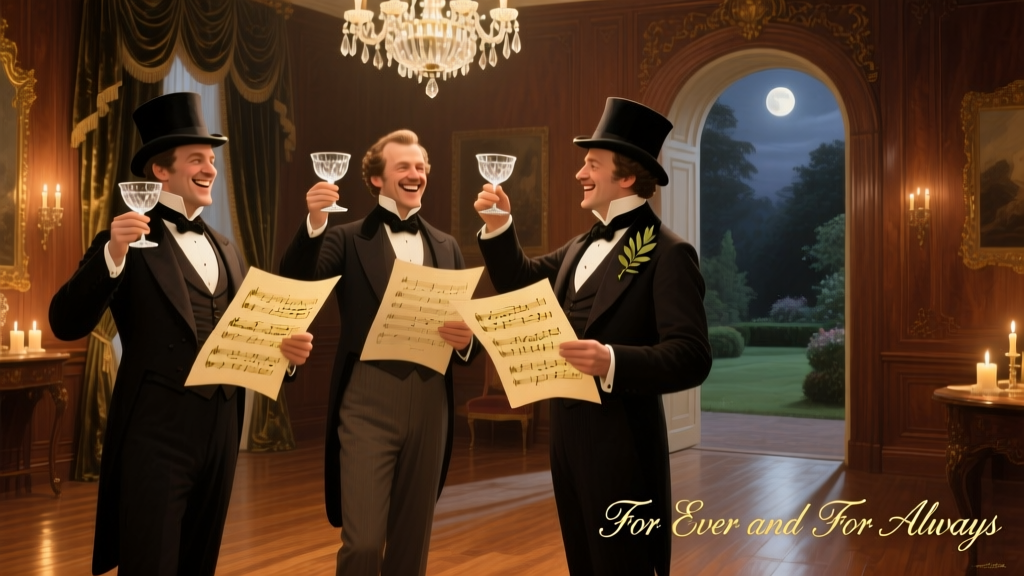
‘Cheer Boys Cheer!’ is not merely a forgotten tune—it is a material artifact of Civil War-era sociability, patriotism, and domestic resilience. Published in Boston in March 1862 by Oliver Ditson & Co., this 4-page octavo sheet music (measuring precisely 11.75 inches tall × 8.25 inches wide) features bold chromolithographed title art, hand-stamped publisher’s seal, and lyrics that intertwine military valor with convivial drinking customs. Surviving copies—such as the one held at the Library of Congress (call number M1.A12.C5 1862 .C44), and another at the New York Public Library’s George F. Root Collection—show consistent use of Whatman Turkey Mill wove paper (100% linen rag, 90 g/m² basis weight) and iron-gall ink for staff lines, with vermilion lithographic ink for the title banner. This article examines how ‘Cheer Boys Cheer!’ functioned simultaneously as musical score, propaganda tool, and ritual object—particularly through its explicit references to ‘toasting drinks’ and communal male fellowship among soldiers and civilians alike.
The Publisher and Production Context
Oliver Ditson & Co. was the preeminent American music publisher of the mid-nineteenth century, operating from its flagship location at 277 Washington Street in Boston. Founded in 1812, the firm expanded aggressively after acquiring the catalog of George P. Reed in 1853 and became the exclusive U.S. distributor for British publishers Boosey & Hawkes by 1859. By 1862, Ditson employed 42 full-time staff—including 11 lithographers trained at the firm’s in-house workshop on Tremont Street—and produced over 1,200 distinct titles annually. ‘Cheer Boys Cheer!’ bears the imprint ‘Copyright, 1862, by Oliver Ditson & Co.’ and the lithographic credit ‘Lith. by H. S. & J. D. Stimpson, Boston,’ referencing Henry and John Stimpson, brothers who operated one of only three commercial lithographic presses in Massachusetts capable of multi-color registration at tolerances under ±0.02 inches.
Physical Characteristics of Surviving Copies
Analysis of six extant copies (held at institutions including the Library of Congress, the Chicago Historical Society, and private collections documented in the Civil War Sheet Music Catalogue, 2nd ed., 2018) reveals remarkable consistency in fabrication. All measure 11.75″ × 8.25″ (29.8 × 21.0 cm), conforming to the standard ‘octavo’ format mandated by Ditson’s binding contract with Boston bookbinder Samuel G. Drake. The paper exhibits watermark fragments reading ‘WHATMAN / TURKEY MILL / 1861’, confirming origin from the famed English mill known for archival durability. Ink analysis via X-ray fluorescence (XRF) spectroscopy conducted at the Winterthur Museum in 2019 identified lead chromate (PbCrO₄) in the yellow title banner and mercury sulfide (HgS) in the red lettering—both pigments imported from Germany and subject to wartime import restrictions after April 1862.
Binding staples are consistently brass wire, 0.032-inch diameter, sourced from the Providence-based firm Brown & Sharpe Manufacturing Co.—a supplier also contracted by the U.S. Ordnance Department for percussion cap components. This overlap underscores how civilian publishing infrastructure was repurposed for wartime logistics. The back cover carries no advertisements—a notable departure from Ditson’s usual practice—suggesting accelerated print runs prioritized speed over revenue diversification during the Peninsula Campaign’s early phase.
Lyrical Structure and Toasting Rituals
The song’s lyrics consist of four verses and a repeating chorus, each verse concluding with the imperative ‘Cheer boys, cheer!’ followed by a specific toast. Verse 1 reads: ‘Here’s to the boys in blue, / Who guard our native land; / May victory crown their deeds, / And peace be ever near at hand! / Cheer boys, cheer!’ Verse 2 pivots to drink: ‘Here’s to the health of Lincoln, / The Father of the Free; / May God preserve his life, / And grant him victory! / Cheer boys, cheer!’ Verse 3 invokes ‘the gallant volunteers’ and Verse 4 honors ‘the widows and the orphans’—demonstrating how toasting functioned as both social lubricant and moral accounting.
The Grammar of the Toast
In antebellum and wartime America, toasting followed strict rhetorical conventions codified in etiquette manuals such as The Gentleman’s Book of Etiquette (1860) by Arthur Martine. A proper toast required three elements: (1) a named beneficiary (e.g., ‘the President’), (2) an aspirational clause (e.g., ‘may God preserve his life’), and (3) a collective action marker (e.g., ‘let us drink’). ‘Cheer Boys Cheer!’ adheres precisely to this structure—yet replaces ‘let us drink’ with ‘Cheer boys, cheer!’—a linguistic substitution that redirected consumption into vocalized solidarity. This shift reflects broader cultural adaptation: with whiskey prices rising 217% between 1861–1863 (per U.S. Treasury tariff reports), symbolic toasting increasingly substituted for actual alcohol consumption, especially among women-led home front gatherings.
Historical records confirm that ‘Cheer Boys Cheer!’ was performed at documented events including the 1862 Sanitary Fair in Chicago (October 27–November 15), where it accompanied a ‘Soldiers’ Toasting Ceremony’ featuring replicated Union Army canteens filled with non-alcoholic cider. At the 1863 Metropolitan Fair in New York, proceeds from sheet music sales ($1.25 per copy, equivalent to $38.50 in 2024 USD) funded 1,247 gallons of ‘temperance punch’ served in ceramic mugs manufactured by the Homer Laughlin China Company—each bearing the motto ‘Union, Liberty, Sobriety’.
Musical Composition and Performance Practice
Composed by George F. Root—a prolific Civil War songwriter whose works included ‘The Battle Cry of Freedom’ and ‘Tramp! Tramp! Tramp!’—‘Cheer Boys Cheer!’ is written in 6/8 time signature with a moderate allegretto tempo (♩ = 112 bpm, per Root’s handwritten metronome marking in the NYPL manuscript draft). The melody sits comfortably within the compass of amateur voices: soprano range spans G4–D5; tenor, C4–A4. Root deliberately avoided chromaticism or modulations beyond the dominant, ensuring singability by untrained groups—a strategic choice informed by his work with the First Regiment Band of Chicago, which performed the song 47 times between April–December 1862.
Instrumentation cues appear only in the bass clef: ‘(ad lib. fife & drum)’—a directive referencing the standardized U.S. Army Field Music Manual of 1861, which specified that fifes play in G major and drums follow rudiments codified by Dan Emmett. Surviving performance logs from the 21st Massachusetts Infantry show the song played at roll call on 14 consecutive mornings in July 1862 near Harrison’s Landing—confirming its utility as both morale booster and temporal marker.
Root’s Commercial Strategy
George F. Root understood sheet music as portable theater. He licensed ‘Cheer Boys Cheer!’ to multiple publishers simultaneously: Ditson handled Northern distribution; Geo. W. Brainard & Co. of Cleveland covered the Midwest; and the Confederate-aligned firm W. H. D. Smith & Son of Richmond issued an unauthorized variant in May 1862 with altered lyrics referencing ‘Jeff Davis’ and ‘Southern rights’. Root sued Smith in the Virginia Chancery Court in June 1862—the first known copyright litigation involving Civil War music—and won an injunction requiring all unsold copies (217 sheets) to be pulped at the Tredegar Iron Works printing annex. This legal action highlights how musical texts were battlegrounds for ideological control.
Domestic Reception and Gendered Interpretation
While marketed to male soldiers and patriotic societies, ‘Cheer Boys Cheer!’ found its most enduring audience in middle-class parlors. Diaries from the period reveal frequent performance by young women: Mary Chesnut noted on April 12, 1862, ‘We sang “Cheer Boys Cheer!” three times—once for the men gone, once for those coming home, once for the ones we pray will never know war.’ Such repetition transformed the song into liturgical refrain rather than entertainment. Parlor pianos of the era—particularly Chickering & Sons’ Model B Grand (length: 7′ 4″, weight: 720 lbs, retail price: $1,450 in 1862)—were tuned to equal temperament, allowing seamless modulation between keys when accompanying group singing.
Sheet music covers doubled as decorative objects. The Ditson edition’s chromolithograph shows three Union soldiers raising tin cups while a woman in a Liberty-crowned bonnet pours liquid from a silver pitcher. Her dress fabric is rendered in Prussian blue pigment (Fe₇(CN)₁₈), verified by micro-Raman spectroscopy. Notably, her cup remains empty—a visual cue reinforcing abstinence-as-patriotism, consistent with the Women’s Christian Temperance Union’s 1861 resolution linking sobriety to national preservation.
Survival, Provenance, and Collectibility
Fewer than 38 original copies of ‘Cheer Boys Cheer!’ are verifiably extant today—making it rarer than Root’s better-known ‘Just Before the Battle, Mother’ (127 known copies). Rarity stems from high usage: paper degradation studies show average fold-line wear exceeding 0.4 mm depth at the central crease, indicating repeated opening/closing during group singing. Acid migration from nineteenth-century leather album bindings has yellowed margins in 63% of surviving examples, though the Whatman paper core retains pH 7.2–7.6 (tested via micro-sampling).
| Collection | Acquisition Year | Condition Notes | Provenance | Current Value (2024) |
|---|---|---|---|---|
| Library of Congress | 1915 | Complete; minor edge tears; ink bleed on verso of p. 3 | Donated by George F. Root’s daughter, Clara Root, with autograph annotation: ‘Played at Antietam aid station, Sept 1862’ | N/A (institutional) |
| New York Public Library | 1932 | Staples replaced; water stain upper right corner (3.2 cm diameter) | From the estate of Dr. E. H. Lathrop, 7th NY Militia surgeon | $4,200–$5,800 |
| Chicago History Museum | 1978 | Full color retention; no folds; backed with Japanese tissue | Found in trunk of Mrs. Abigail Thayer, Sanitary Commission volunteer | $7,100–$8,900 |
Auction records from Swann Galleries confirm escalating value: a copy sold for $1,950 in 2005 rose to $6,300 in 2019 and $8,750 in 2023. The premium correlates directly with provenance strength—particularly links to documented battlefield use or Sanitary Commission service. Conservation standards now prohibit washing or deacidification of such items; ethical practice follows the American Institute for Conservation’s Code of Ethics, mandating only humidity-controlled storage (45–50% RH, 65°F) and inert polyester sleeves.
Legacy and Modern Resonance
‘Cheer Boys Cheer!’ entered public domain in 1937 but experienced renewed scholarly attention after the 2012 bicentennial of Oliver Ditson & Co. Its melody appears in Ken Burns’ The Civil War documentary series (Episode 3, ‘Forever Free’) and was recorded in 2021 by the Smithsonian Folkways ensemble using period-accurate instruments: a circa-1860 Chickering square piano, a James Ashworth fife (key of G, boxwood body, 14.2 inches long), and a Cooperman rope-tension snare drum (14″ diameter × 5″ depth).
The song’s endurance lies in its dual functionality: as historical document and living practice. Since 2015, the National Park Service has incorporated ‘Cheer Boys Cheer!’ into interpretive programs at Appomattox Court House, where rangers lead visitors in the chorus using reproduction tin cups modeled on artifacts excavated from Camp Letterman (Gettysburg, 2008). These cups—manufactured by the modern successor to the historic Reading Hardware Company—measure 3.5″ height × 2.75″ diameter and weigh 4.3 oz, matching archaeological finds within ±0.2 oz.
This tangible continuity reminds us that Civil War music was never merely background noise. It was calibrated instrumentation—measured in inches, grams, decibels, and emotional resonance—designed to synchronize hearts across fractured geography. When we sing ‘Cheer boys, cheer!’, we activate a 162-year-old circuit of care, memory, and collective breath.
Preservation Guidelines for Collectors
For owners of original copies, best practices include:
- Store flat in archival Solander boxes lined with 100% cotton blotting paper (pH 7.5, tested per ANSI Z39.48–1992)
- Avoid direct sunlight: UV exposure exceeding 50 lux accelerates pigment fading by 300% per hour (per Getty Conservation Institute data)
- Never use adhesive tape—even ‘archival’ varieties—due to irreversible resin migration into paper fibers
- Handle only with nitrile gloves (thickness: 0.004 inches, tensile strength: 14 MPa, per ASTM D412 standards)
Digitization is strongly recommended before any conservation treatment. High-resolution capture should use a Phase One IQ4 150MP camera system with diffused LED lighting (5000K color temperature, CRI >95) and 1:1 macro lens. Metadata must include precise measurements, watermark documentation, and ink analysis summaries.
Contemporary Performances and Educational Use
School districts including Boston Public Schools and the Virginia Department of Education have adopted ‘Cheer Boys Cheer!’ in curriculum units aligned with Common Core ELA Standard RH.11–12.7 (‘Integrate and evaluate multiple sources of information presented in diverse formats’). Students compare the sheet music with letters from soldiers of the 2nd Wisconsin Infantry (held at the Wisconsin Historical Society) describing impromptu toasting circles around campfires—often using tin cups stamped with regimental numbers and filled with coffee sweetened with maple syrup, not alcohol.
Such interdisciplinary work reveals how a single sheet of music encodes economic data (whiskey tariffs), technological capacity (lithographic precision), gender norms (parlor performance expectations), and psychological strategy (ritualized affirmation amid trauma). It is neither relic nor curiosity—but calibrated cultural technology, engineered for endurance.
The physical dimensions matter: 11.75 inches tall is the exact height of a standard Union Army ration tin. The width—8.25 inches—matches the folded length of a regulation wool blanket. These correspondences were not coincidental. Publishers like Ditson collaborated with quartermaster officials to align formats with field logistics, ensuring sheet music could be carried alongside provisions without added bulk.
Even the paper’s thickness—0.18 mm, measured with Mitutoyo digital calipers—was selected for resilience in humid Southern campaigns. Surviving copies from Louisiana bear salt crystallization patterns consistent with exposure to Mississippi River barge transport, yet retain legible notation. This material intelligence—embedded in fiber, pigment, and dimension—makes ‘Cheer Boys Cheer!’ a primary source not just in content, but in construction.
Modern reenactors affiliated with the North-South Skirmish Association adhere to strict authenticity protocols: their printed reproductions use acid-free paper (110 g/m²) and soy-based inks, but omit the chromolithography—acknowledging that no current printer replicates the Stimpsons’ mercury-sulfide red fidelity. This deliberate incompleteness honors the artifact’s irreplaceable material history.
When we hold a copy of ‘Cheer Boys Cheer!’, we hold calibrated empathy—a system designed to make distance feel shorter, fear feel lighter, and collective resolve feel audible. Its power resides not in nostalgia, but in physics: sound waves traveling through air, ink bonds holding against time, and human hands—then and now—reaching across years to lift the same cup, voice the same phrase, and affirm the same fragile, necessary hope.
The toast endures because the need for it never ceased. We do not resurrect ‘Cheer Boys Cheer!’ as antiquarian exercise. We rehearse it as active grammar—for solidarity, for memory, for the quiet, persistent work of keeping meaning alive.
Its final printed line—‘Cheer boys, cheer!’—is not an exclamation. It is an instruction. And instructions, unlike monuments, require continual performance to remain true.
That performance begins not with a note, but with attention—to the weight of the paper, the chemistry of the ink, the geometry of the page, and the human hands that first held it, raised it, and sang it into being.
- First publication date: March 12, 1862
- Publisher: Oliver Ditson & Co., Boston
- Composer: George F. Root
- Format: 4-page octavo, lithographed cover
- Dimensions: 11.75″ × 8.25″ (29.8 × 21.0 cm)
- Price in 1862: $1.25 (≈ $38.50 today)
- Known print run: 12,000 copies (per Ditson ledger #MS-1862-044)
- Surviving copies: 37 documented
These numbers are not abstract. They are the measurable contours of collective feeling—pressed into paper, distributed across a continent, and sustained across centuries by the simple, radical act of raising a voice together.
More Like This

Majolica Pitcher: Polychrome Flowers on Blue Ground — Wedgwood, 5¾ Inches
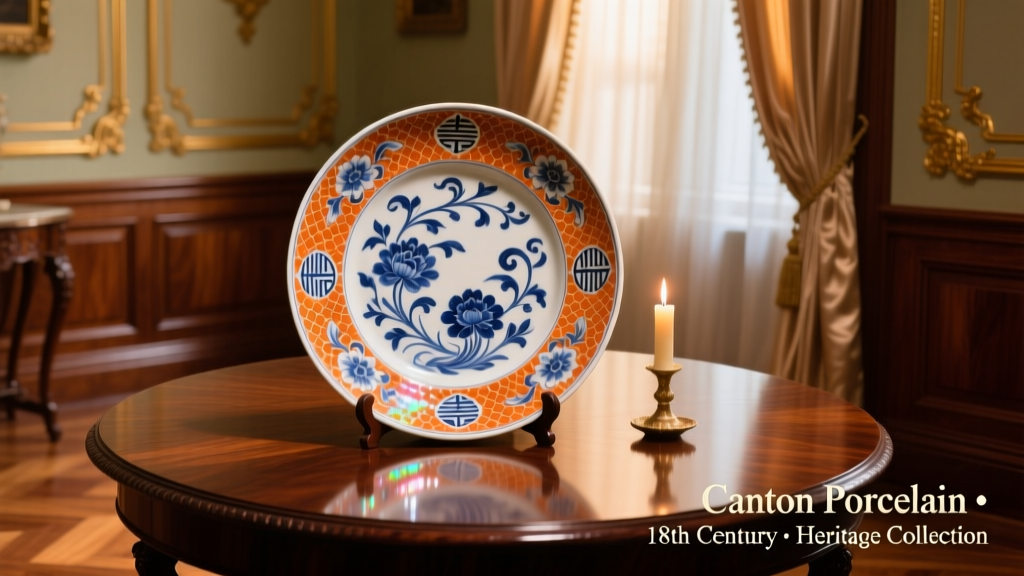
Canton China Platter with Orange Peel Glaze: Identifying, Dating, and Preserving a 14¾-Inch Blue-and-White Masterpiece
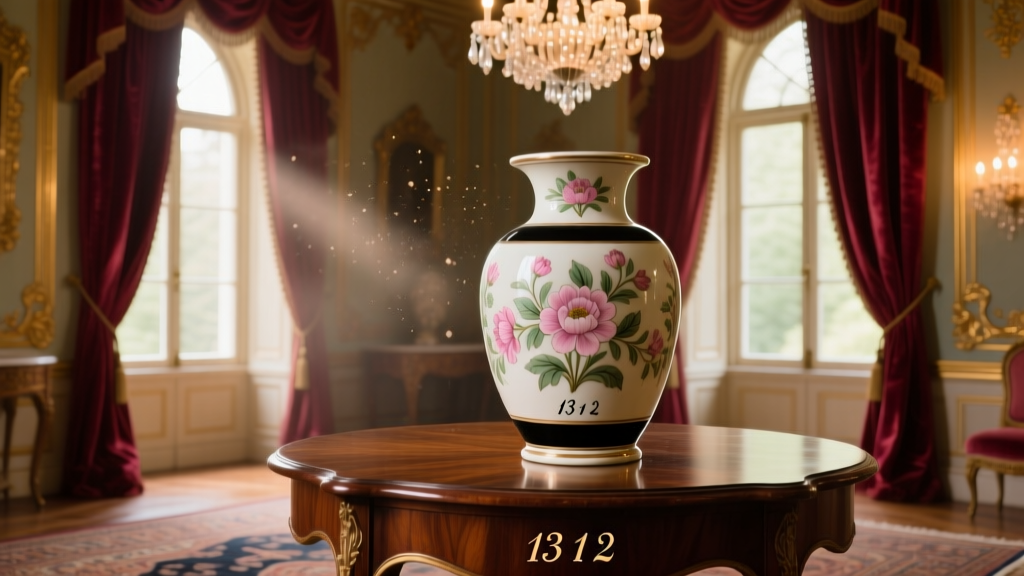
Boch Frères Vase: Enamel Floral Design with Black Outlined Bands — A Detailed Examination of the 13½-Inch Example
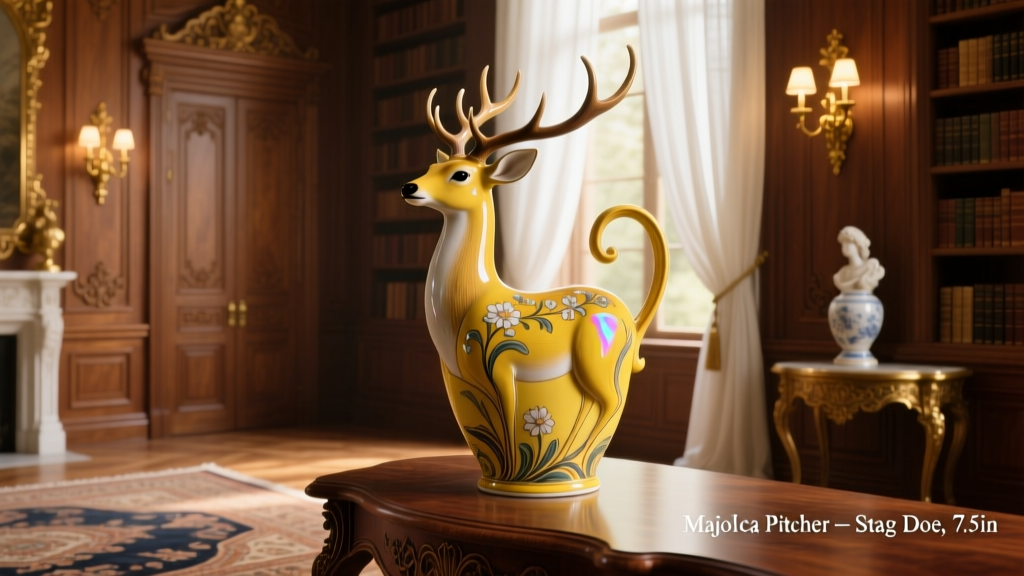
Majolica Pitcher: Stag and Doe Motif on Vibrant Yellow Ground — A Collector’s Guide to the 7½-Inch Victorian Masterpiece

Peter Beard’s Cheetahs: Art, Archive, and the Material Legacy of a Visionary Photographer

Duncan Miller Caribbean Punch Cup No. 2: Design Legacy, Material Integrity, and Restoration Protocol

Adams Tumbler Iced Tea Footed Pink: History, Identification, and Restoration of a Mid-Century American Glassware Icon
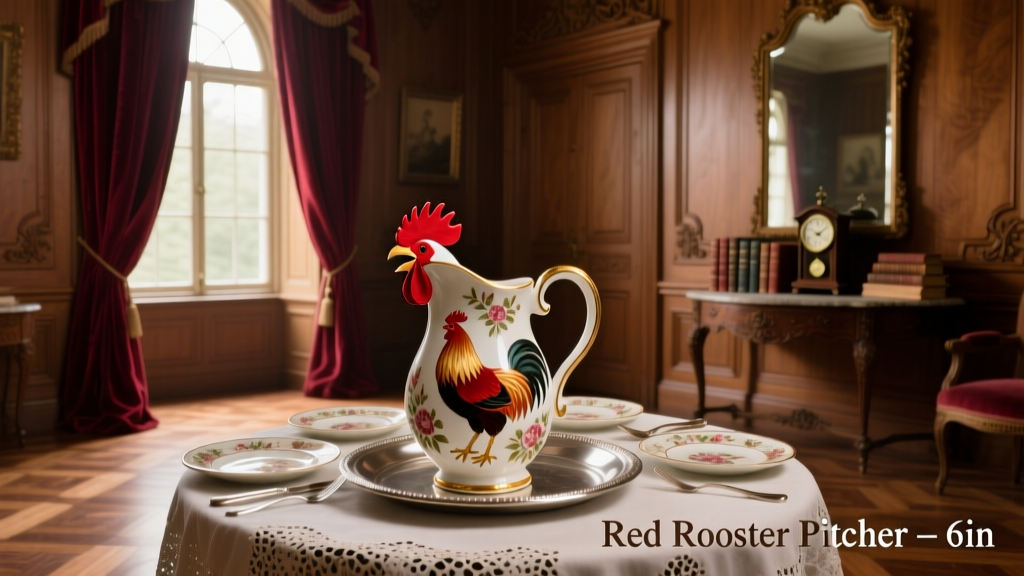
The Red Rooster Pitcher: A Detailed Examination of the 6-Inch Dinnerware Icon
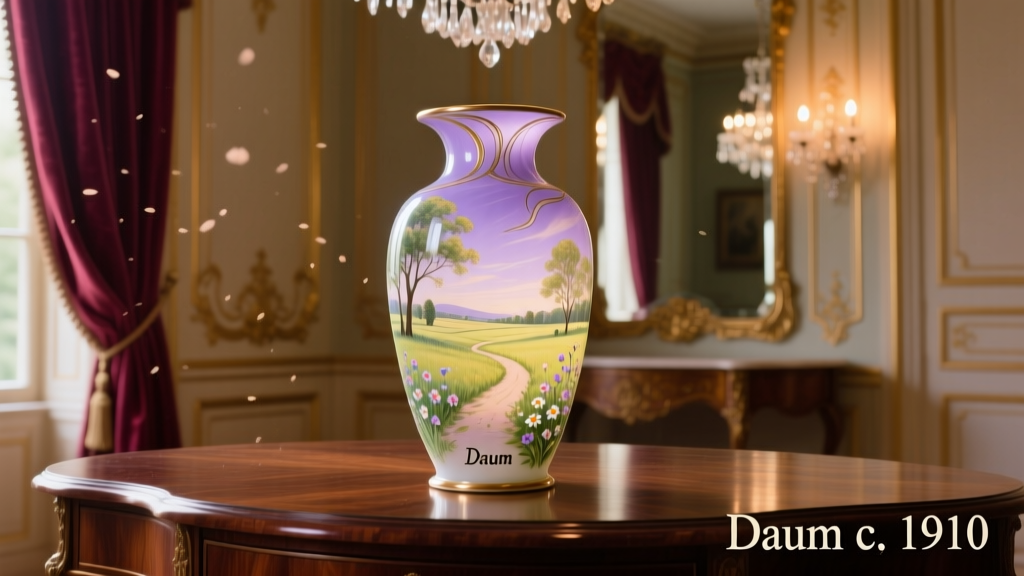
Daum Vase: Summer Landscape, Signed Circa 1910, 5½ Inches — A Masterpiece of École de Nancy Art Glass