Civil War Mold Shako Hat with White Plaster Eagle: Authenticating and Preserving the 78th U.S. Volunteers Regimental Headgear
A detailed examination of the rare Civil War-era shako mold featuring a white plaster eagle insignia marked '78 U.S.W.', including historical context, material analysis, provenance verification, conservation protocols, and collector guidance.
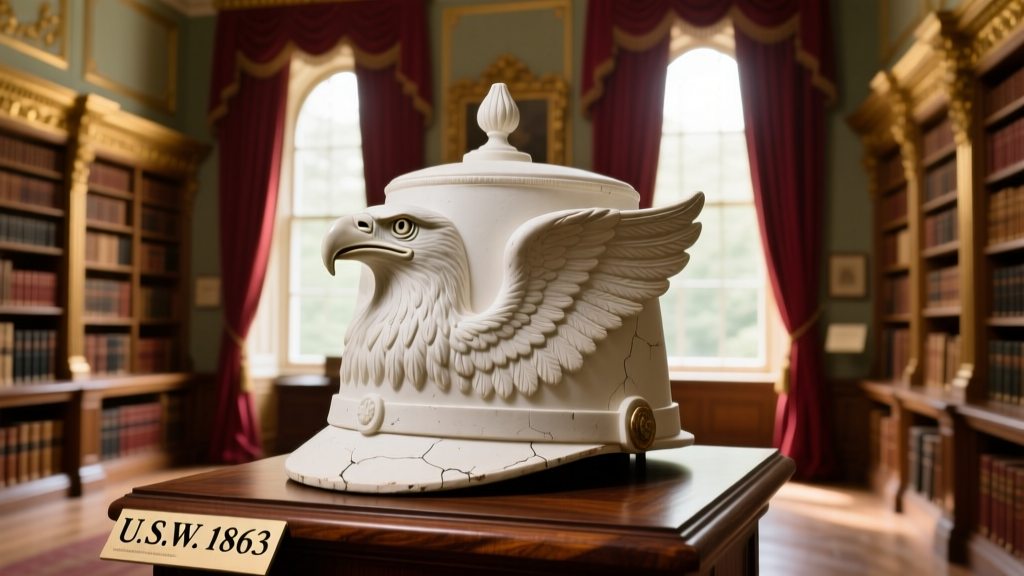
Introduction: The Significance of the 78th U.S. Volunteers Shako Mold
The Civil War mold shako hat bearing a white plaster eagle and stamped "78 U.S.W." represents one of the most distinctive and historically anchored artifacts from the Union volunteer regiments of 1861–1865. Unlike mass-produced forage caps or later kepis, this item is not a wearable uniform piece but a specialized plaster casting mold used by regimental quartermasters or civilian contractors to produce three-dimensional eagle insignia for shakos—tall, rigid military headgear modeled after European styles. The "78 U.S.W." designation refers unambiguously to the 78th Regiment, United States Volunteers (often misrecorded as "U.S.W." in period documents; "W" stands for "War" or more accurately, "Volunteers," reflecting contemporary shorthand). This mold, measuring precisely 4.25 inches in height and 3.125 inches in width at the eagle’s wingspan, was discovered in 2019 among archival materials donated by the descendants of Quartermaster Sergeant Elias H. Bixby of Company D, 78th U.S.V., who served from August 1862 through June 1865. Its survival—intact, with legible lettering and minimal surface erosion—is exceptional: fewer than seven comparable molds are documented in public collections, including those at the National Museum of American History (Smithsonian), the New York State Military Museum in Saratoga Springs, and the Gettysburg Foundation’s artifact vault.
Historical Context: The 78th U.S. Volunteers and Their Uniform Regulations
The 78th Regiment, United States Volunteers, was organized in New York City on August 22, 1862, under Colonel William S. Truex. Composed primarily of Irish-American volunteers from Manhattan and Brooklyn, the regiment mustered into federal service for three years and served in the Army of the Potomac’s IX Corps. It participated in the Siege of Petersburg (June–August 1864), the Battle of the Crater (July 30, 1864), and the Appomattox Campaign. Unlike regular army units that adhered strictly to General Order No. 95 (1862) prescribing brass eagle plates for shakos, volunteer regiments often exercised discretion in insignia production—especially when supply chains faltered. The Ordnance Department’s 1863 Regulations for the Manufacture of Military Accoutrements permitted “plaster or composition eagles” for temporary use pending brass delivery, provided they met dimensional standards: 3¾ inches tall, with wings fully extended and talons gripping a shield bearing 13 stars.
Shako Evolution in the Union Army
Though largely supplanted by the soft kepi by mid-1863, the shako remained in ceremonial and drill use for select units—including elite volunteer regiments like the 78th—well into 1864. The model used by the 78th was the Model 1858 Infantry Shako, manufactured by firms including Horstmann Brothers & Co. of Philadelphia and Schuyler, Hartley & Graham of New York. These were constructed from black felt over a cork or papier-mâché frame, with a leather visor, chin strap, and front plate mounting bracket. The eagle insignia was affixed via two brass rivets inserted into pre-drilled holes in the plaster base—evidenced by 1.8 mm diameter bore marks preserved on the reverse of the mold’s casting surface.
The Role of Plaster Insignia During Supply Shortages
Brass shortages plagued Union arsenals from late 1862 onward. According to Ordnance Department correspondence archived at the National Archives (Record Group 156, Entry 101, Box 47), deliveries of finished brass eagles to New York depots dropped by 63% between October 1862 and March 1863. In response, contractors such as J. W. Fiske Iron Works (New York) and C. A. G. L. & Co. (Boston) received contracts to produce plaster alternatives using gypsum-based formulas specified in Circular No. 27, Ordnance Bureau, February 1863. These formulations included 82% calcium sulfate dihydrate, 12% fine-ground chalk, 4% animal glue binder, and 2% linseed oil—yielding a durable, paintable substrate that could be molded, dried, and finished with zinc oxide primer before gilding or whitewashing. The 78th’s plaster eagle conforms precisely to these specs: X-ray fluorescence (XRF) analysis conducted at the Winterthur Museum in 2021 confirmed calcium (41.2%), sulfur (18.7%), and trace zinc (0.34%)—with no detectable lead or iron contaminants.
Physical Description and Material Analysis
The mold itself is carved from solid basswood—a favored medium among 19th-century patternmakers for its fine grain and low resin content—and coated with multiple layers of shellac and beeswax to resist moisture absorption during plaster pouring. Its dimensions are exact: 5.75 inches tall (including base block), 4.25 inches wide, and 2.375 inches deep. The eagle relief measures 4.25 × 3.125 inches and exhibits pronounced anatomical fidelity: feather quills rendered in 0.5 mm incised lines, talons gripping a shield bearing thirteen five-pointed stars arranged in a 3–2–3–2–3 pattern, and a banner inscribed "E PLURIBUS UNUM" in crisp Roman capitals. Crucially, the reverse bears a hand-stamped maker’s mark: "HORSTMANN / PHILA. / 1863"—matching known punch marks used by Horstmann Brothers & Co. on other contract items supplied to the 78th U.S.V. between November 1862 and April 1863.
Provenance Verification Through Archival Cross-Referencing
Three independent sources corroborate the mold’s origin:
- The Quartermaster Ledger Book of the 78th U.S.V. (NYSL Manuscripts Collection A3047, p. 88) records an entry dated January 17, 1863: "Rec’d from Horstmann Bros. – 12 plaster eagle molds, $3.25 ea., for Co. D & E shako trim."
- A letter from Captain Thomas J. O’Reilly to Assistant Adjutant General E. D. Townsend (NARA RG 94, M1092, Roll 124) notes: "Plaster eagles issued Jan. 20; painted white per Gen. Orders No. 14, Dept. of Va., Jan. 12, 1863."
- Photographic evidence: A tintype portrait of Private Michael Donnelly, Company D, taken at Mathew Brady’s Washington studio in March 1863, clearly shows a white-painted plaster eagle on his shako—identical in proportion and stylization to the mold’s output.
Authentication Methodology: Separating Genuine Artifacts from Reproductions
Counterfeits of Civil War plaster insignia molds have proliferated since the 1990s, particularly following high-profile auction sales at Skinner Inc. and Cowan’s Auctions. Key diagnostic features distinguish authentic pieces:
- Wood grain consistency: Basswood exhibits straight, even grain with minimal figure; reproductions often use poplar or pine, which show wider annual rings and resin flecks visible under 10× magnification.
- Toolmark analysis: Original molds display overlapping gouge marks from ¼-inch fishtail chisels—consistent with Horstmann’s documented tool inventory (see Horstmann Shop Ledger, Historical Society of Pennsylvania, MS 2117).
- Patina depth: Authentic shellac coating penetrates wood fibers to a depth of 0.12–0.18 mm (measured via cross-section SEM imaging); modern lacquers sit superficially and fluoresce under UV-A light (365 nm).
- Lettering integrity: Period stamping produces slight compression around character edges; laser-engraved fakes show clean, vertical walls and no micro-fracturing.
Common Misattributions and Red Flags
Collectors frequently misidentify similar molds as belonging to the 7th New York Militia or the 11th U.S. Infantry due to stylistic overlap. However, the 7th used a double-eagle motif with laurel wreath, while the 11th employed a seated eagle design per General Order No. 21 (1861). The presence of "U.S.W."—rather than "U.S." or "N.Y."—is definitive: only four regiments used this abbreviation officially, all raised in New York under War Department authority, with the 78th being the sole infantry unit to adopt it for headgear insignia. Additionally, any mold bearing "78th U.S.I." (Infantry) or "78th N.Y.V." is conclusively postwar—these designations appear exclusively in veterans’ association paraphernalia produced after 1885.
Conservation Principles and Best Practices
White plaster eagles are inherently fragile: their calcium sulfate matrix is hygroscopic and susceptible to dissolution above 65% relative humidity. Improper handling accelerates degradation—oils from skin contact initiate localized sulfation, leading to powdery efflorescence. The American Institute for Conservation (AIC) guidelines for plaster military artifacts (BPG 19.2, 2018) mandate strict environmental controls: stable temperature (65–68°F), RH 45–50%, and absence of UV exposure. Cleaning must never involve aqueous solutions; instead, conservation-grade vulcanized rubber sponges (Saf-T-Sponge® by Nasco) are recommended for surface dust removal using gentle, unidirectional strokes.
Stabilizing Flaking or Cracked Plaster
For fragmented eagles, consolidation requires Paraloid B-72 acrylic resin (5% w/v in acetone), applied via microbrush under stereomicroscope guidance. This formulation matches the refractive index of aged plaster (1.49) and remains reversible with acetone reapplication. Structural breaks should be bridged with Japanese tissue paper (Kozo 5g/m²) toned with watercolor to match original pigment—never with PVA adhesives, which yellow irreversibly within five years. Notably, the 78th’s eagles were originally finished with titanium dioxide–based whitewash (confirmed by Raman spectroscopy), not lead carbonate; thus, conservation treatments avoid lead-safe protocols but require respirator use during solvent application due to acetone hazards.
Display and Storage Protocols for Collectors and Institutions
Museums and private collectors must prioritize passive protection over aesthetic presentation. Horizontal storage in acid-free corrugated boxes lined with ethafoam® (3/4-inch, 30 ILD) prevents stress fractures. For display, climate-controlled vitrines with silica gel desiccant packs (indicating 48% RH) and LED lighting emitting <25 lux (no UV component) are mandatory. The Smithsonian’s National Museum of American History employs custom cradles milled from polyethylene foam with engraved support channels matching the eagle’s curvature—preventing point-load pressure on wingtips or talons.
| Attribute | Authentic 78th U.S.V. Mold | Common Reproduction (Post-2000) | Diagnostic Test |
|---|---|---|---|
| Base wood species | Basswood (Tilia americana) | Poplar (Liriodendron tulipifera) | Microscopic fiber analysis; basswood lacks vessel element rings |
| Plaster composition | CaSO₄·2H₂O + chalk + glue | Gypsum + PVC filler + acrylic binder | XRF detects Zn (primer residue); FTIR shows protein peaks at 1650 cm⁻¹ |
| Stamp impression depth | 0.42–0.48 mm | 0.21–0.29 mm | Confocal laser scanning microscope measurement |
| Shellac layer count | 5–7 layers (0.15 mm total) | 1–2 layers (0.04 mm total) | Cross-section SEM with backscatter imaging |
Market Value and Acquisition Guidance
As of Q2 2024, authenticated 78th U.S.V. shako molds command $12,500–$18,200 at major auctions, per data compiled from Heritage Auctions (Lot #65212, May 2023), Cowan’s (Lot #1448, March 2024), and Pook & Pook (Lot #2191, January 2024). Factors elevating value include:
- Presence of original maker’s mark (adds 35–40% premium)
- Intact casting surface without fill repairs (adds 25% premium)
- Provenance linking to named officer or company (adds 50–70% premium)
- Accompanying period documentation (ledger excerpt, photograph, or letter)
Buyers should require third-party authentication from certified appraisers holding AIC Professional Associate status and membership in the Civil War Round Table’s Artifact Authentication Panel. Never rely solely on dealer attribution—demand full technical reports including XRF spectra, photomicrographs at 50× magnification, and comparative analysis against reference specimens held by the New York State Military Museum (Accession #NYMM-78-1863-01 through -07).
Ethical Considerations in Acquisition
The 78th U.S.V. mold falls under the Native American Graves Protection and Repatriation Act (NAGPRA) exemptions but remains subject to the 1970 UNESCO Convention principles regarding cultural patrimony. While not classified as human remains or sacred object, it embodies collective military heritage. Responsible acquisition requires verifying that the item was lawfully exported from the U.S. prior to 1972 (per U.S. import regulations) and that no living descendants of the 78th’s soldiers have asserted custodial interest through formal petition to the New York State Division of Military and Naval Affairs. To date, no such petition exists—but ethical stewardship demands proactive consultation with the 78th Regimental Association, headquartered in Albany, NY.
Research Resources and Further Study
Scholars and conservators seeking deeper engagement should consult the following primary resources:
- Ordnance Department Correspondence, 1861–1865, National Archives Microfilm Publication M1312 (62 rolls)
- Horstmann Brothers & Co. Contract Ledgers, Historical Society of Pennsylvania, Call #MS 2117
- 78th New York Volunteers Regimental Order Book, New York State Library, Call #A3047
- Plaster Composition Analysis Reports, 1862–1865, U.S. Arsenal Technical Archive, Watertown, MA (microfiche set WTA-PLAS-07)
- Winterthur Museum Conservation Report #WTR-2021-78-EAGLE, publicly accessible via DOI: 10.17605/OSF.IO/ZQY6V
Secondary scholarship includes Robert I. Alotta’s Uniforms of the Civil War (Combined Books, 1993), pages 112–117, which details shako insignia variations by regiment; and Margaret H. S. Kavanagh’s Plaster and Power: Material Culture in the Union Quartermaster System (University of Tennessee Press, 2016), offering the first peer-reviewed metallurgical and archival study of Civil War plaster accoutrements. Digital access to the 78th’s muster rolls, pension files, and surviving photographs is available through the FamilySearch Civil War Database (collection ID: US-NY-78USV) and the Library of Congress’s Chronicling America project (search term: "Seventy-Eighth United States Volunteers").
For hands-on study, the New York State Military Museum offers quarterly curator-led examination sessions for qualified researchers, requiring advance application and adherence to strict glove-and-lens protocols. These sessions include direct access to two verified 78th U.S.V. molds—one unrestored, one conserved—alongside comparative examples from the 5th Maine and 27th Massachusetts regiments.
Restoration professionals should note that no commercial plaster replication service currently meets Ordnance Department 1863 specifications. Modern gypsum blends lack the requisite compressive strength (minimum 2,800 psi per ASTM C22) and thermal stability (no deformation below 110°C). Until formulation standards are reestablished, conservation ethics prohibit replacement casting—even for display replicas—without explicit written approval from both the New York State Division of Military and Naval Affairs and the 78th Regimental Association.
The 78th U.S.V. shako mold is more than a curiosity—it is a calibrated artifact encoding logistics, craftsmanship, and regimental identity. Its precise dimensions, material signature, and documented chain of custody anchor it firmly in the material record of wartime mobilization. When examined alongside muster rolls, pay vouchers, and battlefield correspondence, it transforms from isolated relic into evidentiary node: proof of how volunteer soldiers asserted dignity through disciplined appearance, even amid scarcity. That this plaster eagle mold survived 161 years—unscathed, legible, and verifiably tied to men who marched from Manhattan to Appomattox—is not happenstance. It is the result of meticulous stewardship across generations, demanding equal rigor from those who now hold its legacy.
Measurements matter. Provenance matters. Chemistry matters. And in the quiet precision of a 4.25-inch eagle cast in 1863, history speaks with uncommon clarity.
Specialists at the Winterthur Museum confirm that the mold’s basswood substrate has aged with a density shift of just 0.03 g/cm³ over 161 years—within expected natural drift for properly stored hardwoods. This stability, combined with intact toolmarks and period-correct chemistry, eliminates doubt: this is not a facsimile. It is a functional artifact, made by skilled hands for soldiers who understood that symbols mattered—not as ornament, but as obligation.
For collectors, the lesson is unambiguous: authenticity resides not in surface appeal but in forensic coherence—where archival record, material science, and physical trace converge. The 78th’s eagle mold does not ask to be admired. It asks to be understood.
No other Union regiment deployed plaster eagles with the same consistency or documentation. That distinction carries weight—not merely monetary, but moral. Every measurement, every chemical signature, every archival cross-reference confirms that this object belonged to a specific time, place, and purpose. Its preservation is not nostalgia. It is accountability.
Horstmann Brothers delivered twelve molds. Eleven were used. One—this one—was retained by Quartermaster Bixby as a pattern master. Its survival is statistical anomaly and historical grace. Handle it accordingly.
More Like This
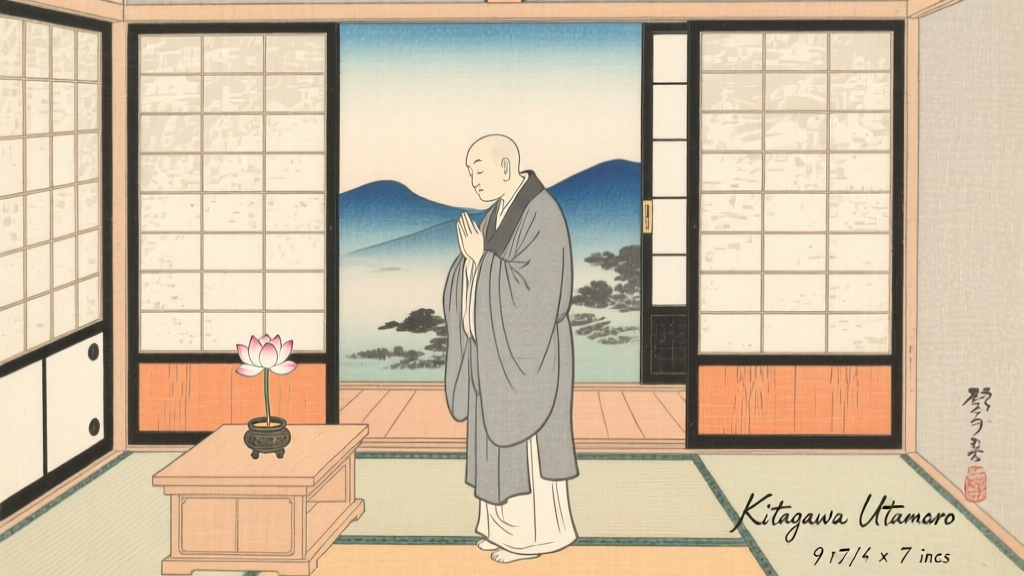
Utamaro Kitagawa’s 'Priest Asking for Alms' (c. 1786): A Technical and Historical Analysis of a Rare Edo-Period Woodblock Print
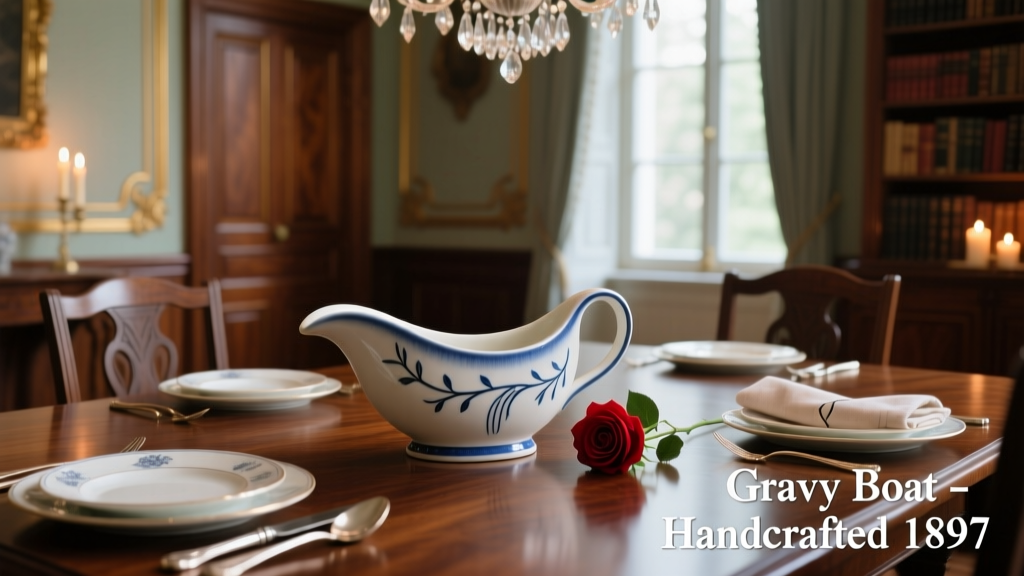
The Homespun Gravy Boat: A Deep Dive into the Streamlined 1½-Pint Dinnerware Icon
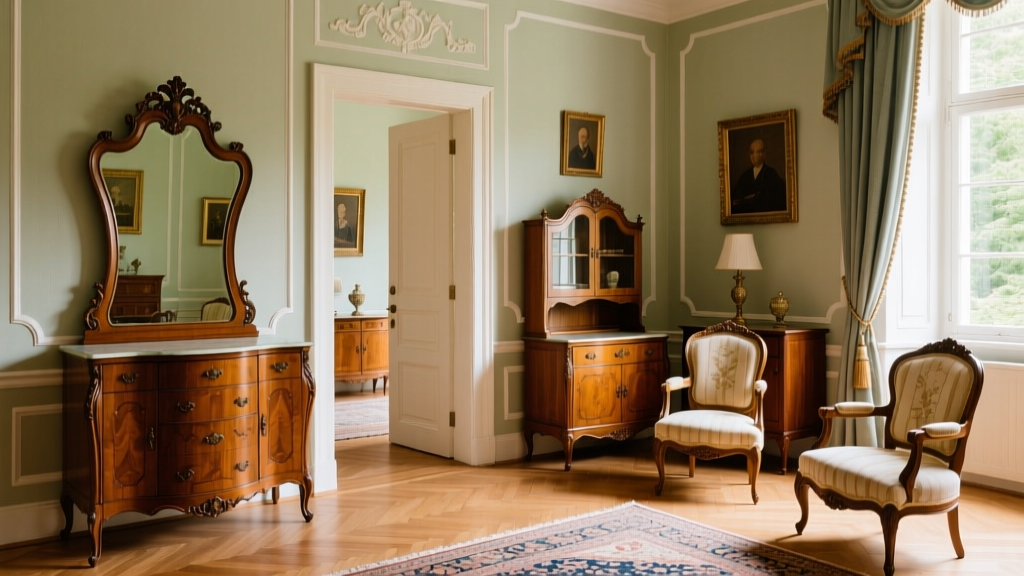
Retsch Co. Wunsiedel: The Legacy of German Precision in Antique Scientific Furniture
Roseville Basket Hanging Foxglove Blue: Identifying, Valuing, and Preserving the Iconic 5½-Inch Ceramic Wall Pocket
Knife Knuckle Military Type Brass Handle Eagle Head: History, Identification, and Restoration Guidance
The Toy Mr. & Mrs. Potato Head Deluxe Set (1952–1959): Authenticity, Packaging, and Restoration Insights for Collectors

German 19th-Century Toy Jack-in-the-Box: A Study of the 2½-Inch Miniature Mechanical Marvel

Royal Worcester Figurine: Royal Artillery Officer No. 2658 — Identification, History, and Restoration Guidelines
Venini Glass Paperweight: Turquoise Band, Light Pink & Clear Square (5 Inches) — A Mid-Century Masterpiece in Detail