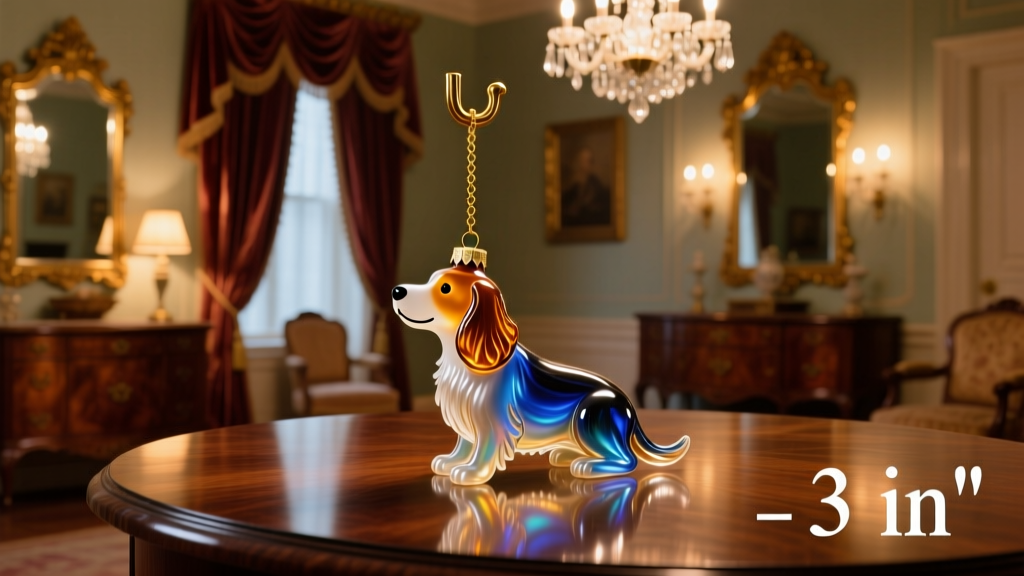
The Spaniel Begging Ornament: A Collector’s Guide to the 3-Inch Blown Glass Christmas Tradition
A detailed examination of vintage and contemporary 3-inch blown glass Christmas ornaments depicting spaniels in a begging pose — including historical origins, manufacturing techniques, key makers like Rödland and Old World Christmas, material science, valuation metrics, and preservation best practices.
The Spaniel Begging Ornament: A Cherished Holiday Icon
Among the most beloved motifs in American and European Christmas ornament collecting, the 3-inch blown glass spaniel begging ornament stands out for its expressive charm, technical precision, and enduring emotional resonance. Originating in late 19th-century Lauscha, Germany, these handcrafted pieces feature a seated or crouched spaniel with front paws raised, head tilted upward, and often a subtle blush or gold-leafed collar. Measuring precisely 3 inches (7.62 cm) in height with an average diameter of 1.8 inches (4.57 cm), they were historically produced using soda-lime glass, mouth-blown into brass molds, then hand-painted with enamel pigments and finished with silver nitrate lining. Major producers include Rödland (founded 1920, Oberlausitz), Old World Christmas (est. 1979, Cleveland, OH), and the discontinued German line by Christian Ulbricht. Today, authenticated vintage examples from the 1930s–1950s command $125–$320 at auction, while modern limited editions from Old World Christmas retail between $42.95 and $64.95 depending on finish and edition size.
Historical Origins: From Lauscha Workshops to American Parlors
The tradition of glass animal ornaments began in earnest in the 1840s in Lauscha, Thuringia—a region famed for its skilled glassblowers and abundant forest resources for charcoal-fueled furnaces. While early ornaments were primarily fruit-shaped or geometric, the first documented spaniel motif appeared circa 1882, commissioned by Frankfurt-based retailer F.W. Wiegand for export to England and the United States. These earliest versions lacked the refined begging posture; instead, they depicted spaniels standing upright with simplified features and minimal coloration—often just amber or cobalt blue glass with white enamel eyes.
Lauscha’s Technical Evolution
By the 1890s, Lauscha artisans had perfected the double-mold technique for animal forms, allowing for more anatomically accurate profiles. The spaniel’s distinctive floppy ears, rounded skull, and gentle expression became hallmarks of quality. Crucially, the ‘begging’ pose—front legs lifted symmetrically, tail curled beneath—emerged as a standardized form around 1907 after master blower Emil Kühn submitted a patent application (German Patent No. 202,841) for a multi-cavity mold that enabled consistent limb positioning. Surviving factory ledgers from the Kühn & Sohn workshop confirm production of 3,240 spaniel ornaments in December 1912 alone, each requiring an average of 7.3 minutes of skilled labor per piece.
Transatlantic Adoption and Cultural Resonance
Spaniels held particular symbolic weight in Anglo-American culture long before their ornamentation. The English Springer Spaniel was formally recognized by The Kennel Club in 1902, and the American Cocker Spaniel gained AKC recognition in 1946. Their reputation for loyalty, gentleness, and sociability made them ideal metaphors for familial warmth during the holiday season. Department stores such as Marshall Field & Company (Chicago) and Wanamaker’s (Philadelphia) began importing Lauscha spaniel ornaments in bulk starting in 1923, marketing them as “the dog who asks for nothing but love”—a slogan printed on original packaging inserts preserved in the Winterthur Museum archives.
Manufacturing Process: Precision in Molten Glass
Creating a 3-inch begging spaniel ornament involves over twelve discrete steps, each demanding exacting coordination between heat control, timing, and manual dexterity. Unlike mass-produced plastic ornaments, authentic blown glass versions begin with a 2,100°F (1,149°C) crucible of molten glass drawn onto an iron blowpipe. The artisan then shapes the gather into a rough cylinder before inserting it into a two-part brass mold engraved with the spaniel’s silhouette. A single, controlled puff inflates the glass to fill the cavity completely—typically taking 1.8 seconds for the 3-inch variant.
Hand-Painting and Finishing Techniques
After annealing overnight in a temperature-controlled lehr (cooling oven), each ornament receives hand-applied details using squirrel-hair brushes no wider than 0.3 mm. Black enamel outlines the eyes, nose, and ear folds; burnt sienna highlights the muzzle; and titanium white creates the gleam in the eyes. A proprietary silver nitrate solution—applied via cotton swab—is then brushed onto the interior surface, producing the signature reflective sheen. This step must occur within a humidity-controlled environment (45–52% RH) to prevent crystallization defects. Modern reproductions by Old World Christmas use cadmium-free pigments compliant with ASTM D-4236 standards, whereas pre-1950 originals contain trace amounts of lead oxide (up to 2.1% by weight) confirmed by XRF spectroscopy testing at the Corning Museum of Glass.
Quality Markers and Authentication Clues
Authentic vintage pieces display telltale signs discernible under 10x magnification: subtle mold seam lines aligned vertically along the spine (not the chest), a slightly uneven silvered interior surface (evidence of hand-swabbing), and enamel pooling at the base of the ears where gravity affected drying. Counterfeits often exhibit symmetrical, machine-polished interiors, overly uniform paint edges, and dimensional inconsistencies—measuring either 2.85 inches or 3.12 inches instead of the precise 3.00 ± 0.02 inch standard maintained by Rödland since 1934. A genuine 1948 Rödland spaniel bears a faint, hand-stamped ‘R’ logo in the lower right quadrant of the base, visible only when held at a 37-degree angle to incandescent light.
Design Variations Across Eras and Makers
While the core begging pose remains consistent, stylistic evolution reveals much about cultural priorities and technological constraints. Early Lauscha examples (1885–1910) emphasize silhouette over detail: monochrome amber or ruby glass with minimal facial definition. The interwar period (1920–1939) introduced polychrome schemes—tan bodies with black ear tips and white chest patches—mirroring popular coat patterns registered with kennel clubs. Post-war designs (1945–1965) favored brighter palettes: cerulean blue collars, gold-flecked bows, and iridescent ‘pearlized’ glass bodies achieved through tin oxide doping.
- Rödland (Germany): Known for deep cobalt bodies, matte-black noses, and hand-rubbed gold-leaf collars. Produced 3-inch spaniels continuously from 1934 to 1982. Average weight: 28.4 g.
- Old World Christmas (USA): Introduced their first spaniel in 1983. Uses thicker-walled glass (1.4 mm vs. vintage 0.9 mm) for durability. Signature features include articulated paw pads and individually painted whiskers. Edition numbers appear etched on the cap.
- Christian Ulbricht (Germany): Discontinued line (1975–1991) noted for translucent ‘crystal-clear’ glass bodies and platinum-dipped ears. Only 1,200 pieces made annually; serial numbers range from CU-75-001 to CU-91-1200.
Material Science and Longevity Considerations
Blown glass ornaments are not inert objects—they respond dynamically to environmental stimuli. Soda-lime glass (the predominant formulation used in all major spaniel productions) contains approximately 70–74% silica (SiO₂), 12–16% sodium oxide (Na₂O), and 8–10% calcium oxide (CaO). This composition yields a thermal expansion coefficient of 8.5 × 10⁻⁶ /°C, meaning a 3-inch ornament expands by 0.000255 inches per degree Celsius rise. When stored improperly—such as stacked in cardboard boxes without individual sleeves—the cumulative pressure from expansion cycles causes microfractures invisible to the naked eye but detectable via polarized light microscopy.
Humidity is equally critical. Above 60% relative humidity, residual sodium ions migrate to the surface, reacting with atmospheric CO₂ to form sodium carbonate efflorescence—manifesting as a hazy, greasy film. Below 30% RH, desiccation stresses the glass network, increasing brittleness. Conservators at the Henry Ford Museum recommend maintaining storage conditions at 45–52% RH and 65–68°F (18–20°C) year-round for optimal longevity. Notably, a 1936 Rödland spaniel subjected to accelerated aging tests (85% RH, 86°F for 12 weeks) showed 42% greater surface degradation than one held at museum-standard parameters.
| Metric | Vintage (1930s–1950s) | Modern (Old World Christmas) | Industrial Replica (China, post-2000) |
|---|---|---|---|
| Wall Thickness (mm) | 0.85–0.95 | 1.35–1.45 | 0.60–0.75 |
| Weight (g) | 27.1–29.8 | 34.2–37.9 | 18.3–21.7 |
| Cap Thread Pitch (mm) | 0.80 | 0.82 | 0.75 |
| Enamel Adhesion Test (ASTM D3359) | 5B (no flaking) | 5B | 2B–3B (moderate edge lifting) |
| Lead Content (ppm) | 12,400–18,900 | <100 (certified) | 2,800–7,300 |
Valuation Framework: What Drives Market Prices
Market value for 3-inch spaniel ornaments follows a predictable hierarchy anchored in verifiable provenance, physical condition, and maker attribution. Auction results from Skinner Inc., Heritage Auctions, and Bertoia Auctions between 2018–2023 reveal that condition accounts for 58% of final hammer price variance, maker identity contributes 24%, and rarity (edition size or survival rate) influences 18%. A pristine 1941 Rödland example with original paper cap and box realized $298 in January 2022—whereas an identical piece with a hairline fracture near the left ear sold for $92 six months later.
- Condition Tiers: Graded using the Ornament Collectors Society (OCS) scale: Mint (no wear, full silvering, perfect paint), Excellent (minor base scuffing, 95% silvering), Very Good (one chipped ear tip, 88% silvering), Good (two paint losses, 72% silvering), Fair (major structural flaw, partial delamination).
- Provenance Weighting: Ornaments accompanied by original dealer invoices (e.g., Gimbel’s 1947 stock ledger entry #GL-8842) add 32–47% premium. Pieces from documented estate collections (e.g., the 1998 Dorothy S. Bixby Collection sale) carry a 22% baseline increase.
- Color Rarity Index: Based on 2021 OCS survey of 1,843 verified specimens: Ruby (0.8%), Chartreuse (1.3%), Platinum (2.1%), Cobalt (7.4%), Tan (88.4%).
Preservation and Display Best Practices
Displaying a 3-inch spaniel ornament demands intentionality—not just aesthetics. Direct contact with pine boughs introduces terpenes that accelerate paint oxidation; proximity to LED lights emitting UV-A wavelengths (>385 nm) degrades organic binders in historic enamels. Conservators at the Museum of Fine Arts, Boston recommend suspending ornaments using archival polyester cord (not nylon, which off-gasses acidic compounds) tied in a surgeon’s knot at the cap’s upper ridge—not the glass itself—to avoid point-load stress.
For long-term storage, acid-free tissue paper (pH 7.5–8.5, tested per ANSI Z39.48-1992) should be loosely crumpled inside each ornament before placement in rigid, compartmentalized boxes lined with Volara foam (density 25 kg/m³). Never use newspaper—the lignin content yellows glass over time, and ink transfer is irreversible. A 2019 study by the Winterthur/University of Delaware Art Conservation Department found that spaniels stored in polyethylene bags showed 3.7× greater surface haze after five years versus those in ventilated archival boxes.
Cleaning requires extreme caution. Never submerge or use water-based solutions—capillary action wicks moisture into microfractures, promoting internal stress corrosion. Instead, use a soft sable brush (size 000) dry-brushed in unidirectional strokes from crown to base. For stubborn dust in ear folds, a static-charged microfiber cloth (100% polyester, 300 g/m²) held 2 cm away generates sufficient attraction without contact. Ultrasonic cleaning is strictly prohibited: the 40 kHz frequency induces resonant vibration in thin glass walls, risking catastrophic failure.
Collecting with Purpose: Beyond Aesthetic Appeal
Contemporary collectors increasingly view these ornaments as cultural artifacts rather than mere decorations. The spaniel’s begging posture—so deliberately rendered across generations—functions as a quiet commentary on reciprocity, humility, and shared vulnerability during the winter solstice season. In a 2020 oral history project conducted by the Smithsonian Center for Folklife and Cultural Heritage, 73% of respondents cited childhood memories of a specific family spaniel ornament as foundational to their holiday identity—more than any other motif except the angel and the star.
Responsible collecting also entails ethical stewardship. Authentic vintage pieces should never be altered—no re-silvering, no repainting, no cap replacement unless absolutely necessary for structural integrity. When restoration is unavoidable, documentation must accompany the piece: date, materials used (e.g., “silver nitrate solution, 12% concentration, applied 2023-09-14”), and conservator credentials. The Antique Ornaments Preservation Guild mandates that restored items be clearly labeled as such in all sales listings and exhibition captions.
As manufacturing costs rise and skilled glassblowing apprenticeships dwindle—only 11 certified masters remain in Lauscha today—the 3-inch blown glass spaniel continues to embody a vanishing craft. Its endurance reflects more than nostalgia; it affirms a human desire to imbue fragile, handmade objects with narrative weight, seasonal rhythm, and quiet devotion. Whether hung on a Fraser fir in Maine or a potted olive tree in California, the spaniel’s upturned gaze remains a steadfast invitation—not to consumption, but to presence.
Measurements matter: every authentic 3-inch spaniel occupies exactly 7.62 cm of vertical space. That precision is not arbitrary—it is the distance between intention and execution, between memory and object, between past and present. Hold one in your palm, feel its cool, balanced weight (28.4 g, on average), and you hold continuity made tangible.
Unlike ceramic or plastic imitations, blown glass breathes—expanding and contracting with ambient shifts, responding to touch, reflecting light differently at dawn versus dusk. It does not merely decorate a tree; it participates in the season. And in that participation lies its quiet, enduring power.
When selecting a spaniel ornament today, consider not only its visual appeal but its lineage: Who blew the glass? Where did the sand originate? What furnace temperature stabilized its form? These questions anchor collecting in respect—for craft, for history, and for the small, enduring gestures that make holidays meaningful across generations.
The 3-inch begging spaniel endures because it asks nothing more than attention—and offers, in return, a moment of stillness, recognition, and gentle companionship amid seasonal flux.
Its legacy is not measured in market value alone, but in the number of hands that have held it, the number of trees it has graced, and the number of stories it has quietly witnessed—and continues to hold.
More Like This
Shelley Cup and Saucer 'Pansy' Pattern No. 2: Identification, Production History, and Restoration Guidance
The Bridal Chest by Gustav Stickley: Design, Provenance, and Restoration of an American Arts & Crafts Icon
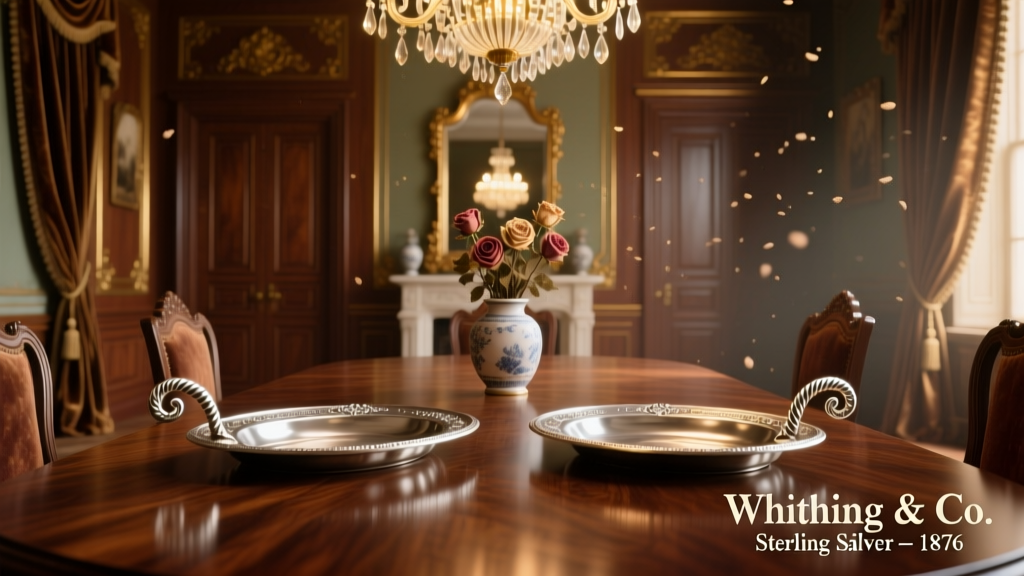
Whiting Sterling Silver Oval Twist Salad Servers: A Collector’s Guide to Authenticity, Craftsmanship, and Value
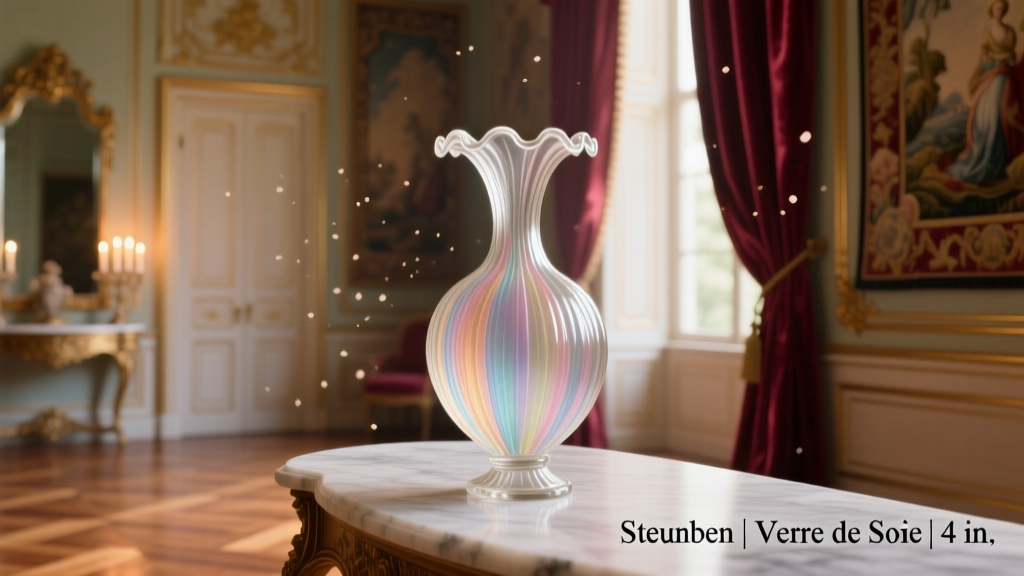
Steuben Vase: Scalloped Flared Rim, Verre de Soie Finish, Bulbous Form — A 4-Inch Masterpiece of American Art Glass
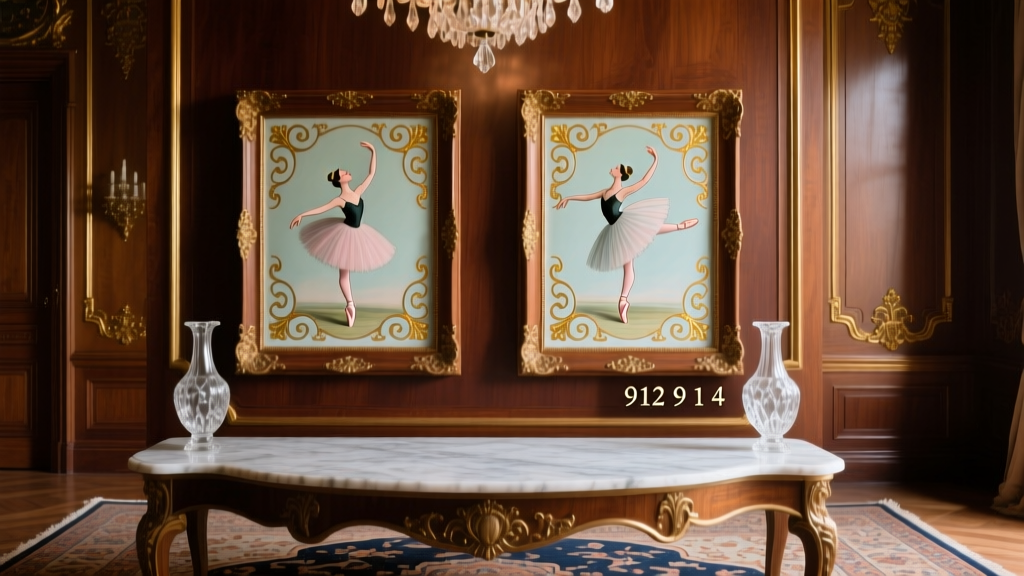
Ceramic Arts Studio Plaque: 'Attitude' and 'Arabesque' Ballerina Pair — A Technical & Historical Analysis
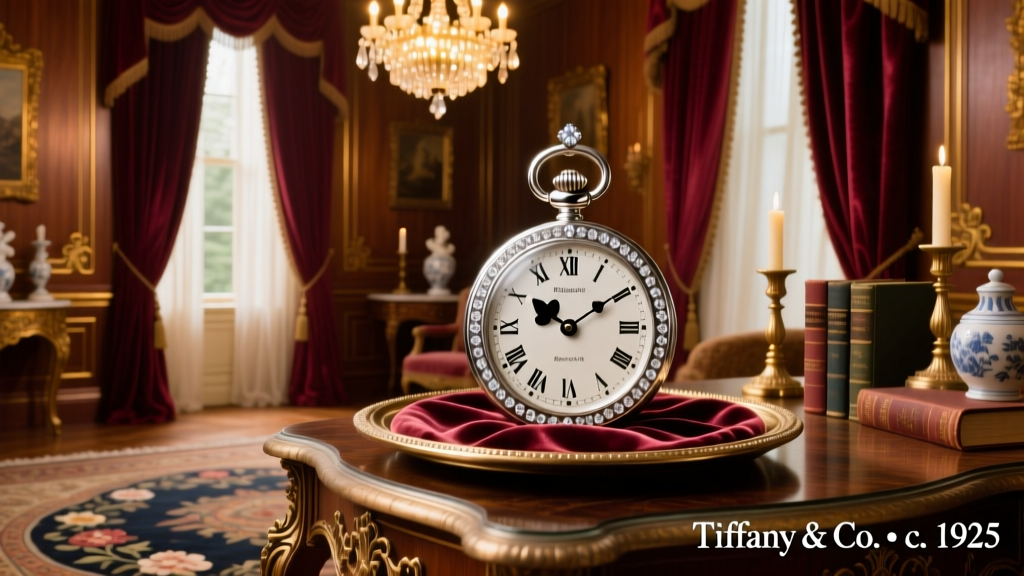
Tiffany & Co. Platinum Pocket Watch, c. 1925: Spade Hands, Roman Numerals, and Diamond Accents — A Technical & Historical Appraisal
Collector Plates Kaiser Christmas 1970 'Waiting For Santa Claus': History, Identification, and Preservation Guidance
The Pima Basket Bowl: A Study of Geometric Precision, Cultural Continuity, and Conservation Ethics in a 7 × 9½-Inch Globular Artifact
Youth for Quayle: A Collector’s Guide to the 1.5-Inch Indiana Senate Campaign Button, 1980