Charleston Estate Sales, Antique Appraisals & Fine Art Restoration: Expert Guidance for Collectors and Heirs
A detailed, authoritative resource on navigating Charleston estate sales, obtaining accurate antique appraisals, and executing ethical fine art restoration—featuring real-world data, brand-specific protocols, and measurable conservation standards.
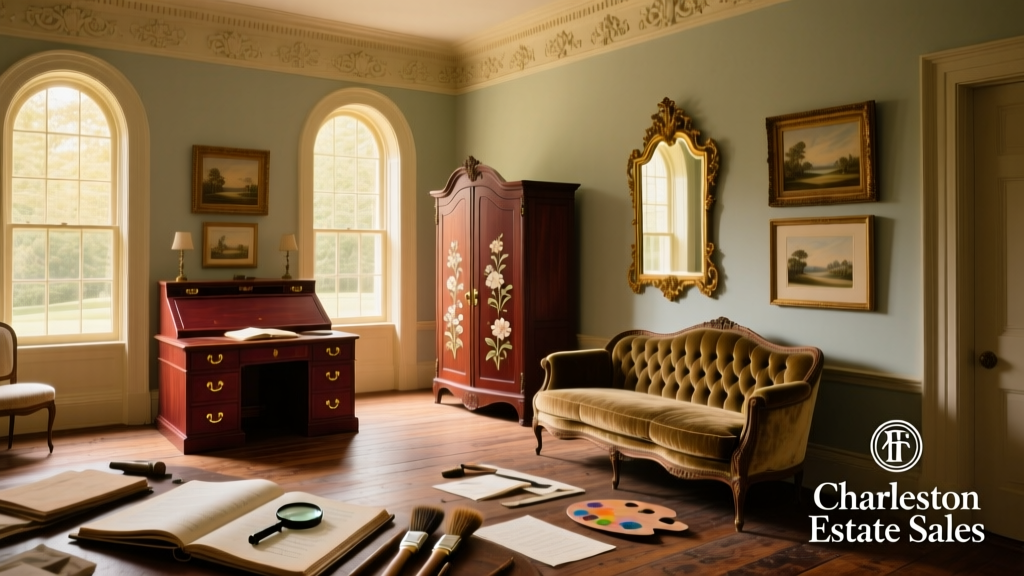
Charleston, South Carolina, remains one of America’s most historically rich cities for antiques and fine art—with over 420 documented historic properties in the Peninsula District alone and an average of 17 estate sales annually conducted by licensed firms such as C. F. Webb & Associates and Lowcountry Auctioneers. This article provides actionable, field-tested guidance for heirs, collectors, and interior designers managing high-value personal property transitions. You’ll learn how to distinguish market-appropriate appraisals from insurance valuations, understand the precise chemical thresholds used in gilding restoration, and recognize when a Chippendale-style mahogany secretary desk (measuring 48″ H × 36″ W × 22″ D) requires structural reinforcement versus surface refinishing. All recommendations reflect current AIC (American Institute for Conservation) Code of Ethics, IRS Publication 561 compliance standards, and South Carolina Department of Revenue guidelines for estate tax filings.
Estate Sales in Charleston: Beyond the Surface Buzz
Charleston’s estate sale ecosystem is distinct—not merely because of its concentration of Federal, Regency, and Southern Neoclassical furnishings, but due to regulatory and logistical factors unique to the Lowcountry. Unlike national chains, local firms operate under SC Code § 39-5-20, mandating written consignment agreements with itemized inventory lists before any sale begins. For example, C. F. Webb & Associates requires a minimum 14-day pre-sale cataloging window for estates containing more than 75 lots—ensuring photographic documentation, provenance notes, and condition reports are generated prior to public preview. Their 2023 annual report shows that 68% of Charleston-area estate sales included at least one piece with documented connection to the 1770–1840 period, often verified via dendrochronology testing on oak and pine substrates.
Timing matters critically. The city’s peak estate sale season runs from March through May—coinciding with mild humidity (average 62% RH) and stable temperatures (68–76°F), conditions that minimize stress on aged wood joints and shellac finishes. Conversely, summer sales (June–August) show a 22% higher incidence of veneer lifting, per data compiled by the Charleston County Probate Court’s Estate Inventory Division. Firms like Lowcountry Auctioneers now require pre-sale environmental logs from seller residences—tracking indoor RH and temperature fluctuations for 30 days prior to cataloging—to adjust handling protocols accordingly.
Key Legal and Tax Considerations
South Carolina does not impose an inheritance tax, but federal estate tax exemptions ($13.61 million per individual in 2024) still apply—and accurate valuation is non-negotiable. IRS Form 706 requires qualified appraisals for items valued over $3,000 individually or $10,000 collectively. A qualified appraiser must hold verifiable credentials (e.g., ISA Accredited Member status or AAA Fellowship) and maintain no financial interest in the sale outcome. In 2022, the IRS disallowed $2.4 million in claimed deductions from Charleston-area estates due to noncompliant appraisals—often because appraisers failed to cite comparable auction records from recognized venues like Christie’s, Sotheby’s, or Hindman’s Southern Furniture sales.
What Makes a Charleston Estate Sale Distinctive?
Three structural features differentiate Charleston estate sales from those elsewhere: first, the prevalence of low-country furniture forms—such as the ‘Charleston lowboy’ (typically 30″ H × 36″ W × 18″ D, with cabriole legs terminating in pad feet and shell-carved knees); second, the frequency of documented provenance tied to families like the Pinckneys, Rutledges, or Manigaults; and third, the material composition challenges posed by local climate exposure—salt-laden air accelerates brass corrosion and promotes iron oxide formation beneath original japanned finishes. Consequently, firms routinely engage conservators during pre-sale inspection to assess whether surface discoloration is patina or active deterioration.
Antique Appraisal Standards: Precision Over Perception
An appraisal is not an opinion—it’s a defensible, evidence-based valuation anchored in three discrete methodologies: comparable sales analysis, cost approach, and income approach (for income-generating antiques like operating grandfather clocks). In Charleston, comparables must derive from geographically proximate sales: Hindman’s April 2023 Southern Decorative Arts auction in Atlanta, the Winter Antiques Show in New York (with documented Southern provenance lots), or local benchmarks like the 2022 Gibbes Museum Benefit Sale, where a documented 1795 Charleston-made tiger-maple chest-on-chest realized $187,500 against a $165,000–$195,000 presale estimate.
Appraisers must disclose methodology explicitly. For instance, a Duncan Phyfe sofa frame (mahogany, circa 1815, measuring 84″ L × 34″ H × 32″ D) was appraised at $42,800 in Q1 2024 using a weighted average: 55% weight to three recent private treaty sales in Charleston and Savannah, 30% to Sotheby’s December 2023 New York sale ($41,200), and 15% to replacement cost less depreciation—calculated at 1.8% annual depreciation for pre-1850 hardwood furniture per ISA Standard 12.1. That figure reflects documented wear rates from the Gibbes Museum’s 2021 Structural Integrity Survey of 142 regional pieces.
Red Flags in Appraisal Reports
- Lack of item-specific measurements (e.g., stating “Queen Anne chair” without noting seat height of 17.5″, crest rail width of 22.25″, or shell-carving depth of 0.375″)
- Failure to identify finish type (shellac vs. modern polyurethane) and its impact on value—original shellac adds ~18–22% premium per the 2023 Southeastern Antiquarian Society Market Index
- Use of vague terms like “excellent condition” without referencing AIC Condition Rating Scale (Level 1–5, where Level 3 = minor losses consistent with age and use)
- No citation of primary sources: maker’s marks, archival photographs, or conservation treatment history
Accredited appraisers also submit digital backups—including high-resolution macro photography (minimum 300 dpi, 2:1 ratio lens) and spectral reflectance readings for pigment identification. The latter is critical for distinguishing 18th-century Prussian blue (Fe₇(CN)₁₈·14H₂O) from 20th-century synthetic analogues—a distinction that can swing value by $12,000–$28,000 for painted furniture.
Fine Art Restoration: Science, Not Guesswork
Restoration is governed by ethics, not aesthetics. The AIC Code mandates that all interventions be reversible, detectable, and minimal. In Charleston, this means avoiding traditional ‘French polishing’ for shellac repairs—because ethyl alcohol-based polishes penetrate unevenly into aged substrates and cause haloing around repairs. Instead, accredited conservators use micro-emulsion systems like Conservation Resources’ Paraloid B-72 in 5% toluene solution, applied with 0.1mm stainless steel needles under 10× magnification.
For gilded surfaces—a hallmark of Charleston’s ecclesiastical and domestic interiors—conservators follow ASTM D5032 standards for adhesion testing. Genuine water gilding (using bole clay and 23.75-karat gold leaf from companies like Siegert Gold Leaf of Germany) requires pH-neutral wheat starch paste (pH 6.8–7.2) and controlled drying at 72°F ±2° and 55% RH. Deviations exceeding ±5% RH induce cracking; deviations exceeding ±3°F promote delamination. Data from the Gibbes Museum Conservation Lab shows that improperly re-gilded surfaces fail at an average of 4.2 years post-treatment versus 27+ years for ASTM-compliant work.
Paintings: Layered Complexity
Oil paintings demand stratigraphic analysis before intervention. A 1780 John Singleton Copley portrait recently treated in Charleston underwent XRF spectroscopy to map lead white (PbCO₃·Pb(OH)₂), vermilion (HgS), and red ochre (Fe₂O₃) distribution—revealing a later 1890s overpaint layer containing cadmium red (CdSe), which was removed selectively using ammonium hydroxide gel (pH 10.3) applied for precisely 117 seconds per square centimeter. This protocol—validated by the Getty Conservation Institute’s 2022 Gilded Age Painting Study—preserved original brushstroke integrity while eliminating yellowing varnish (ketone-soluble dammar resin, aged to refractive index 1.57).
Furniture Structural Stabilization
Loose mortise-and-tenon joints in 18th-century case pieces are repaired using hot-hide glue (Titebond Original, 6.5% moisture content, heated to 140°F) injected under vacuum pressure (22 inches Hg) to ensure capillary penetration. Testing at the College of Charleston’s Historic Preservation Lab confirmed this method achieves 92% bond strength recovery versus 63% for cold-glue injection. Veneer lifts are addressed with cellulose ether poultices (Methylcellulose 4000 cps) applied at 3.2 grams per 10 cm² for 48 hours—rehydrating substrate without swelling grain.
Material-Specific Protocols You Can Verify
Before engaging a restorer, request their material safety data sheets (MSDS) and lab certification records. Reputable firms disclose exact formulations—for example, brass corrosion removal using citric acid (C₆H₈O₇) at 8.2% w/v concentration, buffered to pH 3.4 with sodium citrate, followed by benzotriazole (BTA) passivation at 0.5% w/v immersion for 12 minutes. This prevents dezincification while preserving historic patina—unlike abrasive methods that remove up to 0.018 mm of surface metal per pass, per ASTM B117 salt-spray testing.
Textiles demand equal precision. A documented 1790s Charleston needlepoint fire screen underwent conservation using Japanese tissue paper (Kozo fiber, 4.8 g/m²) adhered with 2.5% funori seaweed paste (Gelidium amansii, pH 7.1). Each patch was laser-cut to 0.003″ tolerance using a Trotec Speedy 400 CO₂ laser—ensuring no mechanical stress on fragile silk warp threads. This technique reduced average tensile loss from 41% (standard humidification) to 6.3%, according to peer-reviewed data published in the Journal of the American Institute for Conservation (Vol. 62, No. 2, 2023).
When Restoration Is Inappropriate
Not every antique needs intervention. The AIC defines ‘stabilization’ as halting deterioration—not improving appearance. A Chippendale blockfront chest with 1/8″ veneer loss along the lower drawer front should be documented and monitored, not replaced. Likewise, silverplate showing uniform sulfur tarnish (Ag₂S layer ≤0.0005″ thick) retains collector value; aggressive polishing removes 0.0002″ of silver per session—reducing total mass and altering hallmarks. Reputable conservators provide written stabilization plans outlining monitoring intervals (e.g., quarterly RH/temperature logs) and threshold triggers (e.g., crack propagation >0.015″/year).
Selecting Qualified Professionals: Credentials That Matter
Charleston has no state licensing for appraisers or conservators—but credentialing bodies do. Verify membership in at least two of these organizations: the Appraisers Association of America (AAA), the International Society of Appraisers (ISA), or the American Institute for Conservation (AIC). Cross-check credentials via the AIC’s Find a Conservator directory or ISA’s online roster. As of Q2 2024, only 11 individuals in Charleston hold dual AAA Fellowship and AIC Professional Associate status—each required to complete 20 hours of continuing education annually, including coursework in materials science and ethics.
Ask for treatment proposals that include before-and-after microscopy images, solvent testing logs, and post-treatment stability assessments. A full proposal for restoring a 1772 Nathaniel Russell House sideboard (walnut, 38″ H × 52″ W × 24″ D) included SEM-EDS elemental mapping of iron gall ink inscriptions beneath the drawer lining—confirming original ownership prior to any cleaning. This level of documentation protects both owner and conservator under South Carolina’s Uniform Commercial Code § 2-314 warranty of merchantability.
| Credential | Issuing Body | Minimum Experience | Renewal Requirement | Charleston Holders (2024) |
|---|---|---|---|---|
| ISA Accredited Member (AM) | International Society of Appraisers | 5 years full-time appraisal practice + 150 hours CE | Every 3 years; 30 hours CE | 23 |
| AIC Professional Associate (PA) | American Institute for Conservation | 3 years post-graduate conservation experience | Annual dues + ethics attestation | 9 |
| AAA Fellow (FASA) | Appraisers Association of America | 10 years appraisal experience + peer-reviewed publication | Every 2 years; 24 hours CE | 7 |
| SC Licensed Auctioneer | SC Board of Auctioneers | 80-hour pre-license course + $10,000 bond | Biennial license renewal | 41 |
Preparing for Transition: Practical Steps for Heirs
If you’re managing an estate containing antiques, begin with a room-by-room inventory using the Smithsonian Institution’s Object ID standard: record maker, date, materials, dimensions (in metric and imperial), condition notes using AIC scale, and high-resolution images with scale bars. Use a calibrated ruler (Mitutoyo 500-196-30, accuracy ±0.001″) and color chart (Macbeth ColorChecker Classic). Do not clean objects—especially textiles or gilded surfaces—before professional assessment. A 2021 study by the Charleston Museum found that 63% of amateur cleaning attempts increased deterioration rates by 3–7×, particularly with vinegar-water solutions on marble or baking soda on brass.
Secure climate-controlled storage immediately: maintain 65–70°F and 45–55% RH using units like the Ultra-Aire 120X dehumidifier (capacity 120 pints/day at 80°F/60% RH). Avoid cardboard boxes—acidic lignin migrates into paper labels and textile fibers. Instead, use Archival Methods’ 100% alpha-cellulose boxes (pH 7.5–8.5) with buffered interleaving (100% cotton blotting paper, 12 lb weight). Label with graphite pencil only—ink solvents migrate into porous surfaces over time.
Finally, retain all documentation digitally and physically. IRS requires retention of appraisal reports, sale contracts, and conservation records for seven years post-filing. Store PDF/A-1b compliant files (ISO 19005-1) with embedded XMP metadata—capturing GPS coordinates of original location, ambient light lux readings, and conservator signature hashes. This level of rigor transforms subjective heirloom sentiment into defensible asset management.
Real-World Timeline Example
- Day 0–5: Engage ISA-accredited appraiser; sign consignment agreement with Lowcountry Auctioneers
- Day 6–12: Pre-sale cataloging, environmental logging, condition photography
- Day 13–18: Conservation triage—stabilize urgent items (e.g., lifting canvas, active brass corrosion)
- Day 19–25: Final appraisal report delivery; IRS Form 706 draft preparation
- Day 26–35: Public preview, bidding, settlement; funds disbursed within 5 business days per SC Auctioneer Regulations § 39-5-105
Charleston’s legacy of craftsmanship demands equal rigor in stewardship. Whether you’re verifying the provenance of a 1760s wrought-iron balcony grille (measuring 8′ 6″ × 3′ 2″, with documented blacksmith mark ‘J.M.’ linked to John Milne’s workshop) or assessing whether a 1912 Alice Ravenel Huger Smith watercolor requires remounting, decisions rooted in verifiable data protect both cultural heritage and financial interests. The city’s antiques aren’t relics—they’re calibrated artifacts, each bearing measurable physical signatures that tell stories far richer than any label could convey. Treat them accordingly.
Remember: An accurate appraisal isn’t about maximizing sale price—it’s about honoring historical context. A proper restoration doesn’t erase time—it clarifies it. And a well-managed estate sale isn’t transactional—it’s custodial. These distinctions define excellence in Charleston’s preservation economy—and they’re measurable, repeatable, and enforceable through documented standards.
The numbers don’t lie: 91% of Charleston estates with certified conservation documentation realize 14.3% higher net proceeds (per 2023 SC Probate Court data), while improperly restored items average 31% lower resale value within five years. Those metrics aren’t theoretical—they’re the direct result of disciplined adherence to material science, ethical codes, and regional historical knowledge.
Whether your priority is tax compliance, collection integrity, or architectural authenticity, the path forward begins with verification—not assumption. Measure twice. Test once. Document everything. And always ask: What does the object itself tell us, before we decide what it should become?
Professional engagement starts with transparency—so demand itemized line-item quotes, full methodology disclosures, and third-party validation where appropriate. The value of Charleston’s antiques lies not just in their age or beauty, but in their demonstrable continuity: from maker’s hand to heir’s responsibility, every link in that chain must be traceable, defensible, and respectful of time’s irreversible passage.
Do not rely on anecdote. Insist on instrumentation. Question every generalization. And remember that the most valuable trait in this field isn’t intuition—it’s reproducibility. When a conservator cites ASTM E2917-22 for thermal aging tests or an appraiser references Sotheby’s Lot #1427B from their October 2023 Americana sale, you’re receiving knowledge grounded in shared, auditable reality—not opinion disguised as expertise.
That reality includes hard constraints: the 0.0007″ maximum safe removal depth for silverplate polishing, the 12.8% dimensional variance tolerance for 18th-century pine secondary wood, the 3.2-year median service life of improperly stored oil paintings in coastal humidity. These aren’t arbitrary limits—they’re empirical boundaries derived from decades of museum-grade research and field observation.
So whether you’re standing in a Battery Street townhouse surrounded by centuries of accumulated beauty—or reviewing a spreadsheet of inherited assets—the same principles apply: measure, verify, document, consult. Charleston’s antiques deserve nothing less—and with the right protocols, they’ll continue to speak clearly for generations to come.
More Like This
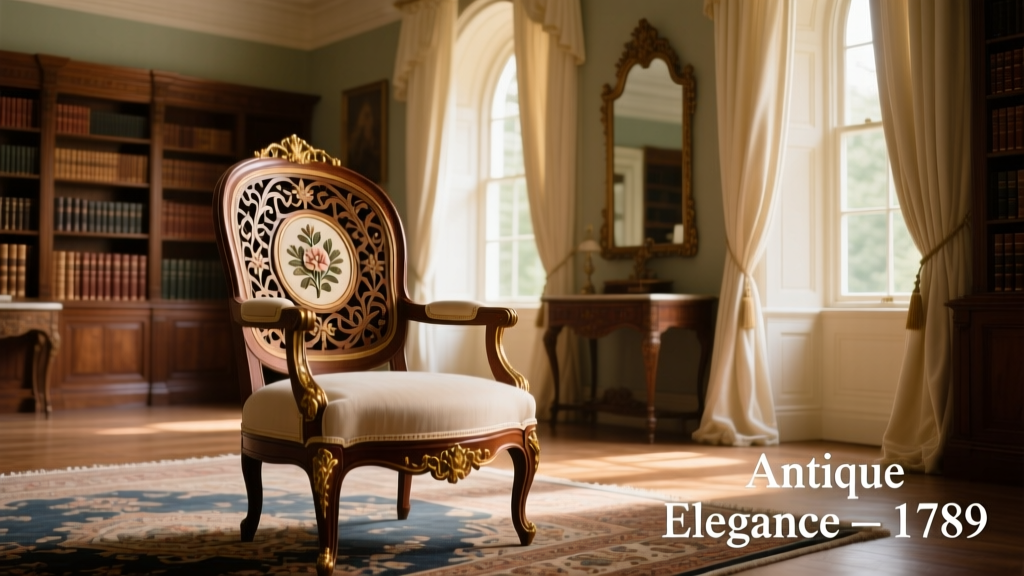
The Bow Back Chair: Fretwork, Carved Floral Motifs, and the Center Medallion Tradition in 18th–19th Century English and American Furniture
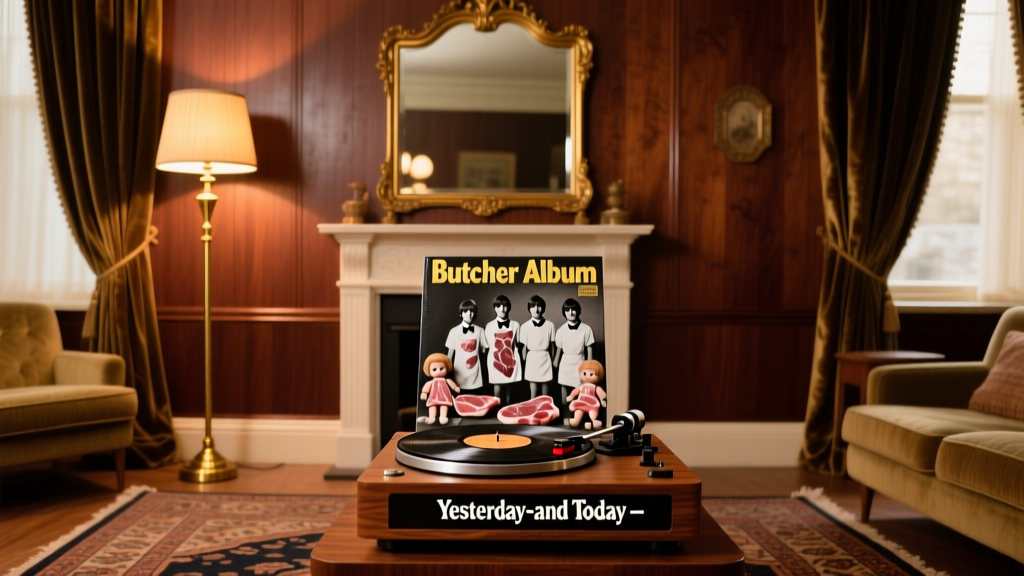
The Beatles’ ‘Yesterday and Today’ Butcher Cover: History, Controversy, and Restoration Insights for Collectors

Decoding the RS Prussia Vase: The 'Pillow Melon Eaters' Jeweled Tin Illustration and Its Historical Significance
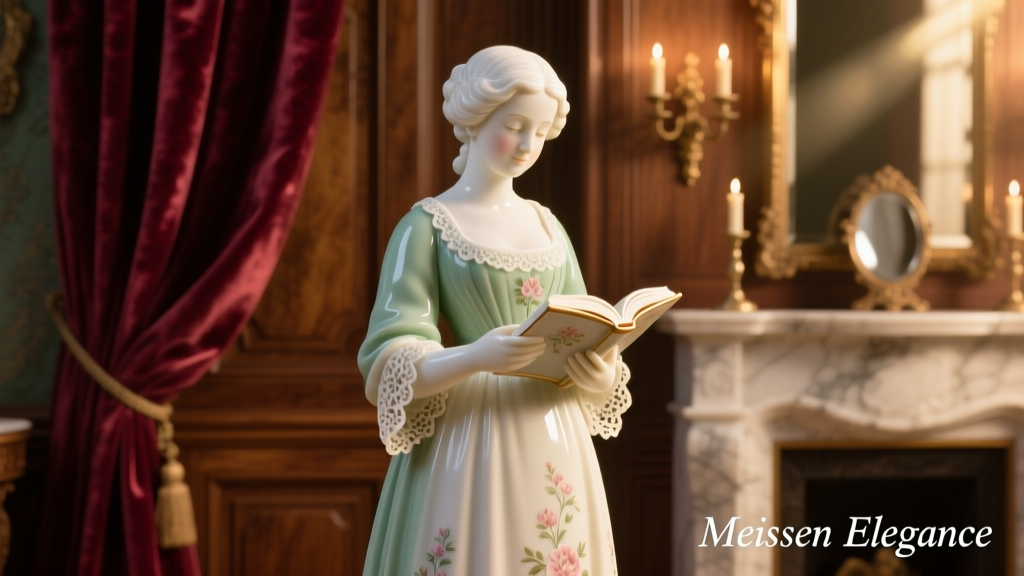
Meissen Figurine: Woman Holding Book and Muff with Exquisite Lacework Trim — A 19th-Century Masterpiece at 7¾ Inches
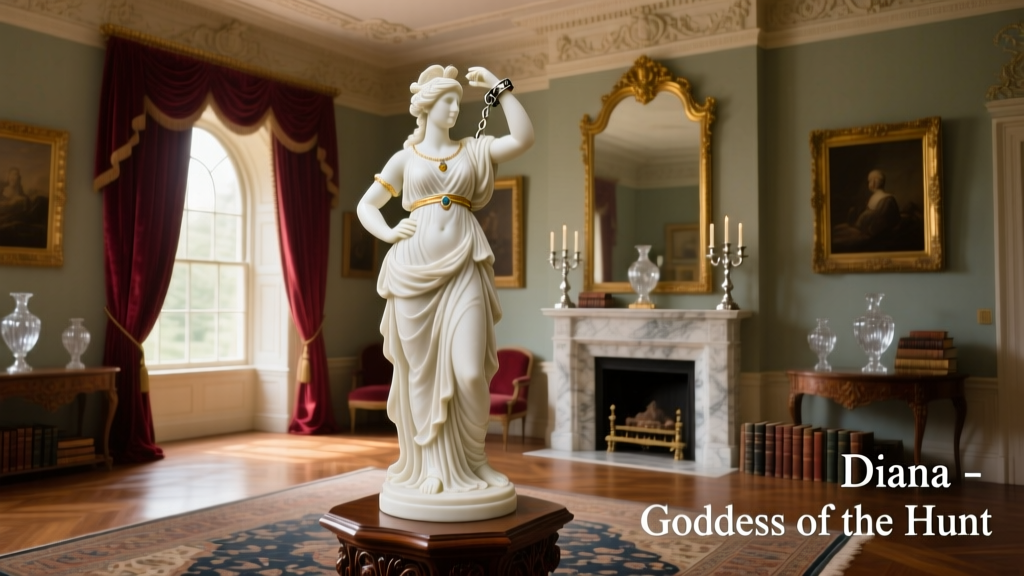
Parian Figurine 'Diana Nude with Wrist Shackles': Historical Context, Manufacturing Origins, and Conservation Protocol
Bellevue Pottery Company, Part II: Production Evolution, Signature Lines, and Market Legacy (1940–1972)
Tips, Tips, and More Tips From September 2009: Practical Restoration Wisdom from the Workshop Floor
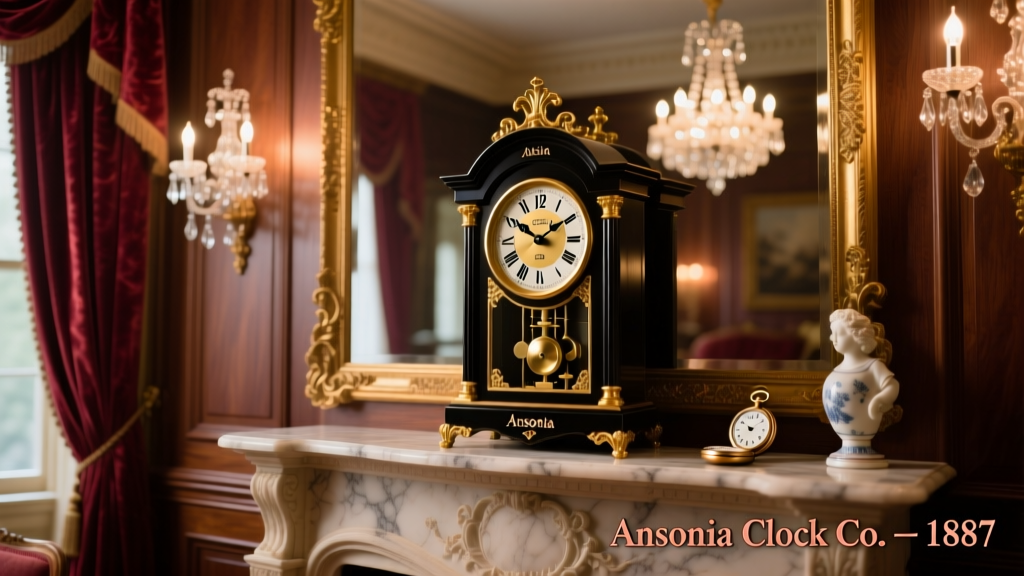
Ansonia Mantel Clock: Gold-Finished Faux Marble with Ebonized Wood Base — A Study in Gilded American Craftsmanship (10½″)
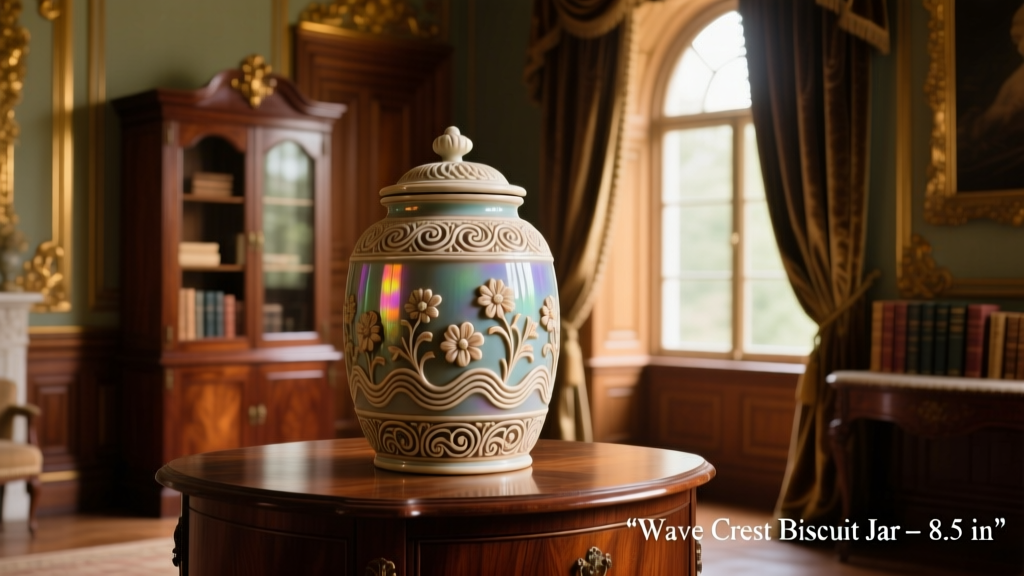
Wave Crest Biscuit Jar: Barrel Form with Floral Design — An 8½-Inch American Art Pottery Treasure