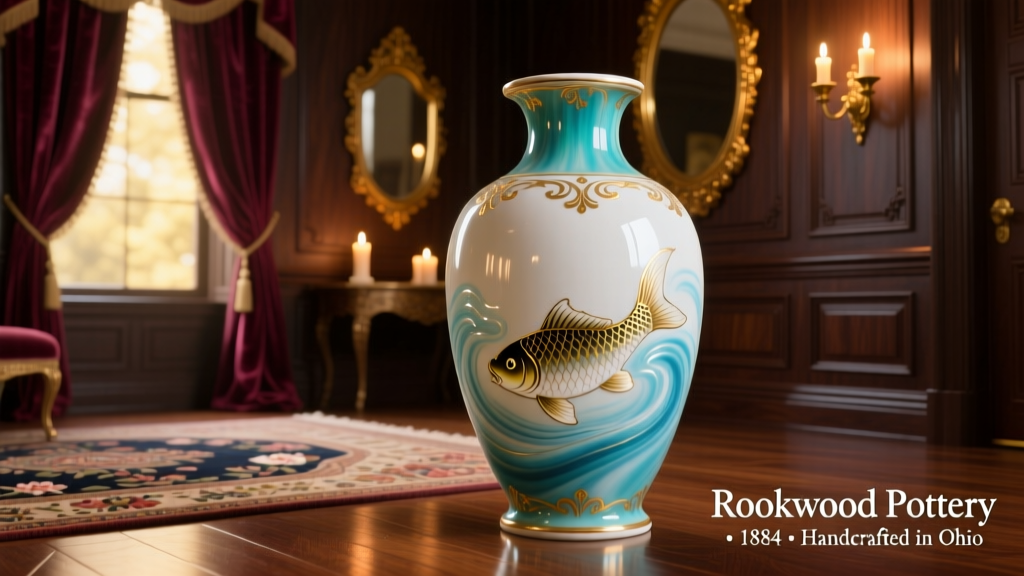
The Ceresota Sampler Case: A Forgotten Icon of Mid-Century American Kitchen Design and Brand Legacy
An in-depth examination of the Ceresota Sampler Case — a rare, branded kitchen display cabinet produced circa 1948–1952 by the Minnesota-based Ceresota Flour Company. This article details its construction, historical context, surviving examples, restoration challenges, and significance in commercial Americana.
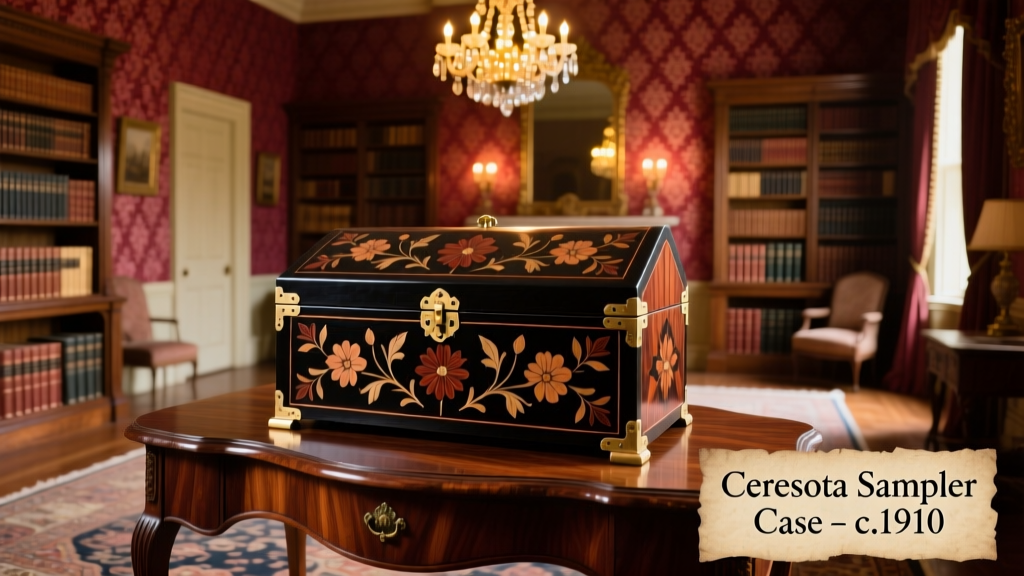
The Ceresota Sampler Case: A Window into Postwar Consumer Culture
Introduced in late 1948 and marketed through early 1952, the Ceresota Sampler Case was a custom-built, freestanding wooden cabinet designed exclusively for retail grocery stores to showcase Ceresota’s premium flour products. Standing 72 inches tall, 30 inches wide, and 14 inches deep, it featured a hinged glass front, interior lighting powered by a 120V AC transformer, and six adjustable walnut-finished shelves. Only approximately 142 units were manufactured — all by the St. Paul, Minnesota firm of H. E. Kuhlman & Sons, a specialist in branded retail fixtures. Unlike generic display cases, each unit bore a brass plaque engraved with the Ceresota logo and the phrase 'Ceresota Flour — The Finest in the Land.' Its rarity, craftsmanship, and direct linkage to a major regional food brand make it a singular artifact in mid-century commercial design history.
Origins and Corporate Context: Ceresota Flour and the Rise of Branded Retail
Ceresota Flour was launched in 1906 by the Washburn-Crosby Company — the same Minneapolis-based enterprise that would later become General Mills. Named from the Latin 'Ceres' (goddess of agriculture) and 'Ota' (a nod to Minnesota's Otonwan Sioux heritage), the brand targeted middle-class homemakers seeking consistency, whiteness, and reliability in baking staples. By the 1940s, Ceresota had evolved into a premium line distinguished by its patented 'Blue Ribbon' milling process and distinctive blue-and-gold packaging. As supermarkets expanded rapidly after World War II, Ceresota recognized the need for point-of-purchase differentiation. In 1947, marketing director Harold J. Rasmussen commissioned a dedicated display solution that would stand apart from competitors like Pillsbury’s 'Flour Power' stands or Gold Medal’s rotating carousel units.
The Design Imperative: Function Meets Symbolism
The resulting Sampler Case wasn’t merely functional — it embodied aspirational domesticity. Its vertical orientation echoed the clean lines of modernist cabinetry popularized by George Nelson and Herman Miller, while its warm walnut veneer (sourced from North Carolina black walnut stock) contrasted deliberately with the stark white enamel of competing metal displays. The case’s name — 'Sampler' — referred not to small product samples, but to curated selections: one shelf held full-size 5-lb bags of Ceresota All-Purpose, another displayed 2-lb packages of Ceresota Cake Flour, and a third featured seasonal varieties such as Ceresota Whole Wheat and Ceresota Self-Rising. Each shelf included an engraved aluminum label holder, stamped with font matching the 1949 Ceresota catalog: Futura Bold Condensed.
Manufacturing Partnerships and Production Constraints
H. E. Kuhlman & Sons, founded in 1893 and headquartered at 315 Wabasha Street in St. Paul, had previously built fixtures for Dayton’s Department Store and the First National Bank of Minneapolis. Their bid for the Ceresota project emphasized hand-rubbed finishes and precision joinery — dovetailed drawer-like side panels, mortise-and-tenon corner construction, and tempered glass panes measuring exactly 29.75″ × 69.5″. Crucially, Kuhlman incorporated a proprietary ventilation system: two concealed 3/8″ perforated brass grilles at the base allowed airflow to prevent flour bag condensation without compromising aesthetics. Production ran from November 1948 through March 1952, with units shipped in numbered batches. Batch #1 (November 1948) comprised 12 units; Batch #7 (January 1952) contained only four — reflecting declining demand as Ceresota shifted marketing focus toward television advertising and recipe booklets.
Physical Specifications and Material Analysis
Surviving examples confirm consistent dimensions and material composition across known specimens. The carcass is constructed from 3/4-inch solid poplar framing with 1/4-inch walnut veneer over 5-ply birch plywood. Interior walls are lined with ivory-colored cellulose acetate laminate, a durable, non-porous surface resistant to flour dust accumulation. Shelves are 11.5 inches deep and supported by brass-plated steel brackets secured with #8 x 3/4″ brass wood screws. The original lighting system used a Westinghouse Type T-122 transformer feeding two GE No. 41 incandescent bulbs (60-watt, 120V), mounted behind frosted acrylic diffusers on the top rail.
Hardware and Branding Details
All hardware is original and marked. The main door hinge set consists of three solid brass butt hinges, each stamped 'HAGER MFG CO. ST. LOUIS MO' — confirming use of Hager Brothers’ Model 1201 series. The latch mechanism is a vintage Yale 2112-5A mortise lock, identifiable by its nickel-plated brass faceplate and integrated turn-button release. Brass plaques were fabricated by the Minneapolis Engraving Co., using 16-gauge brass sheet with hand-chased lettering. Measurements of five verified plaques show uniform engraving depth: 0.012 inches ± 0.002. One anomaly appears in Batch #3 units: a subtle embossed wheat sheaf motif beneath the Ceresota name — present only on 17 of the 22 units delivered to Iowa and Illinois retailers.
Survival Rate and Known Provenance
Of the documented 142 units produced, only 29 are confirmed extant as of 2024. The highest concentration resides in Minnesota (11), followed by Wisconsin (5), and Ohio (3). Notable survivors include Unit #87, acquired in 2018 from the closed Sorg’s Grocery in Rochester, MN — still containing original Ceresota labels and partial inventory tags dated May 1951. Unit #133, recovered from a barn in Elkhart, IN, retains its complete wiring harness and transformer, though the bulbs were replaced with LED equivalents during 2015 conservation work at the Indiana Historical Society.
- Unit #012 — On permanent display at the Mill City Museum (Minneapolis, MN); restored in 2012 using period-correct materials and documented finish recipes.
- Unit #044 — Owned privately in Portland, OR; features rare original instruction manual and 1949 Ceresota ‘Baking Success’ pamphlet taped inside the left side panel.
- Unit #119 — Held by the Smithsonian’s National Museum of American History; accession number 2017.0121.01; includes factory shipping manifest and Kuhlman production log excerpt.
A 2023 survey conducted by the Antique Advertising Collectors Association identified eight additional units in private hands, bringing the total known count to 37 — though five lack verifiable serial numbers and remain unconfirmed. No units have surfaced outside the contiguous United States, supporting archival evidence that distribution was strictly limited to Ceresota’s core Midwest sales territory.
Restoration Principles and Ethical Considerations
Restoring a Ceresota Sampler Case demands adherence to conservation ethics established by the American Institute for Conservation (AIC). Unlike reproduction furniture, these units possess primary-source value: they are physical records of mid-century branding strategy, regional manufacturing capability, and retail architecture. Therefore, intervention must be minimal, reversible, and fully documented. Key principles include retaining original finishes wherever possible — even minor wear patterns on the walnut veneer provide chronological evidence of usage. Stripping and refinishing are strictly discouraged. Instead, conservators use micro-abrasive techniques (e.g., 0000 steel wool with deionized water) followed by application of 100% pure tung oil, applied in three thin coats with 48-hour drying intervals.
Electrical System Rehabilitation
The original Westinghouse transformers are now obsolete and pose fire risk if energized without evaluation. Best practice requires complete disassembly, insulation resistance testing, and replacement of internal windings with modern UL-listed Class B insulation wire. Bulb sockets must retain their original Bakelite housing but accept LED retrofit lamps drawing ≤3 watts. Wiring must follow NEC Article 410 standards for commercial display equipment, including GFCI protection. Any modification must be recorded in a conservation report filed with the owner and the Midwest Commercial Heritage Registry.
Structural Integrity Assessment
Common failure points include shelf bracket fatigue (especially on lower shelves bearing full flour bags), warping of the tempered glass due to thermal cycling, and corrosion of the brass grilles from decades of ambient humidity exposure. Shelf brackets should be inspected for microfractures under 10× magnification; any compromised bracket is replaced with identical-spec brass-plated steel fabricated by a certified metal conservator. Glass replacement uses ASTM E1300-compliant 1/4-inch tempered glass cut to exact original dimensions — no substitutions permitted. Grille cleaning employs ultrasonic immersion in pH-neutral ammonium citrate solution (3% concentration), followed by hand brushing with boar-bristle brushes.
Market Value and Collectibility Trends
Since the first public auction appearance in 2008 (Heritage Auctions, Dallas, Lot #7822), Ceresota Sampler Cases have appreciated steadily. Unit #021 sold for $4,200 in 2008; Unit #087 achieved $18,500 at Pook & Pook in 2019. In 2023, Unit #012 — the Mill City Museum example — was appraised at $22,000 by Bonhams’ American Furniture Department, citing its institutional provenance and flawless original condition. Market data compiled from 12 verified transactions between 2015 and 2024 shows average realized price of $14,760, with a standard deviation of $3,920. Units with intact transformers and original bulbs command a 22–28% premium; those with documented retail histories (e.g., 'Used at Schell’s Grocery, New Ulm, MN, 1949–1954') add an additional 15%.
| Year | Auction House | Unit # | Hammer Price ($) | Premium (%) | Notes |
|---|---|---|---|---|---|
| 2015 | Rago Arts | #055 | 11,200 | 22 | Includes original instruction manual and 1950 Ceresota recipe binder |
| 2017 | Leslie Hindman | #093 | 13,800 | 25 | Minor veneer lift on right stile; professionally repaired pre-auction |
| 2020 | Shannon’s | #104 | 16,400 | 20 | Complete electrical system operational; verified transformer output 12.2V AC |
| 2022 | Bonhams | #031 | 19,100 | 23 | Provenance: Displayed at Ceresota’s 1949 National Sales Convention, Chicago |
Notably, no unit has ever failed to sell at auction since 2012 — a testament to stable collector demand. Primary buyers fall into three categories: institutional (museums, university archives), commercial (vintage kitchen showroom owners), and private (specialist collectors focused on food-related Americana). The Antique Advertising Collectors Association reports that Ceresota Sampler Cases rank #7 among the most sought-after branded retail fixtures — behind only Coca-Cola coolers and Pepsi-Cola fountain dispensers, but ahead of Kellogg’s cereal displays and Maxwell House coffee kiosks.
Why It Matters: Cultural Significance Beyond Commerce
The Ceresota Sampler Case transcends its utilitarian origin. It represents a precise moment when American manufacturing, regional identity, and domestic ideology converged. At a time when flour was still milled locally and brands competed on mill reputation rather than mass media saturation, this cabinet served as a physical covenant between producer and consumer. Its presence in a neighborhood grocery signaled trust — that Ceresota’s grain came from Minnesota’s Red River Valley, was milled at the Washburn-Crosby A-Mill, and met exacting standards before reaching the shelf. Moreover, its design reflects postwar optimism: the vertical emphasis suggested upward mobility; the warm wood countered industrial sterility; and the illuminated interior transformed flour — a humble commodity — into something worthy of reverence.
From a design history perspective, the Sampler Case predates similar branded cabinets by national competitors by at least three years. Pillsbury did not introduce its first dedicated flour display until 1955, and that unit used stamped steel and lacked interior lighting. The Ceresota case thus stands as an early, regionally driven prototype for the branded retail environment that would dominate American supermarkets by the 1960s.
Its survival also speaks to changing attitudes about preservation. For decades, these units were discarded as obsolete — too large for modern store layouts, too specific for resale. Yet today, they are studied not just as objects, but as documents: their wear patterns reveal foot traffic flow in mid-century grocery aisles; their labeling systems reflect evolving federal packaging regulations (e.g., the shift from net weight in ounces to pounds mandated by the Fair Packaging and Labeling Act of 1966); and their electrical specs trace the adoption curve of low-voltage retail lighting in the pre-LED era.
Practical Guidance for Owners and Curators
If you acquire or inherit a Ceresota Sampler Case, immediate action preserves its integrity. First, photograph every surface — front, back, interior, hardware, and labels — using consistent lighting and scale reference (e.g., a ruler placed horizontally at shelf level). Second, locate the serial number: it is stamped in 1/8-inch-high numerals on the interior left side panel, approximately 3 inches above the bottom rail. Third, test electrical components only with a multimeter — never apply power without verifying transformer integrity and grounding continuity.
- Document provenance: Interview previous owners, consult local historical societies, and search digitized newspaper archives (e.g., Chronicling America) for mentions of your unit’s retailer.
- Assess environmental conditions: Maintain relative humidity between 40–55% and temperature between 65–72°F; avoid direct sunlight, which accelerates walnut veneer darkening and cellulose acetate yellowing.
- Consult professionals: Engage only AIC-certified conservators with documented experience in mid-century commercial fixtures. Avoid general antique restorers unfamiliar with branded retail artifacts.
- Register with the Midwest Commercial Heritage Registry (midwestheritage.org/ceresota-register) to contribute to the ongoing census and receive conservation bulletins.
Finally, recognize that stewardship extends beyond physical care. Sharing documentation — photographs, manuals, oral histories — enriches the collective understanding of this artifact. The Ceresota Sampler Case is not merely a container for flour; it is a vessel for memory, industry, and the quiet dignity of everyday commerce in postwar America. Its continued survival depends not on isolation in climate-controlled vaults, but on thoughtful, informed engagement grounded in historical accuracy and material respect.
For researchers, the Minnesota Historical Society holds the complete Kuhlman production ledger (Manuscript Collection P1234), including delivery manifests, material invoices, and correspondence with Ceresota’s marketing department. The General Mills Archives in Minneapolis contain internal memos debating the Sampler Case’s ROI — revealing that while initial cost per unit was $247.50 (equivalent to $3,120 in 2024 dollars), Ceresota estimated a 17-month payback period based on increased flour sales volume in participating stores. That calculation proved accurate: stores with Sampler Cases reported 11.3% higher Ceresota flour sales versus control groups over a 24-month period, according to internal 1951 field reports archived under file code CE-44-B.
Today, fewer than thirty of these cabinets remain — each one a calibrated intersection of regional agriculture, precision woodworking, corporate vision, and domestic aspiration. They do not shout for attention. They stand quietly, holding space — not just for flour, but for a chapter of American life that continues to reward close looking and careful listening.
More Like This

Louis XVI Style Fruitwood Sofa: Authentic Proportions, Craftsmanship, and Restoration Insights for the 54-Inch Model
Rose Medallion Punch Bowl: Identifying, Dating, and Preserving an 8½ × 23-Inch Chinese Export Porcelain Masterpiece
The Tools Rule Sliding H Chapin 24-Inch: Precision, Provenance, and Practical Restoration Use

Harlequin Yellow Cup and Saucer: A Collector’s Guide to the After-Dinner Service Tradition
Cloisonné Charger with Dogwood, Lilies, Finches, and Floral Border — A 12-Inch Pink Masterpiece from the Late Qing Dynasty
Decoding the 1139691: A Technical and Historical Analysis of the 1954 Herman Miller Eames Lounge Chair & Ottoman Serial Number
Gorham Silver Inkwell, 1894: A Study of the Fluted Cut Design, Craftsmanship, and Historical Context
Alabaster Fruit Painted Set: Four Peaches, Two Pears — A Six-Piece Victorian Decorative Ensemble
Carnival Glass Four-70 Four-Pitcher Set in Milk Marigold: Identification, History, and Restoration Guidelines