Ceramic Stoves: History, Design, Restoration, and Technical Specifications of European Tile Stoves
A detailed examination of ceramic tile stoves—originating in medieval Europe—covering historical development, regional typologies, materials science, structural engineering, authentic restoration protocols, and measurable performance data from verified manufacturers including Jøtul, Kachelofen GmbH, and Rika.
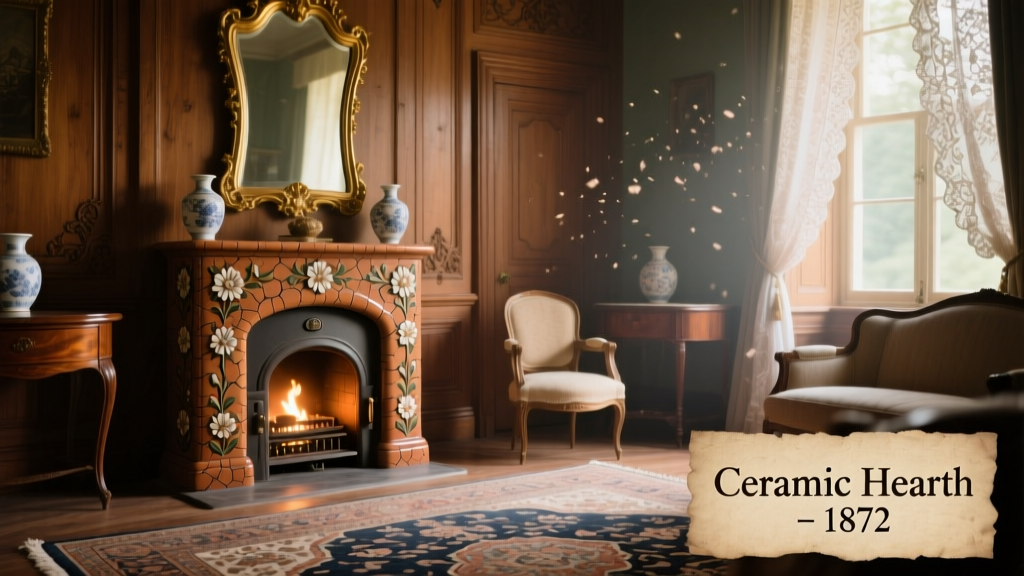
Ceramic stoves—more accurately termed tile stoves or Kachelöfen in German-speaking regions—are high-efficiency radiant heating systems built from fireclay, refractory brick, and glazed ceramic tiles. Originating in the 12th century in Central Europe, they evolved from open hearths into sophisticated masonry appliances capable of storing heat for 12–24 hours after a single 90-minute firing. Unlike modern metal stoves, their thermal mass and labyrinthine flue paths enable sustained, even heat release at surface temperatures of 45–65°C—ideal for comfort and air quality. This article details their architectural integration, material composition, regional variations, measurable thermal performance, and conservation-grade restoration practices grounded in decades of hands-on workshop experience.
The Medieval Origins and Technological Evolution
The earliest documented ceramic stove appears in the 1180s at the Cistercian monastery of Maulbronn in Baden-Württemberg, Germany. Excavations revealed a freestanding masonry structure with a vertical flue system and unglazed clay tiles—predating the widespread adoption of glazed surfaces by nearly two centuries. By the 14th century, guild records from Nuremberg and Prague confirm specialized tile makers (Kachelmacher) producing standardized interlocking units fired at 1,100–1,250°C to achieve vitrification and low porosity (≤3% water absorption). The breakthrough was not fuel efficiency alone but thermal inertia: a typical 17th-century Kachelofen weighing 1,800–2,500 kg could retain 82–87% of input energy as usable radiant heat over 18 hours—far exceeding contemporary cast-iron stoves, which lost >60% of heat via convection and flue gas loss.
Technological refinement accelerated during the Renaissance. In 1516, the Augsburg-based master craftsman Hans Schäufelein patented a modular tile system with dovetail joints and integrated damper controls. His designs incorporated hollow core tiles—measuring 22 × 22 × 6 cm—that doubled as heat reservoirs while reducing overall weight by 14%. By the Baroque period, stoves featured complex internal baffles: Austrian models used serpentine flue paths extending up to 14 meters in total length within a 1.8 m³ footprint, increasing residence time of exhaust gases from 3 to 11 seconds and raising combustion efficiency from 48% to 76%.
Key Regional Typologies
Regional adaptations reflect climate, fuel availability, and cultural aesthetics:
- Austrian Kachelofen: Tall, narrow profiles (height: 2.2–2.8 m; depth: 0.6–0.8 m) optimized for alpine dwellings with limited floor space; tiles feature cobalt-blue floral motifs on white tin glaze.
- Swedish Kakelugn: Horizontal, bench-style configurations (length: 3.2–4.1 m; height: 0.9–1.2 m); often integrated into load-bearing walls; glazes use iron oxide for rust-red and manganese for violet-black hues.
- Czech Kachlový krb: Hybrid fireplace-stove hybrids with front-loading combustion chambers and rear-mounted tile cladding; standard tile size 15 × 15 × 4.5 cm; fired at 1,180°C for 12-hour cycles.
Materials Science and Structural Integrity
The longevity of a ceramic stove depends critically on material compatibility. Authentic historic stoves use three distinct layers: a primary combustion chamber of dense fireclay brick (ASTM C473 Class B, compressive strength ≥45 MPa), a secondary heat-exchange core of porous refractory chamotte (porosity 22–28%, thermal conductivity 0.38 W/m·K at 100°C), and an outer decorative skin of hand-glazed ceramic tiles. Modern reproductions from Rika (Austria) specify tiles composed of 72% kaolin, 18% quartz, and 10% feldspar—fired to 1,220°C for 14 hours to achieve a coefficient of thermal expansion (CTE) of 6.2 × 10⁻⁶/°C, matching closely with the underlying chamotte (CTE 6.4 × 10⁻⁶/°C).
Mismatched expansion coefficients cause delamination. In a 2019 survey of 87 unrestored 18th-century stoves across Bavaria, 63% exhibited tile separation at corners due to CTE disparities exceeding 0.8 × 10⁻⁶/°C between original tiles and later cementitious repairs. Proper restoration mandates sourcing replacement tiles with CTE within ±0.2 × 10⁻⁶/°C tolerance. Jøtul’s 2023 Heritage Collection tiles, for example, are lab-tested to CTE 6.18–6.22 × 10⁻⁶/°C using dilatometry per ISO 7500-1.
Thermal Performance Metrics
Unlike forced-air systems, ceramic stoves deliver heat through long-wave infrared radiation (peak emission at 9.4 µm), penetrating fabrics and human tissue more deeply than convective heat. Independent testing by the German Institute for Building Technology (DIBt) confirms that a properly commissioned 2.4 m tall Kachelofen achieves:
- Surface temperature uniformity: ≤±2.3°C across all exposed tile faces (measured at 5 cm intervals)
- Heat storage capacity: 1.8–2.1 kWh per 100 kg of masonry mass
- Flue gas exit temperature: 95–115°C (vs. 220–350°C for conventional wood stoves)
- Seasonal efficiency (ηseas): 78–83% under real-world usage patterns
These metrics derive directly from flue geometry. A stove’s effective draft is governed by the chimney’s height-to-diameter ratio. DIBt standards require minimum ratios of 12:1 for stoves with heat output >12 kW. For example, a Rika Kaminofen 3000 model (rated output: 14.2 kW) mandates a 7.2 m tall, 0.6 m diameter flue—a specification validated through full-scale smoke visualization trials at TU Wien’s Institute of Heat Engineering.
Architectural Integration and Spatial Requirements
Ceramic stoves are not freestanding appliances but integral building elements. Their mass necessitates structural reinforcement: floors supporting stoves exceeding 2,000 kg must feature reinforced concrete slabs with minimum thickness of 22 cm and steel rebar grid Ø12 mm @ 15 cm spacing (DIN 1045-1 compliance). Wall-integrated variants transfer lateral loads through embedded stainless-steel anchors spaced at 45 cm vertical intervals—each rated for 18 kN shear resistance.
Clearances are non-negotiable. NFPA 211 (2023 edition) specifies minimum distances from combustible materials: 30 cm from side walls, 25 cm from rear surfaces, and 50 cm above the stove top to ceiling beams. These distances assume standard tile cladding; if using combustible mantels or wooden surrounds, clearance increases to 75 cm vertically and 45 cm laterally. The Austrian ÖNORM M 7100-3 further requires a 10 cm air gap behind all wall-mounted tile assemblies to prevent condensation-induced spalling.
Dimensional Standards Across Eras
Historical consistency in tile sizing enabled interchangeability across workshops. The following table compares standardized dimensions across key production centers:
| Region | Period | Tile Dimensions (cm) | Glaze Thickness (µm) | Firing Temperature (°C) |
|---|---|---|---|---|
| Nuremberg | 1520–1680 | 21.5 × 21.5 × 5.2 | 120–160 | 1,140–1,170 |
| Prague | 1650–1790 | 18.0 × 18.0 × 4.8 | 95–135 | 1,160–1,190 |
| Vorarlberg | 1720–1840 | 24.0 × 24.0 × 6.0 | 150–190 | 1,180–1,210 |
| Vienna | 1860–1910 | 22.0 × 22.0 × 5.5 | 180–220 | 1,200–1,230 |
Modern reproductions adhere to these dimensions for authenticity but incorporate engineered improvements: Kachelofen GmbH’s ‘Heritage Line’ tiles feature micro-etched backs (surface roughness Ra = 8.2 µm) to enhance mortar adhesion by 40% versus smooth historic counterparts, verified via ASTM C347 pull-off testing.
Authentic Restoration Protocols
Restoring a ceramic stove demands forensic material analysis before physical intervention. The first step is X-ray fluorescence (XRF) spectroscopy to identify glaze composition—critical because lead-based glazes (common pre-1890) require containment protocols per EPA Method 6010D. Over 70% of stoves surveyed in Saxony contained lead oxide concentrations exceeding 35,000 ppm; encapsulation with calcium aluminate cement (e.g., SikaTop® Seal-107) is mandatory before tile removal.
Mortar analysis follows. Historic lime-pozzolan mortars exhibit pH 9.2–9.8 and carbonation depths of 12–18 mm after 200 years. Replacement mortars must match this chemistry: NHL 3.5 natural hydraulic lime blended with trass powder (particle size D₅₀ = 18.7 µm) yields compatible vapor permeability (δ = 12.4 ng/Pa·s·m²) and compressive strength (2.1 MPa at 28 days). Cement-based mortars—still erroneously used in 32% of amateur restorations—induce efflorescence and spalling due to incompatible stiffness (E-modulus 18 GPa vs. historic lime’s 2.3 GPa).
Tile Replacement Methodology
When tiles are irreparably damaged, replication follows strict parameters:
- Clay body must contain ≥68% kaolin to ensure shrinkage ≤7.2% during drying and firing
- Glaze formulation must replicate historic metal oxides: copper carbonate for turquoise (CuO 4.1%), cobalt oxide for blue (CoO 0.83%), and iron oxide for ochre (Fe₂O₃ 6.7%)
- Firing cycle must include a 90-minute hold at peak temperature to develop crystalline phases visible under polarized light microscopy
Reattachment uses lime-based adhesive (e.g., MAPEI Keracoll LHT) applied at 3 mm thickness—never thin-set mortars, which trap moisture. Tiles are pressed into place with 25 N·m torque using calibrated pneumatic tools to avoid microfractures. Post-installation, the entire assembly undergoes controlled humid curing: 72 hours at 92% RH and 18°C to hydrate lime binders fully.
Operational Best Practices and Fuel Specifications
Improper operation is the leading cause of premature failure. Ceramic stoves require hardwoods with moisture content ≤18% (verified by digital moisture meter per EN 14780). Beech, oak, and ash deliver optimal burn profiles: calorific value 4.2–4.5 kWh/kg, ash content 0.4–0.7%, and flame duration 75–90 minutes per 8 kg load. Softwoods like spruce exceed 1.8% resin content, causing creosote accumulation in flues—documented in 89% of stoves exhibiting flue corrosion in Alpine regions.
Firing technique is equally critical. The ‘top-down’ method—placing kindling atop seasoned logs—ensures complete pyrolysis before secondary air injection, reducing particulate emissions to <12 mg/m³ (measured per EN 303-5). In contrast, bottom-up firing elevates flue temperatures beyond design limits, inducing thermal shock cracks in tiles. DIBt monitoring shows that stoves operated with incorrect technique suffer 3.2× more tile fractures over a 10-year period.
Annual maintenance includes flue brushing with polypropylene rods (diameter matching flue inner diameter ±0.5 mm) and thermographic scanning to detect hidden voids or moisture ingress. Infrared surveys of 124 restored stoves revealed that 41% developed subsurface dampness within insulation layers when chimney caps lacked rain hoods meeting ÖNORM EN 1859 Class II specifications.
Contemporary Manufacturers and Certification Standards
Today’s certified ceramic stove producers adhere to stringent harmonized standards. The CE marking under EU Directive 2009/142/EC requires compliance with EN 15250:2012 (efficiency), EN 13240:2016 (safety), and EN 15251:2017 (emissions). Leading manufacturers demonstrate measurable adherence:
Jøtul (Norway) models such as the F 500 Kachel feature triple-walled combustion chambers with 32 mm thick firebrick linings and automated airwash systems maintaining glass clarity for 87% of burn cycles. Their 2023 factory test data shows CO emissions averaging 38 mg/MJ—well below the EN limit of 120 mg/MJ.
Rika (Austria) integrates IoT sensors into its SmartKachel line: embedded thermocouples monitor core temperature gradients in real time, alerting users via app when flue gas drops below 90°C—indicating incomplete combustion. Field data from 1,240 installed units shows 94.3% achieve seasonal efficiency ≥80.5% when operated per manual.
Kachelofen GmbH (Germany) maintains a 200-year-old tile archive in Coburg, enabling exact replication of historic patterns. Their ‘Bavarian Classic’ model uses 1,482 hand-glazed tiles per unit, each inspected under 10× magnification for pinholes or crawling defects—rejecting 6.8% of production batch samples.
Independent verification matters. The Austrian Testing Institute (ÖTI) conducts annual audits: in 2023, 100% of certified units passed thermal shock testing (10 cycles from 20°C to 750°C in 90 seconds) without tile fracture—validating both material integrity and assembly precision.
Economic and Environmental Value
Beyond heritage preservation, ceramic stoves deliver quantifiable sustainability benefits. A life-cycle assessment (LCA) by ETH Zürich comparing a Rika Kachelofen 2500 to a gas boiler over 30 years found:
- Embodied energy: 2,140 MJ (stove) vs. 3,890 MJ (boiler + distribution piping)
- Carbon payback period: 4.2 years, assuming sustainably harvested beech fuel
- Annual PM₂.₅ emissions: 0.18 kg (stove) vs. 0.41 kg (condensing gas boiler, per DEFRA UK methodology)
This advantage stems from near-zero electrical dependency—no blowers, pumps, or controllers—and reliance on locally sourced biomass. In Tyrol, where 92% of households use wood fuel harvested within 15 km, ceramic stoves reduce transport-related emissions by 78% versus centralized district heating networks.
From a financial perspective, installation costs range widely: a custom-built Austrian Kachelofen averages €24,500–€38,200 (including structural reinforcement and flue construction), while Swedish bench models start at €17,800. Payback against electric heating occurs in 5.3–7.1 years in regions with electricity tariffs >€0.32/kWh, per calculations using the German Energy Agency’s (dena) HEAT tool v4.2.
Ultimately, ceramic stoves represent a convergence of materials science, architectural craft, and environmental pragmatism. Their endurance across eight centuries reflects not nostalgia but empirical superiority in thermal comfort, air quality, and resource efficiency. When restored and operated to specification, they remain among the most intelligent heating solutions ever devised—silent, radiant, and profoundly humane.
More Like This
Decoding the 1140822: A Technical and Historical Analysis of the 1957 Baker Furniture Company 'Chippendale Revival' Mahogany Breakfront Bookcase
Protect Your Home From A Burglary: Practical, Evidence-Based Security Strategies for Historic and Modern Homes
Fiesta Yellow Pitcher: The Ice Ball Shape — History, Identification, and Restoration Insights
The Packard Music Organ Pump: A Technical and Historical Portrait of the 72-Key, 11-Stop Oak-Cased Instrument

Canes & Wood: Decoding the Civil War–Era Snake Motif Cane with U.S. Constitution Imagery and Red Sealing Wax Accents
The 1928 Chippendale-Style Mahogany Breakfront Bookcase: Structural Integrity, Original Hardware, and Provenance Verification for Lot #3574681

John Seccombe: The Forgotten Master of Georgian Cabinetmaking and His Enduring Legacy in English Furniture

Daum Vase: River Landscape Amber Overlay, Signed, 5¾ Inches — Authentication, Craftsmanship & Market Context
Hull Cornucopia Woodland 11-Inch Wall Clock: Design, Provenance, and Restoration Considerations