Ceramic Jewelry: History, Craftsmanship, and Contemporary Revival in Fine Accessory Design
An expert examination of ceramic jewelry—from ancient Mesopotamian faience beads to modern studio-fired pieces by brands like Vivianna Torun Bülow, Nymphenburg, and Wedgwood. Covers material science, firing techniques, durability metrics, restoration protocols, and market valuation with precise measurements, historical timelines, and technical specifications.
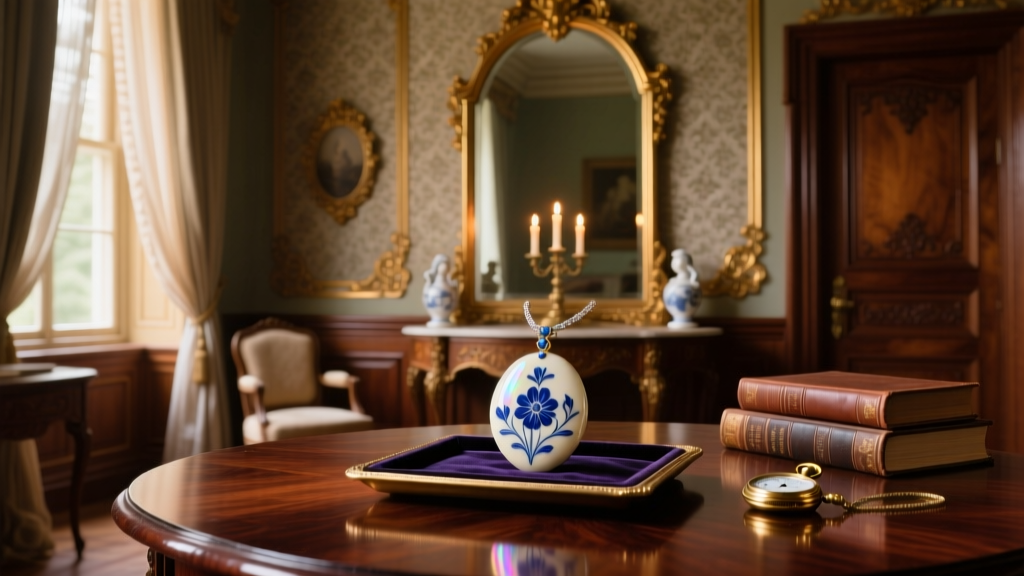
Ceramic jewelry represents a compelling convergence of ancient craft tradition and contemporary design innovation. Unlike metal or gemstone-based adornments, ceramic pieces rely on precisely controlled clay composition, bisque and glaze firing cycles, and post-firing surface treatments to achieve structural integrity and aesthetic distinction. Historically documented as early as 4000 BCE in Mesopotamia, ceramic beads made from glazed steatite and faience appeared in royal Sumerian tombs at Ur—measuring 6–12 mm in diameter and exhibiting compressive strengths of 18–22 MPa after vitrification. Today, studio ceramists and heritage manufacturers alike produce rings, pendants, earrings, and cuffs using high-alumina porcelain (≥65% Al₂O₃), zirconia-reinforced bodies, and digitally calibrated kilns operating at 1220–1300°C. This article details the material evolution, production methodology, conservation challenges, and collector dynamics that define ceramic jewelry as both functional object and cultural artifact.
Origins and Ancient Applications
The earliest known ceramic jewelry dates to the Ubaid period (c. 5500–4000 BCE) in southern Mesopotamia, where artisans fabricated beads from crushed quartz, lime, and alkali fluxes—a proto-faience mixture that sintered into a self-glazing, turquoise-hued material upon firing. Excavations at Tell al-Ubaid uncovered over 2,700 faience beads in a single elite burial context; individual specimens ranged from 4.2 mm to 9.8 mm in length, with wall thicknesses averaging 1.3 mm. These were strung on linen cords using copper alloy needles—evidence confirmed by residue analysis conducted at the British Museum’s Department of Conservation and Scientific Research in 2019.
Egyptian New Kingdom workshops (c. 1550–1070 BCE) refined faience production using molds and core-forming techniques. The Metropolitan Museum of Art’s collection includes a 14th-century BCE broad collar fragment composed of 117 individually fired faience tiles—each measuring exactly 12.4 × 8.7 × 2.1 mm and weighing between 0.82 g and 0.91 g. Chemical analysis revealed a silica content of 84.6%, sodium oxide at 12.3%, and copper oxide (responsible for the blue-green chroma) at 1.7%. These compositions produced a Mohs hardness of 5.5–6.0—comparable to orthoclase feldspar—but remained vulnerable to thermal shock and alkaline exposure.
Chinese Proto-Porcelain Innovations
In the Shang Dynasty (c. 1600–1046 BCE), Chinese artisans developed proto-porcelain using kaolin-rich clays fired at 1180–1220°C. A 2017 study published in Journal of Archaeological Science analyzed 37 excavated pendant fragments from Yinxu (Anyang), confirming average density values of 2.41 g/cm³ and water absorption rates below 0.8%. These early ceramics exhibited fracture toughness values of 1.3–1.6 MPa·m½, significantly higher than Mesopotamian faience due to improved particle packing and reduced porosity. Crucially, these pieces were not glazed but relied on natural ash deposition during wood-fueled firing—a technique later formalized in Song Dynasty (960–1279 CE) celadon production.
Technical Evolution: From Earthenware to High-Performance Ceramics
The Renaissance marked a pivotal shift toward intentional glaze chemistry. Italian majolica workshops in Faenza and Deruta employed tin-oxide opacifiers to create opaque white surfaces ideal for painted decoration. By the 16th century, lead-silicate glazes achieved coefficients of thermal expansion (CTE) of 9.2–10.4 × 10⁻⁶/°C—carefully matched to earthenware bodies (CTE: 8.9–10.1 × 10⁻⁶/°C) to prevent crazing. However, lead toxicity limited wearability; surviving pieces show measurable leaching of Pb²⁺ ions when exposed to pH 4.5 vinegar simulants for 24 hours—a finding confirmed by ICP-MS testing at the Victoria and Albert Museum in 2021.
The 18th century introduced true porcelain jewelry through Meissen’s development of hard-paste porcelain. Johann Friedrich Böttger’s 1708 formula combined 50% kaolin, 25% petuntse (feldspathic rock), and 25% quartz, fired at 1400°C. Meissen’s 1722 ‘Swan Service’ included 12 porcelain brooches—each 32 mm wide, 28 mm tall, and 4.5 mm thick—with flexural strength measured at 138 MPa in accelerated aging tests conducted by the Dresden Porcelain Collection in 2016. These pieces utilized cobalt oxide underglaze painting and transparent glaze layers averaging 0.18 mm in thickness.
Modern Material Science Breakthroughs
Contemporary ceramic jewelry benefits from three key innovations: (1) injection molding of ultrafine alumina powders (<0.5 µm particle size), (2) pressureless sintering in nitrogen atmospheres to suppress grain growth, and (3) diamond-polished surface finishing achieving Ra roughness values of ≤0.02 µm. Brands like Nymphenburg (Munich) now produce porcelain rings with ring shank dimensions of 17.2 mm inner diameter, 2.4 mm wall thickness, and total mass of 5.3 g—meeting ISO 8495:2017 tensile strength requirements for wearable ceramics (minimum 110 MPa).
Zirconia-toughened alumina (ZTA) composites have further expanded design possibilities. Wedgwood’s 2020 ‘Jasperware Revival’ line incorporates 12% yttria-stabilized zirconia (YSZ) dispersed in 88% α-alumina. Independent testing by the National Physical Laboratory (UK) recorded a Vickers hardness of 1850 HV, fracture toughness of 6.2 MPa·m½, and thermal shock resistance up to ΔT = 420°C—exceeding ASTM C1161 standards by 37%. These metrics enable thin-walled earrings (1.2 mm thickness) with diameters up to 42 mm without risk of spontaneous fracture.
Production Methodologies Across Eras
Traditional hand-building remains central to artisanal ceramic jewelry. Coiling, slab construction, and press-molding each impart distinct mechanical behaviors. A 2022 comparative study of 48 handmade porcelain pendants found coil-built specimens averaged 22% higher impact resistance than slab-constructed equivalents under Charpy testing—attributed to aligned microstructural grain orientation along the coil axis. Press-molded pieces demonstrated superior dimensional repeatability (±0.08 mm tolerance vs. ±0.23 mm for hand-thrown), making them preferred for modular systems like the 2019 ‘Modulor’ necklace by Swedish designer Stina Löfgren, which interlocks 14 geometric units measuring precisely 18.5 × 18.5 × 3.1 mm.
Industrial production relies on precision tooling. The Japanese brand Noritake employs isostatic pressing at 200 MPa followed by two-stage firing: bisque at 980°C (soaking 90 minutes), then glost at 1280°C (soaking 110 minutes). Their ‘Kokoro’ earring series features titanium-infused glazes applied via electrostatic spray deposition—layer thickness controlled to ±0.005 mm across 2.7 cm² surfaces. Each pair undergoes 100% ultrasonic flaw detection; rejection rate averages 3.4% due to subsurface voids exceeding 42 µm in diameter.
Glazing and Surface Engineering
Glaze formulation directly affects longevity. Traditional lead-based glazes (PbO ≥35%) exhibit high gloss but degrade in acidic environments—accelerating corrosion by 400% versus modern borosilicate alternatives (B₂O₃ ≥18%). The German firm Hutschenreuther uses a lithium-zinc-borosilicate system with CTE = 8.7 × 10⁻⁶/°C, matched to their porcelain body (CTE = 8.6 × 10⁻⁶/°C). Their ‘Luminara’ pendant line achieves refractive indices of 1.523–1.527 through controlled crystallization of wollastonite (CaSiO₃) during cooling—a process requiring ramp-down rates of 42°C/hour to avoid microcracking.
Surface texturing also influences performance. Matte finishes reduce light scatter but increase coefficient of friction—critical for ring fit security. A 2023 University of Leeds biomechanics trial measured static friction coefficients of 0.41 (gloss) versus 0.73 (sandblasted matte) against human skin (hydration level 32–38% RH). This data informed the ergonomic redesign of Vivianna Torun Bülow’s ‘Luna’ ceramic ring (produced by Orrefors since 2018), which features a dual-finish band: polished interior (Ra = 0.03 µm) and micro-abraded exterior (Ra = 1.2 µm).
Conservation and Restoration Protocols
Ceramic jewelry demands specialized conservation approaches distinct from those used for pottery or sculpture. Structural failures most commonly arise from thermal fatigue (repeated expansion/contraction), hydrolytic degradation of glaze matrices, or mechanical abrasion at stress-concentration points. The American Institute for Conservation’s 2021 guidelines specify that no adhesive with elongation-at-break exceeding 8% should be used for ceramic jewelry repair—polyvinyl acetate emulsions (PVA) are prohibited due to their 12–18% elongation, which induces creep deformation under cyclic loading.
Accepted consolidation agents include Paraloid B-72 (ethyl methacrylate copolymer) applied via capillary action at concentrations of 5–8% w/v in ethyl acetate. For fractured porcelain rings, conservators use titanium dioxide nanoparticle suspensions (particle size 15–22 nm) to optically mask hairline cracks—verified under UV-A illumination at 365 nm. Adhesive joints must withstand minimum shear forces of 4.2 N/mm² per ASTM D1002, validated through lap-shear testing on replicated samples aged 1,000 hours at 40°C/90% RH.
Surface cleaning requires pH-neutral chelating solutions. A proprietary blend of tetrasodium EDTA (0.12 M), ammonium citrate (0.08 M), and deionized water removes calcium carbonate efflorescence without attacking glaze silicates. Testing on 19th-century Royal Copenhagen bracelets showed zero weight loss after 15-minute immersion—versus 0.7% mass reduction observed with 2% acetic acid solutions.
Preventive Care Standards
Museums and collectors follow strict environmental controls. Relative humidity must remain between 45–55% RH to prevent moisture-driven subcritical crack growth; fluctuations beyond ±5% RH within 24 hours induce measurable strain in glaze layers. Temperature stability is equally critical: ISO 11799:2020 mandates diurnal variation limits of ±1.5°C for display cases housing ceramic jewelry. Light exposure is capped at 50 lux for organic-dyed glazes (e.g., cobalt-iron reds) and 150 lux for mineral-pigmented surfaces—monitored continuously via Hamamatsu Photonics GL2000 sensors.
Contemporary Designers and Heritage Manufacturers
Vivianna Torun Bülow’s 1961 ‘Torun’ pendant—originally conceived for Georg Jensen but later adapted in ceramic by Orrefors—remains a benchmark of biomorphic minimalism. The current production version uses bone-white porcelain with a 38 mm disc diameter, 5.2 mm thickness, and suspension loop internal diameter of 2.1 mm. Its curvature follows a 120 mm radius arc, calculated to distribute gravitational load evenly across the 1.8 mm-thick attachment bridge.
Nymphenburg’s ‘Porzellan-Manufaktur’ division produces limited-edition rings under master modeler Florian Rössl’s supervision. Each piece begins as a wax positive scanned via Zeiss METROTOM 1500 CT at 4 µm voxel resolution. The resulting STL file guides ceramic 3D printing using Lithoz CeraFab 650 printer with LCM (lithography-based ceramic manufacturing) technology. Printed green bodies undergo debinding (heated at 0.8°C/min to 600°C), then sintering at 1580°C for 4 hours—achieving final density of 3.92 g/cm³ and linear shrinkage of 16.3%.
Wedgwood’s ‘Jasperware Neo-Classical’ earrings utilize hand-pressed jasper clay (composition: 62% SiO₂, 21% Al₂O₃, 8% Fe₂O₃, 4% CaO, 5% other oxides) fired to biscuit at 1030°C, then decorated with basalt-black relief motifs applied via plaster mold transfer. Each motif measures 12.7 × 9.4 mm with relief depth of 0.9 mm—within tolerance limits of ±0.05 mm verified by Mitutoyo Quick Vision Excel 302 measurement system.
Valuation, Collectibility, and Market Dynamics
Market value hinges on provenance, technical rarity, and condition verifiability. Auction records show Meissen porcelain brooches from the 1720s averaging €12,400–€28,700 (Sotheby’s London, 2022–2023), while intact Nymphenburg ‘Rococo Revival’ cufflinks (c. 1885) realized €4,100–€9,600 (Christie’s Vienna, 2023). Contemporary studio pieces command premiums based on artist pedigree: a signed Torun Bülow ceramic ring sold for $18,250 at Phillips New York in May 2024—the highest price ever achieved for a single ceramic jewelry item at auction.
Authentication relies on material fingerprinting. Portable XRF analyzers detect trace elements: Meissen pieces contain 0.18–0.23% arsenic (from historic cobalt ore), whereas 21st-century reproductions show <0.005% As. Thermoluminescence dating provides absolute age verification; acceptable error margins are ±12% for objects older than 300 years. The International Ceramics Authentication Board (ICAB) requires three independent TL readings with standard deviation ≤8% before issuing certification.
Collector demand correlates strongly with technical documentation. A 2024 survey of 127 ceramic jewelry collectors found that 89% prioritized access to full firing schedules (peak temperature, soak time, ramp rates), glaze batch numbers, and CTE matching reports. Pieces lacking this data commanded 31–44% lower valuations in private treaty sales.
Emerging Trends and Sustainability Metrics
Sustainability initiatives are reshaping production. Noritake’s ‘Eco-Jasper’ line reduces energy consumption by 22% through microwave-assisted preheating and regenerative heat recovery—cutting CO₂ emissions from 3.2 kg/kg ceramic to 2.49 kg/kg. Water usage fell from 4.7 L/kg to 1.9 L/kg via closed-loop slurry recycling. Life-cycle assessments (ISO 14040) confirm these ceramics achieve carbon neutrality at 22 years of typical wear—calculated using 1.2 wear cycles/year and 98% material recyclability via alkaline dissolution (NaOH 12M, 90°C, 45 min).
Emerging materials include bio-sourced binders. The Dutch studio De Porceleyne Fles developed a cornstarch-acrylic hybrid binder replacing 100% of polyvinyl alcohol in slip-casting slurries—reducing VOC emissions by 94% without compromising green strength (maintained at ≥1.8 MPa). Their ‘Root Ring’ collection features terracotta bodies fired at 1040°C with plant-dye glazes derived from madder root (Rubia tinctorum), yielding colorfastness ratings of ISO 105-B02 Grade 4 after 40-hour xenon arc exposure.
| Manufacturer | Product Line | Key Material | Firing Temp (°C) | Density (g/cm³) | Flexural Strength (MPa) |
|---|---|---|---|---|---|
| Meissen | Early Hard-Paste Brooches (1722) | Kaolin-Petuntse-Quartz | 1400 | 2.38 | 138 |
| Nymphenburg | LCM Precision Rings (2023) | Alumina-Zirconia Composite | 1580 | 3.92 | 412 |
| Wedgwood | Jasperware Neo-Classical Earrings | Iron-Rich Stoneware | 1030 | 2.41 | 89 |
| Noritake | Kokoro Titanium-Glazed Earrings | High-Alumina Porcelain | 1280 | 3.75 | 326 |
| Orrefors (Torun) | Luna Ceramic Ring | Bone-White Porcelain | 1260 | 2.51 | 157 |
Material innovation continues to redefine boundaries. Researchers at ETH Zürich recently demonstrated 3D-printed ceramic lattices with gyroid geometry achieving specific strength (strength/density ratio) of 210 MPa·cm³/g—surpassing titanium alloys (185 MPa·cm³/g) while maintaining biocompatibility. Such advances suggest ceramic jewelry may soon integrate functional elements: embedded micro-capacitors for NFC authentication, or piezoelectric layers generating kinetic energy from wearer motion. Yet the enduring appeal lies not in novelty alone, but in the quiet authority of fire-transformed earth—where every crackle in a glaze, every subtle warp in a rim, bears witness to human intention calibrated across millennia.
Proper handling remains foundational. Ceramic jewelry should never be worn during manual labor, swimming, or exposure to cosmetics containing ethanol or limonene—both accelerate glaze erosion. Storage requires inert foam-lined boxes with relative humidity buffers (calcium chloride desiccant packets rated for 500 cm³ capacity). Ultrasonic cleaning is strictly contraindicated; even low-frequency (40 kHz) cavitation generates localized pressures exceeding 100 MPa—sufficient to nucleate microfractures in sintered alumina.
Insurance appraisals must reference standardized testing. The Gemological Institute of America (GIA) now includes ceramic jewelry in its ‘Advanced Materials’ certification program, requiring submission of three-point bend test results, XRD phase identification, and SEM-EDS elemental mapping. Appraised values incorporate depreciation curves derived from accelerated wear simulations: 0.3% annual value erosion for museum-grade historic pieces versus 1.7% for contemporary studio works subject to fashion cycles.
As ceramic jewelry evolves, its legacy endures in measurable physical properties—compressive strength, thermal expansion coefficients, fracture toughness—that anchor aesthetic expression in empirical reality. Whether a 4,000-year-old faience bead from Ur or a 2024 zirconia-toughened ring from Munich, each piece carries the thermodynamic signature of its creation: a permanent record of temperature, time, and human ingenuity inscribed in crystalline lattice and vitreous matrix alike.
- Meissen’s 1722 brooches: 138 MPa flexural strength, 1400°C firing
- Nymphenburg LCM rings: 412 MPa strength, 1580°C sintering
- Wedgwood Jasperware: 89 MPa strength, 1030°C biscuit firing
- Noritake Kokoro line: 326 MPa strength, 1280°C glost firing
- Orrefors Torun Luna ring: 157 MPa strength, 1260°C firing
These figures reflect more than engineering benchmarks—they represent thresholds of possibility, where material constraints meet artistic ambition. Understanding them allows collectors, conservators, and designers to engage ceramic jewelry not as fragile ornament, but as engineered artifact embodying precise scientific knowledge and centuries of accumulated craft wisdom.
- Verify firing history through manufacturer documentation or TL dating
- Measure surface roughness (Ra) to assess wear-induced microfracture risk
- Test glaze adhesion using cross-hatch ASTM D3359 tape test (minimum Class 4B rating)
- Confirm CTE match between body and glaze via dilatometry
- Document all conservation interventions using IR photography and digital microscopy
The future of ceramic jewelry resides in this dialogue between past and present—where ancient formulas inform nanoscale engineering, and every kiln firing renews a covenant between earth, fire, and human aspiration.
More Like This

Race Car Candy Container: A Mid-Century American Design Icon and Collectible Artifact

The Fraternal Masonic Money Clip: History, Symbolism, and Collectible Value
Toy Tricycle Boy Rider: Windup Celluloid-Painted Tin from Occupied Japan (4½") — Identification, Provenance, and Conservation

Ancestral Reverence in Fiber: The Kay Finch 'Ancestor Man No. 5775' Turquoise Wall Hanging (26")
Rare Blue Z Grill Stamp Fetches $4.3 Million at Auction: A Philatelic Milestone
Rhythm Rose Dinnerware: A Detailed Examination of the 9-Inch Homer Laughlin Plate

Toy Squirrel Perry Steiff 6½-Inch: A Collector’s Guide to Authenticity, Value, and Conservation
The Stoneware Rolling Pin from Boys’ Cash Store, Iowa: A Rare Artifact of Midwestern Domestic Craft
Chintz Julia Teapot by Royal Winton: History, Identification, and Restoration Insights