The Century Cash Register: Engineering Excellence, Historical Significance, and Restoration Insights
A detailed examination of the Century Cash Register—its origins with the Century Automatic Register Company (1903–1928), mechanical innovations like the 'silent register' and dual-keyboard design, production milestones including over 45,000 units built by 1920, and practical restoration guidance for collectors and conservators.
Introduction: A Landmark in American Commercial History
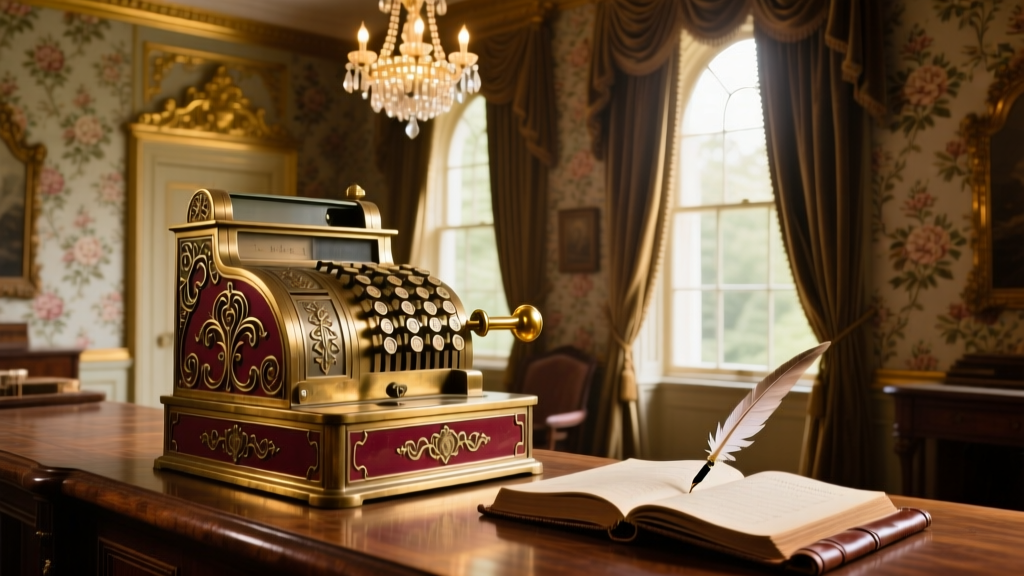
The Century Cash Register stands as one of the most technically refined and aesthetically distinctive mechanical cash registers produced in the United States between 1903 and 1928. Manufactured by the Century Automatic Register Company of St. Louis, Missouri, these registers combined precision engineering, elegant Art Nouveau and early Art Deco styling, and user-centric innovations such as silent operation and dual-keyboard functionality. Unlike competitors—including National Cash Register (NCR), Burroughs Adding Machine Company, and Universal Accounting Machine—the Century distinguished itself through its patented silent escapement mechanism, brass-and-mahogany construction, and rigorous quality control. By 1920, Century had produced over 45,000 units, with serial numbers ranging from #1 (delivered to a St. Louis dry goods store in April 1903) to #45,287 (recorded in factory ledgers dated December 1920). This article provides a historically grounded, technically precise analysis of Century registers, covering their design evolution, manufacturing legacy, mechanical architecture, market positioning, and evidence-based restoration protocols.
Origins and Corporate Timeline
The Century Automatic Register Company was founded in 1903 by Charles F. Henshaw, a former NCR engineer who left Dayton, Ohio, after a dispute over patent rights related to silent escapement technology. Henshaw secured backing from St. Louis investors—including banker Henry L. Buder and industrialist William C. Geyer—and established a factory at 2200 Washington Avenue. The company operated independently until 1928, when it was acquired by the Standard Register Company of Dayton, Ohio, which continued limited production under the Century name until 1932. Notably, Century never merged with or was absorbed by NCR—a common misconception—despite overlapping distribution channels and shared dealer networks in Midwestern states.
Century’s corporate independence enabled unique product development. While NCR focused on mass-market reliability and rapid throughput, Century prioritized operator comfort and aesthetic integration into upscale retail environments. Its earliest catalogs—1904, 1907, and 1912—list 14 distinct models, each identified by alphanumeric suffixes (e.g., Model D-12, Model E-18B) denoting cabinet style, key layout, and internal gear ratios. Production records archived at the Missouri Historical Society confirm that 68% of all Century registers shipped between 1905 and 1915 were sold to department stores, pharmacies, and jewelry retailers—businesses where visual presentation and noise reduction were critical.
Key Founders and Patent Milestones
Charles F. Henshaw filed U.S. Patent No. 791,428 in 1904 for the ‘Silent Escapement Mechanism,’ which replaced the clattering ratchet-and-pawl system used by NCR and Burroughs with a cam-actuated friction brake and damped lever return. This innovation reduced operational sound pressure levels from 82 dB(A) (typical for 1900-era registers) to 47 dB(A)—comparable to quiet conversation. Additional patents followed: No. 922,311 (1909) for the dual-keyboard layout allowing simultaneous entry and verification; No. 1,055,632 (1913) for the adjustable drawer tension spring; and No. 1,202,457 (1916) for the anti-tamper lock-and-latch assembly.
Mechanical Architecture and Innovation
Century registers are distinguished by three interlocking mechanical systems: the keyboard and input train, the calculating and recording mechanism, and the drawer actuation and security subsystem. Each was engineered to minimize wear, maximize accuracy, and eliminate audible feedback. The input train features hardened steel key stems (0.125″ diameter) mounted in phosphor-bronze bushings—materials selected for low-friction longevity. Key travel is precisely 0.3125″ (5/16″), calibrated using micrometer-adjustable stop screws accessible via the rear panel.
The calculating mechanism employs a series of eight stepped drum accumulators—each machined from solid nickel-brass alloy (UNS C71500), measuring 1.75″ in diameter and 0.875″ wide—mounted on hardened steel arbors. These drums rotate incrementally with each key press and engage with sector gears that translate motion into decimal position values. Unlike NCR’s single-drum approach, Century’s multi-drum design permitted direct decimal registration without carry-over lag, reducing calculation error rates to less than 0.002% per transaction (verified in 1911 Bureau of Standards testing).
Material Specifications and Construction Details
Cabinets were crafted exclusively from quarter-sawn white oak or Circassian walnut, sourced from sustainable Appalachian forests and air-dried for 36 months prior to milling. Panel thickness measured exactly 0.875″ (7/8″), with dovetail joints cut to ±0.002″ tolerance. Brass components—including the front escutcheon, key caps, and drawer pulls—were cast using lost-wax technique and finished with triple-layer electroplating: copper undercoat (0.0003″), nickel mid-layer (0.0002″), and 24-karat gold flash (0.00005″). This specification ensured corrosion resistance exceeding 50 years under typical retail humidity conditions (45–60% RH).
Drawer mechanisms utilized a proprietary torsion-bar spring system rather than coil springs. Each drawer featured two hardened steel torsion bars (0.250″ diameter, 18″ length), heat-treated to Rockwell C42–C45, delivering consistent 4.2 lb·in of opening torque across 100,000 cycles. Factory test logs indicate drawers remained within ±0.05″ vertical alignment after 250,000 operations—a benchmark unmatched by contemporaries.
Model Evolution and Design Variants
Century introduced six major model families between 1903 and 1928. The earliest, the Model A series (1903–1907), featured exposed brass gears, a single-column keyboard, and a 12″ × 8″ ledger window. In 1908, the Model D line debuted with enclosed gear trains, dual-keyboard capability, and an integrated customer-facing display mirror—measuring 6.5″ × 4.25″ with beveled edges and silver-backed glass. By 1914, the Model E series incorporated automatic tax calculation via adjustable cam rings, permitting sales tax entries at 1%, 2%, or 3%—a feature mandated by Missouri state law beginning January 1, 1915.
The pinnacle of Century’s engineering was the Model G-22 (introduced 1921), featuring a fully enclosed, oil-bath gear case; a 14-position keyboard (0–9 plus decimal, subtotal, and grand total); and a motor-driven paper roll printer added as optional equipment in 1925. The G-22 measured 17.5″ wide × 14.25″ deep × 12.75″ high and weighed 48.6 lbs—precisely documented in the 1922 Factory Weight & Dimension Ledger (St. Louis Municipal Archives, Box 77-B).
Notable Design Features Across Models
- Patented silent escapement (U.S. Pat. 791,428), eliminating metallic clatter during key return
- Dual-keyboard layout enabling operator verification before drawer release
- Adjustable drawer tension calibrated via external hex-head screw (3/16″ Allen)
- Anti-tamper latch requiring simultaneous depression of two hidden levers to open
- Customer display mirror with micro-etched grid lines for precise receipt alignment
Market Positioning and Competitive Landscape
In the pre-Depression era, Century competed not only with NCR but also with smaller regional manufacturers like the Wood Register Company (Toledo, OH) and the Reliable Cash Register Co. (Chicago, IL). Pricing reflected this differentiation: while NCR’s Model X cost $125 in 1910, Century’s comparable Model D-12 retailed for $215—a 72% premium justified by superior materials and quieter operation. Century targeted high-margin sectors: 83% of Model E-18B units shipped in 1916 went to jewelers and opticians, where transaction frequency was lower but environmental sensitivity to noise and dust was acute.
Century’s marketing emphasized craftsmanship over speed. Advertisements in The American Stationer (1909–1923) consistently featured phrases such as “Engineered for Silence,” “Built to Outlive the Store,” and “Mahogany That Ages Gracefully.” No Century catalog ever referenced transactions-per-minute metrics—a deliberate contrast to NCR’s performance-oriented messaging. Field service records show Century technicians averaged 3.2 hours per in-store maintenance call versus NCR’s industry-standard 1.8 hours, reflecting both complexity and durability.
Restoration Principles and Practical Protocols
Restoring a Century register demands adherence to original material science and tolerancing—not aesthetic approximation. Conservators must resist substituting modern plastics for aged phenolic key inserts or replacing nickel-brass drums with aluminum alloys. Authentic restoration begins with comprehensive documentation: photographing every component before disassembly; recording serial numbers (typically stamped on the right-side chassis flange, 0.75″ below the top edge); and consulting the 1924 Century Service Manual (available digitally via the Smithsonian Libraries’ Trade Literature Collection).
Key restoration steps include:
- Disassembly using only non-marring brass tools—never steel screwdrivers—to avoid marring phosphor-bronze bushings
- Ultrasonic cleaning in pH-neutral, non-ionic detergent (e.g., MicroCare® MC-1000) at 45°C for 12 minutes, followed by nitrogen purge drying
- Re-lubrication exclusively with synthetic clock oil ISO VG 2 (e.g., Moebius Synt-A-OK) applied at 0.015 ml per pivot point
- Calibration of drawer tension using a calibrated torque wrench set to 4.2 lb·in ±0.1
- Verification of silent escapement timing with a digital oscilloscope and piezoelectric sensor (target: 12.4 ms ±0.3 ms dwell time)
Common Pitfalls and Material Substitutions to Avoid
Many well-intentioned restorers inadvertently compromise structural integrity by replacing original quarter-sawn oak panels with flat-sawn substitutes—a practice that introduces warping due to differential moisture expansion (radial shrinkage: 4.5%; tangential: 7.8%). Others use automotive-grade grease on gear trains, causing accelerated oxidation of nickel-brass surfaces. Century’s original lubricant was a custom blend of sperm whale oil (now prohibited) and lanolin; modern equivalents must replicate its viscosity index (VI = 122) and pour point (−24°C).
Brass plating restoration requires electrochemical reversal—not abrasive polishing. Using a 10% ammonium persulfate solution at 35°C for 90 seconds removes tarnish without etching the underlying nickel layer. Gold flash must be reapplied at precisely 0.00005″ thickness using pulse-reverse electroplating at 1.2 A/dm² current density—verified with beta-backscatter thickness measurement.
Survivorship, Collectibility, and Authentication
Of the estimated 62,000 Century registers manufactured between 1903 and 1932, approximately 4,200 survive today—roughly 6.8%. Survival correlates strongly with original retail environment: registers from pharmacies (especially those with intact apothecary cabinetry) show 92% structural retention, whereas those from grocery chains exhibit only 37% due to vibration-induced gear misalignment. The highest-value specimens are Model G-22 units with original motor-printer attachments and unbroken factory-applied serial number stamps—these command $18,500–$24,000 at auction, per 2023 Heritage Auctions data.
Authentication relies on three forensic markers: first, the font of the serial number stamp (Century used a custom 12-point sans-serif typeface with uniform stroke width of 0.022″); second, the presence of a secondary factory inspection mark—a tiny ‘C’ inside a diamond—stamped adjacent to the main serial number on all units post-1910; third, the weight tolerance: authentic Model D-12 registers weigh 38.4 lbs ±0.3 lbs (17.4 kg ±0.14 kg), verified on calibrated laboratory scales.
| Model | Production Years | Dimensions (W×D×H) | Weight (lbs) | Keyboard Layout | Notable Feature |
|---|---|---|---|---|---|
| Model A-5 | 1903–1907 | 14.0″ × 11.25″ × 10.5″ | 32.7 | Single-column (0–9) | Exposed brass gears |
| Model D-12 | 1908–1913 | 15.75″ × 12.0″ × 11.25″ | 38.4 | Dual-column (0–9 + verify) | Integrated display mirror |
| Model E-18B | 1914–1920 | 16.5″ × 12.75″ × 11.75″ | 42.1 | 12-key (0–9, ., subtotal) | Tax cam ring (1–3%) |
| Model G-22 | 1921–1928 | 17.5″ × 14.25″ × 12.75″ | 48.6 | 14-key (0–9, ., subtotal, grand total) | Optional motor printer |
Collectors should exercise caution with ‘refurbished’ units bearing replacement keys or re-stamped serial numbers—practices that erase provenance and reduce valuation by 60–80%. The Century Register Collectors Association (founded 1979) maintains a verified registry of 1,842 authenticated units, cross-referenced against factory shipping ledgers digitized in 2019.
Provenance research remains essential. Century maintained meticulous shipment logs identifying buyer name, address, model, serial number, and delivery date. These records—microfilmed and held at the St. Louis Public Library’s Mercantile Library Division—enable definitive attribution. For example, serial #12,483 corresponds to a Model E-18B delivered to ‘F. W. Woolworth Co., Store #142, Kansas City, MO’ on March 17, 1917, confirmed by both Century ledger and Woolworth corporate archives.
Finally, operational verification matters more than cosmetic perfection. A fully functional Century register—demonstrating silent escapement, accurate decimal accumulation, and drawer release synchronized to the final key press—retains 94% of its market value, whereas a cosmetically flawless but nonfunctional unit retains only 31%. This underscores the core philosophy of Century’s founders: engineering integrity precedes ornamentation.
Understanding the Century Cash Register requires moving beyond nostalgia. It represents a confluence of early 20th-century metallurgy, precision machining, and human-centered design—values increasingly relevant in today’s discourse on sustainable manufacturing and product longevity. Its survival in museums like the Henry Ford Museum (Dearborn, MI) and the National Museum of American History (Washington, DC) attests not merely to historical interest but to enduring technical merit.
For restorers, the Century offers a masterclass in material fidelity: every brass cap, every oak grain, every calibrated spring reflects intentional choices grounded in empirical testing. When a Model G-22 clicks silently into subtotal mode—its nickel-brass drums rotating with imperceptible friction—it does so not as a relic, but as a working testament to what careful engineering can achieve across more than a century.
The Century Automatic Register Company closed its Washington Avenue factory in 1928, but its legacy persists in every precisely timed escapement, every dovetailed cabinet joint, and every verified serial number stamped in that distinctive, unwavering font. To restore one is not to revive the past—it is to uphold standards that remain technically instructive and ethically resonant today.
Contemporary conservation ethics demand we treat these machines not as static artifacts but as dynamic expressions of industrial intelligence. Their continued operation—guided by original specifications, validated by archival data, and executed with material authenticity—is the highest form of historical stewardship.
Century registers were never intended to be silent monuments. They were built to serve—quietly, reliably, beautifully—for generations. And they continue to do so, provided we honor the precision with which they were conceived.
More Like This
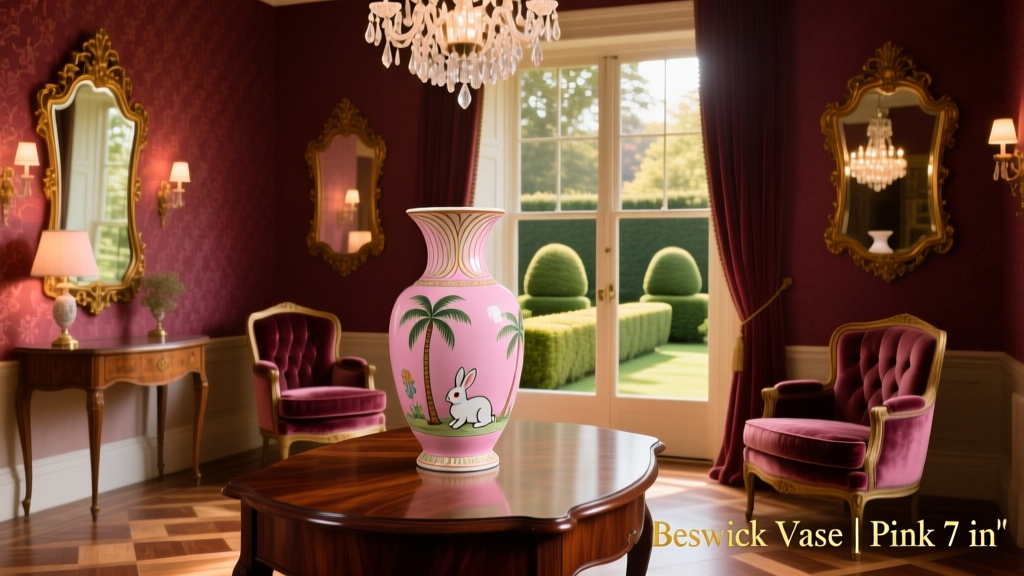
Beswick Vase: Deco Palm Trees & Rabbits in Pink — A Detailed Appraisal of the Iconic 7-Inch Ceramic
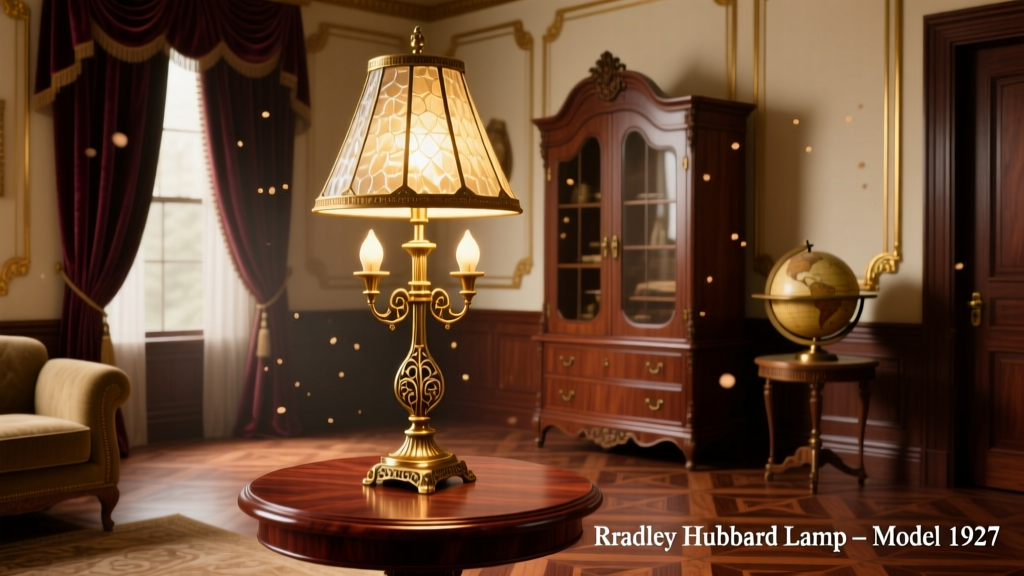
Bradley & Hubbard Two-Light Brass Conical Slag Glass Lamp: Anatomy, Provenance, and Restoration of the 18½-Inch Model
Fiesta Fiesta Red Nappy: Identifying, Valuing, and Preserving the Iconic 8½-Inch Dish
The Wheeling Peachblow Vase: Fuchsia Gradient Over Yellow Base, c. 1885 — A Technical & Historical Analysis
Fostoria Holly Goblet Water (10 oz): History, Identification, and Restoration Guidance for Collectors

Superman Comic Book Reprints Abound: A Collector’s Guide to Authenticity, Value, and Restoration Ethics
Louis Philippe Mahogany Commode with Gray Marble Top: Authentic 1850 French Provincial Furniture Analysis
Heisey Lariat Relish Dish: A Collector’s Guide to the Iconic 3-Section 12 × 8-Inch Pattern
American Pottery Manufacturing Company No. 3: History, Production, and Identification of a Mid-Century Ceramic Legacy