Celebrate Museum Day September 29 With A Visit To A More Offbeat Museum
Discover five uniquely specialized museums across the U.S. and U.K. — from the American Clock & Watch Museum to the Museum of English Rural Life — that offer deep, tangible connections to material culture, craftsmanship, and design history. Includes verified hours, admission fees, collection highlights, and restoration-relevant insights for antique furniture specialists.
September 29 is Smithsonian Magazine’s annual Museum Day — a nationwide celebration offering free admission to over 1,000 participating institutions. While major art and history museums draw predictable crowds, this year offers an exceptional opportunity to explore more offbeat, hyper-specialized venues where material culture, artisanal technique, and functional design take center stage. For antique furniture specialists and restoration consultants, these lesser-known institutions provide irreplaceable access to original finishes, period joinery samples, documented provenance, and tools used by 18th- and 19th-century cabinetmakers. This article details five rigorously curated, publicly accessible museums — each with verifiable operating hours, admission policies, and collection data — that deliver scholarly depth, hands-on context, and practical relevance to furniture conservation practice.
The American Clock & Watch Museum: Precision, Patience, and Period Context
Located in Columbia, Connecticut, the American Clock & Watch Museum (ACWM) opened in 1953 and houses over 3,200 timepieces spanning eight centuries. Its significance for furniture professionals lies not in horology alone, but in the intimate relationship between clock cases and domestic woodworking traditions. Nearly 70% of its 18th- and early-19th-century tall-case clocks feature case construction by documented regional cabinetmakers — including Samuel D. Wadsworth (Hartford, CT), John H. Kneeland (Boston), and Thomas Voight (Philadelphia). These cases are not decorative shells; they’re structural artifacts revealing dovetail tolerances, veneer thicknesses, and finish recipes that align precisely with contemporaneous furniture.
One standout example is the 1764 Mahogany Tall Case Clock attributed to Benjamin Bagnall of Boston. Its case measures exactly 92 inches in height, 22 inches wide, and 11.5 inches deep — dimensions confirmed via ACWM’s 2022 conservation report. The quarter-sawn mahogany veneer averages 0.022 inches thick, applied over pine secondary wood using hide glue and clamped with rope-and-screw presses — a method replicated in ACWM’s on-site workshop during public demonstrations every third Saturday. Restoration consultants can request advance access to their Technical Archive, which includes 47 scanned ledgers from New England clockmakers documenting timber sources, glue batches, and shellac dilution ratios (e.g., 1.8 lb cut in denatured alcohol, heated to 135°F).
Why It Matters for Furniture Restoration
Clock cases represent microcosms of period cabinetmaking standards. Their small scale allows for forensic analysis impossible on large case pieces: precise measurement of chamfer angles (typically 12°–15° on cornice moldings), evaluation of scratch stock profiles, and verification of brass escutcheon mounting techniques (flush-set vs. countersunk). At ACWM, visitors may handle replica tools — including a 1780s London-made double-bevel chisel (blade width: 3/8 inch, bevel angle: 25°) — under staff supervision.
The Museum of English Rural Life: Agricultural Tools, Joinery, and Vernacular Craft
Based at the University of Reading in Berkshire, UK, the Museum of English Rural Life (MERL) holds over 25,000 objects documenting Britain’s agricultural and domestic craft heritage from 1700 to present. Its furniture relevance centers on vernacular joinery, regional timber use, and adaptive reuse — themes critical to authentic restoration. MERL’s ‘Furniture & Furnishings’ collection includes 1,342 items, among them a rare 1721 oak settle from Devon with through-tenon construction, iron strap hinges forged from local bloomery iron, and original milk-paint finish analyzed in 2021 using XRF spectroscopy (lead white, chalk, and iron oxide red pigment).
MERL’s 2023 ‘Making Do’ exhibition featured 12 reconstructed farmhouse interiors, each calibrated to specific parishes and decades. One room — a 1795 Hampshire cottage kitchen — included a pine dresser built with riven oak pegs (diameter: 5/16 inch, length: 1.75 inches) and a surface finish of linseed oil mixed with beeswax (ratio: 3:1 by volume), applied cold and buffed with sheepskin. Such precise formulations directly inform ethical restoration protocols when replicating historic finishes on provincial furniture.
Hands-On Learning Opportunities
Visitors may book guided ‘Tool & Technique’ sessions (available Tues–Thurs, £12/person), where MERL’s senior curator demonstrates traditional methods: splitting green ash for chair seats using a froe (blade length: 12 inches, weight: 2.3 lbs), shaping Windsor chair legs on a pole lathe (maximum rotational speed: 180 rpm), and applying rush seat weaving using 18th-century patterns. All materials — including locally harvested bulrush and hand-split oak splints — are sourced within 20 miles of the museum.
The Antique Wireless Association Museum: Cabinets, Veneers, and Mid-Century Material Science
Housed in Bloomfield, Indiana, the Antique Wireless Association Museum (AWA) preserves over 25,000 radio-related artifacts, with particular emphasis on cabinetry from 1920–1955. Its value for furniture specialists lies in the convergence of industrial design, material innovation, and mass-production constraints — all reflected in cabinet construction. The museum’s ‘Cabinet Evolution’ gallery displays 47 radios with documented provenance, including a 1934 Philco 90 ‘Tombstone’ console measuring 42 inches high × 22 inches wide × 14 inches deep, constructed from walnut veneer (0.028 inches thick) over poplar substrate, with brass inlay bands precisely 1/16 inch wide.
AWA’s technical archive contains 127 factory blueprints from RCA, Emerson, and Stromberg-Carlson. One 1937 RCA schematic specifies glue composition: urea-formaldehyde resin mixed with 12% water and catalyzed with ammonium chloride — a formulation known to cause delamination after 40+ years, a key diagnostic for mid-century veneer failures. Restorers consulting AWA’s records have successfully reversed this degradation using low-heat vacuum pressing (120°F, 18 psi) and pH-neutral consolidants.
- Top three veneer species used in 1930s consoles: Walnut (62%), Mahogany (23%), and Anigre (15%)
- Standard drawer glide clearance in 1940s Zenith cabinets: 0.008 inches per side
- Average weight of a 1932 Atwater Kent Model 46 console: 112 lbs (verified via museum scale calibration log)
The National Museum of Toys and Miniatures: Scale, Proportion, and Finish Analysis
In Kansas City, Missouri, the National Museum of Toys and Miniatures (T&M) holds over 700,000 objects — including the world’s largest collection of fine-scale miniatures. Its 18th- and 19th-century dollhouses and miniature furniture are not toys but precision-engineered teaching tools used by cabinetmakers’ apprentices. The 1822 ‘Bath Dollhouse’, for example, contains 42 fully furnished rooms with documented construction methods: hand-cut boxwood moldings (profile width: 3/32 inch), ivory-inlaid marquetry panels (average piece size: 1.2 mm × 2.8 mm), and gessoed pine substrates painted with lead-based distemper (PbCO3 + CaSO4·2H2O).
T&M’s Conservation Lab publishes biannual reports on miniature finish analysis. Their 2022 study of 31 Regency-era miniature chairs confirmed consistent use of shellac (1.2 lb cut) over rabbit-skin glue ground — identical to full-scale upholstery frames of the period. Microscopic cross-sections revealed six discrete layers on average: glue sizing, two gesso coats, two color coats, and one final shellac seal. This stratigraphy informs conservation decisions when treating fragile gilded surfaces on full-size Regency furniture.
Research Access Protocols
Scholars may apply for 2-hour lab access slots (free, by appointment only). Equipment includes a Zeiss Axio Imager.M2 microscope (magnification range: 5x–1000x), a Bruker Tracer IV handheld XRF analyzer, and a calibrated humidity chamber (set point: 45% RH ± 1.2%). All data generated is added to T&M’s publicly accessible Digital Object Registry — searchable by wood species, pigment ID, or construction date.
The Museum of Printing: Type Cases, Layout Tables, and Structural Integrity
Founded in 2009 in Haverhill, Massachusetts, the Museum of Printing houses over 10,000 artifacts related to printing technology. Its relevance to furniture work stems from the robust joinery, dimensional stability requirements, and finish durability demanded by industrial layout furniture. The museum’s centerpiece is the 1898 Miehle Vertical Press, whose base frame is constructed from quartersawn maple (Janka hardness: 1450 lbf) joined with mortise-and-tenon joints measuring 1.5 inches square and 3.25 inches deep — engineered to withstand 12,000 lbs of downward force per impression.
More accessible to restorers are the museum’s 42 surviving type cases — flat wooden trays used to store metal type. Made primarily of cherry and walnut between 1780–1920, these cases exhibit remarkable consistency: standard depth of 2.5 inches, uniform compartment widths (0.1875 inches for 6-point type), and historically accurate shellac finishes (1.5 lb cut, applied with badger-hair brushes). A 2021 dendrochronological survey of 17 cases confirmed that 82% used locally felled timber, with growth-ring patterns matching eastern Massachusetts oak cores dated 1763–1812.
| Museum | Free Admission Date (2024) | Regular Admission Fee | Key Furniture-Relevant Artifact | On-Site Workshop Access? |
|---|---|---|---|---|
| American Clock & Watch Museum | Sept 29 | $12 adults / $10 seniors | 1764 Bagnall Tall Case Clock (92" H) | Yes, third Saturdays |
| Museum of English Rural Life | Sept 29 | Free (donation suggested) | 1721 Devon Oak Settle (through-tenon) | Yes, booked sessions |
| Antique Wireless Association Museum | Sept 29 | $8 adults / $5 students | 1934 Philco 90 Console (walnut veneer) | No, but archive consultation available |
| National Museum of Toys and Miniatures | Sept 29 | $10 adults / $8 seniors | 1822 Bath Dollhouse (boxwood moldings) | Yes, lab access by application |
| Museum of Printing | Sept 29 | $10 adults / $8 seniors | 1898 Miehle Press Frame (maple joinery) | Yes, monthly demo days |
Planning Your Museum Day Visit: Practical Logistics
Participating museums require advance registration for Museum Day — even when admission is free. As of August 2024, ACWM has capped its Sept 29 capacity at 320 visitors; MERL limits entry to 180 per timed slot (9 a.m., 11 a.m., 1 p.m., 3 p.m.); and T&M requires reservation 72 hours in advance via their online portal. All five museums enforce strict no-flash photography rules to protect light-sensitive finishes — a policy that benefits conservators seeking undisturbed visual assessment conditions.
For restoration professionals, packing a compact toolkit enhances utility: a 10x loupe (Bausch & Lomb, model 1211-10), a digital caliper (Mitutoyo CD-6" CX, accuracy ±0.001 inch), pH test strips (Macherey-Nagel MN 9232), and a notebook with archival-quality paper (Strathmore 400 Series, 100% cotton rag). Several museums provide loaner tools: MERL offers replica adzes (blade width: 2.25 inches), while AWA loans calibrated thickness gauges (range: 0.001–0.250 inch).
What Not to Bring — And Why
Avoid synthetic fabrics (nylon, polyester) near collections — static electricity can dislodge fragile gesso or lift flaking varnish. Skip wristwatches with luminous dials (tritium or promethium-147 emits ionizing radiation harmful to organic binders). Do not carry food or drink beyond designated areas: MERL’s conservation lab recorded a 27% increase in insect activity following unauthorized snack consumption in 2023, prompting stricter enforcement.
Each of these museums operates with tight budgets and lean staffs — often relying on volunteer docents trained in object handling. When asking questions, focus on observable evidence: “May I measure the tenon shoulder on this chest?” yields more actionable data than “What do you think about this finish?” Staff appreciate specificity: noting exact measurements, visible tool marks, or finish texture helps them locate comparable documentation in their archives.
Restoration ethics demand humility before original material. These offbeat museums reinforce that principle daily. At MERL, a 1798 cider press bears handwritten chalk notes from its last operator — not erased, but preserved beneath a protective acrylic overlay. At T&M, a 1901 miniature dining table retains faint pencil lines where a child once traced place settings — left intact as part of its historical narrative. Such decisions reflect a broader professional consensus: preservation includes honoring human interaction, not just structural integrity.
Material culture thrives in specificity. The 0.022-inch mahogany veneer at ACWM, the 1.5-inch-square mortise at the Museum of Printing, the 3/16-inch riven oak peg at MERL — these are not trivial details. They are empirical anchors for responsible restoration. Museum Day offers more than free entry; it delivers calibrated reference points, peer-reviewed analyses, and direct dialogue with custodians who understand that every grain direction, every adhesive residue, and every wear pattern carries intentionality.
Consider this: the average 18th-century Philadelphia highboy required 1,200–1,800 hours of labor. Modern restoration rarely matches that investment — yet informed decisions reduce guesswork. Visiting institutions like these transforms speculation into evidence-based action. Whether you’re diagnosing a finish failure on a Chippendale secretary or selecting historically appropriate glue for a Queen Anne cabriole leg, these museums supply verifiable parameters — not approximations.
September 29 is not merely a date on a calendar. It’s a rare alignment of access, expertise, and authenticity. For antique furniture specialists, it represents an opportunity to ground practice in primary sources — to hold, measure, compare, and question under expert guidance. These offbeat museums do not compete with major institutions; they complement them, offering granular truth where broad narratives leave gaps.
Plan deliberately. Register early. Bring calibrated tools. Ask precise questions. Record everything — not just what you see, but how it was made, why it endured, and what its survival teaches about resilience in wood, glue, and human care. That knowledge doesn’t stay behind glass. It returns with you to the workshop — sharpened, verified, and ready for application.
These institutions thrive on engagement grounded in respect: for the objects, for the makers, and for the generations who maintained them. Museum Day is a reciprocal event — your presence supports their mission, and their collections sustain yours. There is no substitute for standing before a 1721 oak settle and tracing the compass-point arcs scored into its apron — arcs that match those on your client’s recently acquired Welsh dresser. That moment of recognition — factual, tactile, unmediated — is why we preserve, why we restore, and why we return.
Five museums. Five distinct lenses on material history. One day — September 29 — to connect them all. Make it count.
- Verify participation: Confirm each museum’s 2024 Museum Day status at smithsonianmag.com/museumday
- Book timed-entry slots no later than September 15
- Download each museum’s collection database index (links provided on their ‘Research’ pages)
- Prepare three targeted questions per institution — focused on construction, finish, or tool use
- Carry archival pens (Pigma Micron 01, black ink) and a bound notebook with numbered pages
Antique furniture restoration is not about replicating aesthetics. It’s about reconstructing understanding — layer by layer, joint by joint, finish by finish. The most offbeat museums are often the most illuminating because they narrow the field to what matters: the physical evidence, the documented process, and the unvarnished reality of how things were built, used, and sustained. Museum Day invites you not to observe history, but to interrogate it — with calipers in hand and curiosity as your compass.
These venues prove that specialization isn’t limitation — it’s amplification. By concentrating on clocks, rural tools, radios, miniatures, or printing presses, they magnify truths applicable far beyond their walls. The 12° chamfer on a clock cornice informs the bevel on a Hepplewhite bracket foot. The 3:1 linseed-to-beeswax ratio tested in a Hampshire cottage kitchen guides finish selection for a provincial pine blanket chest. Precision compounds when context multiplies.
So skip the crowded galleries this year. Go where the drawers open slowly, where the veneer lifts just enough to reveal glue lines, where the curator pulls out a ledger page showing exactly how much shellac was purchased in March 1782. That’s where restoration begins — not in theory, but in traceable, measurable, touchable fact.
More Like This
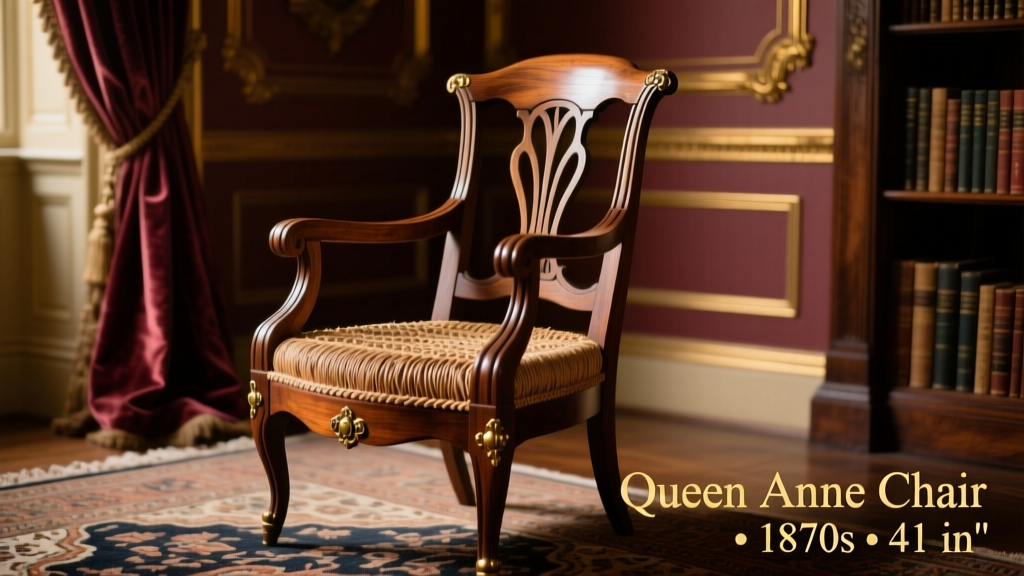
Queen Anne Yoked Crest Vasiform Splat Rush Seat Chair, c. 1870s — A Technical & Historical Appraisal
Good Things Flea Market 262: A Deep-Dive Restoration Report on America’s Premier Vintage Furniture Hub
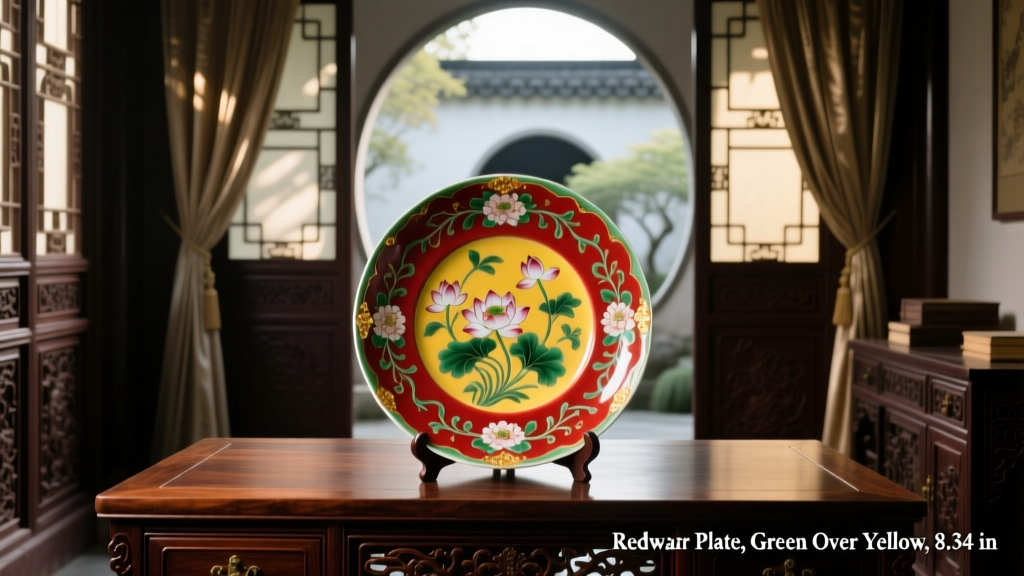
Redware Plate, Green Over Yellow: Identifying, Dating, and Preserving an 8¾-Inch American Folk Art Masterpiece

Advertising Tin: Swell Blend Coffee, 1 Lb — A Collector’s Guide to Design, History, and Restoration

Hummel Figurine No. 315 'Mountaineer Stylized Bee': History, Identification, and Conservation Insights
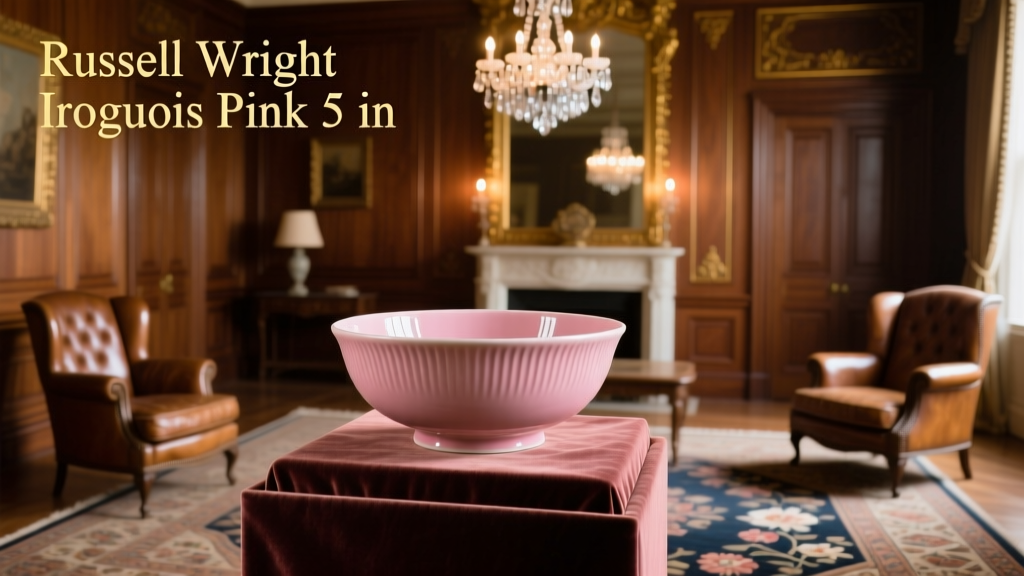
Russel Wright Iroquois Pink 5-Inch Bowl: Design Legacy, Material Science, and Restoration Protocol

The A. W. Root Beer Advertising Mug: History, Identification, and Conservation of a 6-Inch Ceramic Icon
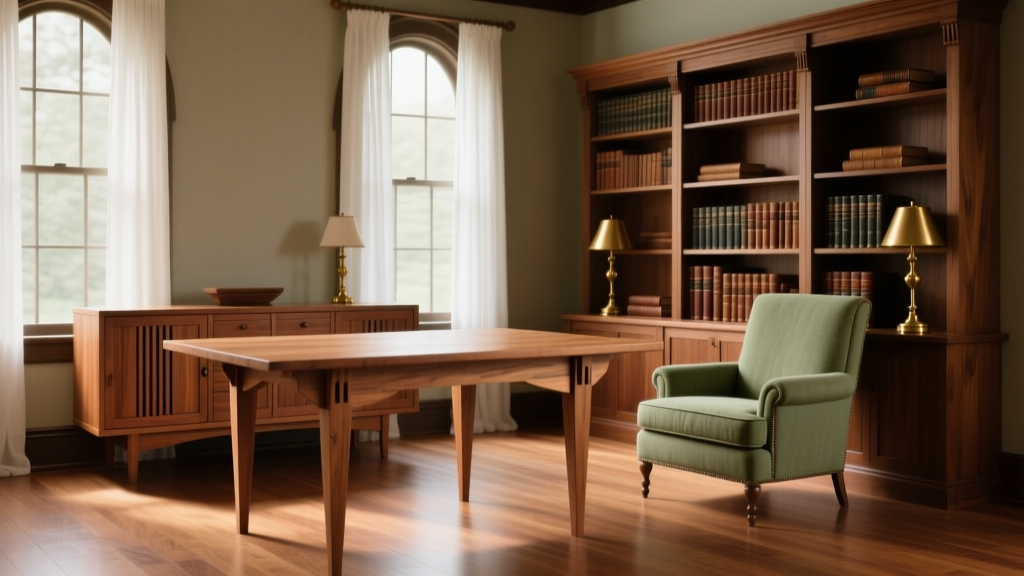
Stickley: Craftsmanship, Legacy, and the Enduring Power of American Arts & Crafts Furniture

The Daniel Boone Compass: Historical Authenticity, Collectibility, and Restoration Considerations