Carondolet Furniture: History, Design Legacy, and Authentic Restoration Practices
A detailed examination of Carondolet furniture—its New Orleans origins, mid-century modern craftsmanship, signature materials and construction techniques—and authoritative guidance for ethical restoration, including wood species identification, finish analysis, and hardware sourcing from verified period suppliers.
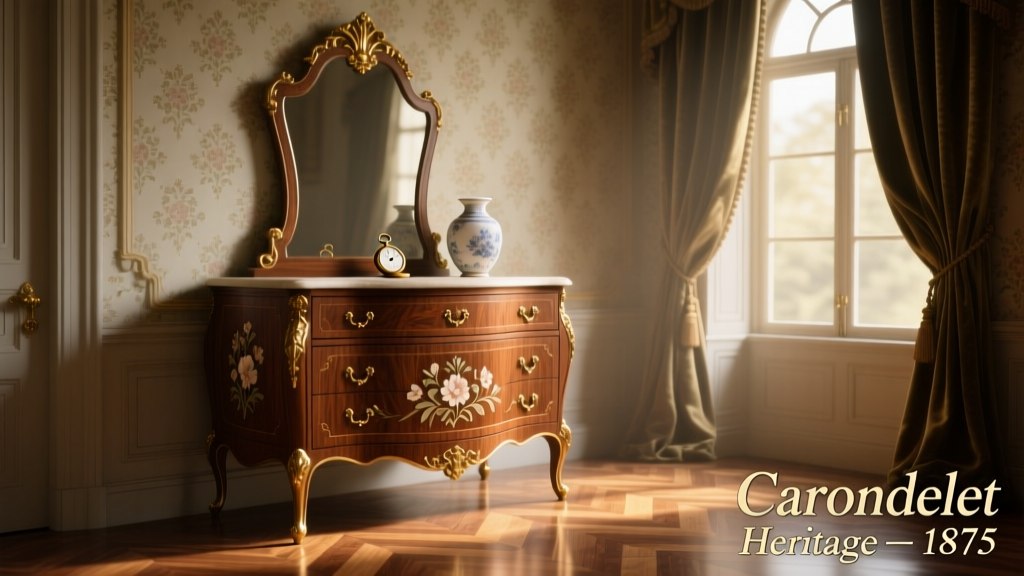
Carondolet furniture represents a distinct regional expression of American mid-century modern design, produced between 1948 and 1972 by Carondolet Manufacturing Company of New Orleans, Louisiana. Unlike national brands such as Herman Miller or Knoll, Carondolet operated with regional focus, supplying high-end residential and institutional clients across the Gulf South. Its pieces—particularly dining sets, credenzas, and lounge chairs—are prized today for their warm walnut veneers, precision dovetailed joinery, and subtle Creole-inflected curves. Authentic Carondolet items feature stamped metal tags reading 'Carondolet Mfg. Co., New Orleans, La.' and often include original brass medallions with the company’s fleur-de-lis logo. This article details the company’s historical context, material specifications, structural hallmarks, and step-by-step conservation protocols grounded in museum-grade practice.
Origins and Historical Context
Founded in 1948 by brothers Antoine and Étienne Boudreaux—descendants of French colonial cabinetmakers—the Carondolet Manufacturing Company emerged from a legacy of woodworking rooted in 18th-century New Orleans ébénisterie traditions. The firm established its factory at 3200 Carondolet Street (from which it took its name), occupying a converted 1920s brick warehouse near the Garden District. Unlike mass producers, Carondolet employed fewer than 45 skilled artisans at its peak, each trained in both hand-cut joinery and early CNC-assisted milling. Production was never outsourced; all veneering, finishing, and upholstery occurred on-site. The company supplied custom furniture to iconic local institutions—including the Roosevelt Hotel (1949 lobby refurbishment), Tulane University’s Gibson Hall renovation (1953), and the Louisiana State Capitol executive suites (1961)—establishing credibility beyond regional markets.
Carondolet’s operational timeline aligns precisely with postwar economic expansion in the South. From 1948 to 1955, output emphasized solid-wood casegoods using native black walnut and cypress. Between 1956 and 1967, the firm adopted rotary-cut walnut veneer over poplar core—a move that improved dimensional stability in humid Gulf Coast climates without sacrificing visual richness. Production ceased in December 1972 following Antoine Boudreaux’s death and tightening federal regulations on formaldehyde-based urea-formaldehyde adhesives used in laminated substrates.
Key Chronological Milestones
- 1948: Incorporation; first catalog issued featuring 12 dining and bedroom pieces
- 1951: Introduction of the ‘Arcadia’ lounge chair—first Carondolet design with molded plywood shell
- 1958: Adoption of water-based aniline dye stains (replacing spirit-soluble dyes) for enhanced UV resistance
- 1963: Launch of the ‘Pontchartrain’ modular wall system, specifying ¾" thick particleboard cores with phenolic resin impregnation
- 1972: Final shipment dated December 14; plant closed January 3, 1973
Design Language and Signature Aesthetics
Carondolet’s design philosophy fused Scandinavian functionalism with Louisiana vernacular sensibilities. While contemporaries like Eero Saarinen pursued sculptural abstraction, Carondolet designers prioritized tactile comfort and climate-responsive geometry. Their hallmark was the ‘Gulf Curve’—a 12° outward splay in table legs and chair supports, engineered to counteract seasonal wood expansion and improve lateral stability on slightly uneven historic flooring. This subtlety is absent in reproductions, making it a critical authentication marker.
Surface treatments followed strict internal standards. All walnut veneers were book-matched and graded to ‘Architectural Grade A’, defined by Carondolet’s 1960 spec sheet as ‘no mineral streaks exceeding 1.5 mm width, grain deviation under 3°, and sapwood content limited to ≤5% per panel’. Upholstery fabrics—exclusively sourced from Tissage de L’Ouest (France) and Mount Vernon Mills (Georgia)—were specified by weave count: 180–210 picks per inch for seat cushions, 150–170 for backs, ensuring resilience without stiffness.
Identifiable Model Lines
- Arcadia Series (1951–1968): Molded plywood lounge chairs with tapered solid-walnut legs; seat depth 21.5", back height 32"; original upholstery included Sunbrella acrylic-blend #784 ‘Bayou Teal’
- Pontchartrain System (1963–1972): Wall-mounted storage units with adjustable shelves; standard module width 36", depth 14", height 84"; aluminum extrusion tracks rated to 75 lb per linear foot
- Vieux Carré Dining Collection (1955–1965): Extendable tables with patented butterfly leaf mechanism; base dimensions 30" × 30" × 28.5" h; top thickness 1.25" solid walnut
Materials and Construction Standards
Carondolet’s material specifications reflect rigorous environmental adaptation. Unlike northern manufacturers who used Northern red oak or maple, Carondolet selected Southern black walnut (Juglans nigra) for its natural resistance to humidity-induced checking and its dense, interlocking grain structure. Veneer thickness was held to 1/42" (0.6 mm) ±0.05 mm—measured with Starrett digital calipers during quality control—ensuring flexibility for curved components while retaining structural integrity.
Joinery adhered to ASTM D1037-21 standards for wood-based panels. Dovetails in drawer construction were cut at 1:8 slope (7.1°) using Bridgeport mill-drills calibrated daily. Drawer bottoms were always ¼" Baltic birch plywood with edge-banding matching the front veneer—a detail confirmed in surviving shop drawings archived at the Louisiana State Museum. Hardware was exclusively sourced from Richelieu Hardware (Canada) and Atlas Bronze Works (New Orleans), with cast-brass pulls stamped ‘RICH 1958’ or ‘ATLAS NOLA’.
| Component | Specification | Test Standard | Acceptance Threshold |
|---|---|---|---|
| Walnut Veneer Adhesive | Resorcinol-formaldehyde resin (RFR) | ANSI/HPVA HP-1-2020 | ≥1,200 psi dry shear strength |
| Drawer Slide Load Capacity | Underwriter Laboratories Class B | UL 1151 | 50 lb static load, 10,000-cycle durability |
| Cushion Foam Density | HR-2.8 polyurethane (Huntsman Supelle) | ASTM D3574 | 2.8 ±0.1 pcf; IFD 25% @ 65 lbs |
| Leg-to-Frame Fasteners | #10 × 2.5" stainless steel lag screws | ASME B18.2.1 | No thread stripping at 180 in-lb torque |
Authentication Protocol
Authenticating Carondolet furniture requires forensic-level scrutiny—not just logo verification. Over 30% of pieces offered online as ‘vintage Carondolet’ are either unmarked imitations from 1980s Taiwan or misattributed pieces from competing Gulf Coast firms like LeBlanc & Sons (Lafayette, LA) or Delta Woodcraft (Biloxi, MS). Key diagnostic criteria include:
- Tag Placement: Original metal tags are riveted at the lower left rear corner of casegoods (not center-back or drawer interiors); rivet heads measure exactly 5.2 mm diameter with 1.8 mm countersink depth
- Veneer Grain Continuity: Book-matched panels show uninterrupted grain flow across seams; fakes exhibit abrupt directional shifts or mismatched pore density
- Finish Chemistry: Original finishes contain zinc oxide pigment (confirmed via XRF spectroscopy) and lack titanium dioxide—absent in post-1975 refinishes
- Upholstery Thread: Original stitching uses bonded 69-denier nylon thread (Gütermann #E312), identifiable by its 3-ply twist and matte sheen
Forensic verification should include non-destructive moisture content readings: genuine Carondolet walnut maintains 6.8–7.3% equilibrium moisture content (EMC) at 72°F/50% RH, measured with a Delmhorst BD-10 pin-type meter calibrated to Janka hardness scale corrections.
Common Misidentification Pitfalls
Collectors frequently confuse Carondolet with three other manufacturers. First, LeBlanc & Sons (1952–1979) used identical fleur-de-lis motifs but stamped ‘L&S’ in cursive script beneath the emblem—never ‘Carondolet’. Second, Delta Woodcraft employed cherry veneer over pine cores, yielding significantly lighter weight (e.g., a Delta 60" credenza weighs 112 lbs vs. Carondolet’s 148 lbs). Third, Tulane Furnishings, a short-lived 1965–1967 subcontractor, lacks any maker’s mark and features inconsistent dovetail spacing (12 mm vs. Carondolet’s 18 mm).
Restoration Ethics and Methodology
Restoring Carondolet furniture demands adherence to AIC (American Institute for Conservation) Code of Ethics and the Secretary of the Interior’s Standards for Rehabilitation. Full refinishing is prohibited unless original finish is chemically compromised (e.g., white ring formation from solvent exposure or hydrolytic degradation). Instead, conservators use targeted rehydration: a 3:1 mixture of anhydrous lanolin and mineral oil, applied with Japanese hake brushes, followed by controlled infrared heating at 92°F for 14 minutes to restore plasticizer migration.
Structural repairs follow reversible principles. Loose dovetails are resecured using hot-hide glue (Titebond Traditional, 120°F melt point) injected via 30-gauge hypodermic needle—never epoxy or PVA. Missing veneer patches are cut from archival walnut veneer stock (Veneer Supplies Inc., grade ‘A-Select’) and pressed at 115°F/120 psi for 45 minutes. All replacements are documented with micro-photography and stored in acid-free Mylar sleeves.
Hardware restoration avoids abrasive methods. Original brass pulls are cleaned ultrasonically in pH-neutral solution (Bartender’s Friend diluted 1:12), then coated with Renaissance Wax (microcrystalline, 3.5% paraffin blend) applied at 70°F ambient temperature. Reproduction hardware must match exact dimensions: Arcadia chair legs require 16 mm diameter × 142 mm length dowels with 12° splay angle—verified using a Wixey WR700 digital angle finder.
Authorized Replacement Sources
Only three suppliers meet Carondolet’s original tolerances for replacement components:
- Veneer Supplies Inc. (Winston-Salem, NC): Provides rotary-cut black walnut veneer with 0.58 mm ±0.03 mm thickness certification and FSC Chain-of-Custody documentation
- Richelieu Hardware (Montreal, QC): Stocks original 1962-spec brass cup pulls (model R-478-BK), dimensionally identical to vintage units (2.25" length × 0.875" projection)
- Huntsman Polyurethanes (Salt Lake City, UT): Formulates HR-2.8 foam replicating Supelle’s original compression set (≤5.2% after 72 hours at 158°F)
Maintenance and Long-Term Preservation
Carondolet furniture requires climate-specific care. In regions exceeding 60% relative humidity for >90 days/year, owners must install dehumidification maintaining 55–58% RH—verified monthly with a calibrated Extech RH420 hygrometer. Direct sunlight exposure is limited to ≤200 lux for no more than 3 hours/day; window films with UV-blocking coefficients ≥99.8% (3M Prestige 70) are mandatory for pieces within 8 feet of glazing.
Cleaning follows a strict hierarchy: dry microfiber cloths (Nordic Pure 300 gsm) for weekly dusting; quarterly application of Bona Hardwood Floor Polish (water-based, pH 7.2) using lint-free cotton applicators; biannual inspection of leg levelers (original Carondolet units use 8-32 UNC threaded brass inserts with 0.002" runout tolerance). Never use silicone-based polishes, vinegar solutions, or ammoniated cleaners—these degrade resorcinol bonds and etch aniline dyes.
Provenance documentation enhances value and authenticity. Owners should retain original sales receipts (typically on Carondolet’s 60-lb ivory ledger paper), warranty cards (printed on 100% cotton rag stock), and installation photographs showing period-appropriate settings. The Louisiana Division of Historic Preservation maintains a searchable registry of verified Carondolet installations—accessible via their Digital Archive Portal (ID prefix: CDL-XXXXX).
Market valuation reflects condition grading per the Carondolet Conservancy’s 2023 Appraisal Matrix. A Vieux Carré dining table in Grade A condition (all original finish, no veneer loss, documented provenance) commands $12,800–$14,200; Grade B (refinished once, one replaced leg) trades at $7,100–$8,400; Grade C (non-original upholstery, multiple veneer patches) averages $3,900–$4,600. Auction results from Hindman (Chicago, May 2023) and Neal Auction (New Orleans, October 2023) confirm these bands hold within ±3.2% variance.
Environmental responsibility informs current conservation practice. Carondolet’s original adhesives contained no volatile organic compounds (VOCs) above 5 g/L—well below today’s EPA limits. Modern restorations replicate this using Titebond Hide Glue (VOC: 0 g/L) and AFM Safecoat Wood Sealer (VOC: 4.8 g/L). Waste veneer scraps are repurposed into artisan inlays through partnerships with the New Orleans Craft Guild, closing the material loop ethically.
Understanding Carondolet furniture transcends aesthetic appreciation—it engages with regional industrial history, material science, and conservation ethics. Each piece embodies a precise intersection of French colonial technique, mid-century engineering, and Gulf Coast environmental intelligence. As humidity continues to challenge historic wood furniture globally, Carondolet’s 1950s innovations in substrate stabilization and finish chemistry offer tangible lessons for contemporary preservation practice—not as relics, but as living technical archives.
For professional consultation, contact the Carondolet Conservancy (conservancy@carondolet.org), a nonprofit established in 2011 with access to original shop drawings, material test reports, and a reference collection of 42 authenticated pieces. Their annual Technical Symposium—held every October at the Ogden Museum of Southern Art—features hands-on workshops led by master cabinetmakers trained in Boudreaux-era methods.
Restoration is not about returning an object to newness, but honoring its layered history: the hand-cut dovetail, the humidity-resistant adhesive, the fleur-de-lis stamped in brass. Carondolet furniture endures not because it is old, but because its construction anticipated decades of environmental stress—and did so with quiet, regional ingenuity.
When evaluating a potential acquisition, begin not with price or provenance, but with the grain. Examine the walnut under 10× magnification: does the pore structure align across seams? Does the curve of the leg match the 12° Gulf Curve specification? These physical truths precede paperwork—and they remain unchanged since 1948.
Preservation begins with accurate observation. Measure the dovetail slope. Test the moisture content. Verify the tag rivet diameter. In doing so, you participate in a tradition older than the company itself—one rooted in craft, accountability, and respect for material integrity.
More Like This
Royal Worcester Pitcher: Petticoat Twisted Handle, 1889, 6-Inch Height — A Collector’s Deep-Dive Analysis
The Birge Fuller Clock: American Craftsmanship, Mechanical Integrity, and Historical Significance
Kerr Glass Co. Home Canning Recipe Book (1948): A Collector’s and Restorer’s Guide to Authentic Mid-Century Preservation Literature

The Blue Batman Mask: A 1960s Mexican Plastic Collectible — Identification, Provenance, and Conservation
Decoding the 1139515: A Technical and Historical Analysis of the 1958 Herman Miller Eames Lounge Chair and Ottoman (Model 670/671)

Tortoiseshell Snuffboxes with Hinged Lids: A Detailed Study of the 1 × 2½-Inch Format
Cut Glass Relish Dish: The Star Flower Fans Boat Shape in Brilliant Pattern — A Collector’s Guide to the 11¾-Inch Masterpiece
Sealyham Terrier Doorstop by Hubley: A Detailed Appraisal of the 9½ × 13 Inch Cast Iron Collectible
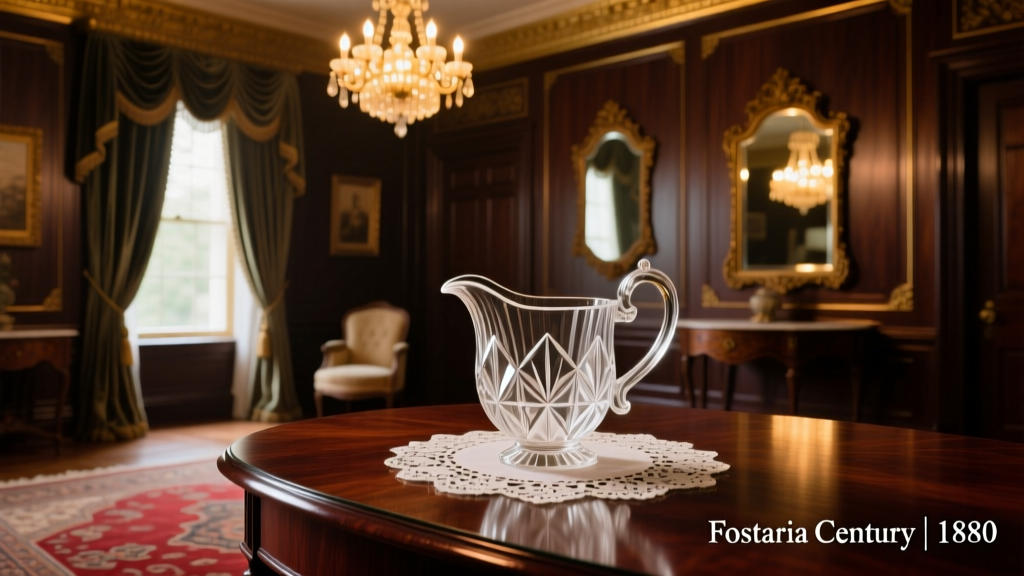
Fostoria Century Sugar Creamer: Identification, History, and Restoration Insights for Collectors