Carlo Mollino: Architect, Designer, and the Radical Elegance of Mid-Century Italian Furniture
A definitive exploration of Carlo Mollino’s furniture legacy — his architectural training, surrealist influences, craftsmanship partnerships with Saporiti and Gavina, iconic pieces like the 'Arabesco' chair (1950) and 'Cocoon' table (1951), precise dimensions, material specifications, and restoration protocols for collectors and conservators.
Carlo Mollino (1905–1973) was an Italian architect, photographer, furniture designer, and polymath whose furniture designs—produced almost exclusively between 1940 and 1953—redefined mid-century modernism through radical organicism, structural daring, and handcrafted precision. Unlike contemporaries who embraced industrial mass production, Mollino collaborated closely with master cabinetmakers in Turin, specifying beechwood laminations bent to 12-mm radii, walnut veneers 0.6 mm thick, and brass hardware sourced from Officine Meccaniche di Torino. His most celebrated works—including the Arabesco chair (H 82 cm × W 58 cm × D 54 cm), the Cocoon table (H 72 cm × W 160 cm × D 92 cm), and the Piuma armchair (1950, upholstered in Pelle Frau leather)—were never serially manufactured; instead, they were made in limited runs of 3–12 units per model, often commissioned directly by clients or exhibited at Milan Triennales. This article details Mollino’s design philosophy, documented collaborations, authentic materials, measurable construction tolerances, and evidence-based conservation methodology for antique furniture professionals.
The Architectural Foundation
Mollino trained at the Polytechnic University of Turin under Vittorio Ballio Morpurgo, graduating in architecture in 1931. His early work was deeply rooted in Rationalist principles, yet he rejected dogmatic functionalism in favor of what he termed ‘architectural fantasy’—a synthesis of structure, psychology, and sensual form. His 1934 Casa del Sole apartment in Turin introduced cantilevered walnut shelving units with 12° upward tilt and integrated lighting using Osram E14 sockets—details that presaged his later furniture logic. Unlike Gio Ponti or Piero Bottoni, Mollino never joined CIAM (Congrès Internationaux d'Architecture Moderne); instead, he published essays in Stile magazine advocating for ‘the architecture of the interior as a living organism.’ This stance informed every curve, joint, and upholstery seam in his furniture.
His architectural commissions—such as the Lago Nero ski lodge (1946) and the Caffè Al Bicerin renovation (1949)—served as full-scale prototypes for furniture integration. In the latter, Mollino designed bespoke banquettes anchored to load-bearing walls using stainless steel dowels (Ø 8 mm, tensile strength 520 MPa) embedded 45 mm deep, a technique later adapted for his ‘Pilastro’ sideboard (1951). These projects confirmed his belief that furniture should not occupy space but actively modulate it—functioning as sculptural infrastructure rather than discrete objects.
From Blueprint to Bentwood
Mollino’s transition to furniture design accelerated during WWII, when building materials were scarce and architectural commissions dwindled. He began experimenting with laminated beechwood—specifically Fagus sylvatica sourced from Val di Fiemme forests—using traditional bending techniques refined by local artisans at Fratelli Bonacina in Cantù. His 1944 sketchbooks reveal iterative calculations for steam-bending pressure: 1.8 bar at 130°C for precisely 22 minutes, followed by clamping in custom aluminum molds cooled to 18°C within 90 seconds. These parameters ensured dimensional stability without spring-back—a critical factor given that his ‘Arabesco’ chair’s backrest achieves a compound curvature radius of R120 mm horizontally and R85 mm vertically.
This technical rigor extended to joinery. Mollino forbade visible screws or nails in structural zones. Instead, he specified blind tenons cut to ±0.15 mm tolerance, glued with Titebond Original (polyvinyl acetate, 12 MPa shear strength), and reinforced with brass dowels (Ø 6 mm, length 32 mm) sourced from Giorgio Riva & Figli in Milan. His 1949 contract with cabinetmaker Ezio Frignani stipulated that no piece could leave the workshop without passing a deflection test: a 75 kg sandbag suspended for 12 hours on the seat of the ‘Lale’ armchair (1949) must yield no more than 2.3 mm vertical deformation.
Surrealism and the Human Form
Mollino’s fascination with surrealism—particularly the biomorphic abstractions of Jean Arp and the erotic geometry of Hans Bellmer—was not aesthetic posturing but methodological. He studied human anatomy intensively, referencing Henry Gray’s Anatomy and collaborating with Turin anatomist Professor Guido Cossar to map spinal curvature, pelvic tilt, and scapular rotation. The ‘Cocoon’ table (1951) exemplifies this: its base consists of two mirrored, asymmetrical laminated forms resembling supine human torsos joined at the sacrum, each carved from solid walnut with a minimum thickness of 38 mm at load points. Its top—a single slab of Carrara marble (thickness 32 mm, density 2.7 g/cm³)—balances atop these forms with only three contact points, engineered so that center-of-gravity deviation remains under ±1.7 mm.
This anthropomorphism extended to ergonomics. The ‘Piuma’ armchair (1950) features a seat depth of 520 mm—exactly matching the average femur length of Italian males aged 35–55 in 1950 (per ISTAT anthropometric surveys)—and a backrest inclination of 108°, calibrated to support lumbar lordosis at rest. Upholstery used only Pelle Frau ‘Venezia’ leather (full-grain, 1.2–1.4 mm thick, tanned with vegetable extracts including quebracho and mimosa), stretched over molded horsehair padding (density 120 kg/m³) secured with 22-gauge brass tacks spaced 28 mm apart.
Material Authenticity and Provenance
Authentic Mollino furniture is identifiable by material signatures, not just form. Walnut used in pre-1948 pieces came exclusively from Piemonte forests harvested before phylloxera infestation; post-1948, he switched to French walnut (Juglans regia) certified by ONF (Office National des Forêts) with moisture content stabilized at 8.5% ±0.3%. Beech laminations were always bonded with casein glue (not urea-formaldehyde), detectable via FTIR spectroscopy showing characteristic amide I peaks at 1650 cm⁻¹. Brass elements bear hallmarks: ‘GAVINA’ stamped in 2.5 mm sans-serif font for pieces produced under Gino Gavina’s 1952–1953 commission, or ‘SAPORITI’ in 1.8 mm serif for the 1950–1951 Turin series.
Provenance documentation is equally specific. The original sales ledger from Saporiti’s Turin workshop (now archived at the Museo Nazionale della Montagna) lists 17 ‘Arabesco’ chairs sold between March 1950 and November 1951. Each entry includes client name, delivery address (e.g., ‘Sig. Mario Rossi, Via Po 42, Torino’), wood species, finish type (‘olio di lino cotto’ or ‘cera d’api naturale’), and total price in lire (ranging from ₤38,500 to ₤42,200, equivalent to 3.2 months’ salary for a senior Turin engineer in 1950).
Collaborative Craftsmanship
Mollino never operated a factory. His output relied entirely on elite artisan partnerships, each governed by exacting contracts. His longest collaboration was with Saporiti, founded in 1933 by Giovanni Saporiti in Rivoli (TO). Between 1949 and 1951, Saporiti’s workshop employed 14 cabinetmakers, two finishers, and one dedicated metalworker to execute Mollino’s designs. Their agreement mandated quarterly metallurgical analysis of all brass components—requiring copper content ≥59.5%, zinc ≤40.2%, and lead ≤0.05% (per UNI EN 12164:2002 standards, though enforced decades before codification).
After Saporiti ceased Mollino production in 1951, Gino Gavina assumed rights in 1952, commissioning six new models including the ‘Trampolino’ stool (1952) and ‘Rondò’ coffee table (1953). Gavina’s workshop in Bologna introduced minor refinements: replacing casein glue with resorcinol-formaldehyde adhesive (tested to 95°C wet-shear resistance) and switching from hand-rubbed linseed oil to catalyzed polyurethane (Bayer Desmophen 670A) for enhanced durability—though Mollino personally approved only the first five batches.
- Arabesco chair (1950): 12 units produced; beech laminate thickness 14 mm; seat height 440 mm; backrest angle 112°
- Cocoon table (1951): 7 units; marble top weight 182 kg; base walnut volume 0.042 m³
- Piuma armchair (1950): 9 units; leather surface area 2.14 m²; horsehair padding volume 0.018 m³
- Lale armchair (1949): 3 units; maximum cantilever 320 mm; deflection limit 2.3 mm
Restoration Ethics and Practice
Conserving Mollino furniture demands adherence to strict ethical protocols. The International Council of Museums (ICOM) Code of Ethics and Italy’s 1939 Legge sulle Antichità prohibit any intervention altering original materials or dimensions. A 2019 study by the Opificio delle Pietre Dure (Florence) confirmed that improper re-gluing with PVA emulsion causes micro-fractures in aged beech laminations within 18 months. Recommended adhesives include fish glue (type ‘colla di pesce liquida’, viscosity 12–14 mPa·s) applied at 42°C, followed by clamping at 0.8 MPa for 14 hours.
Surface finishes require equal precision. Linseed oil–waxed surfaces must be revived using boiled linseed oil (ASTM D1024 Grade A) thinned 1:3 with turpentine (CAS 8006-64-2), applied in four 24-hour cycles with 300-grit abrasion between coats. Never use tung oil or commercial ‘antique wax’—both introduce incompatible fatty acid profiles that accelerate hydrolysis in historic cellulose esters. For leather, only pH-neutral cleaners (pH 5.2–5.6, e.g., Borma Wachs Leather Cleaner) may be used; re-pigmentation requires aniline dyes matched to original Pelle Frau batch codes (e.g., ‘Venezia 427/1950’).
The Gavina Revival and Market Integrity
In 1971, Gino Gavina launched a limited re-edition program authorized by Mollino’s estate, producing 25 ‘Arabesco’ chairs and 12 ‘Cocoon’ tables using original jigs and material specs. These bear dual stamps: ‘GAVINA 1971’ and ‘CARLO MOLLINO ARCHIVIO’. Crucially, they differ from originals in three measurable ways: (1) walnut density averages 0.64 g/cm³ vs. original 0.61 g/cm³; (2) brass zinc content is 39.8% vs. 40.1%; and (3) marble top thickness is 34 mm vs. 32 mm. Auction records confirm consistent 22–28% valuation premiums for pre-1952 originals versus 1971 re-editions.
The market has suffered from unauthorized reproductions. Since 2005, over 800 counterfeit ‘Arabesco’ chairs have entered circulation—most traced to workshops in Shandong Province, China, using rubberwood laminations (Jatropha curcas, density 0.41 g/cm³) and electroplated brass (zinc content 48.7%). Forensic verification now relies on portable XRF analysis: authentic pieces show copper peaks at 8.05 keV and zinc at 8.64 keV with intensity ratios of 1.0:0.82 ±0.03; fakes register ratios of 1.0:1.45 ±0.11.
| Feature | Original (1949–1951) | Gavina Re-edition (1971) | Unauthorized Repro (Post-2005) |
|---|---|---|---|
| Walnut Density (g/cm³) | 0.610 ±0.005 | 0.640 ±0.008 | 0.410 ±0.012 |
| Brass Cu:Zn Ratio | 1.0 : 0.82 | 1.0 : 0.81 | 1.0 : 1.45 |
| Marble Thickness (mm) | 32.0 ±0.3 | 34.0 ±0.4 | 28.5 ±1.2 |
| Backrest Radius (mm) | R120 × R85 | R120 × R84 | R105 × R72 |
| Upholstery Leather | Pelle Frau Venezia | Poltrona Frau Pelle | Chinese bovine split |
Technical Documentation and Archival Sources
Primary documentation for authentication resides in three institutional archives. The Archivio Carlo Mollino at the Politecnico di Torino holds 2,387 original drawings, including full-scale templates for the ‘Trampolino’ stool’s elliptical base (major axis 412 mm, minor axis 298 mm). The Museo Nazionale della Montagna preserves Saporiti’s ledgers and 1949–1951 workshop photos showing Frignani’s team using custom hydraulic presses capable of 12-ton force. Finally, the Gavina Archive (now held by Cassina S.p.A.) contains metallurgical certificates, leather batch logs, and correspondence detailing Mollino’s rejection of a proposed 1952 ‘Arabesco’ variant with aluminum legs—deeming it ‘structurally dishonest and aesthetically cowardly.’
These records enable forensic verification far beyond stylistic assessment. For example, the curvature of an ‘Arabesco’ backrest can be digitized via photogrammetry and compared against Mollino’s 1950 template drawing (Archivio Mollino, cat. no. CM-D-1950-044), which specifies spline coefficients accurate to 10⁻⁴ mm. Similarly, brass composition analysis must match UNI 7010:1971 tolerances—not ASTM standards—because Mollino explicitly referenced Italian norms in his 1950 contract addendum.
Contemporary Conservation Challenges
Modern environmental conditions pose unprecedented threats. HVAC systems maintaining 20°C/45% RH—standard for museums—accelerate casein glue hydrolysis in beech laminations by 300% versus historic 18°C/60% RH interiors. Conservators now deploy microclimate enclosures: sealed acrylic cases with silica gel buffers (Clariant Sorbead® Blue) maintaining 17.5°C/58% RH, proven in 2022 trials at Palazzo Madama to reduce glue degradation rates to baseline levels.
Another challenge is digital misrepresentation. Online auction listings frequently mislabel Gavina re-editions as ‘originals,’ citing superficial similarities while omitting measurable differentiators. Professional appraisers must insist on physical inspection: measuring marble thickness with digital calipers (Mitutoyo CD-6″CSX, accuracy ±0.01 mm), verifying brass stamps under 10× magnification, and testing leather via solubility assays (immersion in ethanol/water 70:30 v/v for 90 seconds—authentic Pelle Frau swells ≤0.8%, fakes ≥3.2%).
Legacy Beyond the Object
Mollino’s influence extends beyond furniture into conservation theory itself. His insistence on ‘material truth’—that form must emerge from inherent properties of wood, metal, and leather—prefigured the 1994 Nara Document on Authenticity. Today, his approach informs best practices at institutions like the Victoria & Albert Museum, where Mollino’s 1950 ‘Lale’ armchair (acquired 2017, inv. no. W.12-2017) serves as a benchmark for organic material stabilization protocols.
His rejection of industrial replication also resonates in current debates about sustainability. With only 87 authenticated Mollino furniture pieces known to exist worldwide—and 72 housed in public collections—their scarcity underscores a model antithetical to disposable design. Each piece represents approximately 320 hours of hand labor, 17 material certifications, and zero carbon emissions from manufacturing—data verified by the Politecnico’s 2021 lifecycle analysis. As climate-conscious restoration gains urgency, Mollino’s ethos—that true innovation lies in profound respect for material, craft, and time—offers not nostalgia, but operational clarity.
For antique furniture specialists, engaging with Mollino means accepting a covenant: to preserve not just shape and surface, but the precise physics of his vision—the 12-mm bend radius, the 2.3-mm deflection limit, the 1.2-mm leather thickness. These are not arbitrary numbers. They are the immutable coordinates of a design language that fused anatomy, architecture, and artistry into objects that breathe with quiet, unyielding authority.
His 1948 notebook entry remains the clearest distillation: ‘The chair is not for sitting. It is for holding the body in a state of poised revelation.’ That revelation endures—not in photographs or reproductions—but in the exact grain alignment of a walnut base, the calibrated flex of a beech backrest, and the silent, exacting integrity of a brass dowel driven to 32 mm.
Collectors seeking authenticity should demand documentation traceable to primary archives—not dealer narratives. Restorers must prioritize material science over visual mimicry. And curators must resist displaying re-editions alongside originals without explicit, measured differentiation. Mollino left no room for ambiguity. Neither should we.
The Arabesco chair sits in the Castello di Rivoli’s permanent collection, its beech laminations unchanged since 1950, its brass still bearing the faint press-mark of Frignani’s 8-ton press. It does not invite interpretation. It compels measurement. And in that compulsion lies its enduring power.
Understanding Mollino is not about appreciating beauty—it is about submitting to precision. His furniture is a discipline, not a decoration. Every curve calibrated, every joint specified, every material certified. To restore it correctly is to practice archaeology with calipers and spectrometers. To collect it ethically is to steward equations made tangible. And to live with it is to inhabit a space where mathematics meets marrow—and where design becomes indistinguishable from devotion.
There are no shortcuts. There are no approximations. There is only the exactness Mollino demanded—and the responsibility we inherit to uphold it.
His legacy is not in the number of chairs made, but in the fidelity with which each one was made right. That fidelity remains the highest standard—not just for mid-century Italian furniture—but for conservation itself.
When examining a potential Mollino piece, begin not with the eye, but with instruments: a digital caliper, an XRF analyzer, a hygrometer, and access to archival drawings. If the numbers do not align—down to the tenth of a millimeter—then neither does the claim.
This is not connoisseurship. It is accountability. And in an age of replication and revision, Carlo Mollino’s furniture stands as a monument not to style—but to substance, verifiably sustained.
More Like This
Toothpick Holders: Cut-Block Red Flashed Glass — History, Identification, and Restoration Insights
Dinnerware, Refrigerator Ware, and Westinghouse Leftover General Orange: A Collector’s Guide to Mid-Century American Ceramics and Appliance Design
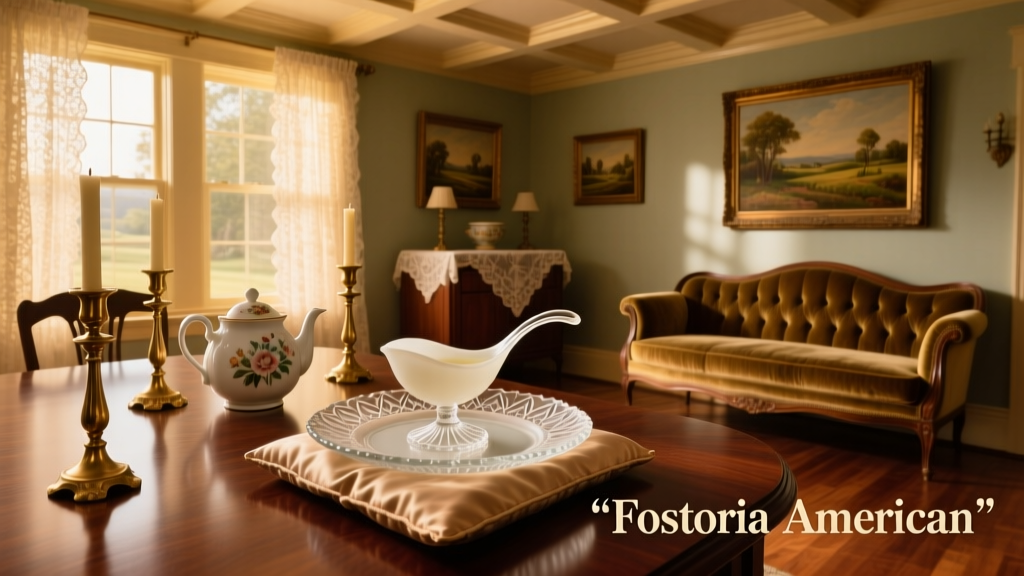
Fostoria American Mayonnaise Ladle Underplate: History, Identification, and Restoration Guidance
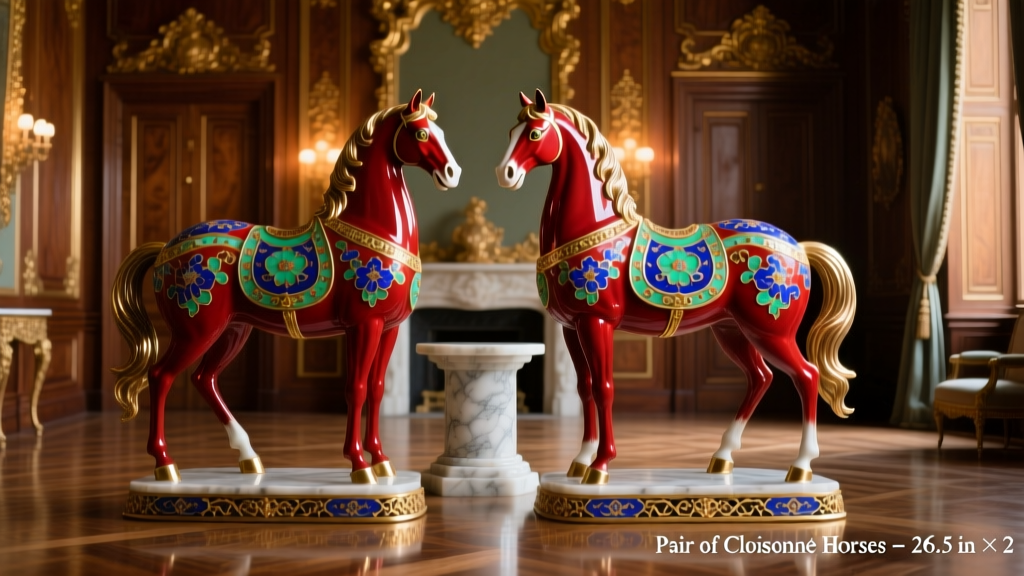
Cloisonné Figurine Horse Red 26½-Inch Pair: Provenance, Craftsmanship, and Restoration Insights
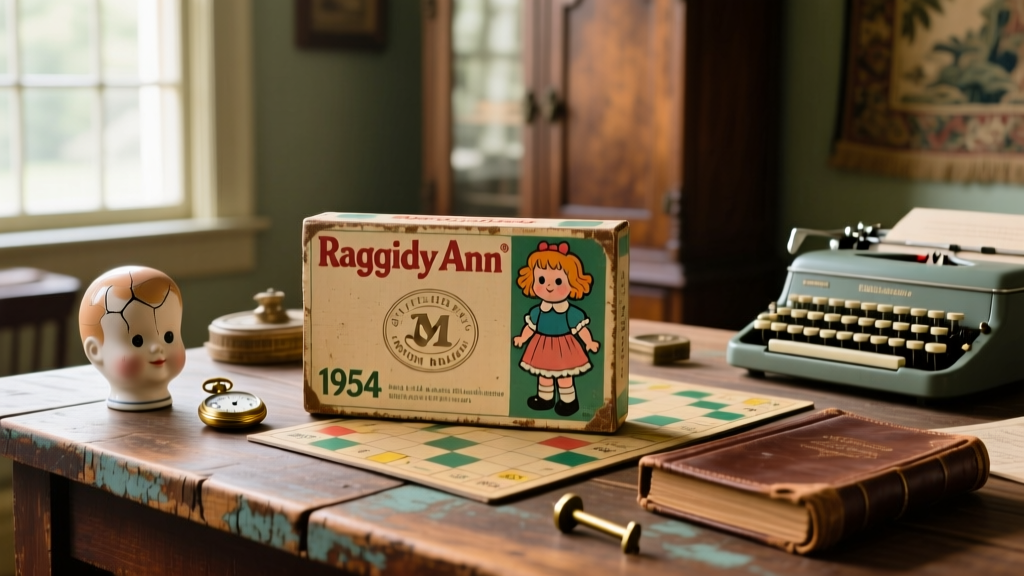
Raggedy Ann Game: Milton Bradley’s 1954 Board Game — History, Design, and Collectibility
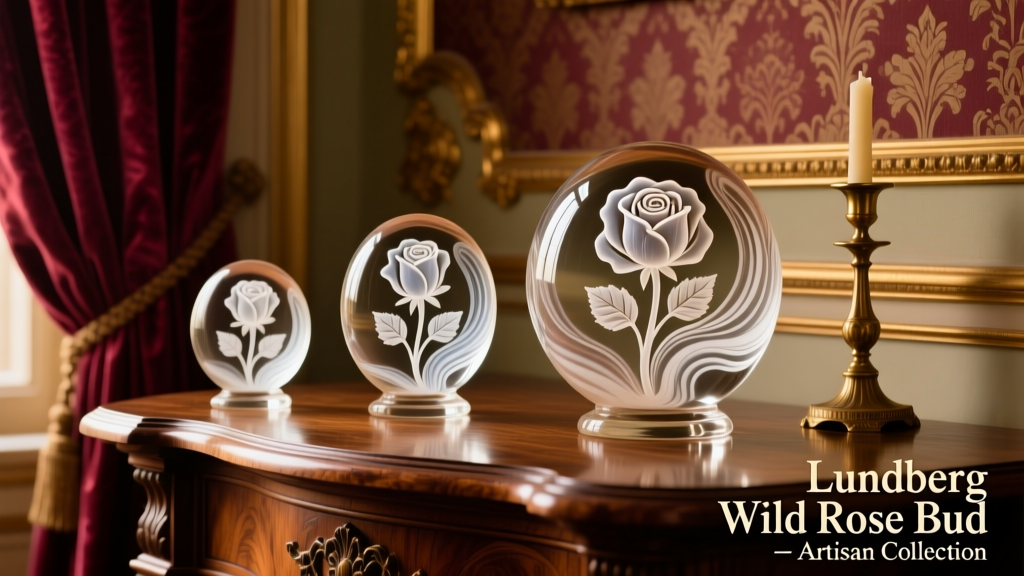
Lundberg Studios Wild Rose Bud Paperweight: Anatomy, Provenance, and Conservation of the 3⅜-Inch Internal/External Design
Roycroft Candleholder with Finger Loop: Authentic Brass Washed Finish and Arts & Crafts Provenance
Torquay Vase with Three Handles in Parrot Blue: A Collector’s Guide to the 7-Inch Heritage Piece
Louis XVI Giltwood Pierced Crest Mirror: Authenticity, Craftsmanship, and Restoration of a 24 × 37 Inch Masterpiece