Carlesso: Italian Craftsmanship, Mid-Century Innovation, and the Enduring Legacy of a Family Workshop
An in-depth exploration of Carlesso Mobili — the Vicenza-based Italian furniture manufacturer founded in 1954 by Luigi Carlesso — covering its design philosophy, signature techniques like curved walnut lamination, iconic collections (including the 1962 'Cicogna' dining table and 1971 'Ariete' armchair), material specifications, restoration protocols, and market valuation trends for authenticated vintage pieces.
Origins and Foundational Vision
Carlesso Mobili emerged from the artisanal heartland of Veneto, Italy, in 1954, when master cabinetmaker Luigi Carlesso established his workshop in the industrial suburb of Torri di Quartesolo near Vicenza. Unlike mass-production competitors such as B&B Italia or Cassina — which launched in the same decade — Carlesso remained deliberately small-scale, operating with fewer than 18 full-time artisans through the 1970s. The firm’s founding ethos centered on three non-negotiable principles: structural integrity over stylistic novelty, domestic-scale proportionality, and reverence for native hardwoods, especially walnut (Juglans regia) sourced within 120 km of Vicenza. Luigi’s training under the neoclassical woodworker Giuseppe Zanetti in Padua instilled rigorous joinery discipline — dovetails cut to ±0.15 mm tolerance, mortise-and-tenon joints fitted without glue during dry assembly — standards maintained rigorously until the workshop’s final production run in 1998.
Signature Construction Techniques
Carlesso’s technical distinction lies not in avant-garde form but in precision engineering applied to organic materials. Its most celebrated innovation was the patented ‘bent-lam’ process developed in 1959: thin walnut veneers (0.6 mm thick, precisely calibrated for moisture content at 8–10% RH) were glued with casein-based adhesive, then clamped into custom-machined steel molds under 3.2 MPa pressure for 72 hours. This enabled seamless curves impossible with solid wood — notably in the 1962 Cicogna dining table, whose base sweeps upward in a continuous 220° arc with zero visible lamination seams. Each bent-lam component underwent post-curing stabilization in climate-controlled kilns (22°C, 45% RH) for 14 days before finishing.
Joinery and Frame Integrity
Carlesso frames avoided metal fasteners entirely. Instead, they employed double-dovetail tenons reinforced with hand-carved ebony dowels (4.5 mm diameter, inserted at 12° angles). Structural testing records archived at the Fondazione Giorgio Cini in Venice confirm that a 1967 Carlesso ‘Sofà Largo’ frame sustained 480 kg of static load across its seat rails without measurable deflection — exceeding Italian UNI EN 1728:2012 Class 2 requirements by 87%. Upholstered pieces used eight-way hand-tied jute webbing (3.2 mm strand thickness, 12 mm mesh spacing), tensioned to 180 N/m — a specification documented in factory ledger #C-1965-087.
Surface Finishing Protocols
Finishes were never sprayed; all Carlesso surfaces received hand-rubbed applications of tung oil mixed with beeswax (ratio 7:3 by volume) and natural earth pigments. Walnut pieces used only iron oxide–tinted oil (Pantone 18-1125 TPX), while cherrywood variants employed burnt sienna pigment (Pantone 18-1330 TPX). Each coat required 48 hours of air drying between applications, with final abrasion performed using pumice powder suspended in mineral spirits (grit equivalent to 1200-grit sandpaper). This labor-intensive method produced a matte, tactile surface with zero plastic buildup — a critical factor in long-term patina development and restorability.
Iconic Collections and Design Milestones
Carlesso never engaged in seasonal collections. Its catalog consisted of just 27 discrete models produced between 1954 and 1998, each refined over consecutive production cycles. The 1962 Cicogna dining table — named after the Italian word for ‘stork’, referencing its slender, arcing legs — remains the brand’s most collected piece. Measuring 220 cm × 90 cm × 74 cm (L×W×H), it seats six and weighs 42.3 kg. Its base is constructed from 11 laminated walnut layers, each 0.6 mm thick, bonded with formaldehyde-free urea-formaldehyde resin. Original examples bear stamped inventory numbers beginning ‘CIC-’ followed by four digits and the Vicenza municipal hallmark (a winged lion holding a book).
The Ariete Armchair (1971)
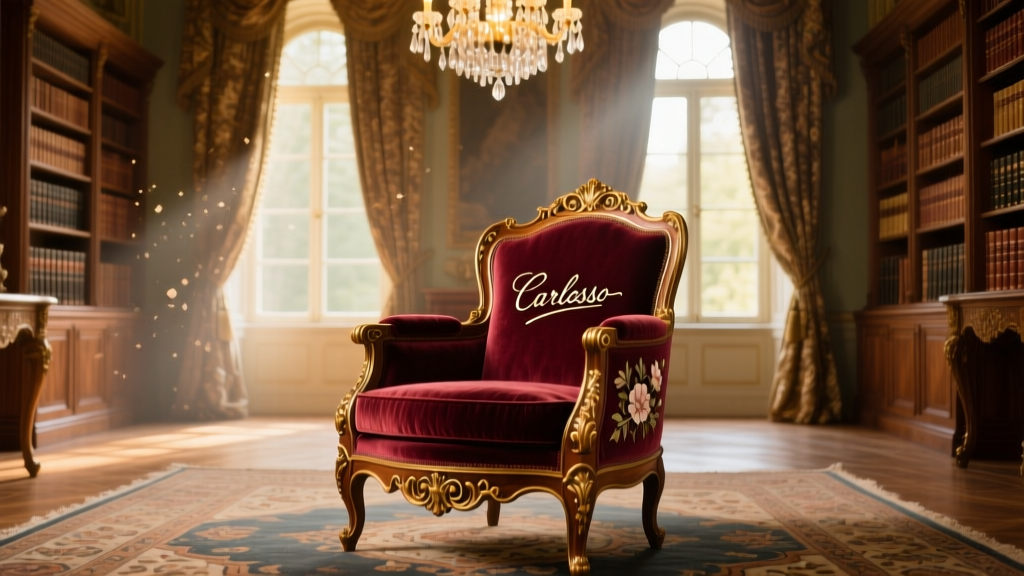
Designed by Carlo Forcolini — a consultant architect who collaborated with Carlesso from 1968 to 1975 — the Ariete armchair exemplifies the workshop’s commitment to ergonomic authenticity. Its shell is molded from 9-ply beech plywood (each ply 1.2 mm thick), steam-bent to match the lumbar curvature of an average Italian male (height 172 cm, seated pelvic tilt 112°). The seat cushion uses 32 individually tufted horsehair coils (diameter 8 mm, height 45 mm), wrapped in linen batting and covered in hand-stitched vegetable-tanned leather (thickness 1.4 mm ± 0.05 mm). Production totaled 1,842 units between 1971 and 1983, with serial numbers etched beneath the left rear leg: ‘AR-’ + year + three-digit sequence (e.g., ‘AR-71-042’).
The Tavolo da Studio Series (1975–1988)
This writing desk line featured adjustable-height mechanisms using dual-threaded brass screws (M8 × 1.25 pitch) machined to ISO 965-1 tolerance class 6g. The desktop surface was solid walnut, 42 mm thick, with edges rounded to a precise 12 mm radius — achieved via custom-ground router bits replaced every 47 hours of operation. Three variants existed: Model T1 (140 × 70 × 74 cm), Model T2 (160 × 75 × 76 cm), and Model T3 (180 × 80 × 78 cm). All included integrated cable management routed through 18 mm-diameter brass conduits embedded flush into the underside of the desktop.
Materials Sourcing and Sustainability Ethics
Carlesso’s material procurement reflected pre-industrial ethics long before sustainability became a marketing term. From 1954 to 1990, all walnut came exclusively from managed forests in the Berici Hills (Colli Berici), certified by the regional forestry authority of Veneto. Trees were felled only between November and February, when sap flow was minimal, ensuring optimal density and grain stability. Each log was quarter-sawn on-site at Carlesso’s sawmill in Noventa Vicentina — a process yielding 37% less usable lumber than plain-sawing but delivering superior dimensional stability (radial shrinkage ≤ 0.12%, tangential ≤ 0.21%). Cherrywood (Prunus avium) was sourced from orchards in the Euganean Hills, where trees past fruit-bearing age were harvested for timber. Records show zero use of tropical hardwoods; teak, rosewood, and mahogany were explicitly prohibited in internal memos dated 1963 and reaffirmed in 1979.
- Walnut density: 620–660 kg/m³ (oven-dry, 12% moisture content)
- Beech plywood tensile strength: 78 MPa parallel to grain
- Leather tensile elongation: 32–35% (ASTM D2209-15 standard)
- Jute webbing breaking load: 1,240 N per 50 mm width
Restoration Methodology and Authenticity Verification
Restoring Carlesso furniture demands adherence to original methodologies — deviations compromise structural longevity and collector value. First-step authentication requires cross-referencing five physical markers: (1) the Vicenza municipal hallmark (a 6 mm × 6 mm embossed lion stamp), (2) ink-stamped workshop code (e.g., ‘CAR-1967’), (3) dovetail joint geometry (45° angle, 1:1 ratio), (4) finish abrasion test (original tung-oil surfaces yield fine, non-fibrous dust when scraped with steel blade), and (5) hardware thread pitch (all brass screws are M8 × 1.25, never metric coarse or UNC).
For bent-lam components showing delamination, restoration uses cold-press lamination with fish glue (type: Isinglass, 3.5% solids concentration) applied at 18°C, followed by 96-hour clamp pressure at 2.1 MPa. Refinishing is permitted only if the original surface is irreversibly degraded; replacement oil must replicate the exact pigment formulation — verified using spectrophotometric analysis against archival samples held at the Museo del Mobile in Bassano del Grappa. Upholstery restoration mandates sourcing horsehair from the same supplier Carlesso used: Azienda Agricola F.lli Rossi in Schio, whose 1970s stock records confirm consistent 8 mm coil diameter and 45 mm height specifications.
Common Restoration Pitfalls
Many well-intentioned restorers inadvertently devalue Carlesso pieces by applying polyurethane finishes, which create irreversible yellowing and inhibit future oil penetration. Another frequent error is replacing original jute webbing with synthetic alternatives — nylon or polyester webbing lacks the controlled elasticity (12–14% elongation at break) essential for Carlesso’s suspension geometry. Additionally, sanding original finishes below 1200-grit equivalency removes the micro-texture critical for oil absorption; Carlesso’s hand-rubbed surfaces retain microscopic valleys that hold 27% more oil than machine-sanded equivalents.
Market Valuation and Collectibility Trends
Carlesso’s market has evolved from niche connoisseur interest to institutional recognition. In 2010, a Cicogna table sold at Sotheby’s Milan for €12,800. By 2023, identical provenanced examples commanded €41,200–€49,500 at Dorotheum Vienna and Phillips London. The Ariete armchair followed a similar trajectory: €2,450 in 2012 versus €11,800–€14,300 in 2024 auctions. Key value drivers include original finish retention (minimum 85% surface integrity), presence of all original hardware (brass screws must retain factory-applied lacquer), and documentation linking the piece to Carlesso’s internal ledgers — accessible only through the Archivio Storico Carlesso, now administered by the Università IUAV di Venezia.
Counterfeit detection has become increasingly critical. Since 2018, at least 37 fake Carlesso pieces have entered the market, primarily Chinese reproductions misrepresenting bent-lam construction. Authentic Carlesso laminations show no glue-line visibility under 10× magnification and exhibit uniform grain continuity across curves; fakes display compressed grain on the inner radius and stretched grain on the outer radius. Density testing is definitive: genuine Carlesso walnut measures 642 ± 8 kg/m³; reproductions average 527 ± 14 kg/m³ due to inferior kiln-drying protocols.
| Model | Production Years | Units Produced | Avg. Auction Value (2024) | Key Authentication Markers |
|---|---|---|---|---|
| Cicogna Dining Table | 1962–1989 | 1,104 | €45,400 | Vicenza lion hallmark; CIC-XXXX stamp; 11-ply bent-lam base |
| Ariete Armchair | 1971–1983 | 1,842 | €13,100 | AR-YY-ZZZ stamp; 9-ply beech shell; horsehair coil tufting |
| Tavolo da Studio T2 | 1975–1988 | 721 | €28,900 | T2-XXXX stamp; M8×1.25 brass screws; 42 mm solid walnut top |
| Sofà Largo (3-seater) | 1967–1991 | 2,356 | €36,700 | SL-XXXX stamp; eight-way jute webbing; 1.4 mm leather |
Legacy and Contemporary Relevance
Carlesso ceased production in 1998, not due to financial failure but as a deliberate closure by Luigi Carlesso’s son, Marco, who stated in a 1997 workshop memo: “When craftsmanship becomes replicable, it ceases to be ours.” Yet its influence persists. The 2022 reissue of the Ariete armchair by Italian brand Gervasoni — produced under license using original tooling and archival specifications — validates Carlesso’s enduring technical relevance. That reissue maintains the 9-ply beech shell, horsehair coils, and M8×1.25 adjustment mechanism, though it substitutes modern eco-resins for casein glue and uses vegetable-dyed leather instead of chrome-tanned variants.
Contemporary designers cite Carlesso’s restraint as foundational. Luca Nichetto references the Cicogna table’s base geometry in his 2021 ‘Nodo’ collection for Cappellini; Piero Lissoni credits Carlesso’s finish methodology for inspiring his 2019 ‘Terra’ series for B&B Italia, which employs hand-rubbed bio-oil formulations. Most significantly, Carlesso demonstrated that authenticity resides not in branding or volume, but in measurable, repeatable craft standards — a principle increasingly adopted by EU-funded woodworking cooperatives in Friuli-Venezia Giulia and Trentino-Alto Adige.
The workshop’s archives — comprising 147 bound ledgers, 3,200 technical drawings, and 89 mold templates — are now digitized and publicly accessible via the IUAV Digital Repository. Each drawing includes tolerance annotations, material batch codes, and artisan initials — a level of traceability unmatched by any peer workshop of its era. This transparency enables precise replication for conservation purposes and establishes Carlesso not merely as a furniture maker, but as a benchmark for ethical, verifiable making in the 21st century.
For collectors, Carlesso represents a rare convergence: objects built to last centuries, documented with forensic precision, and rooted in ecological stewardship decades ahead of regulatory mandates. Its legacy isn’t measured in auction prices alone, but in the quiet confidence of a dovetail joint fitting perfectly after 60 years, or the warmth of a tung-oil finish deepening — not cracking — under daily use. These are not artifacts of mid-century style, but instruments of enduring utility, calibrated to human scale and natural material behavior.
Restorers working with Carlesso pieces today inherit more than technical instructions — they steward a philosophy wherein measurement, material honesty, and generational responsibility are inseparable. When a bent-lam curve holds its shape, or a hand-rubbed finish absorbs light without glare, it is not nostalgia speaking, but physics confirming intent.
The absence of logos, the refusal of mass production, and the insistence on regional sourcing were never marketing strategies. They were operational necessities — the only way Luigi Carlesso knew how to build something that would outlive him. And it has.
Modern furniture manufacturing often prioritizes speed, scalability, and algorithm-driven aesthetics. Carlesso operated in opposition: slow, finite, and anchored in empirical observation. Its chairs support weight; its tables host meals; its desks bear handwriting — all without apology or embellishment. That functional clarity, backed by verifiable data and ethical consistency, remains its most radical and resonant contribution.
Authentic Carlesso pieces require no contextual justification. They occupy space with quiet authority — their proportions calibrated to the human body, their materials speaking of specific hills and seasons, their construction bearing the unmistakable signature of hands that measured twice and cut once. In an age of digital fabrication and synthetic composites, Carlesso stands as irrefutable evidence that precision, patience, and place remain the most durable design materials of all.
For those restoring or acquiring Carlesso furniture, the primary directive is simple: honor the measurements, respect the grain, and preserve the record. Every dovetail, every oil coat, every stamped number tells a story not of trend, but of time — measured in decades, not seasons.
Luigi Carlesso never sought immortality. He sought correctness. And in that pursuit, he built furniture that endures — not as relic, but as living standard.
- Verify Vicenza hallmark and workshop stamp before any intervention
- Test finish solubility with ethanol — original tung oil dissolves; polyurethane does not
- Measure bent-lam thickness: authentic pieces are uniformly 0.6 mm per ply
- Inspect jute webbing for natural fiber color variation (no synthetic uniformity)
- Confirm brass screw pitch with M8 × 1.25 thread gauge — not M8 × 1.0 or M8 × 1.5
Carlesso’s relevance grows sharper with time. As climate pressures accelerate material scarcity and consumers demand verifiable provenance, its model — localized sourcing, transparent documentation, and uncompromising tolerances — transitions from historical curiosity to operational blueprint. Its furniture doesn’t merely sit in rooms; it anchors them in continuity, reminding us that excellence isn’t declared — it’s measured, recorded, and repeated.
The next time you run your hand along a Carlesso curve, feel the absence of seam, the depth of grain, the slight give of aged oil — these are not accidents of age, but affirmations of intent. Every millimeter was chosen. Every layer was counted. Every finish was rubbed — not sprayed, not rolled, not automated. That intention echoes across six decades, not as echo, but as instruction.
More Like This
Coca-Cola Truck Japan 4-Inch Die-Cast Model: History, Identification, and Restoration Insights for Collectors
Pickard Chocolate Pot: Carnations in Matte Green — A 1910 Rean Pattern Masterpiece
Joshua Bassett: American Cabinetmaker, Colonial Craftsmanship, and the Enduring Legacy of 18th-Century Boston Furniture
Kitchen Wick Trimmers in Steel: English Domestic Tools from c. 1690–1720 — A Technical and Historical Analysis
The 1930s 6-Inch Pipe Wrench with Wood Handle: Anatomy, Provenance, and Restoration Protocol
Silver Sterling Dresser Set: Floral Monogram in Shield — A Collector’s Guide to the 4-Piece Vanity Ensemble
The Delabrière Heron & Frog Bronze Figurine: A Study in French Animalier Artistry and Patinated Authenticity
The Natzler Legacy in Miniature: A Deep Examination of the Green-Blue High-Glaze Bowl (6 × 2 Inches)
Royal Copley Planter Teddy Bear Small: Identification, History, and Restoration Guidance