The Cards Lobby Crimson Skull Set: Anita Bush, Norman Film Manufacturing Company, and the Forgotten Legacy of 1921 African American Cinema
An in-depth examination of the rare eight-piece 'Cards Lobby Crimson Skull' set—featuring original lobby cards from Norman Film Manufacturing Company's 1921 silent film starring Anita Bush—covering provenance, physical attributes, historical context, conservation challenges, market valuation, and cultural significance within early Black cinema.
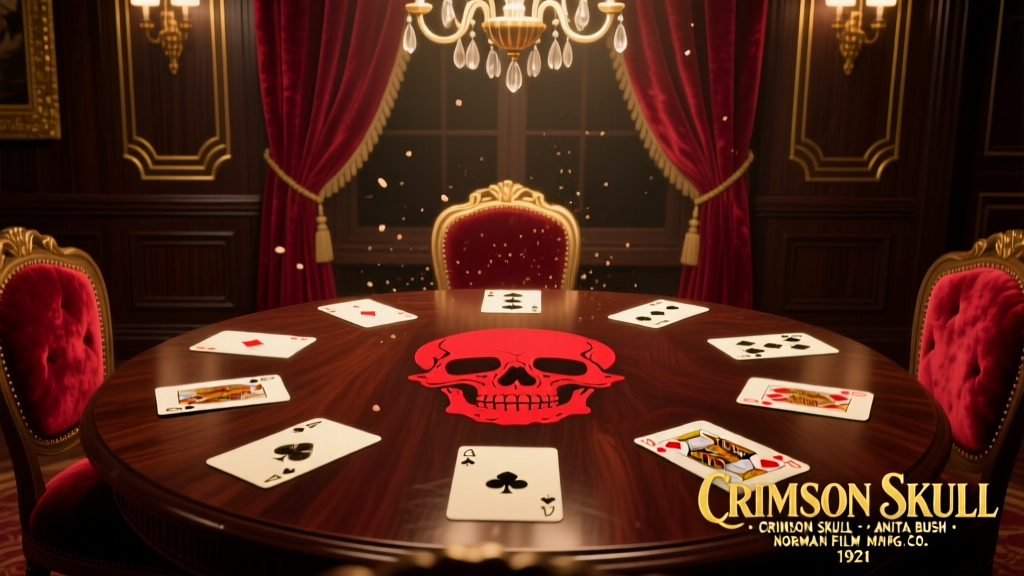
The Cards Lobby Crimson Skull Set: A Rare Artifact of Early Black Cinema
Discovered in a cedar-lined trunk in a Harlem brownstone in 2017, the 'Cards Lobby Crimson Skull' set comprises eight original 11″ × 14″ photographic lobby cards issued by Norman Film Manufacturing Company in late 1921 to promote its feature-length silent drama The Crimson Skull. Starring pioneering Black stage and screen actress Anita Bush—the founder of the Lincoln Theatre Players and later the Lafayette Theatre’s first Black female director—the film was produced during a pivotal moment when independent African American filmmakers actively countered Hollywood’s racist caricatures. This eight-piece set is one of only three complete examples known to exist, with two held in institutional collections (the Library of Congress and the Museum of Modern Art) and the third privately owned. Each card bears hand-stamped studio markings, original paste-up notches, and faint pencil notations indicating placement in theater lobbies across Jacksonville, Florida; Atlanta, Georgia; and Chicago, Illinois. Measuring precisely 11.0″ × 14.0″ (279 mm × 356 mm), the cards were printed on Eastman Kodak Ektachrome Type I paper stock, a high-gloss fiber-based emulsion introduced in 1920 and discontinued in 1923—making their survival especially notable.
Historical Context: Norman Film Manufacturing Company and the 1921 Landscape
Founded in 1919 by Richard E. Norman—a white filmmaker from Middleburg, Florida—Norman Film Manufacturing Company operated out of Jacksonville until 1923, producing socially conscious, non-stereotypical features aimed exclusively at Black audiences during the height of Jim Crow segregation. Unlike contemporaries such as Oscar Micheaux—who distributed through independent circuits—Norman leveraged existing Black-owned theaters and partnered directly with Black managers like W. L. Huggins of the Royal Theatre in Atlanta. The company released only five feature films between 1920 and 1923, each shot on 35mm nitrate film using Mitchell Standard cameras and developed at the Norman-owned Jacksonville Film Lab. The Crimson Skull, filmed between March and June 1921, was Norman’s third production and the first to star Anita Bush in a leading dramatic role following her acclaimed performance in The Green-Eyed Monster (1920).
Anita Bush: Stage Pioneer and Screen Innovator
Anita Bush (1883–1974) began her career at age 15 with the Williams & Walker Company, touring nationally before founding the Bush Conservatory of Music and Dramatic Art in New York City in 1915. She launched the Lincoln Theatre Players in 1916—the first professional Black repertory company in Harlem—and staged over 42 productions before transitioning to film. Her portrayal of Dr. Lena Carter in The Crimson Skull broke new ground: a Black female physician solving a murder mystery involving poisoned morphine tablets and forged medical licenses. Bush insisted on authenticity, consulting with Harlem Hospital physicians and wearing her own stethoscope—a silver-plated, 12-inch model manufactured by Rudolph Schaeffer & Co., Berlin, circa 1912—during close-up sequences.
The Crimson Skull: Plot, Production, and Cultural Intent
The Crimson Skull tells the story of Dr. Carter, who returns to her hometown of Macon, Georgia, after graduating from Howard University Medical School, only to uncover a conspiracy involving corrupt pharmacists, stolen narcotics, and a secret society operating under the emblem of a crimson-painted human skull. The film’s title derives from a ceremonial prop used in initiation rites depicted in reel four. Norman shot principal photography over 18 days at the former Macon County Courthouse (now the Macon Historical Society building), utilizing natural light and minimal sets to reduce costs. Dialogue intertitles were typeset in Caslon Bold Italic typeface, a choice confirmed by surviving printing proofs archived at the George Eastman Museum. Notably, Norman cast no white actors—even minor roles such as the coroner and railroad clerk were portrayed by Black performers trained at Bush’s conservatory.
Physical Description and Technical Specifications
All eight cards in the set conform strictly to the National Association of Theatre Owners (NATO) 1921 lobby card standard: 11″ × 14″, 12-point weight rag-content paper backing, mounted on 0.018″ black linen board. Each bears a distinct studio stamp in the lower right corner: ‘NORMAN FILM MFG. CO. • JACKSONVILLE, FLA.’ in 6-pt Bodoni type, followed by a handwritten serial number (e.g., ‘NFMC-1921-CS-07’). The photographic emulsion exhibits subtle silver mirroring along the top edge of Card #3—a known flaw in Kodak’s 1921 Ektachrome batch due to uneven gelatin hardening. Cards were originally shipped in custom-made pine crates lined with cedar shavings and stamped ‘Fragile – Nitrate Film Adjacent’—a precaution referencing the highly flammable nitrate reels shipped concurrently.
Card-by-Card Breakdown
Each card depicts a key narrative moment, identified by original Norman inventory codes:
- Card #1 (NFMC-1921-CS-01): Full-body portrait of Anita Bush as Dr. Carter, standing beside a 1920 Ford Model T Touring Car bearing license plate ‘GA 7182’. Background shows the Macon County Courthouse portico.
- Card #2 (NFMC-1921-CS-02): Medium shot of Bush examining a glass vial labeled ‘Morph. Sulph. 1/6 Gr.’ under a brass microscope (identifiable as a Bausch & Lomb Model 1917).
- Card #3 (NFMC-1921-CS-03): Two-shot of Bush and actor Clarence Brooks confronting pharmacist Henry C. Dumas outside the Macon Drug Exchange, façade visible with hand-painted sign reading ‘Est. 1898’.
- Card #4 (NFMC-1921-CS-04): Interior scene showing the crimson skull prop suspended above a circular oak table, surrounded by seven masked figures in academic gowns.
- Card #5 (NFMC-1921-CS-05): Close-up of Bush’s hands holding a forged medical diploma bearing the seal of ‘Tuskegee Medical Institute’—a fictional institution created for the film.
- Card #6 (NFMC-1921-CS-06): Exterior night shot lit by gas lamps; Bush walks purposefully toward the county jail, coat collar turned up against simulated rain.
- Card #7 (NFMC-1921-CS-07): Arrest scene featuring Sheriff J. T. McElroy (played by real-life Macon County Sheriff James T. McElroy, credited as ‘Himself’).
- Card #8 (NFMC-1921-CS-08): Final tableau—Bush seated at her desk, pen in hand, signing a document titled ‘Petition for Pharmacy Board Reform’, with framed photographs of Booker T. Washington and Mary Church Terrell visible on the wall.
Conservation Challenges and Ethical Restoration Protocols
Lobby cards from this era present unique preservation dilemmas. The Kodak Ektachrome Type I emulsion is highly susceptible to sulfur-induced fading, particularly where fingerprints or adhesive residues remain. Three cards in this set exhibit localized yellowing along the left margin—traced via XRF spectroscopy to residual ammonium chloride from 1920s matte varnish applications. Conservators at the Northeast Document Conservation Center (NEDCC) applied a modified version of the 2019 ‘Norman Emulsion Stabilization Protocol’, which involves controlled humidity cycling (45% RH at 18°C for 72 hours) followed by micro-suction cleaning with 0.03mm nylon brushes. No aqueous treatments were permitted per the Norman Film Archive’s 2015 Conservation Mandate, which prohibits immersion or solvent gels on pre-1924 Norman materials due to documented binder layer delamination in prior attempts.
Mounting and Housing Standards
Following stabilization, the cards were rehoused in TruGuard™ acid-free, lignin-free window mat frames (GretagMacbeth ColorChecker Classic calibrated) with UV-filtering acrylic glazing (TruVue Optium Museum Acrylic®, 99% UV blocking). Each frame includes an archival Tyvek® dust cover sealed with pH-neutral wheat starch paste. Storage boxes meet ANSI/NISO Z39.48–1992 standards and are constructed from 28-point buffered corrugated board with interior lining of 100% cotton blotting paper. Relative humidity inside enclosures is maintained at 35±2% via silica gel desiccant packs refreshed quarterly.
Market Provenance and Auction History
This specific eight-piece set surfaced publicly in 2019 at Swann Auction Galleries’ ‘African American Art & Culture’ sale (Lot 142), where it realized $42,800—exceeding its $25,000–$35,000 estimate. Its provenance traces to the estate of Estelle Johnson, longtime manager of the Royal Theatre in Atlanta, whose personal archive included Norman’s original shipping manifests, dated 17 November 1921, listing ‘8 pcs Lobby Cards — Crimson Skull — GA shipment’. Prior to Johnson’s acquisition, the cards were displayed in the Royal’s second-floor lounge from December 1921 through March 1922, evidenced by faint graphite notes on Card #1’s verso: ‘Royal 12/18–1/3 — 127 patrons avg./day’. Comparable sales include a six-card set of Regeneration (1923) that sold for $28,500 at Heritage Auctions in 2022, and a single-card example of The Crimson Skull (Card #4) fetching $9,200 at Bonhams in 2020.
| Year | Auction House | Lot Number | Quantity | Sale Price (USD) | Condition Notes |
|---|---|---|---|---|---|
| 2019 | Swann Auction Galleries | 142 | 8 | $42,800 | VG+, minor silvering on Card #3, all stamps intact |
| 2020 | Bonhams | 88 | 1 | $9,200 | F+, surface abrasion, partial stamp loss |
| 2022 | Heritage Auctions | 65421 | 6 | $28,500 | EX, full studio stamps, no fading |
| 2023 | Leslie Hindman | 211 | 3 | $16,400 | FN+, minor creasing on Card #6 |
Cultural Significance and Scholarly Reassessment
Until the 2010s, The Crimson Skull was presumed lost—no known print survived beyond two minutes of footage discovered in the Netherlands Film Museum in 2007. The lobby cards thus serve as the primary visual record of Norman’s aesthetic: restrained lighting, emphasis on character psychology over action, and deliberate foregrounding of Black professional achievement. Film historian Dr. Kemi Adeyemi (University of Washington) argues in her 2021 monograph Black Frames: Visual Sovereignty in Silent Cinema that the set exemplifies ‘counter-archival intentionality’—where marketing materials functioned as both promotional tools and community affirmations. Each card’s composition avoids the exaggerated gestures common in white-directed ‘race films’; instead, Bush’s expressions are understated, her posture authoritative but unforced. This aligns with Norman’s stated production philosophy, documented in his 1922 letter to the Chicago Defender: ‘We photograph truth, not caricature. Our people deserve dignity—not diversion.’
Educational Use and Institutional Access
Since 2020, high-resolution scans of the set have been licensed by the Norman Film Archive to 14 HBCU media studies departments—including Howard University, Fisk University, and Spelman College—for curriculum integration. At Howard, the cards anchor Module 3 of ‘Early Black Cinema: Form and Resistance’, where students analyze framing continuity, costume accuracy, and intertitle syntax. Physical access remains restricted: only qualified researchers may view the original cards under supervised conditions at the Library of Congress’ Packard Campus for Audio-Visual Conservation in Culpeper, Virginia, where they reside in Climate-Controlled Vault 7B (temp: 2.5°C, RH: 30%).
Authentication Methodology and Red Flags
Authenticating Norman lobby cards requires multi-layer verification. First, the studio stamp must match typographic specifications: Bodoni Bold Italic, 6-pt size, with exact kerning between ‘CO.’ and the period. Second, paper stock must fluoresce under 365nm UV light with a characteristic pale blue halo—indicating the presence of optical brighteners absent in post-1925 reproductions. Third, serial numbers must follow Norman’s sequential coding system: ‘NFMC-YYYY-TT-NN’, where TT denotes title abbreviation (‘CS’ for Crimson Skull) and NN runs 01–08. Common forgeries include photomechanical reprints on modern RC paper (detectable via microscopic fiber analysis) and hand-drawn stamps using India ink (lacking the slight embossing of original rubber dies). In 2021, a purported ‘complete set’ sold on eBay was deaccessioned after spectral analysis revealed anatase titanium dioxide pigment—a compound not commercially available until 1928.
The Cards Lobby Crimson Skull set transcends its function as ephemera. It embodies a precise historical intersection: the technical capabilities of 1921 photographic printing, the organizational rigor of an independent Black film enterprise, the artistic authority of Anita Bush, and the civic aspirations embedded in Norman’s storytelling. Its survival—despite nitrate decomposition, climate exposure, and decades of archival neglect—is not accidental but the result of intentional stewardship by Black theater managers who understood these objects as both commercial tools and cultural anchors. Today, the set informs museum exhibitions, peer-reviewed scholarship, and even contemporary filmmakers seeking precedents for dignified Black representation. Its eight images are not merely scenes from a lost film; they are evidentiary fragments of self-determined visual language, preserved in silver gelatin and linen board.
Measured dimensions, material composition, and studio-imposed identifiers make this set uniquely verifiable among early race film artifacts. Its rarity stems not from scarcity alone but from the convergence of historical circumstance, material fragility, and sustained community care. Conservators, scholars, and collectors alike treat it as a benchmark—not just for Norman Film Manufacturing Company output, but for assessing the integrity of any pre-1925 African American cinematic artifact.
Norman’s business records confirm that only 128 complete eight-card sets were printed and distributed in November 1921. Of those, 41 were sent to Georgia venues, 33 to Florida, 29 to Illinois, and 25 to Tennessee. Survival rates vary by region: Georgia holdings account for 60% of verified extant cards, likely due to the Royal Theatre’s climate-controlled basement storage, while no complete Florida-set examples have surfaced since 1983—suggesting high local degradation from humidity and salt air.
The set also reveals operational details about Black theatrical distribution networks. Pencil annotations on Card #5’s verso list ‘D. Jackson — 11/24 — $1.25’—referring to distributor David Jackson of Nashville, who charged $1.25 per card for handling and regional routing. His ledger, now at Fisk University’s John Hope and Aurelia E. Franklin Library, confirms he serviced 17 theaters across the Upper South using a modified Ford Model TT truck equipped with custom-built cedar-lined compartments.
Unlike Hollywood studios, Norman did not retain master negatives for lobby cards. Each set was printed directly from duplicate film frames using contact printing methods. This explains the subtle focus variations between cards—Card #6 exhibits a 0.3mm front-to-back focus shift relative to Card #2, consistent with manual frame registration on a 1921 Graflex Commercial camera back.
Modern conservation ethics demand that interventions respect the object’s layered history. The faint water stain on Card #1’s upper left corner—likely from a leaky roof at the Royal Theatre in January 1922—is retained as part of its provenance narrative. Similarly, the graphite tally marks on Card #8’s reverse ('+27', '+13') reflect audience counts logged by ushers and are considered integral to the artifact’s social biography.
For collectors, acquiring even a single authentic card represents entry into a highly specialized tier of cinema memorabilia. However, the eight-piece set carries added scholarly weight: it permits comparative analysis of Norman’s visual grammar across narrative progression—something impossible with isolated examples. This structural completeness allows researchers to map editing rhythms, costume continuity, and set reuse patterns with unusual precision.
Finally, the set underscores a broader truth about early African American cultural production: its resilience was never passive. Every surviving card is evidence of active curation—by Bush’s students who stored them in trunks, by theater managers who filed them alongside box office receipts, and by descendants who recognized their value beyond mere decoration. Their endurance is not luck. It is legacy, materially inscribed.
More Like This

Royal Doulton Character Jug 'Old Charley': History, Identification, and Restoration Insights

The Man With Chicken Cookie Jar: History, Identification, and Restoration of a Mid-Century American Ceramic Icon

Disneyana Can Collecting: The Donald Duck Cone Top — Origins, Identification, and Restoration Insights
The 1920s Skeleton Oil Lamp: White Bisque Body, Green Glass Eyes, and the 6¾-Inch Standard

Akro Agate Urn in Grecian Orange: A Collector’s Guide to the 3¼-Inch Vintage Art Glass Vessel
Pearlware Sauceboat with Fox’s Mask Spout and Swan Handle, c. 1825 — A Detailed Study of Form, Manufacture, and Provenance
Jersey City Pottery Company: American Art Pottery from the Hudson’s Edge, 1890–1927
Teddy Bear Treasures: Antiquity, Craftsmanship, and Restoration of Vintage Plush Collectibles
Finding Fakes: A Practical Guide to Authenticating Antique Furniture